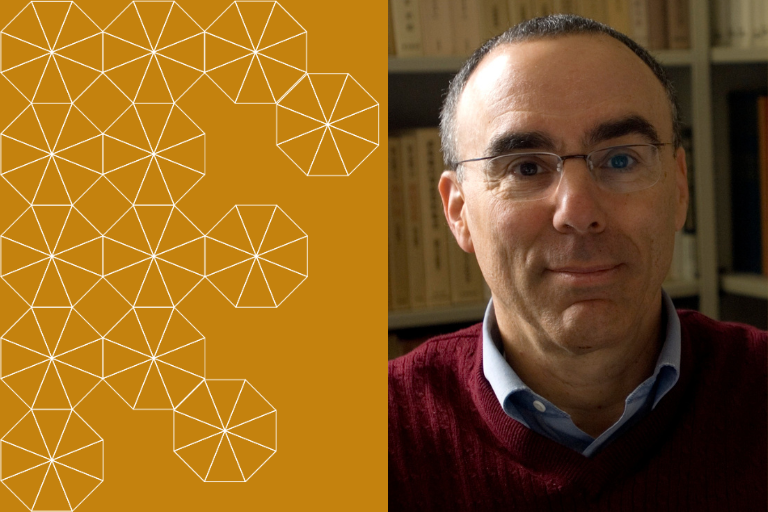
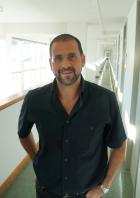
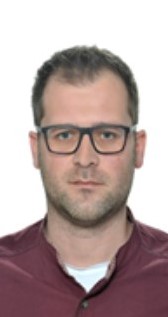
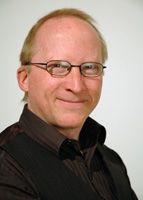
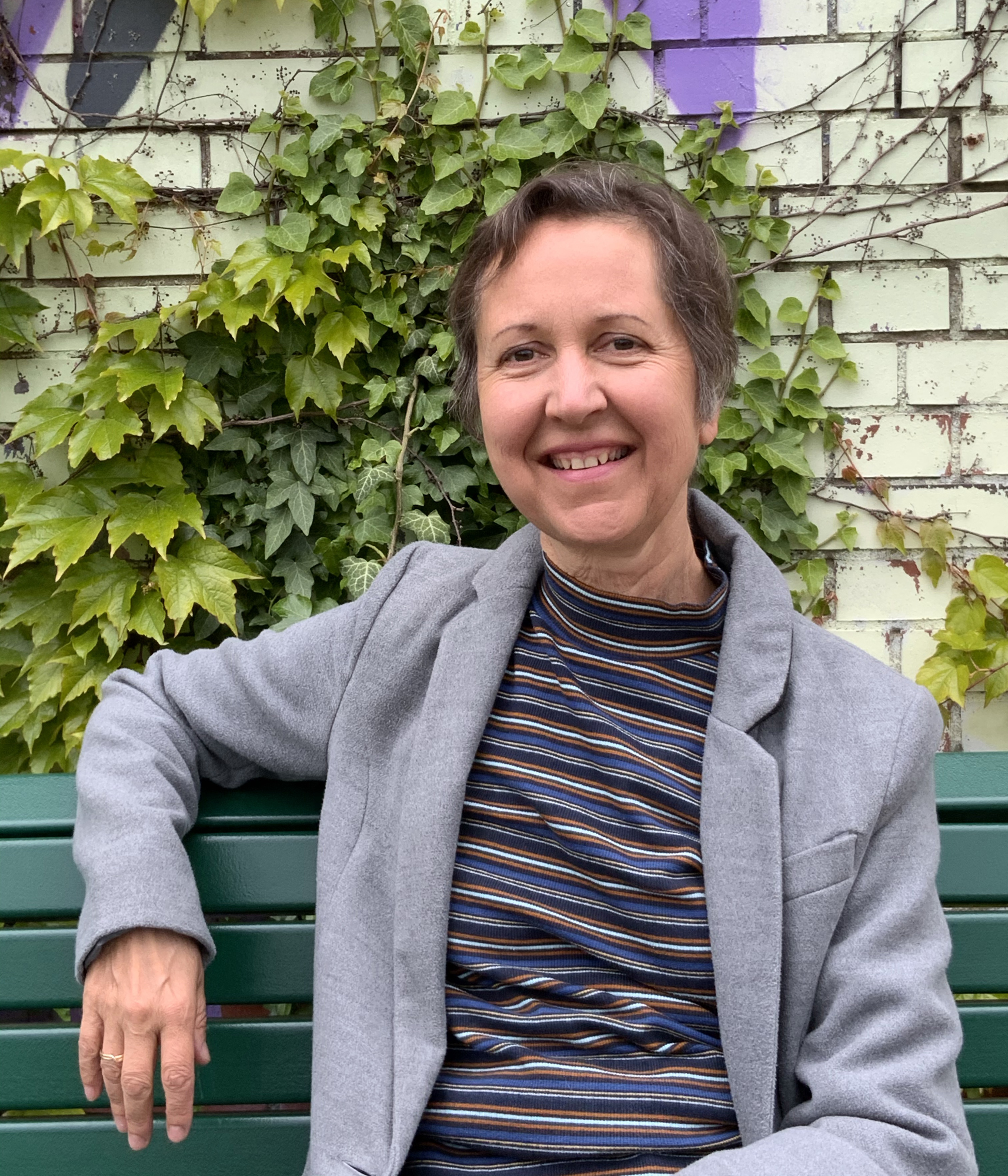
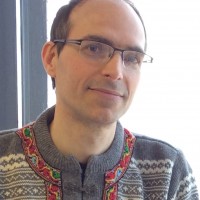
Robert Sharf is the D.H. Chen Distinguished Professor of Buddhist Studies in the Department of East Asian Languages and Cultures at the University of California, Berkeley . He also serves as Chair of the Numata Center for Buddhist Studies and Head Graduate Advisor for the Group in Buddhist Studies . With a PhD in Buddhist Studies from the University of Michigan (1995), he previously taught at McMaster University (1989-1995) and the University of Michigan (1995-2003). Research Interests: Medieval Chinese Buddhism (especially Chan) Japanese Buddhism Buddhist Art and Archaeology Ritual Studies Buddhist Modernism Philosophical Paradoxes Methodology in Religious Studies Critical Buddhist Discourse Publications & Collaborations: Author of Coming to Terms with Chinese Buddhism: A Reading of the Treasure Store Treatise (2002) Co-editor of Living Images: Japanese Buddhist Icons in Context (2001) Co-author of What Can’t Be Said: Contradiction and Paradox in East Asian Thought (2021) Co-author of How to Lose Yourself: An Ancient Guide to Letting Go (2025) Editor of Chinese translations of his works: Xiafu Chanxue zixuan ji and Xiafu Mijiao Yanjiu zixuan ji (2022) Academic Leadership: Director of the Group in Buddhist Studies Director of Religious Studies Chair of the Center for Buddhist Studies
Dr. Christopher Lucas is a Senior Lecturer in Arabic Linguistics at SOAS University of London, affiliated with the School of Languages, Cultures and Linguistics. He holds a BA in Arabic from SOAS and an MPhil and PhD in Linguistics from the University of Cambridge. Prior to his current role, he served as a Research Associate at the University of Cambridge and a British Academy Postdoctoral Fellow at SOAS. His research focuses on linguistic variation and change, particularly in Arabic and Maltese, examining topics like negation, definiteness, and contact-induced grammatical change. He actively supervises PhD students in Arabic/Maltese linguistics and grammatical change. Key publications include works on negation typology, Maltese phonology, and historical linguistics. Dr. Lucas has authored/co-authored books such as *The History of Negation in the Languages of Europe and the Mediterranean* and edited volumes on contact-induced change. His work bridges theoretical linguistics with empirical analysis, contributing to understanding language evolution through contact and historical processes. He is reachable at cl39@soas.ac.uk and office 447, Russell Square campus. Current research includes LADO applications in Arabic and Maltese language dynamics.
Aaron J. Koller is Professor of Near Eastern Studies at Yeshiva University. His scholarship bridges Semitic languages , Jewish intellectual history , and writing system evolution , with particular focus on ancient Hebrew and Aramaic contexts. Education: BA from Yeshiva University, PhD from Revel Graduate School (2009) Affiliations: Bye-Fellow at Cambridge University (2022-2023), Visiting Scholar at Oxford's Centre for Hebrew and Jewish Studies Research explores: Writing Systems : Evolution from cuneiform to alphabetic scripts , including vowel marking and word division mechanisms Dead Sea Scrolls : Reconstructing Persian period Aramaic literature and analyzing language contact between Hebrew and Aramaic Biblical Interpretation : Gender dynamics in Genesis narratives and ethical frameworks in Ezekiel and Deuteronomy Recent publications examine Qur'anic references to Mishnah , alphabetic order historiography , and ancient scribal practices . He has edited five academic volumes including Studies in Mishnaic Hebrew and Semitic, Biblical, and Jewish Studies in Honor of Richard Steiner . Key collaborations include research at Cambridge University , Oxford University , and with scholars like Steven Fine and Mordechai Cohen . His work has been featured in 38 academic books and 25 journal articles .
Ulrike Altendorf serves as Associate Professor of Contemporary English Language at Leibniz University Hannover's Faculty of Philosophy, where she holds multiple leadership positions including Head of the English Linguistics Department and Managing Director of the English Department (since 2021, and previously from 2012-2014). Her extensive administrative roles include Deputy Chair of the Audit Committee, Examination Officer for German and English Linguistics, and representation on the Doctoral Committee of the Faculty of Philosophy. Altendorf's research expertise centers on English language variation with particular focus on Estuary English, which has formed the cornerstone of her academic career since her 2001 doctoral dissertation at Heinrich Heine University Düsseldorf. Her scholarly approach bridges traditional dialectology with cognitive sociolinguistics, developing innovative frameworks like the perceptual prototype approach to language variation. She examines how ideology and social perception shape linguistic categorization, particularly in the contested case of Estuary English as a legitimate dialect category. Analysis of her publication record reveals consistent focus on language variation, with particular attention to British English dialects, accent studies, and the sociocultural dimensions of linguistic change. Her work demonstrates evolution from descriptive documentation of Estuary English features to theoretical contributions examining the cognitive and ideological processes behind dialect formation and recognition. Recent publications increasingly incorporate cognitive sociolinguistic perspectives while maintaining empirical grounding in phonetic and phonological analysis. Altendorf leads active research projects including 'Estuary English Revisited' and 'S Retraction,' examining sound changes in Southeastern England. Her scholarly influence extends through editorial work, including co-editing 'Cultural Issues in the Matrix of Applied Linguistics' (2020) and 'Australien Verstehen – Facetten eines Kontinents' (2010), demonstrating her commitment to interdisciplinary approaches in linguistic research.
Henrique Monteagudo Romero is a Professor of Galician and Portuguese Linguistics at the University of Santiago de Compostela , with research fellowships at the Institute of the Galician Language (USC) and the Center of General and Applied Linguistics (University of Coimbra, Portugal). He serves as Secretary of the Royal Galician Academy and co-director of Grial. Revista de Cultura Galega . Research Focus: History of the Galician language, sociolinguistics, glottopolitics, Galician-Portuguese lyric tradition, and medieval administrative writing International Experience: Visiting professor at universities in Lisbon, New York, Buenos Aires, São Paulo, California, and Uruguay Editorial Contributions: Scientific editor of Plurilingual Societies and Languages, Society and Politics collective works His recent work analyzes linguistic stereotypes in Galicia, language policy implementation post-1981 autonomy statute, and medieval manuscript reconstructions. He coordinates major Galician language research projects focusing on youth language dynamics and 20th-century sociolinguistic evolution.
Dr. Tarik Ćušić is a Research Fellow at the Institute of Language, University of Sarajevo, specializing in Bosnian language studies. He holds a Doctor of Linguistics (2021) and Master's degree focused on Parry-Lord collections, with foundational education from the Faculty of Philosophy, University of Sarajevo. Doctoral thesis: Language and graphic features of the Erlangen manuscript Master's thesis: The formula as an instrument for preserving Bosnian language typical features in Parry's epic poems Bachelor's degree in Bosnian/Croatian/Serbian language and literature Education at Gymnasium "Dobrinja" and Elementary School "Pofalići" His research spans historical linguistics (Erlangen manuscript analysis), oral literature (epic formulas in Parry-Lord collections), and terminology (orientalism retention mechanisms). Publications include a monograph on the Erlangen manuscript and 15 analytical papers on Bosnian dialects, formulaic structures, and cultural linguistics. Recent work examines dialect classification criteria and syntactic patterns in oral narration. Articles focus on epic poetry typology , loanword integration , and discourse analysis of Bosnian Muslim poems. His research connects linguistic preservation with Carpathian-Balkan dialectology and manuscript authenticity verification. Academic activities include: Erasmus+ visits to Heidelberg Slavistik Institute (2019/2017) for manuscript studies Participation in International Forum Bosnia conferences (2018/2017) Keynote on "Abbreviations in modern academic titles" at Sarajevo Bosnian Language Symposium (2022) Research fellowship at Erlangen University Library (2014)
Prof. Charles Boberg is an Associate Professor of Linguistics at McGill University, specializing in sociolinguistics, phonetics, and dialectology. He has conducted extensive research on linguistic variation in Canadian English, including regional phonetic and lexical differences. His work includes co-authoring the Atlas of North American English and authoring The English Language in Canada . Currently, he is co-editing the Handbook of Dialectology with John Nerbonne and Dominic Watt. Education: B.A. in Political Science and German (University of Alberta, 1986) Ph.D. in Linguistics (University of Pennsylvania, 1997) His research focuses on ethno-phonetic variation in Montreal English, the Canadian Shift, and language contact dynamics in bilingual regions like Quebec. He has pioneered methods for studying lexical variation through the North American Regional Vocabulary Survey. His recent projects at FRIAS involve exploring European dialectological frameworks to refine global dialectology studies. Key contributions include analyzing the emergence of new phonemes in Canadian English and documenting sociolinguistic patterns influenced by ethnicity and urbanization. His work bridges North American and European dialectology, emphasizing comparative methodologies and interdisciplinary collaboration.
Hans van de Velde is a Professor of Sociolinguistics at Utrecht University's Department of Languages, Literature and Communication and part of the Institute for Language Sciences . He also serves as a senior researcher at the Fryske Akademy , focusing on Frisian language studies. His research spans multiple areas including: Language variation and change Sociophonetics Standardization processes Minority languages Acoustic-phonetic analysis Language contact Recent scholarship highlights his work on: 2024 : Visible Vowels software for language transfer studies 2023 : Sociophonetics of rhotic sounds and Frisian-Dutch education policy 2022 : Frisian standardization and consonant analysis tools Contact: h.vandevelde@uu.nl
Karl G. Johansson is a Professor at the Department of Linguistics and Nordic Studies, University of Oslo, specializing in Old Norse and Celtic philology. His research focuses on medieval manuscript culture, textual transmission, and the interplay between orality and literacy in Scandinavian contexts from 1200–1500. Ongoing projects: Retracing the Reformation (Bible dissemination in medieval Scandinavia) Past projects: Vadstenaklostret's Manuscripts , Translation, Transmission and Transformation , Skaldic Mentalities Research Interests: Medieval manuscript culture, Norse literature, translation dynamics, skaldic poetry, literacy studies, textual standardization, and cultural memory. His work bridges philology, history, and digital humanities, emphasizing interdisciplinary approaches. Publication Trends: Recent outputs explore manuscript layering, textual mobility, and standardization processes in the North. Collaborative volumes with scholars like Line Cecilie Engh and Stefka Georgieva Eriksen highlight his role in Nordic medieval studies. Academic Contributions: Johansson has edited key handbooks and led initiatives for digitizing medieval Nordic sources. His collaborations span institutions in Denmark, Germany, and Norway, focusing on manuscript materiality and cultural transfer.
Alexandra N. Lenz is a Professor of German Linguistics at the University of Vienna and a Full Member of the Austrian Academy of Sciences. She serves as Director of the Austrian Centre for Digital Humanities and Cultural Heritage (ACDH-CH) and Spokesperson for the Collaborative Research Center 'German in Austria: Variation – Contact – Perception' (FWF F060). Her work spans dialectology, variationist linguistics, syntax, sociolinguistics, and digital humanities. Ph.D. in German Linguistics (University of Marburg, 2002) DFG Fellowship (1998–2001) Rosalind Franklin Fellowships (2005–2009) Her research focuses on Austrian German dialects, lexical variation, syntactic change, language contact, and the interplay between standard and non-standard varieties. She leads the LexAT21 project, analyzing 21st-century lexical variation in Austria, and explores diaglossic repertoires through corpus-based and experimental methods. Recent publications examine lexical dynamics in Austrian media during the pandemic, relativizer variation in Austria, and the evolution of possessive constructions. She has organized major conferences like ICLaVE12 and 'AI meets Humanities & Social Sciences' in 2025. Full Member, Austrian Academy of Sciences (2019) Elected Corresponding Member, Austrian Academy of Sciences (2013) Vidi-Grant (NWO, 2009) [unaccepted] Hugo-Moser-Prize (2009) Lenz mentors through networks like 'Sprachwissenschaftliche Dissertationsprojekte der Wiener Germanistik & Friends' and contributes to editorial boards of journals such as Zeitschrift für Dialektologie und Linguistik . Her leadership roles include chairing the ÖAW Research Department 'Linguistics' and co-founding initiatives like the 'Bairisch Across Borders' network. She directs labs and teams at ACDH-CH, focusing on digital humanities infrastructure and language variation corpora. Her work bridges traditional dialectology with computational methods, emphasizing Austria's unique linguistic landscape.
Heike Wiese is a Professor (W3) at Humboldt-Universität zu Berlin since 2019, holding the Chair for German in Multilingual Contexts within the Department of German Language and Linguistics. Previously, she held similar professorships at Universität Potsdam (2006-2019) and served as a Visiting Associate Professor at Yale University (2005-2006) through a Feodor-Lynen award. Her career began at Humboldt-Universität as a Lecturer (1993-1998) and Assistant Professor (1998-2005). She also worked as a Visiting Scholar at Brandeis University (1998-1999) via a DAAD postdoctoral stipend. Current research spans grammar-lexicon interactions, linguistic architecture, language variation/contact, and language ideologies. Her 2005 Susanne K. Langer Award recognized her foundational work on numerical cognition and language. Recent publications focus on multilingual communication, urban dialects, and emoji as discourse markers in digital German.
Lea Fischbach is a Research Fellow and PhD candidate at the Research Center Deutscher Sprachatlas (DSA) within the Faculty of German Studies and Arts at Philipps University of Marburg. She is employed in the long-term Regionalsprache.de project funded by the Academy of Sciences and Literature in Mainz and also contributes to the BMBF project AnDy . Since January 2021, she has been working at the DSA, initially as a student assistant before advancing to her current PhD candidate position under the supervision of Lucie Flek and Alfred Lameli. Her educational background includes both Bachelor's and Master's degrees in Informatics from Philipps University of Marburg. Her Bachelor's thesis focused on Efficient Serialization of Objects while her Master's thesis addressed Applied Learning Analytics Process Based on a Language Learning App , building upon an Android app she helped develop as part of a student team project. Lea's research centers on the classification of German dialects using audio recordings and deep learning techniques. Her work explores how deep learning can be optimized for dialect classification, which phonetic features are crucial for distinguishing between dialects, and how insights from both deep learning and phonetic analysis can be combined for enhanced classification. This research sits at the intersection of computational linguistics, speech processing, and dialectology, with particular focus on German dialects and low-resource audio data scenarios. Her technical approach integrates programming expertise with linguistic knowledge to develop practical solutions for dialect recognition challenges. Her publications demonstrate a strong focus on practical applications of deep learning to dialect classification challenges. She has explored voice conversion techniques for data augmentation, analyzed the importance of acoustic features in deep learning models, compared speaker diarization approaches for German dialectal speech, and contributed to digital language geography projects. Her work consistently addresses the challenges of working with limited dialectal data and seeks to improve classification accuracy through innovative technical approaches that minimize speaker-related variability while highlighting dialect-specific features. At Philipps University of Marburg, Lea has served as a tutor teaching courses in programming, technical informatics, and database systems. During her time at the DSA, she has contributed to various projects including the creation of the Hessenplattform and developed the second version of the Welcome to Bavaria app, a language guide for Bavarian dialects. Her technical work bridges the gap between computational methods and traditional linguistic research, creating practical tools for dialect documentation and analysis. Her research is conducted within the Research Center Deutscher Sprachatlas, a leading institution for German dialect research that provides both the theoretical framework and computational resources for her technical investigations into dialect classification. She actively participates in international conferences including Interspeech, ACL, and NoDaLiDa, presenting her work on deep learning pipelines for dialect recognition and the challenges in developing technical solutions for dialect classification tasks.
Erik Anonby is a Professor in the Department of French at Carleton University, with research spanning French linguistics, African French, Canadian French, and prosodic phonology. He employs the Nunaliit Atlas Framework for language mapping in Iran, focusing on Kumzari, Persian-Luri-Kurdish continuum, and Gulf dialects. Litt.D. (Leiden), M.L.E. (TWU/UQAC), B.A. (TWU) His research interests include: Phonological variation in Canadian and African French Documentation of endangered languages (Kumzari, Mambay, Lori) Language mapping and ecological modeling in Iran Arabic-Persian language contact in the Strait of Hormuz Recent publications address language distribution in Iran, stress-induced phonological changes in Kumzari, and lexicon/grammar of Mambay and Bakhtiari languages. Grants include SSHRC funding for Iranian language atlases and Carleton research awards.
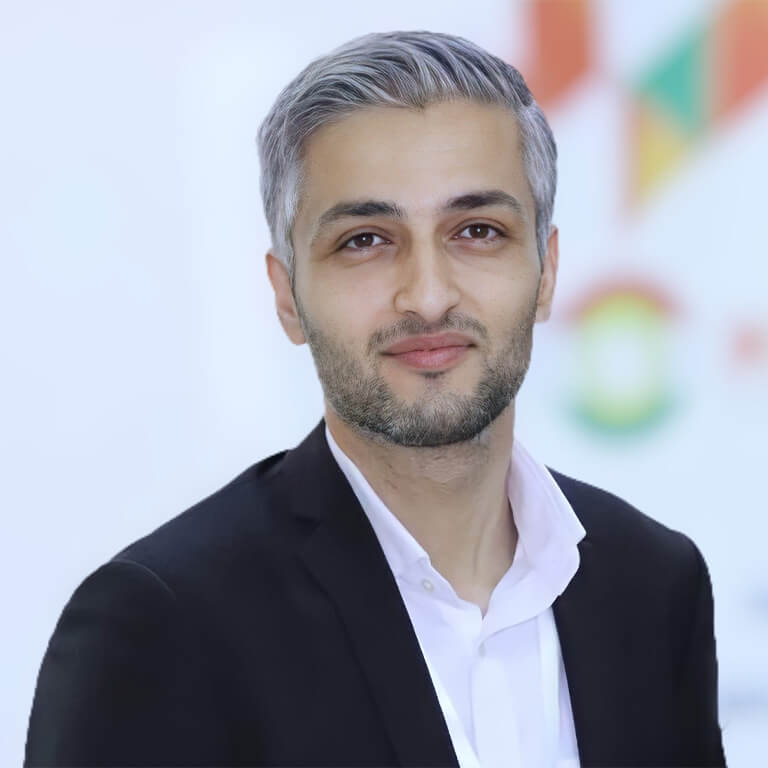
Hewa S. Khalid is a Lecturer in the Department of Central Eurasian Studies at Indiana University , affiliated with the Hamilton Lugar School . He serves as a Visiting Lecturer and Kurdish Language Developer, focusing on Central/Sorani and Northern/Kurmanji Kurdish dialects. PhD , Social Sciences Institute, Dicle University (2019) MA , Institute of Arab and Islamic Studies, University of Exeter (2013) BA , Department of Kurdish Language and Literature, Koya University (2009) Khalid's research explores Kurdish language development , dialect standardization , and second language teaching methods . His work addresses geographical dialects , language contact , and grammatical structures , with recent publications examining educational practices in Iraqi Kurdistan and comparative cultural studies between Kurdish and Persian traditions. His selected publications (2015-2021) highlight trends in Kurdish linguistics , language policy , and pedagogical innovation . He has contributed to academic journals like Kurdiname and Journal of Ethnic and Cultural Studies , as well as edited volumes on Kurdish language and education. Contact: hekhalid@iu.edu | Location: Global and International Studies Building, 3023, Indiana University, Bloomington, IN
JULIO CESAR SOUSA FERNANDEZ is a Full Professor at the Department of Galician Philology, Faculty of Philology, University of Santiago de Compostela. He is affiliated with the Galician Language Institute (ILG) and part of the FILGA research group (Galician Philology and Linguistics). His doctoral thesis (1998) focused on diachronic analysis of verb constructions in Galician, supervised by Dr. Rosario Álvarez Blanco. Research interests center on Galician dialectology, historical linguistics, and geolinguistic methodologies. He specializes in lexical variation, language contact phenomena, and the digitization of linguistic atlases. Key projects include the digital edition of the Atlas Lingüístico de la Península Ibérica and quantitative analyses of Galician dialectometry.