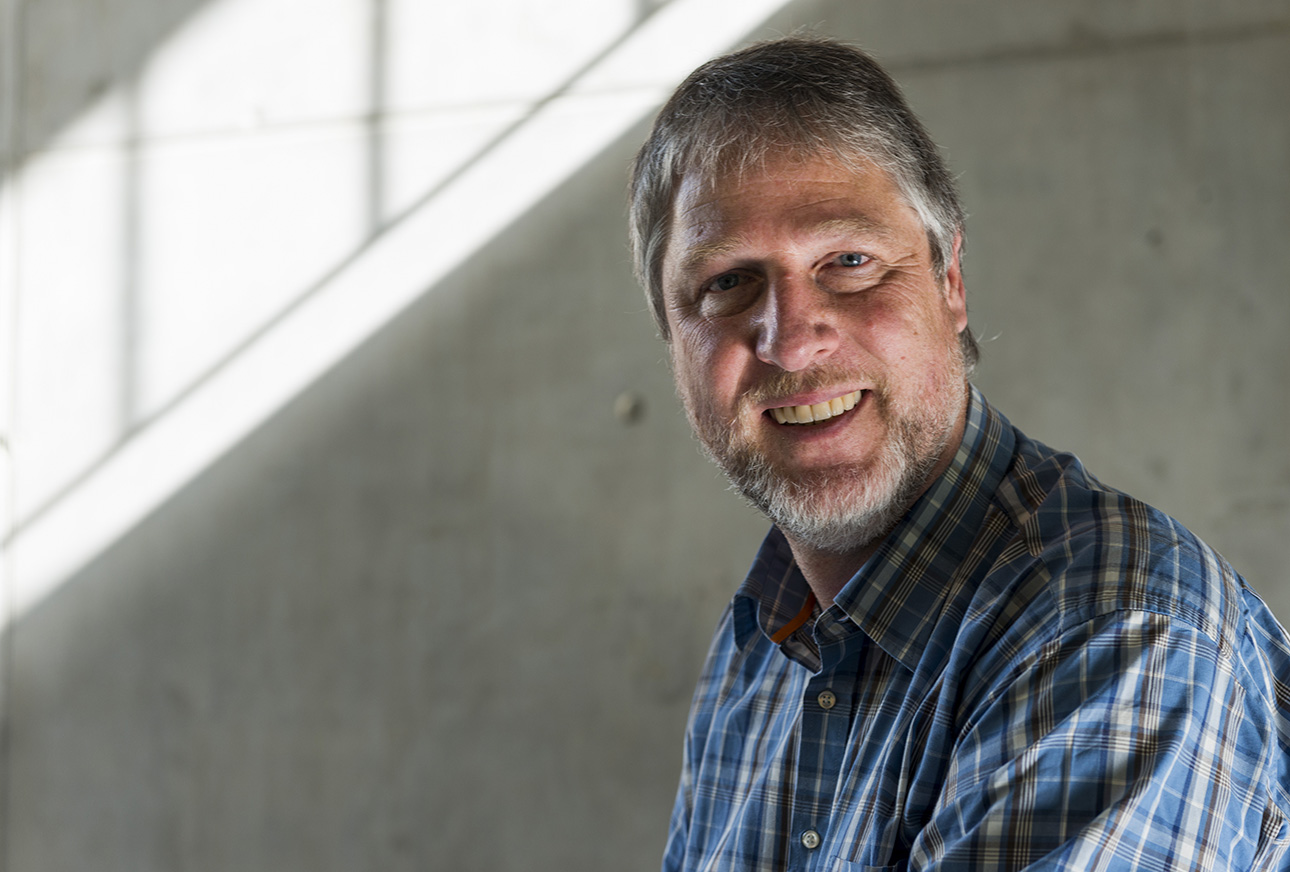
Professor Bernd Möbius is a leading academic in Phonetics and Phonology at the Department of Language Science and Technology, Saarland University. His research bridges phonetic theory with speech technology applications, focusing on text-to-speech systems, prosody modeling, and computational simulations of speech processes. Current research projects: DFG SFB 1102, C1: Information density and phonetic structure predictability DFG SFB 1102, C4: Slavic intercomprehension and surprisal theory (INCOMSLAV) Research Themes: Key areas include text-to-speech synthesis, speech prosody analysis, experimental methods in speech production/perception, information density in phonetics, and cross-linguistic studies of Slavic-Germanic languages. Scientific Contributions: Recent work explores Parkinson-induced dysarthria detection, breath noise acoustics, surprisal-driven speech behaviors, multilingual BERT models for idiomaticity, and perceptual consequences of acoustic adjustments.
Professor Alexander Ilin-Tomich serves as an Acting Professor at the Institute of Egyptology within the Department of History and Cultural Studies at the Free University of Berlin. His academic career spans multiple prestigious institutions including Johannes Gutenberg-Universität Mainz and the Russian Academy of Sciences. His educational background includes: 2022: Habilitation in Egyptology at Johannes Gutenberg-Universität Mainz with thesis "Egyptian name scarabs from the 12th to the 15th Dynasty: Geography and chronology of production" 2007-2011: Doctoral studies at Lomonosov University Moscow, earning "kandidat istoriceskich nauk" (equivalent to PhD) 2002-2007: Undergraduate studies in Ancient History (including Egyptology) at Lomonosov University Moscow Professor Ilin-Tomich specializes in Egyptian stelae, offering tables, scarabs, personal names, prosopography, and administration during the Middle Kingdom and Second Intermediate Period. His research combines philological, archaeological, and historical approaches to examine ancient Egyptian society, with particular focus on administrative structures, material culture, and regional variations. His work on scarab production and distribution has established him as a leading expert in this specialized field. His publication record demonstrates consistent focus on Middle Kingdom administration, with recent expansion into material analysis of Egyptian blue pigment and methodological approaches to studying small archaeological finds. He has developed significant digital resources including the open-access "Personen und Namen des Mittleren Reiches" database. Professor Ilin-Tomich has secured multiple competitive research grants: Fritz Thyssen Foundation project "Ancient Egyptian titles in official and familial contexts, 2055-1352 BC" (2021-2024) Fritz Thyssen Foundation project "Transformation and variability in the corpus of ancient Egyptian personal names 2055-1550 BC" (2017-2021) Alexander von Humboldt Foundation postdoctoral fellowship (2015-2017) Russian Foundation for the Humanities research grant (2013-2015) He actively contributes to the academic community through editorial work, including co-editing the 2023 Festschrift "Schöne Denkmäler sind entstanden. Studien zu Ehren von Ursula Verhoeven," and has established himself as a key researcher in Middle Kingdom studies through his monographs and numerous journal articles.
Shrikanth (Shri) Narayanan is University Professor and Niki & C. L. Max Nikias Chair in Engineering at the University of Southern California (USC), with appointments spanning Electrical & Computer Engineering, Computer Science, Linguistics, Psychology, Neuroscience, Pediatrics, and Otolaryngology-Head & Neck Surgery. He serves as Research Director of the Information Sciences Institute and Director of the Ming Hsieh Institute. PhD in Electrical Engineering (UCLA, 1995) Engineer and MS in Electrical Engineering (UCLA, 1992 and 1990) BE in Electrical Engineering (Anna University, India, 1988) His interdisciplinary research focuses on human-centered signal processing and machine intelligence , addressing societal challenges in health, education, defense, and media arts. Key areas include: Behavioral signal processing Affective computing Multimodal signal processing Computational speech science Biomedical applications Scientific Awards : IEEE James L. Flanagan Speech and Audio Processing Award (2025) Edward J. McCluskey Technical Achievement Award (2024) ISCA Medal for Scientific Achievement (2023) Claude Shannon-Harry Nyquist Technical Achievement Award (2023) ACM ICMI Sustained Accomplishment Award (2020) USC Distinguished Faculty Service Award With over 1,000 publications and 19 patents , his work has been commercialized through startups like Behavioral Signals Technologies and Lyssn . He leads transformative university initiatives and has served in editorial roles for top journals including Computer Speech and Language and IEEE Transactions on Affective Computing .
Dr. Jacek Kudera is a post-doctoral researcher in the Department of Phonetics at the University of Trier, coordinator of the LODinG project at the Trier Center for Digital Humanities, and adjunct faculty at WSB Merito University in Wrocław. His work bridges phonetics, Slavic linguistics, digital humanities, and forensic speech science. Education 2022 – PhD, Department of Language Science and Technology, Saarland University, Germany 2019 – MA (Linguistics), Department of Linguistics, Cognitive Science and Semiotics, Aarhus University, Denmark 2015 – Magister (Slavic Philology), Institute of Slavic Studies, University of Wrocław, Poland Research Interests His research focuses on phonetic and prosodic aspects of Slavic languages , cross-linguistic speech perception , forensic automatic speaker recognition , and human-robot interaction . He employs experimental methods such as eye-tracking, articulatory measurements (EMA), and large-scale digital corpora to investigate how speakers of closely related languages understand one another and how machines can replicate or support this process. Publication Trends Across more than 25 peer-reviewed articles (2014-2025), Kudera has consistently explored Slavic intercomprehension , speech technology evaluation , and digital humanities infrastructure . Recent work (2024-2025) targets voice cloning security , linked open data for linguistics , and mismatch conditions in forensic speaker recognition . Scientific Awards & Fellowships Visegrad Fellowship, University of Presov (2025) Erasmus+ Fellowships (Ostrava 2025, Zagreb 2014, Rijeka 2012-2013) NAWA Fellowship, Polish Academy of Sciences (2022) Nordlys Fellowship, University of Eastern Finland (2018-2019) CEEPUS & additional Central-European mobility grants (2014-2018) Projects & Funding Coordinator : “Mismatch conditions in machine speaker identification” (University of Trier Research Fund, 2024-2025) Coordinator : LODinG – Linked Open Data in the Humanities (Trier Center for Digital Humanities, ongoing) Coordinator : “Patterns: Linguistic Creativity and Variation” (Trier Center for Language and Communication, 2022-2024) Member : SFB 1102 “Information Density and Linguistic Encoding” (Saarland University, DFG, 2019-2022) Member : Digital Atlas of Dialects of Bosnia and Herzegovina (2017-2018) Member : CLARIN-PL & European Roadmap for Research Infrastructures (2014-2017) Labs & Teams He conducts research within the Phonetics Team at the University of Trier , collaborates closely with the Trier Center for Digital Humanities , and maintains affiliations with the Phonetics Group at Saarland University and the WSB Merito University in Wrocław.
Prof. Dr. Angelika Braun is a full Professor of Phonetics at the University of Trier since October 2009, with a career spanning forensic phonetics, sociophonetics, and cross-cultural speech analysis. She previously held roles at the Bundeskriminalamt (Wiesbaden/Düsseldorf) and Philipps-Universität Marburg, where she habilitated in Phonetics and Speech Processing (2000). Her work bridges academic research with forensic practice. Research Focus: Her Sociophonetics (language and emotions, gender-specific speech) Forensic Phonetics (speaker identification, voice analysis) Contrastive and Hawaiian Phonetics Speech prosody and toxin effects (smoking, alcohol) Intercultural dubbing studies Academic Contributions: Over 15 recent articles explore voice quality, emotional speech, forensic age estimation, and cross-cultural dubbing effects. Key conferences include Interspeech, International Congress of Phonetic Sciences, and ISCA. Her work appears in journals like Forensic Linguistics and The Phonetician . Scientific Honors: Fellow of the American Academy of Forensic Sciences (AAFS) Founder Member and former Chairperson of the International Association for Forensic Phonetics (IAFP) Life-Member of the International Phonetic Association (IPA) Leadership roles in ISPhS and GAL Practical Impact: Developed the Almeida-Braun Transcription System for dialect analysis and contributed to forensic audio enhancement protocols (e.g., Rodney King case). Serves as reviewer for Language and Speech , Forensic Linguistics , and JIPA . Collaborates on longitudinal studies of vocal aging and speaker identification.
Univ.-Prof. Dr. Damaris Nübling is a full Professor of Historical Linguistics of German at Johannes Gutenberg University Mainz, holding the Chair since April 1, 2000. She is affiliated with the Faculty of Philosophy and Philology, specifically within the Department of Historical Linguistics of German. Her research spans several interconnected areas of linguistics, with primary focus on Onomastics (name research) , Gender Linguistics , Morphological Change , and Dialectology . Her work investigates the grammar of proper names, gender assignment in language, morphological irregularity across Germanic languages, and linguistic indicators of language change. Nübling's publications reveal strong trends in gender linguistics and onomastics, with significant contributions to understanding how language reflects and shapes gender identity, particularly in German. Her recent work focuses on neutral gender assignment of female terms and names, linguistic negotiation of parenthood, and the self-naming practices of transgender individuals. Teaching Award of the University of Mainz (2002) Academy Prize of the State of Rhineland-Palatinate (2013) Konrad Duden Prize (2014) Professor Nübling leads multiple third-party funded research projects, including the German Surname Atlas (DFA), the Digital Surname Dictionary of Germany (DFD), and projects within the DFG Research Unit "Un/doing Differences. Practices of Human Differentiation." She serves on numerous advisory boards including the Scientific Advisory Board of the Institute for German Language in Mannheim, the Society for German Language (GfDS), and the DFG Review Board for Linguistics. She directs research teams focused on onomastics and gender linguistics, with the namenforschung.net website providing an overview of her onomastic projects. Her collaborative work extends internationally, including projects with institutions in Switzerland, Luxembourg, and Sweden.
Ahmed Abdelali is a prominent researcher at Hamad Bin Khalifa University's Qatar Computing Research Institute (QCRI), where he works in the Arabic Language Technologies department. With 97 publications spanning from 2004 to 2024, he has established himself as a leading figure in Arabic natural language processing research. His work has been presented at major conferences including ACL, EMNLP, EACL, and specialized Arabic NLP venues. Dr. Abdelali's research focuses on several key areas within Arabic computational linguistics, with particular emphasis on Arabic language technologies. His work spans Arabic dialect identification, diacritization, machine translation, offensive language detection, and part-of-speech tagging. In recent years, he has been at the forefront of adapting large language models for Arabic language processing, contributing significantly to benchmarking frameworks like LAraBench and LLMeBench that evaluate Arabic language models' performance. His publication record shows consistent high-impact contributions, with notable collaborations with researchers including Hamdy Mubarak (45 co-authored papers), Kareem Darwish (38 co-authored papers), and Nadir Durrani (26 co-authored papers). Recent work has focused on large language models for Arabic, cross-lingual spaces, and benchmarking frameworks to advance Arabic AI capabilities. His research bridges theoretical advances with practical applications, particularly in processing the linguistic complexities of Arabic and its dialects. Through his leadership in developing resources like the Farasa segmenter and contributions to major Arabic NLP conferences, Dr. Abdelali has played a pivotal role in establishing the infrastructure and community for Arabic language technology research.
Liang Zhao is a Professor in the Department of Computer Science at Harbin Institute of Technology's School of Computer Science and Technology. His research spans multiple areas of natural language processing, artificial intelligence, and machine learning, with a particular focus on large language models, graph neural networks, and explainable AI systems. His research interests include natural language processing, graph neural networks, large language models, model explainability, federated learning, sparse attention mechanisms, hallucination mitigation, transformer length extrapolation, and uncertainty quantification. His work addresses fundamental challenges in modern AI systems, particularly in improving the reliability, efficiency, and interpretability of large language models. Professor Zhao's research output shows a clear trend toward addressing critical limitations in large language models, with recent work focusing on hallucination mitigation, model attribution, uncertainty quantification, and efficient attention mechanisms. His publications demonstrate strong interdisciplinary connections between NLP, machine learning theory, and practical system implementation. Through his extensive collaboration network with researchers including Xiaocheng Feng, Bing Qin, Weihong Zhong, and Yuntong Hu, Professor Zhao has established himself as a leading researcher in the Chinese NLP community. His work appears consistently in top-tier conferences including ACL, EMNLP, and NAACL.
Christine Paul serves as a Scientific Associate in the Department of German Didactics within the Department of Education and Psychology at Freie Universität Berlin, specializing in linguistic and cultural education. Currently on leave while fulfilling duties at Technische Universität Dresden, her expertise spans multilingual pedagogy, German as a second language, and conversation analysis, with significant contributions to corpus linguistics through the Wendekorpus project documenting German reunification narratives. Education: PhD in Linguistics (2016), Freie Universität Berlin First State Examination in German and Spanish (2006), Freie Universität Berlin Graduate Fellowship, Evangelisches Studienwerk Villigst (2009-2013) Study Abroad, Pontificia Universidad Católica del Peru, Lima (2001-2002) Research Focus: Dr. Paul investigates multilingual identity construction in educational settings, analyzing how students navigate spoken vs. academic language varieties through conversation analysis and cognitive linguistics frameworks. Her work bridges theoretical linguistics with classroom practice, particularly examining meaning negotiation in multilingual dialogues and historical language shifts in post-reunification Germany, often utilizing corpus-based methodologies to reveal subtle pragmatic patterns. Publication Evolution: Early career works (2010-2015) established her expertise in temporal inference and retrospective utterances within conversation analysis. Recent publications (2019-2023) demonstrate strategic expansion into digital education spaces and multilingual identity, culminating in 2023's examination of linguistic diversity on school websites. Her research consistently centers on language as a tool for identity construction within institutional contexts, with growing emphasis on intersectional factors like gender and migration background. Academic Engagement: As co-developer of the Wendekorpus audio archive and contributor to the Learning and Research Workshop for Literary Education, she actively shapes pedagogical resources. Her 2024 conference presentation on multilingual female students' self-identification continues her trajectory of connecting linguistic theory to real-world educational challenges through empirical discourse analysis.
Lea Fischbach is a Research Fellow and PhD candidate at the Research Center Deutscher Sprachatlas (DSA) within the Faculty of German Studies and Arts at Philipps University of Marburg. She is employed in the long-term Regionalsprache.de project funded by the Academy of Sciences and Literature in Mainz and also contributes to the BMBF project AnDy . Since January 2021, she has been working at the DSA, initially as a student assistant before advancing to her current PhD candidate position under the supervision of Lucie Flek and Alfred Lameli. Her educational background includes both Bachelor's and Master's degrees in Informatics from Philipps University of Marburg. Her Bachelor's thesis focused on Efficient Serialization of Objects while her Master's thesis addressed Applied Learning Analytics Process Based on a Language Learning App , building upon an Android app she helped develop as part of a student team project. Lea's research centers on the classification of German dialects using audio recordings and deep learning techniques. Her work explores how deep learning can be optimized for dialect classification, which phonetic features are crucial for distinguishing between dialects, and how insights from both deep learning and phonetic analysis can be combined for enhanced classification. This research sits at the intersection of computational linguistics, speech processing, and dialectology, with particular focus on German dialects and low-resource audio data scenarios. Her technical approach integrates programming expertise with linguistic knowledge to develop practical solutions for dialect recognition challenges. Her publications demonstrate a strong focus on practical applications of deep learning to dialect classification challenges. She has explored voice conversion techniques for data augmentation, analyzed the importance of acoustic features in deep learning models, compared speaker diarization approaches for German dialectal speech, and contributed to digital language geography projects. Her work consistently addresses the challenges of working with limited dialectal data and seeks to improve classification accuracy through innovative technical approaches that minimize speaker-related variability while highlighting dialect-specific features. At Philipps University of Marburg, Lea has served as a tutor teaching courses in programming, technical informatics, and database systems. During her time at the DSA, she has contributed to various projects including the creation of the Hessenplattform and developed the second version of the Welcome to Bavaria app, a language guide for Bavarian dialects. Her technical work bridges the gap between computational methods and traditional linguistic research, creating practical tools for dialect documentation and analysis. Her research is conducted within the Research Center Deutscher Sprachatlas, a leading institution for German dialect research that provides both the theoretical framework and computational resources for her technical investigations into dialect classification. She actively participates in international conferences including Interspeech, ACL, and NoDaLiDa, presenting her work on deep learning pipelines for dialect recognition and the challenges in developing technical solutions for dialect classification tasks.
Cristina España-Bonet is a researcher at the Department of Computer Science (CS) in the Polytechnic University of Catalonia (UPC), where she works in the Natural Language Processing (GPLN) group. Previously, she was affiliated with the University of Barcelona (UB) in the Department of Astronomy and Meteorology (DAM), where she completed her PhD in Cosmology. Her research spans both Natural Language Processing and Cosmology , with a strong focus on Machine Translation and Multilingual Systems . Her work in NLP includes: Statistical and Hybrid Machine Translation Document-level Translation Multilingual Information Retrieval Sign Language Translation Low-resource Language Processing She has contributed to major projects such as: OPENMT MOLTO TACARDI Wikiparable Her research has produced significant resources including: Wikipedia-based comparable corpora Hybrid translation systems for patents Stopword lists for Occitan Sign language translation systems
Prof. Dr. Simon Neuberg is a faculty member at the University of Trier , affiliated with the Department of German Studies and specializing in Yiddish Studies . His academic career spans decades, with a Doctorate (1995) and Habilitation (1999) focusing on Yiddish language and literature. Currently, he maintains regular office hours (Wednesdays 14:00-15:00) and collaborates with international scholars. Research Interests: Historical Development of Yiddish Lexicography and Etymology Literary Analysis of Jewish Texts Language Contact and Bilingualism Dialectology of Yiddish Dialects Philological Studies Recent Publications show consistent contributions to Yiddish linguistics, lexicography, and literary analysis from 1997-2024. Collaborations with Yitskhok Niborski and others resulted in multiple editions of Yiddish-Hebrew-Aramaic dictionaries and studies on adjective formation, medical texts, and historical narratives. His work spans monographs, text editions, and articles in Jiddistik-Mitteilungen and other journals.
Melanie Weirich is a Professor and Senior Researcher at the Leibniz-Zentrum Allgemeine Sprachwissenschaft (ZAS) , Berlin. She contributes to the DFG project C02 'Variation in situated interaction' within the CRC 1412 Register: Language-Users' Knowledge of Situational-Functional Variation. Her work intersects phonetics, sociolinguistics, and multimodal speech research. Research Focus: Register variation, f0 modulation, acoustic-phonetic modeling, social meaning of speech. Methodology: Virtual reality experiments, mobile app elicitation, corpus-based analysis (e.g., German Plapper Corpus). Recent publications analyze gender-based f0 variation, vowel dispersion, pause patterns, and multimodal cues in speech. Her work has been presented at major phonetics conferences like Interspeech, ICLAVE, and DGfS. She received the prestigious Heisenberg-Professorship (2021) for her research on phonetic-sociolinguistic interfaces. Scientific Awards: Heisenberg-Professorship (2021) She collaborates with Stefanie Jannedy, Daniel Duran, and other researchers in the CRC 1412 network, contributing to laboratory phonology and speech technology innovation.
Prof. Dr. Hanna Fischer is a Professor of German Linguistics at the Institute of German Studies, University of Rostock, within the Faculty of Philosophy. Her work focuses on the intersection of historical linguistics, dialectology, and language variation, with particular expertise in German temporal forms and regional language phenomena. She leads research on Low German in Mecklenburg-Western Pomerania and directs several digital humanities projects that bridge traditional linguistic research with modern computational approaches. Dr. Fischer's research interests span multiple dimensions of German linguistics. She has made significant contributions to understanding the Präteritumschwund (decline of the preterite tense) in German dialects, examining how this grammatical shift has occurred across different regions and historical periods. Her work on temporal forms and aspectuality has provided new insights into the relationship between standard language and regional varieties. She is particularly known for her innovative approach to digital dialectology , creating citizen science projects that engage the public in language documentation. Her research on Low German has resulted in the development of the Digital Low German Atlas for Mecklenburg-Western Pomerania (DiNA), a groundbreaking resource for regional language preservation. Analysis of Dr. Fischer's recent publications reveals a clear trajectory toward increasingly interdisciplinary research that combines traditional linguistic methods with digital humanities approaches. Her work demonstrates growing emphasis on computational linguistics techniques applied to historical language data, particularly through projects like "Abrogans:alienatus," a digital edition of the oldest German dictionary. There's also a pronounced trend toward applied linguistics , with significant attention to how linguistic research can inform teacher education and classroom practice, as evidenced by her "Sprachvariation@Schule" platform. Her research increasingly incorporates cross-disciplinary perspectives from sociology, history, and computer science to address complex questions about language variation and change. Dr. Fischer actively mentors doctoral students and has established a robust research environment that includes multiple research assistants and student collaborators. She leads the Office "Low German in Mecklenburg-Western Pomerania" and organizes the Rostock Linguistic Colloquium (RoLiKo), which brings together linguists from various disciplines to discuss current research. Her team includes research assistants, doctoral students working on projects like "Dynamics and Stability of Linguistic Representations," and numerous student assistants who contribute to her various research initiatives. Among her notable projects are the Digital Low German Atlas for Mecklenburg-Western Pomerania (DiNA), the "Abrogans:alienatus" digital edition of the oldest German dictionary, and "Sprachvariation@Schule," a platform designed to incorporate language variation into German language teaching. She also developed the "Welcome to Bavaria" phrasebook app and "GrammatikPro" online language skills tests. Her research frequently involves collaboration with institutions across Germany and internationally, as evidenced by her partnership with the Institute for Cultural Research Graubünden in Switzerland.
Christopher Cieri is a prominent researcher in computational linguistics and speech technology, affiliated with the Linguistic Data Consortium (LDC). His work spans three decades, focusing on large-scale language resource development, speaker recognition, and interdisciplinary collaborations between linguists and technology developers. 30+ years of contributions to LDC's infrastructure Key roles in autism spectrum disorder research via speech analysis Leveraging citizen science platforms like LanguageARC His research has produced groundbreaking datasets such as the Greybeard Longitudinal Speech Study and the SAFE-T Corpus, with applications in forensic voice analysis, public safety communications, and clinical diagnostics. Cieri's publications reflect trends in machine translation, dialectology, and multimodal event detection, often working alongside collaborators like Mark Liberman and Kevin Walker. Recent projects emphasize cross-disciplinary challenges, including: Metadata interoperability Data management plans Intellectual property frameworks Low-cost corpus creation models