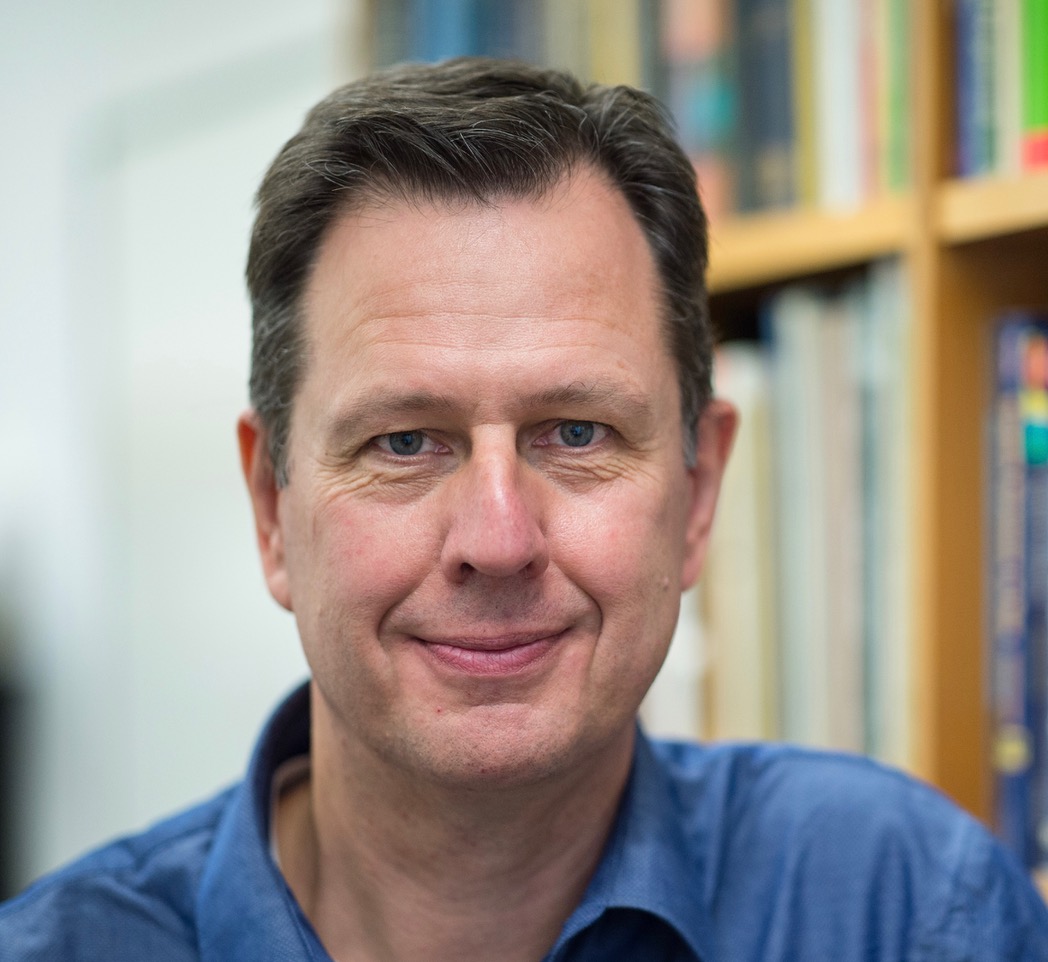
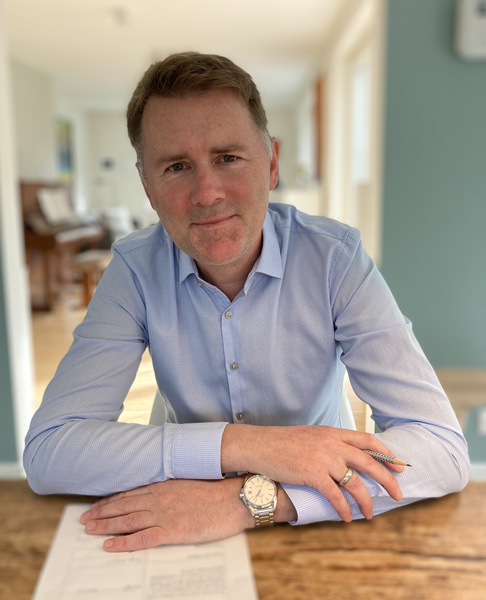
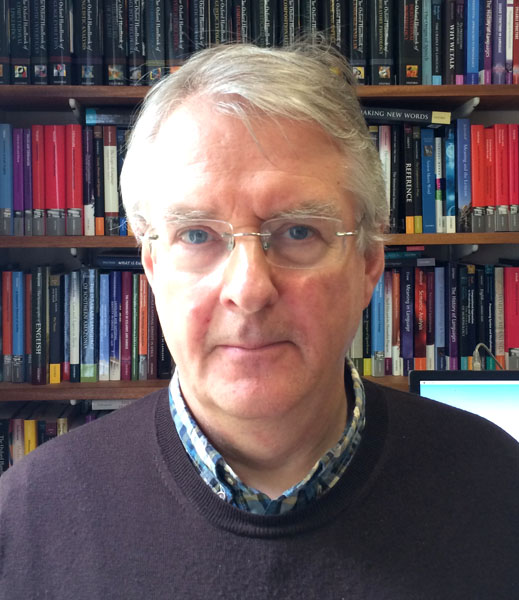
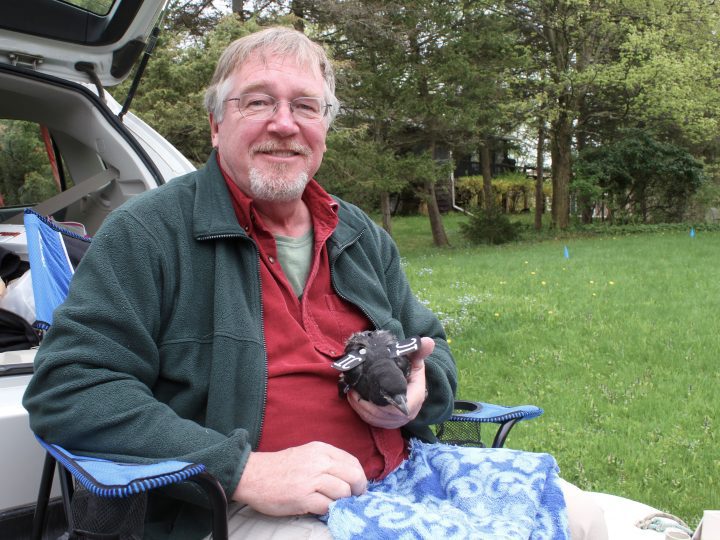
Bas Aarts is a Professor of English Linguistics at the Department of English , University College London (UCL), where he has worked since 1989. He served as Vice-Dean for Innovation and Enterprise in UCL's Faculty of Arts and Humanities (2016–2022) and as Director of the Survey of English Usage (1997–present). Professor of English Linguistics (2003–present) Director of Survey of English Usage (1997–present) International Society for Linguistics of English - Vice-President (2007–2012) Research Interests: His work spans corpus linguistics , syntax , language change , and grammar pedagogy . Recent publications focus on grammatical constructions, verbal structures, and educational interventions. Scientific Awards: Founding Editor of English Language and Linguistics (Cambridge University Press) (1997) UK Government Advisor for grammar teaching in schools (2014–2018) Member of the Council of the Philological Society (2015–2018) International Society for Linguistics of English - Vice-President (2007–2012) Publications: His 15 most recent works highlight expertise in grammatical theory, corpus-based language change, and pedagogical frameworks. Key topics include syntactic gradience, verb phrase evolution, and oblique constructions in English.
Martin Hilpert is a Professor of English Linguistics at the University of Neuchâtel, Switzerland, where he has been employed since 2012. He currently serves as Vice-Recteur Enseignement (Vice President for Education) at the university, having previously served as Head of the Institute of English Language and Literature from 2012-2020. His academic career includes positions as Junior Fellow at the Freiburg Institute for Advanced Studies (2008-2012) and postdoctoral work at the International Computer Science Institute in Berkeley. Hilpert's educational background includes: MA in English Linguistics from Universität Hamburg (1997-2003) PhD in Linguistics from Rice University (2003-2007) Habilitation at Albert-Ludwigs-Universität Freiburg (2012) His research focuses on corpus linguistics, grammaticalization, usage-based linguistics, construction grammar, and cognitive linguistics. Hilpert approaches language as a dynamic system shaped by usage patterns, examining how linguistic constructions evolve over time through corpus-based analysis. His work bridges theoretical linguistics with empirical methodology, particularly through the application of quantitative techniques to historical language data. He has made significant contributions to understanding how grammatical constructions change while maintaining functional coherence across centuries of language use. Hilpert's publication record demonstrates consistent productivity across multiple formats: 4 monographs including highly cited works on construction grammar and diachronic linguistics 30 peer-reviewed journal articles 41 book chapters 10 edited volumes and special journal issues His scholarly impact is evidenced by 3,941 Google Scholar citations, an h-index of 28, and an i10-index of 53. His 2019 textbook "Construction Grammar and its application to English" has received 643 citations, while his 2013 monograph "Constructional Change in English" has 435 citations. Hilpert has received significant recognition including: The 2018 Credit Suisse Award for Best Teaching at the University of Neuchâtel Two competitive Swiss National Science Foundation grants totaling over CHF 924,000 Leadership roles as President of the Societas Linguistica Europaea (2016) and Vice-President for Research of ISLE (2013-2020) His international scholarly engagement is extensive, having served on dissertation committees across eight countries, provided tenure review expertise for universities worldwide, and delivered conference keynotes on five continents. Hilpert has organized major international events including the 2019 ICAME Conference and the 2017 Doctoral Summer School of the Societas Linguistica Europaea. His research network spans collaborations with scholars from Germany, Sweden, Belgium, Poland, France, UK, and USA, reflecting his position at the center of European and global linguistics research communities.
Martin Maiden is a Statutory Professor of the Romance Languages at the University of Oxford and a Fellow of Trinity College, Oxford. Previously, he held positions as a Lecturer in Romance Philology at the University of Cambridge (1989–1996) and a Lecturer in Italian at the University of Bath (1982–1989). He earned his PhD in Linguistics from the University of Cambridge (1987) and an MPhil in Linguistics (1981). Education : M.A., Modern and Medieval Languages, Trinity Hall, Cambridge (1976–1982) MPhil, Linguistics, University of Cambridge (1981) PhD, Linguistics, University of Cambridge (1987) His research focuses on Romance linguistics, particularly Romanian and Italian languages, morphological theory, historical linguistics, and dialectology. He has led major research projects, including the AHRC-funded Autonomous Morphology in Diachrony and the Leverhulme Trust project The Romance Noun . Recent publications highlight his expertise in morphomic structures, plural formation, and diachronic analysis. Awards include a 2014 Commander in Romania’s National Order 'Faithful Service,' a 2013 Honorary Doctorate from the University of Bucharest, and a 2003 Fellow of the British Academy. Scientific Awards : 2014 Commander in Ordinul Național 'Serviciul Credincios' 2013 Honorary Doctorate, University of Bucharest 2012 Diploma for Academic Merit from Romanian Academy 2010 Diploma de onoare from Alexandru Rosetti Institute, Romanian Academy 2003 Fellow of the British Academy Maiden has directed the Oxford Research Centre for Romance Linguistics (2007–present) and served as Chair of the Faculty Board of Linguistics, Philology and Phonetics at Oxford (2013–16). He is also a Consultant Editor for The Grammar of Romanian (2013) and has held leadership roles in academic societies.
Dr. Marika Kalyuga is an Associate Professor in the European Languages and Cultures department at Macquarie University , part of the Faculty of Arts. She holds a PhD in Linguistics from Moscow State Lomonosov University and has over four decades of teaching experience in Russian language pedagogy, linguistics, and culture at institutions including Moscow State University and UNSW. Her research focuses on cognitive linguistics, second language acquisition, and Russian language education. Research & Teaching: Dr. Kalyuga convenes courses like Russian Studies 1-6 , Language in Use , and Women in Russian Culture . She has designed textbooks and instructional materials for Russian as a foreign language. Grants & Awards: Recipient of the Faculty of Arts Teaching Excellence Award (2021) and Order ‘For Diligence’ (2020) . Secured grants including the 2018 Anatoly Konovets Memorial Grant and Macquarie University New Staff Grant (2003) . Student Supervision: Advised over 15 PhD and MRes students on topics ranging from conceptual metaphors in political discourse to Russian diaspora studies. Notable completions include Dragana Stosic (2021) and Sofya Yunusova (2021), both recipients of Vice Chancellor’s Commendations. Visiting Roles: Held visiting scholar positions at Edinburgh University (2007), Moscow State University (2014), and others. Active in editorial roles for journals like Linguistic Frontiers and conference organization for the International Congress of Slavists.
Zeineb Sellami is a Humanities Teaching Fellow and Ph.D. candidate in Linguistics at the University of Chicago. They specialize in syntax, focusing on clitic structures in spoken Arabic dialects and the historical evolution of Maghrebi Arabic. Their research explores clitic doubling and agreement mechanisms across dialects, informed by prior work on Maghrebi Arabic's historical linguistics. Education : Ph.D. in Linguistics, University of Chicago (anticipated 2024) M.A. in Linguistics, INALCO and Paris 3 Research : Investigates syntactic phenomena in Arabic dialects, blending formal syntax with historical linguistic analysis. Current work addresses clitic placement, agreement patterns, and diachronic changes in Maghrebi Arabic. Labs/Teams : No explicit lab affiliations mentioned, though their research may intersect with computational or fieldwork-based projects in the Department of Linguistics.
Carolina González is a full-time Professor at Florida State University's Department of Modern Languages and Linguistics, College of Arts and Sciences. Holding a Ph.D. in Linguistics from the University of Southern California, she specializes in Spanish phonetics, phonology, and prosody with particular focus on language invention and phonation patterns. Research Areas: Phonology, Phonetics, Prosody, Laboratory phonology, L2 phonological acquisition, Syntax-phonology interface, Morph-phonology, Language invention Her publication trends reveal sustained expertise in Spanish consonantal phenomena, intonation patterns, and prosody-conditioned alternations across Romance languages. Notably, she is collaborating with Lara Reglero on mirativity and developing a book on language invention with Cambridge University Press. While no formal scientific awards are mentioned in the available text, her laboratory phonology research integrates acoustic analysis with phonological theory. No graduate students are explicitly listed in the provided materials.
Kevin B. McGowan is an Associate Professor and Director of Graduate Studies in the Department of Linguistics at the University of Kentucky, affiliated with the UK Phonetics Lab and the Lewis Honors College. His research focuses on phonetics, speech perception, sociophonetics, and sound change, with a particular interest in how linguistic variation intersects with social and cognitive factors. He co-authored the third edition of English with an Accent , a seminal work on linguistic discrimination and sociolinguistic awareness. His work bridges experimental phonetics with sociolinguistic theory, emphasizing the role of listener expectations and language ideology in shaping perception. McGowan's contributions include studies on coarticulation timing, non-native speech perception, and the impact of socioindexical cues in noisy environments. He actively promotes open-access methodologies, as seen in projects like Wildcat Voices . His research highlights the interplay between linguistic structure and social meaning, advancing both theoretical and applied linguistics.
Ulrike Schneider is a Professor of English Linguistics at Johannes Gutenberg University Mainz. She holds a PhD (2014) and Habilitation (2024) in English linguistics, specializing in corpus-based studies of syntax, language variation, and diachronic change. Her work bridges theoretical linguistics and applied digital methods. Education Habilitation: "Transitivity as an Explanatory Factor in Language Variation and Change" , Mainz (2024) PhD: "Frequency, Hesitations and Chunks - A Usage-based Study of Chunking in English" , Freiburg (2014) Diploma in Applied Modern Languages and Business, Giessen (2009) Research Interests Language Variation & Change Corpus Linguistics Diachronic Syntax Modality & Negation Political Discourse Analysis Digital Humanities Her work examines syntactic structures in historical and modern contexts, particularly focusing on modals, causatives, and corpus-based methods. Recent studies analyze Trump's political language and the diachronic evolution of verb constructions. Publications highlight methodological innovations in corpus analysis and digital tools for linguistic research. Recent work addresses modal negation patterns, V+it up constructions, and legal aspects of social media corpus publication. Teaching & Grants include innovative digital pedagogy projects funded by the Gutenberg Lehrkolleg. She has held visiting professorships at Hildesheim, Augsburg, Frankfurt, and Konstanz universities since 2023. Awards include the JGU Teaching Award (2024) and a 2018 grant for digital humanities initiatives.
Evangelia Adamou is a Senior Researcher at the French National Centre for Scientific Research (CNRS) and a member of the Academy of Europe. Her research focuses on language contact, bilingualism, and endangered languages, employing experimental and corpus-based methods. She has conducted extensive fieldwork in the Balkans and Mexico, particularly on Romani and Indigenous languages. Education: MA, Aristotle University of Thessaloniki (1997) PhD, University of Paris 5 (2001) Habilitation, INALCO, Paris (2012) Research Interests: Adamou's work bridges sociolinguistics and psycholinguistics, examining phenomena such as nominal tense in Slavic dialects, contact-induced syntactic change in Romani, and spatial cognition among bilingual communities. She advocates for open science, co-developing the Pangloss Collection and CorTypo databases to document underdescribed languages. Grants & Projects: ANR-RSF 'Atlas of the Balkan Linguistic Area' (2022-2025) Riksbankens Jubileumsfond 'Romani Language Repertoires' (2019-2026) French-German EuroSlav2010 database (2010-2012) Advising & Editorial Roles: Adamou has supervised numerous PhD students (e.g., Cristian Padure, Erendira Calderon) and served as Associate Editor of Language (2022-2024). She co-edited the Routledge Handbook of Language Contact and contributes to journals like Glossa Contact . Labs & Collaborations: Her work integrates fieldwork with experimental methods, collaborating on projects like the NSF-funded 'Community-based Documentation of Lesser-studied Language Varieties' in Mexico and Chile.
Stephen M. Dickey is a Professor at the University of Kansas's Department of Slavic and East European Languages and Literatures, specializing in Slavic linguistics. His research focuses on verbal aspect in Slavic languages, cognitive linguistics, and Russian functional grammar, with particular attention to South Slavic culture and literature. He holds a Ph.D. in Slavic Linguistics from Indiana University (1997). Teaching interests include Bosnian/Croatian/Serbian language, Russian grammar, and South Slavic literature. He has contributed extensively to scholarly publications, focusing on aspectual systems, grammaticalization, and Slavic language structures. His work has been supported by grants from the Centre for Advanced Study (Oslo) and the Fulbright-Hays program. Dr. Dickey serves on the editorial boards of the Journal of Slavic Linguistics and Contrastive Linguistics . His research bridges historical and cognitive approaches, examining the evolution of Slavic aspectual systems and their implications for language universals. He has authored/co-authored studies on prefixation, imperatives, and comparative aspectual analysis across Slavic languages.
Prof. Marc L. Greenberg is a Full Professor of Slavic Languages & Literatures and Founding Director of the School of Languages, Literatures & Cultures at the University of Kansas. He holds a PhD (1990) and MA (1984) in Slavic linguistics from UCLA and the University of Chicago. His research focuses on historical linguistics, dialectology, and sociolinguistics of Slavic languages, particularly Slovene and South Slavic dialects. He has conducted extensive fieldwork in Yugoslavia and post-socialist states, addressing language planning and identity issues. Prof. Greenberg has held administrative roles including Department Chair (2000–2011), Acting Associate Dean for Humanities (2012), and Chair-Receiver for Germanic Languages & Literatures. He is a Corresponding Member of Slovenia’s Academy of Sciences (2017) and the first non-Slovene Science Ambassador (2019). His editorial work includes the Encyclopedia of Slavic Languages and Linguistics and multiple journals. Key research themes include Slavic accentology, Pannonian language contact, and open-access publishing advocacy. Education: PhD in Slavic Linguistics, UCLA, 1990 MA in Slavic Languages, University of Chicago, 1984 Research Interests: Historical linguistics, dialectology, Indo-European linguistics, sociolinguistics, Slovene and South Slavic languages. Recent Trends in Publications: His recent work emphasizes open-access publishing challenges and solutions, Balkan-Slavic linguistic contacts, and Prekmurje Slovene dialect analysis. He critically examines APC/BPC models and advocates for global equitable access to research. Scientific Awards: Corresponding Member, Slovenian Academy of Sciences (2017) Science Ambassador of Slovenia (2019) Fulbright-Hays Fellowship (1988–1990) NEH, ACLS, and Swiss Science Foundation grants Advising & Grants: Supervised numerous graduate students and secured grants for fieldwork, encyclopedic projects, and open-access initiatives. His leadership shaped Slavic studies at KU and nationally. Labs/Teams: Leads the Encyclopedia of Slavic Languages and Linguistics project and collaborates internationally on language documentation and open-access advocacy.
Prof. Frans Plank is a distinguished linguist holding dual appointments as Professor of Linguistics and English Language at the University of Konstanz (Germany) and Senior Research Fellow at Somerville College, University of Oxford (UK). His career spans over four decades, with professorships at institutions such as the University of Aarhus (Denmark) and Universität Hannover (Germany). He has served as Dean of the Faculty of Arts at Konstanz and Chair of its Linguistics Department and Sonderforschungsbereich 471. Plank earned academic degrees from Universität Regensburg, University of York, and University of Edinburgh, culminating in a Dr. phil. from Universität Hannover (1980) and a Habilitation in Linguistics (1981). His research focuses on linguistic typology, historical linguistics, Germanic languages, morphology, syntax, and the history of linguistic thought. His work bridges theoretical and empirical linguistics, with contributions to the study of valence orientation, categorial change, and phonological phrasing. He founded Linguistic Typology journal (1997) and the Association for Linguistic Typology (1994). Over 150 papers and 7 edited volumes reflect his prolific output, including seminal works on Maltese noun phrases and double case systems. Recognition includes his 2014 election as Senior Research Fellow at Oxford and editorial leadership roles at major journals like Transactions of the Philological Society . His research also extends to interdisciplinary studies, such as the parallels between linguistics and geology in 19th-century science.
Josep Quer is an ICREA Research Professor at the Department of Translation and Language Sciences, Universitat Pompeu Fabra, leading the LSCLab. He holds a PhD from Utrecht University and has held roles such as Full Professor at the University of Amsterdam and Researcher at the University of Barcelona. His work focuses on theoretical linguistics, particularly sign languages, Romance languages, and Greek. Education: PhD in Linguistics, Utrecht University (1998) Master in Grammatical Theory, Universitat Autònoma de Barcelona (1993) Classics (Greek) Degree, University of Barcelona (1988) Research Interests: Sign language syntax/semantics Romance languages Greek linguistics Modality effects in language Grammar writing standards for sign languages Publications: Over 50 peer-reviewed articles in journals like Language , Lingua , and Sign Language & Linguistics . Recent work emphasizes methodological advancements in sign language research and cross-modal comparisons. Awards: Catalan Academy membership (2021), NIAS Fellowships (2021-2024), and APANSCE Prize (2006). Grants & Leadership: Coordinated EU H2020 project SIGN-HUB (2016–2020). Led development of Gramàtica bàsica de la llengua de signes catalana (2005) with GRIN research group. Served as journal co-editor and network chair for COST Action IS1006. Labs/Teams: Directs LSCLab and manages LSC corpus/lexicon projects under Institut d’Estudis Catalans.
Katalin E. Kiss is a Professor at the Research Institute for Linguistics, Hungarian Academy of Sciences. She has held academic roles including Senior Researcher (1989-2007), Associate Professor (1982-1986), and Lecturer (1979-1981) at Eötvös Loránd University, Researcher at Université de Montréal, and Lecturer at Kossuth Lajos University. Education: MA in Hungarian and English (1972), PhD in Linguistics (1979), Habilitation in Linguistics (1991), Corresponding Member of Hungarian Academy of Sciences (2007). Her research focuses on Hungarian syntax and generative syntax, leading to significant contributions in diachronic syntax and event structure funded by OTKA grants (2002-2013). She has guest lectured at Universität Stuttgart (1988) and Universität Potsdam (2006). Katalin E. Kiss has been honored with prestigious awards including the Palladium Prize, Charles Simonyi Fellowship, and Mellon Fellowship. She has served on editorial boards for journals like Natural Language and Linguistic Theory and Acta Linguistica Hungarica .
Mithun Marianne is a Professor of Linguistics at the University of California, Santa Barbara (UCSB), USA, since 1986. Previously, she held roles including Visiting Professor at UC Berkeley (1982-1986) and Professor at SUNY Albany (1973-1985). She earned a Ph.D. from Yale University in 1974. Her research focuses on morphology, syntax, discourse, prosody, language contact/change, typology, and documentation of Indigenous and Austronesian languages. She has held visiting positions globally, including at the University of Nice, Stanford, and La Trobe University. She serves on editorial boards for journals like Amérindia and Journal of Linguistic Typology . Her honors include Fellow of the Linguistic Society of America (2008), the Medaille du Collège de France (2005), and Doctorates Honoris Causa from La Trobe University (2003) and the University of Oslo (2000). She was elected to the Norwegian Academy of Science and Letters in 1998. Recent activities include leading international research initiatives on cross-linguistic clause combining (2010-2012) and serving on scientific committees for language documentation conferences. Her work bridges linguistic theory with empirical analysis, emphasizing fieldwork and endangered language preservation.