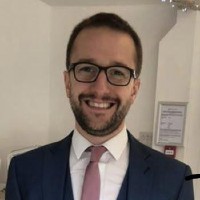
Dr John Stanton is a Reader in Law at City St George's, University of London, with a focus on Constitutional Law and Comparative Constitutional Law. He has held academic roles since 2010, previously at Kingston University and City University, and is a Visiting Lecturer at the University of Malta since 2018. PhD in Law (Kingston University London, 2010) LLB Law (University of Surrey, 2007) His research spans Maltese constitutional history , local government dynamics , democracy , and central-local relations . Recent projects include Law, Localism and the Constitution (2023) and co-editing The Constitution of Malta at Sixty (2024). John’s publications and conference presentations (e.g., at Melbourne and Texas) address themes like constitutional decay , autocracy , and democratic resilience . He contributes to journals such as Legal Studies , Public Law , and Environmental Law Review . Learning Enhancement Award for Teaching (2017) Fellow, Higher Education Academy He testified before the UK Parliament on devolution and is active in the Society of Legal Scholars , UK Constitutional Law Association , and the Honourable Society of the Inner Temple .
Professor Gabrielle Lynch is a leading scholar in Comparative Politics and African Studies at the University of Warwick. She holds the academic rank of Professor and serves as PAIS Impact Director, Comparative Politics cluster lead, and Warwick UCU Equalities Officer. Her research focuses on ethnic identities, elections, transitional justice, and social media's role in African politics. Lynch earned her BA, MPhil, and DPhil from the University of Oxford. She has conducted extensive fieldwork in Kenya, Ghana, and Uganda, supported by grants from the ESRC, Warwick Policy Support Fund, and others. Her awards include the ESRC Award for Outstanding International Impact (2019) and the Market Research Society’s President’s Medal. Lynch is editor of African Affairs and a member of the African Studies Association of the UK and British Institute in Eastern Africa. Lynch’s work bridges academia and public engagement, including columns in The Saturday Nation and The East African . She founded the African Judiciaries Research Network and co-authored influential books like Performances of Injustices and The Moral Economy of Elections in Africa . Her research emphasizes democratization challenges, electoral integrity, and the intersection of technology and politics in Africa.
Dr. Heidi Ashton is an Associate Professor in Cultural and Creative Ecologies at the University of Warwick's Centre for Cultural and Media Policy Studies (CCMPS). She holds a concurrent role as a global research fellow at the Creative Industries Policy and Evidence Centre (PEC). Her work bridges academic research with practical insights from over 25 years of experience as a freelance dancer, choreographer, and producer across global creative sectors. Key affiliations include Director of Education for SCAPVC and external PhD evaluator at Bahria University, Pakistan. Research interests focus on freelance workers' rights within creative industries, social security access, and policy impacts on arts education and cultural participation. Notable projects include collaborations with Equity Union on social security challenges and with Prof. Prue Huddleston on arts education policy. Her work has influenced UK policy debates, including House of Lords citations and Guardian features. Teaching responsibilities span undergraduate and postgraduate levels, including modules on creative industry workplaces and policy analysis. Current PhD supervision explores cultural policy-labour dynamics and digital platforms' role in creative work. Recent projects include the 'Urban Village' community arts initiative in Coventry and pandemic impact studies on cultural sectors. Publications address freelance worker vulnerabilities, comparative cultural policies (e.g., UK vs USA), and educational apartheid critiques. Her 2024 co-authored 'State of the Arts' report provides a UK-wide cultural sector health check, presented to DCMS officials and arts leaders.
Professor Patrick Diamond is a leading academic in Public Policy at Queen Mary University of London's School of Politics and International Relations. He holds a BA, MPhil from Cambridge, and a PhD from Sheffield. His work focuses on UK productivity, regional inequality, governance structures, and social democratic ideologies. He has held senior roles in UK government, including Head of Policy Planning in Downing Street, and has been a Local Councillor in Southwark. Currently, he chairs Policy Network, advises international organizations, and serves on boards of think-tanks and trusts. His research explores policy advisory systems, Brexit impacts, and Labour Party evolution. He has authored over 20 books and numerous articles, including seminal works on British political history and governance reform. He has secured significant research funding from ESRC, Research England, and others. Educational Background: BA, MPhil (Cambridge); PhD (Sheffield). Research Interests: UK productivity, regional inequality, comparative governance, policy advisory systems, Northern Ireland governance, social democracy, and British Labour Party dynamics. He has led projects on English governance post-Brexit, well-being mapping in London, and economic change in East London. Awards and Grants: ESRC Productivity Institute grant (2022-25), Research England Impact Fund (2023-24), multiple ESRC Impact Acceleration Awards. Fellowships include Visiting Fellow at Kellogg College (Oxford), Policy Fellow at the Ministry of Justice Strategy Unit, and Academy of Social Sciences membership. Students and Supervision: Supervised PhD candidates including Matthew Lloyd, Fathima Sulaiman, and Karl Pike, focusing on British politics, governance, and policy analysis. Active in mentoring doctoral research on political leadership and spatial policy. Public Engagement: Advises international bodies like the Latin American Development Bank and Humana International. Serves on boards of Dartington Service Design Lab and Prisoners’ Education Trust. Regularly contributes to media outlets including BBC Radio 4, Guardian, and Financial Times.
Professor Richard Rawlings FBA FLSW is Professor of Public Law at University College London and Senior Fellow at Melbourne Law School. A leading scholar in public law, his work spans constitutional implications of regulatory states, devolution dynamics, and EU administrative procedures. Research examines legal aspects of territorial governance, administrative justice systems, and regulatory enforcement. Authored influential texts including 'Law and Administration' and 'Delineating Wales'. Served as Legal Adviser to UK House of Lords Constitution Committee and on multiple government law reform bodies.
Dr Andrew Hoolachan is a Lecturer in Urban and Regional Planning at the University of Glasgow's School of Social and Political Sciences. He holds a PhD from the University of Cambridge, an MSc from UCL, and an MA from the University of St Andrews. His research focuses on urban governance, sustainability, and political ecology, particularly exploring localism, devolution, and scalar politics in UK cities. He has conducted fieldwork in East London examining the Localism Act's impact on sustainable urban development and the Olympic Legacy. His methodological expertise includes visual and digital methods, policy analysis, and urban political ecology frameworks. Theoretical interests span scale constructions, cultural geographies, and phenomenology. He is affiliated with the Socio-Environmental Action and Place & Built Environment research groups. Recent outputs include studies on urban flood resilience, housing retrofitting, and walking-based pedagogy. His work bridges academic research with policy practice, contributing to reports for institutions like the Royal Town Planning Institute and the UK Collaborative Centre for Housing Evidence. He teaches modules on spatial planning strategies and urban economics, emphasizing experiential learning approaches.
Dillon Newton is a Research Fellow at the School of Human and Health Sciences , University of Huddersfield, and a member of the Centre for Applied Research in Health . His work focuses on interdisciplinary research in social policy, addressing contemporary societal challenges through policy and practice responses. Joined University of Huddersfield in 2020 PhD from University of Salford's Sustainable Housing & Urban Studies Unit Active in research commissioned by UK government, local authorities, and NGOs Research Interests include: Migration : Integration of international nurses, pandemic impacts on healthcare workforce Housing : Housing quality, homelessness, pandemic-related mental health effects Social Inequalities : Devolution, community health outcomes in Northern England Regional Food Systems : Food security and policy intersections Article Trends highlight interdisciplinary work across Public Health , Social Policy , and Migration Studies , with a focus on acculturation , pandemic effects , and structural equation modelling . Scientific Metrics : Scopus h-index: 125 Google Scholar h-index: 6 (from 69 citations) Advising : Accepting PhD students in areas related to migration, housing, and social policy. Collaborates with institutions like University of Salford and University of Huddersfield on grants from UK government departments and charities. Labs & Teams : Collaborates with the Centre for Applied Research in Health and Sustainable Housing & Urban Studies Unit. External collaborations span countries including Nepal, New Zealand, and England.
Professor John Bone is a Personal Chair in the Department of Sociology at the University of Aberdeen, School of Social Science. His work bridges sociology, political economy, neuroscience, and environmental policy, with a strong focus on just transitions, social well-being, and the biosocial impacts of contemporary capitalism. PhD in Sociology, University of Aberdeen (2004) MA Hons in Sociology, University of Aberdeen (1998) John Bone’s research centers on political economy, social and biosocial theory, and energy justice. He has developed an original biosocial framework known as the 'social map' to analyze how human biological capacities interact with social structures, affecting identity, health, and cohesion. His recent book, The Great Decline (2024), critiques the psychological and societal harms of hyper-mediated, neoliberal societies and warns of unpreparedness for AI and climate change. His empirical work examines energy transitions, particularly in Aberdeen, where he leads the Aberdeen Just Transitions Lab. His recent publications span interdisciplinary themes in just transition, climate governance, and social theory. Key trends include the development of metrics for equitable energy transitions, stakeholder engagement in nuclear decommissioning, and the role of deliberative democracy in climate assemblies. His work frequently addresses regional policy, social inequality, and the psychological impacts of economic precarity. Philip Abrams Memorial Prize 2007 (Joint Winner, Best First Book in Sociology) John Bone has supervised numerous PhD students, including David Magee, Karen Lumsden, and Lorna Watson. He has been a co-applicant on major grants such as UKRI’s Just-Systems project (£5.7M) and NIHR’s Aberdeen Health Determinants Research Collaborative (£1.3M). His leadership roles include Head of Department (2013–2019), Social Science Enterprise Champion, and Coordinator of the Aberdeen Just Transitions Lab. He has also served as Chair of the British Sociological Association (2018–2021). He leads the Aberdeen Just Transitions Lab and collaborates with the Aberdeen Health Determinants Research Centre. His research teams engage with policymakers, NGOs, and community groups, including Aberdeen City Council, NHS Grampian, and the Just Transition Commission, to ensure research has real-world impact on policy and social equity.
Dr. Jeffrey Morgan is a Researcher at Cardiff University's School of Social Sciences, specializing in multidisciplinary research at the intersection of computer science, social science, and geography. His work emphasizes human-computer interaction, visualization, and big data analytics. He holds a Research Software Engineer role, combining technical expertise with academic inquiry. Key research interests include AI-driven patent analysis, IoT applications in rural citizen science, and geospatial Twitter demographics. He has contributed to studies on Hadoop infrastructure optimization and social media conflict detection, often collaborating with institutions like Xiamen University and the University of Bremen. His publications span topics like energy-efficient big data processing, digital geography of Welsh identity, and scalable social media analysis frameworks. Notable projects include COSMOS (a cloud-based social media analysis platform) and studies on post-devolution cultural narratives in Wales. Award-winning work includes computational Twitter analysis for detecting online community tensions and geotagging behavior patterns. His research often bridges technical innovation with societal impact, addressing challenges in rural technology deployment and digital sociology.
Ahmad Al-Hiari is a Lecturer in Leadership and Management at De Montfort University (DMU), affiliated with the Leicester Castle Business School within the Faculty of Business and Law. He also holds a Visiting Research Fellow position at the Centre for the Study of Corruption, University of Sussex. He plays a key leadership role at DMU as Chair of the Staff Assembly and founder of the DMU Policy Unit, an academic-led network designed to mobilize research for urgent policy challenges such as post-crisis recovery and evidence-based policing. PhD in Public Sector Governance, De Montfort University (2018–2022) MA Housing, Development & Urban Management, Leeds Beckett University (2017–2018) BSc Architecture, German-Jordanian University (2011–2017) Ahmad’s research centers on public governance, policy transfer, and anti-corruption, with a regional focus on the Middle East. He investigates how informal practices like Wasta challenge Western governance models and explores the effectiveness of decentralization and collaborative governance in Jordan. His methodological expertise lies in elite interviewing with senior policymakers, enabling deep insights into administrative reform and political stewardship. His recent publications and ongoing projects reflect a strong trend in policy-relevant research, particularly in corruption, informal governance, and crisis-responsive policy frameworks such as CRISP and RCFP. His work bridges academic rigor with real-world policy impact, especially in international anti-corruption and post-conflict recovery contexts. Fellow of the Royal Society of Arts (FRSA) Fellow of The Institute of Leadership (FIoL) Fellow of the Higher Education Academy (FHEA) Chartered Member of the Chartered Institute of Housing (CIHCM) Certified Management & Business Educator (CMBE) Ahmad actively supervises postgraduate research and has led several funded projects, including a Knowledge Exchange Policy Fellowship from Research England to support anti-corruption policy development in Jordan. He has organized high-level policy conferences attended by ambassadors and ministers. He leads the DMU Policy Unit and is involved in initiatives like the Society of Evidence-Based Policing and the Universities Policy Engagement Network (UPEN). His work emphasizes building sustainable, responsive research-policy partnerships across sectors and borders.
Professor Jonathan Murray is a Personal Chair of Film Theory, History, and Criticism at the School of Design , University of Edinburgh . As a renowned scholar in Scottish and British cinemas, he co-edits the Journal of British Cinema and Television and contributes to Cineaste . Active in film festivals as a host and curator, he has influenced both academic and public engagement with cinema. PhD and MA in Film and Television Studies and Scottish History, University of Glasgow Research Interests : Jonathan specializes in contemporary Scottish and British cinemas, focusing on cultural identity, adaptation, and espionage themes. His work bridges academic criticism with public discourse, emphasizing animation, documentary, and historical analysis. He explores intersections of film with popular music, design, and societal narratives. Article Trends : His recent publications highlight European cinematic duality, American adaptations, and Scottish cultural heritage. Themes span from Martin Scorsese’s ethical storytelling to Agnieszka Holland’s political narratives and Scottish film’s evolution from Whisky Galore! to Trainspotting . Scientific Awards : 2016 BAFTSS Best Monograph Award 2017 BAFTSS Best Journal Article Award (Shortlisted) 2018 BAFTSS Best Journal Article Award 2019 BAFTSS Best Journal Article Award Supervision : He supervises PhD students Dan Castro and Nelson Correia. His editorial leadership and festival involvement underscore his commitment to advancing film scholarship and practice.
Dr Angus Armstrong is a Professorial Research Fellow at the UCL Institute for Global Prosperity, University College London, directing the ESRC-funded Rebuilding Macroeconomics network that has produced 80+ papers and 100+ public events. His work reinterprets macroeconomics as a knowledge-creation system under fundamental uncertainty. Research focuses on decision-making under uncertainty, collective intelligence, agent-based modelling, and macroeconomic policy within ecological economics, comparative systems, and experimental frameworks. He emphasizes institutions and social interactions as foundations of prosperity in complex adaptive systems. Analysis of 2015-2019 publications reveals concentrated expertise in Brexit fiscal impacts, devolution economics, monetary policy at zero bounds, and Scottish independence. Works integrate macroeconomic modeling with political economy, addressing UK/European policy challenges through institutional and uncertainty-focused lenses. Armstrong serves as Chief Economic Advisor to Lloyds Banking Group (2017) and leads the Rebuilding Macroeconomics network. His 'New Economics of Prosperity' teaching reimagines prosperity as emergent from socio-economic interactions rather than an end state, reflecting his view of economies as open systems defined by fundamental uncertainty.
Dr. Sherrill Stroschein is a Reader in Politics at the Department of Political Science, University College London (UCL) , where she has been since 2005. Her academic career includes prior roles as an Academy Scholar at Harvard University and Assistant Professor at Ohio University . She earned her PhD from Columbia University in 2000 under the supervision of the late Dr. Charles Tilly, and a BA magna cum laude from Amherst College .
Catherine Durose is an Honorary Professor of Public Policy at the University of Birmingham's Department of Public Administration and Policy, part of the College of Social Sciences. Her research focuses on urban governance, co-production, decentralization, and institutional design, with a particular emphasis on how government interacts with citizens and communities to drive policy change. She has secured over £3 million in research funding and serves as Chair of the Editorial Board for Local Government Studies. Educations: PhD, University of Manchester (2007) MA (Research) in Governance and Public Policy, University of Manchester (2004) BA (Hons) in Politics, University of Sheffield (2001) Her research interests span interdisciplinary areas including co-production theory, governance of the commons (housing, energy, data), feminist institutionalism, and participatory policymaking. She has held visiting fellowships at institutions such as the Great Cities Institute (UIC, Chicago) and Tilburg University, and consults for UK government bodies like the Equality and Human Rights Commission. Publications and Awards: Recipient of the Joni Lovenduski Prize (2020) Author of Designing Public Policy for Co-production (2016) Published in Political Studies , Urban Studies , and Nature Teaching and Mentorship: Catherine teaches on INLOGOV's MSc Public Management and Executive Apprenticeship programs. She mentors doctoral students in areas like social accountability in Colombia, blame avoidance in UK governance, and decentralization in Cameroon. Current research projects include studies on urban governance assemblages (with Tilburg and Edinburgh Universities) and feminist institutionalism in hate crime policy (collaboration with University of Birmingham's Vivien Lowndes). She actively contributes to civic initiatives like Citizens UK and co-founded Win: Win, a network for women in higher education, earning her recognition as a 'Woman of Action' in 2017.
Professor Vlad Mykhnenko is Professor of Geography and Political Economy in the University of Oxford Department for Continuing Education, and a Research Fellow in Sustainable Urban Development at St. Peter's College, Oxford. He serves as Academic Director for Social Sciences at Oxford Lifelong Learning and has been with the Department since January 2017, initially taking up an Associate Professorship in Sustainable Urban Development. His academic career spans multiple institutions including the University of Birmingham, Al-Farabi Kazakh National University, the University of Nottingham, the University of Glasgow, and the Central European University. Professor Mykhnenko's educational background includes: PhD in Political Economy from Darwin College, the University of Cambridge (2005) MA in International Relations and European Studies from the Central European University (1999) MA (1998) and BA (1996) in International Relations from Taras Shevchenko National University of Kyiv As an economic geographer specializing in geographical political economy, Professor Mykhnenko challenges conventional wisdom about urban and regional development. His research initially focused on transition economies of Eastern Europe (particularly Polish Upper Silesia and the Ukrainian Donbas) before expanding to cities and regions worldwide. He has produced over 140 research outputs and secured £16 million in external research funding, with £2 million as Principal Investigator. His current research initiatives focus on green steel - rebuilding Ukraine's iron and steel sector post-war without fossil fuels - and sustainable urban development in Kazakhstan. His publication record demonstrates significant scholarly impact across diverse areas including urban shrinkage, post-war reconstruction, geopolitical analysis, and future trends in technology and governance. The breadth of his research interests spans from analyzing spatial economic patterns in African cities to examining the implications of the metaverse for future business practices. Professor Mykhnenko has substantial policy impact, with research quoted in at least 79 policy documents by 49 organizations across 21 countries. His work contributes to UN Sustainable Development Goals, with 30% directly attributed to SDG11: Sustainable Cities and Communities. He has advised governments, intergovernmental organizations, and multinational enterprises, including serving on a UN expert group to shape the New Urban Agenda and providing expert evidence to the UK House of Commons on Ukraine's recovery. In early 2025, he was appointed a commissioner for the Lancet Commission on Ukraine. Professor Mykhnenko has taught over 3,100 students across various institutions and currently contributes to Oxford's MSc in Sustainable Urban Development program. He has supervised numerous doctoral students and received recognition for his teaching excellence, including Fellow of the Higher Education Academy status and a Postgraduate Certificate in Academic Practice. His commitment to research-led teaching has resulted in innovative pedagogical approaches documented in peer-reviewed academic publications.