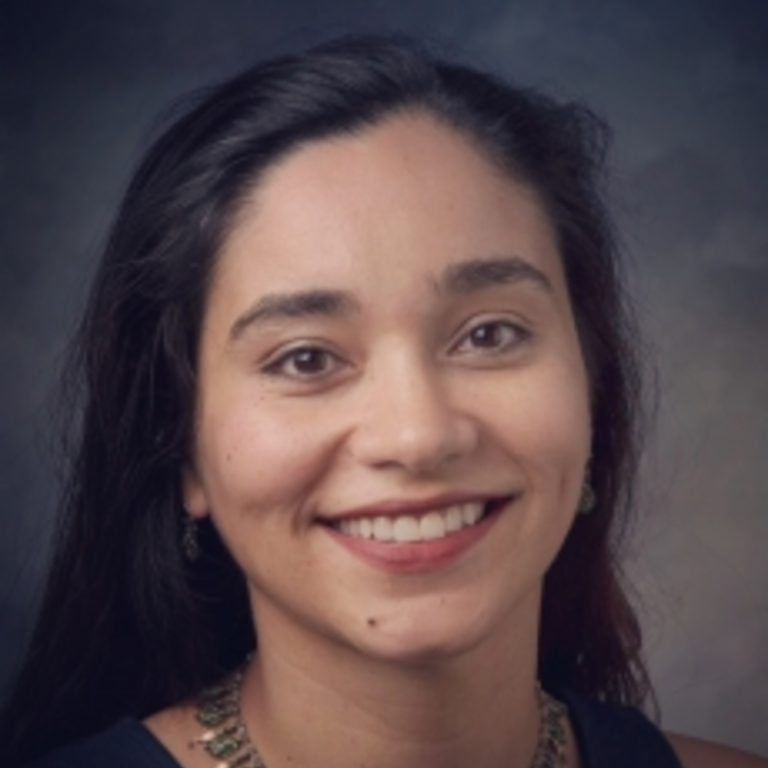
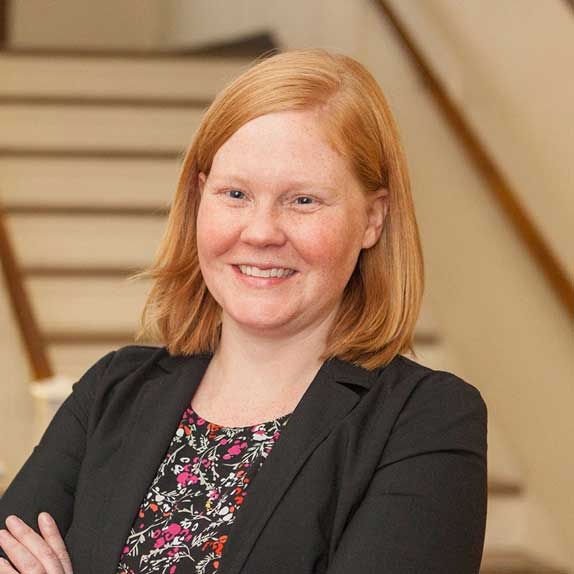
Kelly McElrath, Ph.D., BCBA-D, CBIS, is an Adjunct Professor in the Department of Applied Behavior Analysis at The Chicago School’s College of Graduate and Professional Studies. She is also the lead behavior analyst at Bucks County Schools Intermediate Unit #22, with 29 years of experience in applied behavior analysis across multiple settings. BA, Temple University (1992) MA, LaSalle University (1995) Ph.D., Temple University (2008) Her research focuses on functional assessment of problem behavior, autism intervention, verbal behavior methodology, and online learning pedagogy. She has contributed to advancements in school-wide positive behavior supports and trauma-informed care in behavior analysis. Her recent publications and presentations emphasize behavioral health post-traumatic brain injury, adaptive skill training for autistic individuals, and stimulus control in self-injurious behavior. She has served on national committees and chairs specialized groups in ABAI. Dr. McElrath advocates for accessible, interactive teaching methods that prioritize student engagement and practical application of behavioral science principles in both physical and digital classrooms.
Ece Demir-Lira is an Assistant Professor in the Department of Psychological and Brain Sciences at the University of Iowa. Her research focuses on developmental cognitive neuroscience, examining how socioeconomic status, parental input, and early brain injuries influence children's cognitive and language development. She is affiliated with the Developmental Psychopathology and Developmental Science research groups. Ph.D. in Psychology, University of Chicago (2009) Her work explores brain plasticity in typical and atypical development, with a particular emphasis on preterm infants and the impact of environmental factors on neural structures. She utilizes neuroimaging techniques and behavioral assessments to study these phenomena. Recent publications highlight her investigations into gesture-speech integration, socioeconomic disparities in cognition, and the neural correlates of math attitudes. She also contributes methodological expertise in longitudinal data analysis through her involvement with the Adolescent Brain Cognitive Development (ABCD) Study. Demir-Lira leads the Development, Experience, and Neurocognition (DEN) Lab, which investigates how early experiences shape brain development and cognitive outcomes. Her research bridges psychology, neuroscience, and education to inform interventions for at-risk populations.
Dr. Renata Zubrzycka is an Associate Professor in the Department of Methodology of Pedagogical Sciences at Maria Curie-Skłodowska University's Faculty of Pedagogy and Psychology. Her research focuses on psychosocial adaptation in chronic pediatric illnesses, particularly cystic fibrosis and allergic respiratory diseases, employing interdisciplinary approaches bridging pedagogy, psychology, and clinical care. Research Interests: She investigates parental resilience, stress adaptation in families of children with rare diseases, therapeutic pedagogy for allergic conditions, and behavioral disorders in chronically ill youth. Her work emphasizes multidisciplinary collaboration between educators, psychologists, and medical professionals. Publications: Her recent articles (2020-2025) predominantly explore trauma-to-growth transformation in caregivers, doctor-patient communication frameworks, and life satisfaction dynamics in families managing cystic fibrosis. Methodologically, she employs both theoretical analyses and empirical studies on coping mechanisms. Awards & Honors: Medal of the Commission of National Education (2019) Silver Medal for Long Service from the President of Poland (2017) Lecturer of the Year (3rd place) at UMCS Faculty of Pedagogy and Psychology (2016) Best Poster Award at European Cystic Fibrosis Conference (2015) Collaborations: She actively participates in the European Cystic Fibrosis Society's Mental Health Working Group, European Academy of Allergy and Clinical Immunology, Polish Allergological Society, and partners with the Medical University of Lublin's Pediatric Pulmonology Clinic and MATIO Foundation for cystic fibrosis support.
Francesca Granone is an Associate Professor of Mathematics at the University of Stavanger, affiliated with the Faculty of Educational Sciences and Humanities and the Department of Kindergarten Teacher Education. She holds a Ph.D. in Material Science and a teaching license from the University of Genoa, supplemented by specialized pedagogy training at Kristiania University and Associaciòn Educar. In 2025, she received the 'Meritert Underviser' award for innovative and inclusive mathematics teaching. Her research focuses on: Mathematics didactics in early childhood education Inclusive research methodologies involving co-researchers with disabilities Digital competence development through coding toys (DiCoTe project) Physics education via activity cards Early intervention strategies (e.g., 'Tidlig Innsats' project) She leads the IRiMaD research group, pioneering inclusive research in mathematics education with collaborators including Glenn Knudsen and Mia Johansen. Her publications (2021-2025) emphasize technology-mediated learning, teacher strategies for inclusive play, and spatial/dialogical approaches in mathematics. Trends show consistent focus on bridging digital tools, disability inclusion, and early cognitive development. Awards: Meritert Underviser (2025) Grants & Projects: DiCoTe (Research Council of Norway): Professional digital competence in coding toys VERDI/INKODE (Stiftelsen Dam): Inclusive mathematics resources IRiMaD: Inclusive research in mathematics didactics Tidlig Innsats (KS): Risk identification in early childhood She collaborates extensively with ECEC practitioners in Norway/Italy and co-designs resources with end-users.
Dr. Christelle Moufawad El Achkar is an Instructor of Neurology at Harvard Medical School and Assistant in the Department of Neurology at Boston Children's Hospital. She specializes in epilepsy care with a particular focus on pediatric patients and genetic aspects of seizure disorders. Her work is centered at the Epilepsy Center, one of the nation's few Level 4 pediatric epilepsy centers recognized by the National Association of Epilepsy Centers. Dr. El Achkar completed her medical education at the American University of Beirut in 2008, followed by an internship at Rainbow Babies & Children's Hospital in Cleveland (2011), and neurology residency and fellowship at Boston Children's Hospital (2014-2016). She is board certified in both Child and Adolescent Neurology and Epilepsy by the American Board of Psychiatry and Neurology. Her research primarily focuses on the genetic underpinnings of epilepsy, with numerous publications examining genetic variants associated with pediatric-onset epilepsy, developmental and epileptic encephalopathies, and specific gene-related epilepsy syndromes. Her work spans from basic molecular mechanisms to clinical applications of genetic testing and precision medicine approaches for rare genetic epilepsies. She has contributed significantly to characterizing conditions related to genes including GABRB2, CACNA1E, PACS2, and others. Dr. El Achkar's publication record demonstrates a consistent trajectory of impactful research in epilepsy genetics, with recent work focusing on the diagnostic utility of exome sequencing and the development of patient-customized therapies for rare genetic disorders. Her research bridges clinical neurology with molecular genetics to advance understanding and treatment of genetic epilepsies. As part of Boston Children's Hospital's Epilepsy Center, she contributes to a comprehensive program that provides testing, evaluation, treatment, and counseling for children with epilepsy and seizures through the full range of medical, dietary, noninvasive, and surgical treatments.
Dorota Gizicka is an Assistant Professor at the Department of Social Theory and Sociology of the Family , within the Faculty of Social Sciences at John Paul II Catholic University of Lublin, Poland. Her work focuses on family sociology, social theory, and digital-era youth behavior, with a strong emphasis on religiosity, migration, and gender dynamics. Research Themes: Family planning, digital divide, cyberbullying, social capital, migration, and Catholic social teaching. Key Publications: 2024 study on religiosity and human capital; 2023 book on Polish youth family plans; 2018 analysis of Polish tax challenges for farmers. Academic Contributions: Supervised diploma theses on topics like reproductive attitudes, occupational therapy for disabilities, and migrant family integration. Her recent work explores the intersection of technology, social personality development, and cross-national youth behavior (Poland-Slovakia). She also contributes to theoretical frameworks like the incident method and pro-community behavior in educational lexicons.
Marcin Wojtasiński is an Assistant Professor at the Department of Experimental Psychology, Institute of Psychology, Faculty of Social Sciences, John Paul II Catholic University of Lublin. His academic career at this institution spans multiple research domains. Assistant Professor (2025) Department of Experimental Psychology affiliation Faculty of Social Sciences membership John Paul II Catholic University of Lublin affiliation Dr. Wojtasiński's research interests intersect Cognitive Psychology , Religiosity Studies , and Art Appreciation . His work explores: Religious symbols' dual dimensions (opportunity vs. challenge) Canonical size phenomenon in memory drawing Flow states in board gaming Religious experience's protective role in migration Neural correlates of empathy and art perception Recent publications show increasing focus on network analysis and statistical modeling of complex psychological phenomena. His 2025 work includes vection research, skill-challenge dynamics, and sound predictability effects on attention. Collaboration patterns reveal frequent work with Małgorzata Tatala , Magdalena Szubielska , and other Polish psychologists. While no specific awards are mentioned, his publication record in Scientific Reports , Religions , and PLoS One demonstrates active scientific contribution.
Daniel Crimmins, PhD , serves as Professor and former Director of the Center for Leadership in Disability at Georgia State University's School of Public Health in Atlanta. His work focuses on ensuring equal access to evidence-based supports for individuals with disabilities through research, policy advocacy, and practical intervention tools. B.A., M.A., Ph.D. in Psychology from Binghamton University (1975-1984) Clinical Psychology Internship, University of Mississippi Medical Center Robert Wood Johnson Health Policy Fellow (2002-2003) His research spans functional behavior assessment , positive behavior support , and inclusive education , with specific projects including the Motivation Assessment Scale, BBQuIPS system, and statewide expansion of inclusive postsecondary education programs. Recent publications examine family integration in care planning, parent education disparities, and early developmental screening. Scientific contributions include: Motivation Assessment Scale development Positive Strategies framework for behavioral interventions Brief Behavior Questionnaire (BBQuIPS) system As director of Georgia State's Center for Leadership in Disability, he advocates for person-centered supports , inclusive practices , and elimination of restrictive procedures , working with schools, families, and policy organizations to improve quality of life for individuals with disabilities.
Fabio Catania is a Postdoctoral Fellow at the McGovern Institute for Brain Research, Massachusetts Institute of Technology. His work focuses on developing conversational agents and AI systems tailored for neurodevelopmental disorders, emotion recognition in speech, and inclusive technology design. He has pioneered projects such as the Emozionalmente Italian emotional speech corpus and the Emoty conversational agent for individuals with autism spectrum disorder. Research Interests: AI-driven therapeutic interventions for neurodevelopmental disorders Multimodal emotion recognition systems Design of accessible conversational interfaces for marginalized groups Linguistic and acoustic analysis of non-verbal communication cues Key Contributions: Developed AI tools like Smemo (multimodal interface for children's creativity) and OK, DNA! (genomic data explorer) Created voice-controlled music production systems for motor-impaired users Explored irony and sarcasm detection through multimodal analysis His work bridges computational linguistics, human-computer interaction, and clinical applications, with a focus on creating ethical and inclusive AI systems for healthcare and education contexts.
Professor Antonis Kambas is a faculty member at the School of Physical Education and Sport Science, Democritus University of Thrace. His research focuses on motor development, psychomotor therapy, physical activity promotion in early childhood, and the impact of motor proficiency on health outcomes. He holds a PhD and MSc from Democritus University of Thrace and a BSc from the University of Saarbrücken, Germany. His work emphasizes the assessment of motor skills in preschoolers, with contributions to tools like the Democritos Movement Screening Tool (DEMOST-PRE). Key research areas include the relationship between motor coordination and BMI, sedentary behavior trends in children, and the effects of interventions on motor development in children with ADHD/ASD. Prof. Kambas has collaborated extensively on studies involving physical activity patterns, bone health in preadolescents, and the efficacy of neuromuscular training in youth athletes. His laboratory work includes analyses using DEXA and BIA technologies. He teaches courses on psychomotor intervention, training science, and physical activity in preschool education. Notable publications include investigations into cross-cultural motor competence comparisons and longitudinal studies on physical activity trends. His research highlights the importance of early childhood interventions to promote lifelong physical activity and reduce sedentary habits.
Brian Irvine is a Research Fellow at UCL's Institute of Education (IOE), specifically within the Centre for Research in Autism and Education (CRAE) in the Department of Psychology and Human Development. His work focuses on participatory research methodologies that amplify autistic voices in knowledge construction. Prior to joining UCL in early 2023, he completed his ESRC-funded PhD at the University of Birmingham's Autism Centre for Education and Research (ACER), developing the first UK HEI Specialist (Autism) Mentoring framework. He also served as a Specialist Mentor at Royal Holloway, University of London for a decade, supporting neurodivergent students. His research emphasizes reframing autism through a 'gain' lens, highlighting superior perceptual capacities and fostering inclusive academic cultures. Education: PhD in Autism Studies, University of Birmingham (2023) MEd (Autism Adults), University of Birmingham (2019) PGCE (Religious Education), University of Oxford (1998) BA (Hons), King's College London (1997) Research Interests: Brian’s work bridges neurodiversity theory and practice, focusing on perceptual capacities in autism, mentorship frameworks, and inclusive higher education policies. His current project investigates how autistic perceptual advantages can reshape academic dialogue, moving beyond deficit models. Grants & Initiatives: His ESRC-funded mentoring framework project (2023) and contributions to the Superior Capacity in Autism Project at UCL highlight his commitment to actionable research. His work has influenced autism support policies in UK universities. Labs/Teams: CRAE, UCL; ACER, University of Birmingham; BeMentor (non-academic mentoring network).
Jade Davies is a postgraduate researcher at the Manchester Institute of Education (University of Manchester), focusing on social media's impact on adolescent mental health and wellbeing. She holds a Master of Education (Distinction) and a First-Class BSc in Psychology. Previously, she worked as a Research Assistant at UCL's Centre for Research in Autism and Education (CRAE), leading initiatives like the DARE program to address autism-employment gaps. She is affiliated with the Education and Psychology research group and teaches in the School of Environment, Education and Development, covering modules on psychology, education, and research methods. Her research emphasizes co-creation with marginalized communities, particularly autistic individuals, exploring topics like career progression, support systems, and healthcare access. She contributes to UN Sustainable Development Goals related to education and well-being. Key projects include the UKRI-funded #So.Me project analyzing social media's mental health effects and studies on autistic identity and workplace challenges. Teaching roles include Graduate Teaching Assistant positions and guest lectures on child development and research methodologies. Her work bridges academic research with practical community impact, aiming to improve mental health support and neurodiversity inclusivity across education and employment sectors.
Jacquelyn MacDonald is an Associate Professor in the Department of Applied Behavior Analysis at Regis College, where she serves as Director of the Master of Science in Applied Behavior Analysis Program and Co-Director of the Regis Autism Center. She is a Board Certified Behavior Analyst-Doctoral (BCBA-D®) with over 16 years of clinical experience across diverse settings including schools, residential programs, and day programs for individuals with disabilities. Research Interests focus on: Teaching observational learning to children with autism and developmental disabilities Assessment and treatment of problematic behavior Application of the behavior momentum metaphor Behavioral interventions in educational and clinical contexts Interdisciplinary approaches to autism treatment Publications demonstrate expertise in autism interventions, therapist training, citation education, and behavioral strategies for food aversion. Her work bridges applied research with practical implementation frameworks. Scientific Awards: NECC Outstanding Educator of the Year (2018) Academic Leadership: Previously served as adjunct faculty at Simmons College and UMass Boston. Currently on the editorial board of Behavioral Interventions and the Berkshire Association for Behavior Analysis and Therapy professional practice committee.
Shannon E. Dowd-Eagle is a Professor and Program Director in the School Psychology Program at Rhode Island College's Department of Counseling, Educational Leadership, and School Psychology. She serves as Co-Director of the RI Leadership Education in Neurodevelopmental Disabilities (RI LEND) program and is a member of the Paul V. Sherlock Center leadership team. As Co-Principal Investigator of an OSERS Personnel Preparation grant, she leads interdisciplinary training initiatives for transition services while coordinating the Rhode Island College School Psychology Internship Consortium. Her academic credentials include: Ph.D. in School Psychology, University of Nebraska-Lincoln (2006) M.A. in School Psychology, University of Nebraska-Lincoln (2001) B.A. in Psychology, University of Nebraska-Lincoln (1998) APA Accredited Internship, Devereux Center for Effective Schools (2004-2005) Dr. Dowd-Eagle's research centers on neurodevelopmental disabilities , secondary transition for youth with high-intensity needs, and evidence-based family-school partnerships . Her work integrates eco-behavioral consultation within response to intervention frameworks and develops multi-tiered support systems to improve outcomes for children with disabilities through interdisciplinary collaboration and systemic change in educational settings. Analysis of her 2014-2019 publications reveals consistent focus on strengthening school-community connections and implementing tiered support models. Key contributions include universal family-school partnership frameworks within PBIS, eco-behavioral consultation applications in RTI, and collaborative strategies for transition planning. Her research bridges theoretical foundations with practical implementation for school psychologists addressing neurodevelopmental disabilities. Scientific Awards: No specific scientific awards, prizes, or fellowships were documented in source materials Dr. Dowd-Eagle has secured significant grant funding for disability-focused initiatives: OSERS Personnel Preparation Grant (2019-2024): $1,124,187 as Co-PI for transition services training RI Health and Human Services Grant (2019-2020): $113,700 as PI for community enhancement HRSA MCHB RI LEND Project (2016-2021): $126,809/year as PI for Sherlock Center sub-award She co-leads the RI LEND program through a partnership between Brown University, Hasbro Children's Hospital, and Rhode Island College, training interdisciplinary scholars in neurodevelopmental disability leadership. Her coordination of the School Psychology Internship Consortium establishes supervised practicum networks across educational settings to implement evidence-based practices for children with disabilities.
Dr. Elvin Williams is a Lecturer in the Occupational Therapy and Arts Therapies Division at Queen Margaret University. With clinical experience spanning infant mental health, physical rehabilitation, and occupational therapy leadership in South Africa, he focuses on marginalized populations and socially responsive practice. His interdisciplinary research intersects with areas like gender minority identities, occupational justice, and resilience. Education: BSc in Occupational Therapy (University of the Western Cape, 2003), M.Phil in Infant Mental Health (Stellenbosch University, South Africa) Research Interests: Occupational engagement in socio-political contexts, resilience in vulnerable groups, and intersectional identities in occupational therapy. Recent work explores parenting practices, intergenerational poverty, and leadership in global occupational therapy frameworks. Affiliated Organizations: Health and Care Professions Council (HCPC), Royal College of Occupational Therapists (RCOT), Occupational Therapy Association of South Africa (OTASA), World Federation of Occupational Therapists (WFOT)