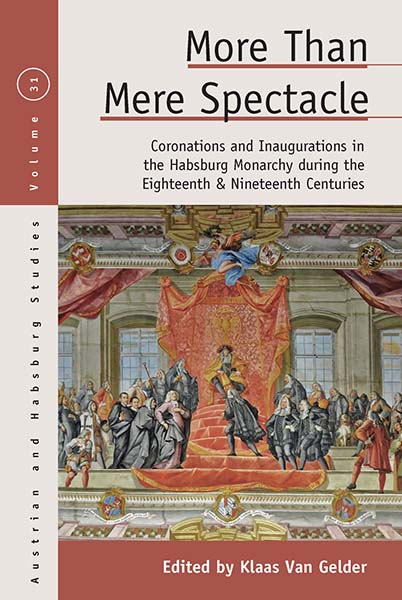
Klaas Van Gelder is an Assistant Professor of History at Vrije Universiteit Brussel (VUB) , specializing in early modern history. He is affiliated with the SHOC research group and serves as Archivist at the General State Archives in Brussels. His academic journey includes an MA (2005) and PhD (2012) from Ghent University, followed by postdoctoral fellowships at Ghent and the University of Vienna. He has held visiting roles, including at Saint Mary's University in Halifax (2024). Van Gelder’s research focuses on social, political, and cultural history of early modern Europe, particularly access to justice, litigants’ profiles, and legal rituals. Key projects include the FED-tWIN project ACCESS , examining Brabant’s legal systems, and studies on seigneurial police regulations. He has authored books like Regime Change at a Distance (2016) and edited volumes such as More Than Mere Spectacle (2021). He has received awards including the André Schaepdrijverprijs (2005) and Frans Stephan Preis (2014). His grants and collaborations include leadership roles in projects like Onderzoeksgroep Alliantie VUB-UGent . He co-edits journals and participates in international conferences, addressing topics like AI in historical archives and rural revolts.
Peter Van Puyvelde is a Full Professor at KU Leuven's Faculty of Engineering Sciences, where he leads research at the Soft Matter, Rheology and Technology (SMaRT) unit within the Department of Chemical Engineering. He is an active member of the Applied Rheology and Plastics Processing Division and the Leuven.AM Institute for Additive Manufacturing. His academic responsibilities include membership in the Faculty Council of Engineering Sciences and departmental committees. His core research focuses on: Polymer processing and complex fluid dynamics In-situ characterization of flow-microstructure relationships Flow-induced crystallization phenomena Development of sustainable polymer materials Additive manufacturing technologies Professor Van Puyvelde's recent publications (2023-2025) demonstrate strong emphasis on sustainable polymer systems including lignin-based materials, humins valorization, bioplastics, and green additives. His work frequently employs advanced characterization techniques like fast-scanning calorimetry and synchrotron X-ray scattering to study crystallization kinetics and microstructure development in complex polymer systems. He currently supervises PhD students working on nanofiltration membranes and reinforced polymer parts. His extensive research portfolio includes leadership roles in multiple ongoing projects: Polylactic acid bioplastics development (Co-promoter) Lignin-based flame retardants (Co-promoter) Humins valorization for functional polymers (Co-promoter) Ionic liquids for enhanced oil recovery (Promoter) Competition between crystallization and crosslinking (Promoter) Additive manufacturing of polymer composites (Co-promoter)
Karoline Faust is an Associate Professor at KU Leuven, affiliated with the Laboratory of Molecular Bacteriology (Rega Institute) and the Faculty of Medicine . She contributes to the iSi Health and Leuven One Health institutes, and serves on senior academic councils. Her research spans microbial systems biology, focusing on community dynamics and network analysis. Education: PhD in bioinformatics (2010, KU Leuven) Affiliations: KU Leuven, ISME Journal editorial board, Belgian Society for Microbiology Her research investigates microbial community dynamics , systems biology approaches to microbiomes, and bioinformatics tool development . She specializes in modeling human gut microbiota , synthetic microbial communities , and environmental microbiomes (e.g., microplastic impacts on Daphnia microbiomes). Her work integrates metabolic modeling , network analysis , and experimental systems to understand microbial interactions. Recent publications highlight her contributions to microbial network inference , 16S rRNA sequencing protocols , microfluidics , and ecological modeling of microbiomes. She develops tools like manta , miaSim , and CoNet to analyze community structures. Teaching: Karoline co-teaches courses in microbiology, bioinformatics, and network analysis at KU Leuven, and has contributed to international workshops on microbial network inference. Scientific Engagement: She serves as Senior Editor at ISME Journal and Secretary of the Belgian Society for Microbiology .
Patrick Willems is a full Professor at KU Leuven's Faculty of Engineering Sciences, Department of Civil Engineering. He serves as the head of the Hydraulics Subdivision within the Hydraulics and Geotechnics unit. Professor Willems holds multiple significant roles including chairman of the ADS Bureau, member of the Faculty Council of Engineering Sciences, and participant in the Leuven One Health Institute and KU Leuven Institute for Urban Studies (LUSI). His work addresses critical global water management challenges through advanced hydrological modeling and climate change adaptation strategies. Professor Willems' research spans several critical areas in water resources engineering. His primary expertise includes urban hydrology and river engineering, statistical hydrology with focus on flood prediction and risk analysis, integrated river basin management, precipitation analysis, and climate change impacts on hydrological extremes. He employs both traditional hydrological modeling approaches and innovative machine learning techniques to develop practical solutions for flood warning systems, urban water management, and climate adaptation planning. His research integrates statistical methods, numerical modeling, and data science to address complex water management problems across multiple geographical contexts. Professor Willems leads multiple major international research projects examining hydrological extremes in transboundary river basins, natural climate adaptation measures, hydrological modeling of peatland areas, and deep learning-based prediction of hydrological extremes. His work spans various geographical contexts including Belgium, Vietnam, Bolivia, Tanzania, and the Congo Basin, demonstrating both local relevance and global applicability of his research. Within KU Leuven, Professor Willems teaches diverse courses including Environmental Problems and Techniques, Statistics and Data Science, Stochastic Hydrology, Urban and River Hydrology and Hydraulics, River Modeling, and Probability and Statistics. He also leads the Hydraulic Engineering Project course and an Artificial Intelligence Project course, reflecting his commitment to integrating traditional engineering knowledge with modern computational approaches. As head of the Hydraulics Subdivision, he oversees research activities focused on developing advanced water engineering tools and methodologies that bridge theoretical advancements with practical applications for water management authorities.
Dr. Joseph Bosco Bangura is a Senior Researcher in Religious Studies & Missiology at the Evangelical Theological Faculty (ETF Leuven) and Senior Researcher in Intercultural Theology at the Protestant Theological University, Groningen. He serves as a Part-Time Lecturer at Aachen University and has held roles at institutions in Sierra Leone, Germany, South Africa, and Uganda. His work bridges Pentecostalism, missiology, and intercultural theology across Africa and Europe. Education: Ph.D. in Theology and Religious Studies (ETF Leuven & Vrije Universiteit Amsterdam, 2013) M.Th. (ETF Leuven, 2007) M.Phil. (Fourah Bay College, 2004) Post-Graduate Certificate in Ecumenical Studies (Ecumenical Institute Bossey, 2001) B.Th. (Evangelical College of Theology, 1997) Research Interests focus on African Pentecostalism, contextual theology, secularization in Africa and Europe, interfaith engagement, and the cultural adaptation of migrant churches. His work explores the intersection of religion with environmental disasters, gender dynamics, and digital media in African Christianity. Selected Articles highlight eco-theology in Sierra Leone, gender and leadership in diaspora churches, and the impact of secularization on Pentecostal communities. His publications also address urban missiology, transnational practices, and the historical evolution of African churches. Academic Memberships: European Academy on Religion and Society American Society of Missiology GloPent Research Network Lamin Sanneh Institute (University of Ghana)
Yves Wautelet serves as an Associate Professor at the Faculty of Economics and Business at KU Leuven, where he conducts research in conceptual modeling, business process management, and digital transformation. His work addresses critical challenges at the intersection of information systems engineering and business strategy, with particular focus on sustainability-driven modeling approaches and IT governance frameworks. His primary research interests include: Conceptual modeling methodologies and frameworks Business process management and information systems design Digital transformation strategies and implementation IT governance and business-IT alignment Sustainability-driven modeling for circular economy Agile software development practices and methods Requirements engineering with user stories Wautelet's recent publication record demonstrates significant scholarly productivity with numerous 2024-2025 publications spanning conceptual modeling frameworks for sustainability (Circulise), tools for identifying ambiguity in user stories (AmbiTRUS), and approaches to align strategic and operational agility. His work bridges theoretical foundations with practical applications across diverse domains including healthcare, circular economy, software development, and organizational transformation. His research consistently applies model-driven approaches to solve complex real-world problems, often integrating sustainability considerations into information systems engineering. As a promotor and co-promotor, Wautelet currently supervises multiple doctoral research projects including: Automatic generation of conceptual models from textual descriptions (2024-2028) Sustainability-Driven Modeling Assistant for Twin Transition in Vietnam (2024-2028) Home Care Business Process Management using Distributed Ledger Technologies (2024-2028) Teaching Modeling Skills in BPMN formalism (2021-2025) His research is conducted through the Information Systems Engineering Research Group (LIRIS) at KU Leuven's Brussels campus, where he contributes to advancing model-driven approaches for addressing contemporary business and technological challenges.
Julie Dethier is a Research Fellow at the University of Liège, affiliated with the Faculty of Applied Sciences and Montefiore Institute. Her research bridges cellular neuroscience and network dynamics, with focus on pathological rhythms in Parkinson's disease and brain-machine interface development. She completed her Ph.D. in 2015 under Prof. Sepulchre's supervision. Her academic journey includes: Ph.D. in Systems and Modeling (2015), University of Liège with Princeton University research stay (2014-2015) Master of Science in Bioengineering (2011), Stanford University (Brains in Silicon lab) Master of Applied Sciences in Biomedical Engineering (2010, summa cum laude), University of Liège Bachelor of Applied Sciences (2008, summa cum laude), University of Liège Dr. Dethier investigates how cellular feedback mechanisms generate pathological beta oscillations in basal ganglia circuits, disrupting motor function in Parkinson's disease. Her computational approaches model the transition from unicellular rhythms to network-level oscillations, with implications for deep-brain stimulation therapies. She integrates electrophysiological data with dynamical systems theory to explain robustness and modulation in neural circuits. Her publication record demonstrates evolving expertise from brain-machine interface hardware (2011-2012) to fundamental neural mechanism studies (2013-2015). Key themes include spiking neural network decoders, cellular feedback loops, and pathological oscillation generation. Work spans computational modeling, neuromorphic engineering, and translational neuroscience with applications in neuroprosthetics. Major recognitions include: WBI excellence grant for Princeton research (2014) LEAR Foundation Fellowship for Cambridge research (2013) Audience Award at ULg thesis competition (2013) IEEE EMBS Best Poster Award (2011) Fulbright Honorary Fellowship and Rotary International Fellowship (2010) Funded by competitive F.R.S.-FNRS and international fellowships, her research involved cross-institutional collaboration with Princeton, Cambridge, and Stanford teams. While no formal advisees are listed, her publications reflect mentorship through co-supervised projects and conference presentations. Current work extends her doctoral thesis on multiscale neural dynamics. She maintains active ties with the Systems and Modeling Research Unit at Liège, Brains in Silicon lab at Stanford, and participates in Benelux neuroscience networks through the Montefiore Institute.
Prof. Ilse Dewachter is the head of the Biomed Neuroscience research group at Hasselt University (UHasselt), specializing in Alzheimer’s therapy and prevention for over 25 years. Her work focuses on multi-targeted therapies targeting tau, inflammation, and ApoE, alongside pioneering research into disease prevention via blood-based biomarkers. Recent studies explore a protective APOE3ch mutation that halted Alzheimer’s progression in a patient, offering hope for new treatments. Research Interests: - Alzheimer’s disease mechanisms (Abeta, tau, inflammation) - Multi-target therapies and biomarker development - Neurodegenerative disease prevention strategies - Genetic mutations impacting disease progression Articles Overview: Her most recent work (2025-2022) addresses neuroinflammation, tau propagation models, and AI-driven neuroimaging. Key themes include APOE genetics, blood-brain barrier dynamics, and exercise impacts on cognition. Funding & Grants: Current projects require significant investment for advanced biomarker equipment and clinical trials. A notable €300,000 grant funded research on brain lipid metabolism’s role in Alzheimer’s. Labs & Teams: Leads the BIOMED Neuroscience group at UHasselt, collaborating internationally on preclinical models and drug development.
Adrien Carbonnet serves as Associate Professor at KU Leuven's Faculty of Arts, where he concurrently holds leadership positions as Head of Japanese Studies and Director of the Centre for Korean Studies. He maintains an external affiliation as Fellow of the Institut Français de Recherche sur l’Asie de l’Est (INALCO/Université de Paris/CNRS). His academic profile centers on East Asian diplomatic history with specialized focus on Belgium's historical engagements with Korea and Japan during the imperial era. Carbonnet's research investigates 19th-20th century international relations in East Asia, particularly Belgian-Korean diplomatic history culminating in the 1901 treaty, Japan-Belgium relations during the Russo-Japanese War, and Korean minority experiences in Japan. His current sabbatical project (2024-2025) at the University of Tokyo's Center for Korean Studies aims to produce a monograph on Belgium-Korean relations during imperialism (1876-1919). He also actively translates works by Korean-Japanese writer Kin Kakuei and examines disease perception in early 20th century Korea through Belgian diplomatic archives. Analysis of his recent publications reveals consistent emphasis on archival-driven diplomatic history, with recurring themes of European imperial influence in Korea, cross-cultural disease perception, and contemporary implications for inter-Korean relations. His work bridges historical scholarship with current diplomatic practices, frequently contextualizing modern Korean affairs through historical precedents while maintaining rigorous archival methodology. Carbonnet's research portfolio includes significant grants: a 2024-2025 sabbatical monograph project on Belgium-Korea imperialism relations, the ongoing 2019-2025 study of Nippon Victor's role in global jazz history (as Co-promotor), and the concluded 2007-2024 Kansai University cooperation agreement. He contributes to academic governance as senior member of the Faculty of Arts Council and the POC Taal- en regiostudies committee. As academic leader, Carbonnet directs the Centre for Korean Studies while heading the Japanese Studies unit, overseeing curriculum development for Korean language programs (reading, writing, grammar, conversation) and modern Japanese courses. His teaching extends to specialized seminars on East Asian international relations history, directly informing his research on Belgian diplomatic engagements in the region.
Prof. Dr. Koert van Bekkum serves as Professor and Department Chair of Old Testament at the Evangelische Theologische Faculteit Leuven (ETF Leuven), where he also holds the position of Academic Vice Dean for Research since 2022. Previously, he was an Associate Professor of Old Testament at ETF Leuven (2018-2020) and continues to hold an Associate Professor position at Theological University Kampen since 2018. His academic career spans biblical scholarship, theological education, and research leadership in the field of Old Testament studies within the Reformed tradition. His educational background includes: PhD from Theological University Kampen (2010) with highest honors, dissertation: 'From Conquest to Coexistence: Ideology and Antiquarian Intent in the Historiography of Israel's Settlement in Canaan' Basiskwalificatie Onderwijs, Vrije Universiteit Amsterdam (2014) Visiting PhD Candidate, Archaeological Institute, Hebrew University Jerusalem (2000) Member Megiddo Expedition (1998, 2000) Drs. theol., Theological University Kampen (1997) VWO-diploma (gymnasium), Gomarus College, Groningen (1989) Van Bekkum's research interests span multiple dimensions of Old Testament scholarship, with particular emphasis on biblical historiography, archaeology of the Southern Levant, and the intersection of biblical studies with Reformed theology. His work demonstrates deep engagement with ancient Near Eastern contexts, biblical chronology, and the theological interpretation of scripture. He has made significant contributions to understanding biblical covenants, ancient Israelite history, and the relationship between biblical texts and archaeological evidence. His scholarship often bridges traditional Reformed theological perspectives with contemporary academic approaches to biblical studies, creating a distinctive voice in the field that values both confessional commitments and scholarly rigor. His recent publications reveal a consistent focus on the intersection of biblical texts with historical and archaeological contexts, particularly regarding the chronology of ancient Israel and the Southern Levant. Van Bekkum frequently examines how biblical narratives interact with ancient Near Eastern contexts, as seen in his work on Joshua, Deuteronomy, and biblical covenants. His scholarship shows a growing interest in reception history and how biblical texts have been interpreted across different eras, including contemporary contexts of religious pluralism. Notably, he has engaged with controversial topics like the Shapira forgeries and biblical chronology, demonstrating willingness to tackle complex scholarly debates while maintaining theological integrity. Van Bekkum is actively involved in academic service, serving on the Executive Board of the Netherlands School for Advanced Studies in Theology and Religion (2017-), as a member of the American Schools of Oriental Research (2019-), and previously as Secretary of the Oudtestamentisch Werkgezelschap in Nederland en België (2017-2022). His leadership extends to editorial roles, including previous service on the Editorial Board of Verantwoordingsreeks (2014-2017) and the Board of the Society for Christian Philosophy (2013-2017). His academic work is characterized by a commitment to integrating biblical scholarship with Reformed theological tradition while engaging constructively with contemporary scholarly debates. Van Bekkum's research demonstrates how historical-critical methods can coexist with confessional theological commitments, offering a model for evangelical scholarship that is both academically rigorous and theologically faithful.
Alicia ALLEGRI is a Professor and educational researcher with expertise in Educational Sciences, currently affiliated with the Institute of School Administration (INAS). She holds a bachelor's degree in primary school teaching (2014) and a Master's degree in Educational Sciences (2017), with additional certification in Didactics of Philosophy and Citizenship (2018). Her professional experience includes teaching since 2017 across multiple educational settings: mainstream primary education, special primary education, and special secondary education. At INAS, where she has conducted research since September 2019, her work focuses on developing and validating educational tools and devices for geography education. Dr. Allegri's research examines learning regulation mechanisms, cognitive development, and educational methodologies. Her work integrates cognitive, social, and affective components of learning, with particular attention to self-regulatory strategies in educational contexts. She has developed expertise in 3D-2D representation techniques for educational games and the study of abstraction processes in student learning. Her research portfolio includes studies on decentering processes in children and adolescents, utilizing adapted educational tools like the Animo-déclic® game. Currently, her work centers on supporting teachers through the creation of validated educational resources for geography instruction. Dr. Allegri's professional development includes participation in research projects during her Master's program focused on educational psychology and learning mechanisms, establishing her foundation in evidence-based educational practices.
Pieter Ballon is a Full Professor at Vrije Universiteit Brussel (VUB) and Director of imec-SMIT, part of the Studies in Media, Innovation and Technology (SMIT) research group. He holds dual affiliations in Communication Sciences and SMIT. His roles include leadership in interdisciplinary research projects and academic administration. Research expertise focuses on Smart Cities, Digital Platforms, and ICT business models. Key interests include platform urbanism, data ecosystems, and algorithmic systems' societal impacts. He has supervised 122 academic works, including 8 master’s theses listed here. Notable awards include the 1st Brussels Smart City Ambassador (2016-2017) and multiple Best Paper Awards. His work spans over 300 publications and 75 research projects, with active grants like SHALGO (2024-2028) and AMAI 5 (2025-2026). He frequently engages in public debates, academic conferences, and media discussions on topics like algorithmic governance and smart city technologies.
Filip De Boeck is a full professor in Social and Cultural Anthropology at KU Leuven’s Faculty of Social Sciences. He is a member of the LUSI - KU Leuven Urban Studies Institute and serves on the Council of the Faculty of Social Sciences. His research focuses on urban anthropology, visual anthropology, and the Democratic Republic of Congo, particularly Kinshasa. He leads projects such as ‘Colonial Graverobbing’ and ‘Dakar-Bamako: Waiting for a train ride back to the future.’ De Boeck’s work bridges ethnography and art, collaborating with visual artist Sammy Baloji on projects like Suturing the City . His recent publications include studies on Kinshasa’s urban futures, infrastructure politics, and decolonial knowledge frameworks. He has supervised PhD candidates such as Charlotte Veithen and Niels Van Doninck. His research highlights themes like urban marginality, postcolonial urbanism, and the interplay between art and anthropology. Key projects include the Frontier Files book and exhibition exploring Congo-Angola border dynamics. De Boeck’s work is supported by grants including KU Leuven’s Sabbatical Program and the Bijzonder Onderzoeksfonds. He actively engages with global academic networks, presenting at institutions like the British Academy and University of Lisbon. His teaching includes courses on urban anthropology, power dynamics, and decolonizing anthropology. Current projects address infrastructure politics in Abidjan, Côte d’Ivoire, and the socio-spatial transformations of Kinshasa’s Malebo Pool wetlands.
Professor Kaat Alaerts is a leading researcher at KU Leuven's Faculty of Movement and Rehabilitation Sciences, where she serves as Head of the Neurorehabilitation Research Group and Professor in the Department of Rehabilitation Sciences. Her work bridges neuroscience, psychology, and rehabilitation science to develop innovative interventions for stress regulation and social-cognitive functioning, with a particular focus on autism spectrum disorder and related conditions. Her primary research interests span neurorehabilitation , oxytocin research , autism spectrum disorder , stress regulation , mindfulness and meditation , neurostimulation , and social cognition . Dr. Alaerts employs a multidisciplinary approach that combines neuroscientific, physiological, and behavioral methods to study both clinical effectiveness and underlying brain mechanisms of neuromodulatory interventions. The research output demonstrates a strong focus on exploring the therapeutic potential of oxytocin, particularly for autism spectrum disorder. Her work examines both the standalone effects of oxytocin and its synergistic effects when combined with mindfulness training or other interventions. A growing body of research also investigates the gut-brain axis in autism and the role of microbiome composition in social and stress-related difficulties. Dr. Alaerts has received notable recognition including the KAGB Clinical Medicine Award in September 2024 for her work on oxytocin administration in children with autism. Her research group has also been honored with multiple "Belgium's got talent" prizes from the Belgian College of Neuropsychopharmacology and Biological Psychiatry. As a dedicated mentor, Dr. Alaerts supervises numerous PhD students and postdoctoral researchers, including Margaux Evenepoel, Jellina Prinsen, Elise Tuerlinckx, and others who have made significant contributions to the field. Her research is supported by multiple substantial grants, including several ongoing projects running through 2028-2029 that investigate oxytocin's role in stress regulation for breast cancer survivors, autism, and other conditions. The Neuromodulation Laboratory, which Dr. Alaerts leads, focuses on three core domains: oxytocin neuropsychopharmacology, contemplative science and combinatory approaches, and neuroregulation techniques. The lab operates within a multidisciplinary network that includes the LBI - KU Leuven Brain Institute and maintains strong collaborative relationships across various research institutions.
Koenraad Muylaert is a Full Professor at the Faculty of Science, KU Leuven, and head of the Biology department at KU Leuven Kulak. His research focuses on microalgae ecology and phytoplankton physiology , with applications in eutrophication studies , wastewater treatment , and biofuel production . Based in Kortrijk, Belgium, he works with international teams in Ecuador, Qatar, and Belgium. Current projects on mountain lake eutrophication and urban aquatic systems Specializes in nano-material flocculation and omega-3 fatty acid production from microalgae Research Trends from his recent articles show emphasis on: Microalgae harvesting innovations (cellulose nanocrystals, PDMAEMA polymers) Comparative processing techniques (DAF vs sedimentation, drying methods) Biotechnological applications in flavor chemistry and microbiome interactions Laboratory operates at KU Leuven's Kortrijk campus, with strong collaborations in environmental engineering and food science . His work bridges fundamental ecological research with industrial biotechnology for sustainable solutions.