John Serences is a Professor in the Department of Psychology at the University of California, San Diego (UCSD). He leads the Perception and Cognition Lab, which participates in the Neuroscience Graduate Program. His research focuses on how behavioral goals and attention influence perception, memory, and decision-making, employing techniques like psychophysics, computational modeling, EEG, and fMRI. Key projects explore serial dependence, neural adaptation in visual cortex, and the interplay between sensory processing and mnemonic storage. Recent work highlights mechanisms reconciling repulsive neuronal adaptation with attractive behavioral biases. Affiliations: Department of Psychology, UCSD; Neuroscience Graduate Program. Research Themes: Visual perception, working memory, decision-making, neuroimaging. His lab investigates neural dynamics underlying cognitive processes, with particular emphasis on how attentional modulations and stimulus history shape neural representations. Notable contributions include studies on adaptive sensory coding and the role of top-down signals in perceptual stability.
Jeffery A. Jenkins is a Provost Professor of Public Policy, Political Science, and Law at the University of Southern California’s Sol Price School of Public Policy, and holds the Maria B. Crutcher Professorship in Citizenship and Democratic Values. He directs the Political Institutions and Political Economy (PIPE) Collaborative and edits the Journal of Political Institutions and Political Economy and the Journal of Historical Political Economy . Previously, he served as Editor in Chief of The Journal of Politics (2015-2020) and founded the Southern California Political Institutions and Political Economy Working Group. His research focuses on American political history, particularly the development of congressional and partisan institutions, and the political economy of historical policy decisions. His major works include Republican Party Politics and the American South, 1865-1968 (Cambridge University Press, 2020), which won the 2021 V.O. Key Award and J. David Greenstone Prize, and Congress and the First Civil Rights Era, 1861-1918 (University of Chicago Press, 2021), awarded the 2023 V.O. Key Award. He co-edited The Oxford Handbook of Historical Political Economy (2024) and oversees a book series on historical political economy with Cambridge University Press. Roles: Editor in Chief of Broadstreet , a historical political economy blog, and host of the podcast P.S. You’re Interesting . Awards: Multiple book prizes recognizing contributions to political science and historical analysis. Research Themes: Reconstruction-era policies, civil rights legislation, Southern Republicanism, and institutional development. His recent articles explore topics such as presidential favoritism in grant allocation, historical disenfranchisement strategies, and the evolution of congressional partisan tactics. Jenkins’ work bridges historical analysis with modern political questions, emphasizing long-term institutional dynamics and their implications for contemporary governance.
Professor Maria H.A. Jaschok is a Senior Research Associate at the Contemporary China Studies Programme in the Oxford School of Global and Area Studies (OSGA), University of Oxford. Formerly Director of the International Gender Studies Centre at Lady Margaret Hall (2000–2018), she also held a Visiting Professorship at King’s College London (2019–2021). A Life Fellow of the Global China Academy, her work focuses on Chinese Muslim women’s mosques, gendered religious practices, and feminist ethnography. Education: PhD from the School of Oriental and African Studies (SOAS), University of London. Extensive fieldwork in China, including prolonged residence in Shunde County, Guangdong, and collaborations with scholars like Shui Jingjun. Research Interests: Anthropology of religion (Islam), feminist methodologies, oral history, gendered identity, and the sociology of the body. Her studies explore marginalized voices in Chinese Muslim communities, particularly women’s agency through religious institutions and oral traditions. Recent Work: Co-editing a volume on Islam in China and ethnography, and leading research on sensory anthropology of women’s mosques. Current projects include a monograph on feminist debates around voice and silence in Chinese Muslim traditions, and a study of the Beijing World Women’s Congress (1995). Awards: Life Fellowship at the Global China Academy, London. Supervision: Advising four students on topics like queer identity in Chinese cyberspace, generational marital conflicts, and homonationalism in the Middle East (2023–2025). Labs/Teams: Collaborates with ethnomusicologists and Islamic studies researchers on projects funded by the Leverhulme Trust and King’s College London, focusing on cross-cultural feminist research and soundscapes in religious spaces.
Rana Jaleel is an Associate Professor in the Department of Gender, Sexuality, and Women's Studies at the University of California, Davis, within the College of Arts & Sciences. She holds multiple leadership roles, including Chair of the Cultural Studies Graduate Group, Chair of the Designated Emphasis in Feminist Theory and Research, Faculty Advisor for the Sexuality Studies Minor, and Co-Director of HATCH: The Feminist Arts & Sciences Initiative. She is also a 2021–2024 College of Arts & Sciences Dean's Faculty Fellow. Education: Ph.D. in American Studies, New York University J.D., Yale Law School MFA in Poetry, University of Michigan, Ann Arbor Rana Jaleel’s research centers on the politics of evidence, examining how harm is recognized or erased in legal, cultural, and political contexts. Her work critically engages with reproductive labor, race, gender, sexuality, property, and international law. She draws from feminist theory, critical ethnic studies, legal studies, and decolonial thought to interrogate the intersections of power, knowledge, and violence. Her interdisciplinary approach is reflected in her contributions across law, cultural studies, and creative writing. Her publications and editorial projects reveal a strong focus on racial capitalism, settler colonialism, queer/trans of color critique, and feminist legal theory. She explores how international legal frameworks for sexual violence are shaped by imperial and racial power. Her work frequently appears in journals such as Critical Ethnic Studies Journal , Cultural Studies , and Brooklyn Law Review . She has co-edited special issues on democracy, gendered citizenship, and racial capitalism, demonstrating a commitment to collective scholarly work. Scientific Awards: Author of Color First Book Award from Duke University Press for The Work of Rape Rana Jaleel is actively involved in academic service and mentorship. As Co-Director of HATCH and leader of the Write the Future! Lab, she fosters creative and critical scholarship among undergraduate students, particularly from women/queer/trans of color and transnational feminist perspectives. She serves on the Editorial Collective and Board of The Critical Ethnic Studies Journal and is a member of the American Association of University Professors’ Committee A on Academic Freedom and Tenure. Her leadership extends to admissions and curriculum development in interdisciplinary programs. She is co-editing a forthcoming issue of South Atlantic Quarterly on 'Queer/Trans of Color Transits and the Global Imaginaries of Racial Capitalism' and continues to develop projects that bridge creative practice, legal critique, and feminist theory.
Lindell Bromham is a Professor at the Research School of Biology , Australian National University, focusing on evolutionary biology, cultural evolution, and interdisciplinary research. Their work spans genomic mutation rates to global linguistic diversity, with notable projects on language endangerment and Galton’s problem in cross-cultural studies. Broad research themes: evolutionary biology, cultural evolution, macroecology, linguistics Key contributions: interdisciplinary funding disparities, language evolution models, parasite-culture interactions Recent articles emphasize language endangerment risk factors, methodological innovations in cross-cultural analysis, and population size effects on language evolution. Awards include Eureka Prize Finalist (2021) and media recognition in Nature and New Scientist . Supervises students in evolutionary and linguistic research.
Joakim Nivre is a Professor at Uppsala University's Department of Linguistics and Philology. He is a leading researcher in computational linguistics, with a focus on dependency parsing, Universal Dependencies (UD) framework development, and multilingual NLP applications. His recent work explores LLMs in climate change discourse analysis, pharmacovigilance explainability, and historical text processing. Key research areas: Dependency parsing theory, Universal Dependencies standardization, LLM evaluation Collaborations: SweSAT-1.0 benchmark development, ClimateEval project, PARSEME integration His 2025-2023 publications demonstrate expertise in explainable AI for healthcare, synthetic data generation for idioms, and multilingual benchmark design. Notably, he co-developed SweSAT-1.0 to evaluate Swedish LLMs and contributed to typology-informed UD revisions. Despite extensive work in NLP, no scientific awards are mentioned in available texts.
Prof. Ravi Ahuja serves as Professor of Modern Indian History and head of the 'Modern Indian History' research group at the Centre for Modern Indian Studies (CeMIS) of the University of Göttingen, where he was founding director in 2009. Previously, he taught at Heidelberg University's South Asia Institute and conducted research at Berlin's Centre for Modern Oriental Studies before his appointment at SOAS, University of London. His research spans 18th-20th century Indian social history with core focus on labour systems, urban development, and infrastructure. Current projects investigate South Asian seafarers' social history and mid-20th century labour-centred social policy formation. The CeMIS research group maintains concentrated bandwidth in: Labour history and history of work History of capital(ism) History of economic and social policy Social history of industrial space (urban/rural) History of infrastructure A dedicated research-oriented educator, Prof. Ahuja offers comprehensive courses across South Asian historiography including gender history, medical history, and social movement studies. He co-leads the 'Historical Sociology' study focus with Rupa Viswanath and maintains intensive mentorship of research students within CeMIS's collaborative academic environment.
Bene Colenbrander is a Researcher in the Department of History at the European University Institute (EUI) in Florence, Italy, joining the 2024 cohort. He is supervised by Professor Alexia Yates and second-read by Carlotta Sorba, indicating his active engagement in advanced historical research within a prestigious academic environment. His research centers on intellectual and legal history, particularly focusing on early modern political thought. Key areas include the concept of 'reason of state,' the works of Hugo Grotius, and the development of international legal theory during the 17th century. His work bridges political philosophy, legal doctrine, and historical context, contributing to broader understandings of statecraft and sovereignty in early modern Europe. Bene's sole known publication to date, 'Reason of state in Hugo Grotius' 'De Iure Praedae'' (2024), reflects a deep engagement with foundational texts in international law. The article explores the interplay between moral philosophy, legal justification, and state interest in Grotius’ early writings, situating them within the political dynamics of the Dutch Republic. This suggests a research trajectory grounded in archival and textual analysis of canonical thinkers in political and legal theory. Bene Colenbrander has not yet received any listed scientific awards. As a current researcher, he is not known to be advising students or leading grants. He is part of the academic community within the Department of History at EUI, contributing to scholarly discourse in intellectual and legal history.
William B Gartner serves as the Bertarelli Foundation Distinguished Professor of Family Entrepreneurship at Babson College's F.W. Olin Graduate School of Business, where he also directs research at the Bertarelli Institute for Family Entrepreneurship. Having joined Babson's faculty in 2017, Gartner brings over 40 years of experience studying entrepreneurial phenomena, with particular expertise in family entrepreneurship dynamics. He previously held distinguished chairs at the University of Southern California and Clemson University, establishing himself as a leading scholar in the field. Gartner earned his PhD, MBA, and BBA from the University of Washington, forming the foundation for his extensive research career. His academic journey began during entrepreneurship's early days in the late 1970s when he took one of the first entrepreneurship courses as an MBA student at the University of Washington, when only six students initially enrolled in the class. Gartner's research primarily explores how families act entrepreneurially, examining topics including entrepreneurial legacy, intergenerational knowledge transfer, and the transformation of family businesses across generations. His work bridges entrepreneurship theory with practical applications, particularly focusing on how entrepreneurial legacies can drive innovation in family businesses. He is particularly interested in the linguistic innovations entrepreneurs employ and how storytelling shapes entrepreneurial identity and practice. His scholarship has evolved to incorporate humanities perspectives, recognizing that literature, philosophy, and history provide valuable insights into entrepreneurial thinking and behavior. Analysis of Gartner's recent publications reveals a strong emphasis on family entrepreneurship as an ongoing process rather than a static state, with increasing attention to methodological innovation in entrepreneurship research. His work demonstrates growing interest in the role of narrative, visual methods, and qualitative approaches to understand complex entrepreneurial phenomena. The research shows consistent focus on family business succession as transformation rather than simple transfer, with increasing attention to adolescent entrepreneurial development and the influence of parenting styles. 2025 — Top 1% of Scholars in all subjects, Stanford/Elsevier's Top 2% Scientist Rankings 2024 — The FamCap25 – The Top FamilyEnterprise Academics, FAMILY CAPITAL MAGAZINE 2022 — Justin G. Longnecker Fellow, United States Association of Small Business and Entrepreneurship 2016 — Dedication to Entrepreneurship Award, Entrepreneurship Division, Academy of Management 2013 — Foundational Paper Award, Entrepreneurship Division, Academy of Management 2005 — International Award for Entrepreneurship and Small Business Research Gartner actively mentors doctoral students and early-career researchers, frequently collaborating on publications addressing complex family business dynamics. His editorial roles as Special Issue Editor for Entrepreneurship and Regional Development and Academy of Management Perspectives demonstrate his influence in shaping research agendas. He has secured significant research funding supporting studies on entrepreneurial legacy, family business succession, and adolescent entrepreneurial development, though specific grant amounts aren't detailed in the available materials. As Director of Research at the Bertarelli Institute for Family Entrepreneurship, Gartner leads initiatives connecting academic research with practical applications for family businesses. His work emphasizes the transformative potential of entrepreneurship within family contexts, challenging traditional notions of family business succession as mere transfer of ownership. Through workshops and seminars, he helps families explore how entrepreneurial legacies can lead to new innovations while preserving core values across generations.
Seung-kyung Kim serves as the Korea Foundation Professor in the Department of East Asian Languages and Cultures and Director of the Institute for Korean Studies at Indiana University's School of Global and International Studies. Previously, she held leadership roles at the University of Maryland including Chair of Women’s Studies, Director of the Center for East Asian Studies, founding Director of the Asian American Studies Program, and Acting Associate Dean for the College of Arts and Humanities. Her research centers on gender dynamics in social movements, examining women's roles as workers and their interactions with state structures. She investigates transnational migration under globalization, with particular focus on family experiences and educational outcomes, while developing feminist frameworks for understanding social transformation. This interdisciplinary work bridges Korean Studies, Gender Studies, and Global Migration Studies through empirical analysis of South Korean contexts. Recent publications (2020-2021) reveal a trajectory emphasizing critical area studies methodology, transnational feminist theory, and institutional analysis of Korean Studies development. Her work consistently connects micro-level family dynamics with macro-level globalization processes, particularly through examinations of kinship systems, educational migration (Kirŏgi families), and state-society negotiations in East Asia. No scientific awards, prizes, or fellowships were documented in the provided materials. The available records indicate no explicitly listed graduate students or advisees. No research grants, funding sources, or sponsored projects were specified in the source text, though her directorship of the Institute for Korean Studies implies administrative oversight of research initiatives. As Director of the Institute for Korean Studies, Kim leads a major research hub promoting interdisciplinary scholarship on Korea within Indiana University's School of Global and International Studies. Her previous directorship of Maryland's Center for East Asian Studies demonstrates sustained leadership in building academic infrastructure for area studies, while her founding of the Asian American Studies Program highlights commitment to intersectional research frameworks.
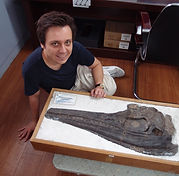
Daniel J. Field is Professor of Vertebrate Palaeontology in the Department of Earth Sciences and the Strickland Curator of Ornithology at the University of Cambridge Museum of Zoology. He is a Fellow of Christ's College, Cambridge, where Charles Darwin studied as an undergraduate, and serves as the founding director of the Darwin-Hamied Centre at Christ's College. Field also maintains research associate positions at the Denver Museum of Nature and Science and the Natural History Museum (London). Field is an evolutionary biologist and palaeontologist whose research focuses on deciphering the origins of modern avian biodiversity using fossil, anatomical, and molecular data. His work spans multiple themes including clarifying how birds survived and diversified following the mass extinction of non-avian dinosaurs, studying the evolutionary histories of major living bird groups, and understanding the evolutionary origins of distinctive biological features such as the modern bird skull. In 2020, his team announced the discovery of Asteriornis maastrichtensis (the 'Wonderchicken'), the oldest-known modern bird fossil and an early relative of the group that gave rise to living chickens and ducks. Field's publication record shows consistent research output across multiple areas of avian evolution, with recent work focusing on avian palate evolution, skeletal pneumaticity, developmental patterns in bird skulls, and the evolutionary relationships among major bird groups. His research integrates cutting-edge techniques including CT scanning, geometric morphometrics, and phylogenetic analysis to address fundamental questions about vertebrate evolution. Field leads an active research group comprising postdoctoral researchers, PhD students, and master's students from around the world. His lab has produced significant work on topics including the evolution of flightlessness in ratites, the developmental underpinnings of avian morphological diversity, and the phylogenetic relationships among major bird lineages. The lab maintains strong international collaborations and has been instrumental in training the next generation of evolutionary biologists and palaeontologists. Field is passionate about natural history and science outreach, and enjoys photographing Earth's vertebrate biodiversity in the field. His work bridges the gap between traditional palaeontology and modern evolutionary biology, contributing significantly to our understanding of how modern bird diversity arose from their dinosaurian ancestors.
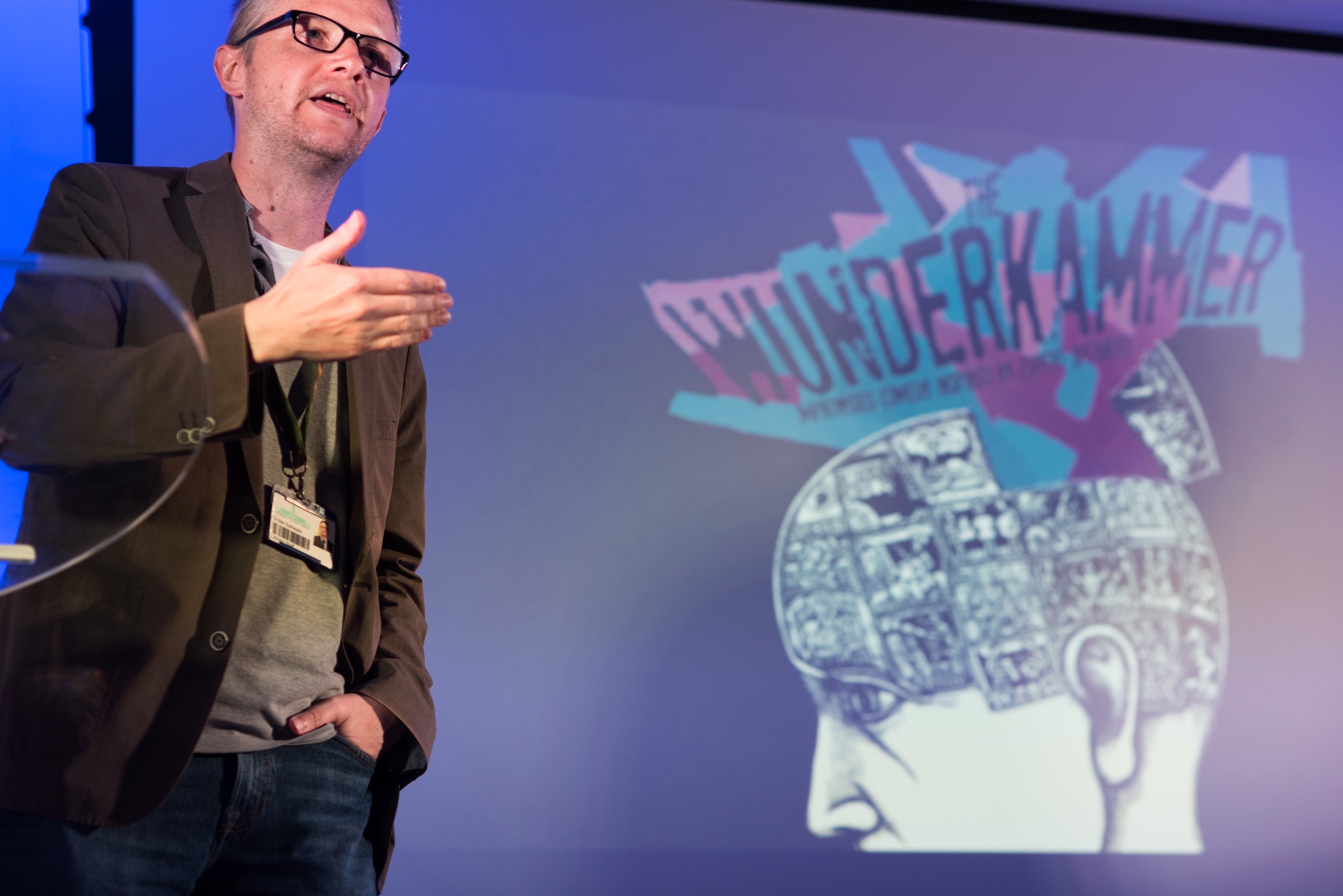
Professor Ben Outhwaite serves as Head of the Taylor-Schechter Genizah Research Unit at Cambridge University Library, a position he has held since 2006 following seven years as a Genizah researcher. His academic career is centered on the linguistic and historical analysis of Hebrew manuscripts from the Cairo Genizah collection. His educational background includes a B.A. in Hebrew Studies, M.Phil. in Medieval Hebrew literature, and Ph.D. from Christ's College, Cambridge. Supervised by Professor Geoffrey Khan, his doctoral thesis examined the grammatical description of Hebrew letters in the Genizah. Professor Outhwaite's research focuses on Hebrew language transmission during the Middle Ages, encompassing Biblical Hebrew vocalization traditions, medieval Hebrew as a communication medium, the form and function of medieval Hebrew Bibles, and the documentary history of communities depositing manuscripts into the Cairo Genizah. His work bridges linguistic analysis with historical context to illuminate Jewish life under Islamic rule. His publication trends reveal consistent contributions to Genizah scholarship, with recent work emphasizing economic history (Nile water pricing), religious polemics, manuscript transmission, and cross-cultural Jewish communities. The articles demonstrate deep engagement with documentary fragments while expanding into broader historical and linguistic contexts. Research funding has been secured from prestigious institutions including the AHRC, British Academy, Wellcome Foundation, and Andrew W. Mellon Foundation. He serves as series editor for Brill’s ‘Cambridge Genizah Studies’ and has contributed to major exhibitions like ‘Discarded History: the Genizah of Medieval Cairo’. The Taylor-Schechter Genizah Research Unit operates within Cambridge University Library, maintaining one of the world's most significant collections of Hebrew and Jewish manuscripts. The unit collaborates internationally on digitization projects and hosts the annual Genizah Lecture, Fragment of the Month features, and scholarly symposia.
Dr. Mildred E. Warner is a renowned Professor in the Department of City and Regional Planning at Cornell University's College of Architecture, Art, and Planning. Her work spans local government service delivery, economic development, environmental sustainability, and multigenerational planning, with a focus on challenging gender biases and promoting social infrastructure as a catalyst for economic growth. She collaborates globally with local government associations, planners, and policy groups. Ph.D. in Development Sociology (1997), Cornell University M.S. in Agricultural Economics (1985), Cornell University B.A. in History (1979), Oberlin College Dr. Warner's research interrogates the impacts of privatization, fiscal decentralization, and market-driven approaches on local governance, emphasizing spatial inequality and rural-urban disparities. She investigates age- and gender-based planning, environmental policy, and pragmatic municipalism, with recent work analyzing water affordability, broadband access, and pandemic response strategies. Her comparative international studies span Canada, Ecuador, Honduras, the UK, Germany, the Netherlands, Spain, and China. Her publications highlight trends in privatization , remunicipalization , public-private partnerships , and age-friendly urban planning . These works often intersect with public health policy , environmental justice , and social equity in service delivery. Scientific awards include the Margarita McCoy Award (2020) , Planning for Social Inclusion Award (2006) , and the Excellence in Research Award (2019) . She has secured major grants from the USDA, NIH, Pew Charitable Trusts, and international bodies to fund her work on aging, rural development, and infrastructure equity. Dr. Warner mentors graduate students in planning and public administration, advising on research design and community development. She directs the Local Government Restructuring Lab and co-founded the Community and Regional Development Institute at Cornell. Her expertise is frequently sought in policy circles and media profiles.
Naomi Rogers, Ph.D. (She/Her) is Professor of the History of Medicine in the Section of the History of Medicine and the Program in the History of Science and Medicine at Yale University. She holds courtesy appointments in the History Department and the Women's, Gender and Sexuality Studies Program, and serves on Yale's Dean's Advisory Council for LGBTQI Affairs. Professor Rogers teaches undergraduate, graduate, and medical students, regularly lecturing on the history of AIDS, reproduction, health economics, eugenics, nutrition, disability, and health activism. Professor Rogers' educational background includes: PhD in History from University of Pennsylvania (1986) MA from University of Pennsylvania (1986) BA in Music from Melbourne University (1980) BA with Honors from Melbourne University (1979) Her research focuses on 20th and 21st century history of medicine with emphasis on health inequities and social justice. Professor Rogers' historical interests span gender and health, disease and public health, disability studies, feminism, alternative medicine, health policy, and health activism. Her work critically examines the intersection of medical practices with social movements, particularly how marginalized communities have challenged medical orthodoxy throughout American history. She has published extensively in journals such as American Journal of Public Health, Bulletin of the History of Medicine, Journal of Medical Humanities, Radical History Review, Social History of Medicine, and Women and Health. Professor Rogers' recent scholarship demonstrates a consistent focus on the historical dimensions of contemporary health issues, particularly vaccine politics, abortion history, and community health activism. Her publications reveal patterns of resistance to medical authority, the role of race and gender in shaping health outcomes, and the historical roots of current health justice movements. Her work bridges academic history with public engagement, as evidenced by her frequent media commentary on COVID-19 and other health issues in outlets including BBC Radio, CNN, Huffington Post, National Public Radio, New York Times, Wall Street Journal, and Washington Post. Among her notable recognitions: AAHN's Lavinia L. Dock Award for Exemplary Historical Research for 'Polio Wars: Sister Kenny and the Golden Age of American Medicine' (2014) Presenter of the AAHM's Garrison Lecture: 'Radical Visions of American Medicine: Politics and Activism in the History of Medicine' (2017) Professor Rogers has been actively involved in academic leadership and mentoring. She has served as Director of Graduate Studies for the 2022-23 academic year, Chair of the Women's Faculty Forum, and Liaison to the Committee on Status of Women in Medicine. Her service extends to editorial boards including the Journal of the History of Medicine and Allied Sciences since 2018. She has also contributed to public understanding of medicine through consultations for documentaries including 'The Polio Crusade' (PBS), 'On the Basis of Sex' (Focus Features), and 'War on Science' (in process). Currently, Professor Rogers serves on the Medical School's OBGYN 'Dobbs' Sessions Planning Committee, which has organized webinars for the Yale community, and was co-organizer of the history-themed session 'Rooted in History: Abortion, Law and American Health Care.' She is working on her book project 'Health Radicalism and the Humanization of American Medicine' (under contract with Oxford), examining critics of medical orthodoxy since 1945 including civil rights, consumer, and feminist activists. She also conducts ongoing research on antisemitism in American medicine in the decades before and after World War II.
Eero Vaara serves as a Visiting Distinguished Professor in the Department of Management Studies at Aalto University, where his research centers on organizational and strategic change through discursive and narrative lenses. His work critically examines strategy processes, radical transformations like mergers and acquisitions, institutional legitimation, multinational corporation dynamics, and historical perspectives on management. His research interests encompass organizational change, strategic discourse, narrative analysis, institutional theory, and multinational corporate identity. Vaara investigates how language constructs organizational realities during crises, mergers, and cross-cultural interactions, with particular attention to power dynamics in identity politics and the role of historical narratives in strategic renewal. His scholarship bridges theoretical rigor with practical implications for managing complex change in global contexts. Recent publications (2020-2022) reveal consistent thematic focus across top management journals including Academy of Management Journal and Strategic Management Journal. Key trends include the interplay of language and social inequality during global crises like COVID-19, entrepreneurial phenomena in isolated economies such as North Korea, strategic ambiguity in organizational protection, and national identity construction within multinational corporations. His methodological innovations integrate critical discourse analysis with computational approaches like structural topic modeling. Scientific awards highlight his scholarly impact: Best Article Finalist 2023 (Academy of Management Discoveries) 2014 OMT Best Published Paper Award for advancing theoretical understanding of organizations While specific advising relationships and grant funding details aren't documented in the source material, Vaara's collaborative publications demonstrate extensive international research partnerships. His work with scholars across Europe and North America indicates active supervision of doctoral research and leadership in multinational research consortia, particularly in discourse-focused organizational studies. Though laboratory affiliations aren't specified, his methodological work suggests engagement with digital humanities research groups and discourse analysis laboratories, especially evident in publications combining computational text analysis with critical theoretical frameworks.