

Robert Östling is a Professor of Economics at the Stockholm School of Economics (SSE), affiliated with the Department of Economics and the Karl-Adam Bonnier Center for Governance within the House of Governance and Public Policy. He holds a PhD from SSE (2008) and previously worked at Stockholm University's Institute for International Economic Studies until 2018. His research focuses on applied microeconomics and behavioral economics, particularly examining how wealth impacts attitudes, behavior, and life outcomes using Swedish lottery data. He teaches econometrics, behavioral economics, and economics for MBA students, and serves as program director for SSE's MSc in Economics. Key roles include board membership of the Swedish Economics Association and the Expert Group on Public Economics (ESO), and membership in the scientific advisory board of the Swedish Consumer Protection Agency. He co-founded the popular economics blog Ekonomistas , recognized as 'Swede of the Year' in 2017. Awards include the Assar Lindbeck Medal (2021) and the Arnberg Prize (2009). His research spans wealth effects on labor supply, health, child development, and political behavior. Notable projects include studying lottery winners' long-term well-being and portfolio decisions. Teaching innovations include using animated GIFs for econometrics instruction. He has contributed to policy debates on economic reforms, consumer protection, and pandemic responses. Outreach activities include public writing and policy advisory roles. His research has been featured in outlets like the New York Times and Swedish media. He remains active in academic networks, including the Network for Evidence-Based Policy.
جستجوی استاد راهنمای دانشگاهی
برای مسیر پژوهشیتان، استاد راهنما، استاد دانشگاه و پژوهشگر مناسب را پیدا کنید و با آنها ارتباط بگیرید.
نمایش ۱۶-۳۰ از ۲٬۴۲۷ استاد راهنما
اطلاعات پروفایلها از صفحات عمومی دانشگاهها گرفته شده و ممکن است بهروز نباشد.

Markus Grillitsch is Professor in the Department of Human Geography at Lund University and Director of CIRCLE (Centre for Innovation, Research and Competence in the Learning Economy). His work spans EU member states, transition economies, and developing countries with focus on spatial transformation processes. His research interests include: Economic Geography and Innovation Studies Regional Development and Knowledge Institutions Place-Based Leadership and Institutional Entrepreneurship Network Analysis and Policy Implementation Recent publications demonstrate strong focus on energy justice transitions, innovation policy limitations, and multi-scale inequality analysis. His work connects theoretical frameworks with empirical studies of regional diversification and agency-structure dynamics. Key recurring themes include sustainable development pathways, capabilities approaches, and institutional transformation processes across diverse geographical contexts. Current research projects include: Multi-level learning journeys for green and just regional transformations (Vinnova-funded) Economic resilience through Swedish hidden champions study Circular value chains and policy dynamics research Klimatneutrala städer 2030 urban climate initiative Grillitsch's work actively contributes to UN Sustainable Development Goals through research on economic growth, reduced inequalities, sustainable cities, and climate action. His fingerprint analysis shows strongest connections to Innovation (100%), Knowledge (93%), and Regional Development (66%) research domains.
Giuliano Di Baldassarre is a Professor of Hydrology and Environmental Analysis at the Department of Earth Sciences, Uppsala University , Sweden. He serves as Head of Division for LUVAL (Air, Water and Landscape Sciences) and directs the Centre of Natural Hazards and Disaster Science (CNDS) (2016–2025). His work bridges water, environment, and society through interdisciplinary methods , focusing on disaster risk reduction, climate adaptation, and sustainable development. Education : Details not explicitly provided in the text. His research examines feedbacks between human activities and hydrological processes , including floods, droughts, and reservoir management . Key themes include social-ecological systems , inequalities in water crises , and policy implications of hydrological extremes . He has pioneered sociohydrology and human-water system modeling . Recent articles highlight global drought-flood interactions , urban water inequality , climate service maladaptation , and sociohydrological modeling . His work spans Nature Sustainability , Science Advances , and Hydrological Sciences Journal . Scientific Awards : International Hydrology Prize (Volker Medal) Plinius Medal (EGU) Witherspoon Lecture Award (AGU) European Research Council Consolidator Grant He led Panta Rhei - Everything Flows (2013–2022), IAHS’s global initiative on water-society interactions. Current efforts include transdisciplinary praxis and climate risk reduction frameworks .

Mischa Billingمشاهده پروفایل
مدرس ارشد
Mischa Billing is a Senior Lecturer at Örebro University specializing in Culinary Arts and Meal Science. She is actively involved in research on sensory experiences, wine studies, and food pairing. Her work spans across multiple disciplines including haptics, olfaction, and culinary traditions. Her research interests focus on the intersection of sensory perception and culinary practices. Billing explores how sound affects taste perception, develops haptic attribute models for food design, and investigates improved sensory experiences for the elderly. Her work in sommelier training and critical attribute techniques bridges traditional culinary knowledge with scientific approaches to sensory evaluation. Analysis of her publications reveals a strong focus on practical applications of sensory science in culinary contexts. Her work spans from theoretical explorations of wine tasting as embodied knowledge to practical guides for food and beverage pairing. The recurring themes include sensory integration, cultural contexts of food consumption, and innovative methods for enhancing meal experiences. Gastronomic Academy's Silver Medal Wine Profile of the Year Nose of the Year Honorary Truffle of the Year Billing has served as general secretary of the International Sommelier Association (ASI) and is a member of the Wine Academy in Sweden. She has extensive experience in evaluating diverse products including Swedish tap water and apple juice. Her media presence includes serving as a jury member on TV4's Sweden's Master Chef and delivering radio talks for Sveriges Radio. She leads several research initiatives including the Sense Lab, which focuses on future sensory experiences, and participates in research groups examining meals from social and cultural perspectives. Her projects like 'Rewine The World' demonstrate interdisciplinary approaches to reducing food waste through innovative culinary methods.
- Culinary Arts
- Meal Science
- Sensory Experience
- +۴ مورد دیگر
Sven Werner is a Senior Professor at Halmstad University's Academy of Entrepreneurship, Innovation and Sustainability. His expertise lies in district heating and cooling systems, with a focus on decarbonization, energy efficiency, and fourth/fifth generation technologies. He has authored foundational textbooks, such as Energiförsörjning: En introduktion till vårt energisystem , and contributed to international platforms like DHC+ and the IEA's Low-Temperature District Heating Annex. His research includes pioneering the concept of 'Fourth Generation District Heating' and analyzing global heating/cooling demands. Key achievements include over 50 short courses for industry professionals and presentations across 20 countries. Current projects include a book on the world history of district heating. Research Highlights: Low-temperature systems, renewable integration, and thermal storage. Impact: Most-cited article on district heating (Annex X Final Report, 2014), cited every six hours in 2021. International Contributions: Co-developed the Pan-European Thermal Atlas (PETA) and advised the EU Energy Council on energy efficiency. Werner's work bridges academia and industry, emphasizing practical solutions for sustainable energy systems. His publications span journals, conference papers, and policy guides, addressing topics like heat distribution costs, industrial heat recovery, and smart grid technologies.
Anastasia Girshinaمشاهده پروفایل
استادیار
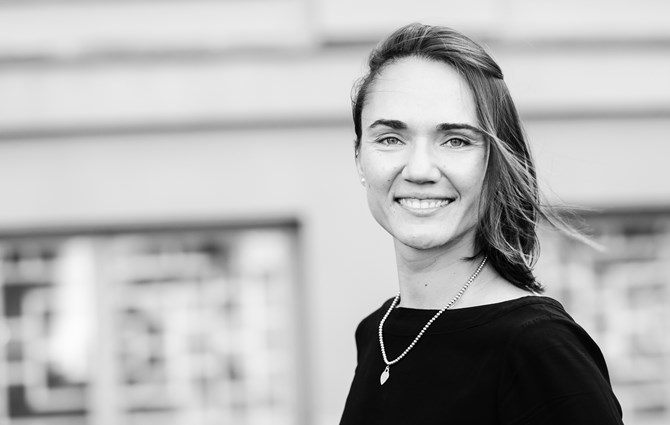
Anastasia Girshina is an Assistant Professor in the Department of Finance at the Stockholm School of Economics (SSE) and Deputy Director at MiDA (the Institute for Micro Data at SSE & SHoF). She also serves as a Research Fellow at the Swedish House of Finance. Her research focuses on household finance, real estate finance, and applied microeconomics, with emphasis on gender disparities in wealth accumulation, fiscal policy impacts, and behavioral finance. Previously, Girshina held a Postdoctoral Fellowship and worked as an Economist at the Luxembourg Central Bank’s Financial Stability Department. Her work has explored topics such as peer effects in stock market participation, housing affordability through tax subsidies, and gender differences in real estate returns. Key achievements include winning a prize for her collaborative study on housing affordability and tax subsidies (2022). Her research often intersects policy design, wealth dynamics, and behavioral insights, with ongoing projects on financial intermediation competition and herding in financial markets. Girshina collaborates with institutions like MiDA and SHoF, leveraging microdata for policy-relevant analysis. Her academic contributions span journals and conferences, with a focus on bridging theoretical models with real-world economic challenges.
Anh Tuan Leمشاهده پروفایل
دانشیار
Anh Tuan Le is an Associate Professor at the Department of Electrical Engineering, Chalmers University of Technology. He holds a PhD in Power Systems from Chalmers (2004) and a Master's in Energy Economics from the Asian Institute of Technology (1997). Specializes in power grid planning, electricity market modeling, and renewable energy integration Active in electric vehicle-grid interaction and battery storage systems Develops voltage stability solutions and decentralized control strategies His recent research focuses on: Flexibility markets for congestion management Machine learning applications in load forecasting Real-time security margin control using AI Key projects include: DigiRES (2024-2027): Digital integration of multi-energy flexibility POTENT-X (2024-2027): Port energy transition hubs FLEXIGRID (2019-2023): Distribution grid flexibility solutions
Professor Ingrid Undeland leads the Marine research group at the Division of Food and Nutrition Science, Department of Life Sciences at Chalmers University of Technology. She is a distinguished researcher with expertise spanning marine food science, lipid chemistry, and blue biorefining, having established herself as a leading figure in sustainable seafood research and marine biotechnology. Her educational background includes food science studies from Linnaeus University and a PhD in bioscience from Chalmers University of Technology and SIK (now RISE). Between 1999-2002, she was a post-doctoral fellow at University of Massachusetts Marine Station, which significantly shaped her research trajectory in marine food science. Professor Undeland's research focuses on pioneering next-generation seafood through innovative value chains from seaweed, small pelagic fish, fish side streams, mussels, and microalgae. Her specialized expertise lies in marine lipids and proteins, particularly their stabilization, isolation from complex sources, and nutritional properties including digestibility. She has extensive experience with antioxidant strategies using plant-derived side streams or extracts and fundamental studies of fish hemoglobins as pro-oxidants. Her work also encompasses innovative technologies for biomass fractionation and nutrient recycling to build blue biorefineries, along with in vitro digestion models and general seafood analytics. Beyond marine research, she explores filamentous fungi as sustainable alternative food protein sources. The trends in her recent publications reveal a strong emphasis on valorizing marine resources through advanced processing techniques. Her work increasingly focuses on sustainable extraction methods for seaweed proteins, particularly Ulva fenestrata, and developing antioxidant strategies using berry side streams to stabilize fish proteins. There's a growing interest in understanding the nutritional properties and digestibility of alternative marine proteins, along with environmental assessments of processing technologies. Her research consistently bridges fundamental science with practical applications for creating sustainable seafood value chains. Swedish representative in Nordic Lipidforum, WEFTA, and EuCheMS Editorial board member of Journal of the Aquatic Food Product Technology Member of the National Committee for Nutrition and Food Science at the Royal Swedish Academy of Sciences Co-founder of the startup company AquaFood H-index of 47 according to Google Scholar Professor Undeland has an extensive record of academic mentorship, having supervised or currently supervising 23 PhD students, 14 postdoctoral researchers, and examining over 25 MSc students. Her research is supported by numerous grants, including the WaSeaBi Project which focuses on valorizing seafood side-streams through holistic value chain design. She collaborates with various industry partners and academic institutions across Europe. Her laboratory includes technicians Dr. Karin Larsson and Dr. Rikard Fristedt, and she leads a dynamic research team working on multiple projects related to marine biorefining and sustainable seafood development. Her research group operates within well-equipped facilities at Chalmers University, with specialized laboratories for marine food analysis, protein extraction, lipid oxidation studies, and in vitro digestion modeling. The team also maintains cultivation systems for seaweed and filamentous fungi, enabling integrated research from raw material production to final product development.

Peter Fredriksson is a Professor at the Department of Economics, Uppsala University. He serves on the Nobel Committee for the Prize in Economic Sciences (Chair 2019-2021) and is affiliated with institutions like the Rockwool Foundation, IZA, CESifo, UCLS, and IFAU. His work spans labor economics, education economics, and policy evaluation. Research Focus : Labor economics, education economics, and policy evaluation Affiliations : Uppsala University, Rockwool Foundation, IZA, CESifo, UCLS, IFAU Research Interests center on labor economics, particularly unemployment insurance, class size effects, peer influences, and policy impacts. His work connects wage dynamics, educational outcomes, and public program evaluations. He explores non-cognitive skills' rising importance and gender pay disparities. Recent Publications (2025-2013) address topics like job mobility, layoff policies, child development, and global poverty. Key journals include Quarterly Journal of Economics , American Economic Review , and Journal of Human Resources . Scientific Awards & Roles : Member of the Royal Swedish Academy of Science Chair of the Nobel Committee for Economic Sciences (2019-2021) Research Fellow at IZA and CESifo Affiliated with Uppsala Center for Labor Studies and IFAU Associate Editor at Scandinavian Journal of Economics Collaborations include the Rockwool Foundation's program committees and extensive work with Björn Öckert, Per-Anders Edin, and Hessel Oosterbeek.
Anders Karlström is a Professor at KTH Royal Institute of Technology, specializing in Transport Modelling and Economics. His research focuses on sustainable transportation systems, emissions reduction, and energy efficiency. Key interests include activity-based modelling, dynamic discrete choice frameworks, and policy analysis for urban mobility. He has contributed to studies on travel behavior, infrastructure planning, and environmental impacts of transport systems across multiple international cities. His work integrates advanced methodologies such as recursive logit models, spatial regression, and machine learning for predictive analytics. Notable research areas involve evaluating weather variability effects on travel patterns, optimizing traffic state estimation with sensor data, and developing scenario-based models for future employment growth. Karlström collaborates with industries to enhance the competitiveness of sustainable transport solutions globally.
Peter Aronsson is the Rector of Linnaeus University since 2017, reappointed until 2026. He holds a professorship in History and has served as Pro Vice-Chancellor, Deputy Vice-Chancellor, and Dean of the Faculty of Arts and Humanities. His research focuses on local/regional history, democratic political culture, history education, and cultural heritage utilization. He coordinates international projects exploring national museums' roles in shaping historical narratives and has authored/co-authored over 100 publications, including books such as National Museums: Studies from around the World . He chairs the Swedish Council for Higher Education's board and sits on the transparency council for Kalmar and Kronoberg County Administrative Boards. His work emphasizes the societal relevance of cultural heritage and history education, advocating for museums as agents of democratic dialogue. Key contributions include founding the Center for Applied Heritage at Linnaeus University, which explores heritage's transformative societal potential. Education: PhD in History from Lund University (1992) Research Groups: Center for Applied Heritage, EuNaMus project Key Projects: EUNAMUS, HistCon, Nordic Spaces Leadership Roles: Vice-Chancellor (2017–present), Pro-Rector (2016–2017), Dean (2013–2015) His articles analyze historical consciousness, museum politics, and heritage management. Recent work addresses post-war Baltic cultural heritage, Nordic identity construction, and the political dimensions of historical narratives. He actively blogs on Open Science and academic governance, emphasizing universities' role in societal challenges.

Anders Parment is a Lecturer in Business Administration at Stockholm University , affiliated with the Stockholm Business School and its Department of Business Administration . With a focus on Marketing , he contributes to research on sustainability, generational differences, and urban-rural market dynamics. PhD in Economics from Linköping University (2005) MSc in Economics from Linköping University and Lund University Degree in Competition Law from Örebro University His research bridges Marketing , Sustainability , and Generational Behavior , examining how urbanization, digitalization, and societal polarization influence consumption and labor markets. Current projects explore urbanization effects and marketization in the Swedish school system . Publications highlight trends in Generational Marketing , Sustainable Practices , and Consumer Behavior across diverse contexts like automotive branding, retail evolution, and public administration. Swedish Marketing Association's Marketing Book of the Year (2019, 2016, 2014, 2013) Educational awards for teaching excellence He teaches basic and advanced marketing courses, including eMBA and leadership programs, emphasizing critical perspectives on corporate sustainability and consumer empowerment.
- Marketing
- Sustainability
- Consumer Behavior
- +۸ مورد دیگر
Jessica Jewell is a Professor in Technology and Society at Chalmers University's Department of Space, Earth and Environment. She holds additional roles including Professor at the Centre for Climate and Energy Transformation (University of Bergen), Guest Research Scholar at IIASA, and Senior Fellow at the Breakthrough Institute. Her research focuses on climate action feasibility, energy transitions, and the political economy of decarbonization. She leads projects funded by the European Research Council (ERC), Norwegian Research Council, and EU initiatives like CINTRAN. Key achievements include an ERC Starting Grant and membership in the Swedish Young Academy. Her work spans interdisciplinary approaches to quantify energy transition dynamics, assess coal phase-out strategies, and analyze carbon capture deployment. She serves on editorial boards for journals like Energy Research and Social Science and Oxford Open Energy . Jewell’s recent articles highlight themes like climate justice in energy transitions, feasibility of rapid decarbonization, and global coal reduction pathways. Her research bridges technical, socio-economic, and political dimensions to inform actionable climate policies.
Joakim Westerlund is a Professor in the Department of Economics at Lund University's School of Economics and Management. With over 134 research outputs and 33 academic activities, his work focuses on econometrics, particularly panel data analysis, structural breaks, and estimation theory. He has contributed to the development of econometric methods for the New Keynesian Phillips Curve and common correlated effects models. Active Wallenberg Academy Fellowship (2019-2028) Supervised 11 doctoral theses and bachelor/master projects Peer-review panel member and journal editor His research aligns with UN Sustainable Development Goals in Economics and Econometrics, with significant contributions to panel unit root testing, interactive effects models, and Stata-based econometric methods. Westerlund received the prestigious Journal of Applied Econometrics Distinguished Author award in 2018. Current PhD supervisees include Christina Maschmann (2023-2028), Tilman Bretschneider (2023-2028), Pelle Almgren (2022-2027), and Shayan Meskinimood (2021-2026).

Jonas Eliassonمشاهده پروفایل
استاد مهمان
Jonas Eliasson is a Visiting Professor at Linköping University's Department of Science and Technology (ITN), focusing on Communications and Transport Systems. He concurrently serves as Director of Transport Access at the Swedish National Transport Administration and chairs the Planning & Construction committee of the Royal Academy of Engineering Sciences. Previously, he was Director of the Stockholm City Transportation Administration (2016–2019) and a professor at the Royal Institute of Technology (KTH) from 2007 to 2016. His research emphasizes transport policy design and evaluation, including cost-benefit analysis, transport pricing, railway capacity allocation, and public acceptability of policies. He advises governments on sustainable transport planning, congestion pricing, and socio-economic appraisals. His work bridges theoretical frameworks and practical implementation, with a focus on accessibility, equity, and climate targets. Key research themes include infrastructure cost overruns, traffic demand reduction strategies, and the integration of passenger and freight transport systems. Recent publications analyze policy impacts, forecasting methods, and carbon-neutral transportation systems. His interdisciplinary approach addresses both technical and socio-political dimensions of transport challenges. Eliasson collaborates with research groups like Railway and Public Transport and contributes to initiatives like the 'Next Generation Smart Transportation Systems' project. Despite extensive professional roles, no formal student advisees are listed. His work is disseminated through journals like Transportation Research Part A and policy reports for national and regional governments.
نمایش نتایج تا ۷۵۰ مورد اول. برای یافتن نتایج دقیقتر، جستجوی خود را با فیلترها محدود کنید.