Dr. Grzegorz Gil is a Lecturer at the Department of International Security , Maria Curie-Skłodowska University in Lublin , Faculty of Political Science and Journalism. Holds a PhD in Political Science (2010) and MA in International Relations (2005) from UMCS. Research focuses on state failure , post-conflict recovery , and international security with regional expertise on Africa , Middle East , and Pacific states . Teaches courses on: International relations Humanitarian operations Australian foreign policy Economic diplomacy Publications (over 15 works) analyze state collapse (Somalia, Yemen, Colombia), military interventions , and regional integration (EU-ASEAN relations). Currently serves as expert for Team Europe Direct (2023–present) and juror in Academic Polish Oxford Debating Championships .
Laurent Matthey is an Associate Professor at the University of Geneva's Department of Geography and Environment since 2014. He directs the Urban Planning orientation of the joint UNIGE-HES-SO Master's in Territorial Development and co-directs the UNIGE-EPFL MAS in Urban Planning. His work bridges ethnography and literary studies, examining political issues in urban narrative production through sensitive registers and attentional regimes. Current affiliations: CRESSON team (UMR AAU) since 2023 Active in EspaceSuisse committee and RAMAU network management Research focuses on epistemology of urban planning knowledge , organized into two streams: Planning discourses and narrative studies Ethnography of urban projects His research-creation explores intersections between: Communication and urban planning Fiction and urban planning Narrative and sensitive methods Urban social quality Current projects include "Participez! Neighborhood makers" (FNS Division 1 funding) and completed works like "The narrative making of the city" (FNS-COST 18126) and "Developing housing cooperatives in Greater Geneva" (Interreg V France-Switzerland). He has supervised doctoral students in Geneva, including Hugo Campi ("Flowers to Convince"), Nicole Peccoud ("Social emergency in Geneva"), and Morgane Rudaz ("Feminist collages"). Key scientific contributions appear in GeoHumanities , Planning Theory , and Social Inclusion , with recent emphasis on: AI's role in urban narrative (2024) Decolonial planning approaches (2023) Affective urbanism (2018) Teaching encompasses: Urban geography and ecology (T206059 BGEO) Research-creation seminar (T416007 MDT) Creative methods in metropolitan foresight Professional engagements include urban quality studies for Geneva's Urban Planning Office and Lausanne's Roads Department. He has co-authored foundational texts on Swiss urbanism with Christophe Mager and David Gaillard, exploring topics like "Urbanism fictionnel" (2011) and "Being an urban planner" (2016).
Seok-Won Lee is an Associate Professor of History at Rhodes College, specializing in East Asian intellectual and cultural history with emphases on Chinese and Japanese history. He teaches courses on traditional and modern China while incorporating transnational perspectives that highlight underrepresented voices, borderlands, minorities, and outlaws through critical thinking frameworks developed during his training at Cornell University. Dr. Lee's academic background includes: Ph.D. in History, Cornell University (2010) M.Phil. in History, Cornell University (2007) M.A. in Interdisciplinary Program in Area Studies, Yonsei University (2003) B.A. in History, Yonsei University (2001) His research centers on intellectual history during East Asia's wartime period (1931-1945), examining how imperial intellectuals redefined concepts of nation, space, and community to justify colonial aggression while challenging Western social sciences' universality. Current projects include revising his dissertation into a book manuscript and conducting archival research on Japanese intellectuals' writings about Chinese and Korean history from the 1920s-1940s, with particular focus on Pan-Asianism and China studies in wartime Japan. Analysis of his twelve publications (2008-2021) reveals consistent engagement with wartime intellectual history, racial discourse, and empire-colony dynamics. Key thematic clusters include: Pan-Asianism's evolution across wartime/postwar contexts; intersections of race, empire, and social sciences; and critical examinations of colonial knowledge production. His work bridges history, Asian studies, and postcolonial theory through transnational methodologies. No scientific awards are documented in available materials. While active in teaching and research, no student advisement details or grant information are provided. Dr. Lee maintains affiliations with Rhodes College's Asian and Asian American Studies program and Chinese studies initiatives, though no dedicated labs or research teams are mentioned.
Dr. Jessica Watkins is a prominent academic affiliated with the German Institute for Global and Area Studies (GIGA) since 2021, serving as an Associate at the Institute for Middle East Studies . Prior to this, she held roles as Research Fellow (2021), Guest Teacher in International Relations at the London School of Economics (2020-2021), and Postdoctoral Research Officer at the London School of Economics (2017-2021). Her academic journey includes positions at King's College London and the Rand Corporation . PhD War Studies (Civil policing in Jordan), King's College London MA International Relations , King's College London BA Hons in Middle Eastern Studies , University of Cambridge Her research explores global orders and foreign policies with a focus on the Gulf Cooperation Council (GCC) states, Iraq, and Jordan. She investigates democratization barriers in post-conflict settings, community policing dynamics, and statebuilding approaches through qualitative analysis and case studies. Key publication trends include post-conflict governance, tribal-state interactions, and critiques of international coalition strategies in Iraq. Her work emphasizes the interplay between political legitimacy, institutional corruption, and grassroots trust in security frameworks. Dr. Watkins contributes to the GIGA Doctoral Program and collaborates with researchers like Dr. Falah Mubarak Bardan and Mustafa Hasan. Her projects bridge academic research with policy advice, particularly in democratization and security studies.
Bruce McClintock is a Professor of Policy Analysis at the RAND School of Public Policy, leading the RAND Space Enterprise Initiative and serving as a Senior Policy Researcher. He retired as a Brigadier General from the U.S. Air Force, with prior roles including A-10 pilot, test pilot, and U.S. Defense Attaché to Russia. His research focuses on space sustainability, Eurasian and Indo-Pacific security, and military strategy. He holds advanced degrees in aeronautical engineering (University of Florida), airpower studies (School for Advanced Airpower Studies), and a B.S. in astronautical engineering from the U.S. Air Force Academy. Education: M.S., Aeronautical Engineering, University of Florida M.S., Airpower Art and Science, School for Advanced Airpower Studies B.S., Astronautical Engineering, U.S. Air Force Academy McClintock’s research emphasizes space governance, international space traffic management, and strategic stability. He contributed to the U.S.-Russia Track-II Dialogue on Strategic Stability (2018–2023), advocating for space safety improvements. He also founded Hike for Life, an outdoor education company promoting environmental stewardship. His recent work addresses challenges in space congestion, NATO’s evolving space strategy, and China’s ambitions in lunar exploration. Key themes include preventing space conflicts, enhancing allied capabilities, and balancing commercialization with sustainability.
Iliana Olivié is a Senior Fellow at the Elcano Royal Institute and Associate Professor in Applied & Structural Economics & History at the Complutense University of Madrid. She holds a PhD in Economics and serves as Vice President for Policy Engagement at EADI (European Association of Development Research and Training Institutes) and Director of the European Think Tanks Group (ETTG). Her research focuses on global development agendas, European aid policies, international development finance, and EU relations with the Global South. Recent publications examine topics like Financing for Development (FfD4), EU aid narratives, and China's role in global governance through the Belt and Road Initiative. She has participated in over 30 research projects and authored 150+ publications, including academic articles, book chapters, and policy reports. Collaborations with multilateral organizations like the United Nations Economic and Social Council (ECOSOC) and the European Parliament highlight her policy-oriented work.
Luís Mah is an Assistant Professor in the Department of Political Economy at ISCTE-University Institute of Lisbon and an Integrated Researcher at CEI-Iscte - Center for International Studies. His work bridges academic research and civil society engagement, with a focus on international development and global political economy. Academic Background: PhD in Development Studies, LSE - London School of Economics and Political Science (1997–2004) Master's in Political Science, Yonsei University, Seoul (1994–1996) Bachelor's in Social Communication, Universidade Nova de Lisboa (1989–1993) Executive Education: Leadership for the 21st Century, Harvard Kennedy School (2008) Global Program on Economic, Social and Cultural Rights, Dignity International (2004) Research Interests: Luís Mah specializes in the political economy of development, with a particular focus on the global implications of Asia's economic resurgence and the European Union’s role in international development cooperation. His interdisciplinary work spans political science, economics, and social development. Professional Experience: From 2015 to 2022, he taught in the Master's in Development and International Cooperation (MDCI) and the PhD in Development Studies at ISEG-University of Lisbon. For 19 years, he has collaborated with civil society organizations. He served as Director of the United Nations Millennium Campaign in Portugal from 2007 to 2010. Scientific Affiliations: Integrated Researcher, CEI-Iscte - Center for International Studies Member, Sustainable Societies Research Group Advising and Grants: While no specific students or grants are listed, his long-standing teaching in graduate programs and leadership roles suggest active mentorship and potential involvement in funded research initiatives related to development and cooperation. Laboratories and Research Teams: He is affiliated with CEI-Iscte and contributes to the Sustainable Societies research group, focusing on global development challenges and policy frameworks.
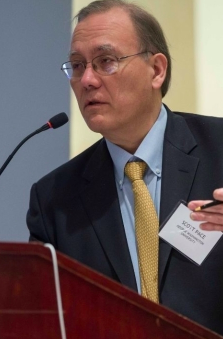
Dr. Scott Pace is a Full-time Faculty member and Professor of the Practice of International Affairs at George Washington University's Elliott School of International Affairs , also serving as Director of the Space Policy Institute . He concurrently holds a faculty role at the Trachtenberg School of Public Policy and Public Administration . His expertise spans civil, commercial, and national security space policy, technical innovation management, and international space cooperation. Education : PhD in Policy Analysis from RAND Graduate School (1989) MS in Aeronautics & Astronautics and Technology & Policy from MIT (1982) BS in Physics from Harvey Mudd College (1980) Research Interests : Focus on space policy frameworks, international collaboration, and governance. Key areas include GNSS systems, spectrum management, and national security applications of space technology. Notable Achievements : Recipient of Japan's Order of the Rising Sun (2021) Former Deputy Assistant to the U.S. President and Executive Secretary of the National Space Council (2017–2020) Lead roles at NASA (2005–2008) and White House OSTP (pre-2005) Awards : Includes NASA leadership medals and DoD recognition for contributions to space policy and crisis management. Advisory Roles : Member of U.S. delegations to UN space committees, NOAA’s Commercial Remote Sensing Advisory Board, and international space organizations like the American Astronautical Society.
Ashwana D. Fricker is an Assistant Professor in the Department of Biology within the College of Arts and Sciences at Adelphi University, where she began her tenure in Fall 2024. Her academic journey includes postdoctoral and teaching experiences at California State University, Northridge, Purdue University, and the University of São Paulo, Brazil. Education: PhD in Microbiology, Cornell University (2015) BS in Biochemistry & Biophysics, Rensselaer Polytechnic Institute (2008) Dr. Fricker's research centers on the gut microbiome and its role in human health, particularly how imbalances (dysbiosis) contribute to diseases such as obesity, liver disease, and cancer. She investigates how microbial metabolites, including short-chain fatty acids, influence host inflammation and epithelial health. Her work aims to develop strategies using prebiotics and probiotics to restore resilient and diverse microbial communities. Her background also includes studies on bacterial persistence in Gram-positive organisms and the ecological impact of invasive predators on microbial communities. Although no publications are listed in the provided text, her research interests reflect a strong interdisciplinary focus spanning microbiology, microbial ecology, and translational health applications. Her work integrates ecological dynamics, molecular mechanisms, and potential therapeutic interventions. Dr. Fricker is committed to inclusive and student-driven pedagogy, emphasizing hands-on learning through microscopy, bioinformatics, and independent research projects. She fosters classroom community via cooperative learning, group problem-solving, and team-based challenges. She has taught courses including Microbiology, Microbial Ecology, and Senior Seminar in Bio-Capstone, and previously taught Microbiology for Non-majors at Purdue University. Her international research experience in Brazil highlights her global engagement in microbiological research. She has not received any listed scientific awards in the provided material. She is actively involved in research and teaching, with no indication of part-time status, retirement, or former employment status. She maintains a professional presence at Adelphi University with an office in the Science Building and a direct line for communication.
Robert O'Brien is a Professor of Political Science in the Faculty of Social Sciences at McMaster University. He teaches courses in international relations and international political economy, with a focus on global labor politics, climate change, and international trade agreements. His research spans several decades, with publications dating back to the 1980s, and he currently serves as consulting editor of the Global Labour Journal and was formerly associate editor of Global Social Policy. Professor O'Brien's educational background includes a B.A (Hons) from Carleton University, an MSc. (Econ) from the London School of Economics and Political Science, and a Ph.D from York University. His research interests span international relations, international political economy, global labor politics, climate change, and social movements. O'Brien has conducted extensive research on international trade agreements including NAFTA and WTO, examining their impacts on labor and social movements. He is currently focusing on climate internationalisms and climate futures, exploring how advanced industrialized countries should adopt climate policies that consider global impacts. O'Brien's recent publications reveal consistent themes in global political economy, labor internationalism, and climate politics. His work demonstrates a strong focus on the intersection of labor movements with international economic institutions, the evolving nature of global governance, and the political dimensions of climate change. The research shows increasing attention to climate politics in recent years, reflecting his current projects on Western internationalism in the climate change era. Fulbright Canada Research Chair in Public Diplomacy (2021) Professor O'Brien has advised numerous students through various courses and research supervision, including Global Political Economy, Political Economy of Global Climate Change, and Politics of a Dying Planet. His teaching spans undergraduate and graduate levels, with courses offered under both Political Science and Global Studies departments. He has received recognition through news coverage, social media mentions, and academic citations, with his work referenced in Wikipedia pages, policy sources, and syllabi across multiple institutions. O'Brien maintains an active research agenda through his work with the Global Labour Journal and ongoing projects examining climate scenarios for the future. His research connects academic scholarship with practical policy implications, particularly regarding how individual citizens can contribute to a transition toward a greener society and economy.
Peter O'Brien is a Professor of Political Science at Trinity University in San Antonio, Texas, where he teaches courses in political philosophy, European politics, and political thought. His extensive research focuses on European identity, Islam in Europe, immigration studies, and anti-Americanism, with particular attention to historical and contemporary European perceptions of non-European cultures. O'Brien's educational background includes a Ph.D. from the University of Wisconsin-Madison and a B.A. from Kalamazoo College. His scholarly work demonstrates a deep engagement with questions of European identity formation, particularly through encounters with Muslim communities and American influence. His research spans historical analysis from medieval times to contemporary politics, examining how Europeans construct their identity through interactions with others. O'Brien's publications reveal consistent themes across decades of scholarship, with recent works addressing counter-terrorism policies, migration governance, and Islamophobia in Europe. His research methodology combines historical analysis with contemporary political theory, often challenging conventional wisdom about European identity and its relationship to non-European cultures. He has developed particular expertise in German politics and European integration processes. Social Science Research Council Fellow at the Free University in Berlin Fulbright Professor at Boğaziçi University in Istanbul Fulbright Professor at the Humboldt University in Berlin As an educator, O'Brien has led immersive study abroad experiences in Berlin, teaching his 'Global City Berlin' course on-site. Beyond academia, he actively volunteers at the Center for Refugee Services and the Village at Incarnate Word senior community, demonstrating commitment to community engagement that complements his scholarly focus on migration and integration issues.
Pan Xu is a tenure-track assistant professor with joint appointments in the Department of Biostatistics & Bioinformatics, Department of Computer Science, and Department of Electrical & Computer Engineering at Duke University's Pratt School of Engineering. Prior to joining Duke, he was a Postdoctoral Scholar Research Associate at the California Institute of Technology, and he earned his Ph.D. in Computer Science from UCLA. His research bridges theoretical foundations with practical applications in machine learning and artificial intelligence. Dr. Xu's research focuses on developing computationally- and data-efficient machine learning algorithms with strong theoretical guarantees, particularly in reinforcement learning, optimization, and high-dimensional statistics. His work addresses two fundamental challenges in sequential decision-making: efficient exploration with minimal interactions and robustness against distributional shifts. His research spans theoretical algorithm design, practical implementation, and real-world applications in bioinformatics and healthcare. His publication record demonstrates consistent high-impact contributions to top-tier conferences including ICML, NeurIPS, ICLR, AAAI, and AISTATS. The research trends show a progression from foundational work in non-convex optimization and multi-armed bandits toward increasingly sophisticated frameworks for robust reinforcement learning, with particular emphasis on distributional robustness, efficient exploration strategies, and practical applications. His work often bridges theoretical guarantees with empirical validation. NSF award on approximate sampling based exploration for sequential decision making Whitehead Scholar award from Duke University School of Medicine PIMCO Postdoctoral Fellowship in Data Science UCLA Outstanding Graduate Student Research Award Rising Stars in Data Science by University of Chicago Best Paper Award for Queer In AI: A Case Study in Community-Led Participatory AI at FAccT 2023 Featured Certification for Wasserstein Distributionally Robust Policy Evaluation and Learning for Contextual Bandits at TMLR Oral Presentation award at AAAI 2024 Dr. Xu actively mentors students and researchers, seeking highly motivated individuals with strong mathematical backgrounds for Ph.D. programs in Biostatistics & Bioinformatics, Computer Science, and Electrical & Computer Engineering at Duke. He has received multiple research grants including an NSF award on approximate sampling based exploration for sequential decision making. His service to the academic community includes roles as area chair for NeurIPS, ICML, ICLR, and AISTATS, as well as action editor for Transactions on Machine Learning Research. His research group develops algorithms that address fundamental challenges in sequential decision-making, with applications spanning healthcare, bioinformatics, and multi-agent systems. Current research directions include distributionally robust reinforcement learning, efficient exploration strategies, and applications of graph neural networks to biological problems.
Jeeseop Kim is an Assistant Professor in the Department of Aerospace and Mechanical Engineering at The University of Texas at El Paso (UTEP), College of Engineering, specializing in robotics, autonomy, and control theory. His research focuses on safety-critical planning and control, with emphasis on bipedal/quadrupedal locomotion, hybrid dynamical system control, and whole-body planning and control. Education: B.S. in Mechanical and Aerospace Engineering, Seoul National University (2014) M.S. in Intelligence and Information (Robotics), Seoul National University (2017) Ph.D. in Mechanical Engineering, Virginia Tech (2022) Postdoctoral Scholar, Mechanical and Civil Engineering, Caltech (2022–2025) His research spans safety-critical control systems for legged robots, including obstacle-aware nonlinear model predictive control (MPC), control barrier functions, and distributed coordination algorithms. Recent work explores adaptive delay estimation, tactile sensing for robotic grasping, and hardware-software co-design for humanoid robots. Key article trends highlight advancements in autonomous inspection robotics, hybrid control architectures, and real-time planning for quadrupedal systems. His work integrates control theory with practical applications in industrial and healthcare domains. Awards: ASME DSCD Rudolf Kalman Best Paper Award (2022) IEEE ICRA Outstanding Paper Award (2023) Jeeseop teaches MECH 4332: Mechanical Computational Applications in Vision and Robotics (Fall 2025). He actively recruits Ph.D. students for Spring/Fall 2026 and seeks motivated undergraduates/MS students with skills in robotics kinematics, programming (C/C++, Python, MATLAB), and CAD design. The AIGIS Lab welcomes applicants with interests in robotics, controls, and autonomous systems.
Professor Nikolaos Koutsouleris serves as a Research Group Leader for the Max Planck Fellow Group for Precision Psychiatry at the Max Planck Institute of Psychiatry and holds a position as Senior Physician in the Department of Psychiatry and Psychotherapy at Ludwig Maximilian University (LMU) Munich. His work bridges clinical practice with advanced computational approaches to transform psychiatric diagnostics and treatment. Dr. Koutsouleris specializes in predictive psychiatry, focusing on extracting meaningful patterns from neurobiological, neurocognitive, and clinical data to improve early recognition of functional psychoses. His research employs structural MRI, neuropsychological testing, and clinical evaluations within cross-sectional and longitudinal studies, utilizing advanced machine learning methods to identify and validate biomarkers for single-subject prediction of psychosis. As head of the Early Psychosis Studies and the Workgroup for Neurodiagnostic Applications, he drives initiatives to implement predictive models across healthcare settings for personalized management of high-risk individuals. His publication record reveals a consistent focus on machine learning applications in psychiatry, with recent work addressing critical issues like the generalizability of clinical prediction models, brain aging patterns in large populations, and multimodal approaches to psychosis prediction. His research spans from fundamental methodological challenges to clinical applications, demonstrating how AI and machine learning are transforming psychiatric practice toward precision medicine. Dr. Koutsouleris actively trains pre- and post-doctoral investigators in advanced data analysis techniques, emphasizing comprehensive analysis of complex, high-dimensional datasets using multivariate methods. His leadership in the PRONIA Consortium and other collaborative efforts highlights his commitment to advancing the field through international cooperation and rigorous scientific inquiry.
Larry D. Wigger serves as Teaching Professor of Supply Chain Management and Faculty Director of Assessment and Accreditation at the Henry W. Bloch School of Management, University of Missouri-Kansas City. With over twenty years of industry experience spanning strategic leadership, operations, and global project management, he integrates practical expertise into academic instruction. His educational background includes: MA in Economics from University of Missouri-Kansas City MS in Supply Chain Management and general MBA from Elmhurst University BA in Business Administration from William Jewell College He is currently completing his PhD dissertation in Economics at UMKC with a co-discipline in Public Affairs and Administration. Wigger's research bridges supply chain visibility through blockchain technology, public policy responses to automation-induced unemployment, and modern monetary theory constraints. His work examines systemic economic structures while addressing practical industry challenges in labor markets and capital allocation. Recent publications demonstrate consistent thematic focus on securing supply chains via traceability systems, analyzing labor-housing dynamics in critical materials networks, and developing holistic economic frameworks for supply chain analysis. His scholarship uniquely connects theoretical economics with tangible supply chain disruptions and policy interventions. Though no formal advisees are documented, Wigger's industry leadership included equity positions in construction startups serving petroleum, retail, and hospitality sectors, plus three years managing post-earthquake reconstruction in Port-au-Prince. His accreditation role indicates significant administrative responsibilities within the business school.