Ning Ai is an Associate Professor at the University of Illinois Chicago (UIC), holding a joint appointment in the Department of Urban Planning and Policy and the Institute for Environmental Science and Policy. Her expertise lies in urban sustainability, material/waste management, and urban metabolism. She joined UIC in 2011 with a Ph.D. from Georgia Tech, an MIT Master's, and dual bachelor's degrees from Tsinghua University and Renmin University of China. Her research integrates life cycle perspectives and data-driven approaches to environmental planning, emphasizing sustainable transportation and waste management. Notable projects include studies on food recovery programs, electric vehicle battery recycling, and neighborhood-level traffic impact analysis in Chicago. She has served on the ACSP Committee on Diversity and led the Air & Waste Management Association’s Sustainability Division (2020-2022). Teaching spans courses like Environmental Planning and Policy, Urban Economics, and System Methods for Environmental Policy. Her work bridges academia and practice, collaborating with entities like the World Bank and Georgia’s Department of Natural Resources. She leads a team advancing eco-friendly product adoption through projects like PFAS-free food service initiatives. Publications focus on sustainable urban systems, waste management frameworks, and policy design. Her research addresses both broad sustainability challenges and localized solutions, emphasizing interdisciplinary collaboration and community engagement.
Jacques deLisle is the Stephen A. Cozen Professor of Law and Professor of Political Science at the University of Pennsylvania. He serves as Director of the Center for the Study of Contemporary China, co-director of the Center for Asian Law, and director of the Asia Program at the Foreign Policy Research Institute. His expertise centers on contemporary Chinese law, politics, and U.S.-China relations, with a focus on legal reform, cross-strait relations, and Taiwan's international status. DeLisle’s research explores the interplay between law, governance, and international dynamics in China. His notable works analyze China’s engagement with international law, Taiwan’s diplomatic strategies, and the implications of U.S. policy toward the region. Recent publications include studies on China-India territorial disputes, political warfare tactics by authoritarian regimes, and the evolving role of the Chinese Communist Party. His work frequently addresses geopolitical issues such as the South China Sea disputes, the impact of the pandemic on U.S.-China relations, and the legal frameworks governing cross-strait interactions. DeLisle has advised on legal reform initiatives in China and frequently engages in policy discussions, including as an expert witness on Chinese law and a consultant for development programs.
David R. Lee is an International Professor at the Charles H. Dyson School of Applied Economics and Management, Cornell University. He holds a BA from Amherst College (1972), MA and PhD from the University of Wisconsin-Madison (1980/1981). His research bridges economic development, agriculture, and environmental sustainability, focusing on food security, climate change impacts, and policy interventions. He has advised global institutions like the World Bank, FAO, and USAID, and received the World Bank Green Award twice (2007, 2011). Education: PhD in Applied Economics, University of Wisconsin-Madison (1981) MA in Economics, University of Wisconsin-Madison (1980) BA in Economics, Amherst College (1972) Research Interests: Dr. Lee explores how economic policies can enhance sustainable agriculture while mitigating environmental degradation. His work emphasizes climate-smart practices, technology diffusion among smallholders, and gender dynamics in resource use. Recent studies include analyzing religious networks' role in information sharing and bioenergy systems' climate mitigation potential. Awards: World Bank Green Award (2007, 2011) Teaching & Advising: Teaches International Trade and Finance and Natural Resources and Economic Development . Mentors graduate students in development economics. No specific grants listed, but extensive consultancy work with global institutions reflects applied research impact. Global Engagement: Conducted research in ~30 countries across Latin America, Sub-Saharan Africa, and beyond. Served as visiting scholar at FAO, USDA, and universities in Italy, Netherlands, Venezuela, and Honduras.
Antonios Tzanakopoulos is the Professor of Public International Law at the University of Oxford and a Fellow at St Anne’s College . He has held visiting positions at the Universities of Paris II, Paris X, Angers, King’s College London, National and Kapodistrian University of Athens, Bern, Hebrew University of Jerusalem, IDC Herzliya, and China University of Political Science and Law. He previously taught at University College London and the University of Glasgow. DPhil (Oxford), LLM (NYU), LLM/LLB (Athens) Researcher for the Hellenic Ministry of Foreign Affairs and United Nations Graduate Teaching Assistant at Oxford’s Faculty of Law His research interests span public international law, state responsibility, treaty law, international human rights, law of the sea, and international investment law. He has served as counsel in cases before the International Court of Justice , EU courts, and ICSID tribunals, including Cyprus v Russia and Ukraine v Russia. His recent ICJ involvement includes Malaysia’s advisory opinions on the Occupied Palestinian Territory. His scholarly output is evident in 15 recent articles addressing treaty-custom interaction, maritime jurisdiction, self-defence doctrine, sanctions accountability, ICJ provisional measures, and state reactions to international coercion. He co-edits major handbooks on treaty law and domestic judicial engagement with international law. Secretary-General of the International Law Association Joint Secretary of the ILA’s British Branch Editorial Board of Oxford Reports on International Law
Dr. Yelda Turkan is an Associate Professor in the School of Civil and Construction Engineering at Oregon State University, where she leads research in automation, computer vision, and machine learning for sustainable infrastructure. She holds a PhD from the University of Waterloo and dual BS degrees in Civil Engineering and Geomatics Engineering from Istanbul Technical University. Her work focuses on leveraging lidar, digital twins, and BIM to improve construction operations and decision-making in the built environment. She has secured over $4M in grants from NSF, FHWA, and other agencies, and currently leads the NSF Convergence Accelerator-funded 'Deep Reality' project for AI-driven infrastructure management. Education: Ph.D., Civil Engineering, University of Waterloo, 2012 M.S., Engineering Informatics & Remote Sensing, Istanbul Technical University, 2006 B.S., Civil Engineering (double major in Geomatics Engineering), Istanbul Technical University, 2005/2003 Professional Roles: Vice President, International Association for Automation and Robotics in Construction (IAARC) Chair, ASCE Computing Division Education Committee Associate Editor, ASCE OPEN Journal Her research emphasizes automation in construction quality control, infrastructure inspection via drones and lidar, and immersive education tools using VR/AR. Recent projects include automated curb ramp compliance analysis, wildfire impact modeling, and digital twin development for timber structures. She has published over 80 peer-reviewed articles and actively promotes computing integration in civil engineering education and professional practice.
Zoran Kalinic serves as an Assistant Professor at the Faculty of Economics, University of Kragujevac, where he teaches Electronic Business since October 2012. Previously, he worked at the Faculty of Mechanical Engineering in Kragujevac from 1996 to 2005, and joined the Faculty of Economics in February 2005 as an assistant in Information Systems, later teaching Information Technology and Electronic Business from 2009 onward. Doctorate (2012): Faculty of Engineering, University of Kragujevac, specializing in information systems development and mobile communications Postgraduate studies: Faculty of Mechanical Engineering in Kragujevac (completed with average grade of 10) Bachelor's degree: Faculty of Mechanical Engineering in Kragujevac (1996, average grade 9.43) Professor Kalinic's research focuses on digital transformation and its economic implications, with particular expertise in mobile commerce, electronic business systems, digital payment technologies, and consumer behavior in online environments. His work frequently employs advanced analytical methods including artificial neural networks, structural equation modeling, and hybrid analytical approaches to investigate technology adoption patterns and digital marketplace dynamics. He has conducted extensive research on Serbian digital markets, including studies on mobile payment systems, e-commerce development barriers, and real estate price prediction using AI techniques. His publication record demonstrates a clear progression from foundational technology acceptance research toward more complex analyses of digital ecosystems, with recent work examining influencer marketing effects on TikTok, biometric payment systems, and gig economy measurement in Serbia. The integration of artificial intelligence methodologies with traditional consumer behavior theories represents a distinctive feature of his scholarly approach. Professor Kalinic maintains active international academic engagement through short study visits to institutions including the University of Udine, Vienna University of Economics, University of Maribor, Krakow University of Economics, Coventry University, Polytechnic of Turin, and Comenius University in Bratislava. He spent six weeks at the University of Maribor in 2007 through a Tempus IMG grant and served as a visiting lecturer at the Krakow University of Economics in 2012. Author/co-author of over 60 papers in international and domestic journals and conferences Participant in multiple scientific research and professional projects Recipient of academic awards during studies from University, Faculty, Ministry of Science and Technology of Serbia, Embassy of Norway, WUS-Austria, Zastava-Yugo Automobiles, and Kragujevac City Assembly His professional development includes a month-long visit to the Faculty of Informatics at the University of the Basque Country in San Sebastian (2004) and ongoing collaboration with regional and European academic institutions. Professor Kalinic's research bridges theoretical frameworks with practical applications in the Serbian and Western Balkan digital economy context.
Associate Professor Sunny-Boy Ahmar Mahboob is a distinguished linguist at the University of Sydney, where he serves as Degree Coordinator for the Master of Crosscultural and Applied Linguistics program within the Department of Linguistics, Faculty of Arts and Social Sciences. With extensive experience in applied linguistics and language education, Dr. Mahboob has established himself as a leading expert in World Englishes, TESOL, and language variation research, both nationally and internationally. Dr. Mahboob's educational background includes: BA from Karachi MA from Karachi MA from Indiana University MEd from Sydney PhD from Indiana University (2003) Dr. Mahboob's primary research focuses on language variation in global contexts, with particular attention to World Englishes, the NNEST (Non-Native English Speaking Teachers) movement, language policy, and decolonial approaches to linguistics. His work critically examines how language policies and practices affect educational outcomes and social justice, especially in postcolonial contexts like Pakistan and the Middle East. He pioneered 'appliable linguistics' - an approach that bridges theoretical linguistics with practical applications in education and policy, emphasizing the need for linguistic theories to address real-world problems. His recent publications reveal a strong trajectory toward decolonial linguistics, with increasing focus on subaltern perspectives, environmental connections to language diversity, and critical examinations of colonial legacies in language education. Dr. Mahboob's work consistently addresses power dynamics in language teaching and the need for more inclusive approaches that value linguistic diversity across educational contexts from primary schools to universities. Dr. Mahboob has received numerous prestigious awards: 2019: Australia's Research Field Leader in English Language and Literature (The Australian's Research magazine) 2012: Fellow of the National Talent Pool; President's Programme for Highly Qualified Overseas Pakistanis 2006: Faculty of Arts and Social Sciences Teaching Award, University of Sydney 2005: Teaching Initiative Award and Fellow of the Association of Pacific Rim Universities 2004: ECU Research and Creativity Award 2002: 'Distinguished President Award' from INTESOL, Indianapolis As an academic mentor, Dr. Mahboob supervises research students including Ruohong CAO (Developing Mandarin Learning Materials for Young Learners in Australia through Positive Discourse Analysis) and Tracy GAO (Evaluating Chinese Language Textbooks: A Sociosemiotic Perspective). His editorial work includes serving as Editor of TESOL Quarterly (2014-2017) and Associate Editor for multiple linguistics journals. Dr. Mahboob has secured significant research funding for projects including the SLATE (Scaffolding Literacy in Academic and Tertiary Environments) project and indigenous language funding initiatives in Australia. Dr. Mahboob founded and leads the International Free Linguistics Conference series, which has become an important platform for critical and alternative approaches to linguistics. His 'SLATE project' focuses on genre-based pedagogy for academic writing, and he actively collaborates with researchers across multiple continents through the World Englishes research network. His recent work increasingly explores the connections between language diversity and environmental sustainability, positioning linguistic ecology as a critical component of broader ecological concerns.
Lynn Blewett is a Professor in the Division of Health Policy and Management at the University of Minnesota's School of Public Health. She directs the State Health Access Data Assistance Center (SHADAC), a Robert Wood Johnson Foundation-funded initiative supporting state-level health access evaluation. Her work focuses on health insurance coverage, Medicaid/CHIP, immigrant health, and international health systems. PhD, Health Services Research, Policy, and Administration, University of Minnesota MA, Public Affairs, Hubert H. Humphrey School of Public Affairs BA, Psychology, University of Wisconsin Her research examines disparities in healthcare access, state policy impacts on coverage, and data infrastructure development. She led the creation of the University of Minnesota's Census Research Data Center, the only health-focused RDC in the U.S. Key publication themes include pandemic healthcare resilience (2020), all-payer claims databases (2023), and long-term Medicaid eligibility modeling (2022). Trends show sustained focus on data-driven policy solutions and equity in healthcare access. Member, National Academy of Social Insurance Board of Scientific Counselors, National Center for Health Statistics Board member, AcademyHealth She has secured grants from the Robert Wood Johnson Foundation and directed SHADAC's federal survey access initiatives. Her advocacy for data transparency extends to global health systems analysis, informed by her Senate legislative experience in health policy. As SHADAC director, she manages teams analyzing state health programs and collaborates with the University of Minnesota Medical Center. The Census RDC under her leadership provides critical infrastructure for health services research.
Vatsal Sharan is an Assistant Professor in the Thomas Lord Department of Computer Science at the University of Southern California's Viterbi School of Engineering. He maintains affiliations with the Theory Group, Machine Learning Center, and the Center for AI in Society at USC. Education: Ph.D. in Computer Science from Stanford University, advised by Greg Valiant Postdoctoral research at MIT, hosted by Ankur Moitra Vatsal Sharan's research centers on the theoretical foundations of machine learning, positioned at the intersection of machine learning, theoretical computer science, and statistics. His work investigates fundamental limits for solving learning and estimation tasks under computational and information-theoretic constraints, with the goal of developing practical algorithms that are efficient, fair, and robust. His research spans memory-efficient learning, algorithmic fairness, robustness in deep learning, and the theoretical underpinnings of transformers and large language models. A significant portion of his work explores how memory constraints affect learning algorithms and whether memory can serve as a distinguishing factor between 'efficient' and 'expensive' techniques in machine learning. His recent publications demonstrate a strong focus on multicalibration, transformer interpretability, and trustworthy AI systems. Scientific Awards: Amazon Research Award (2021 and 2023) SoCal NLP Symposium 2023 Best Paper Award COLT 2022 Best Paper Award Vatsal Sharan advises a diverse group of Ph.D. students including Siddartha Devic, Bhavya Vasudeva, Julian Asilis, Deqing Fu, Devansh Gupta, Spandan Senapati, and Tianyi Zhou. His research is supported by multiple prestigious grants from the NSF, Amazon Research, Google Research, and the Okawa Foundation. He is an active participant in the Learning Theory Alliance (LeT-All), a community-building and mentorship initiative for the learning theory community. His teaching portfolio includes advanced courses on machine learning theory and trustworthy machine learning at USC, where he shapes the next generation of researchers in theoretical aspects of artificial intelligence.
Abhinav Shrivastava is an Associate Professor in the Department of Computer Science at University of Maryland, College Park, with a joint appointment in the Institute of Advanced Computer Studies (UMIACS). Previously, he served as an Assistant Professor at the same institution from August 2018 to June 2024, and spent one year as a Visiting Research Scientist at Google Research from September 2017 to August 2018. His educational background includes: PhD in Robotics and Artificial Intelligence from Carnegie Mellon University (2017), advised by Abhinav Gupta, with thesis titled 'Discovering and Leveraging Visual Structure for Large-scale Recognition' MS in Artificial Intelligence from Carnegie Mellon University (2011), supervised by Alyosha Efros and Martial Hebert BTech in Computer Science and Engineering from Jaypee Institute of Information Technology (2010) Professor Shrivastava's research focuses on computer vision and machine learning, with particular expertise in object detection, image recognition, and neural representations. His work bridges theoretical advances with practical applications, exploring how visual systems can discover and leverage structure in large-scale recognition problems. He has made significant contributions to understanding the role of supervision in vision transformers, developing novel approaches for object-state composition recognition, and creating efficient neural representations for videos and 3D scenes. His research often addresses fundamental challenges in visual recognition, including handling novelty in open-world environments and improving the efficiency of visual systems. An analysis of his recent publications reveals a strong emphasis on neural representations, particularly for dynamic content like videos and 3D scenes. His work demonstrates increasing sophistication in handling open-world vision problems, with research spanning object discovery, localization, and representation learning. The publications show a clear progression toward more efficient and scalable models, with recent work focusing on model compression, sparse representations, and addressing the challenges of working with limited annotations. His scientific contributions have been recognized with several prestigious awards: Best Paper Award (Applications) at IEEE Winter Conference on Applications of Computer Vision (2020) Microsoft Research PhD Fellowship (2014-2016) Best Student Paper Award at IEEE Winter Conference on Applications of Computer Vision (2014) Outstanding Reviewer Award at IEEE CVPR (2015) Professor Shrivastava has successfully mentored numerous graduate students, many of whom have become prominent researchers in computer vision. His Amazon Research Awards (2020 and 2023) have supported innovative projects including 'The pursuit of knowledge: discovering and localizing new concepts using dual memory' and 'Audio-conditioned Diffusion Models for Generating Lip-synchronized Videos.' He has served as Area Chair for major conferences including ICCV, CVPR, and AAAI, demonstrating his leadership in the computer vision community. His research has attracted significant funding from both academic and industry sources, supporting his exploration of fundamental questions in visual recognition and representation learning.
Dr. Kezhi (Ken) Li is an Associate Professor of AI in Healthcare at the Institute of Health Informatics, University College London (UCL). He leads the AI for Health research group and has established himself as a leading expert in applying artificial intelligence to solve complex problems in healthcare, with over 130 publications in leading journals (total impact factor greater than 400). Dr. Li earned his Doctor of Philosophy from Imperial College of Science, Technology and Medicine in 2013, followed by research positions at the Medical Research Council (2015-2017), University of Cambridge (2014-2015), and Royal Institute of Technology (KTH) (2013-2014). His academic journey reflects a consistent trajectory from technical AI research toward increasingly healthcare-focused applications. Dr. Li's research focuses on solving physiological, medical, clinical, and operational problems in healthcare using AI techniques. His specific expertise includes AI in healthcare using electronic health records (EHR), biomedical time series analysis using monitors/wearables, diabetes management, large language models (LLM) in healthcare (especially mental health), patient flow optimization, and digital health with federated learning. His work bridges the gap between cutting-edge AI methodologies and practical healthcare applications, with a strong focus on improving patient outcomes and healthcare system efficiency. Analysis of Dr. Li's publication history reveals a strong emphasis on diabetes management technologies, particularly blood glucose prediction systems using advanced neural network architectures. More recently, his work has expanded into mental health applications of large language models, blockchain-based federated learning for healthcare data, and mortality prediction in critical care settings. His research demonstrates a clear evolution from purely technical AI development toward increasingly clinically impactful applications, with growing emphasis on explainability, privacy preservation, and real-world implementation challenges. Dr. Li has received numerous prestigious awards recognizing his contributions to healthcare AI: Best Application Award of IEEE Global Blockchain Conference (2025) Fellow of British Computer Society (2025) Fellow of the Royal Society for Public Health (2024) Healthcare Partnership of the Year category at the London Higher Awards (2024) ECR Promising Project Award (2023) Gallivan Award finalists (2022) Stylianos Kalaitzis PhD Award Winner (2022) HDR UK Team of the Year (COVID-19) Award (2021) As an educator, Dr. Li serves as the Director of MRes study (AI-enabled Healthcare Systems) at UCL. He leads multiple key modules including Healthcare Artificial Intelligence Journal Club, Dissertation in Artificial Intelligence Enabled Healthcare, and Advanced Machine Learning for Healthcare. His supervision extends across dissertation projects and junior researchers in his AI for Health group. His research has been supported by various grants, including those from HDR UK, focusing on translating AI innovations into practical healthcare solutions. Dr. Li leads the AI for Health research group (https://ai4hucl.github.io/ai4h_webs/), which comprises researchers with diverse expertise in machine learning, healthcare systems, and clinical domains. The group maintains strong collaborations with healthcare providers and industry partners to ensure their research addresses real-world healthcare challenges and can be effectively translated into clinical practice.
Lubomir P. Litov is the David M. Moffett Professor of Corporate Finance and an associate professor in the Finance Department at the Michael F. Price College of Business, University of Oklahoma. He also holds an appointment as Affiliate Associate Professor of Law at the OU College of Law. Dr. Litov received his Ph.D. in Economics from Leonard Stern School of Business at New York University. Prior to joining OU, he held faculty positions at the University of Arizona and Washington University in St. Louis. He is also a research associate at the Financial Institutions Center at the Wharton School of the University of Pennsylvania. Dr. Litov's research focuses on several key areas of finance and corporate governance: Corporate governance mechanisms and board structures Mergers and acquisitions processes and outcomes Venture capital and private equity investment strategies Entrepreneurial finance and growth equity Capital structure decisions and risk management International corporate finance and policy impacts His recent publications examine critical issues such as dual-class stock IPOs, policy uncertainty effects on venture capital, poison pill defenses, and the relationship between venture capitalist directors and managerial incentives. Dr. Litov's work consistently bridges theoretical frameworks with practical applications in corporate finance and governance, with articles published in top journals including the Journal of Finance, Journal of Financial Economics, and Journal of Accounting and Economics. Dr. Litov has received numerous teaching and research honors including: Harold E. Hackler Outstanding MBA Professor Award (2022) Merrick Foundation Teaching Award (2018) Hurley Roberson Teaching Excellence Award (2017) William Sharpe award for best paper in JFQA (2010) As an educator, Dr. Litov teaches courses on Mergers, Acquisitions & Corporate Restructuring across multiple programs including the MBA, Executive MBA in Aerospace & Defense, and MSc in Finance. He also co-organizes the Virtual Household Finance Seminar and the NYU-Georgia Tech-OU Economics Virtual Seminar on Artificial Intelligence and Decentralized Finance, bringing together leading researchers to discuss cutting-edge developments in finance.
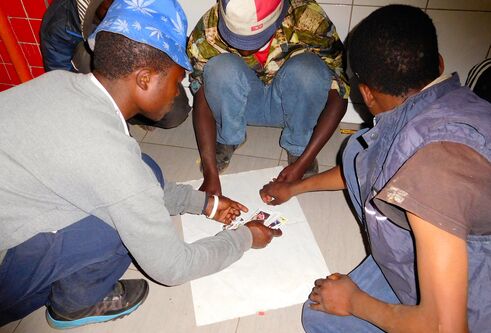
Lorraine van Blerk is a Professor of Human Geography at the University of Dundee's School of Humanities, Social Sciences and Law. She serves as Chair of Human Geography and leads the Research Centre for Transformative Change: Educational & Life Transitions (TCELT) in Education and Society. Her work focuses on street children/youth, refugees, and global inequalities. Academy of Social Sciences Fellow (2021) Stephen Fry Awards - Public Engagement Project of the Year (2017) Market Research Society President’s Medal (2015) Research interests include: Street youth resilience mapping Intergenerational partnerships Transitions to adulthood in crises Policy development for marginalized groups Coastal socio-ecological systems Cultural geographies of homelessness Recent publications address global street youth resilience frameworks (2REST project) and cinema's role for Harare street youth. Key collaborations include universities in Pretoria, Cape Town, Makerere, and Ryerson University. Scientific contributions recognized through: 6 major research prizes 16 funded projects 149+ research outputs International visiting appointments (Toronto Metropolitan University, National University of Singapore)
Dr. Ugur Turhan is a Senior Lecturer in aviation at UNSW Canberra with over two decades of experience in academic and professional settings. His expertise spans Air Traffic Management, Airport Operations, Aviation Safety, and Human Factors in Aviation. Previously, he served as Assistant Professor at Eskisehir Technical University and Anadolu University, and held a visiting professorship at Embry Riddle Aviation Academy. Dr. Turhan earned his Ph.D. in Civil Aviation Management from Anadolu University. His academic journey includes significant contributions to aviation education and research across multiple institutions in Turkey and internationally. Dr. Turhan's research focuses on critical aspects of aviation safety and efficiency. His work explores human factors in air traffic control, aircraft maintenance procedures, and emergency management in aviation contexts. He has developed innovative approaches to training air traffic controllers using 3D simulation technology and has investigated the relationship between safety culture and operational performance in aviation organizations. His research bridges theoretical frameworks with practical applications to enhance aviation safety standards globally. Analysis of Dr. Turhan's recent publications reveals a strong emphasis on human factors across aviation domains. His work consistently addresses safety management systems, cognitive workload assessment, and maintenance procedures. A notable trend is the integration of neurophysiological measurements with operational data to assess air traffic controller performance. His research also demonstrates growing interest in the application of advanced technologies for improving maintenance documentation and technician performance. Dr. Turhan has secured significant research funding through multiple international projects. His leadership roles include: Researcher and Eskisehir Technical University Coordinator for the FACT project under European Commission HORIZON2020 SESAR call (2020-present) Researcher and Eskisehir Technical University Coordinator for the Skill-UP project under Erasmus+ (2020-present) Researcher and Anadolu University Coordinator for the STRESS Project under HORIZON 2020-SESAR-2015-1 (2016-2018) Researcher and Anadolu University Coordinator for the IMPACT Project under HORIZON 2020-DRS-2014 (2015-2018) Researcher and Anadolu University Coordinator for SECONOMICS project under European Commission FP7 (2012-2015) Researcher for Boeing-sponsored International Project on Aviation Educational Software (2014-2016) Dr. Turhan has supervised multiple doctoral and master's students in aviation-related fields. His doctoral students include Birsen Acikel (2016) who researched flight training airspace complexity and Tarık Güneş (2021) who assessed aircraft maintenance technician competency. His master's students have investigated topics ranging from Turkish airspace flexibility to aircraft maintenance documentation. Dr. Turhan also serves as a valuable resource for prospective PhD students interested in human factors and safety in aviation and air traffic management.
Amy Vaughan Van Hecke serves as Assistant Chair and Professor in Marquette University's Department of Psychology, leading research on autism spectrum disorder (ASD) and social development across the lifespan using neuroimaging and psychophysiological methods. She directs community initiatives to improve autism services access for underserved Milwaukee populations through the Next Step Clinic. Her academic foundation includes: B.A. in Psychology from Smith College Ph.D. in Developmental Psychology from the University of Miami Dr. Van Hecke's research centers on brain activity, heart rate regulation, and social behavior in individuals with and without ASD, utilizing high-density EEG and MRI to examine neural responses to interventions like PEERS ® . Current projects investigate pandemic impacts on social interaction in autistic adults and neural mechanisms of social isolation remediation. Her work bridges laboratory neuroscience with community-based clinical applications. Publication analysis reveals consistent focus on intervention efficacy (particularly PEERS ® ), neural plasticity measurement, and comorbid conditions across developmental stages. Recent work emphasizes gender-specific outcomes, family impacts, and pandemic-related mental health, demonstrating methodological diversity from EEG asymmetry to community-based participatory research. Her distinguished scientific recognition includes: Kirschstein National Research Service Award (NRSA) from the National Institute of Mental Health Dr. Van Hecke mentors students through her Marquette Autism Project lab and the Next Step Clinic training program while securing major grants from Marquette University, Johnson Controls Foundation, and the Greater Milwaukee Funders’ Collaborative. She teaches undergraduate/graduate courses in developmental psychology and statistics. Advising: Clinical psychology graduate mentorship (excluding 2025 intake); undergraduate research supervision Grants: $500k+ secured for Next Step Clinic serving underserved Milwaukee children She co-directs the Marquette Interdisciplinary Autism Initiative and the Next Step Clinic, which employs a Family Navigation model in Milwaukee's Metcalfe Park neighborhood to provide autism screening, diagnosis, and therapy for children aged 15 months-10 years facing systemic barriers to care.