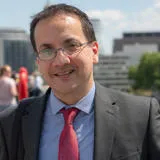
Ruben Enikolopov is an ICREA Research Professor at Universitat Pompeu Fabra (UPF) and holds positions at the Barcelona School of Economics (BSE), New Economic School (Visiting Professor), and National University of Singapore (Provost's Chair). He earned his PhD in Economics from Harvard University. Education: PhD in Economics, Harvard University Research Interests: Focus on political economy, economics of mass media, development economics, and corporate finance. Explores topics like social media's role in protest participation, corruption, nationalism, and historical media influence (e.g., Nazi Germany). Articles Trends: Recent work examines online homophily’s impact on social cohesion, cross-border media effects, and the political consequences of social media in autocratic regimes. Key themes include digital polarization, propaganda, and voter behavior. Awards/Grants: Recipient of European Research Council (ERC) grants including Starting Grant, Proof of Concept, and Consolidator Grant. Recognized for contributions to media-economics research. Labs/Teams: Affiliated with Barcelona Institute of Political Economy and Governance, CEPR, Gallup, and others. Editorships include Journal of Comparative Economics and Review of Economic Studies .
Linus Andersson is a Senior Lecturer at Halmstad University's School of Health and Welfare, specializing in media and communication studies. His research focuses on disinformation, digital ethics, media literacy, and the societal impacts of digitalization. He leads the interdisciplinary RECDACT project on conspiracy theories and participates in the LeaDS research program. Andersson holds a doctoral degree from Södertörn University (2012), researching alternative television and media criticism. His work bridges art, activism, and media theory. He previously worked at Norway's Media Council studying online radicalization. Key research themes include critical thinking in media literacy, digital dependency, and the ethical dimensions of screen culture. His work critiques digital platforms' societal roles while advocating for participatory media education frameworks. Recent publications explore involuntary social media disconnection, digital detox strategies, and the aesthetics of electronic waste representation. He collaborates internationally on media literacy interventions and youth participation in media policy design.
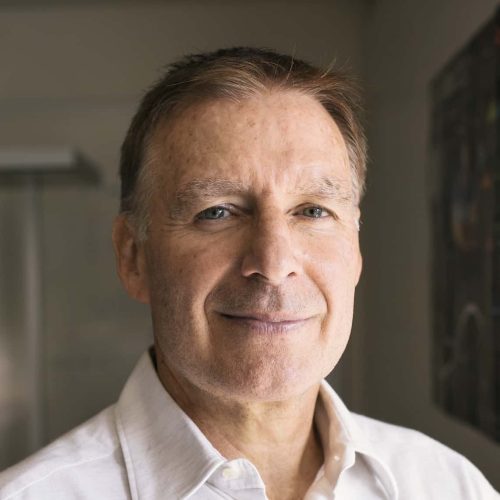
John Horgan is a Teaching Assistant Professor in the School of Humanities, Arts and Social Sciences at Stevens Institute of Technology, where he also serves as Director and Chair of the Stevens Center for Science Writings. He teaches courses in science writing, freshman communication, and the relationship between science and war, while maintaining an active career as a science writer and commentator. His educational background includes a BA in English and an MS in Journalism, both from Columbia University. These foundations have shaped his interdisciplinary approach to analyzing science, technology, and their societal implications. Horgan's research and writing focus on the limits of scientific knowledge, consciousness, the philosophy of mind, science and spirituality, and the roots of war and peace. He critically examines whether science can answer all fundamental questions, especially regarding subjective experience and existential meaning. His work bridges journalism, philosophy, and cognitive science, often challenging mainstream assumptions in neuroscience, physics, and artificial intelligence. His recent publications reflect a consistent thematic thread: the boundaries of rationality and empiricism. From quantum mechanics to mysticism, from war to mortality, Horgan explores topics where data meets doubt. His books and articles reveal a deep skepticism toward scientism while affirming the value of inquiry, narrative, and ethical reflection. Included in Best American Science Writing (2009) Included in The Best American Science and Nature Writing (2007, 2006, 2005) Templeton-Cambridge Journalism Fellowship in Science and Religion (2005) American Psychiatric Association Certificate of Commendation (1997) American Association for the Advancement of Science Journalism Award (2007, 1992) National Association of Science Writers Science-in-Society Award (1993) Forbes Media Guide 'Excellent' rating (1994) National Magazine Award (1986) Society of National Association Publications Award (1985) Horgan has mentored students through senior theses and seminars in science writing, and has played a key role in shaping Stevens’ academic initiatives, including serving on faculty search committees and developing a new undergraduate course in quantum technology. He continues to direct the Center for Science Writings, hosting public lectures by prominent science authors. His influence extends beyond the classroom through his widely read columns and books, which have reached millions of readers globally. The Stevens Center for Science Writings, under Horgan’s leadership, functions as a hub for dialogue between science, humanities, and public audiences. It organizes lectures, supports student writers, and fosters interdisciplinary engagement with science communication. Horgan’s own website, johnhorgan.org, serves as a platform for independent commentary, further amplifying his role as a public intellectual.
Fernanda Rodrigues is an Affiliate Professor at the Faculty of Psychology and Educational Sciences of the University of Porto (FPCEUP) and a guest lecturer at the Faculty of Human Sciences, Universidade Católica Portuguesa. She is a full researcher at the Centre for Educational Research and Intervention (CIIE), where she contributes to interdisciplinary research on social policy and education. Her academic journey includes a PhD in Social Work from the Pontifical Catholic University of São Paulo, Brazil, and degrees in Social Work and Sociology from Portuguese institutions. PhD in Social Work – Pontifical Catholic University of São Paulo, Brazil (1999) Degree in Social Work – ISSS Porto, Portugal Degree in Sociology – ISCTE, Portugal Her research interests span Social Policy, Social Exclusion, University Social Responsibility, Community Development, and Social Work . She has led and participated in numerous international projects, particularly within the Erasmus+ framework, focusing on social inclusion, lifelong learning, and intercultural conflict resolution. Her recent publications highlight a strong emphasis on the role of universities in promoting social responsibility and ethical engagement with communities. The analysis of her recent articles reveals a consistent focus on partnerships, institutional accountability, and social justice . Her work bridges academic research with practical policy development, especially in the context of European and Latin American collaborations. Themes such as poverty alleviation, educational equity, and civic engagement recur across her publications, reflecting a deep commitment to transformative social research. Although no specific scientific awards are listed, her leadership roles in national and European policy frameworks—such as serving on the Scientific Committee for poverty strategies in the Azores and as a UNICEF consultant—demonstrate significant recognition in her field. Fernanda Rodrigues has extensive experience in advising and grant-funded research, particularly through EU-funded projects like YOUNG_ADULLLT, UNIBILITY, and SOLVINC. She has supervised or collaborated with numerous researchers and students, though specific advisees are not named. Her work is closely tied to the CIIE, where she contributes to research teams focused on social inclusion and educational policy. She also plays key roles in public service, including as President of the Porto Delegation of the Portuguese Red Cross and former city councillor in Porto, integrating academic expertise with civic leadership. Her affiliated research units include the Centre for Educational Research and Intervention (CIIE) and participation in networks such as CoPIn (PCEP - Participation, Communities and Political Education). These labs and teams focus on participatory democracy, community-based education, and policy innovation.
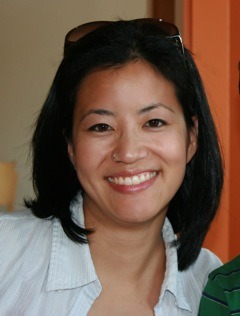
Angela Viora is a Lecturer in European Languages at Monash University, Faculty of Arts, within the School of Languages, Literatures, Cultures and Linguistics. She specializes in Italian Studies, integrating language education with interdisciplinary research in performance, migration, and art. Her teaching spans Italian language, culture, and European studies, and she actively contributes to curriculum innovation, particularly in decolonizing language education. She is based in Melbourne, Australia, and holds a PhD from Monash University in Theatre and Performance. PhD in Theatre and Performance, Monash University (2019) MA in Visual and Performing Arts, Accademia Albertina di Belle Arti di Torino (2012) Academic Diploma (Hons) in Fine Arts and Art History, Accademia Albertina di Belle Arti di Torino (2007) Her research centers on performance studies, migration, embodiment, and space, with a strong emphasis on practice-as-research. She explores identity, belonging, and the socio-political dimensions of art through site-specific and socially engaged performances. Her creative work often addresses the Italian diaspora, domestic space during lockdowns, and the body as a political and emotional site. Her recent publications and artistic outputs show a consistent focus on interdisciplinary performance, pedagogical innovation, and migration narratives. The 2025 monograph The Ecology of the Performance Art Process synthesizes years of practice-led inquiry into fragmentation, union, and reconfiguration in art. Other works like The P.R.omised Land and B.O.D.Y. The Bureau of Domestic Yearning reflect on migration and domesticity through embodied performance. ACIS Publishing Grants Scheme Award (2024) Decolonising and Indigenising European Languages at Monash University: Professional Development of Educators (2024) LLCL Education Funding - Recruiting and retaining students in European Languages (2024) Angela Viora supervises PhD students and is an active researcher in multiple collaborative projects, including the PhotoVOICE initiative with Monash and the University of Padua. She is a member of the Brimbank Arts Advisory Committee and participates in working groups focused on student engagement and decolonizing curricula. Her artistic projects often involve community collaboration and public engagement, reflecting her commitment to socially responsive scholarship.
Kim Hoque is Professor of Human Resource Management and Vice Dean (People and Culture) at King's Business School, King's College London. He previously held professorial positions at Warwick Business School, the University of Nottingham, and Birkbeck, University of London. He is a leading scholar in human resource management, employment relations, and equality, diversity, and inclusion (EDI), with a specific focus on disability employment. King's College London (2022–present) Warwick Business School (prior to 2022) University of Nottingham Birkbeck, University of London His research centers on human resource management, employment relations, and EDI, with a strong emphasis on disability inclusion in the workplace. He investigates how organizational practices, trade unions, and public policy affect disabled workers’ employment outcomes. His work explores topics such as flexible work arrangements (e.g., Flex Plus), high-performance work practices, agency work, and the role of union representation in promoting equity. Recent publications reflect a consistent focus on disability inclusion, workplace flexibility, job quality, and the intersection of financialization and HRM. His research often analyzes large-scale datasets and policy interventions, contributing to both academic discourse and real-world reforms. He frequently collaborates with colleagues such as Nick Bacon, Ian Kirkpatrick, and others on long-standing research projects. Kim Hoque is actively engaged in policy impact. He co-founded the Disability@Work research group (2013) and the Disability Employment Charter (2021), which has been endorsed by over 100 organizations. His research has influenced government policy, including revisions to the Disability Confident scheme and the inclusion of disabled apprenticeship targets in the Industrial Strategy. He advises governmental and non-governmental bodies, including NHS Scotland and the All-Party Parliamentary Group on Disability. He serves on the editorial boards of Human Relations , Journal of Management , and Industrial Relations Journal , and has previously advised the UK Commission for Employment and Skills and the Chartered Institute of Personnel and Development. He is the Principal Investigator on an active ESRC-funded project (2024–2025) focused on new government funding mechanisms. Kim Hoque leads and co-leads several research initiatives, including the Disability@Work group and King's Business School’s role in the secretariat of the All-Party Parliamentary Group on Disability. He collaborates extensively with trade unions, charities, and public sector organizations to co-produce research with practical impact.
Monika Baer is a Professor at the University of Wrocław's Institute of Ethnology and Cultural Anthropology, Faculty of Historical and Pedagogical Sciences. Her work focuses on Central/Eastern Europe, post-socialist transformation, Europeanization, legal agency, and gender/sexuality studies, with emphasis on citizenship, civil society, and activism. She explores how emotions shape political fields and anthropological knowledge production, particularly in late industrial societies. Research Trends: 15 years of publications examine LGBTQ+ rights in Poland, gender dynamics in transitional communities, and anthropological theories of late industrialism. Her work bridges academic scholarship with direct engagement in policy debates and activist movements. Scientific Awards: Kosciuszko Foundation Fellowship (2004) Academic Roles: Co-editor of Agency at Work: Ethnographies in/of Late Industrialism (2021) Co-editor of Anthropology of Gender and Sexuality. Marginal Perspectives (2014) Membership: President, Network for Anthropology of Gender and Sexuality (EASA) Council for European Studies (Columbia University) European Association of Social Anthropologists Polish Ethnological Society Grants: "Protecting Victims of Anti-LGBT Hate Crimes" (2020-2021, EU Justice Programme) DIVERCITY: Combating Homo/Transphobia (2015-2017, EU ROC Programme) "Conflict, Tension, Cooperation" (2014-2017, Polish National Science Centre)
Dr. Yurie Hong is Associate Professor of Classics and Gender, Women, and Sexuality Studies at Gustavus Adolphus College, where she also serves as a dedicated educator and mentor. She holds a Ph.D. from the University of Washington, Seattle, and a B.A. from UCLA. Her interdisciplinary work bridges classical antiquity with contemporary social issues, particularly in the areas of gender, reproduction, and civic responsibility. Ph.D., University of Washington, Seattle M.A., University of Washington, Seattle B.A., University of California, Los Angeles Her research focuses on ancient Greek representations of pregnancy, childbirth, and gender roles, exploring how these themes inform both ancient and modern identities. She is particularly interested in how ancient medical and literary texts conceptualize the maternal-fetal relationship and how motherhood was experienced by women of different social statuses in classical Athens. Her teaching reflects this interdisciplinary engagement, connecting Greek literature and historiography to modern questions of trauma, identity, and justice. Dr. Hong’s scholarly work spans ancient medicine, mythology, gender studies, and pedagogy. Her recent publications examine topics such as gender violence in antiquity, the intersection of biology and classical studies, and the relevance of ancient democracy to modern civic life. She emphasizes narrative analysis and close reading, especially in original Greek texts, to foster deep student engagement. Among her notable recognitions is her role as Chair of the 2017 Nobel Conference, highlighting her leadership in academic discourse. She is also deeply committed to social justice, leading community initiatives on inclusion and democratic values. Dr. Hong advises numerous students, supervising honors theses and capstone projects. She has collaborated across disciplines, notably with Biology, through the Möbius Initiative, to integrate classical and scientific perspectives on reproduction. Her mentorship extends beyond the classroom into community activism and civic education. She is actively involved in building interdisciplinary connections across campus and in the wider community, emphasizing that ideas must take root in individuals to effect real-world change. Her work exemplifies the transformative power of the humanities in addressing contemporary challenges.
Steffen Dalsgaard is a Professor at the Technologies in Practice group at IT University of Copenhagen. As Head of Center for Climate IT, he leads initiatives exploring how digital technologies interact with climate change mitigation. He also contributes to the Center for Information Security and Trust. PhD in Anthropology and Ethnography (Aarhus University, 2010) Recipient of DFF Sapere Aude grant, ERC Consolidator Grant, and Carlsbergfondet funding Key research areas: climate data valuation, sociopolitical implications of IT, and comparative ethnography Research Focus: Investigates intersections between digital technologies, climate change, and sociocultural values through ethnographic studies in Denmark, Papua New Guinea, and Brazil. Examines carbon markets, environmental technoscience, and digital governance systems. Scientific Awards: ERC Consolidator Grant (DecouplingIT) DFF Sapere Aude grant Carlsbergfondet grant Key Collaborations: Works with Independent Research Fund Denmark, European Commission, and external bodies like the Academy for Technical Sciences (ATV). Leads multidisciplinary projects involving climate data analysis and sustainable technology implementation.
Gabor Simonovits is an Associate Professor in the Department of Political Science at Central European University (CEU), with affiliate roles in the Undergraduate Studies and the Doctoral School of Political Science, Public Policy, and International Relations. He holds a PhD in Politics from New York University (2018), an MA in Politics from Stanford University, an MA in Economics from CEU (2011), and a BA in Applied Economics from Corvinus University. His research bridges substantive and methodological inquiry in public opinion studies, focusing on attitudes toward public policies in the U.S., inter-group prejudice in Hungary, and quantitative methods addressing researcher incentives in experimental studies. Simonovits teaches courses on research methods and political behavior at CEU. His work appears in top journals such as Science, the American Political Science Review, and the American Journal of Political Science. He has conducted field experiments on discrimination in housing and ride-sharing platforms, analyzed federalism and abortion law dynamics post-Dobbs, and explored communication strategies in political scandals. His methodological contributions address publication bias and experimental design transparency. Notable collaborations include interventions to reduce anti-Roma discrimination in Hungary’s rental market and studies on democratic erosion’s psychological underpinnings. Simonovits has organized departmental seminars on topics ranging from substance use regulation to electoral autocracy campaigning. His research emphasizes bridging empirical rigor with real-world policy implications, particularly in contexts of democratic backsliding and social inequality.
Katalin Szende is a Professor in the Department of Historical Studies at Central European University (CEU), where she also serves as Director of the Cultural Heritage Studies Program and is affiliated with the Doctoral School of History and the CEU Democracy Institute. She is based in Vienna and holds a PhD from Eötvös Loránd University (ELTE), Budapest, and completed her habilitation at Károli Gáspár University of the Reformed Church in Hungary (KEE). Her research focuses on medieval towns in the Carpathian Basin and Central Europe, with particular interest in urban society, demography, literacy, everyday life, topography, and material culture. She is deeply involved in major scholarly projects such as the Hungarian Atlas of Historic Towns , where she serves as series editor, and is a board member of the International Commission for the History of Towns. She is also the founding president of the Medieval Central Europe Research Network (MECERN), promoting interdisciplinary collaboration across the region. Her recent publications reflect a strong trend in comparative urban history, administrative literacy, and the material culture of writing in medieval towns. Her work often bridges archaeology, legal history, and urban studies, emphasizing the interplay between physical space and institutional development. She has authored influential books such as Trust, Authority, and the Written Word in the Royal Towns of Medieval Hungary (2018) and co-edited volumes like Medieval Buda in Context (2016) and Medieval East Central Europe in a Comparative Perspective (2017). PhD, ELTE Budapest Habilitation, KEE Budapest She has received recognition through extensive publication and leadership in international academic networks. Her editorial and organizational roles highlight her impact on shaping research agendas in medieval urban studies. Katalin Szende has supervised and collaborated with numerous scholars, contributing to the training of the next generation of historians, though specific student names are not listed in the provided texts. Her research has been supported by collaborations with institutions such as Heidelberg University and the Academy of Sciences, and she frequently contributes to international conferences and edited volumes. She leads and participates in significant research teams, including the Hungarian Atlas of Historic Towns project and MECERN, fostering cross-border scholarly exchange and advancing the study of Central European urbanism.
Didier Sornette is Professor of Entrepreneurial Risks at the Department of Management, Technology and Economics (D-MTEC), Swiss Federal Institute of Technology Zurich (ETH Zurich). He is also Professor of Finance at the Swiss Finance Institute, Associate Member of the Department of Physics and Department of Earth Sciences at ETH Zurich, Principal Investigator at the Future Resilient Systems Center at the National University of Singapore, and Specially Appointed Professor at the Institute of Innovative Research, Tokyo Institute of Technology. His research centers on the theory and application of complex systems, particularly focusing on the prediction and control of extreme events—termed 'dragon-kings'—in financial markets, geophysical systems, and socio-economic networks. He employs nonlinear dynamical models, statistical analysis, and feedback mechanisms to detect early warning signals of crises. The available publication highlights his work at the intersection of complexity science and democratic governance, suggesting a growing interest in applying systemic risk methodologies to societal structures. This reflects a broad trend in his research: leveraging quantitative models for real-world systemic instabilities across disciplines. Director, Financial Crisis Observatory (FCO) Co-founder, ETH Risk Center Principal Investigator, Future Resilient Systems, National University of Singapore Specially Appointed Professor, Tokyo Institute of Technology He leads interdisciplinary teams working on InnovWiki, a collaborative platform integrating idea development with prediction markets and data visualization. His lab initiatives emphasize open collaboration, crowd-based evaluation, and real-time risk monitoring. While specific awards and students are not listed in the provided text, his leadership in major research centers and global observatories underscores significant recognition and mentorship activity.
Prof. Dr. Novica Milić serves as a full professor at the Faculty of Media and Communications (FMK), Singidunum University in Belgrade, Serbia. His academic appointments include teaching Renaissance literature and contemporary literary theory at the Faculty of Philology until 2008, followed by media and communication theory at the Faculty of Arts. He has held visiting positions at Yale University, the University of Sheffield, and the University of Vienna, establishing an international scholarly profile. His educational background features: Graduation from the Department of General Literature and Literary Theory, Faculty of Philology, University of Belgrade (1982) Master's degree (1987) with thesis "Literary understandings of Paul de Man and the theory of deconstruction" Doctorate (2001) with dissertation "Theoretical problems of reading as the basis of modern understanding of literature" Professor Milić's research critically examines intersections between Communication Theory, Media Theory, Political Theory, and Aesthetics. His work investigates how media shapes democratic processes, analyzes power structures in contemporary art through post-aesthetic frameworks, and explores philosophical underpinnings of communication. With roots in literary deconstruction, his scholarship bridges historical perspectives with current challenges in digital media landscapes, emphasizing the role of critical theory in understanding modern societal transformations. His recent publications (2020-2024) demonstrate sustained interdisciplinary engagement across democracy studies, political narratology, and post-aesthetic theory. These works reveal consistent thematic threads connecting media philosophy, political communication, and aesthetic critique, particularly examining how digital platforms reshape democratic discourse and how power operates through contemporary art forms. The publications reflect deep integration of literary theory with political philosophy, showing evolution from classical textual analysis toward modern media ecology concerns. No scientific awards were documented in the available materials. While specific student advising details and grant information remain unmentioned, his extensive publication record (approximately 100 works) and course development—including advanced seminars on political philosophy and methodology—suggest significant mentorship activities and research leadership within the Faculty of Media and Communications ecosystem. Though no dedicated laboratories or formal research teams are referenced, his work operates within FMK's interdisciplinary structure encompassing Media and Communications, Digital Arts, and Political Studies departments, indicating collaborative engagement across Singidunum University's academic framework.
Aditya Sarkar is Associate Professor of South Asian History at the University of Warwick, Faculty of Arts, Department of History. He previously held a postdoctoral position at the University of Göttingen and earned his PhD from SOAS, University of London. His academic career spans over a decade of research and teaching in modern South Asian history. PhD in History, SOAS, University of London (2005–2009) M.Phil in History, Jawaharlal Nehru University, Delhi (2004–2005) M.A. in Modern History, Jawaharlal Nehru University, Delhi (2002–2004) B.A. in History, Delhi University (1999–2002) His research centers on labour history, industrial struggles, the social history of the bubonic plague in colonial India, intellectual history, and the politics of the left and right in contemporary India . He examines how colonial law shaped industrial relations, how pandemics redefined labor regimes, and how ideological currents influence political mobilization. His work bridges historical inquiry with urgent contemporary debates on inequality, democracy, and justice. The 15 most recent publications reflect a consistent engagement with labor, disease, colonial governance, and political ideology . His articles trace the evolution of urban-industrial labor in India, analyze the intersection of plague and worker resistance in Bombay, and critique authoritarian populism. He frequently draws historical parallels, such as between the bubonic plague and the COVID-19 pandemic, to illuminate enduring patterns of state power and social struggle. Pandemics, Labor Relations And Political Regimes: The Bubonic Plague And COVID-19 Crises in India (2023) Roundtable: The politics of class, past and present (2022) Pandemic and Labour Relations: Then And Now (2020) The Emergence of a "Modern" Urban-Industrial Workforce in India, 1860-1914 (2021) Labour History And The Case Against Colonialism (2019) Aditya Sarkar has received no explicitly mentioned scientific awards or fellowships in the provided text. His scholarly contributions are recognized through publications in respected journals and a monograph with Oxford University Press. He teaches a range of undergraduate and postgraduate modules including Gandhi and Indian Nationalism , Twentieth Century India , Historiography , and India and the Problem of Postcolonial Democracy . He has not publicly listed any PhD or master’s students he advises. His public intellectual work includes opinion pieces on anti-corruption movements, JNU protests, and nuclear policy, demonstrating a commitment to public history and political critique. He is actively engaged in public discourse through talks and online publications, including a notable talk on pandemic and labor relations. His collaborations include scholars such as Pepijn Brandon and Kavita Krishnan. There is no mention of a formal research lab or team, but his work is deeply collaborative and interdisciplinary.
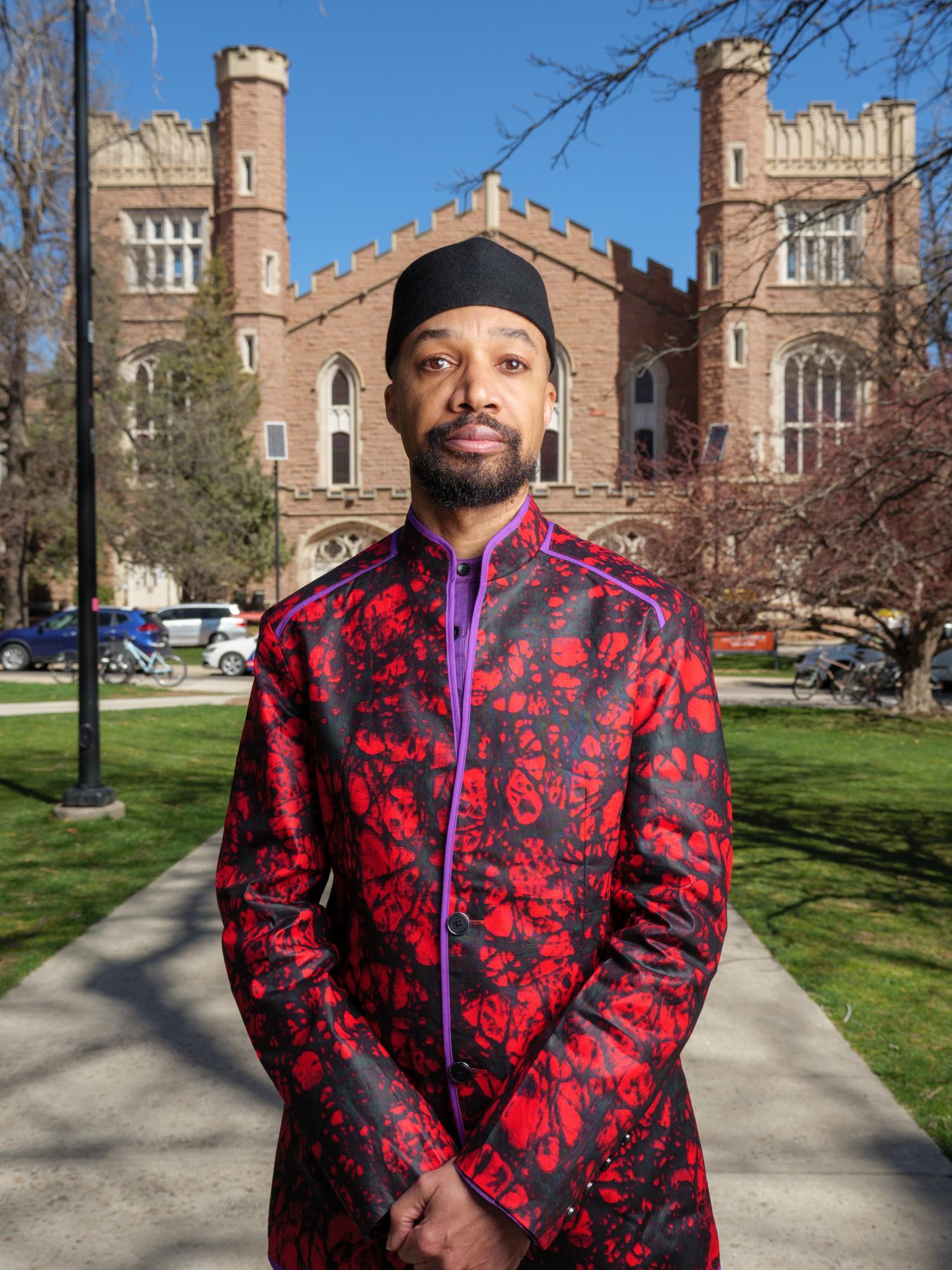
Reiland Rabaka serves as Professor of African, African American, and Caribbean Studies in the Department of Ethnic Studies at the University of Colorado Boulder's College of Arts and Sciences. He is Founder and Director of the Center for African & African American Studies and holds a Research Fellowship at the University of South Africa (UNISA). His academic leadership spans critical race scholarship, Africana studies, and decolonial theory. Rabaka's research focuses on African and African American history, politics, and social movements , with specialized expertise in Black feminist theory, Black sexuality studies, and Black popular music . His work bridges critical race theory with decolonial frameworks, examining cultural production as resistance across eras from the Civil Rights Movement to contemporary hip hop. Key contributions include reconstructing Du Bois's intersectional sociology and analyzing music as liberation praxis. His 19 books and 100+ publications reveal consistent engagement with W.E.B. Du Bois's theoretical legacy Black radical traditions Music as political expression Decolonial epistemologies Recent works like The Funk Movement (2025) demonstrate evolving focus on gendered cultural production within liberation movements. Scientific recognition includes: National Endowment for Humanities/Arts/Science funding Eugene M. Kayden Book Award Cheikh Anta Diop Book Award National Council for Black Studies’ Distinguished Career Award Rabaka's media presence spans NPR, BBC, CNN, and The New York Times , translating scholarship into public discourse. His community engagement includes distinguished teaching awards and service citations, while his creative work as poet and musician informs his interdisciplinary approach to Black cultural studies.