Shan Jayasinghe is a Lecturer in Business Management at Solent University, UK, specializing in areas such as HRIS adoption, business analytics, agile methodologies, and generative AI applications in education. His research spans interdisciplinary topics including IT adoption in hybrid work environments, customer engagement strategies, and organizational behavior in post-pandemic contexts. His work frequently explores Sri Lankan industries, focusing on software, apparel, construction, and IT sectors. Key themes include the integration of technologies like AI, BIM tools, and AR in driving operational efficiency and customer satisfaction. Jayasinghe has collaborated on multiple peer-reviewed articles and conference proceedings, with recent outputs emphasizing agile project management, CI/CD pipelines, and the application of generative AI in education and corporate training. His publications often employ frameworks like DIT, TAM, and UTAUT to analyze technology adoption. He has no listed awards but maintains active research collaborations, evidenced by contributions to IEEE conferences and journals like Education Sciences and Journal of Contemporary Management Issues .
Dr. Israat Haque is an Associate Professor in the Faculty of Computer Science at Dalhousie University, Halifax, where she leads the Programmable and Intelligent Networking (PINet) research group. She also holds an adjunct professorship in the Department of Computing Science at the University of Alberta. PhD in Computer Science, University of Alberta NSERC Postdoctoral Fellow, University of California, Riverside MSc in Computer Science, Concordia University Her research focuses on developing high-performance, secure, and dependable distributed and emerging networking systems, with key interests in Software-Defined Networking (SDN), Cyber-physical Systems (CPS), Internet of Things (IoT), 5G/6G technologies, and AI/ML applications in networking. She applies data-driven approaches to solve real-world problems in network programmability, stream processing, and edge/cloud computing. The 15 most recent publications highlight a strong trend in in-network computing, IoT security, AI-driven network reliability, and stream processing. Her work spans from theoretical surveys to practical system implementations, often leveraging programmable data planes (P4), machine learning, and hardware acceleration to address challenges in performance, security, and fairness in distributed systems. Dr. Haque has received numerous prestigious recognitions: IEEE/ACM N2Women Rising Star Award (2021) ACM FAccT Best Paper Award (2023) IEEE WICE Outstanding Mentoring Award (2025) University of Alberta Alumni Honour Award (2024) Digital Nova Scotia Thinking Forward Award (2022) Intel Fast Forward Initiative Winner (2022) President’s Research Excellence Award, Dalhousie (2021) She actively mentors PhD and MSc students and leads externally funded research projects, including a Canada First Research Excellence Fund (CFREF)-supported initiative on Securing Smart Environments. She has served on editorial boards of IEEE Transactions on Vehicular Technology and IEEE Communications Magazine, and on program committees of top conferences such as IEEE ICNP, IEEE NetSoft, and ACM SIGCOMM. Her lab, PINet, fosters innovation in networking systems and produces high-impact research with real-world applicability. Dr. Haque leads the PINet research group, which includes current PhD and MSc students working on cutting-edge topics like post-quantum cryptography, network programmability for security, and large ML model security. The group collaborates with institutions such as the University of Alberta, Laval University, and Concordia, and has strong industry ties with Intel, Meta, Amazon, and Facebook.
Justus Bogner is an Assistant Professor at the Faculty of Science, Vrije Universiteit Amsterdam, affiliated with the Software and Sustainability (S2) department and the Network Institute. His research focuses on microservices architecture, AI/ML system sustainability, and software engineering practices. He teaches courses like Service Oriented Design and Software Design. Research Interests: Bogner’s work explores the intersection of AI and sustainable software engineering, including energy-efficient microservices, explainable AI (XAI), and MLOps architectures. He emphasizes empirical studies, systematic mappings, and controlled experiments to address challenges in software quality, design patterns, and trade-offs between performance and environmental impact. Awards: Best Presentation Award (2021) Distinguished Artifact Award (2024) Distinguished Artifact Award (2024) Distinguished Paper Award (2024) Grants/Advising: His work has been supported by grants focusing on empirical software engineering and sustainable AI. He collaborates on datasets analyzing technical debt in AI systems and green AI practices.
Dr. Aartee Huzooree is a Lecturer at Edinburgh Napier University's Business School, where she serves as Programme Leader for the BA Business Management and teaches Strategy and Project Management in the MBA Strategic Project Management programme. She holds a PhD in Computer Science from the University of Mauritius alongside MSc and BSc degrees in Software Engineering Projects and Computer Science Engineering. Her research spans multiple domains: Project management methodologies and remote work dynamics AI applications in education and healthcare systems Digital transformation in organizational contexts Health informatics with focus on chronic disease management Her recent publications (2021-2025) demonstrate strong emphasis on AI-driven solutions across sectors, particularly in sports analytics, personalized education, healthcare technology, and sustainable business practices. Awards include: Best Oral Presenter Award (2018) for diabetes sensor technology research As Programme Leader, she oversees student advising and curriculum development. Her work connects to the Centre for Business Innovations and Sustainable Solutions, focusing on technology-enabled solutions for contemporary business challenges.
Wilhelm Hasselbring is Professor of Software Engineering at the School of Electronics and Computer Science, University of Southampton. His research focuses on software system quality, architecture design, and distributed systems with emphasis on fault-tolerance and monitoring. Software System Quality Architecture Design and Evaluation Microservices and DevOps Digital Twins and Prototyping Open Science Practices Current research explores digital twin prototypes for smart farming applications, metamorphic testing methodologies, and scalable microservice architectures. His work bridges theoretical frameworks with industrial applications in middleware and cloud systems. Recent awards include the Ernst Denert Award for Software Engineering (2019-2020). Publications span topics from JavaBERT language models to MQTT bridge evaluations, emphasizing software visualization and reverse engineering techniques. Contact: W.Hasselbring@soton.ac.uk
Professor Viktoria Stray is a leading figure in agile software development at the University of Oslo 's Department of Informatics and serves as a senior researcher at SINTEF Digital . With over 15 years at UiO and 8 years at SINTEF, she combines academic rigor with industry expertise in large-scale agile transformations. Her work bridges empirical software engineering, generative AI integration, and coordination mechanisms in distributed teams. PhD in Informatics (2014), MSc in Computer Engineering (2007) Executive Guest Editor for Information and Software Technology special issue on Generative AI Her research focuses on: Generative AI in developer workflows Large-Scale Agile coordination Autonomous Teams dynamics Human Factors in software testing Digital Transformation in public sector Recent publications analyze trends in agile coaching, hybrid team communication, and empirical studies on coordination mechanisms. She supervises numerous PhD and master's students while teaching large cohorts in courses like IN2000 (680+ students). As Deputy Head of Department and leader of the Gemini Center for Software Engineering, she shapes both institutional and industry-wide practices.
Professor Kyriazis Dimosthenis holds a faculty position at the Department of Digital Systems, University of Piraeus. He earned his diploma in Electrical & Computer Engineering from the National Technical University of Athens (2001) and a cross-disciplinary MSc in Techno-Economic Systems (2004). His academic rank is Professor specializing in service-oriented architectures with a focus on quality of service and workflow management. He has led European projects like BigDataStack, CrowdHEALTH, and CYBELE, addressing challenges in cloud computing, edge computing, and AI-driven solutions for healthcare, finance, and industrial sectors. His research emphasizes resilient service-oriented systems, AI explainability, and human-centric digital transformation. Notable contributions include frameworks for dynamic resource allocation in hybrid cloud/edge environments, AI applications for maritime safety, and data governance solutions for cross-sector integration. He coordinates initiatives such as the Future Internet Architecture Board and Cloud QoS&SLAs, driving advancements in federated data marketplaces and sustainable computing practices. His recent work explores Large Language Model (LLM) applications in financial decision-making, conversational AI for MLOps, and neurosymbolic systems for defect detection. He also investigates XAI methodologies, including VirtualXAI, which leverages GPT-generated personas for explainability assessment. His projects often bridge technical innovation with societal impact, such as the iHELP platform for holistic health records and SmartCHANGE for behavioral change strategies in youth health. Key themes in his publications include bias mitigation in machine learning, dynamic deployment prediction in hybrid cloud settings, and energy-efficient data spaces for mobility. He has contributed to standards like the H2020-funded IRMOS and 5GTANGO, emphasizing interoperability and fault-tolerant architectures. His work frequently intersects with EU policy frameworks, particularly in data governance and ethical AI implementation.
Anargyros Tsadimas serves as a Teaching Associate and member of the Department of Informatics & Telematics at Harokopio University in Athens, Greece. He joined the university in 2004 as a research associate and currently holds a position in teaching laboratory staff. His academic background includes a BSc in Applied Informatics from the University of Macedonia (2002) and an MSc in Advanced Information Systems from the National and Kapodistrian University of Athens (2005). He earned his PhD in Information Systems from Harokopio University, focusing on model-based design of enterprise systems using SysML. His research interests span modeling and simulation of systems, distributed systems, enterprise information systems engineering, and cyber-physical systems. He has contributed over 25 publications in international conferences and journals, including work on SysML extensions for cost analysis, hybrid simulation platforms, and human-centric design of cyber-physical systems. Tsadimas has participated in EU and Greek government-funded R&D projects, with practical experience in startups as a Software Engineer, DevOps, and Technology Advisor. His recent research emphasizes integrating human factors into system design frameworks, exploring cloud pricing policies, and advancing simulation methodologies for complex systems. Notable contributions include developing declarative approaches for executable SysML models and applying systems engineering to transportation infrastructure challenges. No scientific awards are explicitly mentioned in the provided materials. His professional engagement includes advising on systems design projects and collaborating on interdisciplinary initiatives combining technical and human-centric perspectives.
Dr. Bartosz Marcinkowski serves as Professor and Head of the Department of Business Informatics at the University of Gdańsk's Faculty of Management, concurrently holding the positions of Deputy Dean for Research and Head of the Doctoral School. His academic leadership spans departmental administration, faculty research strategy, and doctoral program oversight within Poland's prominent management education institution. Marcinkowski's research centers on the intersection of information systems and practical business applications, with dominant focus areas including agile software development methodologies, digital transformation frameworks, and facility management technology adoption. His work consistently addresses contemporary challenges such as post-pandemic recovery in IT projects, generative AI integration, and sustainable business practices through empirical industry-academia collaborations. Recent publications demonstrate particular expertise in scaling agile frameworks for distributed teams and implementing blockchain solutions in enterprise environments. Analysis of his 2022-2025 publications reveals a strategic research trajectory emphasizing practical solutions for complex business-technology challenges. His work shows increasing integration of sustainability considerations across domains, from facility management to corporate governance, while maintaining strong methodological focus on agile approaches and systems integration. The recurring industry-academia collaboration theme highlights his commitment to bridging theoretical research with real-world business applications.
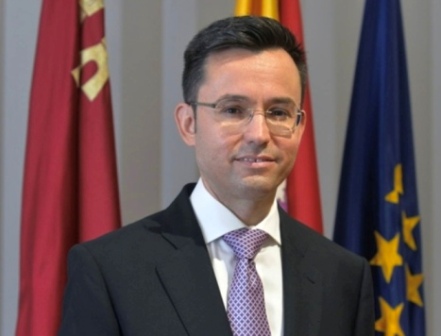
Pedro Soto Acosta is a Full Professor at the University of Murcia , holding the Department of Business Organization and Finance . He earned a European Doctorate in Business Administration, a Master’s in Technology Management, and dual bachelor’s degrees in Business Administration and Accounting & Finance from the University of Murcia and Manchester Metropolitan University. He has also completed postgraduate courses at Harvard University and participated in the Leonardo da Vinci program in Bradford. His research focuses on Digital Transformation Information Systems Management Knowledge Management Green Innovation Entrepreneurship E-business and has published extensively in Q1 journals like Journal of Knowledge Management and Technological Forecasting and Social Change . His work on AI, sustainability, and organizational change has earned awards such as the Premio ABG and Stanford University's Top 2% Influential Researchers . He serves as Editor-in-Chief of Benchmarking: An International Journal and holds editorial roles in 10+ journals. Pedro has held leadership positions including Chief Budget and European Funds Officer for the Region of Murcia and Vice-Chancellor Coordinator at the University of Murcia. With an h-index of 59 , his recent articles explore AI-driven innovation, pandemic digital acceleration, and social media's role in entrepreneurship, reflecting trends in digital resilience and sustainable ecosystems.
Rafael Capilla is a Professor of Software Engineering at Rey Juan Carlos University of Madrid and an Adjunct Professor at LUT School of Engineering Sciences. His research focuses on software architecture, architectural knowledge, software product line engineering, dynamic variability, technical debt, software sustainability, and Industry 4.0 architectures. He has conducted international collaborations across Europe, Latin America, and Asia, with over 80% of his collaborators from foreign institutions. Research Interests : Software Architecture, Technical Debt, Dynamic Variability, Software Sustainability, Industry 4.0 Quality Evaluation Recent Publications highlight trends in sustainable software practices, Industry 4.0 systems, and AI-assisted architectural decision-making. His work explores intersections between technical debt identification, serverless computing economics, and runtime variability models.
Miguel Mira da Silva is a Professor at Universidade de Lisboa, affiliated with INOV - INESC Innovation. His work focuses on enterprise architecture, digital transformation, and blockchain technology. He has contributed extensively to DevOps research and gamification applications in organizational contexts. Research Interests : Enterprise Architecture Digital Transformation DevOps and Agile Methodologies Blockchain Applications Critical Infrastructure Resilience Email: mms@tecnico.ulisboa.pt , miguel.miradasilva@gmail.com
Brian Fitzgerald holds the Frederick A Krehbiel II Chair in Innovation in Business and Technology at the University of Limerick and serves as Director of Lero - the Irish Software Research Centre. He is a globally recognized leader in software engineering and information systems research with significant contributions to open source, agile methodologies, and global software development. His research interests focus on software development methodologies, particularly in open source, inner source, crowdsourcing, agile, lean, BizDevOps, and continuous software engineering. Fitzgerald's work bridges theoretical foundations with practical applications in global software engineering contexts. The trends in his recent publications demonstrate a consistent focus on empirical studies of software development practices, with increasing attention to large language models, community dynamics in open source, and scaling agile methodologies in enterprise environments. His research spans both theoretical frameworks and practical applications across multiple software development domains. AIS Fellow award recipient LEO Award for outstanding lifetime contribution to the IS discipline (2024) President of the Association for Information Systems (2020) Fitzgerald has secured over €115 million in peer-reviewed research funding, including a notable €6 million project with Huawei. He serves as General Chair for major conferences including the 49th International Conference on Software Engineering (ICSE) in Dublin 2027 and previously chaired the 37th International Conference on Information Systems (ICIS) in 2016. His leadership extends to directing Lero, Ireland's national software research center that coordinates researchers across nine third-level institutions. As Director of Lero, Fitzgerald oversees a major research center focused on critical software domains including driverless cars, automation, artificial intelligence, and cybersecurity. His work connects academic research with industry applications through collaborations with major technology companies and government initiatives.
Michael Soltys is an Adjunct Professor in the Department of Computing and Software at McMaster University. His work bridges theoretical computer science, algorithms, and practical applications in cybersecurity and education. Research interests include logic, circuit complexity, and pairwise comparisons. Publications span 2002–2021, with recent focus on cloud computing education, digital forensics, and graph theory. Active in academic service through editorial contributions (e.g., Foreword for Franco-Canadian workshop proceedings). His scholarly activity maps to subdisciplines such as Computer Systems Theory, Logic, Discrete Applied Mathematics, and Operations Research. Dr. Soltys' work on pairwise comparisons and clique covers provides foundational insights for decision systems and graph optimization. He has also contributed to cloud curriculum development and malware analysis frameworks. As an educator, he co-authored An Introduction to the Analysis of Algorithms (2018, 2012, 2009), a textbook exploring algorithmic foundations. Current affiliations include the McMaster Experts database, with collaborations across theoretical computer science and applied cybersecurity research.
Dana Petcu is a Professor at the Computer Science Department of the Faculty of Mathematics and Computer Science at West University of Timisoara. She serves as Director of both the Institute for Advanced Environmental Research and Institute e-Austria Timisoara. With expertise in distributed and parallel computing, she has published over two hundred papers on Cloud, Grid, Cluster, and HPC computing. She is also the chief editor of the open-access journal Scalable Computing: Practice and Experience (SCPE) and has coordinated multiple European Commission-funded projects. Education: Ms. Degree in Computer Science Ph.D. in Numerical Analysis Dana Petcu's research focuses on distributed and parallel computing systems. Her current interests include Cloud & Grid computing, and HPC & Cluster computing. Previously, she worked on Mathematical software, Numerical methods, and Computer graphics. Her work bridges theoretical foundations with practical implementations, particularly in resource management, scheduling algorithms, and scalable computing architectures. She has developed significant expertise in applying these technologies to scientific computing, data-intensive applications, and multi-cloud environments. Her scholarly output demonstrates consistent focus on cloud and distributed computing evolution. Over the past decade, her research has shifted from foundational grid computing to modern cloud technologies, edge computing, and exascale systems. Key themes include resource management across heterogeneous environments, autonomic systems, security SLAs, and multi-cloud portability. Her work shows increasing interdisciplinary connections, particularly with AI/ML techniques applied to resource optimization and anomaly detection in large-scale systems. Scientific Awards: Maria Sibylla Merian-Award (2005) IBM Faculty Award (2009) MLNR Award "Spiru Haret" (2015) Romanian Academy Award "Gheorghe Cartianu" (2015) Dana Petcu has advised numerous graduate students through various master's programs in Distributed and Parallel Computing. She has secured substantial research funding as coordinator of FP7 projects HOST and SPRERS, and as scientific coordinator of mOSAIC. Her grant portfolio includes multiple European Commission-funded initiatives focused on cloud computing infrastructure, resource management, and multi-cloud environments. She has also contributed to EU Research Activities in Cloud Computing as an editor, demonstrating her leadership in shaping European research agendas in this field. She leads the Computer Science Research Center (CCI) and High Performance Computing Service Center (HPC-UVT) at West University of Timisoara. Her teams develop and maintain significant infrastructure for distributed computing research, including simulation environments like CloudSim and iFogSim. She has established strong connections between academic research and practical applications through Institute e-Austria Timisoara, fostering technology transfer and innovation in cloud computing solutions.