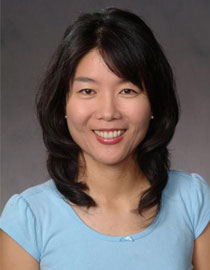
Eun Jung Kim is a Professor in the Department of Computer Science and Engineering at Texas A&M University, affiliated with the College of Engineering. Her research focuses on computer architecture, power-efficient systems, parallel/distributed systems, cluster computing, performance evaluation, and fault-tolerant computing. Ph.D.: Computer Science and Engineering, Pennsylvania State University (2003) M.S.: Computer Science and Engineering, Pohang University of Science and Technology (1994) B.S.: Computer Science, Korea Advanced Institute of Science and Technology (1992) Her work explores innovative solutions for optimizing hardware and software systems, including energy-efficient interconnects, security enhancements, and adaptive network-on-chip designs. Notable achievements include the NSF Early CAREER Award (2009) and contributions to publications like IEEE Transactions on Parallel and Distributed Systems . Recent research trends include advancements in near-data processing, secure computing abstractions (e.g., WHISTLE), and mitigating hardware vulnerabilities (e.g., cache timing attacks). She also integrates IoT and low-cost cluster systems for environmental research applications.
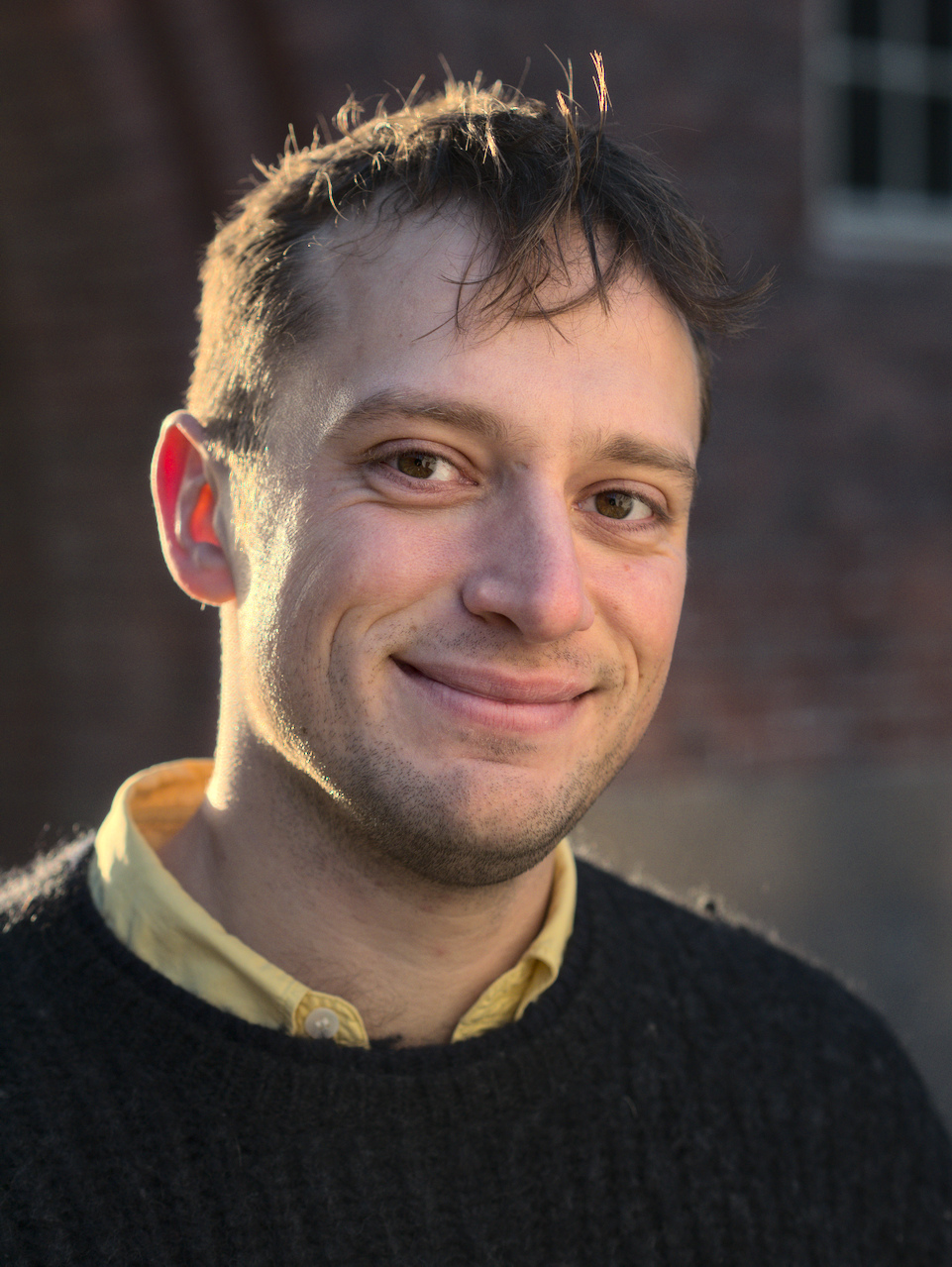
Oskar Kviman is a doctoral student at KTH Royal Institute of Technology working in the Lagergren Lab within the Division of Computational Science and Technology. His research bridges machine learning, statistics, and computational biology with a focus on developing and applying advanced probabilistic methods. His primary research interests include: Bayesian phylogenetics and probabilistic machine learning Variational inference, variational auto-encoders, and sequential Monte Carlo methods Generative AI techniques including flow matching, Schrödinger bridges, and diffusion models Computational cancer research focusing on differential expression testing and spatial transcriptomics Kviman's publication record demonstrates significant contributions to variational inference methodology, particularly in phylogenetics and generative modeling. His work spans top machine learning conferences including ICML, NeurIPS, and AISTATS, showing consistent development of techniques that improve efficiency and accuracy in probabilistic modeling. Recent publications focus on multi-marginal flow matching, variational resampling, and mixture learning in black-box variational inference. He has been recognized for his peer review contributions as a Top reviewer (10%) for AISTATS 2023. Kviman has supervised master's theses for Xindi Liu and Ricky Molén at KTH and serves as a lecturer for 'Statistical Methods in Applied Computer Science' since 2021, while previously working as a teaching assistant for 'Machine Learning, Advanced Course' and 'Deep Learning, Advanced Course'.
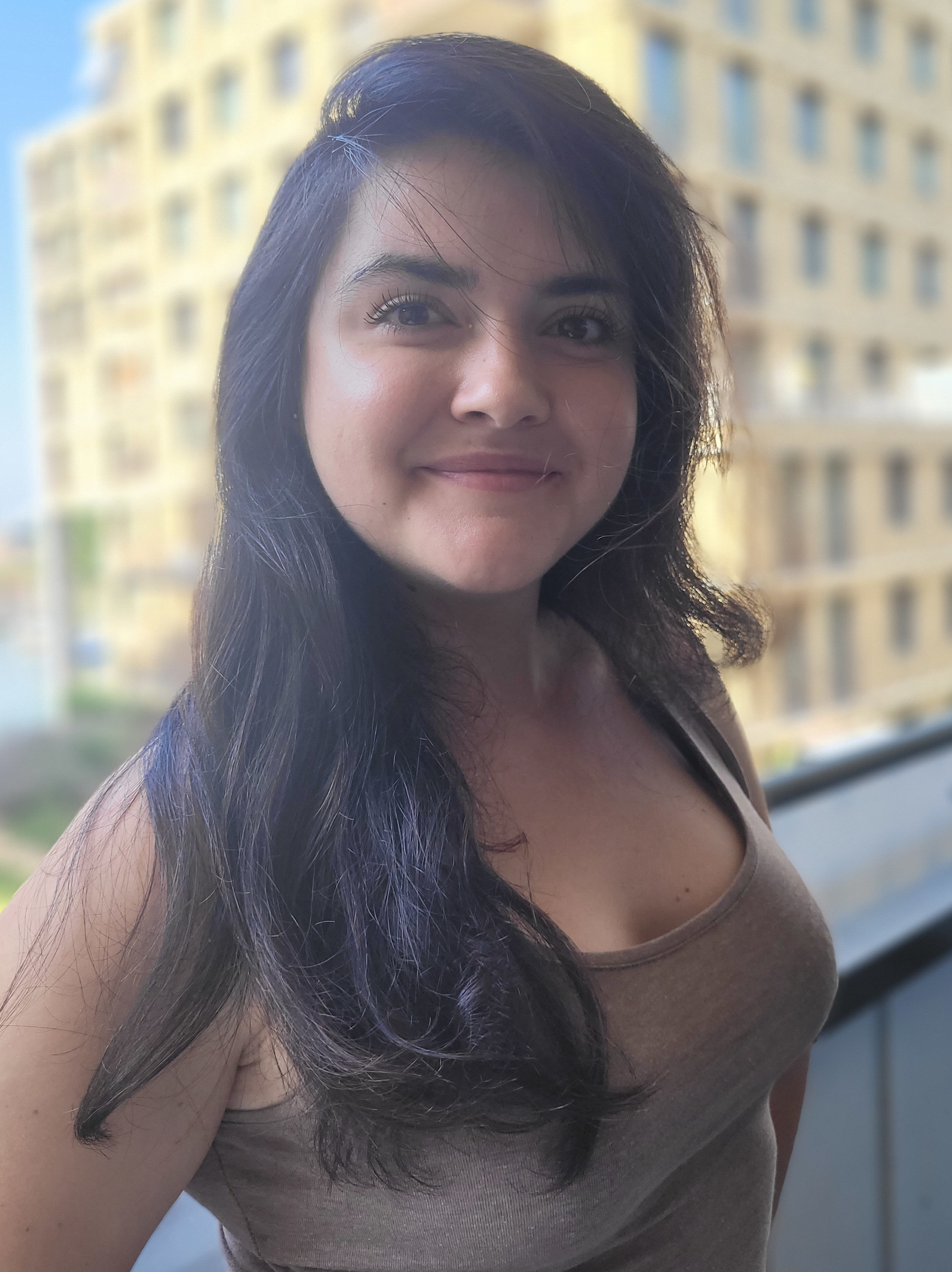
Dr. Franziska Eberle is the Head of the MATH+ Junior Research Group in the Institute of Mathematics at Technische Universität Berlin. She leads research in approximation algorithms, focusing on uncertain environments such as online and stochastic models. Her work addresses scheduling, resource allocation, and combinatorial optimization under uncertainty. Education: PhD in Computer Science, Universität Bremen (2020) M.Sc. in Mathematics for Operations Research, TU München (2016) B.Sc. in Mathematics, TU München (2014) Research Interests: Franziska’s research spans approximation algorithms for stochastic and online scheduling, robust optimization, and algorithmic frameworks for commitment models. She has contributed to load balancing, matroid optimization, and learning-augmented algorithms. Her work bridges theoretical foundations and practical applications in scheduling and resource management. Recent Contributions: Developed algorithms for configuration balancing under stochastic requests (Mathematical Programming, 2024) Optimal online throughput maximization for unrelated machines (ACM Transactions on Algorithms, 2023) Robust scheduling frameworks for speed-uncertain machines (Mathematical Programming, 2023) Teaching: Franziska has taught courses on approximation algorithms, discrete optimization, and practical optimization modeling. Recent offerings include advanced topics in online optimization (Summer 2024). Labs/Teams: Her research group includes PhD student Sebastian Bruchhold, focusing on cutting-edge problems in optimization under uncertainty.
Prof. Bryan Alexander Ford is an Associate Professor at École Polytechnique Fédérale de Lausanne (EPFL), where he leads the Decentralized and Distributed Systems (DEDIS) lab within the School of Computer and Communication Sciences, Department of Computer Science. He also holds teaching positions in SIN (Systems and Networking) and SSC (Security and Software Composition) at EPFL, and serves on the Open Science Strategic Committee. His academic journey includes faculty positions at Yale University following his Ph.D. at MIT. Dr. Ford's research spans multiple domains with a primary focus on building secure decentralized systems. His work encompasses privacy and anonymous communication systems like Dissent, systems security, blockchain technology, and novel approaches to operating systems for deterministic parallel computing such as Determinator. He has made seminal contributions to parsing theory through his development of Parsing Expression Grammars (PEGs) and packrat parsing algorithms, which provide linear-time parsing with backtracking capabilities. His research also extends to networking protocols including the Unmanaged Internet Architecture and Structured Stream Transport, as well as virtualization technologies like VX32. Ford's publication record demonstrates a remarkable evolution from foundational work in parsing and programming languages to cutting-edge research in decentralized systems and security. His early career focused on operating systems theory, parsing algorithms, and language design, culminating in influential papers on packrat parsing and PEGs. More recently, his work has shifted toward practical decentralized systems, blockchain technology, and security architectures, while maintaining connections to programming language theory through projects like Matchertext and MinML. This trajectory reflects both continuity in his interest in system architecture and a strategic pivot toward emerging challenges in decentralized computing. As an educator and mentor, Ford advises multiple PhD students at EPFL through the EDIC program and welcomes prospective students and researchers to join his lab. His teaching includes courses on decentralized systems engineering and technologies for democratic society, reflecting his commitment to both technical rigor and societal impact of computing technologies.
Dr. Lukas Pflug is a researcher at the Department of Mathematics, School of Engineering, Friedrich-Alexander University Erlangen-Nürnberg (FAU). His work spans applied mathematics, chemical engineering, and materials science with a focus on nonlocal conservation laws, topology optimization, and nanoparticle synthesis. Primary affiliation: FAU Erlangen-Nürnberg Research themes: Nonlocal PDEs, Robust Optimization, Plasmonics Key contributions include: Developing mathematical frameworks for nonlocal conservation laws and their singular limit problems Advancing topology optimization techniques for photonic crystals and composite materials Pioneering simulation-driven approaches in nanoparticle synthesis and characterization His methodology integrates theoretical analysis with computational implementation, producing 15+ peer-reviewed publications in high-impact journals like Advanced Optical Materials and SIAM Journal on Applied Mathematics between 2023-2025.
Monika Trimoska is an Assistant Professor at the Coding Theory and Cryptology group at Eindhoven University of Technology (TU/e) , where she has worked since 2023. Previously, she was a postdoc at Radboud University and obtained her Ph.D. in cryptography at the University of Picardie Jules Verne under the supervision of Gilles Dequen and Sorina Ionica. She has also served as a Teaching and Research Assistant at her alma mater. Current Affiliation: Assistant Professor, TU/e (2023–present) Previous Affiliations: Postdoc at Radboud University (2021–2023), Teaching/Research Assistant at University of Picardie (2017–2021) Research Interests revolve around cryptanalysis of post-quantum cryptosystems , focusing on multivariate , code-based , and isogeny-based systems. Her work bridges theoretical and practical security analysis, particularly through SAT solvers and fault injection attacks . Recent Publications demonstrate expertise in algebraic attacks against digital signature schemes like MQ-Sign and CSIDH , with a focus on code equivalence problems , trilinear forms , and parallel collision search . She has also contributed to homomorphic encryption applications. Teaching Activities include courses on Applied Number Theory and Algebra and guest lectures on isogeny-based cryptography at Radboud University. She has co-supervised multiple Ph.D. , Master’s , and Bachelor’s students. Technical Contributions include open-source tools like WDSat (SAT solver for Weil descent) and MCE (Matrix Code Equivalence implementations).
Husnu Yenigun is a Professor at Sabanci University's Computer Science and Engineering Program , Faculty of Engineering and Natural Sciences (Istanbul, Turkey). He earned his BSc, MSc, and PhD in Electrical and Electronics Engineering from Middle East Technical University (Ankara) in 1992, 1995, and 2000 respectively. His professional career includes roles at TUBITAK (1992-1997), Bell Laboratories (1997-1998), and as a consultant at Bell Labs (1999-2000). Research interests: Dr. Yenigun specializes in automata and concurrency theory, formal methods, software quality assurance, model checking, and complexity relief techniques for software verification. His work bridges theoretical automata analysis with practical testing frameworks. Key publication trends: His recent work spans automata synchronization (2018-2021), matrix optimization (2017-2018), and adaptive testing sequences (2016-2018), with applications in Wireless positioning systems Finite state machine verification Parallel computing Formal method implementations Professional activities: He serves on technical program committees for major conferences like MODELSWARD, QRS, and ICTSS (2016-2025). He chaired the programming committee for ICTSS 2013 and 2017, and co-chaired UYMS 2018. He also acted as guest editor for the International Journal on Software Tools for Technology Transfer (2016). Contact: yenigun@sabanciuniv.edu | Office: FENS 2054, Sabanci University
Guillaume Ducrozet serves as Professor of Ocean Engineering at Centrale Nantes since 2022, where he also holds the position of Deputy Director of the Research Laboratory in Hydrodynamics, Energetics & Atmospheric Environment (LHEEA) and coordinates the Erasmus Mundus REM+ program. His academic journey includes progression from Associate Professor (2010-2022) to his current professorship, with a Habilitation to supervise research obtained in 2020 from the University of Nantes. His research expertise spans multiple critical areas of ocean engineering: Numerical modeling of nonlinear wave phenomena using High-Order Spectral (HOS) methods Wave-structure interactions and marine renewable energy systems Experimental wave tank studies in facilities including a 140m long towing tank and a 50m x 30m ocean engineering tank Real-time wave prediction and deterministic wave generation techniques Extreme wave analysis and design for marine structures Ducrozet's recent publication trend reveals a sophisticated evolution in wave modeling approaches, with increasing emphasis on multi-fidelity methods for extreme wave load evaluation, real-time phase-resolved ocean wave prediction, and advanced coupling strategies between numerical models and high-fidelity solvers. His work bridges theoretical advancements with practical applications in offshore renewable energy, ship design, and marine safety. His scientific contributions have been supported through numerous collaborative research projects including ANR projects (Dysturb, CREATIF, SOGOOD), European initiatives (FLOATECH, FLOATFARM), and French national investments (IRT Jules Verne, LabEx MER, ISite NExT). As an educator, Professor Ducrozet teaches fluid mechanics and water waves and sea states modeling across Centrale Nantes' engineering programs, Master of Science in Hydrodynamics, and Master Erasmus Mundus in Advanced Ship Design. His extensive supervision of PhD students demonstrates his commitment to developing the next generation of ocean engineering researchers. His laboratory work at LHEEA integrates experimental measurements with numerical modeling to advance fundamental understanding of complex wave phenomena while developing practical solutions for marine engineering challenges.
Dr. Huseyin Topaloglu is the Howard and Eleanor Morgan Professor at the School of Operations Research and Information Engineering at Cornell University and Cornell Tech . He holds a B.S. in Industrial Engineering from Bogazici University (1997), an M.A. in Operations Research from Princeton University (1999), and a Ph.D. in Operations Research from Princeton University (2001). Education: B.S. Industrial Engineering (1997) – Bogazici University M.A. Operations Research (1999) – Princeton University Ph.D. Operations Research (2001) – Princeton University His research focuses on revenue management , pricing analytics , assortment optimization , and stochastic dynamic programming . Recent work includes advancements in multinomial logit models , network revenue management , and dynamic inventory allocation . He has published extensively in leading journals such as Operations Research , Management Science , and M&SOM , often collaborating with researchers like Y. Bai , P. Rusmevichientong , and O. El Housni . His 15 most recent publications (2024–2003) demonstrate expertise in revenue management using multinomial logit models , dynamic programming , and stochastic optimization . Key subfields include assortment planning , network revenue , pricing under uncertainty , and approximation algorithms for complex systems like ambulance redeployment and airline capacity control . He has also authored books like Revenue Management and Pricing Analytics (2019) and Fundamentals of Linear Optimization (2021).
Suresh Chand is a Professor and the Louis A. Weil Jr. Chair of Management at the Daniels School of Business, Purdue University . He serves as Department Head of Supply Chain and Operations Management. Ph.D., Industrial Administration, Carnegie Mellon (1979) M.S., Industrial Engineering, University of Texas (1976) M. Tech. & B. Tech., Mechanical Engineering, IIT Kanpur (1974, 1972) His research focuses on production process optimization across manufacturing and healthcare sectors. Key areas include: Capacity and production planning for volume flexibility Supply chain modeling to align supply with demand Reduction of patient flow time in healthcare systems Learning/forgetting effects in scheduling and setups Statistical process control and inventory management Professor Chand has published over 50 articles in Operations Research , Management Science , and similar journals. His work spans theoretical advancements in lot sizing, scheduling algorithms, and practical applications in healthcare and global supply chains. He has served as Associate Editor for Management Science (1986-2008), Area Editor for Production and Operations Management (1992-2003), and Senior Editor for Manufacturing and Service Operations Management (1999-2004). He was General Chair for the POM 2005 international conference. Professor Chand teaches core and elective courses in Operations Management to MBA, undergraduate, and doctoral students. He has taught at Purdue's Hannover campus and led Summer Study Abroad programs at TVS Motors in India.
Georg Weissenbacher is a Full Professor of Computer Science at Vienna University of Technology (TU Wien), working in the Institute of Logic and Computation within the Faculty of Informatics. He leads the Formal Methods in Systems Engineering research group and has established himself as a leading researcher in formal verification and automated reasoning. His educational background includes a DPhil from Oxford University (2008-2010), research at ETH Zürich (2005-2010), and a Master's degree from TU Graz (completed by 2003). He completed his Habilitation at TU Wien in 2016 with a thesis on Logical Methods in Automated Hardware and Software Verification. Weissenbacher's research focuses on developing automated tools for software and hardware verification, with particular emphasis on detecting and explaining bugs in complex systems. He is renowned for his work on heisenbugs - bugs that disappear when analyzed, which are particularly challenging in concurrent and multi-core systems. His research bridges theoretical foundations in logic with practical applications in software engineering, with significant contributions to interpolation-based verification techniques and SAT/SMT solving applications. His recent publications show a clear progression from traditional software verification toward emerging challenges in AI security, neural network verification, and sophisticated concurrency models. The research trajectory demonstrates increasing sophistication in handling complex systems properties, with a growing emphasis on probabilistic guarantees and formal methods applied to modern computing challenges. OOPSLA'18 Distinguished Paper Award for 'Randomized Testing of Distributed Systems with Probabilistic Guarantees' Weissenbacher has advised numerous PhD students and postdocs, including current researchers Mai AL-Zu'bi, Katalin Fazekas, and Sarah Sallinger. His research has been supported by significant grants including the Vienna Research Groups for Young Investigators (2011), the National Research Network 'Rigorous Systems Engineering' funded by FWF, and a Microsoft Research PhD Scholarship (2016). He actively contributes to the academic community through his service as co-chair for major conferences including CAV 2018 and FMCAD 2017. As leader of the FORSYTE research group at TU Wien, Weissenbacher oversees a vibrant research team working at the intersection of logic, verification, and practical software engineering challenges. The group is currently involved in the Doctoral College on Automated Reasoning, funded by FWF, which aims to train the next generation of researchers in this critical field.
Sam Silvestro is an Assistant Professor of Instruction in the Department of Computer Science at the University of Texas at San Antonio (UTSA). He is affiliated with the College of Sciences and focuses on teaching and research in systems programming, memory management, and computer security. His work emphasizes practical solutions for production software reliability and security. Education: Ph.D. in Computer Science, UTSA B.S. in Computer Science, UTSA Research Interests: Silvestro’s research centers on secure memory allocation systems, fault diagnosis in production environments, and concurrency control mechanisms. He develops tools like Guarder and Freeguard to enhance heap allocator security while maintaining performance. His work also addresses deadlock prevention and automated failure diagnosis through projects like Watcher and Undead. Publications: His recent work spans memory profiling (MemPerf), in-situ failure diagnosis (WATCHER), and multithreaded debugging (iReplayer), reflecting a consistent focus on production system reliability and security. Scientific Awards: None explicitly listed in provided texts. Advising & Grants: No specific advisees or grants mentioned. Teaching focuses include parallel systems and systems programming courses. Labs/Teams: No dedicated lab/team details provided, but collaborations likely occur through UTSA’s computer science infrastructure.
Aaron Turon is a researcher at the Max Planck Institute for Software Systems (MPI-SWS), where he focuses on foundational aspects of programming languages, concurrency, and formal verification. His work bridges theoretical insights with practical applications, particularly in systems such as Rust and frameworks for reasoning about weak memory models. His research interests include concurrent programming, type systems, formal methods, and scalable distributed systems. He has contributed to seminal projects like the Iris framework for concurrent reasoning and the development of LVars for quasi-deterministic parallelism. Turon's publications emphasize practical formal verification techniques, such as separation logic and logical relations, to ensure correctness in complex systems. His work on Rust highlights the translation of theoretical concepts into industrial-strength tools. He collaborates with academic and industrial partners to advance programming language design, concurrency control, and software engineering practices.
Loek G.W.A. Cleophas is an Assistant Professor in Engineering of Software-Intensive Systems at Eindhoven University of Technology (TU/e), affiliated with the Mathematics and Computer Science department. He holds an Extraordinary Associate Professorship at Stellenbosch University and has held visiting roles at TU Braunschweig (2016-2017) and Umeå University (2014-2016). His academic career includes industry collaborations with ASML and Canon, and leadership as Managing Director of the Dutch research school for Programming and Algorithmics (IPrA). Education: Both his MSc (with honors) and PhD in Computer Science and Engineering were obtained at TU/e. His research focuses on model-driven software engineering (MDSE) and algorithm engineering, with emphasis on pattern matching using finite automata and parallel processing for large datasets. Recent work includes model repository analytics, digital twin systems, and variability analysis in software product lines. Research Trends: Over 129 publications span topics like SAMOS framework for model analytics, VPDSL domain-specific languages, and taxonomy-based algorithm toolkits. His work bridges theoretical foundations with industrial applications in high-tech systems. Advising: Supervised 27 postgraduate students at Stellenbosch and TU/e. Grants/Projects: Led collaborations with ASML on model-driven virtualization, and organized international workshops like AMMoRe (2018-2020). Labs/Tools: Developed SAMOS framework for model analytics and LaMa web application for thematic labeling. Active in open-source tool development for correctness-by-construction methodologies.
Andreas R. Blass is a Professor of Mathematics at the University of Michigan, affiliated with the Department of Mathematics. His primary research focuses on mathematical logic, set theory, category theory, finite combinatorics, and theoretical computer science. He serves as associate chairman for regular faculty appointments, reflecting his administrative contributions. His work bridges foundational mathematics with applications in computer science, such as linear logic, complexity theory, and algorithmic analysis. Blass's research explores topics like infinitary combinatorics, cardinal characteristics of the continuum, topos theory, and geometric morphisms. He has contributed significantly to understanding connections between category theory and set theory, as well as the theoretical underpinnings of computation. His publications span journals in logic, computer science, and mathematics, addressing foundational questions in these interdisciplinary areas.