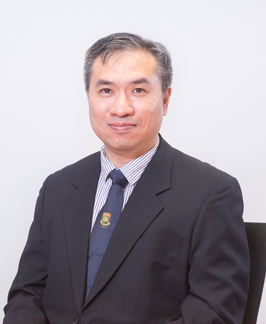
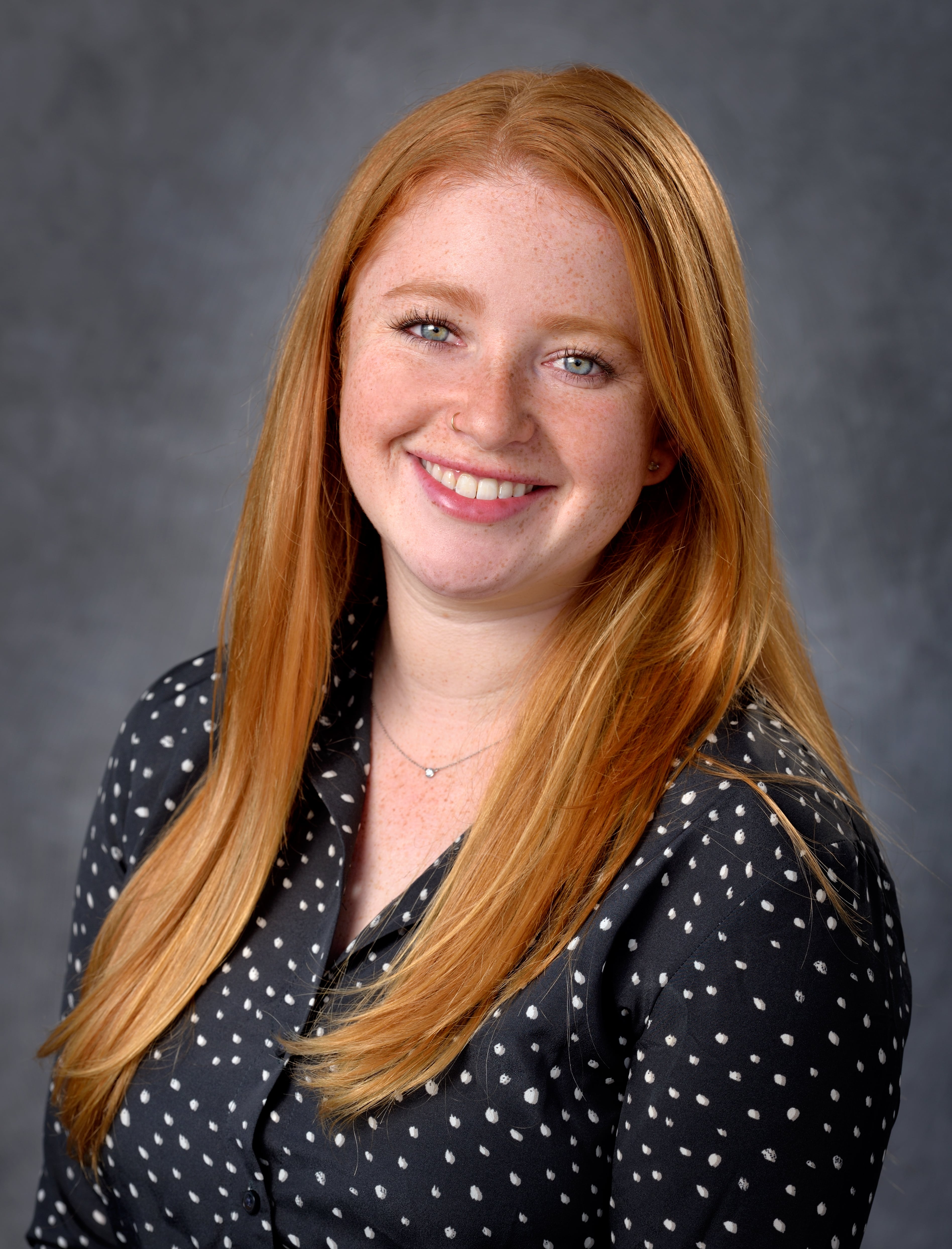
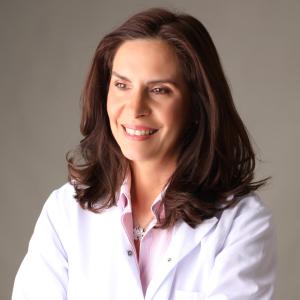
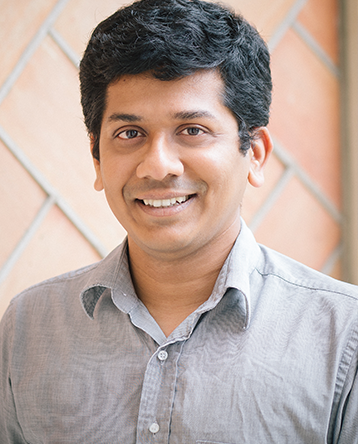
Professor Reynold Cheng is a faculty member at the University of Hong Kong (HKU), specifically within the Department of Computer Science in the School of Computing and Data Science (CDS). He currently serves as the Division Head of the AI & Data Science Division at CDS and is part of the Steering Committee of the Musketers Foundation Institute of Data Science. His academic journey includes a BEng and MPhil from HKU (1998–2000) and an MSc and PhD from Purdue University (2003–2005). Prior to HKU, he was an Assistant Professor at the Hong Kong Polytechnic University (HKPU) from 2005 to 2008. Cheng’s research focuses on data science, big graph analytics, and uncertain data management. He has received numerous awards, including the SIGMOD Research Highlights Reward 2020, HKICT Awards 2021, and HKU Knowledge Exchange Award (Engineering) 2021. His work has been recognized through grants such as the HKU-TCL Joint Research Centre for AI-funded project (HKD 1M, 2020–2022) and a CRF-funded project for real-time monitoring of infectious diseases (HKD 6.5M, 2021–2022). Cheng actively contributes to academic service, including serving as PC co-chair for IEEE ICDE 2021 and editorial roles in journals like IS and DAPD. His publications span top venues like SIGMOD, VLDB, and KDD, emphasizing algorithm design for large graphs and probabilistic data systems.
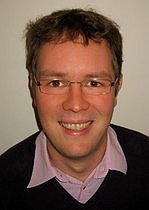
Olof Mikael Lindgren is a Professor of Physics at the Norwegian University of Science and Technology (NTNU) , Department of Physics, Faculty of Natural Sciences. Since 2003, he has led research at the Applied Optics group and Biophysics group , focusing on advanced optical spectroscopy and imaging for biomedical applications. His research spans laser-based spectroscopy, time-resolved optical techniques, and nonlinear optics. He applies these methods to study biomolecular systems, particularly in the context of amyloid diseases like Parkinson’s and Alzheimer’s, and to develop photo-dynamic therapy approaches. He also investigates hybrid organic-inorganic nanomaterials and triplet state dynamics. Recent publications highlight his work on oligothiophenes for amyloid fibril detection, BODIPY-based photosensitizers for cancer therapy, and multimodal fluorescence microscopy of protein aggregates. These studies collectively advance optical diagnostics and therapeutic strategies in life sciences. He teaches the course TFY4195 - Optics and is actively involved in outreach and academic service. His contact email is mikael.lindgren@ntnu.no , and his office is located at Realfagbygget, D4-190, Gløshaugen .
Andrzej Majkowski is an Associate Professor at the Institute of the Theory of Electrical Engineering, Measurement and Information Systems, Faculty of Electrical Engineering, Warsaw University of Technology. His career spans over two decades of research in biomedical engineering, focusing on brain-computer interfaces, signal processing, and emotion recognition. Active in both teaching and research, he contributes to advancing methodologies in electrophysiological signal analysis. Warsaw University of Technology Institute of the Theory of Electrical Engineering, Measurement and Information Systems Faculty of Electrical Engineering Specializing in biomedical engineering , Majkowski's research bridges control systems and information technologies with neuroscience applications. His work explores brain-computer interfaces , EEG/EMG signal processing , and emotion recognition using multimodal physiological data. Recent studies focus on deep learning architectures for artifact removal and classification tasks. Recent publications highlight trends in CNN-LSTM hybrid models for signal denoising, convolutional networks for seizure detection, and machine learning applications in visual evoked potential analysis. His work spans both clinical applications (epilepsy monitoring) and human-computer interaction (emotion recognition, sign language detection). With over 98 documented publications and significant bibliometric indicators (h-index 13 in Scopus), Majkowski has supervised 95 promoted theses. His research includes one funded project and collaborations in biomedical instrumentation, though specific award details remain unspecified in available records.
Dr. Jayne Ellis, DVM, serves as Adjunct Faculty in the College of Natural Science and Mathematics at the University of Alaska Fairbanks (UAF). She concurrently works as an On-Call Wildlife Veterinarian for the Alaska Department of Fish and Game and teaches the necropsy laboratory for second-year veterinary students at UAF. Education Bachelor of Science in Wildlife Conservation Biology, Colorado State University Doctor of Veterinary Medicine (DVM), UAF-CSU Joint Program Dual residency training in Anatomic Pathology and Toxicology, Michigan State University (2 years) Fellowship year in Wildlife Pathology, University of California, Davis Research Interests Dr. Ellis’s investigative work centers on wildlife disease ecology and pathogenesis, with particular emphasis on viral infections affecting avian and mammalian species. Her recent projects investigate the spillover of highly pathogenic avian influenza A(H5N1) from birds into wild terrestrial mammals, as well as emerging respiratory viruses in Alaskan moose populations. Additional interests span toxicologic pathology, infectious disease surveillance in raptor populations, and comparative anesthesia protocols for endangered equids. Publications & Scientific Contributions Across 15 peer-reviewed articles and conference presentations from 2018-2023, Ellis has advanced understanding of viral transmission at the wildlife–domestic animal interface, described novel bacterial pathogens in wild birds, and refined anesthetic techniques for exotic ungulates. Her work integrates field surveillance, molecular diagnostics, and classic pathology to inform conservation and public health policy. Professional Licenses & Qualifications State of Alaska Veterinary License (active) Residency-trained and board-eligible in Anatomic Pathology Teaching & Outreach At UAF, Dr. Ellis leads hands-on necropsy laboratories that train future veterinarians in systematic post-mortem examination techniques essential to wildlife disease investigation. She also provides diagnostic pathology support to state wildlife agencies and collaborates with multi-institutional teams to monitor emerging zoonoses.
Luca Somigli is a Professor at the University of Toronto, holding the Emilio Goggio Chair in Italian Studies. His research focuses on European and Italian modernism, avant-garde movements, futurism, detective fiction, genre literature, and comics. Born in Florence, he earned a Laurea from the Università degli Studi di Firenze and a PhD in Comparative Literature from SUNY Stony Brook. Educational Background: PhD, State University of New York at Stony Brook Laurea, Università degli Studi di Firenze Luca's scholarship explores tensions between modernism and postmodernism, colonial narratives in Italian crime fiction, and the intersection of visual narratives with cultural themes. His recent publications include co-edited volumes on futurism and modernism, alongside articles analyzing authors like Marinetti, Pirandello, and Camilleri. Key research trends include: Colonialism in Italian historical fiction Symbolist and avant-garde artistic movements Visual storytelling in comics and film The legacy of fascist ideology in literature Scientific awards highlight his contributions: the 2019 Visiting Scholar at Université de Haute-Alsace and the 2003 American Association for Italian Studies Book Award. Luca has co-authored works with scholars like Federico Luisetti and Eleonora Conti, and his conference presentations address neomodernist novels and modernist historiography. He serves as Chair of the Department of Italian Studies (2021-present) and previously as Associate Chair – Graduate (2020-2021).
Professor Athina E Markaki serves as Professor of Materials & Biomedical Engineering in the Department of Engineering at the University of Cambridge, leading research in advanced biomaterials and tissue engineering solutions for regenerative medicine with emphasis on vascularization and tubular scaffold development for human conduit replacement. Her academic credentials include a Diploma in Metallurgical Engineering (8.6/10) from the National Technical University of Athens and a PhD in Materials Science from the University of Cambridge. Markaki's research program centers on vascularisation techniques for clinically relevant tissue dimensions and tubular scaffolds to replace diseased or damaged human conduits, integrating biomaterials science with regenerative medicine principles. Key applications span liver tissue engineering, neural crest-derived stem cell differentiation, and vascular graft development, with strong translational focus on orthopaedic and cardiovascular medical devices. Analysis of her recent publications reveals dominant trends in biomimetic scaffold design, particularly collagen-based tubular structures and hydrogel systems for vascularized tissue constructs. Her work demonstrates interdisciplinary convergence of AI-driven retinal assessment, glioblastoma modeling, and self-healing cementitious materials, with consistent emphasis on clinically applicable regenerative solutions for liver, bone, and neural tissues. Her distinguished scientific contributions are recognized by major awards: Rosetrees Trust 2017 Interdisciplinary Award European Research Council (ERC) Starting Grant (2010) Advanced EPSRC Fellowship (2005) De Montfort Award at SET for Britain National Event (2004) Young Scientist Prize 2003 (5th Euromech Solid Mechanics Conference) Multiple academic excellence awards from Greek foundations Markaki directs a well-funded research program including ERC and EPSRC grants, mentoring graduate students in tissue engineering while teaching core engineering curricula covering plastic deformation, fracture mechanics, and medical materials design. Her group maintains strong industry and clinical partnerships to advance regenerative technologies. Her laboratory, accessible via http://www-memti.eng.cam.ac.uk/, specializes in vascularized tissue constructs and tubular scaffolds using laser-based manufacturing, biomimetic design, and hydrogel engineering to address critical challenges in tissue replacement and disease modeling.
Aswin Sankaranarayanan is a Professor in the Department of Electrical and Computer Engineering at Carnegie Mellon University (CMU) , where he leads the Image Science Lab . His research focuses on computational photography , 3D shape estimation , and novel imaging system design . He earned his Ph.D. in Electrical and Computer Engineering (2009) from the University of Maryland and completed a postdoctoral fellowship at Rice University (2012) . Research Themes: Developing imaging systems that exploit low-dimensional signal models to overcome traditional sensing limitations Co-design of optics and processing algorithms for efficient sensing Application of non-linear signal models to high-dimensional data Advancing compressed sensing and big data processing techniques Scientific Recognition: SIGGRAPH 2023 Best Paper Award (Split-Lohmann Multifocal Displays) CVPR 2019 Best Paper Award (Fermat Paths for NLOS Reconstruction) NSF CAREER Award (2017) Dean’s Early Career Fellowship (2018-2021) Herschel Rich Invention Award (2016) Technical Contributions: His recent publications reveal expertise in non-line-of-sight shape reconstruction , VR/AR display systems , and biomedical imaging . Collaborations span institutions like University College London and University of Toronto.
Tom Schrijvers is a Professor at the Department of Computer Science in the Faculty of Engineering Science at KU Leuven, Belgium. He leads the Programming Languages Group within the Declarative Languages and Artificial Intelligence (DTAI) research group. His research focuses on programming languages, particularly functional and logic programming, with special emphasis on Haskell, type systems, and algebraic effects. His research interests include: Functional Programming, especially Haskell Type Systems and Type Theory Algebraic Effects and Handlers Logic Programming, particularly Prolog Constraint Programming Domain-Specific Languages Programming Language Theory Prof. Schrijvers' recent research has focused on effect systems, staged programming, and language composition. His work on algebraic effect handlers has been particularly influential, providing new insights into how effects can be modularly composed and handled in functional languages. He has also made significant contributions to the understanding of type classes and their implementation in Haskell. His publications demonstrate a consistent focus on practical applications of programming language theory, with work spanning from foundational type theory to applied domain-specific languages for areas like fluorescence microscopy. His research often bridges the gap between theoretical programming language concepts and practical implementation concerns. Prof. Schrijvers has supervised numerous PhD students to completion, including Pieter Wuille, Benoit Desouter, George Karachalias, Steven Keuchel, Amr Saleh, Alexander Vandenbroucke, and Ruben Pieters. He currently supervises PhD students Klara Mardirosian, César Santos, Gert-Jan Bottu, Koen Pauwels, Birthe van den Berg, and Roger Bosman. His research group has received funding from various sources including EU projects like GRACeFUL. The Programming Languages Group at KU Leuven, which he leads, focuses on functional (Haskell) and logic (Prolog, Datalog, CLP) programming languages, as well as general programming language theory. The group has been active in numerous research projects and collaborations across Europe.
Claus Hélix-Nielsen is a Professor and Head of Department at the Department of Environmental and Resource Engineering, DTU Sustain, Technical University of Denmark. His research focuses on lipid-protein interactions, biomimetic membranes, membrane transport, and membrane channel proteins, utilizing electrophysiology, fluorescence spectroscopy, and computational modeling. Current Position: Professor and Head of Department Institution: Technical University of Denmark Research Unit: DTU Sustain Department: Environmental and Resource Engineering Research Interests: Dr. Hélix-Nielsen investigates how the hydrophobic coupling between transmembrane proteins and lipid bilayers regulates protein function through bilayer mechanical properties. His work also explores how these properties influence membrane dynamics, including vesiculation. He develops biomimetic membranes for biosensor and separation technologies, employing advanced techniques like Raman spectroscopy and molecular dynamics simulations. Recent Publications Trends: His 15 most recent articles emphasize biomimetic membrane engineering, membrane biophysics, and applications in environmental and biomedical fields. Topics range from artificial ion channels and drug delivery systems to computational modeling of lipid-protein interactions and environmental monitoring sensors. Techniques: Key methodologies include electrophysiology, fluorescence spectroscopy, electron paramagnetic resonance, Raman spectroscopy, and molecular dynamics simulations.
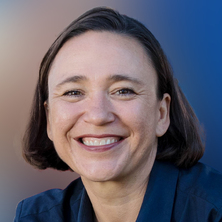
Professor Sara Dolnicar is an ARC Australian Laureate Fellow at the School of Business, Faculty of Business, Economics and Law, University of Queensland. With degrees in psychology and business administration from Wirtschaftsuniversität Wien, she specializes in market segmentation, sustainable tourism, social marketing, and environmental behavior. Born in Slovenia, raised in Austria, now based in Australia Over 300 refereed publications and 16 ARC grants Recipient of TTRA Distinguished Researcher Award (2017) and Slovenian Ambassador of Science (2016) Her research improves market segmentation methodology, addresses environmental sustainability in tourism, and develops behavioral interventions for eco-friendly tourist practices. She pioneered perceptions-based market segmentation and introduced bi-clustering techniques for improved data analysis. Recent publications focus on towel reuse interventions, buffet waste reduction, and smart sensor systems for hotel sustainability. She supervises PhD students in environmental behavior, tourism carbon emissions, and IoT applications for sustainability. Current grants include 'Mechanisms of Behaviour Change Theory' (2025-2028) and 'Reducing plate waste in hotels' (2021-2025). Key research areas: Sustainable tourism, market segmentation, social marketing Supervised over 15 PhD students in environmental behavior and disability employment Collaborates with industry partners like Energy Queensland and disability organizations
Prof. Dr.-Ing. habil. Michael Meurer is a Universitätsprofessor (University Professor) at RWTH Aachen University, holding the Chair of Navigation with a joint appointment at the German Aerospace Center (DLR). His work focuses on satellite navigation, particularly GNSS (Global Navigation Satellite Systems), with applications in low Earth orbit (LEO), safety-critical systems, and autonomous driving. Research Interests GNSS signal integrity and error analysis LEO-based augmentation systems Multi-antenna positioning techniques Spatial signal processing Navigation for autonomous systems Publications highlight his contributions to GNSS error modeling, spoofer detection, and resilient positioning systems. Recent work emphasizes LEO constellations, distributed antenna architectures, and signal integrity monitoring. Contact Email: michael.meurer@nav.rwth-aachen.de Address: Mies-van-der-Rohe-Str. 15, 52074 Aachen Phone: +49 8153 28 3065 Teaching includes courses on satellite navigation, safety-critical navigation systems, and multisensorial navigation architectures.
Prof. Sadettin Emre Alptekin is a full Professor of Industrial Engineering at Galatasaray University, Faculty of Engineering and Technology, where he also serves as Vice Dean. Since joining the university as a research assistant in 2000, he has steadily advanced through the academic ranks, becoming an Assistant Professor (2006–2010), Associate Professor (2010–2023), and finally Professor in 2023. Education: PhD (Dr), Industrial Engineering, Istanbul Technical University, Institute of Science and Technology, 2001–2006 MSc, Industrial Engineering, Galatasaray University, Faculty of Engineering and Technology, 1999–2001 BSc, Industrial Engineering, Istanbul Technical University, Faculty of Management, 1995–1999 Languages: Advanced English (C1), Upper-Intermediate French (B2), Advanced German (C1) Research Interests: Prof. Alptekin’s research focuses on Computer Learning , Fuzzy Sets and Systems , and Decision Support Systems . His work integrates artificial intelligence, machine learning, and soft-computing techniques to solve complex industrial and managerial problems in areas such as supply chain management, quality function deployment, blockchain adoption, and mental-health prediction. Publication Trends: Across more than 50 refereed publications, Prof. Alptekin has consistently explored hybrid intelligent models that combine fuzzy logic, machine learning, and multi-criteria decision-making. Recent articles emphasize deep-learning-based anomaly detection in industrial time-series data, blockchain adoption in supply chains, and machine-learning applications in subjective well-being and mental-health modeling. Scientific Awards & Honors: No specific awards or medals are listed in the provided documents. Research Leadership & Funding: Since 2008 he has been the principal investigator (executive) of 12 nationally funded projects, covering topics such as Industry 4.0 sub-system design, Internet of Things applications, artificial neural networks in organizational decision-making, big-data analytics, and strategic decision processes. Graduate Advising: He has formally supervised at least 8 master’s theses and numerous undergraduate projects. Representative thesis titles include Gaussian-process-regression-based man-hour prediction, machine-learning-driven human-behavior modeling, recommender-system design for e-commerce, thyroid-nodule diagnosis from scintigraphic images, software-effort estimation via neural networks, spreadsheet heuristics for joint-replenishment problems, cross-selling decision systems in insurance, and profitability analyses of Turkish banks under disinflation. Laboratories & Teams: While no dedicated laboratory name is disclosed, his continuous role as Vice Dean and principal investigator implies active leadership of the Industrial Engineering department’s research clusters in intelligent systems and decision support technologies.
Cristian Danescu-Niculescu-Mizil is an Associate Professor at the Department of Information Science , Cornell University . His research focuses on computational frameworks for social behavior analysis through large-scale natural language data , particularly in online communities and crisis counseling contexts. Recipient of WWW Best Paper Award (2013) and Yahoo! Key Scientific Challenges Award Co-developer of ConvoKit , a comprehensive conversational analysis toolkit Principal investigator in NLP for mental health , antisocial behavior detection , and linguistic coordination studies His work spans computational social science and human-centered AI , with recent publications in EMNLP 2025 , ACL 2025 , and CSCW 2025 focusing on conversation dynamics modeling , pivotal moment detection , and talk-time equity analysis . He has advised multiple PhD students who became faculty at Harvey Mudd , University of Michigan , and Thompson Reuters . Key scientific contributions : 2013 : WWW Best Paper - Power dynamics through linguistic coordination 2016 : IJCAI NLP & Journalism Best Paper - Gender bias quantification 2017 : ICWSM Best Paper - Trolling behavior analysis He teaches NLP and Social Interaction (INFO/CS 6742) and Language and Information (INFO/CS 4300) , with teaching resources including the Politeness Web App and ConvoWizard interactive tool featured in NPR's Weekend Edition . His work has been covered by New Scientist , NBC Today Show , and New York Times .
Prof. Dr.-Ing. Elisabeth Clausen is a Professor and Director of the Chair and Institute for Advanced Mining Technologies at RWTH Aachen University. She holds key roles in the Specialist Group for Raw Materials and Disposal Technology, serves as a rectorate representative, and leads the Commission for EU Research Funding. Her research spans Underground mining automation Acoustic emission diagnostics Sustainable mining systems Space resource extraction Advanced sensor technologies Her recent publications focus on autonomous mining machinery, underground communication systems, and acoustic emission analysis across 15+ studies from 2013–2025, with particular emphasis on Ultra-wideband positioning Thermographic detection Crack monitoring in planetary gearboxes Explosive atmosphere safety Mineral processing diagnostics Digitalization trends Prof. Clausen contributes to mining education reform through initiatives like CDIO™ and has developed innovative learning spaces in underground mines. She coordinates international educational labs and integrates sustainability into mining engineering curricula, with publications on Adaptive ventilation systems Mining education frameworks Future-proof mineral extraction Entrepreneurial mindset in engineering
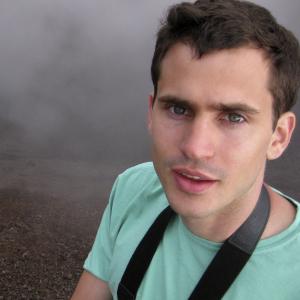
Maximilian Hilger is a doctoral researcher at the Chair of Perception for Intelligent Systems, part of the Munich Institute of Robotics and Machine Intelligence at Technische Universität München (TUM). He joined the chair in 2024 and specializes in radar perception for autonomous systems. M.Sc. in Automation Engineering (RWTH Aachen, 2023) Doctoral studies previously at AASS, Örebro University, Sweden His research focuses on radar-based localization, mapping, and introspection in challenging environments, with publications addressing 4D imaging radar SLAM, loop closure techniques, and sensor fusion methodologies. Recent work includes evaluating radar odometry algorithms and developing robust mapping systems using intensity-augmented normal distributions transform. Key research themes: Radar perception for autonomous systems SLAM robustness and introspection Occlusion-resistant localization Sensor fusion in dynamic environments He collaborates with team members including Prof. Achim Lilienthal, Valeria Salazar, and Thomas Wiedemann at TUM's Siemens Technology Center campus in Garching, Germany.