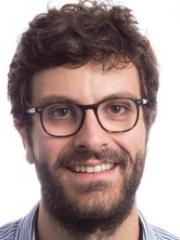
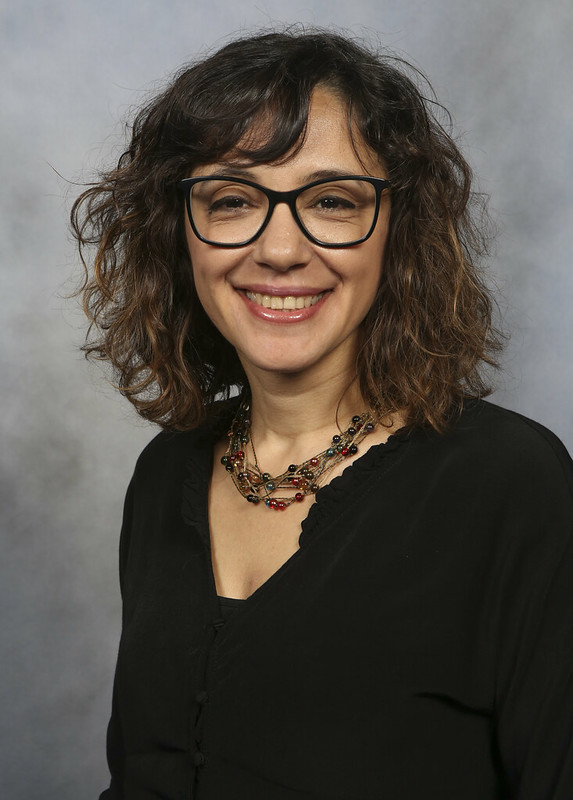
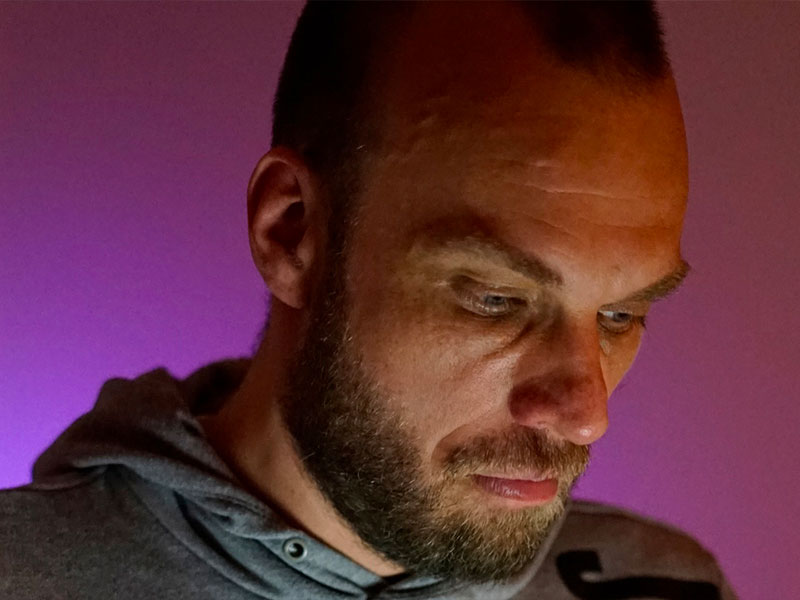
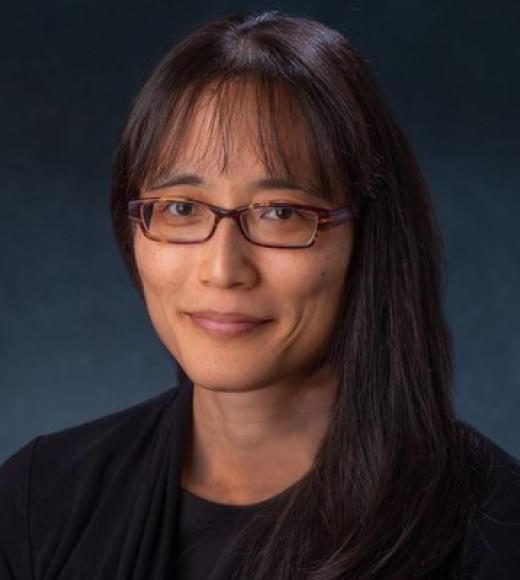
Cara M. Nunez is an Assistant Professor in Mechanical and Aerospace Engineering at Cornell Engineering. Her research focuses on haptic interfaces, sensory perception, and human-robot interaction. Research Areas: Development of wearable haptic devices for sensory feedback Human perception of tactile stimuli under cognitive load Multimodal interaction combining haptic, audio, and visual cues Medical applications of haptic guidance systems Key publications explore smartphone-based sensory assessment, affective mediated touch, and haptic guidance for medical procedures. Her work appears in robotics and human-computer interaction venues.
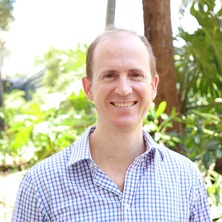
Dr. Maxime Cordeil is a Senior Lecturer in Human Centred Computing at the School of Electrical Engineering and Computer Science, The University of Queensland. His research focuses on Virtual and Augmented Reality technologies for data interaction, interactive visualization systems, and AR interfaces for industry applications. He has authored over 60 publications in top-tier venues such as ACM CHI and IEEE VR, and was nominated as Australia's Field Leader in Computer Graphics in 2021 and 2022. Research Interests: Data visualization, immersive analytics, medical imaging, collaborative systems, and human-computer interaction. Current Projects: Includes embedded visualizations for sports performance, interactive machine learning in 3D environments, and mixed-reality applications in forensic science. PhD Supervision: Actively guiding students in topics like immersive gesture exploration, AR for digital health, and collaborative VR systems. His work bridges theory and practice, with tools like IATK (Immersive Analytics Toolkit) and the MADE-Axes hardware system. He collaborates with industry partners like Raytracer and CSIRO, focusing on applications in space exploration, underwater training, and remote operations. Awards: Multiple best paper recognitions at ISS and CHI, plus industry-driven research grants. Labs: Leads the Immersive Analytics research group at UQ, specializing in embodied interaction and spatial computing.
Dr. Deniz Ortactepe Hart is a Lecturer in TESOL at the University of Glasgow, specializing in social justice language education. She joined the university in 2022 and has extensive experience across Turkey, the US, and the UK in teacher training and educational research. Her roles include founding convenor of the BAAL Language and Education for Social Justice SIG and coordinator of ELINET’s Language and Social Justice strand. Her research focuses on teaching languages for diversity, equity, and social transformation. Notable projects include the Social Justice in ELT initiative in Turkey (2018–2022) and collaborations with California’s Migrant Education Office. She authored Social Justice and the Language Classroom (2023) and is co-editing volumes on environmental and language justice. Her articles emphasize anti-oppressive digital spaces, culturally sustaining pedagogies, and identity重构 in multilingual contexts. Current research explores intersectional identities and environmental justice representation. She teaches courses like Which English? Sociolinguistics and Language Teaching and supervises students in social justice education and environmental justice. Grants include the British Council-funded project on feminist pedagogies (2024–2025) and leadership in Turkish migrant education initiatives (2018–2022). She actively engages in invited talks and professional memberships with TESOL, AAAL, and BAAL.
Henrik von Coler is an Assistant Professor at Georgia Institute of Technology's School of Music within the College of Design. His work bridges engineering, electronic music, and empirical research, focusing on spatial audio systems, live electronics, and human-computer interaction in musical contexts. He joined Georgia Tech in 2023 after serving as director of the TU Studio for Electronic Music at Technische Universität Berlin from 2015 to 2023, where he founded the Electronic Orchestra Charlottenburg (EOC) to explore live electronic ensembles in multichannel environments. His research emphasizes the integration of sound, space, and HCI to enhance compositional and performative expressiveness. Notable projects include immersive audio installations, virtual instrument design, and AI-assisted composition. Coler has performed globally on immersive audio systems and curated international concerts. His technical contributions span spatial sound synthesis algorithms, networked music systems, and real-time signal processing tools. Key areas of exploration include volumetric music performances in metaverse environments, hybrid spatial interaction via ARCube, and statistical models for spectral synthesis. He has developed open-source systems like Orchestra (for metaverse performances) and SPRAWL (for ensemble interaction). Coler’s work often combines empirical research with artistic practice, aiming to redefine the boundaries of live electronic music through technological innovation. His academic output spans over 30 peer-reviewed articles since 2011, with recent focus on metaverse applications, AI-human collaboration, and immersive audio design. While no formal awards are listed, his leadership roles and project outcomes highlight significant contributions to music technology and spatial audio engineering.
Negin Alemazkoor is an Assistant Professor at the University of Virginia's School of Engineering and Applied Science, specializing in interdisciplinary research on infrastructure resilience. Her work focuses on developing AI-driven methodologies for analyzing interconnected systems like power grids, urban flood models, and transportation networks under uncertainty. Key areas include enhancing grid reliability through multi-fidelity modeling, hurricane evacuation equity analysis, and precision-compression techniques for large-scale data. She co-leads a NSF-funded initiative to democratize AI education in high schools. Her research integrates graph neural networks, physics-informed models, and machine learning to address challenges in energy systems, environmental monitoring, and disaster response. Notable projects include hurricane-induced power outage risk analysis under climate change and precision guarantees for smart-meter data analytics. She emphasizes computational efficiency and multi-fidelity approaches to balance accuracy with resource constraints. Recent contributions span AI applications in flood forecasting, renewable energy integration, and infrastructure cybersecurity. Her NSF grant aims to create inclusive AI curricula, reflecting her commitment to education and societal impact. She is affiliated with UVA Engineering’s research initiatives on resilient systems and data-driven decision-making.
Jeffery G. Saven is a Professor of Chemistry at the University of Pennsylvania's School of Arts & Sciences and co-Chair of the Biochemistry Undergraduate Major Program. He holds a BA from New College of Florida, a PhD from Columbia University and University of Wisconsin, and completed postdoctoral research at the University of Illinois, Urbana-Champaign (1993-1997). His research focuses on theoretical and computational chemistry, applying statistical mechanics to study biomolecules, polymers, and condensed phase systems. Key areas include computational protein design, biomolecular simulation, and understanding protein sequence-structure relationships. Collaborations involve experimental groups at Penn and other institutions, such as the DeGrado and Therien groups. Recent work includes designing proteins with nonbiological cofactors and exploring water-soluble membrane proteins. No specific awards or grants are listed, but his research emphasizes interdisciplinary projects combining theory and experiment. His lab actively develops computational tools for molecular system analysis and participates in biomolecular materials design.
Dr. Janie McClurkin Moore is an Assistant Professor in the Department of Biological and Agricultural Engineering at Texas A&M University, part of the College of Agriculture & Life Sciences. Her research focuses on post-harvest technologies, food safety, and innovative engineering education strategies. She holds a PhD in Agricultural and Biological Engineering from Purdue University and has extensive expertise in applying cold plasma technology to agricultural challenges. Education: B.S., Bio-Environmental Engineering, North Carolina A&T State University (2006) M.S.A.B.E., Agricultural and Biological Engineering, Purdue University (2009) Ph.D., Agricultural and Biological Engineering, Purdue University (2015) Research interests span post-harvest treatment innovations, biomass valorization, and educational methodologies. Her work emphasizes non-thermal plasma applications for food safety, mycotoxin mitigation, and sustainable agriculture practices. Publications reveal a strong focus on plasma technology for pest control, food preservation, and hydroponic systems. Her engineering education research explores inclusive pedagogy and curriculum development in diverse educational settings. Advising and grants include contributions to the NSF Convergence Accelerator project addressing food security in extreme environments. She is affiliated with Texas A&M AgriLife Research, advancing applied agricultural solutions through interdisciplinary collaboration.
Miguel Ángel Sotelo Vázquez is a full Professor at the University of Alcalá, leading the INVETT Research Group (Intelligent Vehicles and Traffic Technologies). He holds the Department of Automatic Control and specializes in autonomous systems, particularly in path planning, sensor fusion, and human-vehicle interaction. His research integrates machine learning, robotics, and control theory to address challenges in intelligent transportation systems. He earned his Ph.D. in 2001 with a thesis on autonomous vehicle navigation in partially known environments. His work emphasizes real-world deployment, explainable AI, and safety-critical systems. Recent projects focus on lane change prediction, pedestrian behavior modeling, and cybersecurity for autonomous systems. Key contributions include neuro-symbolic frameworks for decision-making, real-time multi-physics field reconstruction, and cross-cultural studies of pedestrian interactions. He collaborates internationally on urban mobility resilience and hydrogen refueling infrastructure. Research Highlights : Development of knowledge graph-based prediction architectures Experimental validation of human-vehicle interaction in VR environments Creation of the SCOUT trajectory prediction framework
Prof. Tijani CHAHED is a Professor at Telecom SudParis, part of Université Paris-Saclay, affiliated with the SAMOVAR laboratory and the NeSS research group. His work focuses on network optimization, edge computing, machine learning applications in telecommunications, and game-theoretical frameworks for distributed systems. He holds a position in the Department of Computer Science and Telecommunications. His research spans resource allocation in 5G/6G networks, energy efficiency strategies for mobile infrastructure, reinforcement learning for dynamic systems, and coalitional game theory for multi-agent systems. Key contributions include optimization of cache allocation in edge computing, latency-critical traffic management (URLLC), and strategic investment models for distributed computing infrastructures. Selected articles highlight advances in edge computing resource management, metaverse data transport over 5G, and energy-efficient sleep mode control for base stations. His work often intersects with industrial applications in green networks and smart grid integration for mobile infrastructure. Collaborations involve institutions like École Polytechnique, INRIA, and industry partners in telecommunications. Current projects include 6G network architectures, metaverse-enabled edge services, and decentralized resource allocation frameworks. Labs/Teams: SAMOVAR Lab (Signal and Media Access Networks, Optical and Radio Networks), NeSS Group (Networked Systems and Services).
Sanjana Mudduluru is an Assistant Professor in the School of Computer Science at the University of Oklahoma (OU). She holds a BS from Jawaharlal Nehru Technological University (India), an MS in Data Science & Analytics, and a PhD in Computer Science, all from OU. Her research focuses on applying computer vision and machine learning to biomedical imaging, particularly in cancer research and medical diagnostics. She has extensive experience in software development and programming. Education: Ph.D., Computer Science, University of Oklahoma M.S., Data Science & Analytics, University of Oklahoma B.Tech, Computer Science, Jawaharlal Nehru Technological University Her research interests span machine learning, medical image processing, data analytics, and computer science education. She explores innovative deep learning models for medical image segmentation, classification, and synthetic data generation to enhance AI efficacy in healthcare. Recent work includes hybrid models for computer-aided diagnosis and self-supervised learning for rock image analysis. Awards: Dissertation Excellence Award (2023) Tomorrows Engineer Scholarship (2021–2022) CS Alumni Graduate Fellowship (2021–2022) Dr. Mudduluru has no listed advisees but has contributed to grants related to biomedical imaging research. She is affiliated with OU’s Devon Energy Hall and actively publishes in interdisciplinary fields blending computer science with healthcare applications.
Yuko Munakata is a Professor in the Department of Psychology at the University of California, Davis, and Director of the Cognition in Context Lab. She holds affiliations with the Center for Mind and Brain. Her education includes a PhD in Psychology from Carnegie Mellon University and dual BS/BA degrees in Symbolic Systems and Psychology from Stanford University. Her research integrates behavioral experiments, computational modeling, neuroimaging (ERP/fMRI), and cross-cultural studies to investigate how thinking varies across developmental stages and environmental/social contexts. Core interests include executive functions, developmental trajectories, cognitive control mechanisms, and interventions to enhance adaptive thinking. Her work highlights the role of cultural habits, social influences, and proactive control in shaping decision-making and self-regulation. Recent work explores the impact of environmental predictability on cognitive control development, the link between procrastination in adults/children, and the efficacy of executive function training programs. She advocates for contextual frameworks in understanding individual differences and educational inequality. Awards: American Psychological Association Boyd McCandless Early Career Award Outstanding Mentor Award (UC Boulder) Fellowships in Association for Psychological Science and APA Grants: NIH funding since 1998, supporting studies on child development and executive functions. Labs: Cognition in Context Lab (UC Davis), Center for Mind and Brain collaborations.
Andrew Burton-Jones is a Professor of Business Information Systems at The University of Queensland Business School, where he also serves as co-lead of the Future of Health Research Hub and Chair of the Education Steering Committee of the Queensland Digital Health Centre. He is affiliated with multiple research centers including the Centre for the Business and Economics of Health, Centre for Enterprise AI, and Queensland Digital Health Centre across different faculties at UQ. His educational background includes a Bachelor (Honours) of Commerce and Master of Commerce from The University of Queensland, followed by a PhD from Georgia State University. With extensive international experience, he previously served as a tenured Associate Professor at the University of British Columbia before returning to UQ in May 2012. Burton-Jones' research focuses on three interconnected areas: organizational effectiveness in IT use (particularly electronic health records in healthcare settings), methods for analyzing and designing IT systems, and theoretical development within the Information Systems discipline. His work bridges academic theory with practical healthcare applications, with strong emphasis on digital transformation in health services. His recent publications reveal a strong focus on digital health applications, electronic medical records, and digital transformation in healthcare contexts. There's also significant attention to theoretical development in information systems, platform generativity, and research methodology. The work shows increasing integration of healthcare contexts with information systems theory. Fellow of the Association for Information Systems Fellow of the Academy of Social Sciences of Australia Editor-in-Chief of MIS Quarterly (2021-2023) President of the Association for Information Systems (2024-2025) Representative for the Americas for the Association of Information Systems International Representative for the Academy of Management (OCIS/CTO Division) Burton-Jones has supervised numerous PhD students across various topics related to digital health, information systems, and organizational transformation. He has secured substantial research funding including the UQ-QH HDR Alliance Program (2021-2027), ARC Training Centre for Information Resilience (2021-2026), and multiple Digital Health CRC grants. His leadership extends to helping found UQ's Graduate Certificate in Clinical Informatics and Digital Health. He is actively involved in the Future of Health Research Hub, Queensland Digital Health Centre, and Centre for Enterprise AI, where his work focuses on addressing real-world healthcare challenges through information systems research and digital transformation initiatives.
Dr. Silvana Deilen is a Researcher at the Institute for Translation Studies & Technical Communication within the Faculty of Language and Information Sciences at the University of Hildesheim. She joined the university in 2023 after working as a Research Associate at Johannes Gutenberg University Mainz from 2018-2024. Her primary research focus centers on accessible communication, particularly in the areas of Easy Language and Plain Language translation, with special emphasis on cognitive aspects of translation processes and AI-assisted translation technologies. Dr. Deilen earned her B.A. in Multilingual Communication from Cologne University of Applied Sciences (2012-2015), followed by an M.A. in Specialized Translation from the same institution (2015-2018). She completed her doctoral studies (Dr. phil.) in Translation Studies at Johannes Gutenberg University Mainz (2018-2021) with summa cum laude distinction, supervised by Prof. Dr. Silvia Hansen-Schirra and Prof. Dr. Arne Nagels. Her research interests span multiple interconnected domains within translation and communication accessibility. A significant portion of her work examines the cognitive processing of compound words in Easy Language, utilizing eye-tracking methodologies to investigate how visual segmentation affects reading behavior and cognitive load. She has pioneered research on AI-assisted translation for health communication, particularly focusing on how large language models can support the creation of accessible health information. Her work bridges theoretical translation studies with practical applications in healthcare, government communication, and digital accessibility. Dr. Deilen's publication record reveals a clear trajectory toward increasingly sophisticated integration of technology and accessibility. Her recent work shows strong emphasis on evaluating AI systems like ChatGPT for translation tasks, developing editorial workflows for AI-assisted translation of health information, and investigating cognitive aspects of compound translation. The interdisciplinary nature of her research connects linguistics, cognitive science, health communication, and artificial intelligence, demonstrating how translation studies can address real-world accessibility challenges. 2014 & 2016: PROMOS Scholarships 2018-2021: Doctoral Scholarship from Gutenberg Young Researchers College 2020: Best Student Paper Award at Swiss Conference on Barrier-free Communication 2023: Award for Outstanding Dissertation from Johannes Gutenberg University Mainz 2023: Multiple research grants from University of Hildesheim, Wort & Bild Verlag, and Niedersachsen Zukunftsdiskurse 2025: DAAD Postdoctoral Research Grant Dr. Deilen actively collaborates on significant research projects including the KI-GesKom project (AI-Supported Health Communication in Plain Language), which receives funding from the state of Niedersachsen. She works closely with Prof. Dr. Ekaterina Lapshinova-Koltunski, Prof. Dr. Christiane Maaß, and Sergio Hernández Garrido as part of the Research Center for Easy Language. Her work with the Apotheken Umschau demonstrates practical application of research, translating health information into accessible formats for people with communication limitations. Dr. Deilen also contributes to the academic community as a program chair and scientific committee member for international conferences including UCCTS 2025 and Translation in Transition 2024.
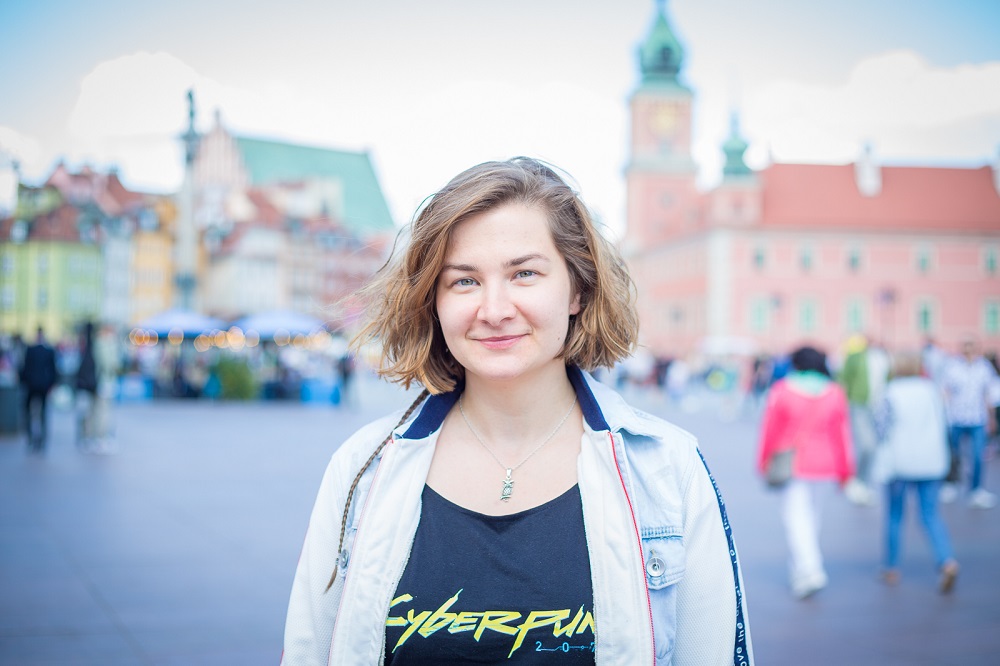
Anna Dawid-Lekowska is an Assistant Professor at the Leiden Institute of Advanced Computer Science (LIACS) and affiliated with the Leiden Institute of Physics (LION) at Leiden University, Netherlands. She leads a research group within the aQa group, focusing on the intersection of machine learning and quantum physics. Previously, she was a Research Fellow at the Center for Computational Quantum Physics, Flatiron Institute, New York. PhD in Physics and Photonics (joint, cotutelle), University of Warsaw & ICFO, Spain MSc in Quantum Chemistry, University of Warsaw BSc in Biotechnology, University of Warsaw Anna's research centers on interpretable machine learning for scientific discovery, particularly in quantum systems. She investigates how overparametrized models generalize, the role of loss landscape flatness, and double descent phenomena. Her work bridges deep learning with quantum simulations, aiming to detect quantum phase transitions and extract physical insights from trained models. She also explores ultracold molecules and novel quantum phases using simulation platforms. Her recent publications demonstrate a strong trend in applying machine learning to automate and interpret quantum experiments, such as detecting laser cooling schemes and understanding neural network initialization. The work emphasizes interpretability, aiming to make AI a transparent scientific tool rather than a black box. Anna has received significant recognition, including: 2022 FNP START laureate Participant in the 2024 Lindau Nobel Laureate Meeting She is actively mentoring and expanding her group, currently recruiting PhD students and postdoctoral researchers. Her work is supported by institutional affiliations with leading research centers and collaborations across Europe and the US. Anna also engages in science communication and education, having lectured at the Nordita Winter School on Machine Learning and Physics. She is involved in the aQa research group, which focuses on quantum algorithms and AI, fostering interdisciplinary collaboration between computer science and physics. Her lab integrates theoretical modeling, algorithm development, and applications to quantum experiments.
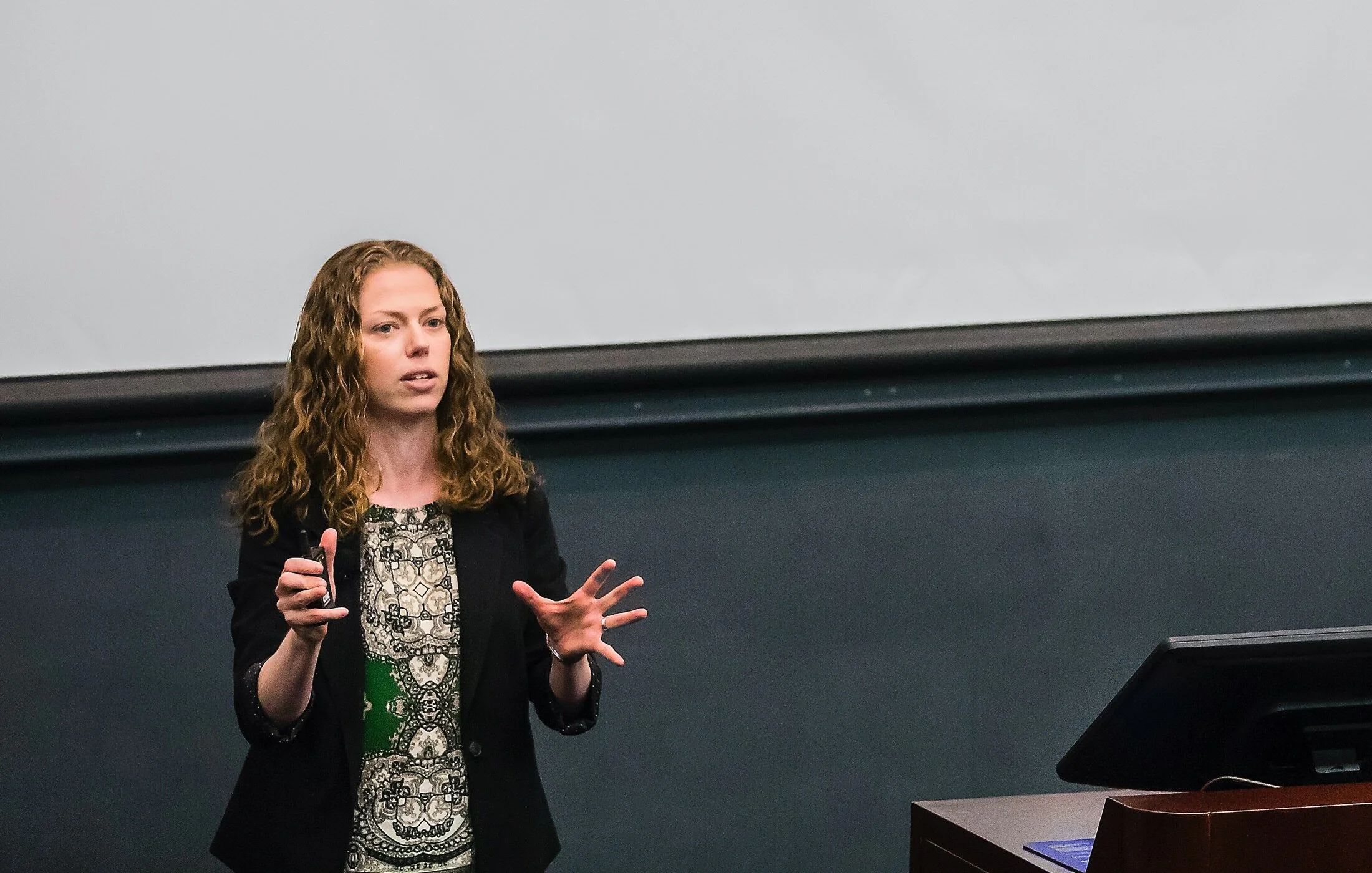
Katherine L. Milkman is the James G. Dinan Endowed Professor at The Wharton School of the University of Pennsylvania, with secondary appointments in the Perelman School of Medicine and School of Arts and Sciences. She co-founded and co-directs the Behavior Change for Good Initiative , focusing on harnessing behavioral economics and psychology for societal benefit. Education: PhD in Computer Science and Business, Harvard University Undergraduate degree (summa cum laude) in Operations Research and American Studies, Princeton University Her research bridges behavioral economics , decision-making , and health psychology , with applications in education, finance, and public health. Recent studies explore quantification fixation , streak incentives , and diversity interventions using megastudy methodologies. Scientific awards include Thinkers50 Top 50 Management Thinker (2021, 2023) APS Fellow (2020) FABBS Early Career Award (2015) Wyss Award (Harvard, 2008) She teaches courses in decision-making and judgment research , including OIDD9950 (Dissertation) and OIDD2990 (Judgment & Decision Making Research). Media outlets like The New York Times and Nature regularly feature her work, while her podcast Choiceology disseminates behavioral economics insights to a broader audience.