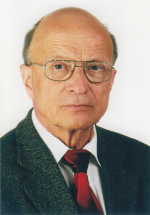
Markus Vincze is an Associate Professor at the Institute of Automation and Control Engineering (ACIN) at Vienna University of Technology (TU Wien). He founded the Vision for Robotics (V4R) group in 1996 to advance robotic perception, particularly in real-world environments and homes. His work focuses on cognitive computer vision techniques for robotics. Education: Diplom in Mechanical Engineering (1988) and PhD (1993) from TU Wien; M.Sc. (1990) from Rensselaer Polytechnic Institute. V4R coordinates EU projects like ActIPret, robots@home, HOBBIT, and national initiatives like vision@home. Markus has edited a book on Robust Vision with Gregory Hager and authored 62 peer-reviewed journal articles and over 400 reviewed publications. His recent research explores zero-shot 6D pose estimation, sim-to-real transfer, and transparent object detection. Markus has served as program chair for ICRA 2013 and organized HRI 2017 in Vienna. He has advised numerous students and secured grants from the Austrian Academy of Sciences for work at HelpMate Robotics and Yale's Vision Laboratory. The V4R group leads innovations in robotic vision, including frameworks for synthetic data generation (Unrealgensyn), depth completion (CAGT), and educational robotics applications for sustainability. Their work spans household robotics (RH3), agricultural robotics (EdgeSoil), and human-robot collaboration.
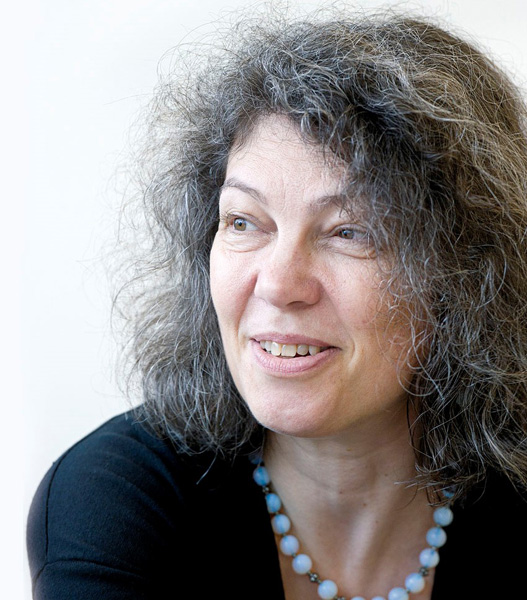
Hilda Tellioglu is an Associate Professor and Dean of Academic Affairs for Informatics at TU Wien, leading the Artifact-based Computing and User Research department. She holds a dual role as Head of Research Unit and oversees the Office of the Dean. Her work focuses on Human-Computer Interaction (HCI), Design Thinking, and Digital Transformation, with a strong emphasis on socio-technical systems and participatory design methodologies. Research interests span software engineering, CSCW, ambient assisted living (AAL), and digital co-creation practices in urban planning. She has spearheaded projects like aspern.mobil LAB, EnviSense, and StreetForum, exploring smart mobility, environmental sensing, and citizen participation in urban development. Her work frequently integrates tangible interfaces and model-based design approaches. Key contributions include frameworks for digital transformation evaluation (EEFCET 2020), user-centered design for informal caregivers (TOPIC platform), and crisis management systems using crowdsourcing (RE-ACTA). She has led over 20+ research projects funded by FFG, EU, and national agencies, focusing on mobility innovation, healthcare technology, and sustainable urban systems. Teaching responsibilities include courses on Design Thinking, Digital Transformation, and Research Methods across bachelor's, master's, and PhD programs. She actively promotes interdisciplinary collaboration through initiatives like the Center for Technology & Society (CTS) and Living Lab methodologies.
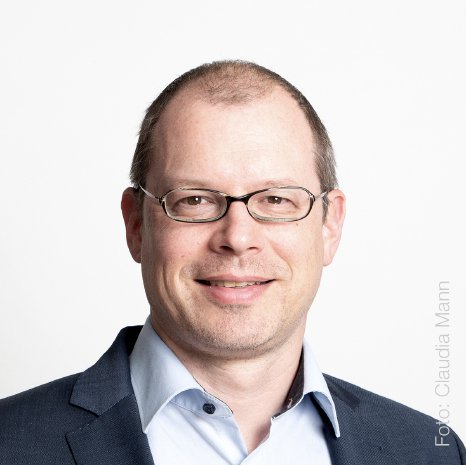
Hannes Hick is a Professor at Graz University of Technology , affiliated with the Institute of Machine Elements and Development Methodology . His research focuses on mechanical development, tribology, and systems engineering for automotive and industrial applications. He actively contributes to engineering education and methodology standardization. Research Interests Hydrogen internal combustion engines System modeling and digital twins Tribology in electric drivetrains Sustainable engineering practices MBSE (Model-Based Systems Engineering) Friction and wear analysis Article Trends His recent work emphasizes hydrogen propulsion systems, model-based approaches for interdisciplinary engineering challenges, tribological optimization for sustainable mobility, and integrating AI with mechanical design workflows. Labs and Teams He leads research at the Institute of Machine Elements, focusing on mechanical validation and development methodologies for advanced powertrain systems.
Ana Sokolova is a Professor in the Department of Computer Science at the University of Salzburg. She is affiliated with the Faculty of Digital and Analytical Sciences and actively contributes to research in theoretical computer science. University: University of Salzburg Faculty: Faculty of Digital and Analytical Sciences Department: Computer Science Email: ana.sokolova@plus.ac.at Her research focuses on probabilistic systems , concurrency theory , convex algebras , and formal verification . This work bridges theoretical foundations with practical applications in distributed computing and programming semantics. Recent publications highlight advancements in trace semantics , determinization , probabilistic anonymity , and coalgebraic modeling . Key trends include the integration of Markov chains , nondeterministic systems , and algebraic structures for formal verification.
Bruce Brown is Pro-Vice-Chancellor for Research at the University of Brighton , overseeing research across life, physical, social sciences, and arts and humanities. He previously served as Dean of the Faculty of Arts and Architecture (1989–2006) and Head of the Department of Design (1984–1989). Administrative Leadership : REF2014/RAE2008 Chair, International Governor at Shenkar College, and advisor to academic bodies in Hong Kong, Portugal, and Italy. Research Interests : Visual memory, arts education, and research leadership, with publications spanning design history, spatial design, and cultural policy. Scientific Awards : 2007 WHO’s WHO (A&C Black) 2005 Honorary Fellow (University for the Creative Arts) 2004 Honorary Fellow (Royal College of Art) 1985 Elected Member (Designers and Art Directors Association) 1978 Sanderson and Herbert Read Awards (Royal College of Art) 1970 Elected Fellow (Royal Society of Arts) Articles focus on visual communication, design policy, and cultural memory, reflecting his expertise in design research and higher education leadership . He is currently an Editor of Design Issues: Research Journal (MIT Press).
Heitor Alvelos is a Full Professor of Design at the University of Porto's School of Fine Arts, where he has held academic positions since 2003. He serves as Course Director for the PhD in Design program (since 2011), Director of ID+ Institute for Research in Design, Media and Culture (since 2007), and Curator of FuturePlaces Medialab for Citizenship (since 2008). His institutional roles extend to the Foundation for Science and Technology (Portugal), where he chairs the Scientific Board for Humanities and Social Sciences. His academic journey includes a PhD in Design/Media Studies from the Royal College of Art (2003), an MA in Visual Communication from the School of the Art Institute of Chicago (1992), and a BA in Communication Design from the University of Porto (1989). His educational path was supported by prestigious awards including a Fulbright scholarship and FCT grant. Alvelos' research spans sound design, new media, cultural criminology, and citizen engagement through media. He explores the intersection of perception, technology, and cultural practices, with particular focus on lexical implications of digital media and ecological approaches to perception. His work often bridges artistic practice with academic research, creating innovative frameworks for understanding contemporary media culture. His recent publications reveal a trajectory from theoretical explorations of graffiti and street art toward more complex investigations of algorithmic identity, digital citizenship, and the materiality of sound in digital contexts. The publications show strong interdisciplinary connections between design, media studies, cultural theory, and sound art, reflecting his dual identity as both academic researcher and creative practitioner. Elected Vice-President, Scientific Board (HSS), Foundation for Science and Technology, Lisbon, Portugal (2010-present) Elected Board Member, Fundação Gomes Teixeira, Portugal (2007-2013) FCT Scholarship, London, UK (1997-1999) Fulbright scholarship, trustee scholarship (SAIC), JNICT grant (1992) As an academic advisor, Alvelos has supervised over 20 PhD students across diverse topics in design, media, and cultural studies. His research is supported through institutional roles including Director of ID+ Institute, which facilitates collaborative research between the University of Porto and University of Aveiro. His work with FuturePlaces Medialab has created unique opportunities for community engagement and citizen science initiatives. Alvelos directs ID+ Institute for Research in Design, Media and Culture, a collaborative research entity between the University of Porto and University of Aveiro. He also curates FuturePlaces Medialab for Citizenship, which has evolved into a significant platform for exploring digital citizenship and community engagement through media arts. His leadership in these organizations demonstrates a commitment to bridging academic research with practical applications in community contexts.
Prof. Martin Teufel is a Professor at the University of Teacher Education Styria, Austria, affiliated with the Institute for Digital Media Education. He specializes in educational technology with a focus on mobile learning, digital competency, and innovative teaching methodologies. His work includes developing MOOC-based learning systems and analyzing student digital preparedness. Key projects include the Styrian University Conference digital competency analysis and the Digital Learning Lab initiative. He holds a BEd from the University of Graz and actively contributes to teacher training programs integrating emerging technologies. Research interests span digital pedagogy, seamless learning environments, and computational thinking tools like BBC micro:bit. His publications highlight patterns in online learning behaviors and institutional digital transformation strategies. He advises on educational technology policy and has led cross-institutional studies on student readiness for digital education. His work often bridges theory and practice through collaborative formats like the Hochschuldidaktik-Café for educators' professional development. Teaching responsibilities include courses on digital media in education and technology-enhanced learning design. He manages educational technology projects and serves as a consultant for digital learning infrastructure. His GPG public key (F361ADE9) indicates active engagement in secure academic communication.
Andreas Fink serves as a University Professor at the Institute of Psychology within the Faculty of Natural Sciences at Karl-Franzens-University Graz, Austria. His research bridges cognitive neuroscience, psychology, and sports science with a particular emphasis on understanding the neurobiological foundations of creative thinking and emotional processing. As a leading figure in creativity neuroscience, Professor Fink employs advanced methodologies including EEG, fMRI, and ambulatory monitoring to investigate how physical activity influences brain function and cognitive performance. His work has significant implications for mental health interventions and cognitive enhancement strategies across various populations. Professor Fink's research interests center on three interconnected domains: biological mechanisms of cognitive and affective functions, creativity neuroscience, and the relationship between physical activity and brain health. His laboratory investigates how physical exercise influences neural processes related to creativity, emotion regulation, and cognitive performance through both basic neuroscience research and applied interventions. A hallmark of his approach is examining EEG alpha power during creative ideation tasks while simultaneously exploring how running, dance, and other physical activities can improve mental health outcomes and cognitive functioning. His work spans from laboratory-based experimental designs to real-world interventions with ecological validity. Analysis of Professor Fink's recent publication trajectory reveals a sophisticated evolution in his research focus, with increasing emphasis on the intersection of physical movement, brain function, and creative cognition. His work has progressively incorporated more ecologically valid approaches using ambulatory monitoring to study creativity in natural contexts, while maintaining rigorous neuroscience methodology. A consistent theme across his publications is neuroplasticity, particularly how physical exercise interventions induce structural and functional brain changes, with special attention to hippocampal volume and white matter integrity. His research has expanded to explore specialized forms of creativity including malevolent creativity and the nuanced relationship between everyday movement patterns and creative cognition. 2009 Psychology Prize for innovative scientific or practical work for his habilitation thesis 'The neuroscientific study of creative thinking' from the Professional Association of Austrian Psychologists (BÖP) and the Austrian Psychological Society (ÖGP) Professor Fink currently leads multiple significant research initiatives funded by the Austrian Science Fund (FWF), including 'Neuronal mechanisms underlying the generation of creative solutions in complex environments' (2016-2018), 'Running Away From Depression with Your Brain and Your Heart' (2022-2025), and 'Dance and Brain' (2024-2026). These projects demonstrate his commitment to translating basic neuroscience findings into practical interventions for mental health. While specific doctoral students aren't listed in the provided materials, his position as a full professor and principal investigator on multiple grants indicates active mentorship of junior researchers and graduate students. His collaborative approach is evident through interdisciplinary partnerships spanning psychology, neuroscience, sports science, and clinical practice. Professor Fink is an active member of the 'Complexity of Life' profile area at the University of Graz and participates in the 'Brain and Behavior' research network. His laboratory environment fosters interdisciplinary collaboration, bringing together researchers from diverse backgrounds to tackle complex questions about the brain-mind-body connection. Current projects suggest his team employs a multimodal approach combining neuroimaging, physiological monitoring, behavioral assessments, and intervention studies to comprehensively investigate how physical activity influences brain function and creative cognition. His 'Running Away From Depression' project exemplifies his translational research focus, directly connecting basic neuroscience findings to clinical applications for mental health improvement.
Winfried Hacker is a distinguished academic serving as Professor at TH Dresden from 1966 to 2001. He holds a PhD (1961) and Habilitation (1965) from the same institution. His research focuses on cognitive psychology, experimental psychology, and problem-solving processes, particularly in design and organizational contexts. He has contributed to understanding reflective practices in problem-solving and innovative work processes. Key honors include membership in the Saxon Academy of Sciences (1991), Academia Europaea (1992), the German Psychology Prize (1996), and an honorary doctorate from the University of Bern (2005). His work bridges theoretical psychology with practical applications in economics and workplace innovation. Publications (2004) explore topics like reflection in design thinking, knowledge exchange in organizations, and cognitive processes in aging populations. His research emphasizes human-centered approaches to work design and decision-making under uncertainty.
Sonia Livingstone is a Professor of Social Psychology at the London School of Economics and Political Science , where she has served since 2003 as a full professor in the Department of Media and Communications. She is a renowned scholar in digital media, children's rights, and social psychology, with a career spanning over three decades. BSc in Psychology (1982), University College London DPhil in Social Psychology (1987), University of Oxford Her research examines how digital technologies reshape children's identities, communication rights, and everyday practices, focusing on risks and opportunities in online environments. She has led major initiatives like EU Kids Online , Global Kids Online , and the Digital Futures Commission , which advocate for child-centered digital design. The 2025 articles highlight her work on children's digital rights , media literacy , platformization of family life , and mental health implications of digital engagement . Her projects emphasize qualitative experiences over quantitative 'screentime' metrics. Scientific Awards Officer of the Order of the British Empire (OBE), 2014 Academia Europaea Erasmus Medal, 2019 Honorary Doctorates: University of Montreal, Erasmus University Rotterdam Fellow of the British Academy (FBA), Royal Society of Arts, Royal Danish Academy of Sciences Livingstone co-founded the MSc in Media and Communications at LSE and served as former head of her department. She collaborates with institutions like the 5Rights Foundation , Connected Learning Research Network , and Harvard's Berkman Center . Her blog Parenting for a Digital Future bridges academia and public discourse.
University College of Teacher Education ViennaAustria
Prof. Georg Jäggle is a Professor of Vocational Education at the University College of Teacher Education Vienna (PH Wien), specializing in educational robotics, STEM pedagogy, and sustainability education. He leads the Department of Vocational Education within the Institute for Secondary Level Vocational Education (I:SBB). His work integrates technology-enhanced learning environments, focusing on project-based methodologies to bridge gaps between education and industry needs. Key projects include the Recycling Heroes initiative (2022–2024), which employs citizen science to promote circular economy awareness, and the EU-funded ER4STEM project (2017–2018), fostering STEM engagement through robotics. Prof. Jäggle holds a Dipl.-Ing. (FH) and a Dr. in engineering education, with prior industry experience as an engineer and vocational school teacher. His research emphasizes digital competence development, intergenerational learning, and inclusive education strategies. He has coordinated interdisciplinary teams across 10+ EU and national projects, including RoboCoop (2018–2022) and Makers@school (2017–2019), which implemented robotics and maker culture in schools. His teaching spans applied mathematics, engineering, and automation technology at both academic and vocational levels. Research interests include technology integration in vocational training, lifelong learning frameworks, and the impact of educational robotics on student motivation. Recent publications (2022–2024) explore STEM career self-efficacy, sustainability curriculum innovation, and cross-generational robotics collaboration. He currently serves in the Center for Research Management (Zentrum Forschungsmanagement) at PH Wien, advancing applied research in MINT (STEM) education and educational technology.
Morgane Chevalier is an Associate Professor at Vaud Teacher Training College (HEP Vaud) working within the Media, Digital Uses and Computer Science Teaching unit (UER MI). She specializes in multimedia pedagogical engineering, combining project management with e-learning scripting. Her work bridges educational theory and practical implementation of digital technologies in classroom settings, with particular focus on primary education. With prior experience teaching in primary schools in Seine-Saint-Denis (France), working in human resources in Montreal (Canada), and teaching in the Canton of Vaud, Chevalier brings diverse perspectives to her academic work. She holds a Master's degree in e-learning from IPM, Lille 1 and is currently pursuing a MAS in 'Theories, practices and training devices for teachers' to refine her understanding of institutional and social contexts of teacher training in French-speaking Switzerland. Her research interests focus on three complementary areas: online homework implementation in blended learning environments and fostering teacher communities of practice; how e-learning supports teacher professionalization; and robotics as a medium for knowledge, specifically examining how classroom robot integration impacts student learning and teaching practices. She is particularly interested in emerging communities of practice around educational technology. Analysis of her recent publications reveals a strong emphasis on educational robotics as a vehicle for developing computational thinking in primary education. Her work consistently explores scaffolded learning approaches, intervention methods, and teacher perspectives on implementing robotics in classrooms. A recurring theme is the development of models to help teachers identify relevant computational thinking concepts during different phases of educational robotics activities. Chevalier serves in several organizational roles including as an Associate HEP Professor, delegate of the intermediate body to the HEP Council, delegate of the Specialized Pedagogy Study Commission, and scientific collaborator at EPFL's LSRO. She is also a member of the educanet2 Community. Her teaching spans Bachelor primary programs, MASPE education, and continuing education courses covering image creation and processing, media education, Thymio II robotics, and flipped classroom methodologies. She collaborates extensively with EPFL researchers, particularly on projects involving the Thymio educational robot, and has developed frameworks for creative computational problem solving through robotics. Her work demonstrates a commitment to translating research into practical classroom applications while supporting teacher development in the digital age.
Bettina Kubicek is Professor of Work and Organizational Psychology at the University of Graz, Faculty of Natural Sciences, where she leads research in the Smart Regulation profile area and contributes to the Human Factor in Digital Transformation and Brain and Behavior research networks. Her work bridges psychological theory with practical organizational challenges in contemporary workplaces. Her research spans work psychology, organizational psychology, and economic psychology with emphases on flexible work arrangements, work intensification, and human-robot collaboration. She investigates cognitive demands of flexible work, work-home interface dynamics, and digital transformation impacts through diary studies and experimental designs. Recent work explores telework challenges, AI in HR, and trust mechanisms in human-robot teams during disaster response. Analysis of her recent publications reveals growing focus on human-robot interaction in Industry 4.0, cognitive aspects of telework, and cross-cultural validation of work addiction scales. Her methodology combines intensive longitudinal designs with physiological measures, increasingly incorporating VR interfaces and AI-driven personnel selection experiments. Scientific awards include: Wirtschaftskammerpreis for project 'Flexible Arbeitsbedingungen und die Vereinbarkeit von Beruf und Familie' (2015) Innovationspreis der Universität Wien (2012) Multiple research stipends for University of Wisconsin-Madison stays (2005-2008) She has secured significant competitive grants including FWF-funded 'Cognitive demands of flexible work: Risks and challenges' (2017-2022) and FFG-supported 'Enabling and Assessing Trust when Cooperating with Robots in Disaster Response' (2021-2023), examining trust calibration and cognitive load in human-robot teams. Current projects address evidence-based guidelines for ICT use in work-life boundaries. As core member of the Human Factor in Digital Transformation network, she collaborates with engineers, computer scientists, and healthcare professionals to develop human-centered technological solutions, particularly in healthcare robotics and disaster response systems.
Christopher Frauenberger is a Professor of Human-Computer Interaction at the IT University of Linz . His research bridges philosophy and design to explore relationships between humans and digital technologies, focusing on Entanglement HCI and PANDORA philosophy circle . He actively engages with neurodiverse groups , particularly autistic children, and examines ethics in design through roles like ACM SIGCHI Ethics Board and Interdisciplinary Transformation University affiliations. Education : PhD in Human-Computer Interaction Research Areas : Participatory Design, Assistive Technologies, Social Play, Ethics in HCI His recent work explores diversity computing and inclusive design spaces , emphasizing relational agency and performative perspectives . Publications address smart technologies for children , critical design methodologies , and value-driven innovation . Supervisions include doctoral work on post-project toolkits and value-driven meeting rooms . He advocates for posthumanist design and critical reflections on technology's societal impact.
Harald Wimmer is a Professor at St. Pölten University of Applied Sciences, where he serves as Academic Director of Digital Marketing and Communication (MA), Academic Director of Digital Media Management (MA), and Deputy Academic Director of Marketing and Communication (BA). He leads multiple academic programs within the Department of Digital Business and Innovation, including Digital Marketing (academic), Digital Marketing (MA), and Digital Marketing (MBA). Professor Wimmer's research spans digital marketing, media management, and strategic communication. His work explores consumer behavior in digital environments, advertising effectiveness, PR strategies, and generational marketing approaches. He has developed expertise in both traditional marketing research methods and newer digital analytics approaches. His research bridges theoretical frameworks with practical applications for businesses navigating digital transformation. His publication record shows a clear progression from early work on consumer acceptance of hybrid vehicles and digital camera branding toward contemporary research on digital marketing, social media, and strategic communication. Recent publications focus on Gen Z marketing, gender representation in media, semiotic analysis of advertising, and creative methodologies in communication. Professor Wimmer actively contributes to academic discourse through editorial roles, particularly with the PRaktivium publication series which examines evolving PR practices and the relationship between journalism and public relations. His work demonstrates strong industry connections and practical relevance to current marketing challenges. He has been instrumental in developing academic programs that address the rapidly changing digital marketing landscape, ensuring curriculum relevance through close industry partnerships and practical project work. His leadership extends to student competitions like the Mobile Marketing Rookie Award and Dialog Marketing Rookie initiatives that connect classroom learning with real-world marketing challenges.