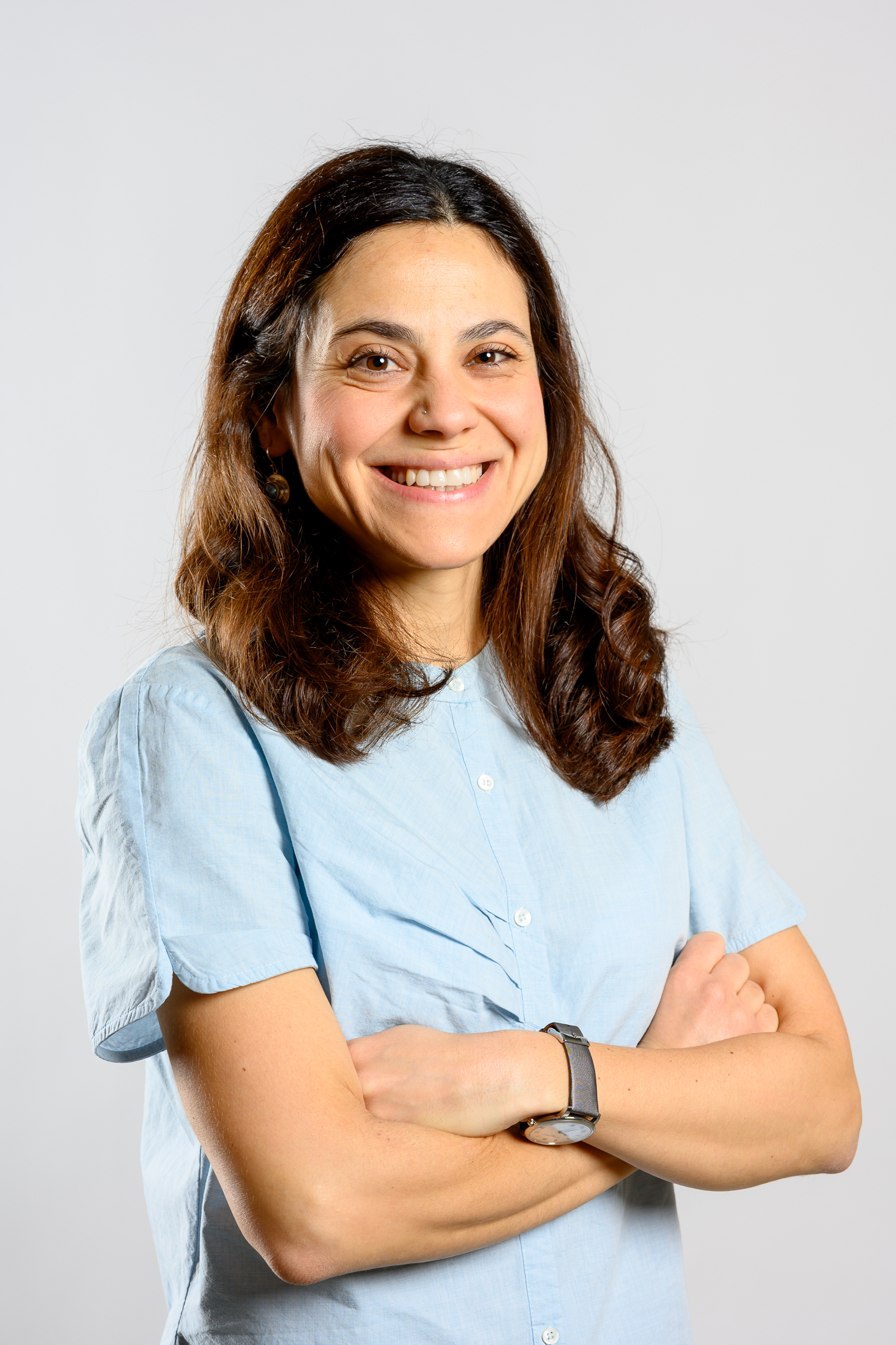
João Miguel Lobo Fernandes is a Full Professor at the Department of Informatics, School of Engineering, University of Minho. He holds a 5-year degree in Informatics Engineering (1991), a Master's in Informatics (1994), and a Ph.D. in Informatics/Computer Engineering (2000) from Universidade do Minho, with a thesis on An object-oriented methodology for embedded systems development . Research interests: Software Modeling, Requirements Engineering, Embedded Software, Software Process, Bibliometrics International collaborations: University of Bristol, Turku Centre for Computer Science (Finland), Aarhus University (Denmark), Universidade Federal de Santa Catarina (Brazil), and others Key projects: iFlow and DIABO logistics platforms (awarded by APLOG) His 160+ peer-reviewed publications focus on software methodologies, embedded systems, and industry collaborations. Recent work includes applications of machine learning in automotive software, feature modeling, and remote work impact studies. He serves on editorial boards for Journal of Information Technology Research and Open Computer Science . 2016 & 2022 Logistics Excellence Awards (APLOG) Organized international events: ACSD, DIPES, GTTSE, PETRI NETS, ICSOB, MOMPES As an academic leader, he directed the 5-year Systems and Informatics Engineering degree (2004-06), Master's in Informatics Engineering (2011-12), and served on Scientific Council of the School of Engineering (2013-16).
Mahmoud Karimi is a Senior Lecturer at the School of Mechanical and Mechatronic Engineering , University of Technology Sydney (UTS), leading the Vibroacoustics Research Group within the Centre for Audio, Acoustics and Vibration. He holds a PhD in Mechanical Engineering from UNSW with specialization in vibration and acoustics, and has conducted visiting research at University of Cambridge, Technical University of Munich, and INSA Lyon. His research focuses on computational hydroacoustics, vibroacoustics, and uncertainty quantification in noise/vibration problems. Academic Leadership : Editor-in-Chief of Acoustics Australia since 2025 Research Income : Attracted $6M in competitive grants ($2M as Chief Investigator) since 2017 Technical Expertise : Specializes in acoustic black hole structures, flow-induced vibration modeling, and leak detection in buried pipelines Scientific Awards : Recipient of ARC DECRA Fellowship (DE190101412) 2019-2022 Research Trends : His 91+ publications demonstrate expertise in hybrid acoustic modeling techniques, sustainable hempcrete development, and vibration energy harvesting solutions with applications in mining, rail systems, and water infrastructure. International Collaborations: University of Cambridge (UK), Technical University of Munich (Germany), INSA Lyon (France) Teaching Portfolio: Advanced numerical methods, dynamics & control, and computational modeling at UTS
Dr. Burcu Demiray is a researcher at the Department of Psychology, University of Zurich, leading a team focused on real-life cognitive activities in the context of healthy longevity. Her interdisciplinary work integrates smartphone sensing, experience sampling, and machine learning to analyze real-life audio, speech, and text data. She is also developing e-learning concepts for Generation 65+ to combat ageism and enhance digital literacy. Education: Not explicitly detailed in the provided text. Research Interests: Healthy cognitive aging and psychological well-being. Automated semantic analysis of real-life conversations. Machine learning applications in gerontology and memory studies. Digital health interventions and ambient audio monitoring. Publications Trends: Focus on naturalistic observation studies using smartphone sensing and wearable devices. Development of machine learning models for reminiscence and memory function detection. Analysis of gender differences in daily communication and cognitive aging. Scientific Awards: No specific awards mentioned. Labs/Teams: Affiliated with the Healthy Longevity Center at UZH and the Digital Society Initiative (DSI) Community Health.
Hironori Washizaki is a Professor at Waseda University's School of Fundamental Science and Engineering, Department of Information and Computer Science, and serves as Director of the Global Software Engineering Laboratory. He also holds a visiting professorship at the National Institute of Informatics and serves as outside director at SYSTEM INFORMATION CO.,LTD. and eXmotion Co., Ltd. With a Doctorate in Information and Computer Science from Waseda University (2003), he has established himself as a leading researcher with 384 publications and an h-index of 36 according to Google Scholar. His research spans multiple domains including software engineering methodologies, security patterns, programming education, and the application of machine learning to software development. His work has significantly contributed to the fields of software patterns, quality assurance, and educational tools for programming. With over 20 years of academic experience, his career progressed from Research Associate (2002-2004) to Assistant Professor (2004-2008), Associate Professor (2008-2016), and Professor (2016-present). Washizaki's recent publications demonstrate a strong focus on applying AI and machine learning techniques to software engineering challenges, including prompt engineering patterns, program repair methods, and vulnerability assessment. His work bridges theoretical research with practical applications in both educational and industrial contexts, particularly in B2B software development and programming education for diverse age groups. KDDI Foundation Award (2022) Spirit of the Computer Society Award (2022) Distinguished Contributor, IEEE Computer Society (2022) IEEE Computer Society Golden Core Member (2022) Fellow, International Academy, Research, and Industry Association (2022) Computer Research Contribution Award, APSCIT (2016) Washizaki has served as chair of the IEEE CS Japan Chapter and SEMAT Japan Chapter, director of ACM-ICPC 2014 Asia Regional Tokyo Contest, and Convenor of ISO/IEC/JTC1/SC7/WG20. His editorial work includes positions at IEICE Transactions on Information and Systems and International Journal of Software Engineering and Knowledge Engineering. His leadership extends to programming education initiatives like SamurAI Coding, demonstrating his commitment to developing the next generation of software engineers.
Dr. Saidi Siuhi serves as an Associate Professor of Civil Engineering at South Carolina State University, where he teaches undergraduate and graduate courses while conducting research and providing institutional service across departmental and university levels. His academic credentials include: Ph.D. in Civil Engineering from the University of Nevada, Las Vegas (2009) M.Sc. in Civil Engineering from Florida State University (2006) B.Sc. in Civil Engineering from the University of Dar-es-Salaam (2003) Specializing in transportation engineering, Dr. Siuhi's research focuses on traffic safety, transportation planning, and microscopic traffic simulation. His work addresses critical transportation challenges including distracted driving/walking behaviors, traffic management during special events (notably the 2017 solar eclipse), and the application of advanced computational methods to transportation networks. He integrates emerging technologies like virtual reality, machine learning, and deep learning to develop innovative safety solutions for complex transportation systems. Analysis of his recent publications (2021-2025) reveals a strong trajectory toward computational transportation safety, with increasing emphasis on AI-driven solutions for pedestrian safety, driver behavior analysis, and infrastructure monitoring. His work consistently bridges theoretical transportation models with practical safety applications, particularly in distracted behavior analysis and event-based traffic management. Dr. Siuhi actively mentors students through senior design projects (CE 459/460) and graduate coursework, though specific advisee names aren't documented. His service contributions span departmental, college, and university committees, supporting academic operations and strategic initiatives within the engineering program.
Dr. Stuart Marshall serves as Associate Dean of Academic Development in the Faculty of Science and Engineering at Victoria University of Wellington - Te Herenga Waka, where he also holds the academic rank of Senior Lecturer. Previously, he served as Head of School for the School of Engineering and Computer Science from 2015-2021 after joining the institution as a Lecturer in 2003. His academic journey includes completing his BSc, MSc, and PhD in Computer Science at Victoria University of Wellington, with his doctoral research focusing on software reuse. Marshall's research interests center on information and data visualization, particularly exploring how visualization can function as collaborative tools in team environments rather than single-user applications. He also investigates explainable AI and mobile user interface design with emphasis on promoting healthy device usage patterns. His work bridges theoretical computer science with practical applications in education and environmental analysis. Analysis of his publication record reveals a consistent focus on visualization techniques, with recent work shifting toward immersive analytics and virtual reality applications for complex data analysis, particularly in ecosystem services. Earlier publications concentrated on mobile learning applications grounded in transactional distance theory, software visualization for large codebases, and graph layout algorithms. Marshall has supervised six PhD students and eight Masters students to completion, with current doctoral supervision spanning immersive environments for reading assistance, medical diagnosis interfaces, and cardiac procedure simulation. His grant portfolio includes multiple ACM ISS 2022 projects with industry partners including Sensor Holdings Limited, Niantic, Autodesk, and Northeastern University, along with an Australian Research Council grant for digital games preservation. Teaching responsibilities encompass foundational programming, safety-critical systems, human-computer interaction, and data visualization across undergraduate and graduate courses. He teaches subjects including SWEN326 (Safety-Critical Systems), CGRA151 (Introduction to Computer Graphics and Games), and DATA301 (Data Science in Practice), with teaching assignments scheduled through 2026.
Wing Lam is an Assistant Professor at George Mason University specializing in software engineering with a focus on software testing methodologies. His academic service includes program committee membership for major conferences including ASE, ICSE, ISSTA, and ESEC/FSE, as well as session chair roles across multiple tracks. His research interests center on flaky tests , mobile application testing , and continuous development optimization . Lam's work addresses critical challenges in test reliability, particularly order-dependent flaky tests and resource-related flakiness. His research bridges theoretical foundations with practical applications in modern software development pipelines, with recent expansion into AI-assisted testing methodologies. Lam's publication record shows a clear trajectory focusing on flaky test detection and mitigation, with approximately 60% of his recent work dedicated to various aspects of this problem. His research increasingly incorporates machine learning techniques for UI testing and test optimization, reflecting broader trends in the field. The consistent publication venue pattern across top software engineering conferences indicates strong recognition within the academic community. Lam has served in multiple leadership roles including Program Co-Chair for MOBILESoft Research Track and Committee Member for ASE's New Ideas and Emerging Results (NIER) Track. His involvement in workshops focused on flaky testing demonstrates his specialization in this niche area of software testing.
Alexandre Bartel is a Professor in the Department of Computing Science at Umeå University, Sweden, specializing in software security and software engineering. His research focuses on system security and analysis of permission-based software stacks, particularly Android. With numerous publications in top-tier security and software engineering conferences and journals, Bartel has established himself as a leading researcher in vulnerability analysis and software security. Bartel's research interests primarily center around software security, with a particular emphasis on Java and Android ecosystems. His work delves into vulnerability analysis, deserialization attacks, control flow integrity, and security mechanisms for complex software systems. He investigates how to verify security properties through efficient algorithms and examines existing software layers from a security perspective. His research bridges theoretical security concepts with practical implementation challenges in real-world systems. Analysis of Bartel's recent publications reveals a strong focus on Java deserialization vulnerabilities, control flow integrity mechanisms, and Android security. His work demonstrates a consistent trajectory from fundamental vulnerability analysis to developing practical security solutions and benchmarks. The research spans both theoretical frameworks and empirical evaluations, with significant contributions to understanding long-term security adoption patterns and developing tools for vulnerability detection. Scientific Awards: Most influential Paper ICSE N-10 Award for IccTA: Detecting Inter-Component Privacy Leaks in Android Apps Bartel actively contributes to the academic community through service roles, having served on program committees for major conferences including ASE, ESEC/FSE, ICSE, and FSE. His research has practical implications for software developers and security practitioners, particularly in the areas of vulnerability detection and security mechanism implementation. While specific grant information isn't detailed in the provided materials, his extensive publication record suggests successful funding for his research initiatives. Though not explicitly detailed in the provided information, Bartel's research likely involves collaboration with students and researchers on projects related to software security analysis. His work on benchmarks like Gleipner and CONFUZZION suggests involvement in developing tools and resources for the security research community.
Despina Kontos, PhD is the Herbert and Florence Irving Professor of Radiological Sciences at Columbia University Irving Medical Center (CUIMC), with appointments in the Department of Radiology and the Herbert Irving Comprehensive Cancer Center. She serves as the Chief Research Information Officer for CUIMC, Vice Chair of Artificial Intelligence and Data Science Research in the Department of Radiology, and Director of Biomarker Imaging at NewYork-Presbyterian Hospital. Additionally, she holds appointments in the Departments of Biomedical Informatics and Biomedical Engineering. Dr. Kontos received her educational training from prestigious institutions: BS in Engineering from the University of Patras, Greece MSc and PhD in Computer and Information Sciences from Temple University Postdoctoral training in Radiology at the University of Pennsylvania Certificates in Biostatistics and Epidemiology from UPenn, Cancer Biology from Harvard, and AI for Decision Making from Wharton As a computer scientist with expertise in artificial intelligence and machine learning, Dr. Kontos focuses on developing computational methodologies to leverage imaging as quantitative biomarkers for personalized disease prediction, particularly in cancer. Her research program investigates how imaging data can be mined to extract sophisticated phenotypic signatures with diagnostic, prognostic, and predictive value. While her primary focus has been on breast cancer, her lab also pursues related research in lung cancers, evaluating the integration of CT radiomic features with liquid biopsy data to characterize tumor heterogeneity. Dr. Kontos founded and directs Columbia University's Center for Innovation in Imaging Biomarkers and Integrated Diagnostics (CIMBID), a multidisciplinary center dedicated to developing and integrating quantitative imaging and non-imaging biomarkers for personalized disease prediction. Through CIMBID, she has built a vibrant scientific ecosystem that brings together expertise across Columbia's campuses, linking basic science, engineering, clinical medicine, public health, and health services research. Analysis of Dr. Kontos's publication record reveals a strong focus on applying AI and machine learning to biomedical imaging, particularly for cancer risk prediction and personalized treatment. Her work demonstrates a progression from foundational methodological development to clinical translation, with increasing emphasis on multi-modal biomarker integration. Recent publications show expansion into new disease areas including Alzheimer's disease prediction, while maintaining her strong focus on breast and lung cancer applications. Dr. Kontos has received significant recognition for her contributions to the field: Academy for Radiology and Biomedical Imaging Research Distinguished Investigator Award (2020) Eastern Cooperative Oncology Group - American College of Radiology Imaging Network ECOG-ACRIN Young Investigator Award of Distinction for Translational Research (2014) Dr. Kontos has been highly successful in securing research funding, with numerous grants from federal agencies including the National Institutes of Health (NIH) and the Department of Defense (DOD), as well as private foundations such as the American Cancer Society (ACS) and the Radiological Society of North America (RSNA). Her leadership extends to mentoring students and postdoctoral researchers through her roles at CIMBID and the Department of Radiology. As the founding director of CIMBID, Dr. Kontos leads a multidisciplinary team that includes the Computational Imaging Biomarker Group (CBIG), the Laboratory of AI and Biomedical Science (LABS), and several other affiliated research labs. The center leverages Columbia's institutional strengths in engineering, data science, and clinical medicine to advance personalized healthcare through AI and imaging technologies.
Prof. Gerhard Weber holds the Chair in Human-Computer Interaction at Technische Universität Dresden, Germany. Previously, he served as Chair for Human-Centered Interfaces at Christian-Albrechts-Universität zu Kiel (2000–2007) and Professor for Operating Systems and Graphical User Interfaces at Harz University of Applied Sciences (1996–2000). His research focuses on accessible computing, assistive technologies, haptics, and multimodal interaction. Key projects include development of tactile charts (SVGPlott), robotic guidance systems (HapticRein), and indoor navigation solutions for visually impaired users. Current work explores voice interfaces for social robots, autism-inclusive technologies, and accessibility maturity models for higher education institutions. Over 70 publications span conferences like CHI, IEEE, and ACM, emphasizing practical applications in assistive tech. Education & Professional Journey: 2007–Present: Chair in Human-Computer Interaction, TU Dresden 2000–2007: Chair for Human-Centered Interfaces, Kiel University 1996–2000: Professor of Operating Systems and GUIs, Harz University Research Interests: Prof. Weber's work bridges theory and practice in accessibility, emphasizing tactile interfaces, inclusive design, and assistive robotics. Recent projects include: Mosaik : Enabling blind users to create and share graphics via audio-tactile tools Cloud4All : Personalized web accessibility solutions Range-IT : Real-time object detection for navigation aids Advising & Grants: Managed €3.2M in EU and national grants (2011–2020) Supervised 12+ graduate projects on assistive tech Labs & Teams: Leads TU Dresden's Human-Computer Interaction Lab, collaborating with industry partners like Siemens and rehabilitation centers to deploy assistive systems in real-world settings.
Professor Dorothy Monekosso holds a PhD in Spacecraft Engineering from the University of Surrey and is currently a Professor of Computer Science at Durham University. She also serves as Chief Technical Officer (CTO) at More Life UK Ltd, a health-focused company contracted with NHS England. Her research focuses on applying AI and machine learning to healthcare technologies, including assistive and rehabilitation systems. Notable projects include the Virtual Physiotherapist for stroke recovery and the Digital Health Hub. Education: PhD (2000) in Spacecraft Engineering (University of Surrey), Master’s in Satellite Engineering, Bachelor in Electronic Engineering. Research Interests: Behavior Analytics, Digital Twin Computing, Anomaly detection, Medical Image Analysis, Smart Environments, and Wearables. Her work bridges robotics, AI, and healthcare to improve independent living and clinical decision support. Awards: Royal Academy of Engineering Foresight Award (2000), Honorary Fellowship of the British Computer Society (2020). Grants/Projects: Innovate UK-funded weight management programs, MRC-funded Virtual Physiotherapist studies, collaborations with NHS and Assisted Living Leeds. Labs/Teams: Leads development of assistive technologies through Durham’s Computer Science department and industry partnerships. Current supervision includes Strahinja Klem.
Dr. Heidi Baseler is a Senior Lecturer in Imaging Sciences at the Hull York Medical School and the Department of Psychology , University of York . She serves as INSPIRE Programme Lead for undergraduate research and contributes to research governance and public/patient involvement in research through committees like the York Neuroimaging Centre Research Governance Committee and Involvement@York . Education : AB in Biology/Psychology from Dartmouth College (1986), PhD in Vision Science from University of California, Berkeley (1995) Career : Research Fellow at Stanford, Smith-Kettlewell Eye Research Institute, and University of York; Lecturer in Imaging Sciences at Hull York Medical School (2012-2021) Her research focuses on neural mechanisms for central/peripheral vision processing, cortical responses to sensory loss (e.g., AMD, deafness), and neuroprotective strategies like photobiomodulation. Techniques include structural and functional MRI , magnetic resonance spectroscopy , multifocal EEG , and electroretinography . Key findings include cortical reorganization in macular degeneration and superior visual performance in deaf adults. Recent article trends highlight: Neuroimaging biomarkers for AMD progression Cross-modal plasticity in deaf individuals Long-term effects of sensory deprivation on brain structure Photobiomodulation for neurodegeneration Functional connectivity in face-selective regions Contrast perception dynamics across aging Scientific awards include: Exceptional Contribution to Student Experience Finalist , Hull York Medical School (2024) Pursuing Excellence Award , Hull York Medical School (2023) Vice-Chancellor's Teaching Award , University of York (2020) Multiple Teacher of Excellence Finalist recognitions (2016-2018) She teaches undergraduate medical students in Foundations of Medicine and Neurological Diseases , and supervises MSc Cognitive Neuroscience projects. Collaborations span institutions like University of Hull , University of Lille , and University of Regensburg . Current students include Sharyfah Alasiri (PhD, Biomedical Sciences) and Erin English (PhD, Psychology) at the University of York.
Christopher M. James is the William H. Dial/SunTrust Eminent Scholar in Finance and Economics at the University of Florida's Warrington College of Business. He also serves as a senior advisor to Cornerstone Research. Previously, he taught at the University of Michigan and the University of Oregon. His academic roles include editorships at top journals like Journal of Finance and Journal of Financial Economics . Education: Ph.D. in Economics (Industrial Organization & Finance), University of Michigan, 1978 MBA in Finance, University of Michigan, 1977 BA, Michigan State University, 1973 Research Focus: Professor James specializes in financial intermediaries' role in corporate capital acquisition and mortgage-backed securities valuation. His work explores banking, corporate finance, and applied econometrics, with notable contributions to loan pricing, debt restructuring, and disclosure requirements. Recent themes include interest rate risk exposure and institutional synergies in loan funds. Professional Service: Associate Editor, Journal of Financial Markets (2017–present) Editor, Journal of Financial Services Research (2014–present) Editor, Journal of Managerial and Decision Economics (2014–present) Advising & Grants: Advised PhD students Jing Lu and Mustafa Emin (2021–2022). His research has been supported by grants related to banking crises, mortgage markets, and corporate finance dynamics. Labs/Teams: Active in interdisciplinary teams at the Warrington College of Business focusing on financial stability, corporate governance, and quantitative finance methodologies.
Cindy Grimm is a Professor and Graduate Program Director in the School of Mechanical, Industrial, and Manufacturing Engineering at Oregon State University (OSU), part of the College of Engineering. She is affiliated with the Robotics group, Human-Centered Computing, and Graphics and Visualization. Her research focuses on robotic grasping and manipulation for agricultural applications, ethics in robotics, and interdisciplinary projects such as 3D modeling, medical imaging segmentation, and bio-inspired sensor design. Education: Ph.D. in Computer Science, Brown University, 1996 M.S. in Computer Science, Brown University, 1992 B.A. in Computer Science and Art, University of California, Berkeley, 1990 Research Interests: Dr. Grimm’s work bridges computer science and robotics, emphasizing practical applications in agriculture and ethics. Key areas include robotic fruit harvesting systems, human-robot interaction, and the development of perception-driven algorithms for complex tasks like tree pruning and object manipulation. Her earlier projects explored surface modeling, bat sonar patterns, and 3D sketching interfaces. Publications: Her recent work addresses challenges in autonomous orchard management, robotic gripper design, and public understanding of service robots. Themes include precision agriculture, grasp planning, and sociotechnical aspects of robotics adoption. Awards: Recipient of the NSF CAREER Award, recognizing her contributions to robotics and interdisciplinary research. Service: Leads the Robotics graduate program at OSU, emphasizing ethical and technical training. Collaborates with the Collaborative Robotics and Intelligent Systems Institute (CoRIS) to advance robotics applications. Labs/Teams: Active in the CoRIS Institute, focusing on collaborative robotics and real-world robotic systems. Her lab develops hardware-software solutions for agricultural robotics and human-centered robotic interfaces.
Jason Schwebke is an Assistant Professor of Accounting at Texas Tech University's Rawls College of Business. He holds a PhD from the University of Central Florida and advanced degrees from Northern Illinois University. His expertise spans taxation, data analytics, and behavioral decision-making in accounting contexts. Education: PhD in Accounting, University of Central Florida (2021) MS in Accounting Science (Tax), Northern Illinois University (2012) BS in Finance, Northern Illinois University (2010) Research Focus: Tax compliance mechanisms, tax policy implications, ethical issues in taxation, and data analytics applications in accounting education and practice. He explores topics such as taxpayer behavior in automated systems, decision-making under tax autonomy, and fraud detection through digital tools. Teaching: Specializes in taxation and data analytics courses at undergraduate and graduate levels, with notable curriculum development in Power BI and Microsoft tools integration. Professional Affiliations: Enrolled Agent (IRS), Series 65 Financial Advisor, and operates a part-time tax consultancy. Served as litigation expert in U.S. District Court (2021–2022). Honors: 2025 Texas Tech Alumni Association New Faculty Award 2025 Lyons School Research Fellowship 2024 Big XII Faculty Research Fellowship Service: Associate Editor for Accounting and the Public Interest , coordinates Rawls College's Research Workshop, and chairs PhD committee initiatives. Active in conference organizing and peer-review activities for top accounting journals.