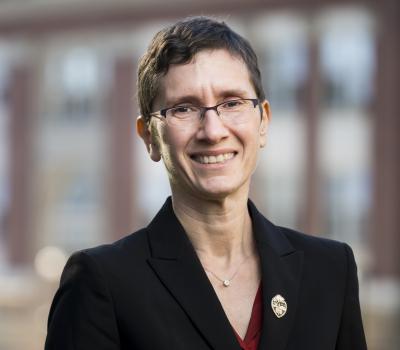
Daniela Goya-Tocchetto is an Assistant Professor of Organization and Human Resources at the School of Management, University at Buffalo. Her research focuses on inequality perceptions, meritocracy beliefs, social class/racial biases, and moral/political decision-making. She holds a PhD from Duke University's Fuqua School of Business and multiple advanced degrees from the Federal University of Rio Grande do Sul and the London School of Economics. Her work bridges social psychology and organizational behavior, addressing topics like system justification theory, partisan polarization, and interventions to reduce antidemocratic attitudes. Recent studies include analyzing income inequality perceptions and the Andrew Carnegie effect on wealth allocation. She has been recognized with the NTR-IACM Early Career Scholars Program (2022–24) and a Best Paper award at the 2022 Academy of Management Meeting. Professionally, she advises CLOO Behavioral Insights Unit on organizational behavior projects in Brazil and Portugal. Her research is published in journals like Science , Nature Communications , and Journal of Experimental Social Psychology .
Debarshi K Nandy is Barbara and Richard M. Rosenberg Professor of Global Finance at Brandeis International Business School. He serves as MSF Program Director and Senior Associate Dean, with affiliations in Economics and Social Policy. Research focuses on venture capital, FinTech innovation, and entrepreneurial finance. Holds a Ph.D. from Boston College and M.S. from University of Calcutta. Research explores venture capital ecosystems, corporate payout policies, private equity impacts on trade, and behavioral aspects of financial decision-making. Recent work examines hedge fund strategies and student debt effects on investment behavior. Publications demonstrate consistent focus on financial intermediation mechanisms, with methodological innovation in natural experiments and empirical finance techniques. Fama/DFA Prize for Capital Markets and Asset Pricing Best Paper in Financial Institutions (FMA) Provost Research Award Directs Masters in Finance program and mentors startups. Affiliated with U.S. Census Bureau and NBER, with NSF and SSHRC research grants supporting work in financial innovation.
Prof. Jack van der Vorst is the Personal Professor of AgriFood Supply Chain Logistics at Wageningen University's Operations Research and Logistics Group. Previously serving as a member of the Board of Directors of Wageningen University & Research (until 2024) and General Director of the Social Sciences Group, he leads over 1000 personnel across three institutes. His advisory roles include the Topteam AgriFood (Science Captain), Top consortium for Knowledge and Innovation (TKI), The Sustainability Consortium (TSC), and Florensis BV's Supervisory Board. With 20+ PhD supervisions and 200+ publications, his research focuses on innovative logistics concepts in AgriFood systems, including supply chain resilience, sustainability, and system innovation. His work integrates modeling frameworks with practical industry applications, emphasizing perishable products, horizontal collaboration, and environmental efficiency. Research interests span AgriFood System Design, Supply Chain Strategy, and Performance Management. His recent studies address challenges like postharvest loss reduction in developing countries, CO2 emission minimization in cold chains, and circular economy implementation in mushroom supply chains. Methodologically, he employs multi-criteria decision models, optimization techniques, and simulation to address complex logistics problems. Publications highlight themes such as horizontal collaboration success factors, vulnerability assessment frameworks, and green supply chain design. His work bridges academic rigor with industry needs, often collaborating with policymakers and international organizations to promote sustainable agri-food systems.
Irem Y. Tumer is a Professor and Vice President for Research and Innovation at Oregon State University (OSU), affiliated with the College of Engineering's Mechanical, Industrial, and Manufacturing Engineering Department. She leads the Complex Engineered System Design group within the Design Engineering Labs. Her expertise spans system-level design, model-based methods, and risk-based approaches for complex engineered systems like aerospace and energy infrastructure. Education: Ph.D. in Mechanical Engineering, The University of Texas at Austin (1998) M.S. in Mechanical Engineering, The University of Texas at Austin (1995) B.S. in Mechanical Engineering, The University of Texas at Austin (1991) Research Focus: Focuses on systematic methodologies for designing large-scale complex systems, including computational design, collaborative design processes, and reliability engineering. Her work addresses challenges in aerospace, nuclear power, and smart infrastructure. Awards & Leadership: ASME Fellow and recipient of ASME’s top honor (2018) Former NASA Ames Research Center Research Scientist and Group Lead (1998–2006) Editorial roles: ASME Journal of Mechanical Design, International Journal of Prognostics and Health Management Funding & Grants: Supported by NSF, AFOSR, DARPA, and NASA since 2006. Previously led NASA-funded projects in system design methodologies.
Kwok Pui-lan is the Dean’s Professor of Systematic Theology at the Candler School of Theology, Emory University. Her work bridges postcolonial and feminist theological frameworks with contemporary social justice issues. She is a prominent author of works including Postcolonial Politics and Theology , Occupy Religion , and Introducing Asian Feminist Theology . Her research focuses on globalization, gender, peacebuilding, and the intersection of theology with race, power, and pedagogy. Dr. Kwok actively contributes to academic discourse through her blog (http://kwokpuilan.blogspot.com) and writings for the Wabash Center, addressing themes such as embodied teaching in digital spaces, anti-racism in academia, and theology’s role in responding to societal crises. Her scholarship emphasizes critical reflection on religious education and the ethical implications of emerging technologies. Her teaching philosophy integrates collaborative learning, arts-based methods, and embodied practices to foster transformative education. She has explored topics like machine learning’s impact on religious imagination and the role of spirituality in pandemic-era learning environments. Dr. Kwok’s work consistently interrogates systems of power and oppression, advocating for marginalized voices in theological discourse. Her contributions to the field include reimagining pedagogical approaches to address contemporary challenges in religious education and social justice advocacy.
**Danilo Dantas** is a **Professor** in the **Department of Marketing** at **HEC Montréal**, a leading business school in Canada. He holds additional roles as the **Pedagogical Coordinator of the Specialized Graduate Diploma (D.E.S.S.) in Arts Management** (in French) and a **Regular Member** of the **Observatoire Interdisciplinaire de Création et de Recherche en Musique (OICRM)**. His expertise spans **Music Marketing**, **Database Marketing**, and **Electronic Commerce**, with a focus on cultural branding, consumer engagement, and digital strategies in creative industries. **Education**: He earned his **Doctorat ès sciences de gestion (marketing)** from Université de Grenoble II, along with advanced degrees including a **D.E.A. in Sciences de Gestion (marketing)**, **D.E.S.S. in Commerce International**, and a **B.A.A. in Administration** from UFRGS, Brazil. **Research & Teaching**: Professor Dantas teaches courses such as *Marketing des arts et de la culture* and *Analyse des bases de données en marketing*. His research investigates topics like cultural branding (e.g., leveraging live music for city brands), music industry strategies, and consumer behavior in digital ecosystems. Recent work explores the interplay between brand fit and new product performance, social media impact on online communities, and e-Government service quality metrics. **Advising**: He has supervised **2 PhD dissertations**, **7 Master’s theses**, and **21+ supervised projects**, covering areas such as VR consumer experiences, vinyl store dynamics, and festival attendee motivations. His projects often address practical challenges in arts management, digital transformation, and cultural policy. **Labs/Teams**: His affiliation with OICRM integrates music creation and research, while his work with the Chaire de gestion des arts Carmelle et Rémi-Marcoux emphasizes arts management education and data-driven decision-making.
Dr. Barbara Barbosa Neves is a sociologist of technology and ageing at the University of Sydney’s Sydney Centre for Healthy Societies, holding a prestigious Sydney Horizon Fellowship in AI Social Science. She specializes in loneliness, social isolation, and digital inequalities in later life, with over $6 million in competitive funding from global bodies. Her research bridges sociology and computer science, focusing on inclusive technology design for older adults. Education: PhD in Sociology. Formerly an Associate Director at the Technologies for Aging Gracefully Lab, University of Toronto, Canada. Visiting positions at Oxford, Oslo, Louvain, and Toronto. Research Interests: Sociology of Technology , Aging Anxieties , Healthcare AI , and Ageism . Her work examines how AI, VR, and robotics can benefit older adults while addressing ethical and social challenges. Key themes include combating age-based digital divides and designing technologies that align with care ethics. Grants & Projects: Lead Investigator for the $1M+ evaluation of Australia’s Aged Care Volunteer Visitors Scheme, ARC Discovery Project on loneliness and technology, and MRFF-funded dementia studies. Collaborates with multidisciplinary teams, including computer scientists and policy experts. Awards: 28+ international awards, including Mather Awards (US), George Story Distinguished Lecturer, and Fellowships from the Royal Society of Arts (FRSA) and Higher Education Academy (FHEA). Public Engagement: Over 200 media contributions, including ABC op-eds and SBS documentaries. Her research informs policy and public discourse on aging, technology, and social equity.
Wink Smith, PhD, is an Instructor in the Department of Interpretation and Translation at Gallaudet University, part of the School of Language, Education, and Culture. He holds a PhD in Linguistics (2023) and has over 16 years of professional experience as an interpreter, educator, and researcher. His work bridges theory and practice in interpretation, with a focus on cognitive linguistics frameworks, depiction in signed languages, and message analysis. He has presented nationally and internationally, published in RID Views, and developed CEU training programs. Research interests include embodied imagery in depiction, skill development methodologies, and the role of depiction in interpretation. He actively serves on professional committees such as the Certification Council for RID and the Conference of Interpreter Trainers (CIT). Awards include the 2016 NAD Outstanding Service Award and a 2021 Certificate of Appreciation for service in interpretation. Teaching responsibilities span undergraduate and graduate courses like INT-595G Special Topics, INT-736 Professional Practice I, and INT-223 Interactive Discourse Analysis. His recent scholarly contributions explore linguistic structures in signed languages and cognitive frameworks for interpreting.
Joseph Roso is an Assistant Professor of Sociology at Ambrose University, specializing in the practices and political activities of religious congregations and leaders. His work examines how religious institutions adapt to 21st-century challenges, including technological integration and political polarization. Roso holds a PhD from Duke University, where he also completed his MA, and a BA from Vanderbilt University, all in Sociology. He teaches courses on quantitative methods, multivariate statistics, and sociological principles. His research focuses on congregational adaptation, clergy activism, and the intersection of religion and politics. Education: PhD in Sociology, Duke University MA in Sociology, Duke University BA in Sociology, Vanderbilt University Roso's research interests center on religious organizations' responses to societal changes, including technology adoption (e.g., streaming services pre-pandemic), political polarization impacts, and clergy-lay dynamics. His recent studies highlight tensions between religious leaders and their congregants on political issues, as well as institutional disaffiliation trends in denominations like the United Methodist Church. His articles analyze topics ranging from evangelical rhetoric on immigration to clergy political activism, leveraging data from the National Survey of Religious Leaders. He has contributed to debates on congregational technological readiness and worship practice evolution. Labs/Teams: Collaborates with projects like the National Congregations Study and National Survey of Religious Leaders, emphasizing large-scale survey methodologies to map religious institutional trends.
Thomas Lectka is the Jean and Norman Scowe Professor in the Department of Chemistry at Johns Hopkins University, where he has been a faculty member since 1994. His research focuses on synthetic and physical organic chemistry, particularly in the area of organofluorine chemistry. PhD, Cornell University Postdoctoral Fellow, Heidelberg (Alexander von Humboldt Fellow) Postdoctoral Fellow, Harvard University (NIH Fellow) Dr. Lectka's research is centered on developing novel synthetic methods, especially for fluorination, and understanding the physical organic principles underlying reactivity. His work spans radical fluorination , catalytic asymmetric synthesis , and the design of fluorinated bioactive molecules . Using a combination of experimental and computational techniques, his lab investigates C-F bond formation , reaction mechanisms , and the biological applications of fluorinated compounds. His recent work, as reflected in publications from 2010 to 2024, shows a consistent trajectory in advancing fluorination methodologies, with increasing emphasis on site-selectivity , enantiocontrol , and biomedical relevance . Themes include the development of new reagents, mechanistic studies, and the synthesis of fluorinated natural product analogs and peptidomimetics. Dr. Lectka has received numerous honors and awards, including: ACS Arthur C. Cope Scholar (2024) ACS Maryland Chemist of the Year (2017) John Simon Guggenheim Memorial Fellowship Dreyfus Teacher-Scholar Award Sloan Fellowship NSF CAREER Award NIH First Award Eli Lilly Grantee Award He actively mentors graduate and undergraduate students in his research group, contributing to education and training in organic chemistry. His lab, The Lectka Group , is supported by grants from the NIH and NSF, enabling cutting-edge research in synthetic methodology and physical organic studies. The group fosters a collaborative environment focused on innovation in fluorine chemistry. The Lectka Group is an active research laboratory at Johns Hopkins University dedicated to pushing the boundaries of synthetic organic chemistry through the exploration of fluorine's unique properties. Current projects include site-selective radical fluorination and the synthesis of unusual fluorinated species, aiming to provide new tools for drug discovery and materials science.
Ada M. Fenick, MD, is a Professor of Pediatrics (General Pediatrics) at Yale School of Medicine. She holds multiple leadership roles including Associate Director for Pediatrics in the Biopsychosocial Approach to Health clerkship, Medical Director of School-Based Health Centers, and Medical Director of the Medical-Legal Partnership Project. Her clinical practice focuses on economically disadvantaged pediatric populations, emphasizing developmental aspects of child health and addressing toxic stress impacts. Education: BS in Biomedical Sciences (University of Michigan, 1990), MD (University of Michigan, 1993), Pediatric Residency (Weill-Cornell/NY Medical Center, 1996) Research: Centers on pediatric primary care innovations such as group well-child care models, medical-legal partnerships, and obesity prevention. Key themes include health equity, social determinants of health, and curriculum development. Her recent work emphasizes leveraging medical student experiences to improve curricula addressing social drivers of health. Over 20 peer-reviewed publications since 2020 focus on topics like electronic phenotyping algorithms for obesity screening and frameworks for group pediatric care implementation. Awards: Includes Howard A Pearson MD Teaching Award (2013) and multiple institutional recognitions for clinical excellence and innovation. She leads initiatives like the Yale Primary Care Pediatrics Curriculum and collaborates with community organizations to enhance access to early intervention services for vulnerable children. Her work integrates clinical care, education, and policy advocacy to promote holistic child health outcomes.
Mei-Po Kwan is a distinguished academic holding multiple roles at The Chinese University of Hong Kong (CUHK). She serves as the Head of Chung Chi College, Choh-Ming Li Professor of Geography and Resource Management, Director of the Institute of Space and Earth Information Science, and Professor at The Jockey Club School of Public Health and Primary Care. Her research focuses on geospatial health, urban mobility, environmental health, and innovative GIS methods, emphasizing individual-level environmental exposure and social disparities. Education: Ph.D. Geography, University of California, Santa Barbara (1994) M.A. Urban Planning, University of California, Los Angeles (1989) B.SoSci. Geography, The Chinese University of Hong Kong (1985) Research Interests: Dr. Kwan’s work bridges health, transport, and environmental geography, leveraging cutting-edge GIS and mixed-methods approaches. Key themes include: Uncertain Geographic Context Problem (UGCoP) and Neighborhood Effect Averaging Problem (NEAP) GIS-based analysis of greenspace, air/noise pollution, and mobility Geospatial AI and real-time sensing technologies Health disparities in urban environments Grants & Awards: She has secured over $68 million in research funding, including recent grants from the Hong Kong Research Grants Council and Innovation and Technology Commission. Notable awards include Fellowships from the American Association of Geographers, Royal Geographical Society, and multiple Highly Cited Researcher recognitions (2019, 2021). Professional Service: Editor of Annals of the American Association of American Geographers , founder of the International Geospatial Health Research Network, and member of prestigious editorial boards and advisory councils. Labs & Teams: Leads the Institute of Space and Earth Information Science and collaborates on projects like the 15-minute city framework, carbon monitoring systems, and geospatial health analytics.
Distinguished Professor Peter Ralph is a faculty member at the University of Technology Sydney (UTS), holding the position of Professor of Marine Biology within the Faculty of Science and serving as the Executive Director of the Climate Change Cluster (C3). He is also the founder of the NSW Deep Green Biotech Hub and an influential member of global initiatives such as UNESCO’s Blue Carbon Scientific Working Group and the Czech Academy of Sciences’ Global Change Research Centre. Leadership Roles: Director of the Climate Change Cluster, Deputy-Chair of Sydney Institute of Marine Sciences. Research Collaborations: Partnerships with CSIRO, industry, NGOs, and international institutions. Key Contributions: Over 280 publications and $15M+ in research funding. His research focuses on algae-based solutions to climate change and sustainability, including carbon capture, bioplastic production, waste-water remediation, and circular bio-economy models. He explores advanced manufacturing through Industry 4.0 integration and zero-waste bio-refinery approaches, while also advancing algal phenomics using automated high-throughput screening systems. Recent articles highlight innovations in AI-driven biorefinery optimization, microalgal bioprospecting, and mutagenesis techniques for rare earth element extraction. His work bridges environmental science with engineering, addressing challenges in algae cultivation scalability and commercialization. Scientific Awards: 2012 and 2018 UTS Vice-Chancellor’s Research Excellence Awards. Peter has secured major grants, including the Fermentalg PhD Project on Microalgae Screening, PNG Natural Seafood’s Macroalgae Product Development, and the Winifred Trust Foundation’s Aquaculture initiative. His research teams collaborate across disciplines to transform algae into sustainable resources for food, energy, and biomanufacturing. He leads UTS’s Climate Change Cluster (C3), a hub for interdisciplinary climate research, and actively promotes algae-building technologies and carbon storage innovations through biomasonry products.
Noah A. Smith is an Adjunct Professor of Computer Science and Engineering at the University of Washington. His work focuses on computational linguistics, machine learning, and natural language processing. He holds a Ph.D. in Computer Science from Johns Hopkins University (2006). His research explores ethical AI applications, multimodal systems, and foundational aspects of language models. Key research areas include: Ethical considerations in NLP, such as detecting rights abuses through text analysis Efficient decoding and alignment strategies for large language models Large-scale evaluation frameworks for multitask and multimodal generation Understanding pretraining dynamics and data composition effects Recent work emphasizes transparency in language models (e.g., tracing outputs to training data) and improving alignment through human feedback. He has contributed to open-source projects like OLMo and Dolma, advancing reproducibility in NLP research. No awards explicitly listed in provided texts. No specific advising or grant details available, though extensive publication output indicates active research involvement.
Professor John Powell is a Professor of Digital Health and NIHR Senior Investigator at the University of Oxford's Nuffield Department of Primary Care Health Sciences. He holds a Senior Research Fellowship at Jesus College and serves as a Consultant Public Health Physician. His roles include leading digital health research initiatives, advising national agencies like NICE and MHRA, and co-directing the MSc in Applied Digital Health. Powell has dual degrees from the University of Cambridge (Social and Political Sciences and Clinical Medicine) and advanced qualifications from the London School of Hygiene and Tropical Medicine. Research Focus: Digital health transformation, AI in healthcare, patient feedback systems, and evaluation of digital health technologies. His work explores how digital tools reshape patient-clinician interactions and improve service delivery in the NHS. Notable projects include NHS App evaluations, social media's health impact, and frameworks for medical education in digital competencies. Recent Contributions: Key publications analyze NHS App adoption patterns, social media influencers' health impact, and challenges in AI ethics. He leads the Digital Health Theme in NIHR ARC and HRC, driving translational research. Powell's work bridges academia and policy, with past roles including Clinical Director of NHS Choices and Editor-in-Chief of major health technology assessment journals. Honors & Roles: Fellowships in Public Health and Clinical Informatics, Honorary Professor at University of Bristol, and former Warwick Professor of Public Health. Active in global health policy through roles like senior clinician at NICE.