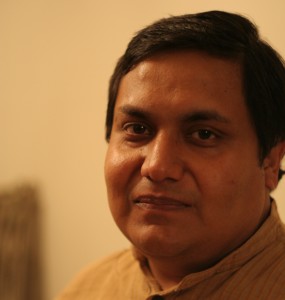
Tommy Svensson is a Professor of Communication Systems at Chalmers University of Technology, where he leads research on wireless systems on air interface and wireless backhaul network technologies. He received his Ph.D. in information theory from Chalmers in 2003 and has extensive industry experience from Ericsson AB, working with core, radio access and microwave networks. His primary research interests include: Design and analysis of mobile communication systems Physical storage algorithms Multi-user access and resource allocation Cooperative/context-aware/secure communication mm-wave/sub-THz communication C-V2X and JCAS Satellite networks Sustainable design and comprehensive architecture Professor Svensson has been actively involved in numerous European research projects including WINNER I/II/+, ARTIST4G (contributing to 3GPP LTE standards), METIS, mmMAGIC, and 5GCar (towards 5G), and Hexa-X, RISE-6G, SEMANTIC, ROBUST-6G, and ECO-eNET (towards 6G). He also contributes to the Chase/ChaseOn and WiTECH antenna systems center of excellence at Chalmers, focusing on mm-wave and (sub)-THz solutions for various wireless scenarios. His publication record is extensive, with 6 books, 111 journal papers, 151 conference papers, and 80 public EU project deliverables to his name. Professionally, he serves as: Founding member/editor of the IEEE JSAC Series on Machine Learning in Communications and Networks Chair of the award-winning IEEE Sweden Vehicular Technology/Communications/Information Theory Societies chapter Editor of IEEE Transactions on Wireless Communications and IEEE Wireless Communications Letters Lead local organizer of EuCNC & 6G Summit 2023 Coordinator of the Communication Engineering Master's Program at Chalmers
Kelly Bennion serves as an Associate Professor in the Psychology and Child Development Department at California Polytechnic State University. Her research examines how real-life variables—such as emotion, stress, physiological arousal, and sleep—affect memory encoding and consolidation using behavioral experiments, eye tracking, polysomnography, and neuroimaging. She investigates how sleep selectively enhances memories for emotionally salient or future-relevant information in ecologically valid contexts. (78 words) Her educational background includes: Ph.D. and M.A. in Psychology (Cognitive Neuroscience concentration) from Boston College Ed.M. in Mind, Brain, and Education from Harvard Graduate School of Education B.A. in Psychology and Spanish (summa cum laude, Phi Beta Kappa) from Middlebury College Dr. Bennion's work focuses on memory prioritization mechanisms during sleep-wake cycles, particularly how emotional arousal and physiological stress modulate consolidation. She explores real-world applications including educational strategies and mental health interventions, emphasizing the interaction between cortisol levels and sleep-dependent memory processing. Her multi-method approach bridges laboratory findings with naturalistic memory phenomena. (92 words) Analysis of her 2020-2025 publications reveals three dominant research streams: (1) sleep's role in enhancing emotional and future-relevant memories through selective consolidation, (2) cross-episode memory integration via semantic relatedness and surprise mechanisms, and (3) interdisciplinary extensions into public health (postpartum interventions) and environmental toxicology (bisphenol A effects). Her methodology increasingly combines behavioral metrics with physiological monitoring to capture memory dynamics in complex scenarios. (68 words) Dr. Bennion actively mentors undergraduate researchers, evidenced by student co-authorships on publications including Jackson (2019) on school shooter perceptions. While specific grant details aren't provided, her sophisticated research infrastructure implies substantial external funding. She teaches core psychology courses including Research Methods, Biopsychology, and Memory, emphasizing hands-on methodology training. Her laboratory maintains advanced capabilities for sleep monitoring, eye tracking, and neuroimaging to investigate memory consolidation across physiological states. (76 words)
Meire Ellen Gorete Ribeiro Domingos is a Lecturer and Postdoctoral Researcher at École Polytechnique Fédérale de Lausanne (EPFL), affiliated with the School of Engineering (STI) and Industrial Process and Energy Systems Engineering (IPESE) department. She works on process modeling, techno-economic and environmental analyses, and optimization of energy conversion systems, particularly in biorefineries, hydrogen production, and industrial decarbonization. Education PhD in Chemical Engineering, Polytechnic School of the University of Sao Paulo (2022) BSc in Chemical Engineering, University of Brasilia (2017) Research Interests Exergy and energy integration of chemical/industrial processes Modeling and optimization of energy systems Decarbonization via renewable energy integration Techno-economic and environmental analysis of industrial processes High-temperature heat pumps and carbon capture Multi-time scale optimization for industrial-urban systems Publication Trends Focus on decarbonization pathways (2023-2025) Black liquor gasification for integrated chemical/fuel production (2019-2022) Renewable energy and solid oxide cells for industrial-urban symbiosis (2024-2025) Development of decision-support tools like ROSMose (2023-2024) Life cycle assessment and CO2 management strategies Thermal integration and process simulation for sustainability Laboratory & Teams Industrial Process and Energy Systems Engineering (IPESE), EPFL Valais Wallis SCI-STI-FM and SCI-STI-JVH research groups EPFL School of Engineering (STI)
Signy Lynch is an Assistant Professor in English and Drama at the University of Toronto Mississauga (UTM) and a graduate faculty member at the Centre for Drama, Theatre and Performance Studies. Her research focuses on contemporary intercultural/diasporic performance, Black theatre, participatory performance, audience research, and critical theatre criticism in Canada. Education : PhD and MA from York University, Hon. BA from Queen’s University Her work explores the intersections of digital media and intercultural performance, including immersive theatre practices and audience dynamics in pandemic-era performances. She co-edits Canadian Theatre Review and investigates epistemic violence in traditional criticism frameworks. In the 15 most recent publications , Lynch examines topics like racial dynamics in theatre criticism, intermedial performance technologies, audience complicity in Indigenous storytelling, and pandemic-era performance adaptations. Her articles appear in Theatre Research in Canada , Contemporary Theatre Review , and New Theatre Quarterly . Awards : Barbara Godard Prize (2021), Governor General’s Gold Medal (2022), CTCA Outstanding Critical Essay runner-up (2022) Lynch co-directs the Centre for Spectatorship and Audience Research and serves on Cahoots Theatre’s board. Her SSHRC-funded research addresses hiring equity in Canadian theatre academia and reimagines critical dramaturgy for digital futures.
Dr. Idalina Baptista serves as Associate Professor in Urban Anthropology at the University of Oxford's Department for Continuing Education, where she teaches urban theory in the MSc and DPhil in Sustainable Urban Development programs. A Fellow of Kellogg College and member of the Oxford Network for the Future of Cities, she bridges academic research with real-world urban challenges through her extensive fieldwork in African cities. Her academic credentials include a PhD in City and Regional Planning (2009) and Master of Landscape Architecture (1999) from the University of California, Berkeley, and a BEng in Environmental Engineering (1996) from Portugal's New University of Lisbon. This interdisciplinary foundation informs her critical approach to urban development. Baptista's research pioneers decolonial perspectives on African urbanization, focusing on energy infrastructure governance in Maputo, Mozambique. She examines how prepayment electricity systems reshape social relations, how colonial legacies influence contemporary urban landscapes, and how community energy initiatives can advance energy justice. Her work challenges Anglo-American urban models through ethnographic and archival methodologies, emphasizing localized knowledge production for sustainable urban futures. Analysis of her 2018-2024 publications reveals consistent thematic focus on energy access inequalities, infrastructure informality, and post-colonial governance in sub-Saharan Africa. Her articles demonstrate methodological innovation through socio-technical analysis of electricity practices, contributing significantly to debates on urban political ecology and energy transitions in the Global South. She actively supervises doctoral candidates including Yaseen Albarim and Patrick Brown, while leading major research initiatives such as the Electric Urbanism project on prepayment systems in Mozambique, the CESET project on community energy across Ethiopia/Malawi/Mozambique, and a British Academy-funded study on energy access in conflict-affected urban areas. Her past experience as an environmental planning consultant and NGO member grounds her academic work in practical policy engagement.
A/Pr Steven Goh is an Associate Professor in Mechanical and Mechatronic Engineering at the University of Southern Queensland (USQ), affiliated with the School of Engineering. He holds advanced degrees including a DEng from USQ and is a Fellow of Engineers Australia. His research focuses on engineering education, practice, management, and biomedical engineering. He has received notable awards such as the 2015 Australian Government OLT Citation for Outstanding Contribution to Student Learning and multiple USQ accolades. Education: BEng(Hons) in Manufacturing & Materials (UQ), MBA (Deakin), MProfAcc (USQ), DEng (USQ), and a Diploma in Company Directorship (AICD). Research Interests: Engineering education innovation, sustainable energy systems, and biomedical applications. He actively contributes to professional bodies like the Australasian Association of Engineering Education and serves as Editor (Strategic) for the Australian Journal of Mechanical Engineering. Awards: Multiple teaching excellence awards from USQ (2008-2010) and the 2015 national OLT Citation. Advising/Grants: Not explicitly detailed in text; his roles include supervising students and leading research projects on engineering education and asset management. Labs/Teams: Associated with the Centre for Future Materials and Centre for Health Research at USQ.
Peter A. Tass is a Professor of Neurosurgery at Stanford University's School of Medicine, where he leads the Tass Lab within the Department of Neurosurgery. His research focuses on developing groundbreaking neuromodulation techniques designed to impact the course of neurological diseases including Parkinson's disease, stroke, epilepsy, and tinnitus. The Tass Lab is part of several prestigious Stanford initiatives including Bio-X, the Wu Tsai Human Performance Alliance, the Maternal & Child Health Research Institute (MCHRI), and the Wu Tsai Neurosciences Institute. MD from Universities of Ulm and Heidelberg, Germany (1989) PhD in Physics from University of Stuttgart, Germany (1993) Diploma (master's degree) in Mathematics from University of Stuttgart, Germany (1993) Habilitation thesis in Physiology from RWTH Aachen University, Aachen, Germany (2001) Dr. Tass's primary research interests center around computational neuroscience approaches to understanding and treating neurological disorders. His lab pioneers neuromodulation techniques based on thorough computational modeling that employs dynamic self-organization, plasticity, and other neuromodulation principles to produce sustained therapeutic effects after stimulation. He specifically focuses on developing stimulation methods that cause sustained neural desynchronization by unlearning abnormal synaptic interactions. His work spans both invasive techniques like deep brain stimulation and non-invasive approaches such as vibrotactile and acoustic stimulation. Current projects involve developing novel therapies for Parkinson's disease, epilepsy, tinnitus, and other neurological conditions using comprehensive computational neuroscience methods derived from non-linear dynamics, statistical physics, and numerics. Analysis of Dr. Tass's recent publications reveals a strong focus on coordinated reset stimulation techniques, neural network modeling with plasticity mechanisms, and computational approaches to brain stimulation. His work consistently bridges theoretical computational neuroscience with clinical applications, particularly for Parkinson's disease treatment. A significant portion of his recent research examines how stimulation parameters, sequences, and timing affect long-lasting desynchronization effects in neural networks. His publications demonstrate an interdisciplinary approach combining physics, mathematics, neuroscience, and clinical medicine to develop novel therapeutic interventions. Member of the European Academy of Sciences and Arts (2012) Nicolaus August Otto Innovation Prize (2011) German Innovation Award in Medicine (2011) Rapid Response Innovation Awards from The Michael J. Fox Foundation (2009, 2010) Runner-up for the German future prize (2006) Erwin Schrödinger prize (2005) Fritz Winter prize (2000) Dr. Tass actively mentors a diverse team of researchers including staff scientists, postdoctoral fellows, clinician-scientists, and students. His lab currently includes researchers with backgrounds in physics, computational neuroscience, biomedical engineering, and clinical neurology. The lab is involved in multiple clinical trials, including studies on coordinated reset spinal cord stimulation and vibrotactile coordinated reset stimulation for Parkinson's disease. His research is supported by various funding sources including foundations focused on neurological disorders and innovation in medical technology. Dr. Tass collaborates extensively with both internal Stanford researchers and external collaborators worldwide. The Tass Lab at Stanford is a multidisciplinary research group comprising physicists, neuroscientists, engineers, and clinicians working together to develop novel neuromodulation therapies. The lab team includes staff scientists like Justus Kromer (theoretical physicist), postdocs like Daniel Ehrens and Kanishk Chauhan, clinician-scientists like Tina Munjal, and clinical research coordinators. The lab maintains active collaborations with Stanford colleagues across departments including Kwabena Boahen, Vivek P. Buch, and Jaimie Henderson, as well as external collaborators like Alexander Neiman and Kęstutis Pyragas. Current research directions include developing non-invasive vibrotactile treatments for Parkinson's disease, acoustic coordinated reset therapy for tinnitus, and responsive deep brain stimulation for conditions like loss-of-control eating.
Cheng Zhang is an Associate Professor (with Tenure) in Information Science and a Field Member in Computer Science at Cornell University. He directs the Smart Computer Interfaces for Future Interaction (SciFi) Lab , focusing on integrating human-centered AI with advanced sensing technologies to empower everyday wearables. Ph.D. in Computer Science, Georgia Institute of Technology (2020) M.S. in Software Engineering, Chinese Academy of Sciences B.S. in Software Engineering, Nankai University His research examines how to solicit information on and around the human body to address real-world challenges in interaction, health sensing, and activity recognition. He builds novel sensing systems spanning hardware prototypes, algorithm design (machine learning and physics-based modeling), and high-impact applications in accessibility and health. Article Trends : His recent work includes low-power, minimally intrusive wearables (e.g., EchoForce for muscle activity tracking, Ring-a-Pose for hand poses, SeamFit for smart clothing) using acoustic sensing and machine learning. The 15 most recent articles span 2025–2023, with applications in silent speech, authentication, and pose estimation. Scientific Awards : NSF CAREER Award Ubicomp 10-Year Impact Award Best Paper Honorable Mentions at ISWC’24 and ISWC’23 Advising : Mentored Ph.D. students like Ruidong Zhang (Qualcomm Fellowship recipient) and Ke Li, with research featured in Cornell Chronicle and IEEE Spectrum .
Maria Pau Ginebra Molins is a Professor in the Department of Materials Science and Engineering at the Barcelona East School of Engineering (EEBE), Polytechnic University of Catalonia (UPC). She leads the BBT Research Group focused on Biomaterials, Biomechanics and Tissue Engineering and is affiliated with the Institute of Research and Innovation in Health. Her educational background, while not explicitly detailed in the provided text, reflects extensive expertise in materials science with a specialization in biomaterials, evidenced by her substantial research portfolio spanning over three decades. Professor Ginebra Molins' research spans biomaterials development, bone tissue engineering, and advanced manufacturing techniques. Her work focuses on calcium phosphate-based materials, 3D printing technologies for bone scaffolds, hydrogel systems, and surface modifications of biomaterials to enhance biological responses. She has pioneered approaches in vat photopolymerization, direct ink writing, and the development of stimuli-responsive biomaterials. Analysis of her recent publications (2024-2025) reveals a strong emphasis on translational research with clinical applications. Her work bridges fundamental materials science with practical medical solutions, particularly in bone regeneration, dental implants, and antimicrobial biomaterials. The publications demonstrate expertise in advanced characterization techniques, including spectroscopy and nanoindentation for biomaterial evaluation. Multiple competitive R&D projects including CEX2023-001300-M Maria Maetzu Centre Ciència i Enginyeria Multiescala 17 documented awards and recognitions Leadership in the Inspiring the next generation of innovators project Patents related to 3D-printed bone grafts Professor Ginebra Molins actively supervises doctoral students, with Johansson, L. completing a thesis on 3D-printed biomimetic bone grafts. Her research group (BBT) collaborates extensively with industry and clinical partners to translate laboratory findings into medical applications. She participates in numerous competitive research projects funded by national and European programs, demonstrating the high impact and relevance of her work in the biomaterials field.
Cuiyun Gao is a Full Professor and PhD Supervisor at the School of Computer Science and Technology, Harbin Institute of Technology, Shenzhen. She has established herself as a prominent researcher in the intersection of artificial intelligence and software engineering. Her educational background includes a PhD from the Chinese University of Hong Kong (completed in 2018), followed by postdoctoral work at CUHK and a Research Fellowship at Nanyang Technological University. She also had a visiting period at University College London supervised by Prof. Mark Harman and Prof. Federica Sarro. Dr. Gao's research primarily focuses on Software Repository Mining, Natural Language Processing, Code Analysis, Large Language Models, Source Code Understanding, User Review Analysis, Vulnerability Detection, and Mobile Advertising Analysis . Her work bridges the gap between traditional software engineering practices and modern AI techniques, particularly in the context of code intelligence and software maintenance. Her recent publications (2024-2025) demonstrate a strong emphasis on Large Language Models for code-related tasks, including code generation, optimization, vulnerability detection, and software engineering applications. Her research shows a clear trend toward addressing practical challenges in integrating LLMs into the software development lifecycle while maintaining code quality and security. Scientific Awards: Distinguished Paper Award at ASE 2023 Best Paper Award of the Track at ICSE 2024 Distinguished Paper Award at ICSE 2024 Dr. Gao actively supervises multiple PhD and Master's students, contributing to the next generation of software engineering researchers. She has served on numerous conference committees including FSE, ISSTA, ICSE, ASE, and SANER. Her research has received significant attention in the software engineering community, with multiple papers published in top-tier venues like FSE, ICSE, ASE, and TSE. Her lab appears to be actively engaged in both theoretical research and practical applications, particularly in the context of WeChat and other industry collaborations, demonstrating strong industry-academia connections.
Heather Krasna serves as Adjunct Assistant Professor of Health Policy and Management and Associate Dean of Career and Professional Development at Columbia University's Mailman School of Public Health. With over 25 years of experience, she leads career services for Mailman students while conducting nationally recognized research on public health workforce dynamics through major federal grants. Her educational background includes: BA from University of Michigan at Ann Arbor (1997) MS from New School University (1997) PhD from Maastricht University (2020) Training at Teachers College Columbia University (2020) Dr. Krasna's research examines employment outcomes, salary disparities, occupational classifications, and labor market competition within the public health workforce. Her work leverages large-scale job postings data and federal datasets to address critical gaps in workforce taxonomy and governmental public health infrastructure, directly informing policy interventions and educational curricula. Analysis of her 2021-2025 publications reveals consistent focus on defining the public health workforce scope, with growing emphasis on sector comparisons (public vs. private), equity in career services, and methodological improvements for occupational data collection. Her studies increasingly incorporate intersectional analysis of salary disparities and strategic recommendations for workforce strengthening. Her scientific recognition includes: Dean's Award for Excellence in Administrative Leadership Provost's Award for Massive Open Online Course Design Phi Beta Kappa membership As career services leader, Dr. Krasna provides individual advising to diverse populations including students, elected officials, and government executives. She directs significant grant-funded initiatives including a $4.35 million HRSA Research Grant as Site Principal Investigator for the Consortium for Public Health Workforce Research (C-WORPH) and a $250,000/year CDC grant for public health infrastructure strengthening. Through the Region II Public Health Training Center, she develops and delivers strategic hiring training to health departments nationwide. Dr. Krasna actively shapes national public health workforce policy through leadership roles in the American Public Health Association Governing Council, Association of State and Territorial Health Officials' Public Health Advocacy Consensus Task Force, and multiple national committees focused on workforce taxonomy and educational standards.
Dr. Nabil Nasr serves as Associate Provost for Academic Affairs and Director of the Golisano Institute for Sustainability (GIS) at Rochester Institute of Technology (RIT). He also holds leadership positions as CEO of the REMADE Institute and Member of the United Nations Environment Programme (UNEP) International Resource Panel (IRP). His academic journey includes a BS from Helwan University (Egypt), M.Eng. from Pennsylvania State University, and MS and PhD from Rutgers University. Dr. Nasr is an internationally-recognized leader in sustainability research with expertise spanning sustainable manufacturing, remanufacturing, circular economy, and sustainable product development. His work emphasizes systems thinking and technological innovation to build regenerative industrial systems. He has pioneered research in value-retention processes, establishing frameworks for remanufacturing, refurbishment, repair, and direct reuse as strategic approaches to resource efficiency. His publication record demonstrates significant contributions to circular economy implementation across multiple sectors. Analysis of his recent work reveals strong focus on practical applications of circular strategies in industrial systems, automotive production, and urban mobility solutions, with emphasis on developing decision support tools and business cases for sustainable practices. Remanufacturing Industries Council 2017 ACE Award Rochester Engineering Society 2017 Engineer of Distinction APRA Asia-Pacific Most Influential Expert on Remanufacturing Award (2016) Institute of Industrial and Systems Engineers (IISE) Fellow Dr. Nasr has established numerous research centers and initiatives including the world's first university-based remanufacturing research hub (1997), the Center for Integrated Manufacturing Studies (2002), and the REMADE Institute - the largest recycling and remanufacturing consortium in the United States. His leadership extends to international forums including the UN Environment Programme, World Trade Organization, and OECD, where he influences global sustainability policy.
Juliet Schor is a Professor of Sociology at Boston College, specializing in work, consumption, and environmental sustainability. She holds a Ph.D. in Economics from the University of Massachusetts Amherst and previously taught at Harvard University for 17 years. Her research focuses on consumer culture, sustainable economies, and the four-day workweek trials. She has authored influential books like The Overworked American and The Overspent American , which shaped national debates on work-life balance and consumerism. Education: B.A., Wesleyan University; Ph.D., University of Massachusetts Amherst. Research interests include: Consumer society and political consumption Environmental degradation and sustainability transitions Sustainable sharing economies and platform cooperativism Work-hour reduction and carbon emissions Recent work analyzes global four-day workweek trials, funded by 4 Day Week Global. Collaborations include studies on Airbnb’s environmental impact and platform labor dynamics. Her research bridges academia, policy, and activism. Awards: ASA Public Understanding of Sociology Award (2014) Herman Daly Award (2011) Leontief Prize (2006) Guggenheim Fellowship Grants and advising: Member of MacArthur Foundation’s Connected Learning Network; leads PhD student collaborations (e.g., After the Gig ). Organized the Summer Institute in New Economics. Labs/Initiatives: Co-founder of the Center for a New American Dream; chairs the Better Future Project (climate justice). Active in global sustainability networks like 4 Day Week Global.
Dr. John O'Sullivan is a Professor in the School of Communications at Dublin City University (DCU), part of the Faculty of Humanities and Social Sciences. He has been teaching since 1996, specializing in journalism, media theory, and technology's societal impact. His research focuses on journalism practice, digital media, news audiences, and media ethics, particularly through projects like the EU-funded ReMED initiative examining news media in Ireland. He has held leadership roles, including Chair of the MA in Journalism program and Vice-President of the Journalism Studies Section at ECREA. His academic background includes extensive experience in newspaper editing and digital media initiatives. Research interests span media formats/platforms, participatory journalism, and the interplay between technology and democracy. He has supervised PhD students exploring digital news strategies, Southeast Asian journalism norms, and social media's democratic role. O'Sullivan's work bridges traditional and digital media, emphasizing post-digital journalism's challenges and opportunities. Publications span peer-reviewed journals like Journalism and Digital Journalism , addressing topics such as news consumption, algorithmic impact, and participatory methodologies. He has contributed to international conferences and research networks, including COST Actions on audience transformations and Eastern European media studies. His teaching emphasizes professional journalistic values in evolving media landscapes.
Anupam Joshi is the Acting Dean of the College of Information Technology and Engineering and Oros Family Professor of Computer Science and Electrical Engineering at the University of Maryland, Baltimore County (UMBC). He also directs UMBC’s Center for Cybersecurity and leads the National Cybersecurity FFRDC for the University System of Maryland. His research focuses on networked computing, AI-driven cybersecurity, privacy-preserving technologies, and policy-driven security frameworks. He holds a Ph.D. in Computer Science from Purdue University (1993), an M.S. (1991), and a B.Tech in Electrical Engineering from the Indian Institute of Technology, Delhi (1989). Dr. Joshi’s work spans over 400 publications with 32,650+ citations (h-index 92) and nine patents. His grants include funding from NSF, DARPA, NASA, NIST, and industry partners like IBM and Northrop Grumman. Key contributions include developing CAPD frameworks for IoT security, FABULA for automated threat intelligence, and KiNETGAN for intrusion detection through synthetic data. He is an IEEE Fellow and pioneer in applying AI to secure critical infrastructure, smart grids, and healthcare systems. His research trends emphasize AI-empowered cybersecurity, privacy compliance in data sharing (e.g., agriculture, healthcare), and mitigating attacks on smart systems. Notable projects include combating fake cybersecurity reports using provenance analysis, securing EV charging infrastructure, and enhancing smart farming resilience through policy-driven access control. Awards: IEEE Fellow Grants: Over $30M from NSF, DoD, NASA, and industry collaborations Labs/Teams: Director of UMBC Center for Cybersecurity, Cybersecurity Knowledge Graph initiatives Future work includes advancing neurosymbolic AI for cybersecurity, semantic data extraction from scientific literature, and AI ethics in healthcare applications.