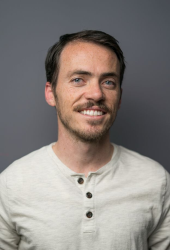
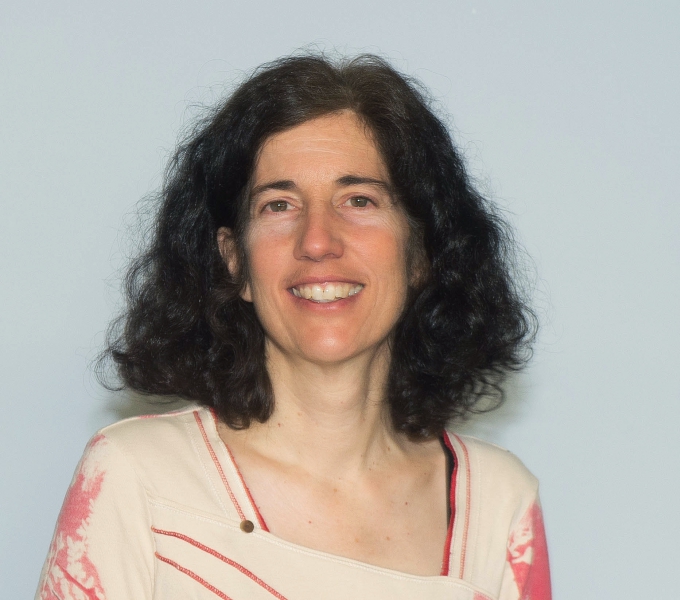
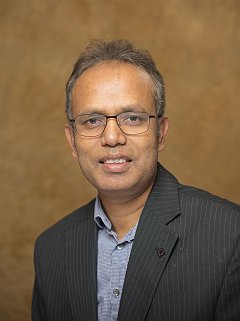
Mia Consalvo is a Professor and Canada Research Chair in Game Studies & Design at Concordia University. She serves as Graduate Program Director in Communication Studies and directs the Concordia Centre for Technoculture, Art and Games. Her research focuses on game studies, qualitative methods, new media, and popular culture. Education: BA in Communications, Lyndon State College MA in Communications, University of Washington PhD in Mass Communications, University of Iowa Her recent work analyzes livestreaming platforms like Twitch, socio-economic class in gaming, feminist approaches to game studies, and the intersection of mental health with game environments. She has published extensively on game design, player culture, and digital labor. Scientific Awards: Canada Research Chair in Game Studies & Design She supervises thesis projects in Media Studies (MA) and Communication (PhD) programs, emphasizing collaborative research and critical analysis of games as cultural artifacts.
Dr. Abby Haynes is a Research Fellow at the Sydney School of Public Health, University of Sydney, affiliated with the Institute for Musculoskeletal Health and Faculty of Medicine and Health. Her work focuses on physical activity for healthy ageing and people with disability, employing qualitative research, systems thinking, and realist evaluation. Key research themes include: Healthy Ageing Disability and Physical Activity Implementation Science Knowledge Mobilisation Her recent publications analyze: Inclusive sports programs for children with disability Fall prevention in acute hospitals Telehealth physiotherapy for aged care Realist evaluations of yoga and dance interventions Systems thinking in public health policy These emphasize public health, gerontology, and health equity approaches. Grants include MRFF-funded projects on traumatic brain injury rehabilitation (2024), fall prevention (2023), and aged care mobility (2022).
Prof. Dr. Daniel J. Lang is a leading academic at Karlsruhe Institute of Technology (KIT), where he serves as Professor for Designing Real-World Laboratory Research and Head of the Research Group "Designing Real-World Laboratory Research" at ITAS. He also holds the UNESCO Chair in Higher Education for Sustainable Development at Leuphana University of Lüneburg. His career spans key roles including Dean of the Faculty of Sustainability at Leuphana University (2012-2016) and leadership positions in multiple research projects. Current affiliations: KIT (2022-present), Leuphana University (2010-2022) Research focus: Real-world laboratories, transdisciplinary research, sustainability transformations, knowledge integration, and urban mobility systems His work connects academic research with practical sustainability challenges, particularly in mobility (TRAMIGO, ADMoS-Future), digitalization (LinkLab), and societal transformation. He has developed frameworks for evaluating socio-technical experiments and co-designed tools for policy implementation. Scientific contributions include establishing transdisciplinary methodologies and contextual analysis frameworks. Recent projects examine equity in automated mobility (CulturalRoad), knowledge transfer in real-world labs, and sustainability transitions in SMEs (TRANSFORM). His 15 most recent publications address topics like socio-technical experiments, equity metrics, and cross-case learning. Key awards: UNESCO Chair in Higher Education for Sustainable Development Advising: Supervised Beecroft, R.'s 2020 dissertation on real-world labs
Ralf Bierig joined Maynooth University's Computer Science Department in 2017, teaching topics including information retrieval, software testing, interaction design, and virtual reality. He is the programme director of the Higher Diploma in Human-Computer Interaction (HCI) and User Experience (UX). He earned his BSc (2002) from University of Furtwangen and PhD (2008) from Robert Gordon University. Research Interests His work spans information retrieval, interactive information retrieval, personalisation, information search behavior, usability (UX), and virtual reality (VR). Recent publications focus on multimodal concept indexing, hybrid IR approaches, and contextual adaptation in search systems. Publication Trends His research combines statistical semantics, graph modeling, and multimodal data analysis across academic collaborations in Austria, Germany, and international venues like ECIR and SIGIR.
Academic Profile Christina Harrington is an Assistant Professor at Carnegie Mellon University with dual appointments in the School of Computer Science (Human Computer Interaction Institute) and School of Design. She directs the Equity and Health Innovations Design Research Lab , focusing on community-centered technology design. Her work bridges industrial design, interactive systems, and human factors psychology to advance health equity through technology. Research Focus Harrington's research employs participatory and speculative design methods to address systemic inequities in technology. She examines how design can support health autonomy for older adults, people with disabilities, and historically excluded communities (particularly Black and Latinx populations). Her work actively challenges corporate design paradigms through frameworks like design justice and community collectivism , with recent emphasis on ethical AI and conversational technologies. Research methodologies include: Community-based participatory research Speculative co-design Critical race and disability frameworks Intersectional analysis of technology impacts Publications Focus Her recent publications (2023-2025) demonstrate strong focus on equity-centered design with three dominant themes: 1) Health technology disparities affecting Black older adults, 2) Participatory AI and algorithmic justice, and 3) Design justice pedagogy. Over 60% of recent works explicitly examine racial equity in AI systems, health interfaces, and design education. Honors & Recognition Google Award for Inclusive Research (2022) for "Transforming theory into practice: eliciting cultural imaginaries and design thinking to understand Black-Centered Design" Skip Ellis Early Career Award (2022) Data & Society Faculty Fellow (2022-2023) Leadership & Impact As lab director, Harrington leads community-engaged projects that translate design justice principles into practice. She serves on committees for community tech initiatives and has industry experience at Apple, Lenovo, and Motorola. Her work influences both academic discourse (ACM CHI, CSCW, DIS) and industry practices in ethical design.
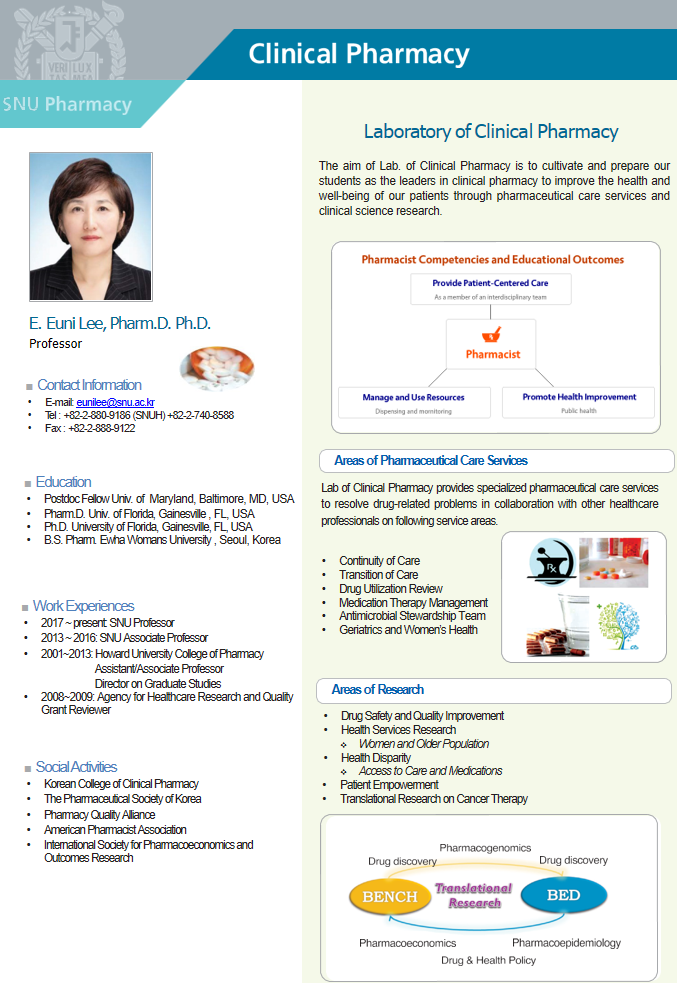
Professor Kim Eun-kyung is a full-time Professor at the College of Pharmacy , Seoul National University , South Korea. She directs patient-oriented research at the intersection of pharmacy, public health and clinical epidemiology, leading projects that range from nationwide pharmaco-epidemiologic cohort analyses to qualitative investigations of pharmacist-led care models. Education Ph.D. & Pharm.D., University of Florida, USA Research Interests Professor Kim’s research program is built on five mutually reinforcing pillars: Population-based patient care research – leveraging large national databases to understand medication utilization and outcomes in real-world settings. Drug safety and patient empowerment – identifying adverse drug reactions and developing interventions that enable consumers and clinicians to report and prevent harm. Access to care and medications in underserved and special populations – examining barriers faced by the elderly, rural residents, patients with rare diseases, and those undergoing high-cost procedures such as hematopoietic stem-cell transplantation. Disease prevention and appropriateness of therapy – evaluating preventive pharmacotherapy (e.g., anti-osteoporosis drugs, vitamin D) and ensuring evidence-based prescribing. Quality improvement in health-care delivery – designing multidisciplinary models that integrate pharmacists into care teams to optimize medication therapy and reduce drug-related problems. Publication Trends Across 2017–2020, Professor Kim has published extensively in International Journal of Environmental Research and Public Health , Clinical Nutrition , Medicina , BMC Public Health , Blood Research , Neuroepidemiology and other peer-reviewed journals. Her work characteristically combines rigorous secondary-data analyses of Korean or US national health surveys with systematic reviews/meta-analyses focusing on drug safety endpoints. Themes include neurological adverse events (trimetazidine-induced parkinsonism), hematologic toxicities (linezolid-induced thrombocytopenia), nutritional and metabolic complications in critical care, and access/utilization of medications in vulnerable populations. Scientific Awards & Honors (None listed in the provided texts) Grants & Research Support While specific grant identifiers are not detailed in the supplied pages, the breadth of large-scale database studies and multi-institutional collaborative projects implies sustained funding from national agencies such as the Korea Health Industry Development Institute (KHIDI) or the Ministry of Health & Welfare. Laboratory & Team Professor Kim leads an active research group located in Yeongeon Campus 17-201. The team integrates graduate students, post-doctoral researchers, pharmacists and biostatisticians working together on pharmacoepidemiology, patient-reported outcomes and health-services research.
Tobias Hermann serves as an Associate Professor at the University of Oxford's Department of Engineering Science, where he leads research within the Oxford Thermofluids Institute and holds a prestigious UKRI Future Leaders Fellowship. Affiliated with St. Hilda's College as an Associate Research Fellow, his work centers on experimental hypersonics and advanced diagnostic development for extreme aerospace environments. Hermann earned his Dipl.-Ing. in Aerospace Engineering from the University of Stuttgart (2012) followed by a Dr.-Ing. degree (2017), with doctoral research focused on spacecraft re-entry phenomena and aerothermochemistry during atmospheric entry. His thesis involved developing optical diagnostics including Vacuum Ultraviolet spectroscopy and tomographic emission systems. His research program emphasizes experimental hypersonics and plasma flows , with core expertise in spacecraft re-entry physics , high-temperature material-flow interactions , and optical diagnostic innovation . Hermann pioneered analytical methods for transpiration cooling in porous media and developed system engineering tools for thermal protection systems. His current work bridges fundamental fluid dynamics with practical aerospace applications, particularly in hypersonic vehicle design and re-entry simulation through facilities like the T6 expansion tube. Analysis of Hermann's publication record reveals consistent focus on high-enthalpy flow diagnostics and thermal protection systems , with recent work advancing expansion tube capabilities for boost-glide re-entry simulation, integrated arc-jet facilities for ablating models, and vacuum ultraviolet spectroscopy for plasma flow characterization. His research demonstrates strong integration of experimental validation with analytical modeling across hypersonic testing regimes. Hermann's scientific recognition includes: UKRI Future Leaders Fellowship (2021-present) As an educator, Hermann supervises 4th-year undergraduate projects and DPhil (PhD) students in hypersonics while teaching Thermodynamics and Fluid Mechanics. His current research portfolio—primarily funded through his UKRI Fellowship—comprises three major thrusts: development of high-enthalpy wind tunnels (including the multi-mode T6 facility), pre-heating of hypersonic models using plasma flows, and advancement of measurement techniques like spatially resolved UV-nIR spectroscopy. These projects address critical gaps in hypersonic testing infrastructure and instrumentation. Hermann directs experimental efforts at Oxford's Southwell Laboratory within the Oxford Hypersonics group, operating facilities including the T6 Stalker tunnel, OPG1 plasma wind tunnel, and specialized arc-jet systems. His team develops cutting-edge instrumentation such as vacuum ultraviolet spectroscopy systems, high-speed focused Schlieren, and pressure-sensitive paint diagnostics to investigate complex phenomena in hypersonic boundary layers and re-entry flows.
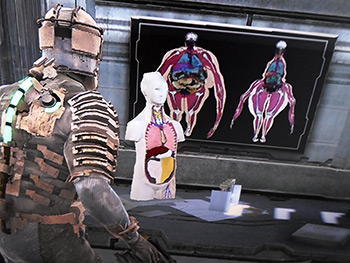
Diane Carr is a Professor of Media and Cultural Studies at the Institute of Education, University College London (UCL), where she serves as Director of the Digital Media MA Programme. Based in the Culture, Communication & Media department, Carr is an established scholar in game studies, media studies, and critical disability studies. Her work bridges academic research with practical applications in digital media education. Carr's research focuses on media studies and cultural studies perspectives on digital games and players, with particular emphasis on critical analysis, methodology, representation, and screen studies. During 2024-25, her research follows two key themes: developing ludic autoethnography to articulate real-world experiences of discrimination, and examining complicity with big tech, datafication, and AI in games and education. Her work consistently explores the intersection of disability studies with game studies, challenging normative representations of ability in digital spaces. Carr's publications reveal a sustained engagement with disability representation in games, particularly through analyses of titles like Dead Space and Deus Ex. Her research demonstrates how games function as cultural texts that both reflect and shape societal attitudes toward disability, ability, and bodily difference. She employs textual analysis and autoethnographic approaches to examine how games construct notions of normalcy and deviance. UCL Widening Participation community of practice awards (2022) ONE UCL Award for collegiality, 'Ways of Working/Working Together' (2021) UKLA Postgraduate Research Prize (2015) Carr has supervised numerous PhD students including Danielle Kleinerman (in progress), Angeliki Symeonidi (2020), Bruno de Paula (2019), and Angela Colvert (2015). Her research funding includes significant projects like 'Disability and Community: Dis/engagement, Dis/enfranchisement, Dis/parity and Dissent' (2016-2021) funded by the AHRC, 'Alternative Futures: Disability and Community' (2014-2015), and 'Digital Games: Representations of disability' (2013-2014). She has also led projects on AI education using science fiction and virtual worlds in higher education. As Director of the Digital Media MA Programme, Carr leads initiatives that connect game studies with critical media education. Her teaching includes research design and game studies on the MA Digital Media Critical Studies program. Notably, Carr is deaf, bringing lived experience to her critical disability studies work while actively contributing to academic discourse on accessibility and representation in digital spaces.
Taylor Sparks is a Professor of Materials Science and Engineering at the University of Utah, where he also serves as Director of Graduate Affairs for the John and Marcia Price College of Engineering. He holds a PhD in Applied Physics from Harvard University, an MS in Materials from the University of California, Santa Barbara, and a BS in Materials Science & Engineering from the University of Utah. His research focuses on advancing materials discovery using machine learning to streamline and optimize material design, with applications in energy materials, dental materials, and sustainable engineering. His work integrates big data and materials informatics to explore new synthetic techniques, structure-property relationships, and sustainable materials that balance performance with economic factors. The Sparks Research Group has secured funding from agencies including DOE, NSF, DOD, and various industry partners. Sparks' recent research output demonstrates a strong trend toward leveraging artificial intelligence and machine learning to accelerate materials discovery, with particular emphasis on large language models for materials science, Bayesian optimization for experimental design, and novel approaches to crystal structure prediction. His work bridges the gap between theoretical predictions and experimental validation in materials science. NSF CAREER Award Royal Society Wolfson Visiting Fellow Acta Materialia Outstanding Reviewer Award for 2020 Honorary Outstanding Faculty Teaching Award of 2020-2021 Materials Science & Engineering Department Research Award for 2023 John G. Francis Prize for Undergraduate Student Mentoring Sparks has advised numerous graduate students who have gone on to successful careers in academia and industry. His research has been supported by significant grants from NSF, DOE, DOD, Army Research Office, and industry partners. His group has developed innovative tools including the Materialism Podcast, a materials science YouTube channel, and the Honegumi interface for Bayesian optimization, demonstrating his commitment to both research excellence and science communication. The Sparks Research Group operates multiple laboratories focused on materials characterization, synthesis, and informatics. They collaborate extensively with other institutions globally, host visiting researchers, and run outreach initiatives including the Materialism Podcast and YouTube channel to make materials science more accessible to broader audiences.
Donna Naples is a Professor in the Department of Physics & Astronomy at the University of Pittsburgh, affiliated with the Dietrich School. Her research focuses on neutrino physics, particularly their fundamental properties and oscillations. She is involved in major experiments such as NOvA, MicroBooNE, and the upcoming DUNE project at Fermilab. Her work contributes to understanding neutrino masses, mixing matrices, and potential sterile neutrinos. Naples has been recognized as a Fellow of the American Physical Society (2018). Research Interests: Neutrino oscillations and cross-section measurements High-intensity neutrino beam experiments (NuMI) Detector development for neutrino physics Search for sterile neutrinos and beyond-Standard-Model interactions Key Contributions: Leadership in the MicroBooNE detector design Analysis of MINERvA neutrino interaction data Role in planning the DUNE experiment Awards: Fellow of the American Physical Society (2018) Advising & Collaboration: Advises graduate student Fan Gao Collaborates with international teams on neutrino experiments
Chanchal K. Roy is Professor of Software Engineering/Computer Science at the University of Saskatchewan and Co-Director of the Software Research Lab. He leads an NSERC CREATE graduate program on Software Analytics Research and co-leads the Data Management group for an NSERC CFREF project on Food Security, with over 170 publications cited 6,000+ times. His research centers on software clone detection using the widely adopted NICAD system, software evolution, empirical studies, and AI-driven software analytics. Recent work integrates large language models for code generation, clone detection in the AI era, and developer interactions with tools like ChatGPT, emphasizing practical applications in maintenance and analytics. Analysis of his 15 most recent publications reveals a strong trend toward AI/ML integration in software engineering: 12 of 15 articles (2025) explore LLMs, quantum computing, or deep learning for tasks like bug localization, code snippet generation, and feature-toggle analysis. Key themes include empirical validation of AI tools, Stack Overflow data mining, and cross-domain frameworks for Society 5.0. His scientific awards include: Most Influential Paper Awards (SANER 2018, ICPC 2018) Outstanding Young Computer Science Researcher Award (CS-Can/Info-Can, 2018) New Researcher Award (University of Saskatchewan, 2019) New Scientist Research Award (College of Arts and Science, 2019) As lead of the NSERC CREATE program and CFREF data group, he mentors graduate students in software analytics while securing major grants. He actively serves on program committees for ASE, ICSE, and FSE, reviewing journals and organizing workshops on clone detection and empirical methods. His lab focuses on real-world applications in food security data management and software evolution. The Software Research Lab, co-directed by Roy, drives projects like NICAD and the NSERC CREATE initiative, emphasizing open-source contributions and industry collaboration. Current efforts include quantum-SE integration and AI-augmented maintenance tools under the CFREF food security mandate.
Sri Kolla, Ph.D. is a tenured Professor in the Department of Electronics and Computer Engineering Technology at Bowling Green State University (BGSU) , where he has served since August 2002. He also served as a Visiting Professor at the Indian Institute of Science (2017) and as a Fulbright Research Scholar (2008-2009). His academic career spans faculty roles at Penn State University, University of Toledo, and consortium graduate faculty at Indiana State University. Education: Ph.D. in Electrical Engineering and Computer Science (University of Toledo, 1989) M.S. in Electrical and Computer Engineering (University of Saskatchewan, 1986) M.E. in Electrical Engineering (Indian Institute of Science, 1983) B.E. in Electrical Engineering (Andhra University, 1981) Research Interests: Dr. Kolla specializes in Electrical Power and Energy Systems with Smart Grid applications, Control Systems for networked environments, and Machine Learning techniques for power system diagnostics. His work focuses on fault detection in microgrids using LSTM networks, stability robustness of discrete-time systems, and multi-agent protection schemes for power infrastructure. Scientific Contributions: Developed robust control frameworks for microgrid systems under parameter variations (2023-2025) Pioneered AI-based fault identification in induction motors and transformers (1995-2000) Advanced networked control system designs addressing time delays (2002-2012) Published 82+ technical articles in IEEE, ISA Transactions, and conference proceedings Honors and Recognition: Recipient of the Fulbright-Nehru Academic and Professional Excellence Award and Whiteford Scholarship . Senior member of IEEE and ISA , with listings in Marquis Who’s Who and fellowships in The Institute of Engineers (India) .
Prof. Dr. Johan Robertsson is a Full Professor of Applied Geophysics and Head of the Exploration and Environmental Geophysics (EEG) Group at ETH Zürich's Department of Earth and Planetary Sciences. He holds a MSc from Uppsala University (1991) and a PhD in Geophysics from Rice University (1994). Before joining ETH in 2012, he spent 15 years at Schlumberger in R&D roles, leading projects that revolutionized marine seismic data acquisition. His research focuses on wave propagation physics, seismic data inversion, and applications in exploration and environmental geophysics. He pioneered the use of Distributed Acoustic Sensing (DAS) for landslide monitoring and contributed to Mars seismology via the InSight mission. Education: MSc in Engineering Physics, Uppsala University (1991) PhD in Geophysics, Rice University (1994) Research Interests: Seismic wavefield modeling and inversion Planetary seismology (Mars, Moon) Acoustic metamaterials and wave control Environmental geohazard monitoring Marine seismic acquisition techniques His work on the Martian soil properties using InSight data and lunar exploration instrumentation (ALGEP) reflects his cross-disciplinary approach. He holds 90+ patents and has secured prestigious grants like the ERC Advanced Grant. Awards: EAGE Guido Bonarelli Award (2020) ERC Advanced Grant MATRIX (2017) EAGE Conrad Schlumberger Award (2018) Grants & Advising: Led the MATRIX ERC project advancing seismic imaging algorithms Advised over 20 PhD/MS students (names not listed) Secured Schlumberger's largest R&D project in marine seismic sampling His EEG Group operates cutting-edge labs for immersive wave experimentation and planetary geophysical instrumentation. Current initiatives include lunar subsurface exploration and acoustic invisibility experiments.
Dr. Robert J. Teather is an Associate Professor and the Director of the School of Information Technology at Carleton University in Ottawa, Canada. He previously served as an interim Director of the School of Information Technology during the 2022-23 academic year. His academic journey includes a PhD in Computer Science from York University (2013) and a postdoctoral fellowship at McMaster University (2015). Dr. Teather's educational background includes: PhD in Computer Science from York University (2013) Master's Thesis: "Comparing 2D and 3D Direct Manipulation Interfaces" from York University (2008), which was awarded the Joseph Liu Thesis Award Dr. Teather's research broadly falls under the field of human-computer interaction, with specialization in 3D user interfaces, virtual reality, and user interfaces for computer games. His work establishes methods for direct comparison of 2D and 3D interfaces for conceptually equivalent tasks, such as selection and manipulation interfaces. He investigates factors influencing human performance in VR, including stereo 3D graphics, haptic feedback, and head-tracking. His research also evaluates novel user interfaces like tilt control or touchscreens, and examines human performance with game input devices in complex tasks involving navigation, selection, and manipulation of objects in game environments. His research has been published extensively in top venues including IEEE VR, ACM SUI, and Graphics Interface. Among his notable scientific achievements are: NSERC Postgraduate Scholarship during his PhD studies Ontario Graduate Scholarship during his PhD studies Best Paper Honourable Mention at the ACM Symposium on Applied Perception 2020 Best Demo Award for SUI 2017 Joseph Liu Thesis Award (2008) Dr. Teather actively supervises graduate students at Carleton University, currently overseeing multiple PhD and Master's students in the areas of human-computer interaction and interactive digital media. His research is supported by NSERC and the Canada Foundation for Innovation, providing funding for his students and laboratory equipment. His students have produced research spanning VR as a persuasive tool to improve vaccine confidence, selection performance using smartphones in VR, and text entry methods in virtual reality environments. Dr. Teather leads a well-equipped CFI-supported lab focused on virtual and augmented reality research. His team works collaboratively on projects related to interactive virtual reality systems, computer game user interfaces, and input devices for 3D interaction. The lab environment fosters interdisciplinary research with opportunities for students to work on cutting-edge VR/AR technologies and contribute to the growing field of spatial computing.
Dr. Margaret Elizabeth Kruk is a Professor of Health Systems at the Harvard T.H. Chan School of Public Health, part of Harvard University. She previously held roles as Associate Professor at Columbia University and Assistant Professor at the University of Michigan. Her research focuses on improving health system quality in low-income countries, using implementation science and econometric methods to evaluate large-scale reforms. She chairs the Lancet Global Health Commission on High Quality Health Systems in the SDG Era and directs the QuEST Network, a multi-country initiative to enhance health systems globally. Education: MD from McMaster University, MPH from Harvard University. Affiliations: Director of QuEST Centers and Network, former roles at UNDP and McKinsey & Company. Her research interests span healthcare quality measurement, maternal and newborn health, and policy solutions for systemic deficits. Key projects include the People’s Voice Survey on health system performance and mobile phone eCohorts for tracking care quality in LMICs. Publications highlight maternal health outcomes, vaccination decision-making, and health system confidence across countries. Grants include NIH funding for maternal-newborn health integration with HIV programs in Tanzania. Twitter: @mkruk