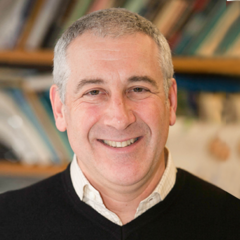
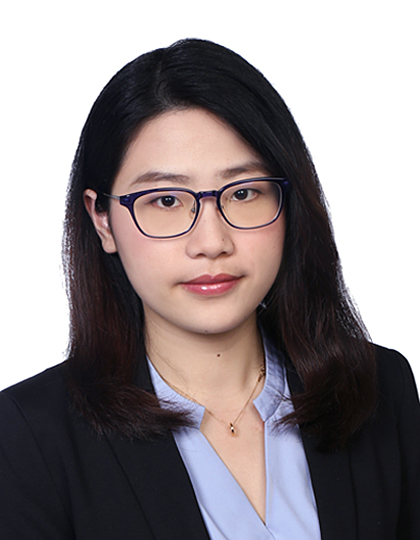
Dominik Hangartner is a Professor of Political Analysis at ETH Zurich and co-director of the Stanford-Zurich Immigration Policy Lab. His research combines fieldwork and statistical analysis to evaluate migration policies and political institutions. Education: Doctorate in Social Sciences, University of Bern (2011) Research Interests focus on: Immigrant integration Effects of direct democracy Discrimination monitoring Refugee policy evaluation Political economy of migration Publications span Science , Nature , and American Political Science Review , with recent work analyzing refugee return dynamics, welfare migration, and media effects during crises like the Syrian refugee influx and the pandemic. Scientific Awards: Philip Leverhulme Prize National Latsis Prize ERC Starting Grant Grants & Projects include EU and Swiss National Science Foundation funding for immigration policy experiments. He collaborates with the Immigration Policy Lab on algorithmic integration strategies and field experiments.
Joshua J. Coon is a Professor at the University of Wisconsin-Madison with appointments in the Department of Biomolecular Chemistry and the Department of Chemistry. He leads the Coon Group, focusing on advancing mass spectrometry technologies for proteomics, metabolomics, and lipidomics. His research addresses fundamental questions in cell biology, including stem cell differentiation, epigenetic regulation, and cancer biomarker discovery. Affiliations : Director of the NIGMS National Center for Quantitative Biology of Complex Systems. Research Emphasis : Instrumentation development, data analysis software, ion chemistry, and biological applications of proteomics. Laboratory : Located in the Genome Center of Wisconsin with a dozen hybrid mass spectrometers, including Orbitrap systems. Collaborations : Long-term partnership with Thermo Fisher Scientific and the Wisconsin Alumni Research Foundation (WARF) for technology commercialization. Training : Mentored 27 Ph.D. students since 2009, emphasizing interdisciplinary research and professional development.
Marc Sachon is a Full Professor and Director of the Department of Operations, Information, and Technology at IESE Business School, University of Navarra . He serves as Academic Director for Advanced Management Programs (AMP) and specialized courses like Successful Change Management and Industry 4.0 . His leadership extends to the annual IESE Automotive Industry Conference (since 1986) and consulting engagements with global firms such as BMW Group , Phoenix Group , and Traton Group . PhD in Industrial Engineering and Engineering Management from Stanford University MBA from IESE Business School Master's in Aerospace Technology from University of Stuttgart His research focuses on operations strategy , particularly in the automotive industry , and the impact of Industry 4.0 on manufacturing and logistics. He explores how digital transformation reshapes value chains, emphasizing human-machine collaboration and supply chain resilience. His work spans academic journals like IEEE Transactions and business publications like IESE Insight , with case studies on companies such as Porsche and Netflix . Professor Sachon has received multiple teaching awards and maintains an active consulting practice across industries including airlines , pharmaceuticals , and logistics . He previously worked at Airbus and IBM , and currently advises a mobility startup board. His recent publications highlight trends in electric mobility , 3D printing , and supply chain sustainability .
Associate Professor Dan Dongseong Kim is Deputy Director of UQ Cybersecurity and an Associate Professor at The University of Queensland (UQ), Australia. Previously, he held permanent academic positions at The University of Canterbury (UC), New Zealand (2011-2018) as a Senior Lecturer and Lecturer. His research focuses on Cybersecurity and Dependability for AI, IoT, Autonomous Vehicles, Cloud Computing, and Moving Target Defenses (MTD). Doctor of Philosophy in Computer Engineering from Korea Aerospace University Postdoctoral Research at Duke University (2008-2011) Visiting Scholar at University of Maryland (2007) Dan's work explores Graphical Security Models , Moving Target Defense for proactive resilience, and AI-Driven Cybersecurity with emphasis on adversarial robustness and interpretable models. His recent publications (2024-2025) span journals like IEEE Transactions on Dependable and Secure Computing and conferences such as DSN , addressing automated defense, evolving attacks, and hardware-aware security frameworks. He has advised 15 Ph.D. graduates, including researchers now at institutions like RMIT University, La Trobe University, and CSIRO's Data61. Current supervision includes projects on Automated Penetration Testing , AI-Based Intrusion Response , and Moving Target Defense . Dan's research is funded by agencies including the Republic of Korea's Agency for Defence Development and US Army Research Lab . His professional roles include Associate Editor for IEEE Communications Surveys and Tutorials and Steering Committee Chair for IEEE PRDC .
Francis Y. Yan is an Assistant Professor of Computer Science at the University of Illinois Urbana-Champaign (UIUC), holding an affiliate appointment in Electrical & Computer Engineering within the Grainger College of Engineering. He leads the Illinois Networked Systems and AI (NSAI) research group, focusing on building intelligent networked systems that are safe, robust, and performance-optimized through practical machine learning integration. Prior to joining UIUC in January 2025, he served as a Senior Researcher at Microsoft Research Redmond under Victor Bahl. His educational background includes: Ph.D. in Computer Science from Stanford University (2020), advised by Keith Winstein and Philip Levis B.S. in Computer Science (Yao Class) and B.A. in Economics from Tsinghua University (2015) Additional undergraduate studies at MIT Yan's research adopts a holistic approach to practical machine learning for networked systems, emphasizing judicious application rather than indiscriminate use. He builds real-world systems and research platforms to lay ML foundations, devises deployable algorithms using domain insights, and validates performance through extensive empirical evidence. His work consistently addresses operator concerns regarding ML deployment—focusing on safety, robustness, generalization, and efficiency—while strategically combining ML with classical networking and systems techniques. Analysis of his 15 most recent publications (2023-2025) reveals dominant themes in resource allocation for microservices (DeDe, Autothrottle), real-time video optimization (Mowgli, GRACE), and LLM-driven network algorithm design. His work bridges theoretical advances with industrial deployment, evidenced by platforms like Puffer (400,000+ users) and OpenNetLab that have become community standards for validating congestion control algorithms. His research has been recognized with top honors: USENIX NSDI Outstanding Paper Award (2024) for Autothrottle APNet Best Paper Award (2022) IRTF Applied Networking Research Prize (2021) USENIX NSDI Community Award (2020) USENIX ATC Best Paper Award (2018) for Pantheon Yan actively recruits master's and undergraduate researchers for his NSAI group, prioritizing self-motivated students for projects in networked systems and AI. His research is supported by industry collaborations (notably Microsoft) and manifests in deployable platforms like Puffer—which has enabled award-winning research at NSDI and SIGCOMM—and OpenNetLab for real-time communications. His work directly impacts production systems including Microsoft Teams and Bing. He founded and directs the Illinois Networked Systems and AI (NSAI) research group, which operates critical infrastructure including Puffer (a live TV service and research platform) and OpenNetLab. These platforms facilitate community-wide validation of novel algorithms, with Puffer alone supporting multiple best-paper awards at top conferences. Current workstreams span cloud resource management (Teal, Autothrottle, DeDe), low-latency video (Puffer, Tambur, Mowgli), and LLM-augmented systems (Nada, Designing Network Algorithms via LLMs).
Christopher Storie is a Professor of Geography at the University of Winnipeg, specializing in GIS, Remote Sensing, and Urban Geography. He holds an office in Lockhart Hall (5L03) and teaches courses such as Introduction to GIS, Remote Sensing, and Urbanization in the Developing World. His research focuses on Deep Learning applications for automated land use/land cover mapping, informal settlement mapping, and urban-rural fringe detection. Key research interests include leveraging neural networks for geospatial analysis, urban dynamics in regions like Mexico City, and collaborative international fieldwork. He has contributed to over 20 peer-reviewed articles since 2000, emphasizing satellite imagery analysis and environmental monitoring. His work bridges technical geospatial methods with socio-environmental challenges in urban and developing regions.
Dr. Min Xu is a Courtesy Professor in the Computational Biology Department within the School of Computer Science at Carnegie Mellon University. His research focuses on advancing computer vision and machine learning for biomedical image analysis, particularly cellular cryo-electron tomography (Cryo-ET) and automated science video analysis. He leads a lab developing cutting-edge computational tools for structural biology and medical imaging. Key research directions include: High-resolution 3D Cryo-ET image analysis AI-driven medical image segmentation Few-shot learning for cryo-EM analysis Video analysis frameworks for laboratory automation Notable contributions include the AITom toolkit for Cryo-ET analysis and pioneering work in adapting foundation models for medical imaging tasks. His work has been published in top venues like CVPR, MICCAI, and Nature-associated journals. No academic awards or grants are explicitly listed in the provided text. He maintains an active lab focused on translating computational methods into impactful biomedical research tools.
Charles Fine is the Chrysler Leaders for Global Operations Professor of Management at MIT Sloan School of Management and concurrently serves as CEO, President, and Dean of the Asia School of Business (ASB) in Kuala Lumpur since 2015. He holds an AB in Mathematics and Management Science from Duke University, MS in Operations Research, and PhD in Business Administration from Stanford University. His research focuses on supply chain strategy, value chain roadmapping, and operations management in fast-clockspeed industries such as automotive and aerospace. He has pioneered frameworks for strategic innovation, entrepreneurial operations, and urban mobility systems. Key contributions include the concept of 'clockspeed' in industry dynamics and co-authoring Clockspeed (1998) and Faster, Smarter, Greener (2017). Fine co-directs MIT Sloan’s Driving Strategic Innovation executive program with IMD, Switzerland. He previously served on the board of Greenfuel Technologies, a biotech startup he co-founded. His work has been published in top journals like Management Science , Production and Operations Management , and Interfaces . Recent research highlights include analyzing unintended consequences of automated vehicles and exploring supply chain strategies for market expansion through O2S (Online-to-Store) models. He advises global corporations on supply chain resilience, value chain design, and innovation scaling.
Dr. John Hastings is a Professor in the Department of Computer Science at Dakota State University, part of the Beacom College of Computer & Cyber Sciences. With nearly 35 years of experience, he specializes in teaching and curriculum development in computer science, combining academic rigor with industry insights from his roles as an AI/ML engineer, team leader, and business owner. Education: Ph.D., Computer Science, University of Wyoming M.S., Computer Science, University of Wyoming B.S., Computer Science, University of Wyoming Research interests include machine learning, AI applications in natural language processing (LLMs), generative AI, computer vision, ecological/environmental AI, AI in games, and gamification in education. Recent publications focus on cybersecurity challenges, AI ethics, and insider threat detection. His work has been recognized with awards such as the AAAI’s Innovative Applications of Artificial Intelligence (IAAI) Award and an International IPM Award for Excellence related to the CARMA AI tool. Teaching emphasizes active learning and practical skills, including courses on programming, data structures, AI, and cybersecurity. He advocates for gamification in education to enhance student engagement and success.
Dr. Joyoung Lee is an Associate Professor in the Department of Civil and Environmental Engineering at New Jersey Institute of Technology (NJIT). He previously served as Laboratory Manager at the Federal Highway Administration's Saxton Transportation Operations Laboratory. His research focuses on Connected Vehicle (CV) systems, including applications in traffic management, signal control optimization, and autonomous vehicle infrastructure integration. Dr. Lee holds a Ph.D. (2010) and M.S. (2007) in Transportation Engineering from the University of Virginia, and a B.S. (2000) in Transportation Engineering from Hanyang University. His work emphasizes CV-based solutions for real-time traffic systems, cooperative vehicle-infrastructure systems (CVIS), and autonomous vehicle integration. Notable achievements include the 2019 IEEE CAVS Best Paper Award and multiple best paper recognitions from PTV User Group Meetings. His research also addresses traffic safety through innovations like the Virtual Guide Dog system for visually impaired pedestrians and advanced traffic monitoring frameworks using LiDAR and computer vision. Education: Ph.D., Transportation Engineering, University of Virginia (2010) M.S., Transportation Engineering, University of Virginia (2007) B.S., Transportation Engineering, Hanyang University (2000) Dr. Lee's research interests span smart city infrastructure, edge computing for traffic systems, and sustainable transportation solutions. He has pioneered algorithms for cooperative intersection management, automated platooning systems, and federated learning-based traffic optimization. His work bridges theoretical models with real-world implementation through partnerships with FHWA and industry stakeholders. Key contributions include development of the Cumulative Travel-Time Responsive (CTR) traffic signal control system, smart arrival notification systems for paratransit services, and advanced microsimulation calibration techniques. His lab focuses on translating CV data into actionable strategies for safer, more efficient transportation networks. Awards: IEEE CAVS Best Paper Award (2019) ASCE Grand Challenge Innovation Contest Honorable Mention (2017) PTV VISSIM Best Paper Awards (2012, 2008) Excellence in Research Award (University of Virginia, 2011) Ongoing projects include semi-decentralized graph neural networks for traffic forecasting and low-cost LiDAR-based traffic monitoring systems. His work addresses critical challenges in autonomous vehicle integration, incident management, and infrastructure resilience through interdisciplinary collaborations.
Mateja Durovic is a Professor of Law and Technology at King’s College London, holding roles as Deputy Director of the Centre for Technology, Ethics, Law and Society (TELOS) and Academic Director of the Executive programme on Consumer Law. He previously served as Assistant Professor at City University of Hong Kong (2015-2017). His academic credentials include a PhD and LLM from the European University Institute, an LLM from the University of Cambridge, and an LLB from the University of Belgrade, graduating as top of his class. Research focuses on consumer law, contract law, and the intersection of law with new technologies. He has published in leading journals such as the European Review of Private Law and collaborates with institutions globally. His work addresses digital vulnerabilities, smart contracts, EU consumer directives, and online commercial practices. He is a visiting professor at universities in Europe and Asia and advises international organizations like the European Commission and the United Nations. Professional affiliations include the European Law Institute and Society of Legal Scholars. His contributions have been cited by the Court of Justice of the European Union and UK Law Commission. He leads King’s Cybersecurity Centre and Centre for Data Futures, advancing interdisciplinary research in digital technologies, cybersecurity, and participatory data infrastructure.
Yuan Tian is an Assistant Professor in the School of Computing at Queen's University, Faculty of Arts and Science. She holds a PhD in Information Systems from Singapore Management University (2017) and a B.Sc. in Computer Science from Zhejiang University (2012). Her research focuses on integrating heterogeneous data sources to enhance software engineering practices, including data mining, recommender systems, and social network analysis. Prior to Queen's, she was a data scientist at Living Analytics Research Centre (LARC), SMU. She has held visiting positions at Carnegie Mellon University, INRIA Paris, and SAIL Canada. Research Interests: Data Mining Software Engineering Social Network Analysis Information Retrieval Recommender Systems Computer Security Recent Research Trends: Her work emphasizes AI-driven solutions for software bug management, code translation, vulnerability detection, and developer behavior analysis. Notable contributions include leveraging LLMs for technical debt repayment and enhancing code vulnerability detection via Graph Neural Networks. Awards: SMU Presidential Doctoral Fellowship (2015-2016) Best Paper Award at SANER 2017 Grants & Advising: No formal advisees listed, but active in collaborative projects with industry and academic partners. Labs/Teams: Previously associated with SOAR Group at SMU and currently leads research in Queen's School of Computing.
Dr. Dijiang Huang is an Associate Professor in the School of Computing and Augmented Intelligence at Arizona State University (ASU). He joined ASU in 2005 after completing his Ph.D. in Telecommunications and Computer Networking from the University of Missouri-Kansas City (2004). His research focuses on cybersecurity, mobile computing, and cloud computing, supported by grants from the National Science Foundation (NSF), Office of Naval Research (ONR), and industry partners like HP. He has received prestigious awards, including the ONR Young Investigator Award and HP Innovative Research Award. Education: B.E. in Telecommunications, Beijing University of Posts and Telecommunications (1995) M.S. in Computer Science, University of Missouri-Kansas City (2001) Ph.D. in Telecommunications and Computer Networking, University of Missouri-Kansas City (2004) Research Interests: Huang’s work emphasizes secure communication protocols, privacy-preserving techniques, and resilient network architectures. He has pioneered frameworks like Secure Group Communication (SeGCom) and Attribute-Based Cryptography , addressing challenges in VANETs, SDN, and edge computing. His recent projects include developing Waterfall for SDN security and SmartDefense for DDoS mitigation. Grants & Awards: ONR Young Investigator Award (2008) HP Innovative Research Award (2008) NSF grants for secure mobile cloud frameworks and cyber-physical systems Professional Contributions: Huang has served as a reviewer for journals like IEEE Transactions on Wireless Communications and conferences such as ACM MobiArch. He co-developed the Open Human-Robotic Mobile Networking and Security Testbed (OHReST) and the Virtual Laboratory (VLab) for cybersecurity education.
Pedro Vilaça is a **Professor and Head of the Department of Energy and Mechanical Engineering** at **Aalto University's School of Engineering**, Finland. Previously, he worked at the Instituto Superior Técnico (Técnico), University of Lisbon, Portugal (1995–2013). His research focuses on **welding technology**, **solid-state manufacturing**, **non-destructive testing (NDT)**, **hydrogen-related materials science**, and **materials safety**, with applications in energy and aeronautics sectors. He leads R&D teams and has collaborated globally, contributing to 142+ publications (h-index 32 via Scopus). **Research Interests**: Advanced welding techniques (e.g., friction stir welding), hydrogen embrittlement in steels, supercapacitor materials, and smart composites. He has pioneered methods for **zero-material-loss welding** and **self-sensing metallic materials**. **Key Projects**: Led initiatives like **THEWFuelCells** (fuel cell welding innovations) and **EARLY/Vilaca** (hydrogen damage assessment). His work aligns with **UN Sustainable Development Goals**, emphasizing renewable energy storage and industrial sustainability. **Awards**: 2011 Eng. Cruz Azevedo Award for outstanding research in Mecânica Experimental. **Collaborations**: Active in international networks, including the International Institute of Welding and European research consortia. He has organized conferences, reviewed patents, and advised doctoral students globally. **Recent Articles**: Focus on corrosion-resistant materials, piezoelectric composites, and hydrogen-induced failure in steels. His 2023–2025 work emphasizes energy storage innovations and advanced joining technologies. **Grants**: Principal investigator for projects funded by Business Finland, EU EIT, and Academy of Finland. **Labs/Teams**: Oversees Aalto’s mechanical engineering research teams and collaborates with institutions like Helmholtz-Zentrum Geesthacht.
Professor Bing Chu is an academic at the University of Southampton, actively contributing to research in control systems, robotics, and machine learning. They are a member of the Vision, Learning and Control Centre for Internet of Things and Pervasive Systems and the Centre for Robotics, focusing on interdisciplinary approaches that combine control theory with data-driven methodologies. Current research interests include: Iterative learning control Human-robot interaction Wind farm power optimization Robot behavior modeling Control system architectures Collaborative learning systems Recent publications highlight trends in data-driven control systems, human-robot interaction datasets, and optimization techniques for both continuous-time systems and wind energy applications. Professor Chu supervises multiple PhD students across robotics and electronic engineering, including Balint Gucsi, Haonan Shen, and Aleksander Wolski, while leading projects funded by Zhengzhou University and the Royal Society.