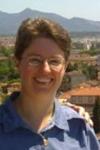
Claire Bowern is Professor of Linguistics at Yale University specializing in historical linguistics, language documentation, and Australian Indigenous languages. Her research employs computational phylogenetics to study language evolution and supports language revitalization through digital archives and fieldwork methodologies. Recent publications address: Phylogenetic signal in lexical evolution across language families Digital infrastructure for endangered language documentation (FLEx software analysis) Decolonizing linguistics pedagogy and research practices Her work consistently integrates linguistic, anthropological, and computational approaches to analyze language diversity and change. She contributes to global databases including Grambank and D-PLACE, examining links between linguistic, cultural, and environmental patterns.
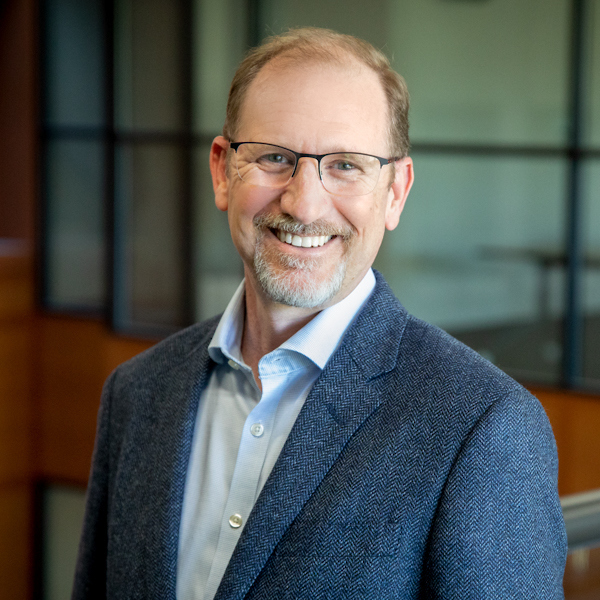
David Williamson Shaffer is the Sears Bascom Professor of Learning Analytics and Vilas Distinguished Achievement Professor of Learning Sciences at the University of Wisconsin-Madison's Department of Educational Psychology. He is also a Data Philosopher at the Wisconsin Center for Education Research. His work focuses on merging statistical and qualitative methods to model complex human collaboration. Shaffer holds an AB in History and East Asian Studies from Harvard University (1987), and MS/PhD in Media Arts and Sciences from MIT (1996/1998). Before academia, he was a teacher, curriculum developer, and game designer. His research emphasizes Quantitative Ethnography —a methodology combining big data analysis with cultural interpretation. Key contributions include Epistemic Network Analysis (ENA) and over 250 publications, including influential books like How Computer Games Help Children Learn (2006) and Quantitative Ethnography (2017). Awardees of the EU Marie Curie Fellowship (2008) and Spencer Foundation Fellowship (2003), Shaffer's work has been presented globally at conferences like Learning Analytics & Knowledge and Computer Supported Collaborative Learning. His interdisciplinary approach bridges education, data science, and humanities, addressing challenges in authentic STEM experiences, collaborative learning analytics, and culturally responsive pedagogy.
Paulina Łęska-Bayraktar is an Assistant Professor in the Department of English-Polish Comparative Linguistics at the Faculty of English, Adam Mickiewicz University in Poznań, where she conducts research and teaches in formal syntax and comparative linguistics. Her academic foundation is deeply rooted in the same institution, reflecting a sustained commitment to linguistic scholarship in Poland. Her educational background includes: B.A. in English Linguistics, Adam Mickiewicz University in Poznań (2012) M.A. in English Linguistics, Adam Mickiewicz University in Poznań (2014) Ph.D. in English Linguistics, Adam Mickiewicz University in Poznań (2019) Her research interests lie at the intersection of syntax, semantics, and cognitive grammar, with a strong focus on generative approaches to Slavic languages—particularly Polish. She investigates complex syntactic phenomena such as binding theory, pronoun distribution, quantifier scope, agreement, and the structure of relative and nominal clauses. Her work combines formal theoretical analysis with empirical data, often drawing on acceptability judgments and psycholinguistic methodologies. The trends in her recent publications reveal a sustained engagement with the syntax of Polish, especially in non-canonical constructions involving dative arguments, experiencers, and pronominal clusters. Her work contributes significantly to the understanding of how universal syntactic principles manifest in Slavic morphosyntax, and she frequently collaborates with leading scholars like Prof. Jacek Witkoś. She has received research funding from the Polish National Science Center through multiple grants, including OPUS, Beethoven, and Miniatura projects, which have supported her investigations into nominal expressions, pronouns, and anaphora in Polish. These grants underscore the national recognition of her research contributions. Paulina Łęska-Bayraktar actively participates in the international linguistics community, presenting her work at major conferences such as Formal Approaches to Slavic Linguistics (FASL), Formal Description of Slavic Languages (FDSL), and the Poznań Linguistic Meeting. She is also involved in collaborative research teams and has co-authored works with scholars from Humboldt-Universität zu Berlin and other institutions. Her academic presence is further strengthened by her profiles on ORCID and ResearchGate.
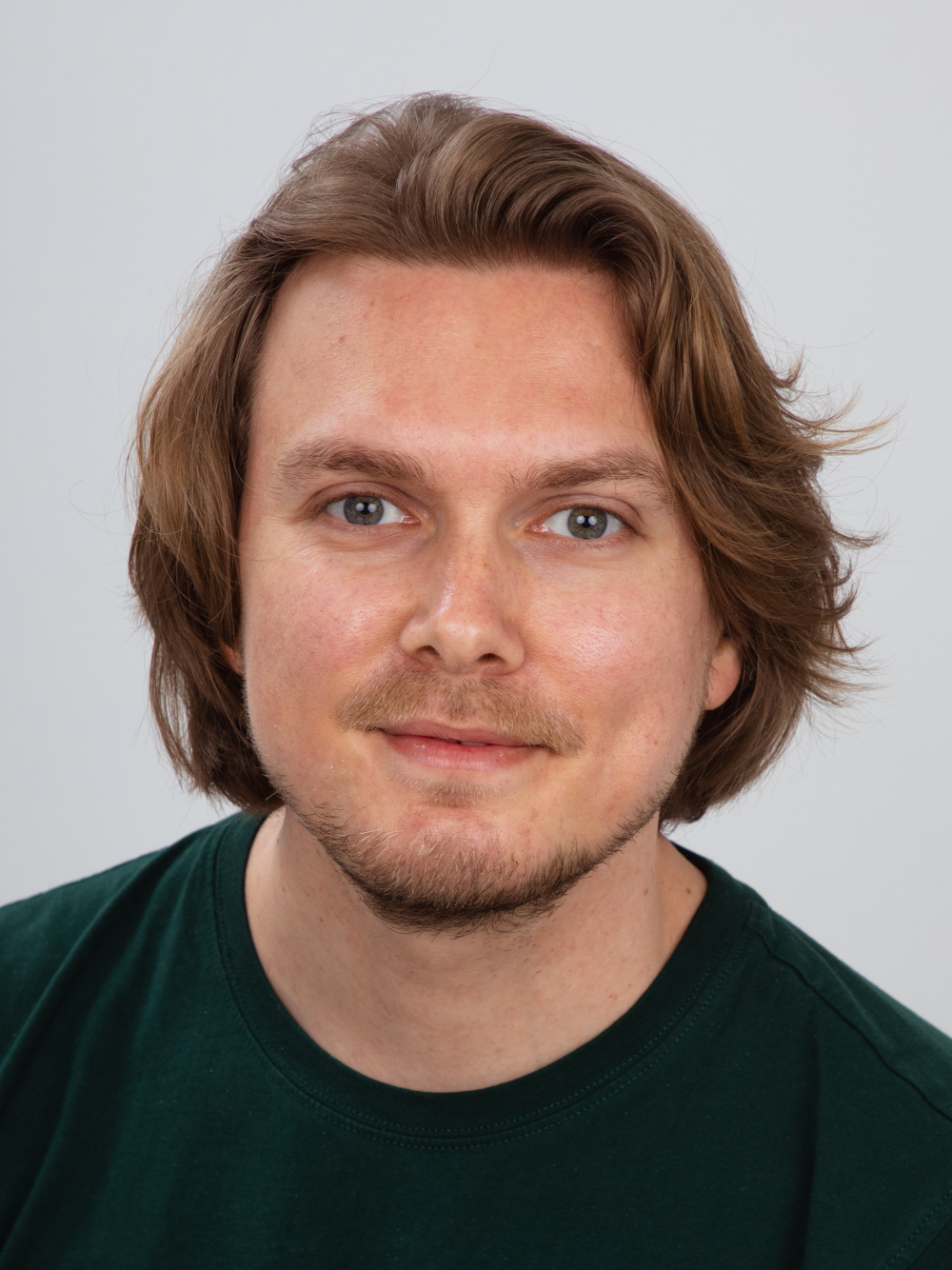
Jonas Fischer is the head of the Explainable Machine Learning group at the Max Planck Institute for Informatics, Department of Computer Vision and Machine Learning. His research focuses on interpreting complex machine learning models, particularly in genomics and healthcare, aiming to enhance robustness and alignment with human decision-making. Prior to his role at MPI, he was a postdoctoral fellow at Harvard University's Department of Biostatistics, where he worked on interpretable models for gene regulatory systems in cancer. Education: PhD in Computer Science from Saarland University (2022), with a thesis titled More than the sum of its parts , exploring the intersection of pattern mining and deep learning. He has contributed to advancing methods in neural network pruning, federated learning, and low-dimensional embeddings (e.g., dtSNE, Mercat). His work bridges computational biology, data mining, and machine learning, with applications in DNA methylation analysis, graph-based differential networks, and biomedical informatics. Key research areas include: (1) Explainable AI and neural network interpretability, (2) Biomedical applications of machine learning (e.g., gene regulatory networks, cancer genomics), (3) Low-dimensional embeddings and visualization techniques, (4) Federated learning for privacy-preserving collaborative models, and (5) Pattern mining for error analysis in NLP and classification tasks. Publications span top venues like NeurIPS, ICLR, Bioinformatics, and Genome Biology. His group develops tools such as BONOBO for omics data integration and node2vec2rank for scalable graph analysis. He actively collaborates with biomedical researchers to address challenges in data-driven healthcare and precision medicine.
Anush Tserunyan is a Professor of Mathematics at McGill University, Canada, and a Visiting Professor at the Unit of Pure and Applied Mathematics (UMPA) at École normale supérieure de Lyon from December 1, 2024, to January 31, 2025. She holds a bachelor's and master's in computer science and applied mathematics from Yerevan State University (2005–2007) and a Ph.D. in Mathematics from UCLA (2013), focusing on finite generators for group actions, equivalence relations, and recursive program complexity. Research Interests: Anush Tserunyan specializes in Ergodic Theory , Combinatorics , and Group Actions , with notable contributions to graph theory, hypergraphs, and Ramsey theory. Her work bridges combinatorial structures with analytic methods, particularly in dynamical systems and descriptive set theory. Collaborations: During her visit to UMPA, she collaborates with teams in Geometry, Groups and Dynamics , and Number Theory , alongside researchers like Benjamin Schraen and Sophie Morel. Her stay includes seminars on GGD, Number Theory, and the 'Actions!' working group. Publications: Her research spans topics like ergodic theorems, disjoint matchings in graphs, and algebraic hypergraphs, reflecting a focus on foundational mathematical structures and their applications.
Jan Dreier is a Research Fellow at the Institute of Logic and Computation at Vienna University of Technology. His research centers on structural graph theory and algorithmic meta-theorems, particularly exploring the boundaries of tractability for model checking problems. Dreier's work bridges theoretical computer science and discrete mathematics, focusing on graph decompositions, parameterized complexity, and logical expressiveness. Key research themes include monadic stability in graph classes, applications of model theory to computer science, and efficient algorithms for logical queries on structured graphs. His publication record shows consistent focus on graph sparsity concepts and algorithmic applications of logic, with recent work expanding into approximation methods for counting queries. Research demonstrates sophisticated applications of combinatorial methods to fundamental problems in computational complexity.
Paul Larson is a Professor of Mathematics at Miami University. His research focuses on set theory, topology, and model theory, with particular expertise in forcing axioms, descriptive set theory, and infinitary logic. He holds a Ph.D. in Mathematics from the University of California, Berkeley. His work bridges foundational mathematical logic with applications in topology and combinatorics. Key contributions include studies on canonical models under fragments of the Axiom of Choice, polar forcings, and cardinal characteristics. Larson has collaborated extensively with leading researchers such as Saharon Shelah and Jindřich Zapletal. His publications span prestigious journals like the Annals of Pure and Applied Logic and Transactions of the American Mathematical Society. Beyond research, he contributes to the academic community through editorial work and expository writings on historical developments in determinacy theory. Education: Ph.D., Mathematics, University of California, Berkeley Research interests emphasize foundational questions in set theory with applications to topology and model theory. His recent work explores advanced forcing techniques, square principles in Pmax extensions, and combinatorial properties of cardinal invariants. Publications reflect interdisciplinary engagement, including crystal structure prediction in high-pressure chemistry and operator theory in functional analysis. Despite an extensive publication record, no specific scientific awards are documented here. His advising and grant activities remain unspecified in the provided texts. Collaborations span international institutions, reflecting his role as a central figure in contemporary set theory research.
Raquel Fernández is Full Professor of Computational Linguistics and Dialogue Systems at the University of Amsterdam, where she leads the Dialogue Modelling Group at the Institute for Logic, Language & Computation (ILLC). As Vice-Director for Research at ILLC and a Fellow of the ELLIS Society, she bridges computational linguistics, cognitive science, and artificial intelligence through her research on language use in multimodal and conversational contexts. PhD in Computational Linguistics from King's College London Prior research positions at University of Potsdam and Stanford University's CSLI Her work explores how cognitive constraints, social interaction, and perception shape language use, with a focus on: Visually-grounded language processing Multimodal dialogue modeling Model uncertainty and calibration Language grounding in multimodal data Language learning and semantic change Dialogue reference resolution Recent publications analyze multimodal reasoning limitations, cross-lingual knowledge consistency, and uncertainty modeling in dialogue systems. She has received multiple accolades including an ERC Consolidator Grant , NWO VENI/VIDI/Aspasia fellowships , and EMNLP/GenBench awards . Outstanding Paper Award (EMNLP 2023) Best Data Award (GenBench Workshop 2023) ELLIS Society Fellow ERC Consolidator Grant #819455 recipient NWO VENI/VIDI/Aspasia awardee As a leader in academic service, she serves on the SIGDAT Executive Committee and chairs multiple conference committees. Her lab develops models for multimodal dialogue, visual storytelling, and grounded language understanding.
Dr. hab. Piotr Łukomski is an Associate Professor at the Department of Political Theory, Institute of Political Science, University of Wrocław. His academic career focuses on the intersection of political theory, philosophy, and cultural analysis, with notable contributions to Hannah Arendt's philosophy, game theory applications in politics, and the role of imagination in political thought. Department: Political Theory Email: piotr.lukomski@uwr.edu.pl ORCID: 0000-0002-5307-616X Research Interests: His work spans conceptual metaphors in political theory, decision-making under hazardous conditions, cultural evolution of tyranny, and the aestheticization of politics. He examines how digital technologies (like VR) reshape political identity and how Arendtian frameworks apply to modern governance. Teaching: Coordinates social consulting labs and teaches decision-making processes in political contexts, with a focus on practical applications in hazardous conditions. Publications: Recent articles analyze VR-era political identity, Hannah Arendt's relevance to modern democracy, and the integration of problem-solving strategies in political thought.
Hannah Hoganson is an NSF Postdoctoral Fellow in the Department of Mathematics at the University of Maryland, mentored by Christian Rosendal after previously holding a Brin Postdoctoral Fellowship under Lei Chen. Her research bridges geometric group theory, low-dimensional topology, and descriptive set theory, with a focus on mapping class groups of infinite-type surfaces and topological groups. Her educational background includes a PhD from the University of Utah (2022) advised by Ken Bromberg, and prior graduate studies at Miami University where she investigated Thompson's groups. She has taught multiple calculus courses at UMD and the University of Utah, receiving exceptional student evaluations for her clarity and supportive teaching style. Hoganson's research explores the coarse geometry of mapping class groups, connections between topological groups and descriptive set theory, and geometric structures on infinite-type surfaces. Her work often combines algebraic, geometric, and topological methods to address fundamental questions about group actions and classification problems in low-dimensional topology. Her recent publications demonstrate a strong trend toward interdisciplinary approaches, integrating geometric group theory with descriptive set theory to analyze infinite-type mapping class groups and Polish groups. Key themes include geometric finiteness, coarse boundedness, and the interplay between algebraic structures and topological dynamics in infinite settings. NSF Postdoctoral Fellowship (DMS-2303365) Brin Postdoctoral Fellowship Hoganson has advised an undergraduate reading course in geometric group theory (Spring 2024) and served as a mentor for REU students at SUMSRI. Her current research is supported by NSF grant DMS-2303365, which funds her postdoctoral work on geometric and topological aspects of infinite-type surfaces and groups. She actively collaborates with researchers including George Domat, Sanghoon Kwak, and Robbie Lyman across multiple projects. She co-organizes the University of Maryland Geometry and Topology Seminar and has co-led specialized workshops including the Big Mapping Class Groups log cabin workshop in Young, AZ (2024) and the AWM special session on Women in Groups, Geometry and Dynamics (2023), fostering collaborative research environments in geometric topology.
Maria Rita Casali is a Full Professor at the Department of Physical, Computer and Mathematical Sciences, University of Modena and Reggio Emilia. Her research focuses on geometry, topology, and mathematical structures, particularly in relation to PL-manifolds and colored tensor models. Teaching: Courses in Geometry, Discrete Mathematics, and Linear Algebra for Engineering and Strategic Sciences degrees. Research: Investigates combinatorial invariants (regular genus, G-degree, gem-complexity) for compact 4-manifolds, linking them to quantum gravity and tensor models. Publications: Recent works include studies on trisections of 4-manifolds, classifications via colored graphs, and combinatorial properties of the G-degree. Her contributions to crystallization theory and PL-manifold representation have advanced the understanding of geometric topology and its applications in theoretical physics.
Alexandra Gade is a University Distinguished Professor at the Department of Physics and Astronomy in the College of Natural Science , Michigan State University (MSU). She serves as the FRIB Scientific Director and has held leadership roles at both the National Superconducting Cyclotron Laboratory (NSCL) and FRIB. Her research focuses on the structure of exotic nuclei using radioactive isotope beams , with expertise in Coulomb excitation and nucleon knockout reactions . Education: Ph.D. in Physics (Dr. rer. nat.), University of Köln (2002) Diploma thesis, University of Köln (1998) Vordiplom, University of Köln (1995) Her nuclear structure research investigates how neutron-proton asymmetry alters nuclear properties like deformation, excitation patterns, and shell closures. She employs advanced experimental techniques at NSCL/FRIB, including the S800 spectrograph and GRETINA/SeGA gamma-ray detectors , to study exotic nuclei across the nuclear chart. Key projects include proton/neutron removal reactions and intermediate-energy Coulomb excitation , providing insights into nuclear deformation , collective modes , and single-particle orbit modifications . Recent scientific contributions focus on high-profile FRIB experiments , triaxial nuclear shapes , and shell evolution near drip lines . Her work bridges experimental observations with nuclear theory , particularly in refining shell model calculations and reaction models for exotic systems. Scientific Awards: 2023-24 Research Leadership Award (MSU) 2020 AAAS Fellow 2018 William J. Beal Outstanding Faculty Award (MSU) 2017 NatSci Outstanding Faculty Award (MSU) 2015 Zdzislaw Szymanski Prize 2014 GENCO Membership Award (GSI) 2013 APS Fellow 2010 Thomas H. Osgood Excellence in Teaching Award (MSU) 2008 Alfred P. Sloan Fellow 2008 DOE Outstanding Junior Investigator Her research group has trained numerous PhD students and postdoctoral researchers , many of whom hold academic or national laboratory positions. Collaborations include nuclear theorists , instrumentation experts , and international facilities like CERN, Argonne, and Lawrence Livermore National Laboratory.
Sanjay Jain is a Provost's Chair Professor in the Department of Computer Science at the School of Computing, National University of Singapore (NUS). His research focuses on theoretical computer science with particular emphasis on inductive inference, recursion theory, complexity theory, and computational learning theory. Education: B.Tech. in Computer Science from Indian Institute of Technology Kharagpur, India (1986) M.S. in Computer Science from University of Rochester, USA (1988) Ph.D. in Computer Science from University of Rochester, USA (1990) Professor Jain's research spans multiple areas of theoretical computer science. His primary contributions are in computational learning theory, where he has made significant advances in understanding the intrinsic complexity of language identification and the limits of inductive inference. His work on recursion theory explores fundamental questions about computability and complexity, while his research in complexity theory addresses structural aspects of computational problems. A notable achievement was his work on "Deciding Parity Games in Quasipolynomial Time," which won the prestigious STOC 2017 best paper award and later the EATCS-IPEC Nerode Prize. Professor Jain's publication record shows a consistent focus on theoretical foundations of computer science, particularly in learning theory and computational complexity. His recent work has expanded into automatic structures, semiautomatic models, and connections between computational learning and algebraic structures. There is a clear progression from foundational work on language identification to more complex models involving automatic functions, transducers, and connections to mathematical logic. Scientific Awards: STOC 2017 Best Paper Award for "Deciding Parity Games in Quasipolynomial Time" EATCS-IPEC Nerode Prize (2021) Professor Jain has served on the editorial board of Information and Computation and has been actively involved in the academic community through program committee memberships for major conferences including COLT, ALT, LATA, TAMC, and PRICAI. He has held leadership roles as program co-chair for ALT 2000 and ALT 2013, and conference chair for ALT 2005. His work has been supported by various research grants, though specific details are not provided in the available materials. Professor Jain leads research in theoretical computer science at NUS, where he has built a strong research group focused on computational learning theory and related areas. His work often involves collaborations with researchers from around the world, particularly with Frank Stephan, with whom he has co-authored numerous papers. His research group has made significant contributions to understanding the fundamental limits and possibilities of computational learning models.
Christian Bargetz is a Professor of Functional Analysis at the University of Innsbruck, Austria, affiliated with the Faculty of Mathematics, Computer Science, and Physics (MIP). His primary research focuses on nonlinear functional analysis, Banach space theory, and distribution theory. He teaches advanced courses such as Optimization, Distribution Theory, and Functional Analysis, demonstrating his expertise in both theoretical and applied aspects of his field. Education: Completed his PhD in 2012 at the University of Innsbruck under the supervision of Norbert Ortner. His diploma thesis (2008) explored differential behaviors with Ulrich Oberst. Bargetz has held continuous academic positions since 2008, including roles as a lecturer and researcher. Research Interests: Specializes in iterative projection methods, generic properties of nonexpansive mappings, Fréchet spaces, and vector-valued distributions. His work bridges functional analysis with geometric measure theory and optimization, with applications in metric geometry and topological tensor products. Publications: Over 30 peer-reviewed articles in prestigious journals such as Canadian Journal of Mathematics , Journal of Mathematical Analysis and Applications , and Proceedings of the American Mathematical Society . Recent work includes studies on extremal nonexpansive mappings and Lipschitz function spaces. Grants & Projects: Principal investigator in FWF-funded projects on nonexpansive mappings and Banach spaces. Collaborates internationally, including with institutions in Israel, Poland, and Serbia. Teaching: Leads advanced courses in functional analysis, optimization, and distribution theory. Supervises bachelor's theses and master's projects on topics like extension operators for Lipschitz functions. Affiliations: Active member of the Functional Analysis working group and regularly participates in international conferences such as the Banach Afternoon, Winter School in Abstract Analysis, and DMV-ÖMG Annual Conferences.
Kord Eickmeyer is a Lecturer at Technische Universität Darmstadt in the Department of Mathematics, specializing in the mathematical logic group. He holds a PhD in mathematics from Humboldt University Berlin and has held postdoctoral positions at TU Darmstadt (2011–2017) and the National Institute of Informatics in Tokyo (2011–2013). His research focuses on finite model theory, graph structure theory, and computational complexity, particularly in descriptive and parameterized complexity, as well as randomization and derandomization techniques. Research interests include exploring the boundaries of computational complexity through logical frameworks, analyzing graph structures for efficient algorithm design, and investigating the role of randomness in computation. His work bridges theoretical computer science and mathematical logic, with applications in algorithm design and formal methods. Publications span topics from model-checking on ordered structures to gap-planar graphs and randomized logics. Collaborations include prominent institutions like the National Institute of Informatics and Humboldt University Berlin. No scientific awards are explicitly listed, but his extensive academic contributions reflect a strong research trajectory. Advising and grants are not detailed in the provided text, though his academic career includes supervision roles during his PhD and postdoctoral phases. His involvement with the mathematical logic group at TU Darmstadt highlights collaborative research efforts in foundational areas of computer science and mathematics.