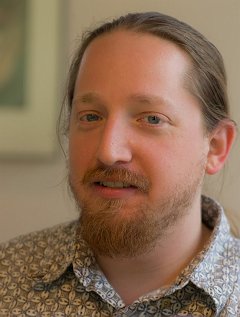
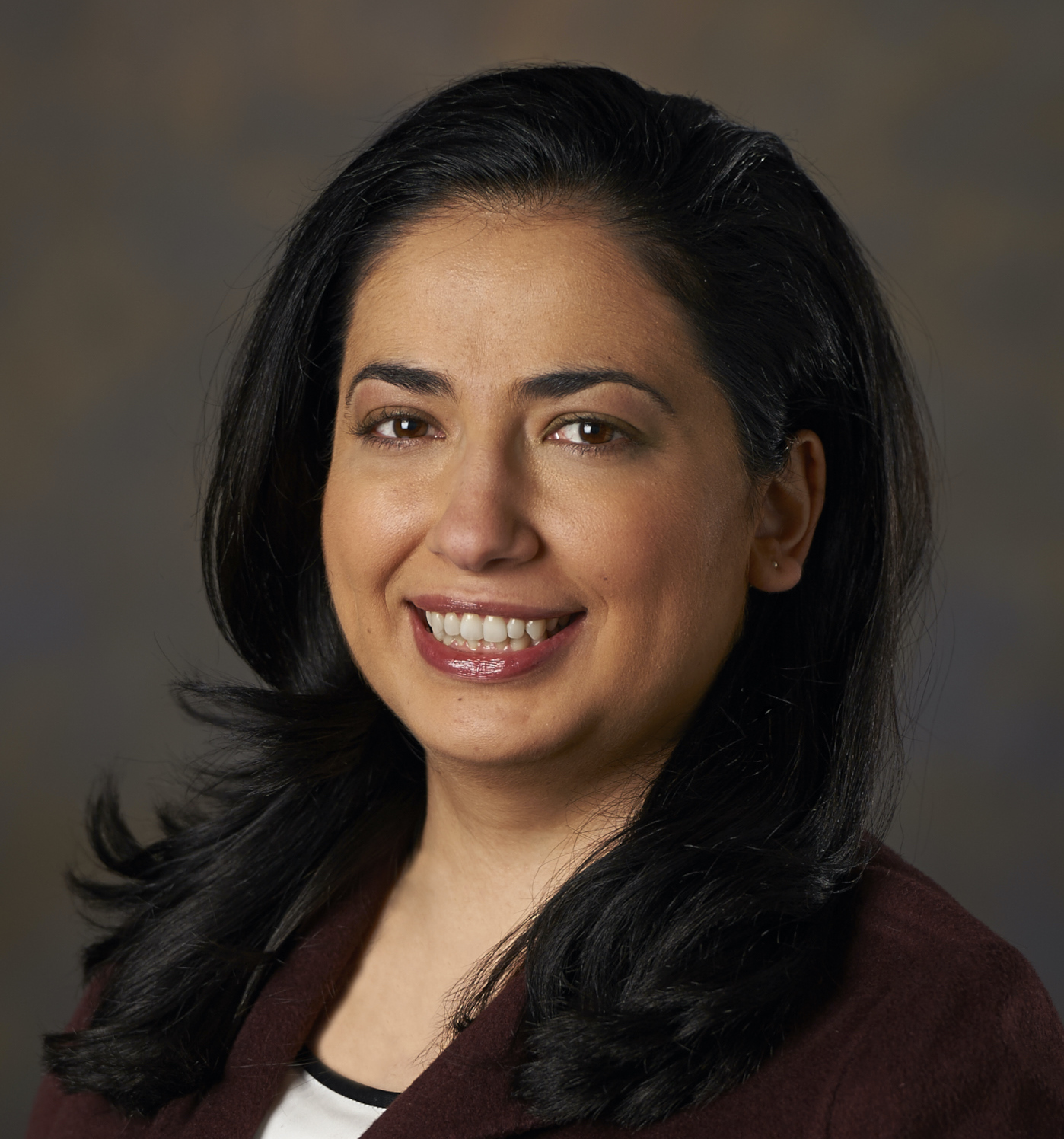
Markus Steinbach is a Professor of German Linguistics at the University of Göttingen, specializing in theoretical and experimental linguistics with a focus on sign languages, spoken language interfaces, and discourse structures. He serves as Spokesperson of the Göttingen Centre 'Text Structures' (2021–present) and has held prestigious fellowships, including a 2017 Distinguished Guest Scientists Fellowship at the Hungarian Academy of Sciences. Core research areas: German grammar, sign languages, syntax-semantics interface, grammaticalization. Active projects: TypMod (CNRS), Parts of Speech and Iconicity in DGS (DFG), IDEALISM (DFG-AHRC), and Sign Hub (Horizon 2020). His recent work explores temporal and causal pragmatics, polar response strategies, and neurophysiological aspects of sign language processing. Awards include a 2017 MTA fellowship, and he contributes to editorial leadership via co-editing Linguistische Berichte (since 2014) and the Sign Languages and Deaf Communities series (since 2012). Collaborations span institutions like the DFG and CNRS.
Cameron Freer is a Research Scientist at the Massachusetts Institute of Technology's Probabilistic Computing Project. His academic career spans multiple institutions including Keio University, Harvard University, and University of Hawaii at Manoa, with roles ranging from Postdoctoral Fellow to Project Associate Professor. Current affiliation: MIT Probabilistic Computing Project Past academic roles: Keio University SFC (2021–2024), MIT Brain and Cognitive Sciences (2013–2015), MIT Mathematics (2008–2010) Research interests focus on probabilistic computing , random structures , and their intersections with logic, mathematics, and artificial intelligence. Key contributions include foundational work on Markov categories , graphons , and feedback computability . Recent publications explore probabilistic programming systems , random graph modeling , and computable aspects of measure theory . Collaborators include prominent researchers from Harvard, Oxford, and MIT. Professional engagements include committee memberships in major conferences like POPL (2024), LAFI (2024–2025), and PLDI (2024). Holds PhD in Mathematics from Harvard University (2008).
Dr. Ra Golan is a faculty member in the Department of Philosophy at the Faculty of Humanities and Social Sciences, Ben-Gurion University. He holds a doctorate in philosophy and conducts research on the foundations of logic, examining the validity of inferences and the relationship between descriptive and normative aspects of logical reasoning. His research focuses on the foundations of logic, specifically investigating when conclusions follow from premises and the significance of this derivation. Dr. Golan employs phenomenological analysis to explore how our perception of phenomena implicitly contains normative expectations that form the basis for logical inferences. His work bridges the gap between descriptive aspects of the world and the normative aspects of justification in logical reasoning. Dr. Golan's insight emphasizes that phenomena appearing obvious on the surface often reveal complex and counterintuitive dimensions when seriously examined. His research contributes to understanding how logical validity relates to both the structure of the world and normative standards of justification.
Fatma Kilinc-Karzan is a Professor of Operations Research at the Tepper School of Business, Carnegie Mellon University, and holds the Frank A. and Helen E. Risch Faculty Development Chair. She is also an Associate Professor of Computer Science (by courtesy) and affiliated with the Algorithms, Combinatorics, and Optimization (ACO) PhD Program. Her career includes visiting roles at institutions like the Simons Institute at UC Berkeley and extensive professional service on editorial boards and conference committees. PhD in Industrial and Systems Engineering (minor in Mathematics) from Georgia Institute of Technology B.S. and M.S. in Industrial Engineering (minor in Information Systems) from Middle East Technical University Research Interests : Her work focuses on convex optimization , structured nonconvex optimization , and their applications in optimization under uncertainty (robust optimization, chance constraints), machine learning (preference learning from limited data), and business analytics . She explores theoretical aspects like semidefinite programming (SDP) relaxations, convex hull characterizations, and algorithmic efficiency for large-scale problems. Article Trends : Her recent publications emphasize semidefinite programs , rank-one function optimization , and chance-constrained programming with applications in portfolio optimization , healthcare , and recommender systems . Key methodologies include perspective reformulation , submodularity , and first-order algorithms . Scientific Awards : 2015 INFORMS Optimization Society Prize for Young Researchers 2014 INFORMS JFIG Best Paper Award Advising and Grants : She has advised over a dozen PhD students, many of whom won awards like the INFORMS Optimization Society Best Student Paper Prize. Her research is supported by grants including an NSF CAREER Award , ONR grant , and AFOSR grant . She collaborates with institutions like IBM and the Simons Institute.
Chad Mundie serves as an Adjunct Professor in the Art Foundation department at Virginia Commonwealth University's School of the Arts. His affiliation is listed under the Art Foundation office. Research interests are inferred from his academic role to include foundational aspects of art education and studio practice. No specific research descriptions or publications are detailed in the provided text. No academic awards, grants, or advising records are explicitly mentioned in the source material.
Dr. Wayne Maddison is a Professor in the Departments of Botany and Zoology at the University of British Columbia, within the Faculty of Science. His research focuses on jumping spider systematics, phylogenetic theory, and computational biology. He is known for contributions to software like Mesquite and MacClade, aiding phylogenetic analysis. His work integrates empirical studies of spider diversity with theoretical advancements in evolutionary inference. Key research areas include evolutionary and ecological theory, systematics, and biodiversity conservation. Maddison has led expeditions to diverse regions like Siberia, Mexico, and Madagascar, discovering new species and documenting spider behavior. His lab emphasizes the intersection of fieldwork, morphology, and molecular data to understand arthropod evolution. Publications span spider phylogeny, taxonomic revisions, and methodological innovations in systematics. Collaborative projects include global phylogenomic studies of jumping spiders and reclassification efforts within the Salticidae family. His work bridges traditional taxonomy with computational tools, advancing both empirical and theoretical aspects of evolutionary biology.
Liliana Dinis is an Assistant Professor (Adjunct) at Católica Lisbon School of Business and Economics, where she conducts research in the fields of Strategy, Organizations, and Entrepreneurship. Her scholarly focus centers on family business dynamics, particularly the long-term influence of founders across generations, emotional aspects of organizational behavior, innovation within family enterprises, and the strategic use of historical narratives in business contexts. Her academic journey includes a PhD in Organizations Studies from Nova School of Business and Economics, awarded with distinction and honour for exceptional work, supervised by Pedro Neves. Prior to that, she completed an M.Sc. in Applied Management at Católica Lisbon School of Business and Economics. Liliana's research has been recognized with three best paper awards at international research conferences, highlighting her contributions to the academic understanding of family firm operations and strategic development. Her work bridges theoretical and practical insights into how family businesses sustain and evolve across generations. She has not published any articles in the provided text, so no trends can be inferred at this time. Best Paper Award (thrice at international research conferences) Liliana Dinis has not advised any named students in the provided material, and no information is available about research grants she may have received. There is no mention of leadership in labs or research teams in the current description. No specific labs, research centers, or collaborative teams are mentioned in the provided text.
József Túri is a faculty member at the Department of Descriptive Geometry, University of Miskolc, where he actively teaches undergraduate engineering courses. His teaching responsibilities include Descriptive Geometry, CAD Fundamentals, Geometric Modeling and Its Applications, and Computer Graphics, indicating strong engagement in technical and visual aspects of engineering education. His research interests, inferred from his teaching portfolio, center around Descriptive Geometry , Geometric Modeling , and Computer Graphics , with applications in engineering design and education. He also contributes to instruction in virtual reality and CAD systems, suggesting a focus on digital tools for spatial reasoning and design. No recent publications or research articles are listed in the available text, so no trends can be inferred from a publication record. No scientific awards or honors are mentioned in the provided information. There is no available information about student advising, research grants, or leadership in funded projects. However, his consistent teaching schedule and inclusion in departmental activities suggest ongoing academic involvement. There is no mention of associated research labs, teams, or collaborative groups in the provided content.
Tim Sheard is a Full Professor in the Computer Science Department at Portland State University, where he has been actively contributing to programming language research and education since at least the early 2000s. He holds a Ph.D. from the University of Massachusetts at Amherst (1985) and maintains an office in FAB 120-04. His educational background includes a Ph.D. from the University of Massachusetts at Amherst in 1985, establishing his foundation in computer science and programming language theory. Professor Sheard's research primarily focuses on dependently typed programming languages , with his Omega language serving as a significant contribution to the field. His work explores how Generalized Algebraic Data Structures can be used to construct, maintain, and propagate semantic properties of programs using the Curry-Howard Isomorphism. He has also made substantial contributions to meta-programming systems , being the creator of MetaML and designer of Template Haskell. His research spans theoretical foundations of programming languages, type systems, staged computation, and practical implementations of advanced language features. An analysis of his recent publications reveals a consistent focus on dependently typed programming, with significant attention to Omega language development and applications. His work bridges theoretical foundations with practical implementations, particularly in the areas of type-level computation, generalized algebraic data types, and staged programming. The trend shows increasing sophistication in handling dependent types while maintaining practical applicability for real-world programming challenges. Professor Sheard has been actively involved in academic service, having served as General Chair of the Generative Programming and Component Engineering Conference (GPCE'04) and organizing the ICFP programming contests in 2002 and 2008. His research has been supported by National Science Foundation grants (Nos. 0910500, CCF-0541447, and 0613969), indicating significant external recognition of his work's importance. He has advised several doctoral students including Chuan-Kai Lin, Nathan Mishra-Linger, Emir Pasalic, and Walid Taha, whose dissertations focused on type systems, meta-programming, and staged computation. His teaching portfolio includes advanced courses in programming languages, functional programming, and mathematical logic, reflecting his deep expertise across theoretical and practical aspects of computer science.
Daphna Heller serves as Associate Professor in the Department of Linguistics at the University of Toronto, located in Sidney Smith Hall, Room 4088. Her academic work bridges theoretical linguistics with experimental methodologies to investigate core aspects of human language processing. Research interests focus on psycholinguistics , experimental semantics/pragmatics , and referential processing . Key specialties include perspective-taking in communication, probabilistic models of reference, language processing in understudied languages (particularly Hebrew and Niuean), and the cognitive mechanisms underlying definite descriptions. Her work integrates theoretical linguistics with experimental paradigms including eye-tracking, corpus analysis, and cross-linguistic comparison. Recent publications reveal strong trends in perspective integration theory and referential choice mechanisms , with increasing focus on mental state attribution in communication. The 2020-2025 publications demonstrate methodological diversity spanning psycholinguistic experimentation, cross-linguistic analysis of Niuean and Hebrew, silent gesture studies, and computational modeling of pragmatic phenomena. 2022 Faculty Research Fellow, Jackman Humanities Institute Heller's research program examines how speakers and listeners manage reference in context, with particular attention to the probabilistic weighing of multiple perspectives. Her work on Hebrew linguistics contributes to understanding Semitic language processing, while Niuean studies provide insights into ergative language comprehension. Current projects appear to extend the Multiple Perspectives Theory to question-answer dynamics and mental state attribution in communication.
Stavros Tombris is a Clinical Assistant Professor at the School of Medicine of European University Cyprus (EUC). His academic affiliation is tied to clinical maxillo-facial surgery. Limited details are provided about his specific roles beyond his title and institutional affiliation. Education and employment history sections are listed but lack detailed content in the provided text. His research interests can be inferred to focus on clinical aspects of maxillo-facial surgery, though explicit descriptions are absent. No publications, awards, or grants are explicitly mentioned in the text. The listed sections (Exhibitions, Research Projects, etc.) appear as headers without substantive entries. No information about academic advising, labs, or teams is available in the provided data.
Maribel Romero is a Professor in the Department of Linguistics at the University of Konstanz since 2007. She holds a Ph.D. from the University of Massachusetts Amherst (1998), with a dissertation on focus and reconstruction effects in wh-phrases. Previously, she taught at the University of Pennsylvania (1998–2007), progressing from Assistant to Associate Professor. Her research focuses on formal semantics, syntax-semantics interfaces, and semantics-pragmatics interactions. Key areas include negation, questions, epistemic bias, copular sentences, and superlatives. She has pioneered work on counterfactual conditionals, polar question bias, and clausal embedding restrictions across languages. Romero has led major projects funded by DFG, ERC, and the Nuance Foundation. Notable initiatives include the Questions at the Interfaces research unit and the Meaning-Driven Combinatorial Restrictions AHRC-DFG project. She has also held editorial roles for Journal of Semantics and Language and Linguistics Compass , and serves on advisory boards for the DFG and Leibniz-ZAS. Teaching responsibilities span introductory linguistics to specialized courses in semantics/pragmatics (e.g., Intensional Semantics , Computational Semantics ). She has also contributed to summer schools at Stanford and Humboldt University Berlin.
Dr. Anna Socka is an Assistant Professor at the Institute of German Philology within the Faculty of Languages at the University of Gdańsk, a position she has held since December 2003. Her academic work focuses on theoretical and contrastive linguistics with special emphasis on modality, evidentiality, and Polish-German language comparison. Education: PhD in German Linguistics from University of Cologne (1995-2003), nostrified by University of Gdańsk MA in German Philology from Catholic University of Lublin (1988-1994) Dr. Socka's research centers on the intricate relationships between modality and evidentiality, particularly reportative expressions, and their connections to aspectuality. Her work extensively explores pragmatic dimensions including conversational implicatures, contrastive Polish-German linguistics, and specialized areas like Mennonite cemetery epigraphy. She employs both theoretical frameworks and corpus-based methodologies to analyze how modal and evidential markers function across discourse contexts and grammatical structures. Her publication record demonstrates consistent scholarly output with significant contributions to understanding reportative constructions, hearsay particles, and the syntax-semantics interface in German and Polish. Recent work (2020-2025) shows increasing focus on corpus-based analysis of modal-aspectual interactions and evidential marking systems. Scientific Recognition: Individual Rector's Award of the third degree for doctoral dissertation Dr. Socka maintains active scholarly engagement through numerous international conference presentations (over 25 between 2004-2025), particularly at events organized by the Societas Linguistica Europaea and German linguistics associations. She has served on research teams with notable linguists like Prof. Björn Wiemer and participates in multiple scholarly organizations including the Mitteleuropäischer Germanistenverein and Societas Linguistica Europaea. Her methodological approach combines rigorous theoretical analysis with empirical corpus studies, contributing significantly to the understanding of modal and evidential phenomena in Germanic and Slavic languages.