معرفی
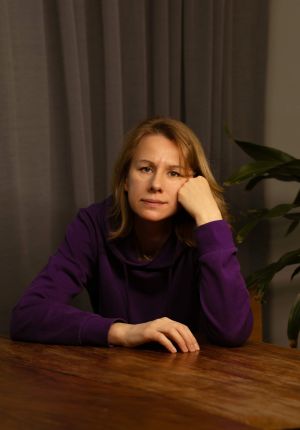
Dr. Anna Socka is an Assistant Professor at the Institute of German Philology within the Faculty of Languages at the University of Gdańsk, a position she has held since December 2003. Her academic work focuses on theoretical and contrastive linguistics with special emphasis on modality, evidentiality, and Polish-German language comparison.
Education:
- PhD in German Linguistics from University of Cologne (1995-2003), nostrified by University of Gdańsk
- MA in German Philology from Catholic University of Lublin (1988-1994)
Dr. Socka's research centers on the intricate relationships between modality and evidentiality, particularly reportative expressions, and their connections to aspectuality. Her work extensively explores pragmatic dimensions including conversational implicatures, contrastive Polish-German linguistics, and specialized areas like Mennonite cemetery epigraphy. She employs both theoretical frameworks and corpus-based methodologies to analyze how modal and evidential markers function across discourse contexts and grammatical structures.
Her publication record demonstrates consistent scholarly output with significant contributions to understanding reportative constructions, hearsay particles, and the syntax-semantics interface in German and Polish. Recent work (2020-2025) shows increasing focus on corpus-based analysis of modal-aspectual interactions and evidential marking systems.
Scientific Recognition:
- Individual Rector's Award of the third degree for doctoral dissertation
Dr. Socka maintains active scholarly engagement through numerous international conference presentations (over 25 between 2004-2025), particularly at events organized by the Societas Linguistica Europaea and German linguistics associations. She has served on research teams with notable linguists like Prof. Björn Wiemer and participates in multiple scholarly organizations including the Mitteleuropäischer Germanistenverein and Societas Linguistica Europaea. Her methodological approach combines rigorous theoretical analysis with empirical corpus studies, contributing significantly to the understanding of modal and evidential phenomena in Germanic and Slavic languages.