Bülent Güloğlu is a Professor at the Department of Economics, Istanbul Technical University, specializing in econometric modeling, financial markets, and energy economics. His research spans nonlinear tail dependencies, structural change analysis, and sustainable development. Research interests include: Quantile regression applications in banking risk analysis Nonlinear dynamics in energy-agricultural commodity markets ESG metrics and corporate risk dependency Energy productivity in Türkiye's economic transformation Financial contagion and market interconnectivity Recent publications focus on sustainable photovoltaic policies, tail dependence analysis, and AI-enhanced decision models. His work has received Scopus citations and a Best Paper award in 2017. Scientific awards: Best Paper Prize, Istanbul Technical University (2017) Current projects include ESG risk analysis, energy efficiency impacts on carbon emissions, and nonlinear energy market modeling.
Bikramjit Das is an Associate Professor and Associate Head of Pillar (Graduate Programme) at Singapore University of Technology and Design (SUTD). He holds a PhD in Operations Research from Cornell University and prior to SUTD, was a postdoctoral researcher at ETH Zurich’s RiskLab. His research focuses on extreme events analysis using applied probability, optimization, and statistical learning, with applications in finance, telecommunications, federated learning, and climate modeling. He teaches courses in Probability, Stochastic Modeling, and Analytics, and directs the Master of Science in Technology and Design (Data Science) program. Education: PhD in Operations Research (Cornell University), B.Stat & M.Stat (Indian Statistical Institute). Research emphasizes heavy-tailed distributions, risk contagion, and network modeling. Key areas include risk analysis in financial networks, robust optimization under uncertainty, and extreme value theory. His work bridges theoretical probability and real-world applications in data science and public policy. Notable contributions include studies on asymptotic independence in high dimensions, robust newsvendor models, and inference techniques for heavy-tailed data. His articles explore topics ranging from federated learning under noise to climate modeling and congestion phenomena in sparse networks. Collaborations include visiting positions at MIT and the Karlsruhe Institute of Technology. Active in academic leadership, he has contributed to technical reports on healthcare provider choice analysis and probabilistic flood risk assessments for nuclear power plants.
Yongmiao Hong serves as the Ernest S. Liu Professor of Economics and International Studies in the Department of Economics at Cornell University. He holds dual appointments as Professor of Statistics and field member in both the Department of Statistical Sciences and Center for Applied Mathematics. Professor Hong's research spans model specification testing, nonlinear time series analysis, financial econometrics, and empirical studies of Chinese economic systems. His methodological innovations include generalized spectral analysis for capturing nonlinear dependencies, semiparametric specification tests using orthogonal series/kernel methods, and autoregressive conditional interval (ACI) models for interval-valued time series data. His work demonstrates how interval data (e.g., daily stock price ranges) provides superior econometric estimation compared to point-valued observations. His publication record reveals consistent contributions to top-tier journals including Econometrica , Annals of Statistics , and Review of Financial Studies . Key trends show evolutionary progression from foundational specification testing (1990s) to sophisticated nonlinear time series tools (2000s), with recent focus on interval-valued modeling and multivariate conditional distribution validation. His research consistently bridges theoretical econometrics with financial market applications. Professor Hong advises doctoral students in economics and statistics, though specific advisee names aren't publicly listed. His research has been supported by grants enabling extensive empirical work on Chinese financial markets and continuous-time model validation. He previously served as President of the Chinese Economists Society in North America (2009-2010). His laboratory work centers on time series methodology development, particularly spectral analysis extensions and interval data modeling. Current projects involve refining ACI models for crude oil price forecasting and developing wavelet-based covariance matrix estimators robust to heteroskedasticity.
Barry Goodwin is a William Neal Reynolds Distinguished Professor and Graduate Alumni Distinguished Professor in the Departments of Agricultural and Resource Economics and Economics at North Carolina State University. He has held faculty positions at Kansas State University and Ohio State University. His research focuses on applied economics, policy analysis, trade, and econometrics, with a strong emphasis on agricultural markets, crop insurance, and policy evaluation. Education: Ph.D. in Economics from NC State University (1988). Areas of expertise include Agricultural Marketing, Prices, Markets and Policy, Applied Econometrics, and International Trade. He is also a 2018 Holladay Medal recipient, recognizing his contributions to the field. Research interests span spatial price analysis, crop insurance impacts, agricultural policy, and international trade dynamics. His work frequently addresses issues like market integration, policy reforms, and risk management in agriculture. Recent publications explore topics such as US farm support programs, nonlinear market integration, and the role of technology in agricultural productivity. Barry’s academic contributions include over 150 peer-reviewed articles, with a focus on empirical analysis of agricultural markets and policy implications. His awards and recognitions highlight his influence in advancing applied economic methodologies and their application to real-world challenges in agriculture and resource management.
Aurelio F. Bariviera is an Associate Professor of Economics and Financial Mathematics at Universitat Rovira i Virgili, Spain, and a Visiting Professor at Universidad Nacional de La Plata, Argentina. He holds a PhD from Universitat Rovira i Virgili, following postgraduate studies at Università degli Studi di Padova and an undergraduate degree from Universidad Nacional de La Plata. His research focuses on quantitative finance, information theory, econophysics, and financial econometrics. Notably, two of his papers (2017) in Economics Letters and Physica A were recognized as Highly Cited Papers in Web of Science. Education: Bachelor’s Degree: Universidad Nacional de La Plata (Argentina) Postgraduate Diploma: Università degli Studi di Padova (Italy) PhD: Universitat Rovira i Virgili (Spain) Research Interests: Quantitative Finance Information Theory and Entropy Applications Econophysics and Financial Networks Cryptocurrency Market Dynamics Machine Learning in Finance Policy Uncertainty Analysis Recent Article Trends: Focus on cryptocurrency interconnections, market shocks, and regulatory frameworks Analysis of commodity and policy uncertainty impacts using wavelet and copula techniques Applications of clustering and machine learning in financial forecasting Awards: Highly Cited Paper in Web of Science (2017): Economics Letters Highly Cited Paper in Web of Science (2017): Physica A Advising & Grants: Consortium on Cloud Computing, Big Data & Emerging Topics Research projects on cryptocurrency regulation, trajectory clustering, and renewable energy forecasting Labs/Teams: Active in interdisciplinary teams applying data science to finance, transportation systems, and astronomy digitization.
Claus Haslauer is a Research Professor and Scientific Director at vegasIWS, leading the Stochastic Hydrogeology Group in the Department of Hydrogeology at the University of Tübingen. His DFG-funded research focuses on spatial dependence structures in hydrogeology, notably developing copula-based geostatistical models adopted by Baden-Württemberg's environmental agency (LUBW) for groundwater assessment. He collaborates with the Kansas Geological Survey and is affiliated with the International Research Training Group 'Integrated Hydrosystem Modelling'. His expertise spans: Multivariate copula models for aquifer parameter analysis Spatial interpolation techniques using secondary data (e.g., land cover) Impact assessment of spatial heterogeneity on solute transport Integration of categorical and uncertain measurements in environmental models He actively contributes to conferences like AGU Fall Meetings and GeoEnv, emphasizing data-model fusion in hydrogeology. As a doctoral advisor, he recruits researchers for projects on spatial dependence structures. His group develops computational tools including geostatistical code for operational use and Python-based scientific workflows.
Yunran Wei is a Tenure-track Assistant Professor at the School of Mathematics and Statistics, Carleton University. His research focuses on Quantitative Risk Management, Actuarial Science, Mathematical Finance, and FinTech/InsurTech. He holds a Ph.D. in Actuarial Science from the University of Waterloo, with supervisors Ruodu Wang and Gord Willmot, and has earned credentials including the Associate of the Society of Actuaries (ASA). Education: Ph.D. in Actuarial Science, University of Waterloo (Supervisors: Ruodu Wang, Gord Willmot) MMath in Statistics, University of Waterloo (Supervisor: Carole Bernard) BMath, Double Major in Pure Mathematics and Mathematical Finance, University of Waterloo Research Interests: Dr. Wei’s work bridges theoretical advancements in risk management and practical applications in financial markets. His research explores Cryptocurrency Market Risk , Risk Sharing Mechanisms , and Statistical Methods for Actuarial Applications . Recent projects analyze vulnerability in financial systems using conditional risk measures and investigate optimal allocations under heterogeneous beliefs. Awards & Funding: NSERC Discovery Grant (2023–2028) James C. Hickman Scholar Fellowship (2018–2019) Grants & Advising: As sole PI of NSERC grants totaling $39,500 CAD annually, Dr. Wei leads research teams focusing on risk analytics. His advising includes collaborations on cryptocurrency risk modeling and parametric risk measures. Professional Activities: Active contributor to journals like Mathematical Finance and Insurance: Mathematics and Economics , with a focus on advancing quantitative methods in finance and insurance.
Antai Wang is an Associate Professor in the Department of Mathematical Sciences at New Jersey Institute of Technology (NJIT), specializing in biostatistics and survival analysis. His research focuses on developing statistical methodologies for dependent data structures, particularly using Archimedean copula models and frailty models. He has secured funding from the National Science Foundation for projects like 'Analysis of Survival Data Using Copula Models' (2011-2015), which advanced methodologies for analyzing dependent competing risks and semi-competing risks data. Key research areas include survival analysis, copula models, and their applications in medical studies. Wang has contributed to studies on opioid prescribing patterns in trauma patients, breast cancer biomarkers, and post-traumatic seizure prophylaxis. His work bridges statistical theory with clinical applications, addressing real-world health challenges through rigorous quantitative methods. Notable collaborations include studies on tumor proliferation genes in ethnic patient groups and evaluating green tea extract effects on breast cancer biomarkers. Wang’s methodologies have been applied to improve understanding of disease progression and treatment efficacy, with publications in journals like Statistica Sinica and American Surgeon . His grants and projects reflect a commitment to advancing statistical tools for complex survival data, emphasizing identifiability of models and handling dependent censoring. While no formal awards are listed, his extensive publication record and federal funding underscore his impactful contributions to the field.
Shawkat Hammoudeh is a Professor in the Department of Economics at the LeBow College of Business, Drexel University . A Palestinian American economist with a PhD from the University of Kansas and post-doctoral training at Drexel, he has been a long-standing faculty member since the early 1990s, promoted to full Professor in 2004. His educational background includes a PhD in Economics from the University of Kansas (USA) and post-doctoral studies in Finance at Drexel University (1989–1990). Prior to joining Drexel, he held research and consulting positions at the Kuwait Institute for Scientific Research, OAPEC, and the World Bank. Hammoudeh's research is centered on energy economics, commodity markets, financial risk management, Islamic finance, and applied econometrics . He has published over 230 articles in top journals such as Journal of Banking & Finance , Energy Economics , and Journal of International Money & Finance . His recent work explores oil price volatility, green bonds, BRICS market linkages, and the impact of geopolitical risks on financial markets, using advanced econometric techniques like quantile regression, copulas, and regime-switching models. His recent publications (2023–2024) show a strong focus on energy-finance linkages, sustainable investing, systemic risk in oil-dependent economies, and the role of uncertainty in financial markets . He frequently investigates asymmetric and nonlinear relationships, often using high-frequency and cross-country data to inform portfolio risk management and policy. Hammoudeh is actively involved in academic leadership, serving as Subject Editor for Emerging Markets Review and Journal of International Financial Markets, Institutions & Money , and as associate editor for several other journals. He collaborates widely with researchers across Turkey, Egypt, India, Saudi Arabia, and the U.S. He has advised students and co-authored with junior researchers, though specific names are not listed. He has received no explicitly mentioned scientific awards in the text, but his research impact is evident through his high RG score (>41.4) and consistent ranking among the top 10% of economics researchers by SSRN. He regularly presents at international conferences such as WEAI and MEEA. Hammoudeh is also active in policy discussions, frequently interviewed by media on oil and commodity markets. He has contributed to projects with the Arab Unity Studies Center and the Euro-Arab Dialogue Project, and continues to explore financial and energy policy implications for developing and oil-exporting nations.
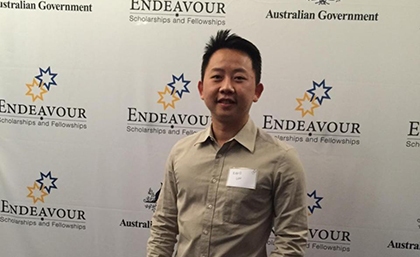
Dr Rand Low is an Associate Professor of Quantitative Finance at Bond Business School , with an Honorary Associate Professor role at the University of Queensland. He works at the Centre for Data Analytics and holds a Chartered Professional Engineer designation from Engineers Australia. PhD in Finance, University of Queensland (2009-2013) Bachelor's degrees in Engineering and Computer Science, University of Melbourne (2001-2005) Graduate Diploma in Project Management, University of New England His research focuses on portfolio optimization , risk management , and machine learning applications in finance, particularly for corporate bonds , digital assets , and commodities . He has published in top journals including Journal of Banking & Finance and Energy Economics . Dr Low's work has been recognized through awards like the Australia Awards - Endeavour fellowship and Dean's Award for Research Higher Degree Excellence . He actively supervises HDR students and serves on editorial boards for journals with Q1 rankings. Industry experience includes leadership roles at Bank of America Merrill Lynch and BlackRock in New York, where he developed quantitative models for market risk , structured products , and model governance . He currently works on the RBA's CBDC Pilot for blockchain-based corporate bond settlement.
Paolo MAZZA is a Full Professor of Finance at IÉSEG School of Management in France, specializing in Management Sciences and Finance. He holds a HDR (Habilitation à Diriger des Recherches) from the University of Paris Dauphine and a Ph.D. in Finance from the Louvain School of Management. His research focuses on econometrics, quantitative methods, market liquidity, and corporate finance. He has advised on finance and audit-related matters and is a member of the LEM research group. His work spans topics such as insider trading performance, carbon market integration, cryptocurrency dynamics, and technical analysis strategies. Education: 2017: HDR in Management Sciences (Finance), University of Paris Dauphine 2013: Ph.D. in Finance, Louvain School of Management 2008: Master's in Management Sciences (Finance), UCLouvain Research Interests: Prof. Mazza’s research emphasizes quantitative finance, market microstructure, and regulatory frameworks. He explores how technical analysis impacts market quality, evaluates the performance of insider trading in emerging markets, and investigates carbon market dependencies. His work often combines econometric models with real-world market data to address practical financial questions. Key Contributions: His recent studies include analyzing corporate legal insider trading performance in Vietnam, Korea, and China, and assessing the integration of global carbon markets using GARCH-copula models. He has also contributed to understanding cryptocurrency volatility during market stress periods and refining fund rating methodologies using nonparametric frontier models. Awards: Best Dissertation Award (2008), Facultés Universitaires Catholiques de Mons Teaching & Professional Experience: Prof. Mazza teaches technical analysis, financial markets, and quantitative methods at the undergraduate and graduate levels. Prior to academia, he worked as a Performance Analyst at Dexia Asset Management and as a researcher at the Louvain School of Management.
Kevin-Martin Aigner serves as an Academic Councillor (Akad. Rat) at the Department of Data Science within the Faculty of Science at Friedrich-Alexander University Erlangen-Nuremberg (FAU). He is affiliated with the Professorship of Optimization under Uncertainty & Data Analysis led by Prof. Dr. Liers, focusing on mathematical optimization methods for energy systems and power networks. His work bridges theoretical optimization with practical energy transition challenges. His research centers on optimization under uncertainty, with key interests in distributionally robust optimization, data-driven methods, and sector-coupled energy system modeling. He develops novel approaches for handling renewable energy uncertainties in power grids, solar feed-in variability, and multi-sector energy integration. His methodologies emphasize explainability in optimization processes and robust decision-making under complex uncertainty structures. Recent publications reveal consistent focus on power network optimization (2021-2025), with increasing emphasis on distributionally robust frameworks, explainable AI integration, and regional multi-sector energy modeling. His work demonstrates strong interdisciplinary connections between operations research, machine learning, and sustainable energy systems engineering. Scientific recognition includes: GOR Dissertation Award for "Data-driven Optimization under Uncertainty for Power Networks" Dr. Aigner actively contributes to major research initiatives including: CRC TRR 154: Mathematical Modeling, Simulation and Optimization using Gas Networks (2022-2026, DFG-funded) ESM-Regio: Multi-sector Coupled Energy System Modeling on Regional Level (2021-2024, BMWE-funded) Optimal Control of Electrical Distribution Networks with Uncertain Solar Feed-in (2018-2021) He participates in the Optimization under Uncertainty & Data Analysis (OUDA) research group and has organized academic events including the TRR 154 Summer School on Optimization, Uncertainty and AI (2024) and Women in Optimization 2024. His teaching includes Discrete Optimization I and specialized seminars on Mixed-Integer Nonlinear Optimization.
Paula Brito is an Associate Professor at the School of Economics of the University of Porto, where she teaches Statistics and Multivariate Data Analysis at undergraduate and post-graduate levels. She is a member of the Artificial Intelligence and Decision Support Lab (LIAAD) at INESC-TEC. She holds a PhD in Applied Mathematics from the University of Paris Dauphine (1991). Her research focuses on symbolic data analysis, including methodologies for multidimensional complex data (e.g., distributional data), clustering, and statistical modeling. She has contributed to applications in environmental monitoring, social networks, labor markets, and anomaly detection. Key projects include developing parametric models for distributional data, symbolic principal component analysis for air quality studies, and community detection in interval-weighted networks. Her work on Luxembourg’s labor market highlights immigrant group dynamics using symbolic data techniques. She has supervised multiple theses on topics such as anomaly detection in financial markets, symbolic pattern mining in networks, and multiclass classification of distributional data. Paula is affiliated with LIAAD, fostering interdisciplinary research in artificial intelligence and decision support systems.
Nina Deliu is a Tenure-track Assistant Professor in Statistics at Sapienza University of Rome's MEMOTEF Department, with joint appointments as a Visiting Faculty Researcher at Google and Visiting Researcher at the MRC-Biostatistics Unit, University of Cambridge. She holds editorial roles at Trials journal and YoungStatS, and maintains active collaborations with institutions including the University of Toronto, National University of Singapore, ISTAT, NADO Italia, and FAO. Education: PhD in Methodological Statistics, Sapienza University of Rome (2021) MSc in Statistics and Decisions, Sapienza University of Rome (2017) MSc in Mathématiques, Informatique, Décision et Organisation, Université Paris Dauphine (2016) Research spans Bayesian inference, reinforcement learning, multi-armed bandits, adaptive experimental design, copula models, and uncertainty quantification, with applications in healthcare, education, and public health. Her work bridges theoretical statistics with real-world challenges in biostatistics, mobile health interventions, and digital education platforms. Publications focus on adaptive experimentation frameworks, response-adaptive clinical trials, reinforcement learning in healthcare, and copula-based statistical methods. Recent work emphasizes finite-sample error control, zero-inflated count data modeling, and multivariate dependency analysis. Awards: XPRIZE $1M Digital Learning Challenge (2023) for the Adaptive Experimentation Accelerator project Research Projects: The role of self-reported health outcomes in cancer risk prediction using UK Biobank data Contextual Multi-armed Bandits for Developing Personalized Mobile Health Interventions Leads collaborations through the IAI Lab (University of Toronto) and coordinates interdisciplinary teams for projects in statistical methodology, health interventions, and official statistics innovation.
Enis Kayış is an Associate Professor in the Industrial Engineering Department at Ozyegin University , Turkey. His academic journey began with dual B.Sc. degrees in Industrial Engineering and Mathematics from Bogazici University (2002), followed by an M.Sc. in Statistics (2007) and a Ph.D. in Management Science and Engineering (2009) from Stanford University. Research Interests focus on data-driven decision making and business analytics , applied to outsourcing , supply chain contracting , and healthcare operations . His work bridges theoretical models with practical solutions, particularly in stochastic optimization and operational efficiency. Selected Research Trends include: predicting surgery durations using operational/temporal factors, inventory pooling under dependent demand, and supply chain contract design under information asymmetry. These align with broader applications in healthcare analytics and revenue management . Scientific Awards : 2012 INFORMS Revenue Management and Pricing Section Practice Award Advising & Grants : He has advised MS students like Ertugrul Ayyildiz and Tagi Hanalioglu. His TUBITAK CAREER grant project on Daily Operating Room Planning (2015-2018) involved collaboration with Turkish hospitals, while industry projects included Product Pricing Optimization (Gtech, 2015-2016) and Healthcare Operations Analytics (HP Labs, 2012-2013). Labs & Collaborations : His research group engages in EU-wide trainings and partnerships with hospitals to enhance operating room scheduling efficiency.