معرفی
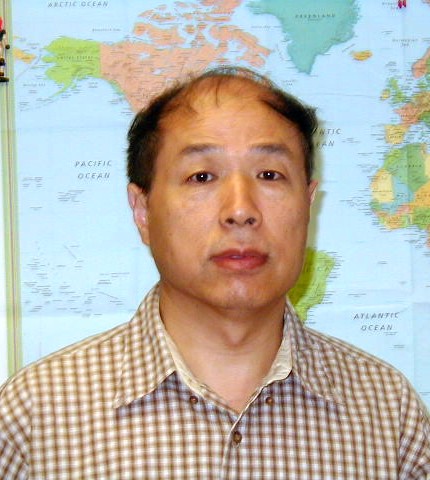
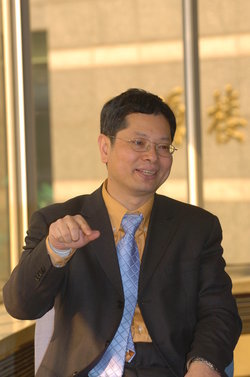
Yongmiao Hong serves as the Ernest S. Liu Professor of Economics and International Studies in the Department of Economics at Cornell University. He holds dual appointments as Professor of Statistics and field member in both the Department of Statistical Sciences and Center for Applied Mathematics.
Professor Hong's research spans model specification testing, nonlinear time series analysis, financial econometrics, and empirical studies of Chinese economic systems. His methodological innovations include generalized spectral analysis for capturing nonlinear dependencies, semiparametric specification tests using orthogonal series/kernel methods, and autoregressive conditional interval (ACI) models for interval-valued time series data. His work demonstrates how interval data (e.g., daily stock price ranges) provides superior econometric estimation compared to point-valued observations.
His publication record reveals consistent contributions to top-tier journals including Econometrica, Annals of Statistics, and Review of Financial Studies. Key trends show evolutionary progression from foundational specification testing (1990s) to sophisticated nonlinear time series tools (2000s), with recent focus on interval-valued modeling and multivariate conditional distribution validation. His research consistently bridges theoretical econometrics with financial market applications.
Professor Hong advises doctoral students in economics and statistics, though specific advisee names aren't publicly listed. His research has been supported by grants enabling extensive empirical work on Chinese financial markets and continuous-time model validation. He previously served as President of the Chinese Economists Society in North America (2009-2010).
His laboratory work centers on time series methodology development, particularly spectral analysis extensions and interval data modeling. Current projects involve refining ACI models for crude oil price forecasting and developing wavelet-based covariance matrix estimators robust to heteroskedasticity.