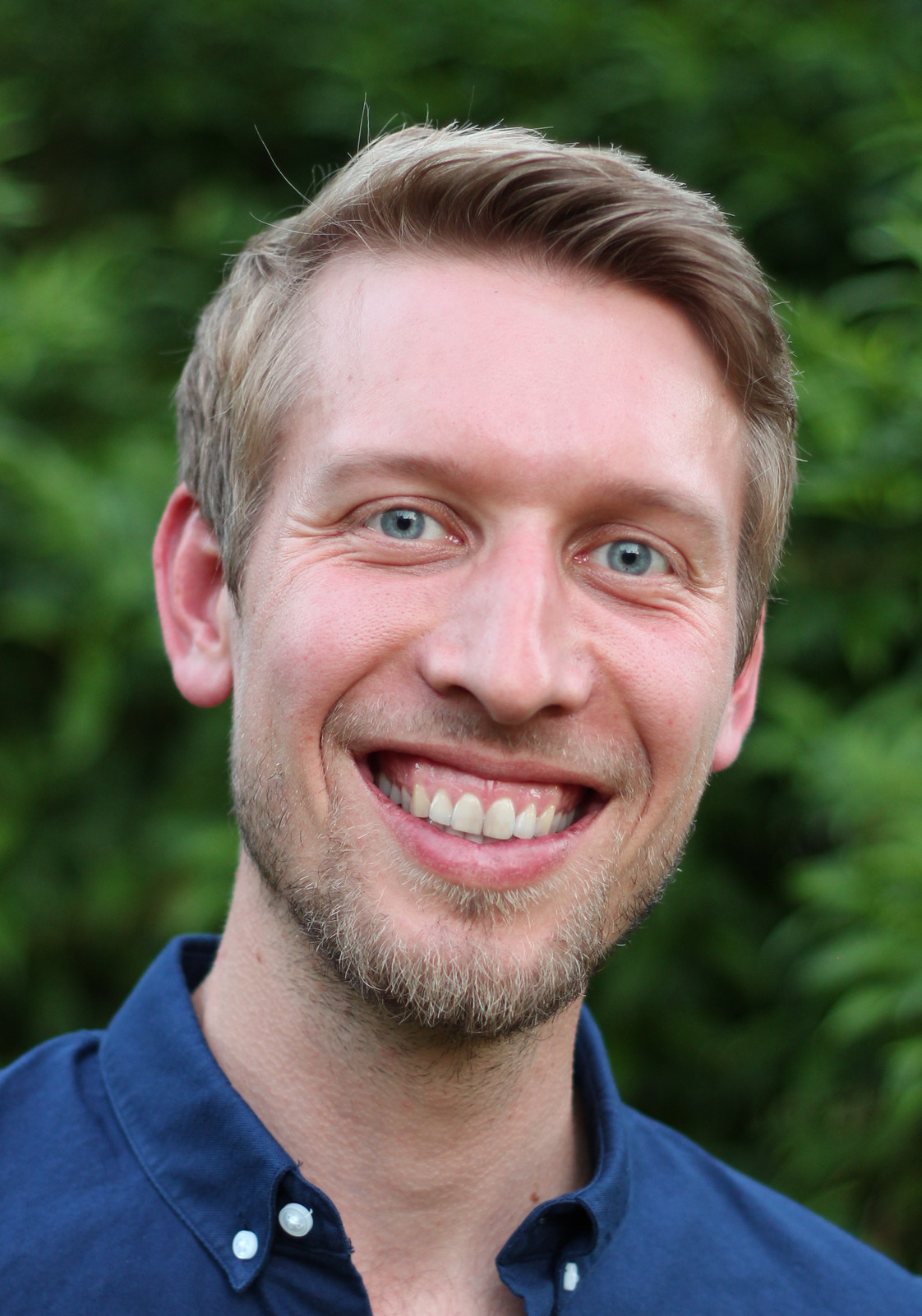
Jiacheng Ma is a Doctoral Assistant at the Dependable Systems Laboratory (DSLAB) at École Polytechnique Fédérale de Lausanne (EPFL), within the School of Computer and Communication Sciences (IC) and the Department of Computer Science. He is concurrently a PhD student in the Doctoral Program in Computer and Communication Sciences (EDIC). His research focuses on dependable systems , encompassing areas such as distributed systems, fault tolerance, system reliability, and cybersecurity. His work contributes to building robust and secure computing infrastructures. No scientific awards or publications are listed in the current profile. He advises no students at this time and has no listed grants. He is affiliated with the Dependable Systems Laboratory (DSLAB) , a research group focused on system security and dependability.
Dr. Saverio Bolognani is a Lecturer at the Department of Information Technology and Electrical Engineering at ETH Zürich. His research focuses on feedback optimization, control systems, and game theory, with applications to power grids and multi-agent systems. He is affiliated with the Institut für Automatik and teaches courses like 'Game Theory and Control' in the Autumn Semester 2025. His work integrates optimization, stochastic processes, and distributed algorithms to address challenges in energy systems and resource allocation. Recent contributions include PRIME (a feedback optimization framework) and karma-based economies for dynamic resource management. His experimental studies validate real-time control strategies for distribution grids and compressor stations. Research interests span control theory, power systems, game theory, and distributed optimization. He emphasizes practical implementations, such as online feedback optimization for grid flexibility and voltage regulation. His work often bridges theoretical foundations (e.g., Wasserstein space optimization) with real-world applications in smart grids and multi-modal mobility systems. No scientific awards are explicitly listed. His advising and grants involve experimental validation of control systems and participation in collaborative projects. He is involved in labs/teams focused on power distribution networks, reactive power control, and urban motion planning games.
Rodolphe Schlaepfer is an Honorary Professor at the École Polytechnique Fédérale de Lausanne (EPFL), affiliated with the School of Architecture, Civil and Environmental Engineering (ENAC). He holds the academic rank of Professor and has been associated with EPFL since 1997 as a Professor and Director of Ecosystem Management. His career includes leadership roles at the Swiss Federal Institute for Forest, Snow and Landscape Research (WSL) and the Swiss Federal Institute of Technology Zurich (ETHZ). Joined EPFL in 1997 as Professor and Director of Ecosystem Management Previously held roles as Director of WSL (1987-1996) and Professor of Forest Science at ETHZ (1982-1987) Formerly a Research Scientist at the Swiss Federal Institute for Forest Research (1967-1976) Professional Highlights : President of the Swiss Biometrical Society Board member of IUFRO (International Union of Forest Research Organizations) Editor for Europe of the Journal Urban and Landscape Planning President of the Lemanic Forest Forum Research Interests : Focus on sustainable forestry, ecosystem management, biodiversity conservation, and climate change impacts. Key areas include forest inventory, landscape ecology, and participatory environmental governance. His work integrates quantitative methods (e.g., GIS, remote sensing) and stakeholder engagement in environmental projects. Recent studies explore topics like snow-farming impacts on alpine ecosystems and climate-driven shifts in tree phenology. Publications & Advocacy : Over 100 peer-reviewed articles and theses supervised, with contributions to journals like Global Change Biology and Science of the Total Environment . Advocated for deadwood conservation, sustainable floodplain management, and participatory landscape planning frameworks. Awards & Recognition : While no explicit awards are listed, his leadership roles in international organizations (IUFRO) and sustained academic contributions reflect significant recognition in forest science and environmental policy. Advising & Grants : Supervised over 100 master’s and PhD students in forest management, ecology, and landscape studies. His research has addressed critical issues like forest fire prevention in Ticino (Switzerland) and biodiversity hotspots in Madagascar. Labs & Teams : Active within EPFL’s ENAC-DEC department and collaborates with institutions like WSL and international groups on projects spanning forest ecology, climate adaptation, and environmental systems analysis.
Mahdi Jafari Siavoshani is an Assistant Professor in the Department of Computer Science and Engineering at Sharif University of Technology, where he leads the Information, Network, and Learning (INL) Lab. He holds a PhD and MSc from the Swiss Federal Institute of Technology (EPFL), and a BSc in Electrical Engineering and Physics from Sharif University of Technology. Prior to his current role, he was a postdoctoral fellow at the Institute of Network Coding, The Chinese University of Hong Kong. His research spans fundamental problems in information processing, transmission, and analysis, with a focus on theoretical limits and practical algorithm design. Key areas include Machine Learning, Optimization, Data Science, Information and Communication Theory, and Computer Networks. His work integrates probabilistic modeling, network coding, and deep learning to address challenges in secure communication, traffic classification, and distributed systems. The recent publications highlight a strong trend in network coding, information theory, and machine learning applications. His work explores coding-theoretic solutions for secrecy, load balancing in cache networks, belief propagation algorithms, and encrypted traffic classification using deep learning. These contributions reflect a blend of theoretical depth and practical relevance in modern communication systems. Assistant Professor, Department of Computer Science and Engineering, Sharif University of Technology PhD and MSc, Swiss Federal Institute of Technology (EPFL) BSc in Electrical Engineering and Physics, Sharif University of Technology Postdoctoral Fellow, Institute of Network Coding, The Chinese University of Hong Kong He advises research in the INL Lab and teaches courses such as Computer Networks, Engineering Probability and Statistics, Network Coding, and Stochastic Processes. While no formal students are listed, his lab environment fosters collaborative research. There is no mention of external grants or funding in the provided texts. The INL Lab serves as the primary research unit, focusing on information theory, network algorithms, and machine learning applications. The lab integrates theoretical research with practical implementations, particularly in networked systems and data analysis.
Dr. Falk Wittel is a Lecturer at the Department of Civil, Environmental and Geomatic Engineering at ETH Zürich, affiliated with the Institute of Construction Materials (IfB). His research focuses on advanced materials science, structural engineering, and geomatics applications. Key areas include wood mechanics, hygroresponsive materials, and granular systems. He explores topics such as creep behavior in orthotropic materials, micro-mechanical testing of biomaterials, and environmental degradation effects on construction materials. His work spans experimental and computational analyses of material properties, including tensile/shear performance of wood tissues, residual stress in adhesives, and rheological modeling of hygroscopic systems. He investigates biomimetic systems like the Venus flytrap’s mechanical response and develops cost-effective testing methodologies for orthotropic materials. Notable contributions include studies on wood densification, ice lensing in sandstone, and fragmentation processes in granular materials. His research bridges fundamental mechanics with practical applications in civil engineering and sustainable construction.
Prof. Hug is a prominent academic specializing in power systems and energy optimization. As a professor, they advise doctoral students on topics including smart grid design, distributed energy resource management, and renewable integration. Their research emphasizes flexibility quantification, optimal power flow, and data-driven modeling frameworks like DALINE. Notable contributions include scalable aggregation methods for flexible loads, voltage-aware frequency control strategies, and analysis of climate impacts on hydropower systems. Prof. Hug's work bridges theoretical advancements with practical applications in grid operations and market mechanisms. Doctoral students: 16+ supervised since 2015 Postdoctoral researchers: 12+ mentored Key areas: Smart grids, DER optimization, machine learning in energy systems Recent publications (2023-2025) address EV charging impacts, reinforcement learning for grid control, and dual challenges of low-inertia systems. Their work is published in top-tier venues and often collaborates with industry stakeholders.
Alexander Reinhold Werbik is a Lecturer at the Institute of Business and Regional Economics (IBR) at Lucerne University of Applied Sciences and Arts, within the Lucerne School of Business. His academic career includes roles at the German Academy of Science and Engineering (2015–2017) and extensive international consulting for IT ventures. He teaches MBA and executive programs focusing on entrepreneurship, innovation, and organizational transformation. Research interests emphasize digital-era economic systems, start-up ecosystems in peripheral regions, and the integration of artistic practices into entrepreneurial contexts. Key projects include Blockchain-based Innovation Governance (BIG) , DISCO , and Digitale Fitnessakte . His work bridges academia, policy, and entrepreneurship through cross-border collaborations. Recent publications explore Industry 4.0 strategies, venture capital's role in global expansion, and eco-innovation drivers. He has presented at forums like the ISPIM Innovation Symposium and the European Association of Work and Organizational Psychology (EAWOP). Guest edited the 2014 SCI Special Issue on Industry 4.0. Advising focuses on fostering entrepreneurial ecosystems and sustainable regional development. Engaged in initiatives like the Geneva & Fribourg Entrepreneurship Forum and the CINet Conference. Active in shaping policies for start-up ecosystems and digital economies worldwide.
De Lapparent Matthieu is a Full Professor at HES and Director of the Interdisciplinary Institute for Business Development (IIDE) at the Haute école d'Ingénierie et de Gestion du Canton de Vaud. His expertise spans Transport and Logistics, Mathematical Economics, Econometrics, Industrial Organization, and Behavior Modeling . He leads research projects focusing on urban development, energy systems, and transportation economics. Affiliations: IIDE, HES-SO Key roles: Director, Principal Investigator (4 completed projects funded by Société du Grand Paris, Planair SA, etc.) Research interests include: - Discrete choice modeling for mobility and infrastructure decisions - Energy network optimization (gas distribution, microgrids) - Urban sustainability and brownfield rehabilitation - Risk analysis in transportation and decision-making Recent studies explore EV charging dynamics, blockchain in energy markets, and spatial distribution of employment in Île-de-France. His work integrates quantitative methods with policy applications, emphasizing practical tools for urban planners and industry. Grants and projects total over CHF 100k in funding. Collaborations include institutions like Société du Grand Paris, Mobil'Homme Sàrl, and academic partners within HES-SO.
Nicky Le Feuvre is a Professor at the University of Lausanne affiliated with the LIVES Centre (National Centre of Competence in Research on life course and inequalities). Her research examines gender and age inequalities in academic and professional labor markets, with particular focus on Swiss institutional contexts including banking, higher education, and legal professions. She investigates how career structures, funding models, and policy reforms shape precarity and citizenship across the life course. Her primary research interests include gender studies, age and work dynamics, academic career trajectories, professionalism, and discrimination. Le Feuvre analyzes intersections of gender and age through comparative frameworks, exploring pension reforms, age management policies, and transnational mobility. Recent work emphasizes Swiss-specific institutional path dependencies while drawing cross-national comparisons with France and other European contexts. Analysis of her 2022-2025 publications reveals consistent thematic focus on gendered retirement pathways, postdoc precarity, and professionalism in regulated professions. Methodologically, she employs life course perspectives and comparative institutional analysis, with increasing attention to Swiss finance sector dynamics and academic citizenship frameworks. Her work demonstrates strong policy relevance for aging workforces and gender equity in higher education. No scientific awards were mentioned in the provided source materials. Information regarding academic advising responsibilities and research grant funding was not specified in the available texts. Le Feuvre is a core researcher at the LIVES Centre, an interdisciplinary national research hub examining life course inequalities through sociological, economic, and political science lenses. The center facilitates cross-institutional collaboration on longitudinal studies of work-family dynamics, retirement transitions, and social policy impacts, with Le Feuvre contributing expertise on gendered institutional analysis within Swiss and European contexts.
Silvia Schintke is a full professor at Haute école d'Ingénierie et de Gestion du Canton de Vaud (HEIG-VD), part of HES-SO University of Applied Sciences and Arts Western Switzerland. She leads the Laboratory of Applied NanoSciences (COMATEC-LANS) and the Industrial Systems Engineering program. Professor since 2002 Executive Diploma HSG in General Management (2012-2014) St. Gallen Leadership Certificate (2011) Her research focuses on Nanotechnology and Advanced Materials , particularly Functional Surfaces , Nanofiber Fabrication , and Flexible Electrodes . She has developed bio-sourced packaging solutions and metal-free conductive polymers for medical applications. Key projects include: Current: SIENA (electrophysiology networks in agriculture) PRONANO (nanotechnology development) Completed: NAPARDI (France-Switzerland), CORRAL (EU FP7 corrosion protection), NanoSkills (European nanotechnology training) She has secured multiple grants from: innosuisse Swiss National Science Foundation EU FP7 Leonardo da Vinci Program Her publications span conductive hydrogels , nanofiber electrodes , and molecular self-assembly techniques. She collaborates with institutions like Agroscope, Vivent SA, and international universities.
Matthias Wiggenhauser is a Lecturer at the Department of Environmental Systems Science, ETH Zurich. His research focuses on biogeochemical processes controlling trace metal (e.g., Zn, Cd) dynamics in soils and plants, with emphasis on anthropogenic impacts and isotope tracing techniques. He holds a PhD in Plant Nutrition from ETH Zurich (2014-2018) and has held postdoctoral positions at ETH Zurich and the University of Grenoble-Alpes. His work integrates experimental approaches like NanoSIMS, LA-ICP-TOFMS, and stable isotope labeling to study metal mobility, plant uptake mechanisms, and agricultural contamination risks. Research Interests Wiggenhauser investigates trace metal distribution in soil microarchitecture, cadmium translocation pathways in cacao and rice, and the impact of fertilizers on metal leaching. His studies often combine isotopic analyses with spectroscopic techniques to elucidate biogeochemical processes. Recent work addresses phloem-mediated Cd transport in seedlings and Zn isotope fractionation under microbial disturbances. Key Contributions - Quantified Cd preferential hotspots in soil using nanoscale imaging. - Demonstrated phloem-based Cd reallocation in cacao trees. - Developed in vitro fossilization for plant tissue elemental quantification. - Showed Cd leaching rates are climate-dependent but minor compared to fertilizer inputs. Grants & Collaborations Funded projects include the OMAO4Wheat initiative and collaborations with institutions like CNRS (France) and University of Bern. His work bridges environmental chemistry, plant physiology, and agricultural sustainability.
Roland Hodler is a Professor of Economics at the University of St. Gallen and holds Research Fellow positions at CEPR, CESifo, and OxCarre. His research focuses on development economics, political economics, and public economics, with emphasis on transforming ethnic diversity and natural resources into drivers of prosperity. He also examines the impact of digital media on political polarization. His work has been published in top journals and widely covered by global media outlets such as The Economist and BBC. Research Interests: Ethnic diversity and institutional reforms Natural resource management and conflict prevention Media algorithms' role in political polarization Chinese foreign aid effectiveness Publications: Over 35 peer-reviewed articles, with recent work exploring themes like ethnic clustering in education, web search personalization effects, and resource curse mitigation. His research bridges theoretical frameworks with empirical evidence from Africa, Asia, and Latin America. Awards & Recognition: While no specific awards listed, his work has received prominent media attention and policy engagement. Collaborates extensively with global research networks and policy institutions. Professional Activities: Advises international organizations and governments on development policies. Active in outreach through media commentary and academic conferences.
Elie Bouri is a Professor of Finance at the Lebanese American University's School of Business, Department of Finance. His extensive research portfolio demonstrates expertise in cryptocurrency markets, financial volatility analysis, and cross-market risk transmission. With over 30 scholarly publications indexed on SSRN, his work has garnered significant attention with more than 26,000 downloads and 162 citations. Professor Bouri's research interests focus on cryptocurrency market dynamics, particularly Bitcoin's properties as a hedge, safe haven, or diversifier relative to traditional assets. His work employs advanced econometric techniques including asymmetric GARCH models, quantile regression, and network analysis to examine volatility spillovers, market efficiency, and extreme dependence across financial markets. Recent research extends into climate risk, energy transition, and geopolitical influences on financial markets. His publication record shows consistent output since 2016 with significant recent activity, including multiple papers published or posted in 2024-2025. His research demonstrates methodological sophistication with applications of mixed data sampling, time-varying parameter models, and higher-order moment analysis to contemporary financial questions. Bouri frequently collaborates with an international network of researchers across Europe, Asia, and the Americas. Professor Bouri's scholarly contributions have appeared in journals such as the Journal of Finance, Finance Research Letters, Applied Economics, and Resources Policy. His work on cryptocurrency market properties during crisis periods has been particularly influential in understanding Bitcoin's role in diversified portfolios. His research program addresses critical questions about market efficiency, risk transmission, and asset pricing in both traditional and emerging digital asset markets, with practical implications for portfolio management, risk assessment, and financial regulation.
Julien Hambuckers is a Professor at the University of Liège - HEC Liège , Belgium, where he focuses on advanced financial and economic modeling. His research bridges empirical finance, econometrics, and risk management. His research interests include: Operational and systemic risk analysis Extreme value theory applications in finance Econometric modeling of hedge fund tail risks Monetary policy impacts on financial uncertainty Stochastic volatility in currency markets Statistical methods for market microstructure analysis His work frequently employs: Penalized likelihood techniques Proxy structural vector autoregressions Non-stationary extreme value regression models Censored maximum likelihood estimation Bootstrap validation methods Generalized Pareto distributions Notable collaborations include research with experts from: ESSEC Business School University of Göttingen European University Viadrina Université d'Avignon CREAR Risk Research Center Recent methodological contributions appear in: Journal of Finance (2024) International Journal for Forecasting (2024) Journal of Financial Economics (2023)
Sebastian Engelke is an Associate Professor at the Research Center for Statistics at the University of Geneva. His research focuses on extreme value theory, spatial statistics, graphical models, and machine learning applications in climate science and risk assessment. He holds an SNSF Eccellenza Grant and has contributed to foundational work on extremal graphical models and causal inference in heavy-tailed systems. Affiliations: University of Geneva, Research Center for Statistics Grants: SNSF Eccellenza Grant (2020–2025), Ambizione Fellowship (2015–2018) Education: PhD in Mathematics (2013, Georg-August-University of Göttingen), studies at UC Berkeley and University of Göttingen. Research Interests Engelke’s work bridges extreme value theory with modern machine learning, addressing challenges in climate extremes, risk quantification, and graphical model structures. Key areas include: Statistical modeling of multivariate extremes Causal discovery in heavy-tailed distributions Applications in environmental science and climate informatics Key Contributions Recent work includes advancements in extremal graphical models (via matrix completions), neural network approaches for extreme quantile regression, and validation methods for deep learning weather models. His research is published in top journals like Annals of Statistics and Journal of the American Statistical Association . Awards & Recognition Lambert Award (2021) Gumbel Lecture (2023) Fields Research Fellowship (2019) Teaching & Supervision Engelke teaches courses on machine learning, probability, and advanced topics in statistics at the University of Geneva. He supervises PhD students and postdocs in machine learning and extreme value theory. His students include Edoardo Vignotto (extremal random forests) and Nicola Gnecco (causal discovery in heavy-tailed models).