معرفی
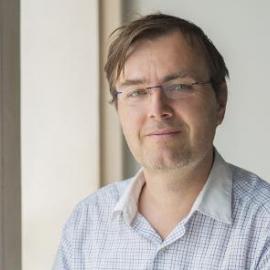
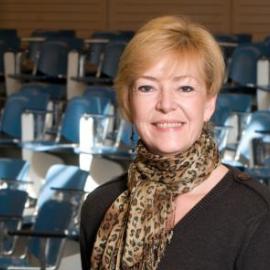
Nicky Le Feuvre is a Professor at the University of Lausanne affiliated with the LIVES Centre (National Centre of Competence in Research on life course and inequalities). Her research examines gender and age inequalities in academic and professional labor markets, with particular focus on Swiss institutional contexts including banking, higher education, and legal professions. She investigates how career structures, funding models, and policy reforms shape precarity and citizenship across the life course.
Her primary research interests include gender studies, age and work dynamics, academic career trajectories, professionalism, and discrimination. Le Feuvre analyzes intersections of gender and age through comparative frameworks, exploring pension reforms, age management policies, and transnational mobility. Recent work emphasizes Swiss-specific institutional path dependencies while drawing cross-national comparisons with France and other European contexts.
Analysis of her 2022-2025 publications reveals consistent thematic focus on gendered retirement pathways, postdoc precarity, and professionalism in regulated professions. Methodologically, she employs life course perspectives and comparative institutional analysis, with increasing attention to Swiss finance sector dynamics and academic citizenship frameworks. Her work demonstrates strong policy relevance for aging workforces and gender equity in higher education.
No scientific awards were mentioned in the provided source materials.
Information regarding academic advising responsibilities and research grant funding was not specified in the available texts.
Le Feuvre is a core researcher at the LIVES Centre, an interdisciplinary national research hub examining life course inequalities through sociological, economic, and political science lenses. The center facilitates cross-institutional collaboration on longitudinal studies of work-family dynamics, retirement transitions, and social policy impacts, with Le Feuvre contributing expertise on gendered institutional analysis within Swiss and European contexts.