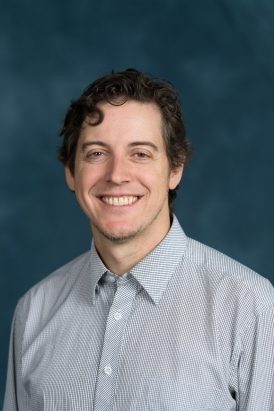
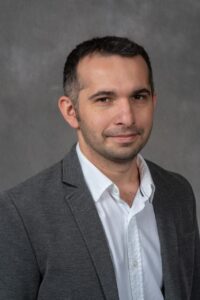
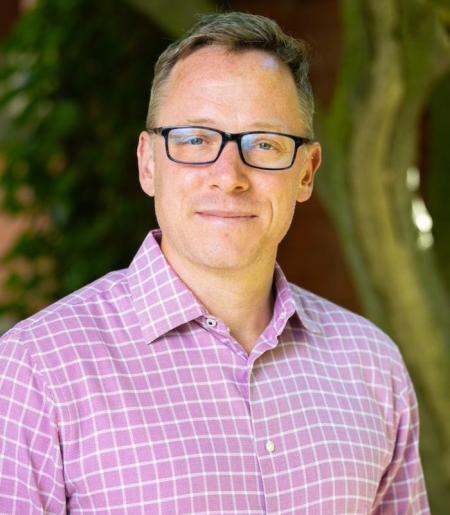
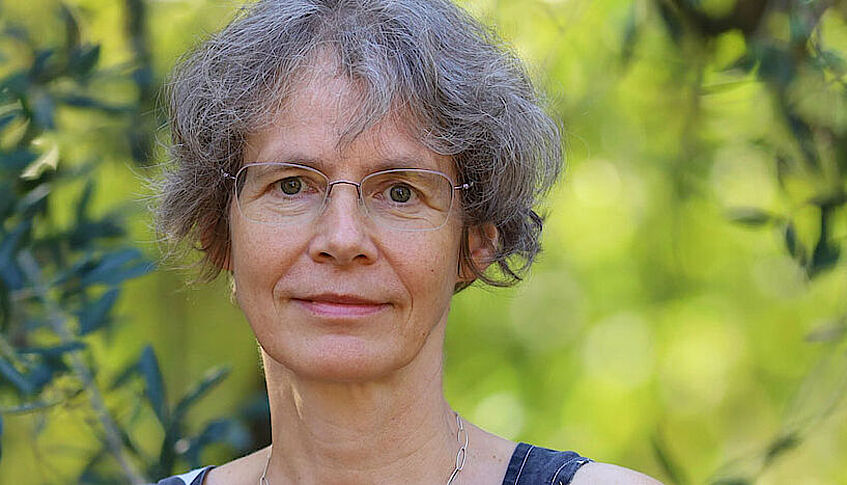
Dr John Stanton is a Reader in Law at City St George's, University of London, with a focus on Constitutional Law and Comparative Constitutional Law. He has held academic roles since 2010, previously at Kingston University and City University, and is a Visiting Lecturer at the University of Malta since 2018. PhD in Law (Kingston University London, 2010) LLB Law (University of Surrey, 2007) His research spans Maltese constitutional history , local government dynamics , democracy , and central-local relations . Recent projects include Law, Localism and the Constitution (2023) and co-editing The Constitution of Malta at Sixty (2024). John’s publications and conference presentations (e.g., at Melbourne and Texas) address themes like constitutional decay , autocracy , and democratic resilience . He contributes to journals such as Legal Studies , Public Law , and Environmental Law Review . Learning Enhancement Award for Teaching (2017) Fellow, Higher Education Academy He testified before the UK Parliament on devolution and is active in the Society of Legal Scholars , UK Constitutional Law Association , and the Honourable Society of the Inner Temple .
London School of Economics and Political Science (LSE)United Kingdom
Abby Innes is an Associate Professor of Political Economy at the European Institute, London School of Economics , where she has been a faculty member since 1997. Her academic career includes a Visiting Fellowship at MIT (1995–1997) and a Jean Monet Fellowship at the European University Institute (2001–2002) . She has received multiple teaching awards , including the LSE Teaching Prize and European Institute Departmental Teaching Prize, and currently serves as the Teaching Chair of her institute. Research Interests : Dr. Innes specializes in the political economy of Central Europe , neoliberalism , and materialist utopias . Her work explores state capture , systemic transitions , and comparative capitalism , with a focus on the UK’s neoliberal transformation. Recent research addresses the political economy of the green transition and neoliberal institutional failures . British Academy Mid-Career Fellowship (2017-2018) LSE Teaching Prize (2002) LSE/ASRC Excellence in Education Award (2020) European Institute Departmental Teaching Prize (2011, 2013, 2015) Nominee for LSE Student-Led Teaching Excellence Awards (2014, 2020) Publications : Her 2023 book Late Soviet Britain: Why Materialist Utopias Fail argues that UK neoliberalism parallels Soviet economic dogma, leading to institutional rigidity , democratic erosion , and governance crises . She has published in journals such as The Review of International Political Economy and Comparative Politics , alongside frequent contributions to LSE Blogs and The London Review of Books .
Clio Andris is an Associate Professor at Georgia Tech, jointly appointed in the School of City and Regional Planning and the School of Interactive Computing. She directs the Friendly Cities Lab, focusing on mathematical models of social networks applied to urban planning, transportation, and geography. Her work integrates spatial analysis with visualization, emphasizing interdisciplinary collaboration. Education and Career: Andris earned a PhD in Urban Information Systems from MIT (2011), where she was an NDSEG Fellow. She held postdoctoral positions at Singapore-MIT Alliance for Research and Technology and the Santa Fe Institute. Prior to Georgia Tech, she was a faculty member at Penn State’s Department of Geography, affiliated with the GeoVISTA Center. Research Focus: Her research bridges social networks, geovisualization, and urban informatics. Key areas include spatial social network analysis, GIS applications for urban policy, and the impact of digital tools on civic engagement. She has developed innovative visual analytics tools like SNoMaN and ROBIN to democratize spatial data exploration. Awards: She received the NSF CAREER Award (2021) and NDSEG Fellowship (2011). Her lab is affiliated with the Center for Spatial Planning Analytics and Visualization (CSPAV) and the Information Visualization Lab. Labs and Collaborations: The Friendly Cities Lab focuses on socially just urban design through computational methods. Her work addresses issues like food security networks, pandemic impacts on biodiversity, and community mapping for activism. Grants and Outreach: Her NSF-funded projects emphasize public good applications, such as real-time pandemic risk communication and educational tools for migration data. She actively collaborates with non-profits and policymakers to translate research into actionable urban strategies.
Professor Andrew Chadwick is a leading scholar in political communication and digital media studies at Loughborough University, where he directs the Online Civic Culture Centre (O3C). He holds a BSocSc from Birmingham, MSc and PhD from the London School of Economics. His research focuses on hybrid media systems, disinformation dynamics, and digital politics. Key contributions include conceptualizing hybrid media events and analyzing misinformation in personal messaging platforms. His work has been recognized with prestigious awards, including the APSA Best Book Award. He supervises numerous PhD students exploring topics like social media influence, public opinion, and digital disinformation. Current projects include the Leverhulme-funded Everyday Misinformation Project examining numerical disinformation on messaging apps. His media engagements span BBC Radio 4 to The Washington Post. Research highlights include studies on misinformation warnings' ineffectiveness, vaccine hesitancy, and the role of celebrities in political representation. O3C serves as a hub for interdisciplinary research on digital civic culture. Chadwick’s academic leadership includes roles in editorial boards for top journals and international conference keynotes.
Arthur Weststeijn is an Assistant Professor in Political History at Utrecht University, specializing in the history of the Dutch Republic and its colonial empire, the history and contemporary politics of Italy, and the history of Spain and Latin America. He is affiliated with the Department of History and Art History within the Humanities faculty and is part of the Research Institute for History and Art History, focusing on International and Political History. Dr. Weststeijn's educational background includes: PhD in History, European University Institute, Florence (2010) RMA in History, European University Institute, Florence (2006) MA in Philosophy, University of Amsterdam (2005) MA in History, University of Amsterdam (2004) Erasmus Exchange, Universidad de Sevilla (2000-2001) His research focuses on the intellectual history of power, particularly examining ideas that express and contest political authority through two main themes: colonialism (how ideas have shaped European colonialism and resistance against it) and republicanism (how resistance to autocratic rule has given rise to ideas of liberty, citizenship, and democracy). His work spans early-modern Dutch colonialism, anticolonial thought, the history of democracy, and connections between ancient and modern forms of settler colonialism. He has published extensively on early modern republicanism, the political uses of classical heritage, and the making of modern Italy. Weststeijn's scholarly output demonstrates a consistent focus on the intersections between political thought, colonial history, and republican theory. His work often examines how historical ideas continue to shape contemporary political discourse, particularly regarding democracy, citizenship, and colonial legacies. He frequently engages with both European and transatlantic intellectual traditions, showing particular expertise in Dutch and Italian political thought. His notable awards and fellowships include: Fellow, Huntington Library, San Marino, California (Summer 2022) Fellow, John Carter Brown Library, Providence, Rhode Island (Spring 2019) Director of Historical Studies, Royal Netherlands Institute in Rome (2011-2017) Dr. Weststeijn has served as a visiting researcher at prestigious institutions including the Cambridge Centre for Political Thought, University of Southern California, University of Wisconsin at Madison, and University of Padua. He frequently appears as an expert commentator on Italian culture and politics in Dutch media and maintains an active public intellectual presence. He is involved in multiple research initiatives including the IOS research themes on Contesting Governance, Futures of Democracy, and Longtermism and Institutional Change. His work often involves interdisciplinary collaboration with archaeologists, classicists, and scholars from various humanities disciplines.
Jason Brownlee is a Professor in the College of Liberal Arts at the University of Texas at Austin. His research focuses on comparative politics, democracy, and authoritarianism, with a regional emphasis on the Middle East and Southeast Asia. Ph.D., Princeton University Contact: brownlee@austin.utexas.edu Research Interests : Brownlee investigates the persistence of authoritarian regimes, the political economy of repression, and the impact of foreign intervention on domestic politics. His work often analyzes Egypt, Iran, Malaysia, and the Philippines. Key Publications : Authoritarianism in an Age of Democratization (Cambridge, 2007) Democracy Prevention: The Politics of the U.S.-Egyptian Alliance (Cambridge, 2012) The Arab Spring: Pathways of Repression and Reform (Oxford, 2012, co-authored with Tarek Masoud and Andrew Reynolds) Teaching : Brownlee offers courses such as "War/Freedom in South Asia/Middle East" and "Issues & Policies in American Government," delivered both in-person and online.
London School of Economics and Political Science (LSE)United Kingdom
Tomila Lankina is a Professor of Politics and International Relations at the London School of Economics (LSE), specializing in democratization, popular protest, and Russian and Eastern European politics. She holds a DPhil from the University of Oxford and has held research appointments at institutions such as Stanford University and Humboldt University in Berlin. Her work examines historical legacies of social structure and their implications for democracy, inequality, and political regimes. Her groundbreaking book The Estate Origins of Democracy in Russia (Cambridge University Press, 2022) explores how pre-communist social stratification in Russia shapes contemporary political outcomes. The book has received major accolades, including the 2023 J. David Greenstone Prize and Davis Center Book Prize. Lankina’s research also addresses modern issues like Russian media manipulation, post-communist social resilience, and the impact of historical institutions on modern governance. Active in supporting Ukrainian scholars during Russia’s invasion of Ukraine, Lankina co-founded an LSE Taskforce to assist displaced students and researchers. She has been recognized for her excellence in PhD supervision by LSE and has published widely in top journals like the American Political Science Review and World Politics . Her interdisciplinary approach combines historical analysis with contemporary political dynamics, emphasizing the persistence of social hierarchies and their role in shaping autocracy and democracy. Current projects include a book on Russian dissent history and comparative studies of post-colonial and post-communist societies.
Mark E. Warren is a Professor of Political Science at the University of British Columbia (UBC), holding the Merilees Chair for the Study of Democracy. He joined UBC in 2004 and directs the SSHRC-funded Participedia project, which documents global democratic innovations. His research focuses on democratic theory, citizen participation, representation, and corruption. Warren previously taught at Georgetown University, Northwestern University, and Rice University. Education: B.A. from Lewis and Clark College, M.A. and Ph.D. from the University of Toronto. Key roles include founding the Centre for the Study of Democratic Institutions at UBC and co-founding the Center for Democracy and the Third Sector at Georgetown University. Research interests emphasize new forms of citizen engagement, democratic representation, and the interplay between civil society and governance. He has authored influential books like Democracy and Association (2001) and edited volumes such as Democracy and Trust (1999), recognized with prestigious awards. His work addresses corruption in democracies and systemic approaches to deliberative democracy. Awards include the Elaine and David Spitz Book Prize (2003) and ARNOVA’s Outstanding Book Award (2003). Participedia, his flagship project, serves as a global resource for participatory governance. Warren’s contributions bridge academic research and practical democratic innovation, influencing policies and institutions worldwide.
Dan Slater is a Professor of Political Science at the University of Michigan, specializing in the politics and history of dictatorships and emerging democracies with a regional focus on Southeast Asia. He serves as Director of the Center for Emerging Democracies, and holds affiliations with the Center for Southeast Asian Studies, Program in International and Comparative Studies, and other interdisciplinary programs. His academic journey includes a PhD from Emory University (2005), an MA from the University of Washington (1996), and a BA from the University of Wisconsin (1994). Slater’s research examines authoritarian durability, democratization processes, and the interplay between contentious politics and state power, with a strong emphasis on Southeast Asia’s historical trajectories. His work bridges comparative politics, international relations, and methodological innovation, with key contributions including the seminal book Ordering Power: Contentious Politics and Authoritarian Leviathans in Southeast Asia . Recent research explores the origins of democratic transitions, military supremacy in dictatorships, and the legacies of authoritarianism. Slater has advised on democratization challenges in Ethiopia, Fiji, and Pakistan, and his consulting work extends to institutional analysis in transitional states. Slater’s articles appear in top journals like the American Journal of Political Science , International Organization , and World Politics , alongside region-specific publications. His research consistently bridges historical analysis with contemporary political dynamics, offering frameworks for understanding regime stability and transformation. Beyond academia, he has held leadership roles in research centers, including Director of the University of Chicago’s Center for International Social Science Research. His awards and recognitions are not explicitly listed here, but his prolific publication record and interdisciplinary influence reflect significant scholarly impact. Slater’s current work addresses democratic erosion, authoritarian resilience, and the global implications of Southeast Asia’s political experiments.
Dr. Aykut Ozturk is a Lecturer in Political & International Studies at the University of Glasgow's School of Social & Political Sciences. He joined in 2020 after earning his PhD in Political Science from Syracuse University. His research focuses on democracy/authoritarianism, political identities, and online survey methods. He teaches courses on authoritarian political communication and authoritarianism. Education: PhD in Political Science, Syracuse University Research Interests: His work spans public opinion (political identities, polarization), comparative politics (democracy/authoritarianism dynamics, Turkish politics), and methodological innovations in online surveys/experiments. He explores how authoritarian regimes sustain support through propaganda and emotional appeals. Grants & Collaborations: GCID Small Research Grant: 'Fighting Disinformation' (collaborator: Candas Ayan et al.) Research on Kurdish political participation with Dr. Sevinc Ozturk Teaching: Authoritarian Political Communication (PGT) Issues in Authoritarianism (Honors) Advising: Currently supervising Candas Ayan (de-citizenization in Turkey/India) and Siyuan Zhang (gendered expectations on Chinese social media).
Allan Sikk is a Professor of Comparative Politics at the School of Slavonic and East European Studies (SSEES), University College London (UCL). He joined UCL in 2007 following a PhD from Tartu University and a tenure as head of the Estonian parliament’s research service. His research focuses on electoral candidates, party switching in parliaments, and party system evolution, with a 2023 co-authored book, *Party People: Candidates and Party Evolution* (Oxford University Press), analyzing party change through candidate data in Central and Eastern Europe. He leads the INSTAPARTY project, a 4-year initiative funded by the Norwegian Research Council, studying party instability in parliaments. Education: PhD, University of Tartu (2006) MA, University of Tartu (2001) BA, University of Tartu (1999) Research expertise spans political science, comparative government, and democratization, with a focus on Europe and Eastern Europe. His work integrates classic comparative models with insights from new democracies. He is fluent in English, Estonian, Danish, Finnish, Spanish, Russian, and reads multiple languages. Grants and Projects: Co-Principal Investigator, INSTAPARTY: Party Instability in Parliaments (Norwegian Research Council) His publications analyze party system volatility, parliamentary behavior, and electoral dynamics, emphasizing candidate turnover and institutional adaptation. He contributes to Sustainable Development Goals 5 (Gender Equality), 10 (Reduced Inequalities), and 16 (Peace, Justice, Strong Institutions).
Thomas Pepinsky holds the prestigious Walter F. LaFeber Professorship of Government and Public Policy at Cornell University, where he is a faculty member in the Department of Government within the College of Arts and Sciences. He additionally serves as a Nonresident Senior Fellow at the Brookings Institution, bridging academic research with policy engagement. His academic career, which began at Cornell in 2008 after earning his Ph.D. from Yale University, has established him as a leading scholar in comparative politics with deep regional expertise in Southeast Asia. Professor Pepinsky's research examines the complex interactions between political and economic systems globally, with particular attention to democratic backsliding in Southeast Asia and Europe, the evolution of social categories like ethnicity in the Malay world, and methodological approaches to social science explanation. His work consistently connects theoretical political science with empirical analysis of real-world political phenomena, often employing innovative methodological frameworks to understand complex political dynamics across different contexts. His scholarly output demonstrates a clear trajectory from foundational work on Southeast Asian politics to increasingly comparative analyses examining democratic erosion, electoral behavior during political transitions, historical persistence of political attitudes, and the intersection of social categories with political economy. Recent publications reveal growing attention to contemporary crises including refugee flows, pandemic politics, and the challenges to democratic institutions worldwide. Among his significant professional activities, Dr. Pepinsky serves as editor of the Journal of East Asian Studies and is a co-founder and Executive Board member of the Southeast Asia Research Group (SEAREG). He also contributes to the Association for Analytical Learning about Islam and Muslim Societies (AALIMS) and the International Political Economy Society (IPES), reflecting his interdisciplinary approach. At Cornell, he actively participates in the Southeast Asia Program (SEAP) and teaches courses including Introduction to Comparative Government and Politics, Southeast Asian Politics at both undergraduate and graduate levels, and independent study opportunities. His international scholarly engagement is evident through visiting appointments at institutions including Amsterdam, the Australian National University, Freiburg, Griffith University, the Hertie School, and the National University of Singapore.
Filip De Boeck is a full professor in Social and Cultural Anthropology at KU Leuven’s Faculty of Social Sciences. He is a member of the LUSI - KU Leuven Urban Studies Institute and serves on the Council of the Faculty of Social Sciences. His research focuses on urban anthropology, visual anthropology, and the Democratic Republic of Congo, particularly Kinshasa. He leads projects such as ‘Colonial Graverobbing’ and ‘Dakar-Bamako: Waiting for a train ride back to the future.’ De Boeck’s work bridges ethnography and art, collaborating with visual artist Sammy Baloji on projects like Suturing the City . His recent publications include studies on Kinshasa’s urban futures, infrastructure politics, and decolonial knowledge frameworks. He has supervised PhD candidates such as Charlotte Veithen and Niels Van Doninck. His research highlights themes like urban marginality, postcolonial urbanism, and the interplay between art and anthropology. Key projects include the Frontier Files book and exhibition exploring Congo-Angola border dynamics. De Boeck’s work is supported by grants including KU Leuven’s Sabbatical Program and the Bijzonder Onderzoeksfonds. He actively engages with global academic networks, presenting at institutions like the British Academy and University of Lisbon. His teaching includes courses on urban anthropology, power dynamics, and decolonizing anthropology. Current projects address infrastructure politics in Abidjan, Côte d’Ivoire, and the socio-spatial transformations of Kinshasa’s Malebo Pool wetlands.
Univ.-Prof. Dr. Dorothee Bohle is a Professor of Comparative Politics focusing on Southeast and Eastern Europe at the University of Vienna's Department of Political Science. Previously, she held positions at the European University Institute (Florence) and the Central European University (Budapest). She specializes in comparative political economy, institutional political economy, and welfare state analysis, with a focus on capitalist diversity in Europe's periphery. Education includes studies at Hamburg, Paris, and Berlin, followed by a PhD from the Free University of Berlin (2001). Her career includes roles as Dean of Post-Graduate Studies at the European University Institute and leadership in the Max Weber Programme. Research interests encompass the political economy of crises (e.g., financial crisis, pandemic responses), East Central Europe's socio-economic dynamics, housing regimes, and FDI-led growth models. She critiques neoliberal policies and explores resilience in peripheral economies. Her work bridges theoretical frameworks (e.g., varieties of capitalism) with empirical studies of EU integration impacts. She contributes to debates on democratic erosion and authoritarian trends in post-socialist states.
Isabela Mares is the Arnold Wolfers Professor of Political Science and Director of the European Union Center at Yale University. Her research focuses on comparative politics of Europe, political economy, electoral systems, and social policy reforms. She has authored five books, including Conditionality and Coercion: Electoral Clientelism in Eastern Europe (2018) and Protecting the Ballot: How First Wave Democracies Ended Electoral Corruption (2022). Her work has received prestigious awards such as the William Riker Award and Gregory Luebbert Award. Mares has taught at Stanford, Columbia, and held visiting roles at SciencesPo and Central European University. Her research examines electoral corruption, taxation, and democratization processes. Education & Academic Background PhD in Political Science (not explicitly stated, inferred from roles) Prior faculty positions at Stanford University and Columbia University Visiting Professorships at SciencesPo (Paris) and Central European University (Budapest) Research Interests Mares specializes in comparative politics with a focus on electoral integrity, clientelism, taxation, and welfare state development. Her work bridges historical and contemporary cases, analyzing how institutions shape political and economic outcomes. Recent projects include studies on antiparliamentarism and historical democratization processes. Recent Article Trends Her recent publications address modern challenges such as energy transition policies, populism’s impact on social protection, and historical electoral reforms. These articles emphasize institutional resilience, voter behavior, and the political economy of reform. Awards & Recognition Member of the American Academy of Arts and Sciences Simon Guggenheim Foundation Fellow Multiple APSA awards for books and papers Teaching & Mentorship Mares teaches courses on political economy, comparative politics, and historical analysis. At Yale, she co-organizes the Seminar in American and Comparative Political Behavior. While specific advisees are not listed, her mentorship is evident through collaborative research projects and co-authored works (e.g., with Lauren Young). Labs & Collaborations She leads the European Union Center at Yale, fostering interdisciplinary research on European politics. Her work often involves mixed-methods approaches, combining qualitative interviews and quantitative surveys in field-based studies.