Daniela Iorio is an Associate Professor at the Department of Economics, University of Bologna, and holds a part-time professorship at the European University Institute’s School of Transnational Governance. She specializes in Political Economy, Health Economics, and Public Economics. Her work addresses topics like voting behavior, eating disorders, reproductive health, and parental investments. She earned a Ph.D. in Economics from the University of Pennsylvania and has held positions at institutions including USC, Universitat Autònoma de Barcelona, and the Barcelona Graduate School of Economics. Her research focuses on health policy, behavioral economics, and political institutions. Notable contributions include analyzing the link between eating disorders and addictive behaviors, evaluating IVF success disparities, and developing parenting measurement tools through digital interventions. She has been awarded the 2016 Oliver E. Williamson Prize and the Rita Levi Montalcini grant. Iorio teaches advanced courses on political economy and health economics at the PhD and master’s levels. She directs the Health Economics, Management and Policy master’s program at Bologna and has advised over a dozen graduate students. Her grants include a €758k MIUR project on child development and parental engagement. She serves as an Associate Editor for the European Economic Review and referees for top journals like the American Economic Review .
Elias Dinas is a Full-time Professor in the Department of Political and Social Sciences at the European University Institute (EUI). He holds the Swiss Chair in Federalism, Democracy, and International Governance. His research focuses on political socialization, authoritarian legacies, and research methodology. Dinas earned his PhD in Political Science from the EUI in 2010. His research interests include the impact of historical traumas on political attitudes, experimental methods, and the dynamics of norm change. He collaborates with institutions like the Graduate Institute in Geneva through seminars, conferences, and methodological workshops. Recent work explores topics such as ideology mapping via AI, the electoral effects of early voting experiences, and the interplay between migration crises and public policy. His research has been published in top journals like the American Political Science Review and highlighted in outlets like The New York Times. Received the Michael Wallerstein Award (2019) for his work on migration and hostility. Supervises 14 students researching memory politics, norm change, and intergroup relations. Leads projects on post-authoritarian ideologies, German political identity, and elite-driven norm erosion. His teaching and supervision emphasize causal inference, experimental design, and quantitative methods, reflecting his commitment to rigorous political analysis.
Maria Eugenia Bartoloni is a Full Professor of European Union Law at Sapienza University of Rome, Department of Legal and Economic Studies. She is also a member of the doctoral program faculty for "Internationalization of Legal Systems and Fundamental Rights" at Università della Campania "L. Vanvitelli" and previously served as its Master's Degree Course President. She coordinates the journal Il Diritto dell’Unione europea and serves on editorial boards for multiple EU law publications. Education: PhD in International and EU Law from Macerata University (2004), Law Degree (1999) from Macerata University. Research Interests: Focus on EU constitutional law, international legal norms coordination, fundamental rights application, judicial protection limits, and EU foreign/security policy. Her recent work explores the EU's unique legal frameworks for maritime concessions, the Charter of Fundamental Rights' scope, and the evolving legal dimensions of EU international relations. She has participated in numerous national and international research projects. Scientific Awards Marie Curie Fellow (2015) Principal Investigator for SELECT Project – "StrEnghten Lay and honorary judges European CompeTencies" (JUST-AG-2020 / JUST-JTRA-EJTR-AG-2020)
Stéphanie Novak is a Full Professor at the Department of Comparative Linguistic and Cultural Studies, Ca' Foscari University of Venice. Her research focuses on European institutions, transparency, accountability, collective decision-making, and international negotiations. She has published extensively in journals like the Journal of Common Market Studies and Global Policy, and co-edited a volume with Jon Elster on majority decisions. Current Assignments: Member of the Steering Committee of the Ca' Foscari International College; Delegate for Internationalization Research Interests include: EU institutional transparency and accountability Collective decision-making and consensus Intergovernmental relations and crises Legislative process conflict-resolution International negotiation dynamics Democratic compromise in supranational contexts Her 2023-2024 publications analyze transparency dilemmas, consensus fragility, and digital policy interoperability. Earlier works (2005-2020) examine voting norms, institutional hypocrisy, and EU global representation. Scientific Awards: Dalloz-Bibliothèque de thèses prize (doctoral thesis) Editorial Involvement: Associate Editor, Journal of European Policies (since 2017) Editorial Board, La Fabrique du Politique (since 2018) Former Board Member, La Vie des Idées (2009-2021) Grants & Projects: POLiN Project (2023-2025): Interoperability in EU digital health policies Universalism and Right of Man Project (2023-2026): Late Enlightenment political conditions Observatoire des Institutions Européennes (2014-2021): EU institutions and transparency
Juan Carlos De Martin is a Full Professor of Computer Engineering at the Polytechnic of Turin, where he is also co-founder and co-director of the Nexa Center for Internet & Society. He holds a Faculty Associate position at the Berkman Klein Center for Internet & Society at Harvard University and is a member of the Scientific Council of the Treccani Institute and the Steering Committee of Biennale Democracy. He previously served as Vice Rector for Culture and Communication at the Polytechnic of Turin (2018–2023) and as president of its libraries (2007–2015). His research centers on the societal implications of digital technologies, with a strong emphasis on algorithmic and data justice, digital power, and the democratic challenges posed by modern technology. He advocates for a more democratic and ethical technological future, particularly critiquing the dominance of smartphones and promoting digital sovereignty. His recent publications reflect a clear trend toward ethical AI, data protection, and the social impact of algorithms. He has published on gender bias in language models, GDPR compliance tools, and non-discrimination audits in software, demonstrating a sustained commitment to fairness, transparency, and accountability in digital systems. Best Student Paper Award IEEE ISCC 2011 Best Student Paper Award IEEE ICME 2005 Fellow at Harvard University (Berkman Klein Center) (2011–2015, 2016–2024) Faculty Associate at Collège d'études mondos, France (2016) De Martin has advised PhD students like Marco Rondina on Responsible AI and has led numerous EU-funded research projects such as COMMUNIA and DECODE. He has also played a key role in public policy, serving on ministerial working groups on AI and online hate. He is the founder of the Biennale Tecnologia and has authored influential books on the future of universities and technology, all published under Creative Commons licenses. He leads the Nexa Center for Internet & Society, a multidisciplinary research group focused on the legal, economic, and social aspects of the Internet. The center fosters collaboration between computer scientists, legal scholars, and social scientists to address pressing digital challenges.
Gianluca Passarelli is a Full Professor at the Department of Political Science, Sapienza University of Rome. His academic work focuses on Political Science and Comparative Politics , particularly Electoral Systems , Political Parties , and Presidentialization . University: Sapienza University of Rome Department: Department of Political Science Email: gianluca.passarelli@uniroma1.it His research explores preferential voting systems , electoral reform , party transformation , and executive institutional dynamics across Italy, Europe, and the Western Balkans. Recent works analyze the 2020 Italian constitutional referendum , Salvini's League evolution , and democratization processes in the Western Balkans . Key projects include Institutional Settings and Voting Behavior (INSET&VOTE) , Populism and Euroscepticism , and DeDec (Democracy in Decline) . His publications span books like Preferential Voting Systems (Palgrave, 2019) and chapters in major handbooks.
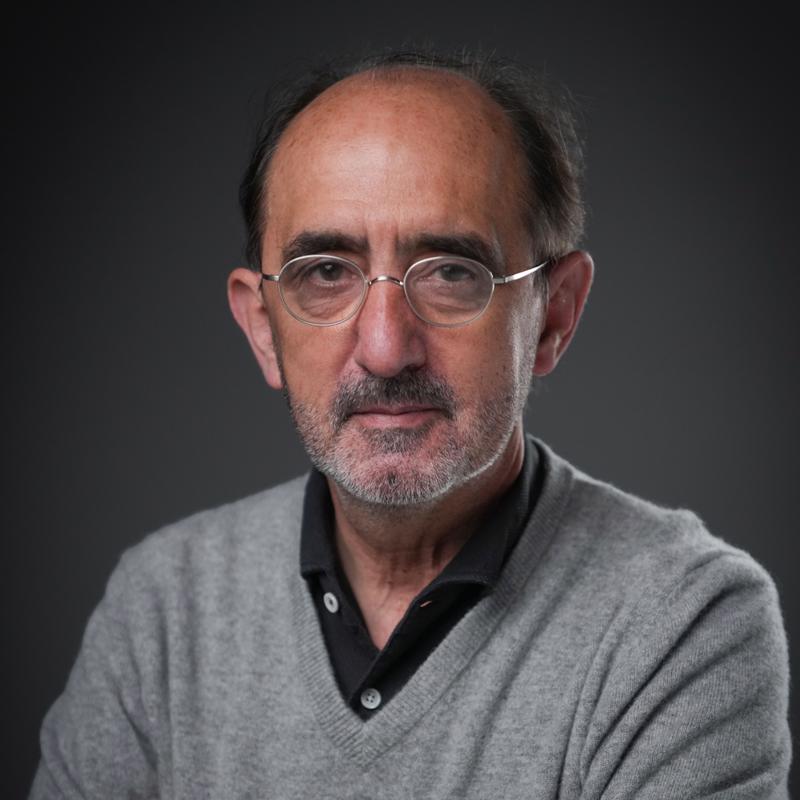
Prof Daniel Innerarity serves as a Part-time Professor and Chair in AI & Democracy at the Florence School of Transnational Governance, European University Institute. He is simultaneously Professor of Political and Social Philosophy at the University of the Basque Country and the Ikerbasque Foundation for Science in Spain, and director of the Instituto de Gobernanza Democrática. His academic career spans multiple continents with previous positions including Robert Schuman Visiting Professor at EUI, Fellow of the Alexander von Humboldt Foundation at University of Munich, visiting professor at University of Paris 1-Sorbonne, professorship at Georgetown University, and visiting fellow at Max Planck Institut for International and Public Law at Heidelberg. Innerarity's research focuses on the critical intersection of democracy and emerging technologies, particularly artificial intelligence. His scholarship examines how complex democratic systems can be designed and maintained in the 21st century, with special attention to the epistemic challenges posed by AI systems. He investigates European integration through the lens of consent theory, arguing for democratic legitimacy in transnational governance structures. His publications demonstrate a consistent concern with how digital technologies reshape democratic processes, citizen participation, and political representation in contemporary societies. Scientific Awards: Miguel de Unamuno Essay Prize 2003 National Literature Prize in the Essay category Espasa Essay Prize Euskadi Essay Prize Prize for Humanities, Culture, Arts and Social Sciences from the Basque Studies Society/Eusko Ikaskuntza (2008) Príncipe de Viana Culture Prize (2013) Innerarity maintains an extensive international academic network across European and North American institutions. His work bridges theoretical political philosophy with practical governance challenges in the digital age, particularly focusing on how democratic institutions can maintain legitimacy and functionality amid rapid technological change. His leadership of the Instituto de Gobernanza Democrática demonstrates his commitment to translating theoretical insights into practical governance frameworks.
Juha Kasperi Tolvanen is an Assistant Professor in the Department of Economics and Finance at Tor Vergata University of Rome. He specializes in applied microeconomics, focusing on the role of information and communication in shaping market structures and political outcomes. His research bridges industrial organization and political economy, examining topics such as information asymmetry in markets and the strategic use of ambiguity by anti-establishment political parties. Dr. Tolvanen holds a PhD from Princeton University (2016). He teaches courses including Game Theory and Industrial Organization, Microeconomics 2, and contributes to graduate programs in Philosophy and Economics. His research combines theoretical frameworks with empirical data from corporate and political contexts. His recent publications explore themes like quantity contracts in decentralized markets, the impact of algorithmic recommendations on strategic behavior, and the empirical analysis of demand using managerial responses to pricing algorithms. He collaborates actively with firms to quantify the economic implications of communication strategies and information flows. Dr. Tolvanen’s work has appeared in leading journals such as the RAND Journal of Economics , Management Science , and American Political Science Review . His research agenda emphasizes bridging theory with real-world applications, particularly in understanding how information dynamics influence economic and political systems.
Richard Lang is an Extraordinary Professor at the University of Bolzano within the Faculty of Economics , specializing in cooperative management, social entrepreneurship, and housing policy. He leads the Competence Center for Cooperative Management , focusing on innovative models for community-led housing and nonprofit sector development. His research emphasizes the role of social capital, institutional contexts, and collaborative governance in fostering sustainable urban and rural development. Recent work highlights his engagement with cooperative housing initiatives , including studies on social innovation in Vienna, grassroots movements in England, and rural entrepreneurship across Europe. Lang’s interdisciplinary approach bridges economics, sociology, and urban planning to address systemic challenges in housing equity, community integration, and policy implementation. Education Background: Not explicitly stated in provided texts. Labs/Teams: Competence Center for Cooperative Management (University of Bolzano). Grants/Awards: None listed in the provided texts. His articles consistently analyze the intersection of institutional frameworks and grassroots action, emphasizing how cooperative models can drive social and economic sustainability. Key themes include contextual adaptation of policies, multilevel social capital utilization, and the governance challenges in collaborative housing systems.
Simon Hix is a Full-time Professor in the Department of Political and Social Sciences at the European University Institute (EUI). He holds a Ph.D. from the EUI (1995) and previously taught at the London School of Economics. His research focuses on comparative political behavior, EU institutions, electoral systems, and historical political science. He employs quantitative methods and has contributed to major journals like the American Political Science Review. Education: Ph.D. in Political and Social Science (EUI, 1995) Research interests include EU policy dynamics, Brexit's political implications, and the evolution of political systems. He leads projects on transnational democracy and EU institutional reforms. Honors include Fellowships at the British Academy and Royal Society of Arts. Advises numerous doctoral students and collaborates on initiatives like the Stein Rokkan Chair in Comparative Politics. Active in policy debates on EU-UK relations and democratic governance.
Lucy Amelia Jane Bell is a Research Fellow at Sapienza University of Rome's Department of European, American and Intercultural Studies. Previously, she served as a Senior Lecturer in Hispanic Languages and Cultures at the University of Surrey (2013–2022). Her work bridges literary analysis, social theory, and activist practices. University of Cambridge BA (2008), MPhil (2009), PhD (2013) Her research focuses on Latin American literature and culture as instruments for social transformation. Key areas include cartonera publishing , prison reform , waste studies , and decolonial theory . She collaborates across disciplines with social anthropologists in marginalized communities. Recent publications explore intersections of necropolitics , environmental justice , and gender resistance , with a focus on Mexico and Brazil. Her 2022 book Taking Form, Making Worlds won the LASA Book Prize and pioneered trans-formal methodologies combining literary analysis with action research. Grants: AHRC, Global Challenges Research Fund, BBC Arts, Secretaría de la Cultura (Mexico) Projects: 'Cartonera Publishing' (2017–2020), 'Prisoner Publishing' (2020–2022)
Cristina Coscia is an Associate Professor at the Department of Architecture and Design (DAD), Polytechnic University of Turin, and serves as Contact Person for the Master's Degree in Architecture and City Construction. Her research focuses on heritage economic enhancement, strategic evaluation for decision-making, and sustainability science. Scientific Director for EU-funded projects (CULTURALITY 2024-2028, Erasmus+ 2017-2020) Member of ENCATC (2012-2016) and Scientific Councils for international conferences Her work integrates ICT into cultural heritage management, emphasizing participatory platforms, stakeholder mapping, and multicriteria modeling. She applies data-driven techniques (e.g., Market Basket Analysis, Item Response Theory) to cultural consumption patterns. 2015 : SIForAge Social Innovation Prize 2011 : La Metamorfosi International Design Prize Coscia supervises doctoral students in architectural heritage and contributes to editorial boards ( Sustainability , Territorio Italia ). She leads collaborations with municipalities (Lagnasco, Valdieri) and NGOs (Barriera Design District).
Michael W. Bauer is a Full-time Professor at the Florence School of Transnational Governance, European University Institute (EUI). He holds a Ph.D. in Social and Political Sciences from the EUI (2000) and has held academic positions at the University of Konstanz, Humboldt-Universität zu Berlin, and visiting roles at institutions across Europe. His research focuses on European and international public administration, multilevel governance, and democratic bureaucracy, with recent emphasis on populism’s impact on public administration and civil servants’ ethical responsibilities under illiberal rule. Bauer leads the Florence team in the EU-funded RADAR project. He has received the Christopher Pollitt Award (2023) and recognition for co-authoring the most downloaded Governance article (2023). His publications include works on European Commission dynamics and democratic backsliding. Bauer advises PhD students like Alexander Mesarovich and Moritz Wassum, and his research spans policy learning, regulatory governance, and transnational democracy.
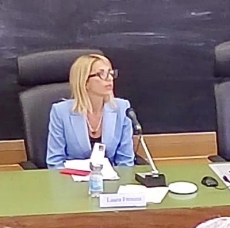
Laura Frosina is an Associate Professor of Comparative Public Law (IUS/21) at the Department of Political Science, Sapienza University of Rome. She teaches courses such as States, Autonomies and Separatisms in the Master's program in International Relations and Comparative Public Law in the undergraduate program in International Cooperation and Development. She is a member of the Doctoral Faculty in Public, Comparative, and International Law and actively participates in national and international research projects. PhD in Theory of the State and Comparative Political Institutions, Sapienza University of Rome (2005) Laurea in Political Science (with honors), Sapienza University of Rome (2000) Postgraduate Course in Assembly Consultants, Sapienza University of Rome (2001) Her research centers on comparative constitutional law, with a strong focus on Spain, Italy, and Latin America. Key themes include multilevel governance, European Union institutions, separatism, autonomy, federalism, parliamentary systems, and constitutional reforms. She analyzes political-constitutional crises, emergency powers, and the evolution of democratic institutions in pluralistic societies. Her work frequently examines the interplay between law, politics, and institutions in contexts of territorial tension. The most recent articles highlight a sustained scholarly engagement with Spanish constitutional dynamics, particularly around the Catalan independence movement, coalition governments under Sánchez, judicial-political conflicts, and broader EU institutional challenges. Trends include the analysis of secession referendums, emergency governance during the pandemic, urban constitutionalism, and the transformation of party systems. Her publications appear in specialized journals such as Nomos , Federalismi.it , and Revista de Derecho Constitucional Europeo , as well as in edited volumes from major academic publishers. Member, Editorial Board of Nomos (since 2001) Responsible, Critical Reviews Section, Nomos (since 2014) Member, Editorial Board, Federalismi.it (2006–2010) Member, Editorial Board, Focus America Latina , Federalismi.it (since 2009) Member, Editorial Board, Quaderni di Nomos (since 2012) Member, Editorial Board, Rivista di Diritto pubblico comparato ed europeo (since 2022) Principal Investigator, Cities and Models of Governance in the 21st Century (Sapienza SEED PNR Project, 2022–2025) Member, Large Ateneo Research Project Following Constitutional Law No. 1/2020, which Parliament? (Sapienza, 2022) Laura Frosina has been involved in numerous research projects funded by the Italian Ministry of Education, Universities and Research (MIUR), CNR, Sapienza University, and the European Committee of the Regions. She has served as a research fellow and principal investigator on topics including intergovernmental cooperation, EU multilevel governance, democratization in South Asia, and urban governance. She has collaborated with the Center of Excellence Integración Europea y Globalización at the University of Granada and participated in international training programs for parliaments in the Balkans. Her academic work bridges doctrinal legal analysis with political science perspectives, contributing to both theoretical and policy-oriented debates. She is affiliated with the Association of Comparative and European Public Law and has coordinated academic events and seminars, including tributes to her mentor Fulco Lanchester. Her institutional page lists regular office hours and remote availability via Google Meet, indicating active engagement with students and the academic community.
Ilaria Riccioni is an Associate Professor of General Sociology at the Faculty of Education , Free University of Bozen-Bolzano. She earned her PhD in Social Theory and Research from Sapienza University in Rome and has been a tenured academic since 2007. Her work bridges sociological theory with applied research in multicultural contexts. Education: PhD in Social Theory and Research, Sapienza University, Rome. Research Focus: Sociological theory, avant-garde art as critique, multicultural coexistence, and institutional roles in education and social dynamics. Her recent publications analyze theatre's role in mediating social boundaries, art's relationship with capitalist markets, and methodologies for integrating qualitative research with artistic expression. As President of the ISA's Research Committee RC37 (Sociology of the Arts), she leads global discourse on art's sociological implications. Scientific Leadership: President of RC37 (ISA), 2025–. Teaching: Courses include Epistemology of Educational and Social Sciences and Fundamentals of General Sociology. Her empirical studies focus on South Tyrol's trilingual society, examining how artistic practices foster cohesion across cultural divides and redefine public spheres in digital globalization.