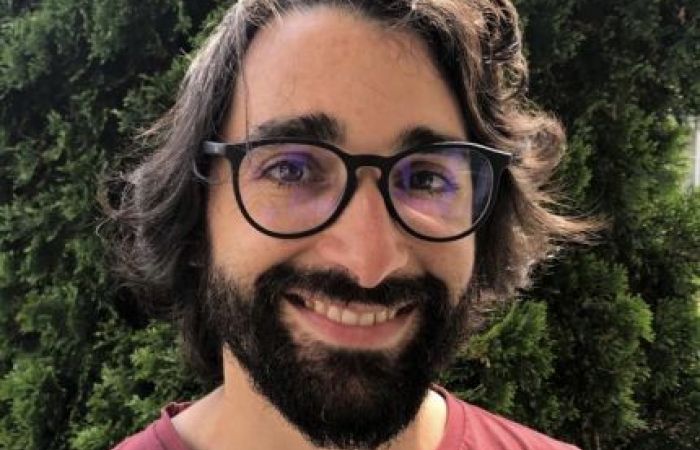
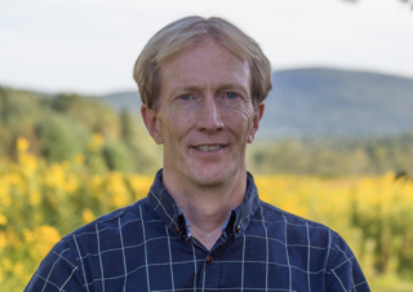
Michael Albert is a Lecturer in Global Environmental Politics at the University of Edinburgh's School of Social and Political Science. He holds a PhD from Johns Hopkins University and previously taught at SOAS University of London. His research focuses on climate, energy, and food system transformations through Marxist and Neo-Gramscian frameworks, emphasizing transdisciplinary approaches. Key areas include green capitalism, degrowth, renewable energy geopolitics, and abolitionist ecological security. His first book, Navigating the Polycrisis: Mapping the Futures of Capitalism and the Earth , explores intersecting crises (climate, capitalism, energy, etc.) and utopian/dystopian futures. Current projects address mental health crises linked to ecological instability and far-right populism. He is affiliated with the Energy, Environment and Sustainability International Relations Research Group. Albert’s research outputs span journals like Global Environmental Politics , Review of International Political Economy , and Globalizations . He actively participates in conferences and public engagements, including talks on post-growth IR and climate assemblies.
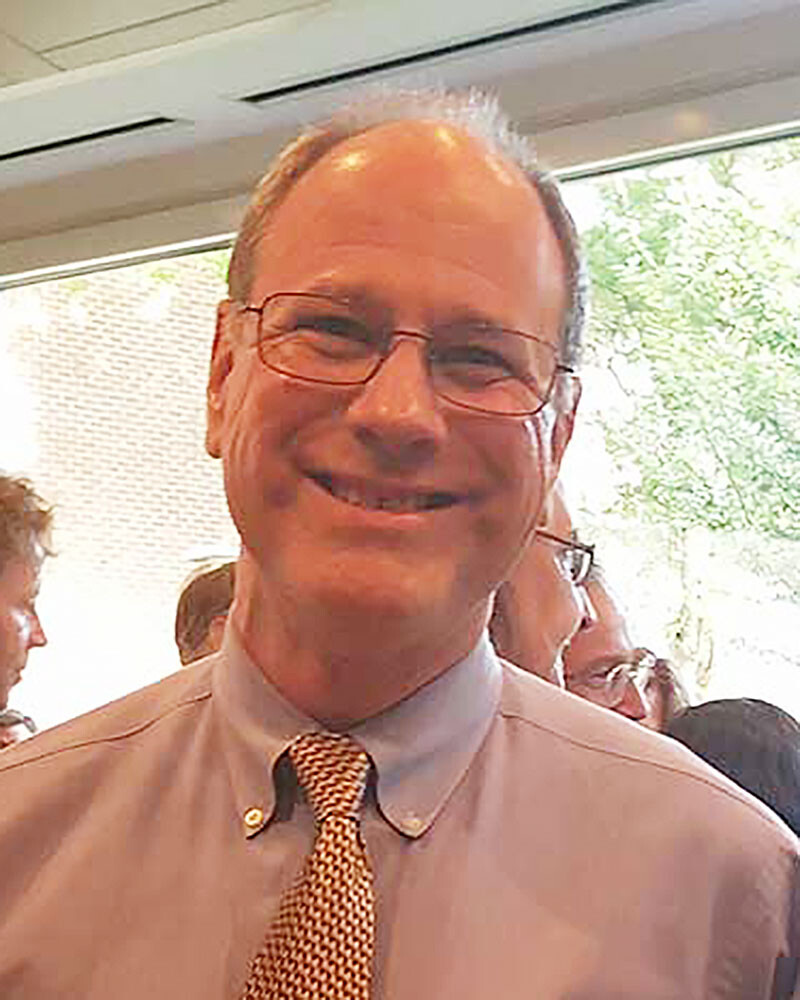
Dr. David S. Kosson is a distinguished faculty member at Vanderbilt University, holding the Gass Family Chair in Energy and the Environment. He serves as Professor of Civil and Environmental Engineering, Chemical and Biomolecular Engineering, and Earth and Environmental Sciences. As Director of the Consortium for Risk Evaluation with Stakeholder Participation (CRESP) and the Environmental Laboratory, he leads multidisciplinary research addressing nuclear waste management, environmental remediation, and policy. His work has established frameworks like the U.S. Leaching Environmental Assessment Framework (LEAF), impacting national waste management policies. Dr. Kosson earned his Ph.D., M.S., and B.S. in Chemical Engineering from Rutgers University. He previously chaired Vanderbilt’s Civil and Environmental Engineering Department (2000–2012). His research focuses on nuclear/chemical waste containment, contaminant mass transfer, and eco-cultural risk assessment. He advises U.S. federal agencies on defense waste remediation and chemical weapons demilitarization. Education: Ph.D., Chemical and Biochemical Engineering, Rutgers University M.S., Chemical and Biochemical Engineering, Rutgers University B.S., Chemical Engineering, Rutgers University Key Roles: CRESP Principal Investigator Environmental Laboratory Director Former Department Chair (Civil & Environmental Engineering) His research integrates laboratory experiments with field data to model long-term behavior of waste forms and geological interfaces. Notable contributions include studies on cement-rock interactions, PFAS leaching, and ecological risk assessment at DOE sites like Hanford and Oak Ridge. He has authored over 200 publications, advancing risk-informed decision-making in waste management. Scientific contributions span nuclear waste durability, eco-cultural justice frameworks, and sustainable materials engineering. He collaborates internationally on deep geological disposal systems and environmental policy.
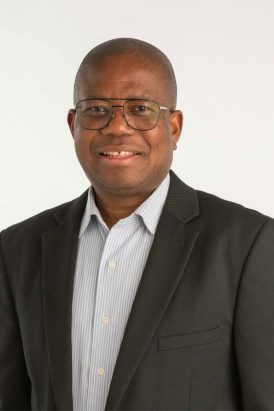
Omolade Adunbi is a Professor of Anthropology and Afroamerican and African Studies at the University of Michigan, with a courtesy appointment in Law. He serves as Director of the African Studies Center and is affiliated with the Program in the Environment, Donia Human Rights Center, and Institute for Energy Solutions. PhD in Anthropology from Yale University (2010) MPhil and MA in African Studies from Yale His research spans political and environmental anthropology, focusing on governance, extractive industries, climate politics, and China-Africa relations. His award-winning books interrogate oil politics in Nigeria, special economic zones, and the social impacts of resource extraction. Recent research explores climate activism on social media and China's infrastructural engagements in Africa. He has received prestigious teaching awards at the University of Michigan, including the John Dewey Award (2022) and Class of 1923 Teaching Award (2016) . Royal Anthropological Institute Amaury Talbot Book Prize (2017) African Studies Association Honorable Mention (2023) ASA UK Best Book Prize Finalist Adunbi advises on resource governance, transnational corporations, and environmental rights. He is currently working on a book manuscript about Climate Change and the Afterlives of Infrastructures .
Dr. Megan MacKenzie is a Professor and Simons Chair in International Law and Human Security at Simon Fraser University’s School for International Studies. She holds a D.Phil. from the University of Alberta, an M.A. from the University of Saskatchewan, and a B.A. from the University of Regina. Her research focuses on gender and war, military culture, and post-conflict reconstruction. She is internationally recognized for work on military sexual violence, systemic discrimination in militaries, and feminist critiques of security studies. Key contributions include Good Soldiers Don’t Rape (2023) and co-editing Feminist Solutions to Ending War (2021). MacKenzie is co-Director of the Research Network on Women, Peace and Security, advancing gendered approaches to conflict and security. Her interdisciplinary work bridges academia and policy, addressing issues like racial bias in academia, equity initiatives in universities, and the intersection of gender and global health during pandemics. Recent publications analyze racial disparities in academic responses to students, implicit bias in healthcare, and institutional resistance to EDI reforms. Her advocacy extends to policy advocacy on military reform and post-conflict recovery.
Dr. Greg Dvorak is Professor of International Cultural Studies at Waseda University in Tokyo, holding dual appointments in the Graduate School of International Culture and Communication Studies (GSICCS) and the School of International Liberal Studies (SILS). His scholarly work focuses on Japanese and American postcolonial histories in Oceania, with particular emphasis on transoceanic intersections of art, gender, and militarism in popular culture. Born in Philadelphia but with extensive personal and professional experience across the Marshall Islands, Japan, United States, and Australia, Dvorak brings unique transnational perspectives to Pacific Islands Studies. His educational background includes a B.A. from Rutgers University, M.A. from University of Hawai'i at Mānoa, and Ph.D. from Australian National University. His academic journey reflects deep engagement with Pacific studies, particularly through his dissertation research on Pacific Islands History. Dvorak's research interests span postcolonial studies, cultural anthropology, gender studies, and art history with specific focus on Micronesia, Marshall Islands, and broader Oceania. His work critically examines the intersections of militarism, environmental change, and cultural representation, revealing how Pacific Islander communities navigate and resist colonial legacies through artistic expression and cultural practices. His recent publications demonstrate consistent scholarly productivity with significant contributions to both academic journals and art publications. His work shows evolving trends toward examining contemporary art activism as resistance to nuclear legacies and climate change, with increasing emphasis on transoceanic connections between Pacific Islander communities and Japanese contexts. Waseda University e-Teaching Award (Good Practice) 2020 Toyota Foundation Joint Research Fellowship 2010 JSPS Postdoctoral Fellowship 2008 Japan Foundation Postdoctoral Fellowship 2008 Wenner-Gren Postdoctoral Fellowship 2008 Australian National University Postgraduate Award 2004 Norman Meller Award for Outstanding Pacific Scholarship 2004 East West Center Degree Fellowship 2002 Dvorak supervises doctoral and master's students in cultural studies topics while coordinating the culture study plan at Waseda. His teaching innovations earned recognition with the Waseda University e-Teaching Award during the pandemic. His current research projects include "Collective De/Fence: Demilitarization and Climate Change Activism through Art in the Contemporary Indo-Pacific" (2023-2026) funded by KAKENHI, examining art's role in resistance to militarization and climate change. As founding director of project35 (Project Sango), Dvorak has established a transnational network connecting Pacific Islander and Japanese artists and scholars. This initiative has facilitated numerous collaborative projects including the "AM/NESIA: Forgotten 'Archipelagoes' of Oceania" program at the Yamagata International Documentary Film Festival and co-curation of the "Air Canoe" exhibit at the 10th Asia Pacific Triennial. His work bridges academic research with practical cultural exchange, creating spaces for Pacific Islander voices in Japanese cultural institutions.
Filippa Lentzos serves as Associate Professor in Science & International Security at King's College London, leading critical research on global biolabs, disinformation, responsible science, and Biological Weapons Convention (BWC) verification. She holds concurrent positions as Associate Senior Researcher at the Stockholm International Peace Research Institute (SIPRI) and Non-Resident Scholar at the James Martin Center for Nonproliferation Studies (CNS). Her research expertise spans biosecurity policy with particular focus on dual-use life sciences governance. Key areas include: Verification mechanisms for biological weapons treaties Analysis of bioweapons disinformation campaigns Responsible innovation frameworks for synthetic biology Global oversight of high-containment laboratories UN and WHO technical advisory processes Analysis of her 15 most recent publications (2021-2024) reveals consistent focus on emerging biosecurity threats, with 87% addressing verification challenges and 73% analyzing Russian disinformation tactics regarding biolabs. Her work increasingly integrates AI and synthetic biology implications into arms control frameworks. Professional recognition includes: Chair of WHO Technical Advisory Group on Responsible Use of Life Sciences Member of WHO Health Security Interface–Technical Advisory Group Rostered Expert for UN Secretary-General’s Mechanism on Chemical/Biological Weapons NGO Coordinator for the Biological Weapons Convention Lentzos actively shapes global biosecurity policy through direct advisory roles with WHO and UN bodies, while leading field research in conflict zones including conducting public health workshops in Ukraine under missile threat conditions. Her work bridges scientific research and diplomatic implementation of biosecurity measures.
Dr. Timothy Gitzen is an Assistant Professor of Anthropology at Wake Forest University. His research spans cultural/queer anthropology, biosecurity, science and technology studies, and postcolonial analysis. Key projects include examining microbial interactions in Arctic science and bioart, and analyzing security panics around queer youth sexuality in the U.S. and South Korea. Research Focus: Queer youth resilience, biosecurity discourse, postcolonial film analysis, and Cold War legacies in South Korea. Teaching: Courses on cultural anthropology, gender/sexuality, and ethnographic methods. Publications: Recent book Banal Security: Queer Korea in the Time of Viruses (2024) and forthcoming Unscripting the Present (2025), alongside peer-reviewed articles on militarized art spaces and viral outbreak films. Scientific Awards: Zachary T. Smith Faculty Fellowship. Current Projects: U.S. queer youth sexuality and security panic theories.
Heidi Amin-Hong is an Assistant Professor of English at the University of California, Santa Barbara. Her research focuses on Asian American and Pacific Islander cultures shaped by US imperialism, militarism, global capitalism, and environmental transformation. She examines ecological collapse and transpacific ecologies through literary and visual narratives. Education: Ph.D., University of Southern California Research Interests: Her work bridges ecological aesthetics with Cold War afterlives, analyzing how diasporic writers and artists reimagine demilitarized futures through cross-border and interspecies coalitions. Key themes include transpacific speculative fiction, migrant ecologies, and the entanglement of human/nonhuman histories. Research Affiliations: American Cultures and Global Contexts Center, Literature and the Environment. Courses Taught: Includes 'Transpacific Speculative Fiction,' 'Global Environmental Literatures,' and 'Racial Ecologies of the Transpacific.'
Stuart Schrader is an Associate Professor of History and Director of the Chloe Center for the Critical Study of Racism, Immigration, and Colonialism at Johns Hopkins University (JHU). He holds a PhD in Africana Studies from New York University. His research focuses on racial inequality in criminal justice systems, war and empire dynamics, and global counterinsurgency's impact on policing. Schrader authored Badges Without Borders: How Global Counterinsurgency Transformed American Policing (2019), which examines how U.S. policing adopted tactics from global counterinsurgency campaigns. His teaching emphasizes police and prison systems, Black social movements, and social theory. In 2023, he received the JHU Alumni Association Excellence in Undergraduate Teaching Award from the Krieger School of Arts & Sciences. Schrader’s work bridges historical analysis with contemporary activism, critiquing militarized policing and carceral systems. His articles explore topics like police brutality’s roots in Jim Crow-era New Orleans, the global security-industrial complex, and demilitarization efforts. Through the Chloe Center, he advances interdisciplinary scholarship on racism, colonialism, and immigration.
Denis Mathis is a Lecturer in Geography at the University of Lorraine since 2016, affiliated with a research laboratory focused on Water and Environments, Landscape and Territorial Transitions, and Transitions in Planning. He serves as Co-head of the MEEF 2D Master's in History and Geography and the Master M1 MEEF 2D Letters-History-Geography program. His academic qualifications include: Thesis from University of Nancy 2 (2009): 'Agrarian geohistory of a Lorraine region: Saulnois' CAPES in History and Geography (1995) Auditor at Institute of Advanced Studies in National Defense (2013) Mathis specializes in historical and retrospective geography, analyzing transitions in landscapes, geosystems, and anthroposystems. His work examines human interactions with hydrosystems (watercourses, ponds, flooding, canals), military geography (border legacies, garrison towns, demilitarization), and rural geography (peri-urbanization, vineyards, forests) across Grand Est, Burgundy-Franche Comté, Luxembourg, and Germany. He employs interdisciplinary approaches combining archival research with field studies to investigate material and immaterial landscape transformations. His 2025 publications reveal strong thematic cohesion around military heritage reconversion, historical water management, and cross-border landscape studies. Key trends include analyzing post-military site transformations in the Pays de Bitche, artisanal knowledge transmission in Lorraine villages, and Solvay company town legacies. His work consistently bridges historical analysis with contemporary geographical challenges, emphasizing the Moselle region as a living laboratory for conflict heritage and territorial transitions. Mathis has supervised 4 professional dissertations for M2 MEEF, PEPA, and PEA programs. His research engagement includes the Patrimart project (2015-2017) on 'Landscape(s) of the strange' and co-leading the 2018 OHM Pays de Bitche project on military vocation. He teaches courses on territory formation, urban geography, and CAPES competition preparation while developing pedagogical approaches using local resources. Within the University of Lorraine laboratory, he collaborates across thematic axes with engineers, technical staff, and doctoral students. His work utilizes technical platforms for hydrometry, topography, sedimentology, and drone-based remote sensing, contributing to online databases like LOTERR (30,000 aerial photographs) and IKARE (karst phenomena mapping).
Benjamin Peters is the Director of the Global Scholars Program and Adjunct Lecturer in Curriculum Support at the University of Michigan. Previously, he served as a Professor of Political Science, Dean of the School of International Liberal Arts, and Vice President at Miyazaki International College in Japan. His research focuses on the human right to peace, cultures of peace, Japanese and Costa Rican politics, constitutional antimilitarism, and social movements. He holds a PhD from Rutgers University (2010), MAIS from the University of Washington (2004), and BA from the University of North Carolina (1994). Affiliations: Center for Japanese Studies, CJS Faculty Associates, International Institute Publications: Co-edited Peace Ethology: Behavioral Processes and Systems of Peace (2018), with work on peace constitutions, Kamikaze narratives, and alternative defense strategies Professional Roles: Reviewer for Journal of Race, Ethnicity, and Politics and Economics of Peace and Security Journal ; member of the Center for Global Nonkilling His teaching emphasizes interdisciplinary approaches to peacebuilding, with recent work exploring museum activism and the intersection of constitutional frameworks with nonviolent governance. Peters actively engages in global academic collaborations, particularly in Asia-Pacific and Latin American contexts.
Noelani Goodyear-Kaʻōpua is a Kanaka Maoli (Native Hawaiian) Professor in the Department of Political Science at the University of Hawaiʻi at Mānoa, deeply rooted in Oʻahu's activist communities since her childhood as the daughter of UH student activists. Her work bridges Indigenous political theory with on-the-ground sovereignty movements, focusing on decolonial futures through ʻāina (land)-based praxis. Her academic credentials include: PhD in History of Consciousness from the University of California, Santa Cruz (2005) BA in Hawaiian Studies and Political Science from the University of Hawaiʻi at Mānoa (1996) Professor Goodyear-Kaʻōpua's research pioneers Indigenous political epistemologies, examining how Hawaiian social movements reconfigure settler colonial relations through mana wahine frameworks and demilitarization struggles. Her scholarship emphasizes community-centered knowledge production, as demonstrated in her collaborative book Nā Wāhine Koa: Hawaiian Women for Sovereignty and Demilitarization (2019) and current intellectual biography of Haunani-Kay Trask. Her exceptional teaching has been recognized with: Regents’ Medal for Excellence in Teaching (2019) Chancellor's Teaching Award (2013) Beyond academia, she co-founded Hālau Kū Māna public charter school, serves on boards for Kānehūnāmoku Voyaging Academy and Hui o Kuapā fishpond restoration, and developed the Movement-Building for Ea curriculum for community organizers. She also co-edits the Indigenous Pacifics series at UH Press and previously served on the Native American and Indigenous Studies Association council (2016-2019), embodying her commitment to education as a transformative force for Indigenous resurgence.
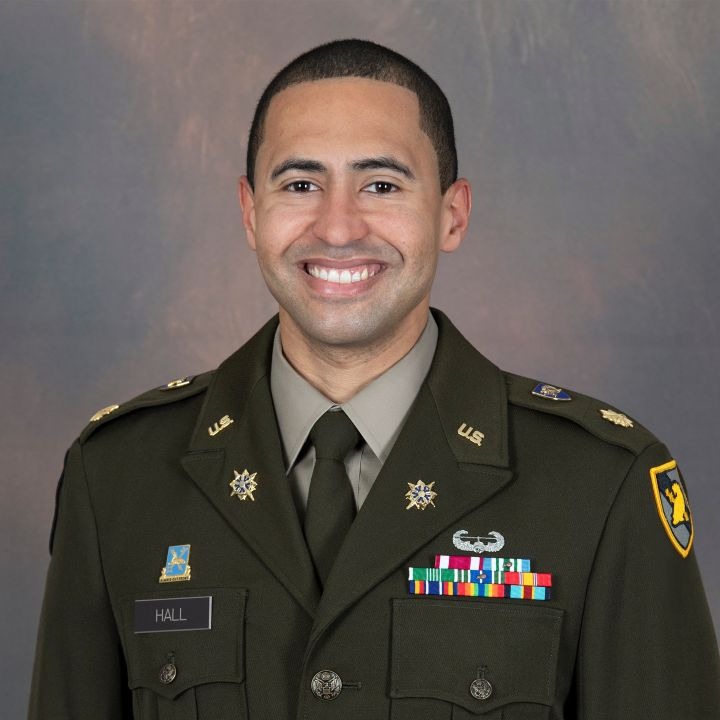
Derrick R. Hall serves as an instructor teaching general chemistry while holding the military rank of Major in the U.S. Army Military Intelligence Corps, with operational experience as Battalion S2 and Intelligence Planner. His academic background includes: M.S. in Chemistry from Purdue University (GEM Fellow) B.S. in Chemistry (Honors) from United States Military Academy at West Point, 2014 Research centers on military applications of green chemistry, specifically detection and decontamination of chemical warfare agents using catalytic processes. His graduate work pioneered essential trace elements for decontamination, evolving into current focus areas that bridge defense needs with environmental sustainability. Publication analysis reveals consistent expertise in catalytic decontamination methods (2018 heptamolybdate study) and sustainable military material cycles (2013 magnesium recycling research), demonstrating applied chemistry solutions for defense environmental challenges.
Dr. Christopher Coggins is a Professor of Geography and Asian Studies at Bard College at Simon’s Rock. His academic focus spans rural land use, biodiversity conservation, and the intersection of cultural practices with environmental management, particularly in China. He holds a PhD and MS from Louisiana State University and a BA from Wesleyan University. Dr. Coggins’s research centers on southern China’s fengshui forests—sacred groves managed communally for ecological and spiritual purposes. Since 2011, he has led interdisciplinary projects funded by the Luce Foundation, ASIANetwork, and others, involving students in fieldwork analyzing these forests’ ecological roles and sociocultural significance. His work bridges political ecology, history, and anthropology, with notable publications including Sacred Forests of Asia (2023) and The Tiger and the Pangolin (2003), which received the Julian Steward Award. His teaching emphasizes critical geography, Asian philosophies, and environmental policy. Media appearances include BBC documentaries and interviews on China’s ecological civilization. Coggins has organized student research conferences and collaborated internationally, fostering connections between academia, policy, and local communities. Key achievements include securing a $400,000 Luce Foundation grant to expand environmental studies in Asia, and co-editing volumes that explore fengshui forests’ roles in biodiversity conservation and cultural resilience. His research underscores the global relevance of traditional ecological knowledge in addressing contemporary environmental challenges.
Dr. Minkwan Kim is an Associate Professor at the University of Southampton. He specializes in advanced propulsion systems, plasma engineering, and aerospace technologies. His research focuses on CubeSat propulsion, in-situ resource utilization for space missions, and non-thermal plasma applications in environmental and medical contexts. He currently supervises seven PhD students and teaches courses in astronautics and spacecraft systems engineering. Dr. Kim has received recognition for innovative solutions in pandemic response through the AHSN Regional Competition (2020). His work bridges academic research with practical applications in space sustainability, environmental engineering, and healthcare technologies. Research Projects: Includes Cube-de-ALPS propulsion, demilitarization of chemical agents, and magnetic shielding for hypersonic vehicles. Teaching: Courses such as SESA3039 Advanced Astronautics and SESA6079 Space Systems Engineering. His publications span plasma dynamics, satellite deorbiting strategies, and interdisciplinary applications of plasma technology. Collaborations include projects funded by the Royal Society, Research England, and the European Union.