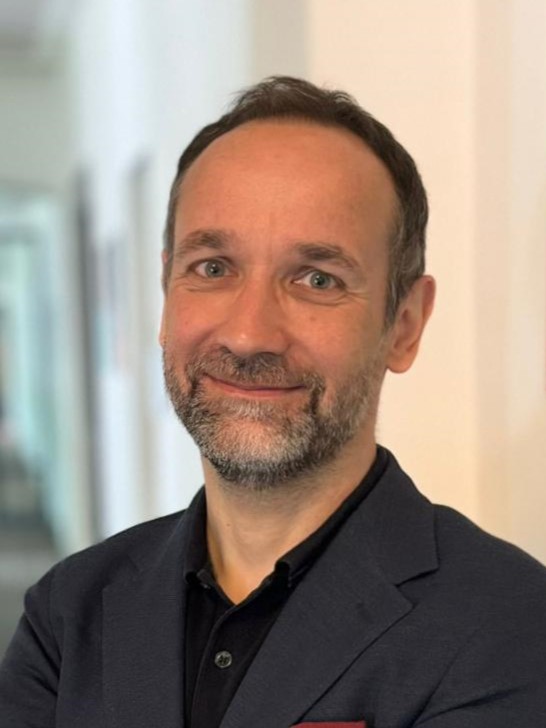
Prof. Dr. Peter Vorderer is a full professor of Media and Communication Studies at the University of Mannheim's Philosophical Faculty, leading the Institute for Media and Communication Studies. He holds a PhD from TU Berlin and has held professorships at institutions such as the University of Toronto, USC's Annenberg School, and the Free University of Amsterdam since 2010. His research focuses on media psychology, exploring media effects, entertainment media narratives, and the pervasive role of digital connectivity in everyday life. Education includes studies at Heidelberg and Mannheim Universities, with additional training at NYU and the University of Michigan. He has served as editor for Zeitschrift für Medienpsychologie and Media Psychology , and as President of the International Communication Association (2014-2015). His work bridges psychological and societal impacts of media, emphasizing entertainment's cognitive and emotional dimensions. Key research themes include media-induced resonance theory, mobile communication's psychological effects, and digital dependency. His 15 most recent articles (2014-2020) reveal a focus on media's role in well-being, social behavior, and cognitive processing. Awards include ICA Fellowship (2016). His lab contributes to understanding media's dual hedonic/eudaimonic functions and their societal implications.
Prof. Dr. Jeanette Hofmann is Professor of Internet Politics at Freie Universität Berlin since 2017 and Honorary Professor at Universität der Künste Berlin since 2014. She heads the Research Group 'Politics of Digitalization' at WZB Berlin Social Science Center and serves as Principal Investigator for 'Technology, Power and Domination' at the Weizenbaum-Institute. Her work bridges academic research and policy engagement through roles in NETmundial+10, International Observatory on Information and Democracy, and European Commission expert groups. Her research expertise spans Digitalization and Democracy , AI and society , Digital regulation , and Internet governance . Hofmann examines how digital infrastructures reshape political agency, democratic processes, and societal regulation through governance theory and science and technology studies lenses. Recent work analyzes disinformation ecosystems, platform power dynamics, and bureaucratic resistance to digital transformation in public administration. Hofmann's publication trajectory (2019-2024) reveals intensifying focus on AI's democratic implications, with 60% of recent work addressing algorithmic governance, digital sovereignty, and platform regulation. Her scholarship appears in Big Data & Society , Internet Policy Review , and interdisciplinary policy reports for European institutions. Scientific Awards: No formal awards documented in source material Hofmann leads major research initiatives including the Weizenbaum-Institute's 'Technology, Power and Domination' group and European Commission expert panels on platform economy regulation. Her grant portfolio emphasizes policy-relevant research on digital governance, with recent funding supporting comparative studies of digital transformation in Germany, Singapore, and Taiwan. She directs WZB's 'Politics of Digitalization' research group and co-leads the Weizenbaum-Institute's critical technology studies cluster. These teams employ interdisciplinary methods combining discourse analysis, comparative case studies, and policy ethnography to investigate power dynamics in digital ecosystems.
Lucio Baccaro is Director at the Max Planck Institute for the Study of Societies (MPIfG) and was Full Professor of Macrosociology at the University of Geneva, where he also served as Deputy Dean for Research (2016–2020). He has held academic positions at MIT, Case Western Reserve University, and visiting roles at the University of Turin and the University of Vienna. His primary affiliations are with MPIfG and the University of Geneva, both central to his research in political economy and sociology. Education: PhD in Management and Political Science, Massachusetts Institute of Technology (MIT), 1999 Doctorate in Labor Law and Industrial Relations, University of Pavia, 1997 Master of Business Administration, Stoa' (IRI-MIT joint venture), 1991 Laurea in Philosophy, summa cum laude, University "La Sapienza", Rome, 1989 Lucio Baccaro’s research focuses on comparative political economy, labor relations, global worker rights, and deliberative governance . His work integrates economic sociology and political sociology to analyze institutional change, social dialogue, and the impact of globalization on labor and welfare systems. He has led major comparative studies on employment models, pension reforms, and international labor standards. His scholarship emphasizes the interplay between institutions, ideas, and power in shaping economic governance. His recent publications reveal a consistent focus on institutional change, deliberative processes, labor market reforms, and global justice . Themes include path dependence in international organizations, the transformation of collective bargaining, and the role of expertise in democratic governance. His interdisciplinary approach bridges sociology, political science, and economics, with strong methodological rigor in comparative and qualitative analysis. Scientific Awards and Honors: Honorary Professor, University of Duisburg-Essen (2023) Professeur honoraire, University of Geneva (2020) International Geneva Award (2011) Outstanding Young Scholar Award, IRRA (2003) Founder's Prize, SASE (2001) Maurice F. Strong Career Development Chair, MIT (2006–2009) Multiple fellowships from SSRC, Harvard, MIT, and CUNY Alfiere del Lavoro, awarded by the President of Italy (1984) Advising and Grants: While specific student advisees are not listed, Baccaro has supervised research and mentored scholars through his roles at MPIfG and the University of Geneva. He has secured substantial research funding, including grants from the Swiss National Science Foundation (SNF) and the Swiss Network for International Studies (SNIS), supporting projects on post-Fordist growth models, employment policy, and deliberative governance. His leadership in co-principal investigator roles highlights his collaborative research approach and institutional influence. Labs and Research Teams: As Director at MPIfG, Baccaro leads a major research institute focused on the study of societal and economic institutions. He has been instrumental in shaping research agendas on political economy and governance, fostering interdisciplinary collaboration and international scholarly exchange.
Saskia Goldberg is a Research Fellow at the Institute of Social Sciences , University of Stuttgart , with a current affiliation as Postdoctoral Researcher at the KU Leuven (since April 2022). Her work focuses on deliberative democracy, dialogic citizen participation, and legitimacy perceptions in representative democracies. Education: Master in Empirical Political and Social Research from University of Stuttgart (2014–2016) Goldberg’s research examines how citizens evaluate deliberative minipublics, the contingent legitimacy perceptions of non-participants, and the intersection of deliberation with policy outcomes. She has conducted empirical studies on democratic preferences, citizen forums, and dialogic participation in local governance. Her recent publications analyze the legitimacy of deliberative forums, cost-benefit assessments of citizen participation, and democratic expectations. Trends in her work include experimental methodologies, comparative studies of political systems, and the practical implications of deliberative innovations in real-world governance contexts. Goldberg has collaborated with institutions like the Ohio State University (2021) and contributed to edited volumes on empirical social research and democratic theory. Her teaching experience includes courses on democratic innovations, political systems, and comparative democracy models. She has participated in projects funded by the Fritz-Thyssen-Stiftung and Baden-Württemberg Stiftung , focusing on evaluating citizen participation mechanisms and analyzing democratic preferences.
Miriam Hartlapp serves as Professor for Comparative Politics: Germany and France at the Freie Universität Berlin (FUB), where she has held her position since April 2017. Prior to joining FUB, she occupied professorial chairs at Leipzig University (2014-2017) and the University of Bremen (2013-2014), with earlier research roles at the Max Planck Institute for the Study of Societies, International Labour Organization (ILO) in Geneva, and WZB Berlin Social Science Center. She is affiliated with the Otto Suhr Institute of Political Science within the Department of Political and Social Sciences. Her research centers on European integration and comparative politics, specifically examining power dynamics, polarization, and conflict within the EU multilevel system. She investigates intersections between EU economic and social integration, representation mechanisms in political institutions, and the evolving role of soft law in EU governance. Current projects include 'Varieties of Procurement Regimes: How Do States Procure Strategically and to What Effect?' (Strategic Procurement with David Levi-Faur) and 'Reconfiguring EU through Spending' (ReSpend), which analyze strategic public procurement and EU spending policies respectively. Analysis of her 2021-2025 publications reveals a dominant focus on EU soft law mechanisms, public procurement systems, and gender representation in EU institutions. Her work demonstrates increasing attention to green-social policy synergies in procurement, Eurosceptic polarization effects, and the reconfiguration of EU social policy through spending instruments. Methodologically, she employs comparative analysis centered on France and Germany while examining institutional dynamics across EU policy domains. Professor Hartlapp actively leads the ReSpend project team at the Otto Suhr Institute, investigating how EU spending patterns reshape integration processes. Her research integrates theoretical frameworks from political economy, institutional analysis, and gender studies to address contemporary challenges including populism, democratic representation gaps, and sustainable policy transitions within the European project.
Prof. Dr. Gabriele Abels is a Full Professor of Comparative Politics and European Integration at the Institute of Political Science, University of Tübingen, within the Faculty of Economics and Social Sciences. She has held a Jean Monnet Chair since 2011 and served as Director of the Jean Monnet Center of Excellence PRRIDE (2015–2018) and President of the German Political Science Association (DVPW) from 2012 to 2015. Since 2021, she has been a member of the Constitutional Court of Baden-Württemberg, underscoring her significant role in public and academic life. Research Interests: Her research spans Comparative Politics , European Integration , Gender Studies , Federalism , and EU Governance . She investigates the role of regional parliaments, gender equality policy, democratization, and the legitimacy of EU institutions, with a focus on the Conference on the Future of Europe and the von der Leyen Commission. Her work integrates feminist theory into European integration studies, analyzing gendered dimensions of leadership, representation, and policy-making. Recent Publications: Her most recent scholarly contributions examine masculinities in post-conflict settings, gender and intersectionality in the 2021 German election, and the EU's gender equality strategy. She has also published extensively on regional governance, parliamentary scrutiny, and historical perspectives on women's political representation. Her work appears in journals like Peacebuilding , Journal of Common Market Studies , and The Journal of Legislative Studies , and in edited volumes on gender and EU politics. Scientific Awards and Honors: Jean Monnet Chair 'ad personam' (since 2011) President, German Political Science Association (2012–2015) Director, Jean Monnet Center of Excellence PRRIDE (2015–2018) Member, Constitutional Court of Baden-Württemberg (since 2021) Advising and Grants: She has supervised numerous Master's theses in the 'Democracy and Governance in Europe' (MADRE) program and led funded research projects, including the Jean Monnet Center of Excellence. She has participated in EU-funded initiatives such as Erasmus+ and organized student excursions to Brussels, facilitating direct engagement with EU institutions and practitioners. Her leadership roles in research centers and academic associations reflect sustained grant and institutional support. Labs and Teams: She leads research within the Institute of Political Science and collaborates with the European Center for Research on Federalism. She has coordinated the PRRIDE research center and works with a team including Dr. Martin Große Hüttmann, Dr. Lisa Damaschke-Deitrick, and other scholars. Her work involves close collaboration with international partners and visiting scholars, fostering a dynamic research environment focused on European integration and governance.
Prof. Dr. Christian Diller is a Professor at the Justus Liebig University Giessen, where he leads the Spatial Planning and Urban Geography Division within the Institute of Geography. He serves as Chairman of the Bachelor Examination Board in Geography and is responsible for B.Sc. internships and thesis supervision. His research spans multiple critical areas of spatial planning and urban geography with significant funding from DFG, BMBF, and other agencies. His research focuses on six interconnected areas: climate resilience and critical infrastructure planning; urban geography and gentrification processes; settlement geography and spatial development patterns; regional development and governance; spatial evaluation research; and planning theory and methodology. His current work examines how spatial planning can address climate change impacts, particularly regarding critical infrastructure vulnerability, and investigates state-led gentrification processes in German cities through large-scale empirical analysis. Professor Diller leads multiple major research projects including MAPROLEIT (Material and procedural models of spatial planning), State-Led Gentrification research, KritIKlima (critical infrastructure and climate change), and VALPLAN (values in planning processes). His work combines theoretical development with practical applications, often involving multi-method approaches that bridge quantitative and qualitative techniques. His research has significant policy implications for urban development, climate adaptation, and regional planning in Germany and beyond. The findings contribute to strengthening municipal capacities for climate resilience and improving planning practices through evidence-based evaluation of planning instruments and methods. Professor Diller supervises numerous doctoral candidates and has completed supervision of several PhD theses on topics ranging from wind energy planning to urban development instruments. His collaborative approach is evident in his extensive network of research partnerships across German universities and research institutions. Lead researcher on over 15 major research projects since 2009 Principal investigator for multiple DFG-funded projects Supervisor of 16+ doctoral candidates (completed and ongoing) Collaborator with researchers across Germany and internationally
Prof. Dr. Birgit Peters holds the Professorship for Public Law with a focus on International and European Law at the University of Trier . Her work bridges legal theory and practice across international environmental governance, climate change litigation, and participatory democracy frameworks. Key Affiliations : University of Trier (since 2024), University of Rostock, University of Münster Research Themes : Environmental human rights, legitimacy of EU administrative networks, cross-border participatory mechanisms Her article portfolio reveals a trajectory from foundational studies on customary international law (2010) to cutting-edge analyses of climate adjudication (2025). Notably, her work on "Legitimation through public participation" (2020) and "The Europeanization of Participation" (2015) demonstrates sustained expertise in procedural legitimacy. Prof. Peters actively engages in policy dialogue , including submissions to the International Court of Justice (2024) and UN Special Rapporteur (2023). She contributes to legislative commentary on climate protection acts and participates in international symposia on law-nature interfaces. Teaching Innovations : Jessup Moot Court, simulation games for international law education Public Engagement : Regular media commentary in Legal Tribune Online , podcast appearances
Prof. Dr. Berit Völzmann holds the Acting Chair for "Public Law, especially Constitutional Law, and Legal Philosophy" at Humboldt University of Berlin since April 2025. Previously, she served as a Visiting Professor at Leibniz University Hannover (2024) and as a Research Assistant at Goethe University Frankfurt am Main (2016–2023). Education: Habilitation (2023), Second State Examination (2015), Doctorate (2014) from University of Cologne. Research Focus: Intersects constitutional law, gender equality, anti-discrimination, and democratic theory. Recent works address digital rights, climate justice, and posthumanist legal frameworks. Awards include the prestigious Leibniz Prize. Publications: Span feminist legal theory, administrative process reforms, and gender-discriminatory advertising critiques. Notable monograph: Functional Transformation of the Administrative Process (2025). Notable Awards: Leibniz Prize Habilitation from Goethe University Frankfurt Teaching: Offers courses in Public Law, Legal Philosophy, and Anti-Discrimination Law at Humboldt University. Regularly participates in research workshops and lectures on legal mobilization and postgender jurisprudence.
Prof. Dr. Regina Kreide is a Full Professor of Political Theory and History of Ideas at Justus Liebig University Giessen. She serves as Co-Director of the DFG-funded Collaborative Research Center 'Dynamics of Security' and leads the DAAD ISAP partnership with Universidad de Antioquia in Colombia. Her research focuses on critical analyses of security mechanisms, minority rights, and democratic transformations in global contexts. Her scholarly work engages with: Political and critical theory examining global justice paradigms Securitization dynamics affecting marginalized communities Democratic theory in digital and transnational spaces Housing justice and property relations as sites of political struggle AI's impact on public discourse and democratic deliberation Kreide's publications demonstrate sustained engagement with Habermasian critical theory while addressing contemporary challenges like migration governance, algorithmic power, and housing inequality. Her recent work shows increased focus on material inequalities and technological disruptions to democratic processes. She actively mentors doctoral candidates, having supervised 16 PhD students on topics ranging from digital activism to postcolonial democracy. As project leader for major DFG and DAAD initiatives, she coordinates international research on Roma minorities and security politics. Her team includes four researchers and administrative staff supporting the Collaborative Research Center's operations.
Dr. Ray Hebestreit is a Research Assistant and Coordinator of the BA Political Science program at the Institute of Political Science, University of Duisburg-Essen. He serves as Research Coordinator for the NRW School of Governance and has held editorial and academic roles since 2007. Education: Studied Political Science and Economics at Philipps University of Marburg (2001–2006); received Dr. rer. pol. in 2011. His research focuses on political and civic participation, especially dialogic/discursive models, theories of democracy, Smart City governance, knowledge society dynamics, and the interplay of knowledge and ignorance in political contexts. His publications analyze municipal governance, federal institutions, and electoral strategies. Ray Hebestreit is affiliated with the German Political Science Association (DVPW), the German Political Science Association (DGfP), the 'Research Group on Governance' at the NRW School of Governance, and the Association for Citizen Participation. He has coordinated academic programs, served as Editor-in-Chief of the Journal of Political Science (ZPol), and participated in research projects like 'Educational Equity in Focus.'
Dennis Frieß is a researcher and coordinator at the Heinrich Heine University Düsseldorf, specifically working with the Düsseldorfer Institut für Internet und Demokratie (DIID) as its coordinator since August 2022. Previously, he served as the coordinator of the NRW Research College Online Participation from May 2019 to June 2022. His academic journey includes being a research assistant at the Chair of Communication and Media Studies III at HHU-Düsseldorf from April 2013 to April 2019. His educational background includes a Bachelor of Arts in Social Sciences, Law, and Communication Science from the University of Erfurt (2006-2010) and a Master's in Political Communication from Heinrich-Heine-Universität Düsseldorf (2011-2013). He completed his PhD in 2020 with the dissertation "Deliberative Online-Öffentlichkeiten. Eine kumulative Analyse" (Deliberative Online Publics: A Cumulative Analysis). Dennis Frieß's research primarily focuses on political (online) communication, online deliberation, and online participation . His work explores how digital platforms can facilitate democratic discourse, the quality of online political discussions, and the role of design in shaping deliberative outcomes. More recently, he has been investigating the intersection of artificial intelligence and democratic deliberation, examining how AI technologies might support or hinder meaningful online discourse. An analysis of his recent publications (2023-2025) reveals a strong emphasis on understanding user behavior in political online discussions, with particular attention to how different social media platforms shape political engagement. His work increasingly addresses the role of artificial intelligence in online public spheres, examining both the potential benefits and ethical concerns. Key themes across his publications include deliberative quality in online discussions, political participation patterns across platforms, and the democratic implications of digital communication design. Best Paper Award at DGPuK-Fachgruppentagung Kommunikation und Politik (PolKomm2023) for "KI und Deliberation: Normative Ideale im Lichte der aktuellen KI-Forschung. Ein Systematischer Literaturüberblick" ASI-Nachwuchspreis 2021 (methodische Kategorie) for "Collective Civic Moderation for Deliberation? Exploring the Links between Citizens' Organized Engagement in Comment Sections and the Deliberative Quality of Online Discussions" Finalist in Deutscher Studienpreis 2021 (Sozialwissenschaften) for "Weil aus Worten Taten werden. Deliberative Online Öffentlichkeiten" As coordinator of the DIID and previously the NRW Research College Online Participation, Frieß has been involved in numerous research projects examining digital democracy and online participation. His work with the DIID Monitor Online-Participation NRW and the IndI (Innovative Interventions for Discursive Integration) project demonstrates his commitment to translating research into practical applications for democratic innovation. He has also contributed to media discussions about digital democracy, appearing in outlets such as NDR, Antenne Düsseldorf, and Deutschlandfunk Kultur. Dennis Frieß is an active member of several academic communities, including the Deutsche Gesellschaft für Publizistik- & Kommunikationswissenschaft (DGPuK), the International Communication Association (ICA), and the European Communication Research and Education Association (ECREA), reflecting his engagement with both national and international scholarly conversations about digital democracy.
Andra-Ioana Horcea-Milcu is a Professor at the University of Kassel , leading the Cultures of Sustainability section within the Faculty of Humanities and Cultural Studies. She is a sustainability scientist with expertise in transdisciplinary research for sustainability transformations, focusing on values as leverage points and inner dimensions of cultural change. Academic Affiliation : University of Kassel, Germany Education : PhD in Social-Ecological Systems (Leuphana University), MA in Environmental Sciences (Université Libre de Bruxelles), License in Systems Ecology (University of Bucharest) Her research bridges social-ecological systems and transdisciplinary knowledge co-creation , emphasizing how values can drive sustainability innovation. Recent work explores transformative research methodologies , conflict resolution in sustainability science , and scaling impact through co-production . She has contributed to major global assessments as a lead author for IPBES and served as a Marie Skłodowska-Curie Fellow and IASS Fellow . Her editorial role at Sustainability Science underscores her influence in the field. Notable scientific contributions include: 2024: Transformative research frameworks 2023: Mobilizing values for sustainability 2022: IPBES assessments and co-productive agility
Sophie Kuppler is a Researcher at the Institute for Technology Assessment and Systems Analysis (ITAS) of the Karlsruhe Institute of Technology (KIT), specializing in nuclear waste governance , long-term planning , and public participation . Her work bridges socio-technical systems analysis with energy transition studies, focusing on repository research, conflict management, and transdisciplinary collaboration. Education BSc in Environmental and Resource Management, Technical University of Cottbus MSc in Technical and Socio-Economic Planning, University of Roskilde PhD in Sociology, University of Stuttgart (2016) Research Focus Long-term governance of nuclear waste repositories Public participation in infrastructure conflicts Socio-technical analysis of energy systems Comparative governance frameworks (Germany/Switzerland) Transparency in nuclear waste management Her publications emphasize place-sensitive governance , institutional learning , and participatory mechanisms in high-risk contexts. Current projects include co-designing geothermal energy concepts and analyzing nuclear cultural heritage. Kuppler's methodological approach combines qualitative case studies, stakeholder workshops, and comparative policy analysis. Scientific Contributions Co-developed frameworks for long-term nuclear waste governance Proposed place-based strategies for repository siting Advanced analytical tools for stakeholder engagement Investigated transparency mechanisms in nuclear facilities
Christine Reh is Professor of European Politics at the Hertie School in Berlin. She previously served as Dean of Graduate Programmes (2018-2022) and held academic positions at the College of Europe (Bruges) and University College London . Her research focuses on EU institutions, politicisation, and legitimacy, particularly analyzing informal governance and national electoral influences on supranational decision-making. PhD from European University Institute (Florence, Italy) in 2007 Editorial Board Member, Journal of European Public Policy Co-Editor, European Union series at Bloomsbury Press Her research explores: EU decision-making under ideological gridlock Impact of domestic politics on European Commission agendas Politicisation-depoliticisation strategies in EU institutions Legitimacy challenges in multilevel governance Codecision procedures and informal legislative practices Consensus-building in European integration Key publication themes include: Trilogue negotiations and early agreements European Council's legislative authority European Parliament's intra-organisational politics Accountability mechanisms in EU financial governance Normative assessments of informal politics She teaches graduate courses on: EU politics and policy-making European Union governance Qualitative research methods Climate policy in Brussels Contact: reh@hertie-school.org | Office hours: Mondays 2-4pm (Room 2.50)