
معرفی
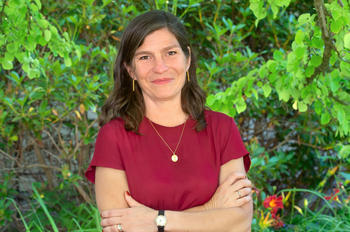
Miriam Hartlapp serves as Professor for Comparative Politics: Germany and France at the Freie Universität Berlin (FUB), where she has held her position since April 2017. Prior to joining FUB, she occupied professorial chairs at Leipzig University (2014-2017) and the University of Bremen (2013-2014), with earlier research roles at the Max Planck Institute for the Study of Societies, International Labour Organization (ILO) in Geneva, and WZB Berlin Social Science Center. She is affiliated with the Otto Suhr Institute of Political Science within the Department of Political and Social Sciences.
Her research centers on European integration and comparative politics, specifically examining power dynamics, polarization, and conflict within the EU multilevel system. She investigates intersections between EU economic and social integration, representation mechanisms in political institutions, and the evolving role of soft law in EU governance. Current projects include 'Varieties of Procurement Regimes: How Do States Procure Strategically and to What Effect?' (Strategic Procurement with David Levi-Faur) and 'Reconfiguring EU through Spending' (ReSpend), which analyze strategic public procurement and EU spending policies respectively.
Analysis of her 2021-2025 publications reveals a dominant focus on EU soft law mechanisms, public procurement systems, and gender representation in EU institutions. Her work demonstrates increasing attention to green-social policy synergies in procurement, Eurosceptic polarization effects, and the reconfiguration of EU social policy through spending instruments. Methodologically, she employs comparative analysis centered on France and Germany while examining institutional dynamics across EU policy domains.
Professor Hartlapp actively leads the ReSpend project team at the Otto Suhr Institute, investigating how EU spending patterns reshape integration processes. Her research integrates theoretical frameworks from political economy, institutional analysis, and gender studies to address contemporary challenges including populism, democratic representation gaps, and sustainable policy transitions within the European project.
Miriam Hartlapp در جاهای دیگر
جستجوهای مرتبط
شاید اینها هم به کارتان بیاید
- MMiriam HartlappWZB Berlin Social Science Center · استاد
 Philipp GenschelFree University of Berlin · استاد
- MMichael BolleFree University of Berlin · استاد
- TTanja BoerzelFree University of Berlin · استاد
- TTanja A. BörzelFree University of Berlin · استاد
- HHans-Joachim MengelFree University of Berlin · استاد