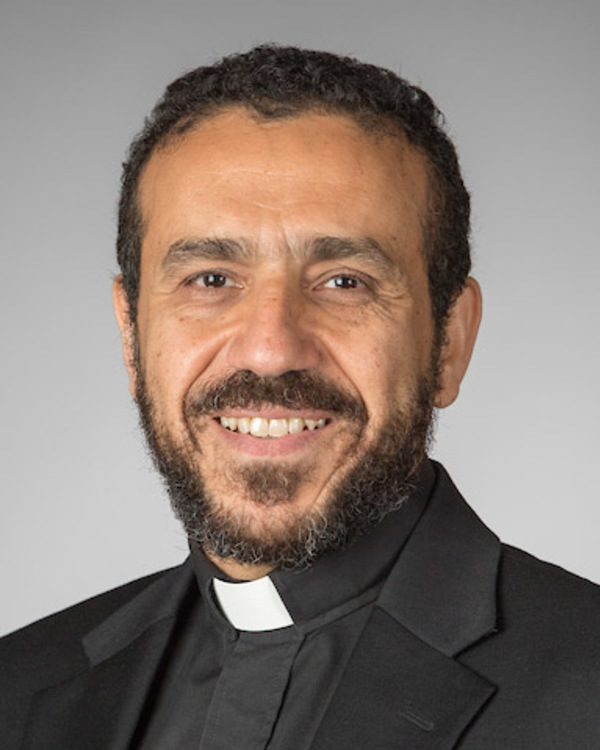
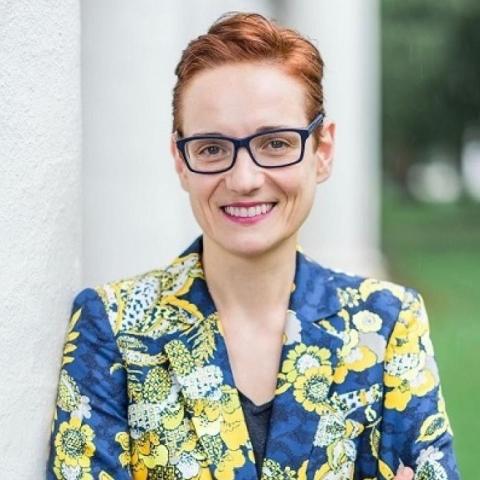
Khaled Anatolios is the Department Chair and John A. O'Brien Professor of Theology at the University of Notre Dame's College of Arts and Letters. His work bridges Patristic theology with contemporary theological discourse, focusing on the doctrinal coherence of early Christian thought. Primary Area: History of Christianity Secondary Area: Christianity and Judaism in Antiquity Research Interests encompass: Trinitarian Theology Christological Debates Soteriological Frameworks Patristic Biblical Exegesis Ecumenical and Contemporary Theological Engagement His publications, including Retrieving Nicaea and Athanasius: The Coherence of his Thought , analyze key figures like Irenaeus, Origen, and Augustine. Recent articles highlight: Continuing relevance of Nicene hermeneutics Liturgical theology in Eastern Christianity Methodological developments in Patristic thought Contact: kanatoli@nd.edu | Office: 242 Malloy Hall
Takashi Miura is an Associate Professor at the University of Arizona specializing in Japanese religions from the early modern to modern periods. His work explores millenarian movements, Shinto practices, and Buddhist visual culture. He holds degrees from the University of Hawai'i at Mānoa (B.A./M.A.) and Princeton University (Ph.D.). Dr. Miura's research examines religious innovations like the rise of 'yonaoshi' renewal gods and deified peasants. His 2019 monograph Agents of World Renewal analyzes apocalyptic concepts in Japanese history. Current projects include a study on early modern peasant deification and its societal impacts. He teaches courses on Buddhism and Japanese religious practices, including EAS 160A1 and JPN 220. His publications span academic journals and edited volumes, addressing topics from Meiji-era polemics to post-war new religions. His work frequently bridges textual analysis with visual and material culture studies.
Dr. Noga Ganany serves as University Associate Professor in the Study of Late Imperial China at the Faculty of Asian and Middle Eastern Studies, University of Cambridge, and holds dual roles as Governing Body Fellow and Director of Studies at Sidney Sussex College. Her scholarship centers on cultural history of Ming-Qing China (1400-1900), specializing in literature, religion, and book history with emphasis on print culture's role in religious practices. Education: PhD, Columbia University (2018) Research Focus: Dr. Ganany investigates the interplay between writing and worship in late-Ming hagiographic literature, examining how commercial publishing reshaped reverence for cultural icons and influenced pilgrimage. Her work extends to conceptualizations of death/afterlife through figures like King Yama, bridging literary analysis, religious studies, and historical context with material culture of the book. Publication Trends: Recent articles (2013-2023) reveal consistent engagement with religious narratives in late imperial China, particularly netherworld journeys, hagiographic texts, and tomb art. Her scholarship demonstrates interdisciplinary methodology combining textual analysis with visual/material sources, highlighting print culture's transformative role in religious practices and icon veneration. Academic Leadership: She actively supervises graduate research in late-imperial Chinese literature and religions, currently guiding Ilay Golan's PhD on overseas sailor religious traditions. Dr. Ganany organizes two major sponsored lecture series: 'Book Culture in Buddhism and Beyond' (Glorisun Global Buddhist Network) and the 'Yin-Cheng Distinguished Lecture Series on Buddhism' (Tzu Chi Foundation), fostering cross-disciplinary dialogue in Buddhist studies.
Dr. Daniel Castelo is the William Kellon Quick Professor of Theology and Methodist Studies at Duke University's Divinity School, serving concurrently as Associate Dean for Academic Formation (2023–2024). He holds a Ph.D. from Duke University (2005), M.Div. from Church of God Theological Seminary, and undergraduate degrees from Washington University and Lee University. His work bridges Latinx theologies, Methodist traditions, and pneumatology, emphasizing experiential spirituality and doctrinal innovation. Research interests include the doctrine of God, theological interpretation of Scripture, and intersections between Pentecostalism and Latinx theological perspectives. He co-edits the Wesleyan and Methodist Explorations series and serves on the Methodist Review editorial board. Notable awards include the John Templeton Award for Theological Promise (2011). Teaching focuses on advanced theological topics, Latinx theology, and Wesleyan foundations through courses like 'Introduction to Latinx Theology' and 'Pentecostal Theology.' He mentors students in Hispanic Summer Program initiatives and has taught globally in Mexico, Honduras, and Brazil.
Mark McInroy is a Professor and Associate Department Chair of Theology at the University of St. Thomas, College of Arts and Sciences (CAS). His research focuses on modern Christian theology, particularly the theology of Hans Urs von Balthasar, theological aesthetics, and deification in Christian traditions. He teaches courses such as Theological Anthropology, emphasizing Catholic perspectives on human nature and ministry. Education: ThD and M.Div. from Harvard Divinity School, BA from Southwestern University His research integrates patristic, medieval, and Reformation theologies, exploring themes like mystical theology, perception, and East-West Christian relations. Notable publications include Balthasar on the Spiritual Senses (2014) and contributions to Oxford Handbooks on Balthasar and deification. He has received prestigious awards like the Manfred Lautenschläger Award for Theological Promise (2015) and a Distinguished Early Career Grant (2018-2020). McInroy’s work bridges historical and constructive theology, addressing contemporary theological challenges through interdisciplinary approaches. He has co-edited volumes on theological aesthetics and Balthasar’s influence, reflecting his commitment to advancing theological discourse globally.
Christoph Hammann is a researcher at the Department of New Testament Studies within the Faculty of Protestant Theology at the University of Münster, working under Professor Eve-Marie Becker's chair since August 2022. He is currently completing his habilitation on "Authority, Power, and Rule in the Lukan Double Work: Exegetical Investigations of Luke's Ascending Christology Against the Background of Greek-Roman Biography, Historiography, and Epic" (2022-present). His research spans multiple interdisciplinary areas at the intersection of biblical studies, ancient philosophy, and cultural history. Hammann's primary interests include Pauline theology and epistolography, the Lukan works in Greco-Roman cultural context, the relationship between natural science and theology in early Christianity, philosophy of the Imperial Period and Late Antiquity, conceptions of history in the New Testament, and the beginnings of Christianity in Rome. His academic background combines classical philology (specializing in Greek studies) with Protestant theology, enabling unique cross-disciplinary approaches to biblical texts. Hammann's publication record reveals a consistent engagement with how early Christian texts interacted with and transformed contemporary Greco-Roman discourses on topics like purity, authority, and cosmology. His work often examines the philosophical and medical contexts of biblical concepts, particularly in relation to heart metaphors, sacrificial practices, and Christological development. DAAD Congress Travel Grant (2023) Publication subsidy for dissertation (2019) PhD Prize from Philipps-Universität Marburg (2019) Multiple international research grants from Evangelisches Studienwerk Villigst (2015-2018) Fondation Hardt research grant (2017) Hammann actively contributes to academic life through teaching undergraduate and graduate courses in New Testament exegesis (including Greek language instruction), organizing conferences such as the upcoming Colloquium Biblicum Lovaniense LXXIV on The Corinthian Letters (2025), and co-editing scholarly volumes like "Opfer in Antiochien" (2023). He serves on multiple academic committees and is a member of several scholarly societies including the Society of Biblical Literature (since 2025) and the Münster School of Ancient Cultures (since 2023). His research group within the Excellence Cluster "Religion and Politics" focuses on ancient cultural contexts of early Christianity, with particular attention to the intersections between biblical texts and Greco-Roman philosophical, medical, and political discourses. Hammann also leads student excursions to Rome to study early Christian sites and Pauline contexts.
Nalini Rao is an Associate Professor of World Art at Soka University of America. Her academic career includes positions at the University of Southern California, University of Hawaii Hilo, and California State Universities. She specializes in Indian art, archaeology, and religious studies, focusing on Hindu monasteries, relic worship, and pre-modern royal iconography. Education: PhD in Art History from UCLA (1991), PhD in Ancient History and Archaeology from University of Mysore (1981), MA in History of Art from University of Marathwada (1973). Research Interests: Hindu monastic institutions, Buddhist art, royal iconography, and maritime archaeology. She explores intersections between art, religion, and power in pre-modern India. Key Themes in Publications: Analysis of Vijayanagara royal imagery, Jain architecture in Sravanabelagola, and ritual symbolism in South Indian festivals. Her work bridges archaeology, art history, and cultural anthropology. Awards: Includes the IGNCA Award for Narrative Art (2014), PBRC Research Award (2010), and multiple fellowships for art history research. Teaching & Outreach: Courses span World Art, Asian Art History, and contemporary visual culture. Curated exhibitions on Indus Valley Civilization and modern Indian art.
John Wayne Kaufman is an Associate Professor of Early Christian Studies and the History of Theology at MF University College of Theology, Religion and Society. He currently serves as head of the Department of Theology and History and has held various academic leadership roles, including board member and department head. His research focuses on early Christianity (2nd–3rd centuries), with a specialization in Irenaeus of Lyons, emphasizing themes like salvation as deification, historical methodology, and the intersection of theology and history. He teaches courses on early Christianity, the history of theology, and historical methods in theological studies. Education and Academic Background: PhD in Theological History, MF University (2009) Cand.theol., MF University (2001–2003) Cand.philol. in Intellectual History, University of Oslo (1999–2001) Cand.mag. in German, Theology, and Intellectual History, University of Oslo (1995–1998) Research Interests: Kaufman’s work bridges early Christian theology, historical methodology, and the societal context of antiquity. He explores themes such as Irenaeus’ Christology, the development of Christian denominations, and the role of historical studies within theological frameworks. His recent publications address topics like Christian responses to ancient epidemics and the Delphic maxim’s influence on early Christian thought. Professional Contributions: Kaufman has edited volumes on ancient perspectives of love and contributed chapters to international collections. His work often engages with historical relativism and the essence of Christianity, reflecting his interdisciplinary approach to theological history.
Dr. Viacheslav V. Lytvynenko is a Research Professor at Charles University, Prague, and an Affiliated Researcher in Historical Theology at the Evangelical Theological Faculty, Leuven. He holds a Ph.D. in Greek Patristics (2014), an M.Th. (2003) from ETF Leuven, and a B.Th. (1996) from Donetsk Christian University. His research focuses on theological and textual analysis of patristic works , particularly those attributed to Athanasius of Alexandria and Pseudo-Athanasian texts in Slavonic traditions. He investigates manuscript transmission , translation errors , scribal habits , and the reception of anti-Arian motifs in medieval Slavic contexts, including Russia, Bulgaria, and Serbia. Recent publications highlight his expertise in manuscript studies (e.g., marginalia in Old Permic script), exegetical traditions (e.g., allegory in Pseudo-Athanasian texts), and historical theology (e.g., the evolution of the 'Knyazhiy Izbornik' in Slavic literature). His work bridges patristics , Byzantine studies , and Slavic medieval history . He has taught at multiple institutions, including ETF Leuven (2015–present), Gordon-Conwell Theological Faculty (2014–present), and Donetsk Christian University (2003–2010). While no student lists or awards are documented, his collaborations (e.g., with Irina Gritsevskaya) and extensive bibliography reflect significant contributions to theological and Slavic scholarship.
Vasudha Narayanan is a Distinguished Professor in the Department of Religion at the University of Florida, affiliated with the College of Liberal Arts and Sciences. She holds a Ph.D. from the University of Bombay and has held leadership roles including President of the American Academy of Religion (2001-2002). Her research focuses on Hindu traditions in India, Cambodia, and America, with particular emphasis on visual culture, gender, and material religion. Educated at the Universities of Madras, Bombay, and Harvard, her work explores themes such as Hindu temple architecture in Cambodia, diasporic religious practices, and gendered expressions of devotion. She has authored nine books, including co-editing the Brill’s Encyclopedia of Hinduism , and has been supported by grants from the Guggenheim Foundation, NEH, and ACLS. In 2023, she was elected to the American Academy of Arts and Sciences. Her research interests span Khmer art history, Bhakti poetry, and the intersection of religion with environmental ethics. She co-founded the Center for the Study of Hindu Traditions (CHiTra) at UF, dedicated to advancing scholarship on Hindu culture. Her recent work examines the cultural and religious exchanges between India and Cambodia, as well as the role of performance and ritual in diasporic Hindu communities. Notable awards include the University of Florida’s Teacher Scholar of the Year (2010). Her articles analyze topics ranging from temple iconography to gendered devotional practices, reflecting her commitment to interdisciplinary and globally oriented religious studies.
Ivana Petrovic is the Hugh H. Obear Professor of Classics at the University of Virginia. She specializes in Ancient Greek religion, Hellenistic poetry, and the interplay between texts and their historical, social, and religious contexts. Her research focuses on the role of belief in Greek religion, particularly the concepts of inner purity and pollution, challenging traditional views of Greek ritualism. Petrovic holds a Diploma in Classics from Belgrade, Serbia, and a PhD from Giessen University (2004). She has taught at Giessen University, Durham University, and joined UVA in 2016. She is the editor of the journal Greece and Rome and has co-edited major volumes such as Archaic and Classical Greek Epigram (2010), Inner Purity and Pollution in Greek Religion (2016), and Greek Epigram from the Hellenistic to the Early Byzantine Era (2019). Her current research with Andrej Petrovic explores the diachronic study of belief in Greek religion, emphasizing the significance of intrinsic faith-based elements. She has published extensively on topics including Greek epigram, sacred regulations, and religious interactions in the ancient Mediterranean. Petrovic has contributed to interdisciplinary discussions on the materiality of texts and the cultural poetics of Hellenistic poetry. Her work bridges literary and epigraphic analysis, examining how religious and social contexts shaped literary production.
Jennie Grillo is an Associate Professor of Theology at the University of Notre Dame, affiliated with the College of Arts and Letters. She holds a DPhil, MSt, and MA from Oxford University. Her primary research focuses on Christianity and Judaism in antiquity, particularly the Old Testament's interpretation within Christian theology and the history of Israelite religion. Grillo’s work bridges biblical studies, patristic exegesis, and reception history. Key publications include *Daniel After Babylon* (OUP, 2024) and *The Story of Israel in the Book of Qohelet* (OUP, 2012), which won the Manfred Lautenschlaeger Award. Current research explores divine incorporeality in the Hebrew Bible, with interests in wisdom literature, liturgical reception, and early biblical print traditions. Grillo has held fellowships from ACLS, the Louisville Institute, and the National Humanities Center. Her teaching emphasizes Hebrew Bible/Old Testament studies, reflecting her expertise in ancient Near Eastern thought and early Jewish-Christian interpretation.
Dr. phil. habil. Frank Förster is a researcher and curator at the Institute of Archaeology and Cultural Anthropology at the University of Bonn, specializing in Egyptology. He serves as Curator of the Egyptian Museum of the University of Bonn and holds the title of Temporary Academic Councillor. His academic journey includes a PhD and habilitation from the University of Cologne, with a focus on early Egyptian history, desert archaeology, and iconography. His research interests include Desert Road Archaeology , Predynastic and Early Dynastic Egypt , Rock Art , Sports in Ancient Egypt , and Pharaonic trade routes . He has led and contributed to major interdisciplinary projects, particularly under the DFG and the Collaborative Research Center 389 ACACIA. His scholarly work emphasizes the intersection of movement, landscape, and cultural expression in ancient Egypt. Frank Förster's recent publications reveal a strong focus on museum curation, artifact analysis, and the symbolic representation of violence and power in early Egyptian iconography. His work spans academic monographs, exhibition catalogs, and interdisciplinary studies. He has co-edited volumes on rock art and desert archaeology, and his articles frequently appear in leading Egyptological journals. He is actively involved in digital education, public outreach, and exhibition development. Notably, he contributed to the relocation and reopening of the Egyptian Museum at the University of Bonn in 2024. His academic service includes obituaries, editorial work, and collaborative research with international institutions. Member, Heinrich-Barth-Institut für Archäologie und Umweltgeschichte Afrikas e.V. Member, Uschebti e.V. – Verein der Freunde und Förderer des Seminars für Ägyptologie der Universität zu Köln He has advised on numerous exhibition projects and virtual reality tours, integrating academic research with public engagement. His work exemplifies a commitment to both scholarly rigor and accessibility in Egyptology.
Yuhang Li is an Associate Professor of Chinese Art at the University of Wisconsin–Madison’s Department of Art History. She serves as Affiliate of the Religious Studies Program, Department of Asian Languages and Cultures, and Center for East Asian Studies, and holds the role of Faculty Director of Material Culture at the Center for Design and Material Culture. Her education includes a B.A. from Central Academy of Fine Arts (Beijing, 1991), M.A. from the University of Illinois at Urbana-Champaign (2001), and Ph.D. from the University of Chicago (2011). Her research focuses on gender and material practice in late imperial China, particularly Buddhist women’s artistic devotions, Chinese textiles and costume, opera’s role in visual culture, and Qing court art. Her book Becoming Guanyin (2020) won major academic awards. She co-edited Performing Images: Opera in Chinese Visual Culture (2014) and contributed to special issues on Empress Dowager Cixi. Teaching includes courses on Asian art surveys, Chinese art history, material culture, and gender studies. Her work bridges art history with religious studies, exploring how material practices reflect gendered identities and religious belief. Awards include the 2021 Religion and the Arts Book Award and the 2024 Geiss-Hsu Book Prize. Her research frequently examines the intersection of ephemeral mediums (e.g., paper, hair embroidery) with enduring cultural and religious themes.
Rev. Prof. John Behr holds the Regius Chair in Humanity at the University of Aberdeen, appointed in 2020. Previously, he served as Dean of St Vladimir’s Orthodox Theological Seminary (1995–2017) and held the Father Georges Florovsky Distinguished Professorship. His work bridges patristic scholarship and contemporary theology, focusing on early Christian thought, Nicaean theology, and theological anthropology. He earned a D.Phil. (Oxford) and D.D. (Melbourne). Research interests include the theology of Irenaeus, Origen, and Gregory of Nyssa, with a focus on Christology, asceticism, and the Council of Nicaea. His major works include The Mystery of Christ (2006), Becoming Human (2013), and critical editions of Origen’s On First Principles (2017). His recent articles explore Nicaean legacy, patristic exegesis, and theological responses to modern challenges. His publications reflect engagement with ecumenical dialogue, biblical hermeneutics, and the intersection of science and faith. Behr’s academic leadership includes directing theology programs and editing series like the Popular Patristics . His contributions emphasize the continuity of early Christian tradition with contemporary theological discourse.