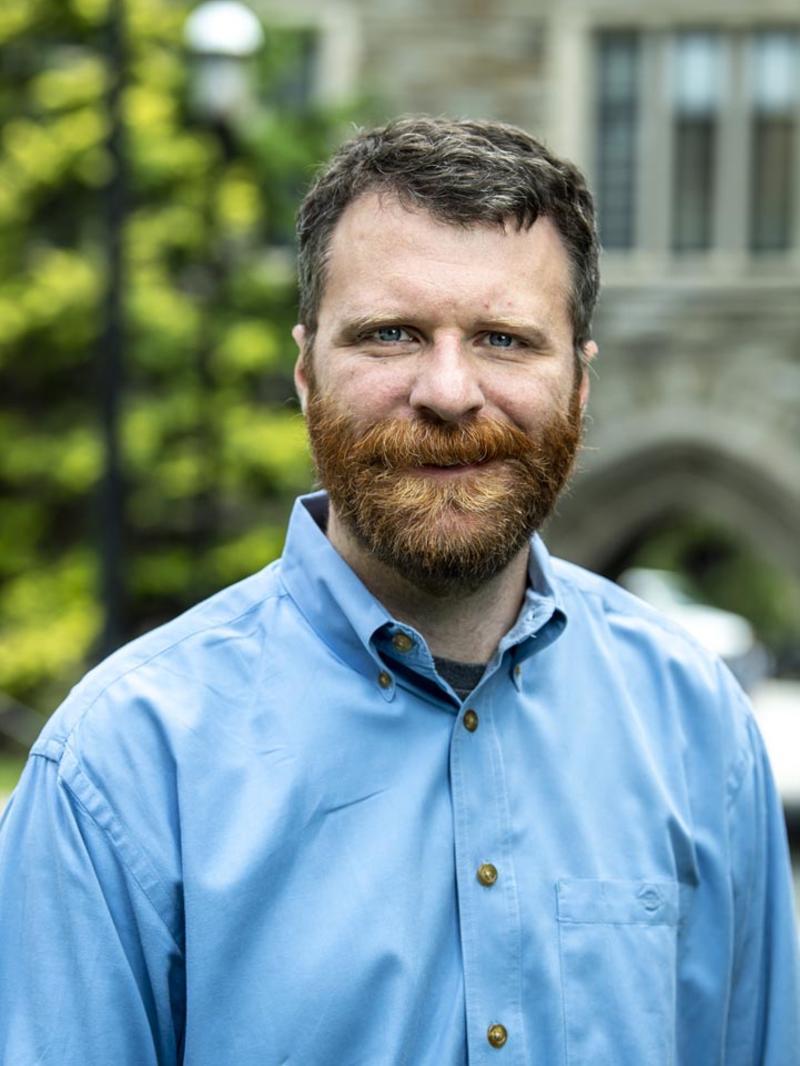
Roger Maull is a Professor of Management Systems at the University of Exeter’s Business School and serves as the Academic Director of the Initiative for the Digital Economy at Exeter (INDEX), based in London’s South Bank. His research bridges digital technologies, operational systems, and sustainability, with a focus on the intersection of the Digital Economy and Circular Economy. BA in Economics, MSc in Management Information Systems, PhD (1987) Roger’s work explores how digital systems transform business models, supply chains, and societal structures. Key themes include data sharing ethics, IoT applications in food systems, and the role of systems theory in sustainable innovation. He has pioneered the HAT platform for personal data management and co-founded the startup Dataswyft.io. His publications span 15 recent years, emphasizing digital transformation, circular supply chains, and ethical frameworks. Notable projects include the Food Data Trust and the Internet of Food Things, funded by grants exceeding £40m from UKRI agencies. Current initiatives involve the DIGIT EPSRC project and the Defence Data Research Centre (DDRC.uk).
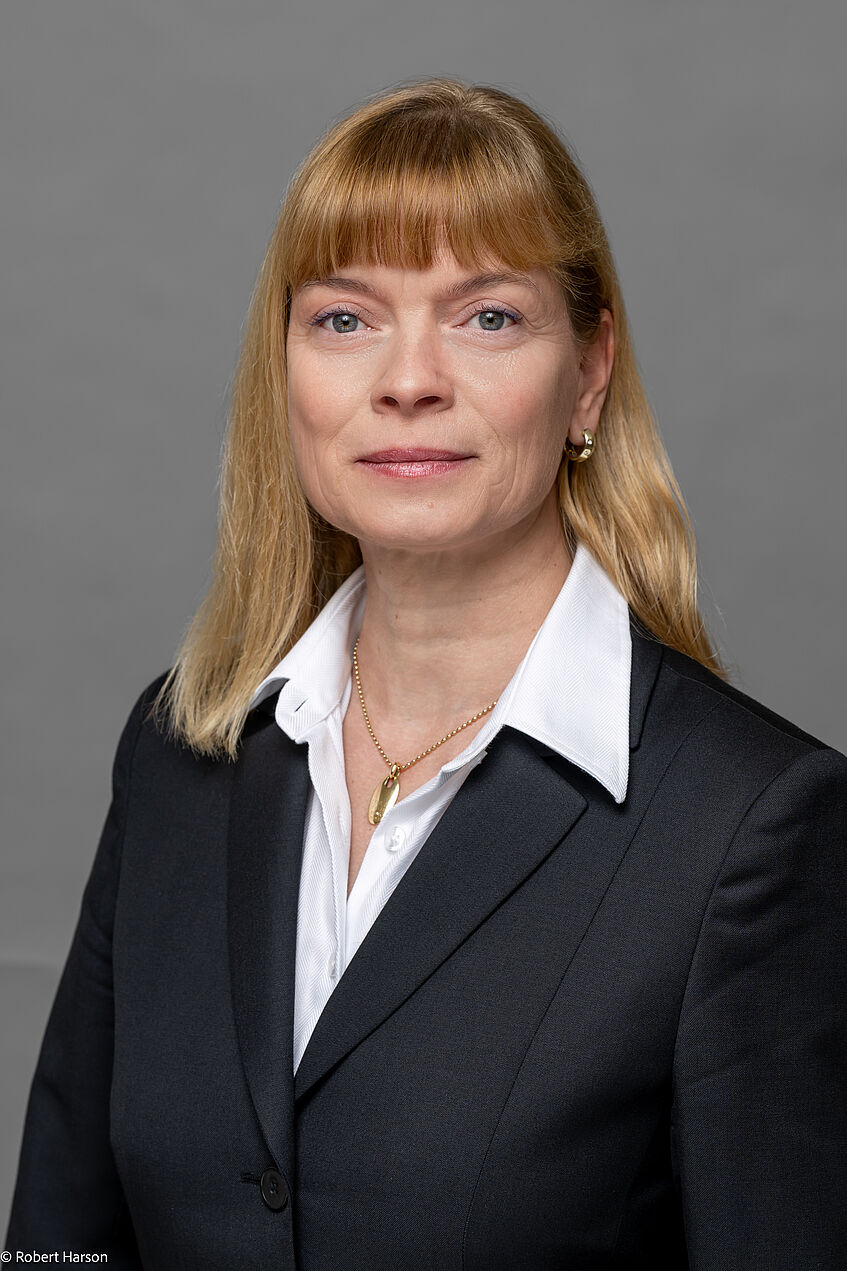
Dr. Jessica Lynn Corsi is a Senior Lecturer in Law at The City Law School, City, University of London, and a founding faculty member at the interdisciplinary Violence and Society Centre. She co-leads the £7.1 million VISION consortium grant (2020–2025) focused on violence reduction through data innovation. Key roles: Co-Investigator on VISION grant Lead for Disability and Accessibility (Equality, Diversity, Inclusion team) Advisory Board Member for City's Gender Equality and Law Project (Indonesia partnerships) Her research spans public international law, human rights law, and gender studies, addressing violence in diverse contexts including armed conflict, gender-based violence, and legal frameworks for marginalized groups. She combines traditional legal methods with interdisciplinary approaches. Recent research includes: Co-founding the Working Group on Gender Parity for the International Court of Justice Systematic reviews on gendered homicide defenses globally Developing evidence synthesis frameworks for legal materials She holds a PhD in Law from Cambridge, a Juris Doctorate from Harvard, and degrees from Cambridge and Georgetown University’s School of Foreign Service. Scientific awards include: Higher Education Innovation Funds (2023–2024) for ICJ gender parity work Policy Support Fund (2023) for gender bias in homicide defenses British Academy grants and Brunel Research Initiative Fund (2018)
Christopher W. Close is Professor of History at Saint Joseph's University, Philadelphia, where he has taught since 2012. Specialising in the political and religious history of early-modern Europe, he focuses on the Holy Roman Empire, the Reformation, and urban politics between the fifteenth and seventeenth centuries. Education BA, University of Iowa PhD, University of Pennsylvania Research Interests Close’s scholarship interrogates how religious change intersected with political authority in cities and principalities of the Holy Roman Empire and the Low Countries. His work emphasises networks of communication, alliance formation, and the negotiated nature of confessional and constitutional transformation. He explores state formation through the lens of shared sovereignty, corporate alliances, and urban autonomy. Publication Trends Across more than twenty peer-reviewed articles and two major monographs, Close traces the evolution of imperial governance, confessional politics, and urban identity. Recurring themes include the agency of imperial cities, the fluidity of sovereignty, and the role of collective memory in shaping Protestant identity after 1517. His most recent outputs extend these inquiries into comparative European frameworks and methodological reflections on historical writing. Awards & Grants Teaching Innovation Grant, Saint Joseph's University (2024) Faculty Merit Award for Research, Saint Joseph's University (2022) DAAD Michael J. Morris Grant for Scholarly Research (2017–18) Franklin Research Grant, American Philosophical Society (2014) Several internal Saint Joseph’s University grants for research, curriculum development, and teaching excellence Current Editorial & Professional Service Close serves as Subject Editor for Religion for Routledge Resources Online – The Renaissance World , curating scholarly content and guiding digital humanities initiatives in early-modern studies.
Jamie Pringle is an Associate Professor in Leadership and Leadership Development in Sport at the Department of Sport, Exercise and Rehabilitation Sciences. His research intersects sports ethics and neurotrauma studies, focusing on fairness in athletics, gender identity policies, and biomarker exploration for mild traumatic brain injury (mTBI). Research Trends: Recent work critiques international sports frameworks for gender inclusion, emphasizing protections for female athletes. Concurrently, he contributes to multidisciplinary mTBI biomarker studies involving military and civilian populations, utilizing advanced neuroimaging techniques. Key Collaborations: Active in projects funded by the US Army Medical Research Acquisition Activity and the UK Ministry of Defence, including the mTBI-Predict cohort study analyzing baseline variability in mTBI cases.
Hiroshi Nakazato is Associate Professor of Economic Law at Waseda University Faculty of Law , Tokyo, where he has taught since April 2025 after a 27-year career with the Japan Fair Trade Commission. A leading voice on Japanese antitrust enforcement, he studies the intersection of competition law with labour regulation, digital platforms, and public procurement. Education: LL.B., Waseda University School of Law (1995) LL.M., University of Toronto Faculty of Law (2002) Doctoral coursework completed, Waseda University Graduate School of Law (2020-2024) Research interests span antitrust law, economic criminal law, freelancer-protection policy, cartel & bid-rigging offences, and platform regulation. His recent work explores how competition rules should apply to collective action by freelancers, algorithmic management by gig platforms, and sustainability-oriented cartels in fisheries and energy markets. Publications & media impact: He authors a steady stream of refereed articles, invited commentaries and high-profile press interviews on live antitrust scandals—ranging from the Tokyo-Olympics bid-rigging case to Google advertising restrictions and electricity-sector cartels—shaping both scholarly debate and enforcement practice. Grants & projects: He currently leads four JSPS Grants-in-Aid on (i) digital technology & new regulation, (ii) expanding antitrust enforcement, (iii) labour/competition law interface, and (iv) criminal-law responses to global market misconduct (total ≈ ¥50 m). Public service: Chairs the Chiyoda and Taito Ward bid-monitoring committees, advises the national Freelance League, and serves as secretary of the Japan Economic Law Association, maintaining a unique bridge between academy, government and civil society.
Marian-Andrei Rizoiu is an Associate Professor leading the Behavioral Data Science lab at the University of Technology Sydney's Data Science Institute, Faculty of Engineering and Information Technology. He holds concurrent appointments as an Honorary Lecturer at Australian National University and Honorary Research Scientist at Data61. Previously, he has held visiting professor positions at Imperial College London, Jean Monnet University, and Max Planck Institute for Software Systems. Associate Professor in Behavioral Data Science, UTS Data Science Institute (Jan 2024 - present) Senior Lecturer in Behavioral Data Science, UTS Data Science Institute (Jul 2021 - Jan 2024) Lecturer in Computer Science, UTS Faculty of Engineering and Information Technology (Feb 2019 - Jul 2021) Dr. Rizoiu's research focuses on interdisciplinary work crossing computer and social sciences, blending psycholinguistics, digital communication, and stochastic modeling to understand human attention dynamics online, the emergence of influence, and opinion polarization. His key contributions include developing theoretical models for online information diffusion that can account for complex social phenomena, and building skill-based real-time occupation transition recommender systems that link social media-predicted personality profiles with occupation skill requirements. His research outputs reveal strong trends in misinformation detection, social influence measurement, and online radicalization pathways. Recent publications demonstrate sophisticated modeling approaches including state space models for early misinformation prediction, multivariate Hawkes processes for analyzing partially interval-censored data, and ideology detection pipelines. His work spans computational social science, machine learning, and practical applications for countering harmful online content. Excellence Award and Academic of the Year at the 2023 Australian Defence Industry Awards ADMA'22 Best Application Paper Dr. Rizoiu has successfully secured over $2.9 million in research funding from selective funders including Meta Research, Defence Science and Technology Group, Department of Home Affairs, and Defence Innovation Network. He has supervised 3 PhD students to completion and more than 10 Honours students, most achieving High Distinction. His research has been applied in real-world contexts including serving as an expert for NSW government's Defamation Law Reform and providing evidence for Australian Federal Senate inquiry into media diversity. He leads the Behavioral Data Science lab which focuses on modeling human behavior in online environments, with particular emphasis on mis- and disinformation detection and labor market analysis. The lab has developed tools like TRACK, UTS OPEN's software for recommending personalized learning pathways, used by over 750 students and professionals.
Prof. Dr. Susanne Reindl-Krauskopf is University Professor of Criminal Law and Criminology at the University of Vienna, Honorary Professor at The University of Queensland, and head of Vienna's Institute for Criminal Law and Criminology. She teaches and researches in Austrian, European and comparative criminal law with focus on cybercrime, organised crime, corruption, pre-trial detention and human-rights-compliant criminal procedure. Education & Qualification: Doctor of Laws (University of Vienna) Habilitation in Criminal Law and Procedure Honorary Professor, The University of Queensland (since 2010) Research Focus: Her work spans the general and special parts of criminal law, criminal procedure, cyber and IT criminal law, economic and corruption offences, transnational organised crime, environmental crime, and the intersection of artificial intelligence with criminal justice. She coordinates numerous interdisciplinary projects and supervises a large team of doctoral researchers. Publications & Editorial Work: Author of leading textbooks (eight editions of Criminal Law Special Part with H. Fuchs, Cybercrime Law , IT Criminal Law , Environmental Criminal Law , Corruption Criminal Law ), commentaries on the Austrian Criminal Code and Code of Criminal Procedure, and over 100 journal articles and handbook contributions. Editorial board member of Juristische Blätter and co-editor of the series Criminal Sciences in Theory and Practice . Research Projects & Grants: “Social-benefit fraud and labour dumping” (Federal Ministry of Labour, 2012) “Criminal Organisations – dogmatic evaluation of § 278a StGB” (Federal Ministry of Justice, 2012) “Resilience of Law in Times of Crisis” (Ministry of Interior, 2017) Jean Monnet Network “Transnational Security” (EU, 2018-2021) Teaching & Supervision: She offers intensive courses in criminal procedure, seminars on transnational organised crime and AI & criminal law, and continuously supervises diploma, doctoral and post-doctoral researchers within the institute's graduate programme.
Cornelius Wiesener serves as a Tenure Track Assistant Professor at iCourts, Centre of Excellence for International Courts and Governance, University of Copenhagen's Faculty of Law. His research and teaching specialize in human rights and international law within military operations and national security frameworks. Education includes a B.A. in International Relations from Dresden, dual LL.M. degrees from NUI Galway and the European University Institute (EUI) in Florence, and a 2015 EUI Ph.D. supervised by Prof. Martin Scheinin examining humanitarian law and human rights law interplay in peace operations. Research focuses on extraterritorial human rights application, non-refoulement obligations during armed conflict, and security detention legality. His work critically analyzes state balancing of security interests against fundamental rights protections in operational contexts, emphasizing practical implementation challenges. Recent publications (2022-2024) reveal evolving trends: expanding ECHR jurisdiction in military zones, AI's impact on governmental transparency, and contextualized non-refoulement assessments in detainee transfers. Key subfields include ICC jurisdictional competence, Israel-Palestine conflict law, and risk assessment protocols for forced returns. Wiesener maintains active collaborations with the Royal Danish Defence College, Institute for International Law of Peace and Armed Conflict (Bochum), Amsterdam Centre for International Law, ICRC, and OSCE Office for Democratic Institutions and Human Rights, ensuring his scholarship bridges academic theory and field practice in international legal frameworks.
Joanne Stagg serves as a Lecturer at Griffith Law School, Griffith University, and participates in the Arts Education and Law Group. Previously affiliated with the Law Futures Centre (2013-2024), her interdisciplinary scholarship bridges legal theory, education, and social philosophy to examine power structures in institutional frameworks. Her research portfolio includes: Curriculum Theory and Higher Education pedagogy Gender construction through legal-health systems (e.g., Pap smear registers) Queer perspectives in international adjudication Women's roles in peace and security frameworks Social and political philosophy applications to civil law Recent publications reveal a trajectory toward increasingly influential work in international legal spaces, with forthcoming Oxford University Press chapters on women/peace issues (2026) and established contributions to queer legal theory. Her scholarship consistently challenges normative assumptions about identity, consent, and institutional power through critical interdisciplinary analysis. Dr. Stagg maintains active research engagement through international collaborations and institutional affiliations. Her 2017 study on flipped classrooms demonstrates commitment to educational innovation, while ongoing work with the Arts Education and Law Group suggests continued focus on pedagogical reform. The alignment of her research with Sustainable Development Goal 16 underscores its practical relevance to global justice initiatives.
Joanna Kulesza is an Assistant Professor in the Department of International Law and International Relations at the Faculty of Law and Administration, University of Lodz, where she also serves as the Executive Director of the Lodz Cyber Hub research center. She is additionally a Professor at Vilnius University and has held visiting positions at Stanford University, University of Oxford, and University of Muenster. Her research focuses on the intersection of international law, cybersecurity, and Internet governance, with significant contributions to understanding jurisdiction in cyberspace, state responsibility, and human rights in digital environments. Dr. Kulesza's research interests span the application of public international law in cyberspace, international relations, due diligence in international law, state responsibility (including self-defense, sanctions, retorsions, and reprisals), cyber diplomacy, media law, human rights in cyberspace, freedom of expression online, regulation of internet platforms and digital services, intermediary liability, algorithmization and automation of law application, data governance, privacy and data protection online, cybersecurity, cybercrime, cyberwarfare, sanctions for actions using communication and information technologies, responsibility for algorithm operation (including lethal autonomous weapon systems), and internet governance with special focus on international telecommunications infrastructure, particularly low Earth orbit satellites. Her recent publications reveal a strong focus on equitable access to satellite broadband, jurisdiction in cyberspace, international dispute resolution mechanisms for data conflicts, and the relationship between internet governance and sustainable development. Her work demonstrates increasing engagement with practical policy frameworks and international standard-setting processes. President of the Republic of Poland Award (2009) Minister of Economy Award (2008) Patent Office of the Republic of Poland Award (2008) Foundation for Polish Science START program scholarship (2011) Foundation for Polish Science MONOGRAPHS scholarship (2012) Member of Scientific Committee of European Union Agency for Fundamental Rights (2018-2023) Dr. Kulesza actively mentors young scientists and serves as a reviewer for numerous prestigious journals including Data & Policy (CUP), International Data Privacy Law (Oxford Academic), and European Journal of Law and Technology. She coordinates multiple international research projects, including the Global Digital Human Rights Network (COST CA19143) and serves as coordinator of University of Lodz's cooperation with the European Security and Defence College for specialized training in 'Cybersecurity and International Law'. As Director of the Lodz Cyber Hub, she leads an interdisciplinary research center that combines public international law, international relations, and information and communication technologies, with particular emphasis on internet governance. The center supports decision-making processes and builds intellectual capacity in the information society, addressing issues of international law application in cyberspace, cybersecurity, combating cybercrime, and human rights protection with special focus on privacy, data protection, freedom of expression, digital platform responsibility, and new media law.
Dr. Christopher Murphy is a Senior Lecturer in Intelligence Studies at the University of Salford's School of Arts, Media and Creative Technologies, where he has taught since 2006. He is affiliated with the Politics & Contemporary History Research Centre and has established himself as a specialist in British intelligence history. His research interests focus on the history of the British intelligence community, particularly the Special Operations Executive (SOE) during World War II. His expertise spans intelligence history, security studies, and the evolution of the British security state. Dr. Murphy's publications reveal a consistent focus on SOE operations, intelligence analysis methodologies, and the historical development of intelligence institutions. Dr. Murphy's publication record shows a clear progression from early work on SOE's foreign currency transactions and origins in France to more recent comprehensive works on British intelligence history and contemporary intelligence analysis. His research demonstrates increasing breadth from specific WWII operations to broader examinations of the intelligence community's evolution through the Cold War to the present day. Vice Chancellor's Distinguished Teaching Award (2016) Dr. Murphy actively supervises PhD students in British intelligence history and contemporary intelligence studies. His current research includes the 'Ensemble' project which applies AI to intelligence analysis. He convenes multiple modules across undergraduate and postgraduate levels, directly integrating his research expertise into teaching. His laboratory work focuses on historical intelligence analysis methods and their application to contemporary security challenges.
Dr Joelle Grogan is a legal academic specializing in EU and UK law, leading the research team at UK in a Changing Europe while holding dual university affiliations as Senior Research Fellow at the CEU Democracy Institute (Central European University) and Visiting Senior Research Fellow at UCD Sutherland School of Law (University College Dublin). Her work bridges academic research and policy analysis on post-Brexit legal frameworks. Her research centers on human rights law and constitutional governance, with particular expertise in the European Convention on Human Rights (ECHR), UK asylum policy, and EU rule of law mechanisms. She examines critical tensions between national sovereignty and international obligations, especially regarding the Belfast/Good Friday Agreement and migration policy. Her analysis frequently addresses how legal frameworks adapt to political pressures while maintaining rights protections. Recent publications reveal a consistent focus on ECHR compliance challenges, notably through 15+ explainers and blogs from 2022-2025 analyzing the UK's Rwanda asylum scheme, Illegal Migration Act, and rule of law backsliding in Europe. These works demonstrate methodological rigor in dissecting legal technicalities while connecting them to real-world governance crises, often through collaboration with experts like Dr Alice Donald. As research team lead at UK in a Changing Europe, Dr Grogan directs policy-relevant analysis on Brexit's ongoing implications. Her work informs parliamentary committees and public discourse through timely explainers that translate complex legal concepts into accessible insights, particularly regarding human rights protections in transitional political contexts.