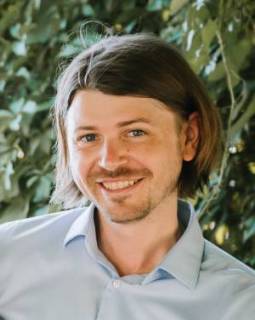
Chong Zu is an Assistant Professor of Physics at Washington University, affiliated with the Department of Physics, the Institute of Materials Science & Engineering, and the Center for Quantum Leaps. His research focuses on quantum systems, leveraging solid-state spin defects like nitrogen-vacancy (NV) and silicon-vacancy (SiV) centers in diamond for quantum sensing, simulation, and computation. Education: B.S. in Physics and Mathematics (Tsinghua University, 2011), Ph.D. in Physics (Tsinghua University, 2016). Postdoctoral research at UC Berkeley (2016–2021) under Prof. Norman Yao before joining Washington University in 2021. Research emphasizes quantum-enhanced sensing (e.g., nanoscale magnetic/electric field detection), non-equilibrium quantum dynamics (spin-spin interactions in dense defect systems), and quantum information protocols (entanglement-based computation). His group explores applications in physics, chemistry, and biology under extreme conditions (e.g., cryogenic/high-temperature environments). Notable projects include developing quantum sensors for in-vivo biological studies and investigating many-body quantum dynamics via spin defect arrays. Recent highlights include contributions to WashU’s quantum research initiatives, as covered in Inside WashU’s Quantum Quest (2024) and Flawed diamonds: Physicists gain quantum insights from imperfect crystals (2023).
Selman Hershfield is a Professor in the Department of Physics at the University of Florida's College of Liberal Arts and Sciences. He specializes in condensed matter theory, particularly transport phenomena and many-body physics in nanostructures. His research combines theoretical rigor with practical applications to quantum systems and nanodevices. Hershfield investigates transport in quantum dots, magnetic multilayers, and tunneling through single atoms or defects. These systems exhibit novel many-body effects due to reduced dimensionality and can be driven far from equilibrium. His work connects fundamental theory with technological applications in nanoelectronics. His publications establish foundational frameworks for nonequilibrium quantum statistical mechanics and develop novel solutions for complex transport problems. Recent work extends to robust control of autonomous systems under uncertainty.
Dmitri V. Talapin is the Ernest DeWitt Burton Distinguished Service Professor at the University of Chicago, holding joint appointments in the Department of Chemistry, Pritzker School of Molecular Engineering, and the College. His research focuses on inorganic nanomaterials, including quantum dots, MXenes, and semiconductor devices, with emphasis on synthesis, self-organization, and optoelectronic applications. Talapin leads the Talapin Group, situated in the Gordon Center for Integrative Sciences, and has pioneered methods for colloidal nanocrystal synthesis in molten salts. Education: Ph.D. in Chemistry from the University of Hamburg (2002), postdoctoral positions at IBM T.J. Watson Research Center and Lawrence Berkeley National Laboratory. Research interests encompass nanomaterials functionalization, ligand engineering, and scalable production of nanocrystals for applications in electronics, photonics, and energy storage. Recent advances include direct optical lithography of nanocrystals and MXene surface chemistry innovations. Awards: Packard Fellowship, MRS Outstanding Young Investigator Award, Royal Society of Chemistry Fellowship, and recognition as one of Thompson Reuters' Top 100 Chemists of the Decade. Advising: Supervises a dynamic team including graduate students (e.g., Tanya Chen, Marley Downes) and postdocs (e.g., Yuan Liu). Recent lab news highlights student achievements such as Di Wang's MXene PhD defense and Tanya Chen's Danute Nitecki Fellowship. Labs/Teams: The Talapin Lab collaborates across disciplines to advance nanomaterials science, emphasizing safety and sustainability through initiatives like the Joint Research Safety Initiative. Key projects include DOLFIN (Direct Optical Lithography of Nanomaterials) and MXene functionalization.
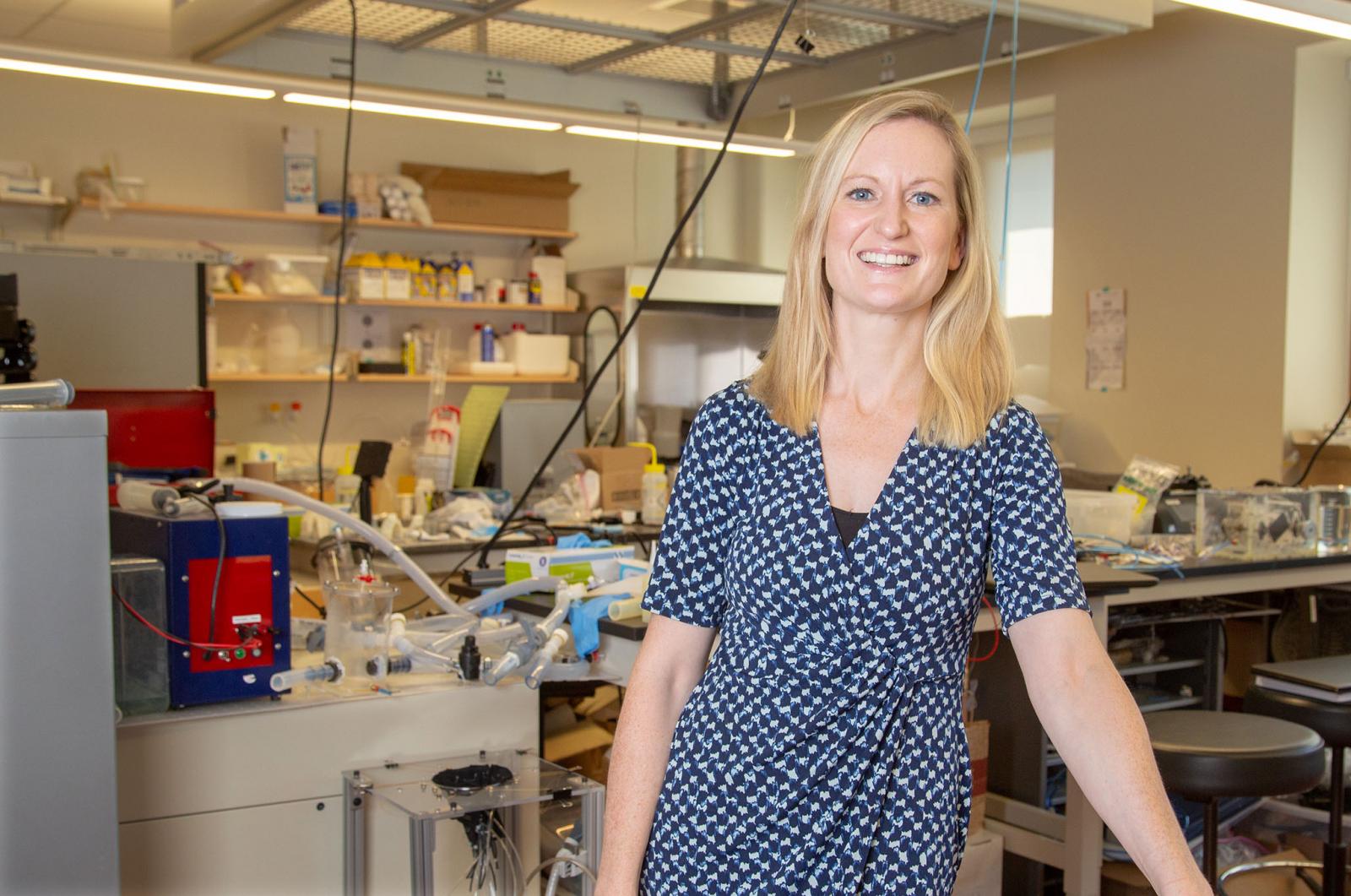
Ellen Roche is the Abby Rockefeller Mauzé Professor in the Department of Mechanical Engineering at the Massachusetts Institute of Technology (MIT). She serves as Associate Department Head for Research and directs the Therapeutic Technology Design and Development (TTDD) Lab, focusing on cardiac and pulmonary device innovation through soft robotics, biomimetics, and advanced biomaterials. Her work bridges mechanical engineering, bioengineering, and clinical medicine via collaborations with Boston Children’s Hospital, Brigham and Women’s Hospital, and others. PhD in Bioengineering, Harvard University (2015) MSc in Bioengineering, Trinity College Dublin (2011) BE in Biomedical Engineering, National University of Ireland, Galway (2004) Her research integrates soft robotics , biomaterials , and computational modeling to develop implantable devices that augment cardiac function, modulate immune responses, and deliver therapies to the heart. Key innovations include a bioinspired cardiac simulator , extra-cardiac compression devices , and a biorobotic hybrid heart combining organic tissue with synthetic robotics. Her recent publications emphasize dynamic therapy reservoirs , biomimetic heart models , and minimally invasive delivery systems . Scientific accolades include the Presidential Early Career Award (2025) , NSF CAREER Award (2019-2024) , and the Nature Research Inspiring Women in Science Award (2021) . She serves as Associate Scientific Advisor for Science Translational Medicine and contributes to peer review for the National Science Foundation and journals like Nature Medicine and Science Robotics . Her teaching includes Medical Device Design and Product Design at MIT.
Dr. Anulipt Chandan is a Lecturer in the School of Civil and Mechanical Engineering at Curtin University, located on the Curtin Perth campus. He holds a PhD in Sustainable Engineering, M.Tech in Electrical Engineering, and B.Tech in Electronics Engineering. His roles include contributing to the Faculty of Science and Engineering and serving in the Office of the Provost. Dr. Chandan's research focuses on interdisciplinary areas including blockchain technology, sustainability in energy systems, smart grid innovations, supply chain traceability, and materials science. His work bridges electrical engineering with emerging technologies, addressing challenges in renewable energy integration, failure analysis of materials, and achieving UN Sustainable Development Goals (SDGs) through blockchain applications. His publications span from materials science studies on alloy steels and nanocrystalline structures to blockchain frameworks for supply chain transparency and energy management systems. He has taught courses such as 'Renewable Energy Principles,' 'Sustainability and Renewable Energy,' and 'Ethics and Sustainability in Engineering.' Dr. Chandan’s research emphasizes practical solutions for global sustainability challenges, leveraging his expertise in both technical and socio-economic dimensions of innovation.
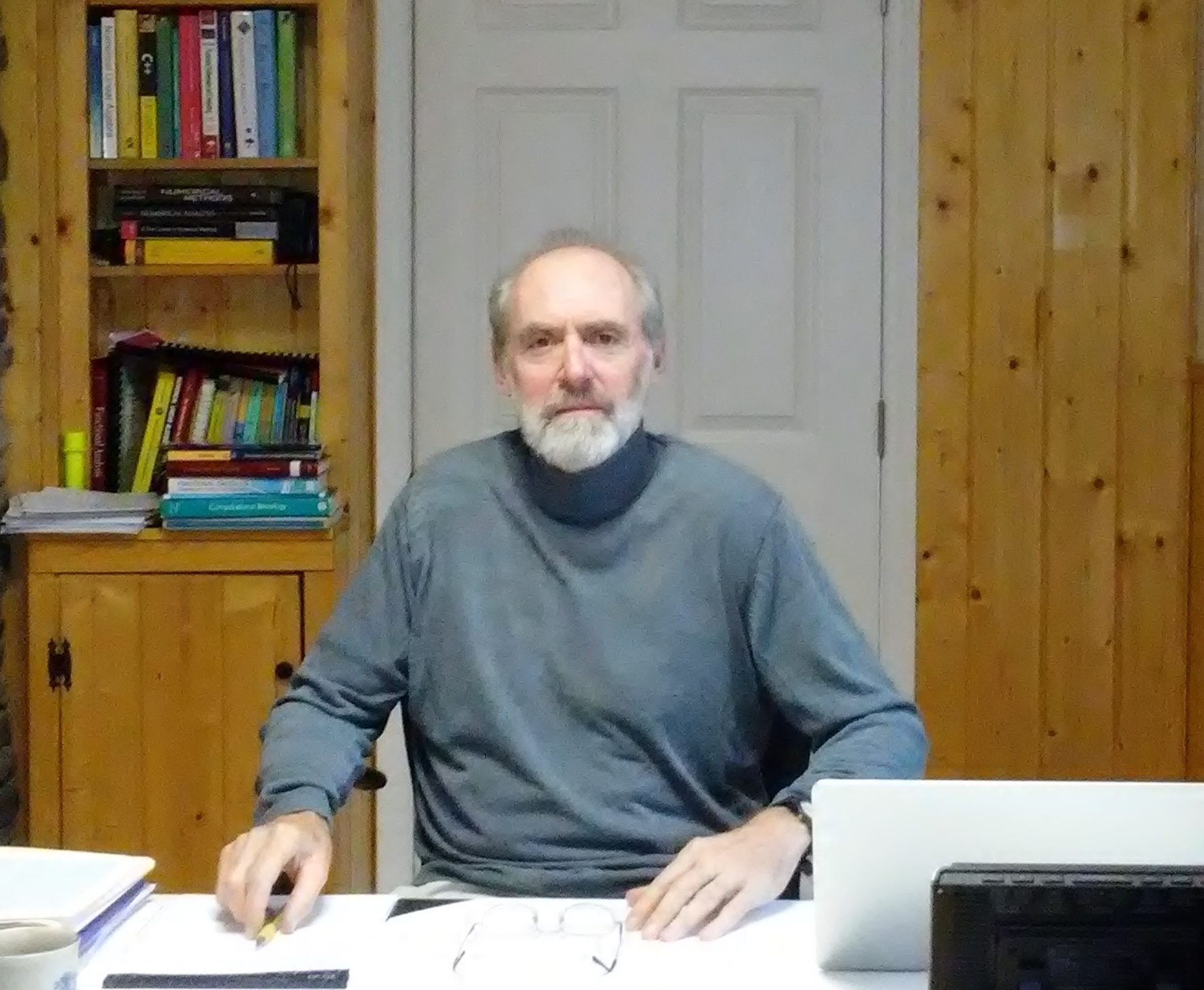
Vincent J. Ervin is a Professor of Mathematical Sciences at Clemson University's College of Science, located in Martin Hall. His academic journey includes a PhD from Georgia Institute of Technology in 1984. He specializes in numerical analysis, computational mathematics, and partial differential equations with focuses on fluid dynamics, fractional calculus, and viscoelastic systems. University: Clemson University College/School: College of Science Department: Mathematical and Statistical Sciences His research emphasizes fractional diffusion equations , viscoelastic fluid flow , and coupled Stokes-Darcy systems . Notable contributions include: Numerical methods for axisymmetric elasticity equations Stability analysis of fractional advection-diffusion systems Modeling fluid-structure interactions in biomedical applications (e.g., ocular pressure) Publications span topics from spectral approximations for fractional PDEs to error estimation in viscoelastic flows. His work bridges theoretical analysis with computational implementations, often employing finite element methods and stabilized formulations.
Lang Yuan is an Associate Professor in the Department of Mechanical Engineering at the University of South Carolina's Molinaroli College of Engineering and Computing. His research focuses on additive manufacturing, materials science, and computational materials engineering, with expertise in microstructure evolution, solidification defects, and X-ray characterization techniques. Research interests include developing computational models for grain structure prediction during laser powder bed fusion, in-situ monitoring of melt pool dynamics, and defect characterization in additively manufactured materials. Recent work emphasizes process-structure-property relationships in alloys and ceramics, with applications in aerospace and energy sectors. Methodologies combine synchrotron imaging, discrete element modeling, cellular automata simulations, and machine learning approaches to advance manufacturing quality control and material design.
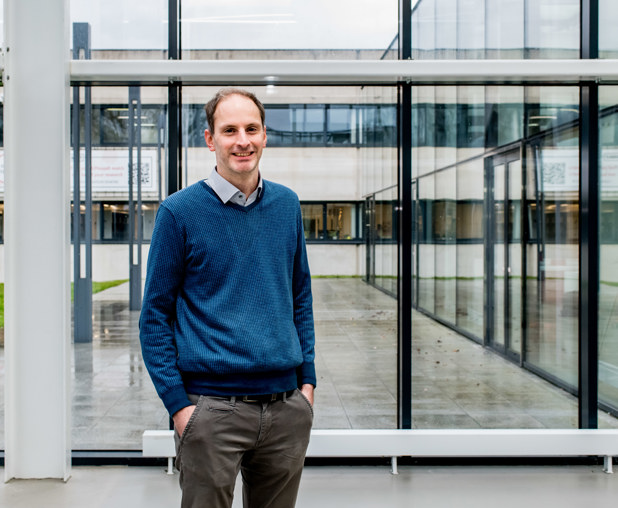
Koen Vandewal is Full Professor and Chair of Physics at Hasselt University (Belgium), where he leads the Organic Optoelectronics research group. He obtained his PhD in Physics at Hasselt University in 2009, followed by postdoctoral positions at Linköping University (Sweden) and Stanford University (USA). Before joining Hasselt in 2018, he held an endowed professorship at TU Dresden (Germany). His research solves fundamental questions in organic, hybrid and molecular electronics for applications in devices like OLEDs, solar cells, and sensors. Key research themes include: Organic photovoltaic physics and material stability Light-matter interactions in optical microcavities Nanoscale assembly of donor-acceptor systems Advanced characterization of quantum dot photophysics Recent publications focus on overcoming efficiency limits in transparent photovoltaics, understanding excitonic disorder in organic semiconductors, and developing printed sustainable transistors. He has supervised numerous PhD students through the OOE research group.
José R. B. Gomes is a Principal Researcher at the Department of Chemistry, University of Aveiro, and a core member of CICECO – Aveiro Institute of Materials. His research focuses on computational chemistry, with emphasis on multiscale approaches for catalysis, materials design, and surface science. He holds a Ph.D. from the University of Porto (2000) and has conducted postdoctoral research at the University of Barcelona and Porto. His work integrates quantum mechanics, molecular dynamics, and machine learning to study reactions at interfaces, gas adsorption in porous materials, and ionic liquid interactions. He leads multiple funded projects, including investigations into MXene-based catalysts and corrosion inhibitors. Key achievements include the Vicente de Seabra Medal (2010) and pioneering studies on MXene stability and catalytic properties. He supervises a dynamic research group comprising Ph.D. and M.Sc. students and collaborates internationally with institutions like the University of Barcelona and Strathclyde. Teaching roles at the University of Aveiro include computational chemistry and modeling courses. Educations: Ph.D. in Chemistry, University of Porto (2000); Postdoctoral training at University of Barcelona (2000–2007) Research Interests: Leveraging computational methods (DFT, MD, QM/MM) to bridge length/time scales in material design. Active areas include: (1) MXenes for catalysis and sensors, (2) Machine learning for corrosion inhibitor screening, (3) Gas adsorption in porous materials, and (4) Multiscale modeling of silicate chemistry. Recent work emphasizes AI-driven material discovery and sustainable energy applications. Publications: Over 200 peer-reviewed articles, with recent focus on MXene surface chemistry and corrosion solutions. Notable contributions include the DATACORTECH AI platform for inhibitor design and studies on subsurface oxygen in MXenes. Awards: Teresa da Fonseca Prize (1995), Mendonça Monteiro Prize (1994), Vicente de Seabra Medal (2010) Grants & Leadership: Coordinator of Group 6 at CICECO and PI of projects funded by FCT, Rede Nacional de Computação Avançada, and international collaborations. Active in developing AI tools and corrosion-resistant materials for industrial applications.
Christopher A. Sutton is an Assistant Professor in the Department of Chemistry and Biochemistry at the University of South Carolina, affiliated with the McCausland College of Arts and Sciences. His research focuses on computational materials discovery, integrating machine learning and first-principles methods to design and understand functional materials for energy applications. Education : B.S., University of Central Arkansas, 2004–2008 Ph.D., Georgia Institute of Technology, 2009–2014 Research Interests : Sutton’s work emphasizes machine learning-driven materials design, electronic structure calculations, and high-throughput screening for energy storage, optoelectronics, and catalytic systems. His lab explores domains such as perovskites, battery materials, and defect engineering. Grants & Funding : DOE/HFTO (Co-PI): $1,000,000 NSF EPSCoR RII Track 1: $20,000,000 DOD/DEPSCOR: $600,000 Awards : Alexander von Humboldt Postdoctoral Fellowship (2016–2018) 67th Lindau Nobel Laureate Meeting Attendee (Chemistry) Recipient of multiple fellowships and scholarships Labs & Teams : The Sutton Lab at USC specializes in machine learning for quantum mechanical property prediction and computational materials discovery. Collaborations include experimentalists and AI experts to bridge theory and application.
Ishwara Bhat is a Professor in the Department of Electrical, Computer, and Systems Engineering at Rensselaer Polytechnic Institute (RPI). He earned his B.S.E.E. from the Indian Institute of Technology and M.S./Ph.D. in Electrical Engineering from RPI. His research focuses on epitaxial growth and characterization of II-VI, III-V, and IV-IV semiconductors, including wide band gap materials like GaN, SiC, and ZnSe, as well as narrow band semiconductors like HgCdTe and InGaSb. Current projects emphasize silicon carbide epitaxial films for high-power, high-temperature, and high-voltage devices, supported by collaborations with Texas Instruments.
Loredana Valenzano-Slough is an Associate Professor in the Department of Chemistry at Michigan Technological University. She earned her PhD from the University of Southampton (United Kingdom) in 2003 and her MSc from the University of Torino (Italy) in 2000. Prior to joining Michigan Tech as an Assistant Professor in 2012, she held positions as an Assistant Research Scientist at Michigan Tech (2010-2012), Postdoctoral Associate at the University of Torino (2005-2010), and Postdoctoral Fellow at the University of Leiden (2003-2005). Her educational background includes: PhD, University of Southampton, United Kingdom, 2003 MSc, University of Torino, Italy, 2000 Dr. Valenzano-Slough's research focuses on computational characterization of molecules and materials across diverse domains. Her work addresses fundamental questions about intermolecular interactions, molecular driving forces, and molecular reactivity at the electronic structure level. She investigates how thermodynamics and kinetics determine structural development of materials at the molecular level, with particular emphasis on understanding how materials' morphologies influence their physical-chemical properties. Her research spans energetic materials, nanoporous materials, cementing materials, active pharmaceutical ingredients, crystal growth, nucleation processes, surfaces, and the effects of defects and solvents on material properties. Her group actively explores questions about nucleation initiation, crystal growth mechanisms, and the possibility of tailoring crystalline morphologies. Analysis of her recent publications reveals a strong focus on metal-organic frameworks (MOFs) for gas storage and separation applications, computational studies of energetic materials like RDX, and investigations into the structural and mechanical properties of various crystalline materials. Her work often combines computational modeling with experimental validation, demonstrating expertise in quantum mechanical calculations and materials characterization. The research spans multiple disciplines including computational chemistry, materials science, and physical chemistry with applications in energy storage, sensing technologies, and pharmaceutical development. Dr. Valenzano-Slough has been actively involved in mentoring students, with several undergraduate and graduate students contributing to her research projects. Her group has produced work on topics ranging from fluorescent probes for chemical detection to computational studies of material properties under various conditions. She has established collaborations with researchers at UCLA and maintains an active research program supported by university resources. She has received funding support including a start-up package from Michigan Tech and the UCLA MSGC-NASA Pruett Scholarship. Dr. Valenzano-Slough has presented her research at numerous conferences including APS March Meetings, ACS Spring Meetings, and specialized workshops on shock compression of condensed matter. She serves as a reviewer for multiple prestigious journals including JACS, Journal of Physical Chemistry, and Dalton Transactions. Her research group maintains active collaborations, particularly with Dr. H. Liu at MTU and Dr. G. Sant at UCLA, focusing on computational chemistry applications to materials science problems. The group utilizes high-performance computing resources at Michigan Tech for their computational studies, with team members regularly working across campus in both ChemSci and Rekhi Hall.
Dong Chen is an Associate Professor in the Department of Computer Science at the Colorado School of Mines. His research focuses on building data-driven experimental systems in Cyber-Physical Systems (CPS), IoT, Embedded AI, and Embodied AI, with applications in smart devices, homes, cities, and renewable energy systems. He leads the Next Generation Cyber-Physical Systems Laboratory (CPSLab), emphasizing open-source systems and datasets. Dr. Chen holds PhDs in Electrical and Computer Engineering (2018, University of Massachusetts Amherst) and Computer Science (2014, Northeastern University). His work addresses security, privacy, sustainability, and efficiency in smart environments. Notable contributions include SolarFinder, SolarTrader, PrivacyGuard, and VoiceAttack, which tackle challenges in IoT privacy, energy trading, and adversarial attacks. He received the NSF CAREER Award (2023) and is a member of Sigma Xi, ACM, AAAI, and IEEE. His research spans system design, AI applications, and cross-cutting domains like solar energy modeling and edge computing. Current projects include AgileDART (edge stream processing) and SolarDetector (satellite-based PV array identification). Advising and collaborations: Dr. Chen seeks PhD and undergraduate students with strong CS/EE backgrounds. His lab focuses on CPS/IoT security, energy systems, and AI-driven solutions. He has published extensively on topics ranging from smart grid optimization to adversarial machine learning.
Mark T. Lusk is a Professor in the Department of Physics at the Colorado School of Mines. His research spans multiple disciplines including topological quantum optics, general relativity, geometric quantum mechanics, and quantum information science. California Institute of Technology, Ph.D. Applied Mechanics (1992) Colorado State University, M.S. Electrical Engineering (1988) U.S. Naval Academy, B.S. Electrical Engineering (1982) The Lusk Group investigates fundamental issues in topological quantum optics and relational quantum mechanics , focusing on holonomies of entangled states in curved spacetime. His work bridges disciplines such as quantum field theory , condensed matter physics , and atomic/molecular/optical physics . His recent publications analyze optical vortices, exciton transport in quantum dots, and defect engineering in semiconductors. Themes include quantum information , topological effects , and nanoscale light-matter interactions . Contact: mlusk@mines.edu
Prof. Vlassopoulos Dimitris is a prominent academic affiliated with the University of Crete (Department of Materials Science & Technology) and the Foundation for Research & Technology - Hellas (FORTH), Institute of Electronic Structure & Laser. His career spans over three decades, with roles including Professor (2007–present), Associate Professor (2002–2007), and Adjunct Professor at the University of Crete. He holds a Ph.D. in Chemical Engineering from Princeton University (1990) and has held positions at Mobil Research & Development Corporation (1990–1991) and Metelco S.A. (1983–1984). Education: Diploma in Chemical Engineering, National Technical University of Athens (1983) M.A. in Chemical Engineering, Princeton University (1986) Ph.D. in Chemical Engineering, Princeton University (1990) Research Interests: His work focuses on molecular rheology, branched/ring polymers, soft colloids, nonlinear rheometry, and interfacial viscoelasticity. Key areas include polymer network dynamics, colloidal gels, and supramolecular assemblies. His contributions bridge fundamental rheology and applications in materials science. Awards: FORTH Prize for Basic Research (2009) Society of Rheology Publication Award (2011) Weissenberg Award (2015) E.C. Bingham Medal (2019) Advising & Grants: While student names are not listed, his research has been supported by grants from institutions like FORTH. His work often involves interdisciplinary collaborations, such as developing 3D bioprinting methods and exploring hagfish slime mechanics. Labs/Teams: Active in FORTH's Institute of Electronic Structure & Laser and collaborates with international groups on projects like supramolecular polymer networks and nanocomposite rheology.