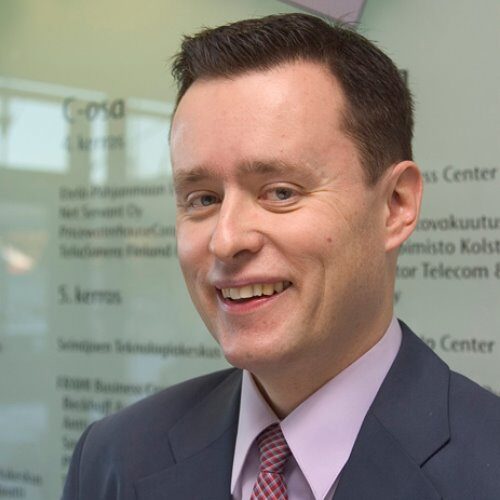
Mikko Alava is a Professor in the Department of Applied Physics at Aalto University, specializing in computational materials science and complex systems. His research focuses on alloy design, nuclear materials, and rheology, with a strong emphasis on atomistic and molecular dynamics simulations. Research areas: High-entropy alloys, metallic glasses, radiation damage, and thermogelation. Key tools: Computational modeling, Bayesian optimization, open-source software development (pyRheo). Scientific Awards: Prize for Teaching Excellence (Aalto School of Science, 2014) Distinguished Referee (Europhysics Letters, 2016) Outstanding Referee (American Physical Society, 2011) Nordita Corresponding Fellow (2001-2004) John S. Bates Prize (2004)
Flyura Djurabekova is a Professor in the Department of Physics at the University of Helsinki, affiliated with the Faculty of Science. Her research focuses on radiation damage, materials under extreme conditions, ion beam interactions, and computational physics. She holds a PhD in Computational Physics and a MSc in Physical Electronics. Her work spans interdisciplinary areas including materials science, plasma physics, and quantum technologies. Education: PhD in Physics and Mathematics, 1999 (Modeling of compositional modification of surface layers under high dose ion irradiation) MSc in Engineering Physics, Tashkent State Technical University, 1991 Research Interests: Her research emphasizes atomic-scale processes in materials exposed to ionizing radiation, including defect dynamics in semiconductors and high-entropy alloys, radiation resistance of materials for fusion reactors, and surface modifications via plasma treatments. She employs advanced computational methods like molecular dynamics and machine learning to model complex phenomena such as vacuum arc ignition and hydrogen diffusion in metals. Publications: Her recent work includes studies on gallium oxide radiation tolerance, defect formation in tungsten alloys, and plasma-induced surface modifications. These contributions highlight her expertise in bridging computational modeling with experimental validation. Awards: Outstanding Referee for the American Physical Society Journals (2013) Grants & Projects: EU Horizon Europe Project HyWay (2024–2027): Focuses on high-entropy alloys for extreme environments Eurofusion HerHEA Project (2024–2025): Studies radiation damage in fusion materials CERN K-Contract (2024–2025): Investigates materials for accelerator technologies Labs & Collaborations: She leads research groups exploring nanomaterials under ion irradiation and collaborates internationally on fusion material development. Her work integrates multi-scale simulations with experimental techniques like Rutherford backscattering spectroscopy.
Professor Konstantinos Sarakinos holds a position at the Department of Physics, University of Helsinki, and is the Chief Scientific Officer of MIMSI Materials AB. His research focuses on thin film synthesis, surface physics, and materials engineering with applications in energy and nanotechnology. He has held roles at Linköping University (Sweden) and KTH Royal Institute of Technology. Sarakinos earned a Ph.D. from RWTH Aachen University and a Docent title from Linköping University. Education: Ph.D. in Physics (RWTH Aachen, 2008), M.Sc. in Nanosciences (Aristotle University, 2004), M.Sc. in Mechanical Engineering (Aristotle University, 2002). His work combines experimental and computational methods to study material growth mechanisms and nanostructure formation under non-equilibrium conditions. Research interests include manipulating metal film morphology on weakly-interacting substrates, developing hierarchical heterostructures, and exploring compositionally complex materials. He leads projects funded by the Academy of Finland and EU (e.g., SilverAlloyPVs/EIT project). His publications span over 79 peer-reviewed articles focusing on thin film growth dynamics, surface chemistry, and materials for energy applications.
Christian Ahläng serves as Coordinator at the Center for Lifelong Learning at Åbo Akademi University, focusing on technologies for a sustainable future. His research spans materials science and renewable energy , particularly solar cell technologies. Projects : Foundation ESERO Finland (2023–2025), EU Resource Center (2023–2026), LUMA Finland (2021–2024). Research Areas : Thin-film solar cells, perovskite and organic photovoltaics, charge transport modeling, and sustainable technology development. His work aligns with the UN Sustainable Development Goals, emphasizing clean energy and climate action. Collaborations include institutions like the Finnish Cultural Foundation and the Swedish Technical Sciences Academy in Finland . Publications highlight innovations in solar cell efficiency and stability mechanisms.
Ramin Ghiyasi serves as a Postdoctoral Researcher at Aalto University within the Department of Chemistry and Materials, actively contributing to the Inorganic Materials Chemistry research group. His work focuses on advanced thin-film deposition methodologies with applications in next-generation energy conversion technologies. His primary research interests center on atomic/molecular layer deposition (ALD/MLD) techniques for engineering functional materials, particularly thermoelectric systems. He investigates structure-property relationships in inorganic-organic hybrid superlattices, with emphasis on optimizing electrical conductivity while minimizing thermal transport through strategic defect engineering and interface control. His expertise spans intermetallic compounds, metal oxides, and cellulose-inorganic nanocomposites for flexible electronics applications. Analysis of his 2021-2025 publication record reveals a consistent trajectory in transport-property engineering through ALD/MLD, with increasing sophistication in multilayer architecture design. His work demonstrates particular mastery in ZnO and SnO systems, where organic components and purge-time manipulation enable unprecedented thermal conductivity suppression while maintaining electrical performance—critical for high-efficiency thermoelectric devices. No scientific awards are documented in available sources. There is no evidence of student advisement or principal investigator roles for major grants. Dr. Ghiyasi operates within Aalto University's Inorganic Materials Chemistry ecosystem under Professor Maarit Karppinen's leadership, collaborating extensively with international partners including Anjana Devi's group in Germany. His current research frontiers involve layer-engineered multilayer structures for flexible thermoelectric applications and novel precursor development for low-temperature hybrid film growth.
Rina Ibragimova is a Postdoctoral Researcher at Aalto University, affiliated with the DAS Group in the Chemistry and Materials domain. Her research focuses on computational materials science, particularly the development and application of machine learning interatomic potentials for modeling hydrocarbons and MXenes. Her work spans surface functionalization, defect analysis, and electronic properties of 2D materials. Recent publications highlight collaborations with leading researchers in the field, emphasizing experiment-driven atomistic modeling and theoretical studies of MXene stability and structure. Key trends in her research include combining spectroscopic data (XPS) with machine learning for precise structure inference, investigating pH-dependent functionalization in MXenes, and exploring electron beam effects on 2D materials. Her publications appear in high-impact journals like ACS Nano , Nature Communications , and Physical Review B .
Lassi Roininen is a tenured Professor of Applied Mathematics at LUT University's School of Engineering Sciences, holding this position since September 2022 after serving as Assistant Professor there from 2018 to 2022. He maintains significant adjunct appointments as Associate Professor at University of Oulu, Assistant Professor at Bahir Dar University (Ethiopia), and faculty member at AIMS Rwanda, demonstrating strong international academic engagement. Education: Master of Science (Engineering), Tampere University of Technology Doctorate in Applied Mathematics, University of Oulu (2015) - conducted at Sodankylä Geophysical Observatory His research integrates Statistics, Geophysics, and Applied Mathematics with core expertise in Bayesian inference, uncertainty quantification, and inversion problems. He develops computational frameworks for geophysical imaging, climate modeling, and industrial applications, emphasizing robust statistical methodologies for real-world data challenges. Recent work shows increasing focus on African climate adaptation and medical/industrial tomography. Analysis of his 15 most recent publications reveals dominant trends in Bayesian approaches to climate science (particularly East African adaptation studies), medical/industrial imaging (tomography and fault detection), and geophysical modeling. His work consistently bridges mathematical innovation with practical applications across environmental science, healthcare, and manufacturing sectors. Research support includes Academy of Finland postdoctoral funding. Through AIMS Rwanda, he actively mentors African mathematicians and contributes to capacity building in computational sciences across the continent. His collaborative projects demonstrate commitment to solving region-specific challenges through advanced statistical methods. His work is closely tied to geophysical research networks including Sodankylä Geophysical Observatory, with recent expansions into East African climate resilience initiatives. Current projects integrate multi-instrument atmospheric data with Bayesian frameworks to address pressing environmental challenges in developing regions.
Sami Franssila is a Professor in the Department of Chemistry and Materials Science at Aalto University, School of Chemical Engineering. He is also affiliated with the Microfabrication research group. His research spans advanced materials engineering, with a focus on micro- and nanofabrication technologies, surface science, and functional materials. Franssila earned his Doctoral degree in Natural Sciences from Helsinki University of Technology in 1995, a Licentiate degree from the University of Helsinki in 1990, and a Master’s degree from the same institution in 1986. His research interests include Microfabrication, Nanotechnology, MEMS, Microfluidics, Thin Film Technology, Superhydrophobic Materials, and Atomic Layer Deposition . His work often explores the design and application of nanostructured surfaces, particularly black silicon and biomimetic superhydrophobic materials, with applications in biomedical devices, energy, and environmental technologies. His recent publications (2024–2025) highlight advancements in nanojungle black silicon, air plastron stability in biofluids, and anisotropic wetting surfaces inspired by plant structures. These works demonstrate a strong trend toward biomimetic, durable superhydrophobic materials with real-world applications in challenging environments. Member of the Academy for Technical Sciences in Finland (2010) Teaching award based on student response (2009) Textbook of the year award from Helsinki University of Technology (2004) Franssila has supervised 16 theses and actively participates in academic service, including doctoral thesis oppositions, professorship evaluations, and conference organization. He has led major research projects such as N2PCON (EU Horizon Europe), CONNECT WP7, and ARMOR (Business Finland), securing funding from both national and international sources. He has also chaired the Micronano System Workshop and Superhydrophobicity and Wetting Symposium, demonstrating leadership in the research community. His research group collaborates widely across Europe and engages in interdisciplinary work linking materials science, engineering, and life sciences. The team focuses on translating fundamental surface phenomena into scalable technologies, with recent media attention on a revolutionary water-repellent 'armor' surface attracting over 100 companies.
Tuomas Alapieti is a Postdoctoral Researcher in the Department of Civil Engineering at Aalto University, Finland, specializing in building-environment interactions with emphasis on school infrastructure. His work bridges engineering, environmental health, and material science through empirical field studies and laboratory analyses. His research focuses on critical building science domains: Microbiological dynamics in educational settings (airborne/surface pathogens) Chemical emissions from wooden construction materials Performance validation of real-time air quality monitoring systems Condition assessment of aging school buildings Moisture-paint interactions affecting indoor air chemistry Methodologically, he combines sensor networks, microbiological sampling, and occupant surveys to evaluate both objective measurements and perceived environmental quality. Analysis of his 2020-2024 publications reveals a concentrated investigation into Finnish school environments, with 70% of works examining wooden construction's impact on indoor ecosystems. His research progression shows increasing emphasis on microbiological aspects (2023-2024) after establishing foundational work on VOC emissions and sensor reliability (2020-2021). Scientific recognition: Oskari Vilamo Foundation Award for Best MSc Thesis (2017) Alapieti operates within Aalto's 'Performance in Building Design and Construction' research group, collaborating extensively with Salonen, Vornanen-Winqvist, and Mikkola teams. His current projects involve longitudinal assessments of school building conditions across Finland, with publications targeting high-impact venues like Indoor Air and European Journal of Wood Products. No advisory roles or grant leadership are documented in available sources.
Hele Savin is a Professor in the Department of Electronics and Nanoengineering at Aalto University, specializing in semiconductor surface engineering and nanotechnology. Her research focuses on defect engineering, black silicon applications, and atomic layer deposition for photovoltaics and detectors. She holds a Docent title in semiconductor technology from Helsinki University of Technology (2008), a PhD (2005), and a Master's (2000). Education: Docent in Semiconductor Technology, Helsinki University of Technology (2008) Doctoral Degree in Engineering and Technology, Helsinki University of Technology (2005) Master's Degree in Engineering and Technology, Helsinki University of Technology (2000) Research Interests: Hele Savin's work addresses defect engineering in microelectronics and photovoltaics, black silicon for detectors and solar cells, and surface passivation techniques. Her group explores atomic layer deposition for semiconductor interfaces, light-induced degradation mechanisms, and nanotechnology applications in energy and sensing. Recent Research Trends: Her recent articles emphasize advancements in semiconductor contacts, nanostructured materials for photovoltaics, and infrared detector optimization. Key areas include laser-textured silicon, charge collection in detectors, and thin film engineering for improved device performance. Awards: 35th EU PVSEC 2018 Student Award (2018) Alexander von Humboldt Research Fellowship (2009) Aalto ELEC Entrepreneurial Mindset Award (2022) Best Poster Award at CSSC-9 Conference (2016) Advising & Grants: Supervised postdocs include Dmytro Gnatyuk (2024–current), Liu Xiaolong (2020–current), and Ville Vähänissi (2011–current). Active grants include TIMEZERO (MEMS Timing Systems), COLO (Atomic-Scale Interfaces), and HYGER (Black Germanium Detectors). She also holds external roles as Tandem Professor at Okmetic Oy and co-founder of ElFys Inc. Labs & Teams: Lead the Electron Physics Group (EPG), focusing on semiconductor surfaces, nanotechnology, and device fabrication. Collaborates internationally on projects like EU H2020 HYGER and Academy of Finland initiatives.
Kimmo Lahtonen is a Senior Scientist affiliated with the Faculty of Engineering and Natural Sciences . He holds a Doctor of Engineering (2008) and a Dipl.In. in Technology (2002). His research focuses on advanced materials science, particularly in Atomic Layer Deposition (ALD) , perovskite-based solar cells , and nanostructured materials . Key contributions include studies on operational stability of solar cells, halide engineering in photovoltaics, and lead-free perovskite alternatives. He has authored/co-authored over 118 publications, with recent work emphasizing energy materials and sustainable technologies. Beyond academia, he serves as an R&D Specialist at SurfLab Solutions Oy since 2014. His work aligns with UN Sustainable Development Goals, addressing clean energy and innovation. Education: Doctor of Engineering (2008), Dipl.In. Technology (2002) Key Research Themes: Solar Energy Materials, Thin Film Technologies, Nanocrystals Recent Collaborations: MAX IV Laboratory (Sweden), IEEE Conferences His articles explore cutting-edge topics like perovskite-inspired photovoltaics , hafnium oxide dielectrics , and lead-free layered perovskites . He actively participates in international conferences and peer-review activities, showcasing his commitment to advancing materials science and fostering interdisciplinary research.
Pekka Toivanen is a Professor at the School of Computing, Faculty of Science, Forestry and Technology at the University of Eastern Finland. His research focuses on artificial intelligence, healthcare systems, IoT, cybersecurity, and machine learning. He has contributed extensively to fields like medical image analysis, smart grids, and robotics, with over 100 peer-reviewed publications. His work bridges theoretical advancements and practical applications, such as improving healthcare diagnostics via AI, enhancing IoT security, and optimizing energy management in microgrids. Research Interests: Dr. Toivanen’s primary areas include AI-driven healthcare solutions, cybersecurity for IoT devices, deep learning applications in medical imaging, and energy-efficient smart grid systems. He has pioneered methods for tuberculosis risk prediction and developed novel encryption algorithms for Bluetooth security. Publications: His recent work emphasizes AI in healthcare (e.g., tuberculosis prediction models) and energy systems (e.g., reinforcement learning for microgrid management). He also explores vulnerabilities in wireless technologies like Bluetooth and ZigBee, proposing robust countermeasures. Grants/Teams: Leads projects on AI distribution platforms for healthcare and secure IoT architectures. Collaborates with interdisciplinary teams in medical and engineering domains.
Antti Mikkonen is a Civil Engineering Doctoral Researcher at the University of Tampere, affiliated with the School of Engineering Sciences and Department of Civil Engineering. He holds a Master of Science (Technology) in Environmental Engineering (2013) and a Lower-Degree Level Tertiary Education in Technology (2013). His research focuses on heat transfer, fluid dynamics, and thermal engineering applications, contributing to sustainable energy systems and materials science. Key research interests include computational fluid dynamics (CFD), flow characteristics of tube banks, impinging jet dynamics, and thermal stress analysis in materials like solar panels and glass. He has published extensively since 2014, addressing topics such as structural integrity assessment using environmental data and glass tempering processes. His work aligns with UN Sustainable Development Goals related to education and environmental sustainability. Mikkonen has presented at international conferences, including a 2016 conference on impinging jet heat transfer. His research emphasizes practical engineering solutions and environmental applications, though no specific awards or grants are noted in the provided information.
Turkka Salminen is a Staff Scientist at Tampere University's Faculty of Engineering and Natural Sciences, affiliated with the ENS Research Environment Unit. He serves as coordinator of the Tampere Microscopy Center (TMC), collaborating with Prof. Minnamari Vippola and Dr. Mari Honkanen. His expertise spans electron microscopy, focused ion beam microscopy, Raman spectroscopy, and materials characterization. Salminen advises TMC users, contributes to material characterization projects, and teaches microscopy-related courses. He also collaborates nationally and internationally with research institutes and laboratories. Research interests focus on advanced microscopy techniques, nanomaterials, tribology, and composite materials. His work bridges fundamental material science with applications in energy, biomedical, and structural systems. Recent studies include fretting degradation mechanisms, cold-sprayed composites, and bioactive glass scaffolds. Salminen has authored/co-authored over 60 peer-reviewed articles since 2007, with recent contributions in Tribology International , Material & Design , and Nano Today . His work emphasizes interdisciplinary approaches, combining experimental methods with computational modeling. Key projects involve developing novel materials for energy storage, corrosion-resistant coatings, and biomedical implants.
Di Wu is a Research Fellow at the Department of Automation Technology and Mechanical Engineering , part of the Faculty of Engineering and Natural Sciences at Tampere University. Their work focuses on advanced manufacturing technologies, optimization algorithms, and materials science, with significant contributions to thermal modeling in additive manufacturing and superconductivity research. Affiliations : Tampere University (since 2019) Research Interests : Specializes in multi-objective optimization using AI methods, additive manufacturing process modeling, thermal field prediction in metal AM, and superconductivity applications. Their work integrates knowledge-based systems and causal modeling to enhance engineering design processes. Key Research Trends : Recent publications emphasize real-time thermal management in thin-wall metal additive manufacturing, ANN-based optimization for HTS solenoids, and AI-driven approaches to superconductivity research. They also explore functional modeling and dimensional analysis in welding and micro-turbine systems. Collaborations : Active in international collaborations with institutions like American Society of Mechanical Engineers and Springer, focusing on advanced manufacturing and material science challenges.