معرفی
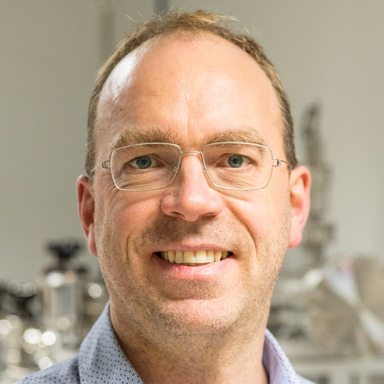
Sami Franssila is a Professor in the Department of Chemistry and Materials Science at Aalto University, School of Chemical Engineering. He is also affiliated with the Microfabrication research group. His research spans advanced materials engineering, with a focus on micro- and nanofabrication technologies, surface science, and functional materials.
Franssila earned his Doctoral degree in Natural Sciences from Helsinki University of Technology in 1995, a Licentiate degree from the University of Helsinki in 1990, and a Master’s degree from the same institution in 1986.
His research interests include Microfabrication, Nanotechnology, MEMS, Microfluidics, Thin Film Technology, Superhydrophobic Materials, and Atomic Layer Deposition. His work often explores the design and application of nanostructured surfaces, particularly black silicon and biomimetic superhydrophobic materials, with applications in biomedical devices, energy, and environmental technologies.
His recent publications (2024–2025) highlight advancements in nanojungle black silicon, air plastron stability in biofluids, and anisotropic wetting surfaces inspired by plant structures. These works demonstrate a strong trend toward biomimetic, durable superhydrophobic materials with real-world applications in challenging environments.
- Member of the Academy for Technical Sciences in Finland (2010)
- Teaching award based on student response (2009)
- Textbook of the year award from Helsinki University of Technology (2004)
Franssila has supervised 16 theses and actively participates in academic service, including doctoral thesis oppositions, professorship evaluations, and conference organization. He has led major research projects such as N2PCON (EU Horizon Europe), CONNECT WP7, and ARMOR (Business Finland), securing funding from both national and international sources. He has also chaired the Micronano System Workshop and Superhydrophobicity and Wetting Symposium, demonstrating leadership in the research community.
His research group collaborates widely across Europe and engages in interdisciplinary work linking materials science, engineering, and life sciences. The team focuses on translating fundamental surface phenomena into scalable technologies, with recent media attention on a revolutionary water-repellent 'armor' surface attracting over 100 companies.