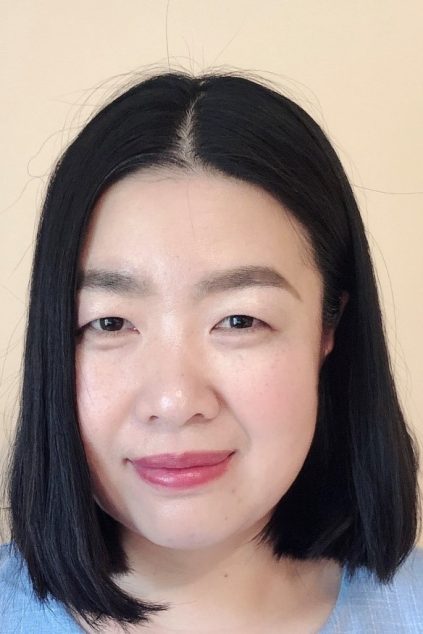
Yeşim Beceren is an Assistant Professor in the Department of Textile Engineering at Istanbul Technical University. Her research focuses on textile materials, yarn properties, consumer satisfaction, and polymer characterization. She has conducted studies on seacell fibers, yarn hairiness, and blended fabrics, contributing to sustainable textile solutions. She led a major 11-year project (2010–2021) improving nanoweb properties via electrospinning of silk fibroin. Her work has been cited 235 times with an h-index of 7. Expertise includes UN SDGs related to sustainable production and responsible consumption. Notable projects: 'Improving Properties of Nanoweb via Electrospinning from Silk Protein Fibroin.' Her research outputs span textile comfort properties, consumer behavior modeling, and advanced spinning systems. She has advised multiple collaborative studies but no explicit student listings are provided.
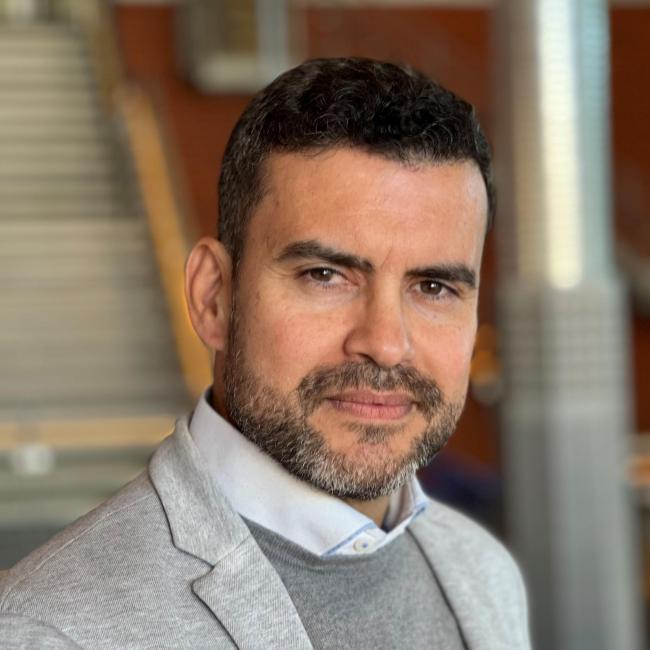
Dr. Ricardo Martinez Hincapie is a Researcher at the ISC Department of the Fritz Haber Institute of the Max Planck Society , Berlin, Germany. His research focuses on electrocatalysis, energy materials, and surface science, particularly in the design and characterization of advanced electrocatalysts for energy conversion systems such as fuel cells and electrochemical synthesis. He leads studies on the structural and chemical properties of catalysts, including additive-manufactured electrodes, platinum alloys, and carbon-based materials. His work spans topics like oxygen evolution reaction (OER) optimization, hydrogen peroxide generation via carbon electrodes, and the interfacial chemistry of platinum surfaces. He has contributed to understanding surface segregation in nanoparticles and the mechanical stability of biomedical electrode coatings. Dr. Martinez Hincapie collaborates on projects involving material synthesis, electrochemical analysis, and applications in sustainable energy technologies. His research outcomes are disseminated through high-impact articles in electrochemistry and materials science. He actively participates in funding initiatives and maintains a strong publication record, reflecting his expertise in bridging fundamental surface science with applied catalysis for real-world energy challenges.
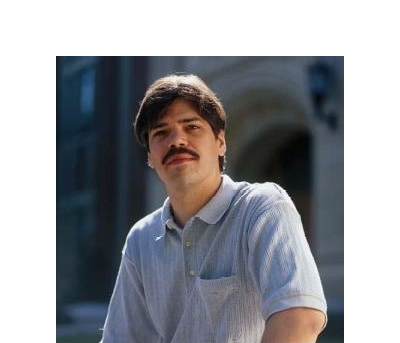
Lloyd Bumm is an Associate Professor in the Homer L. Dodge Department of Physics and Astronomy at the University of Oklahoma. His research focuses on surface physics, molecular interfaces, and nanometer-scale assemblies, with an emphasis on scanning tunneling microscopy (STM) and optoelectronics. He holds a B.S. from Clarkson University (1982) and a Ph.D. from Northwestern University (1991). His work explores molecular-scale electronics, self-assembled monolayers (SAMs), and advanced STM image analysis techniques. He develops methods to extract information from STM data and studies surface chemistry, including how defects and environmental factors influence molecular behavior. Collaborations involve molecular dynamics simulations and infrared spectroscopy to complement experimental findings. Awards: Nancy Mergler Undergraduate Research Mentor Award, NSF Career Award Grants: CAREER: Optoelectronics and Nanometer-Scale Photonics of Single-Molecules, NanoLab: Hands-On Introduction to Nanoscience His lab specializes in nanoscale device analysis, including stress characterization in SOI substrates and semiconductor devices. Techniques like Scanning Surface Photovoltage Microscopy are employed to study material properties at the atomic scale. He also investigates metal-enhanced fluorescence and surface-enhanced Raman scattering substrates for advanced sensing applications.
Moyses Araujo is a Professor of Physics at Karlstad University (KAU), Sweden, specializing in condensed matter theory with a focus on renewable energy science. His research integrates computational methods like density functional theory (DFT), molecular dynamics, and AI to design materials for energy storage (batteries) and conversion (photovoltaics). He holds a PhD from Uppsala University (2009) and has held postdoctoral positions at KTH Royal Institute of Technology (VR scholarship) and Yale University (YCEI fellowship). Notable awards include the Benzelius Prize, Ångström Premium, and Bjurzon’s Premium for his PhD thesis. Research interests include battery materials (solid-state electrolytes, lithium-ion anodes/cathodes), photocatalytic hydrogen evolution, and organic semiconductors. His group collaborates internationally on projects funded by VR and EU initiatives. Publications span high-impact journals like PNAS , Energy & Environmental Science , and Advanced Materials . Teaching includes Computational Physics, Solid State Physics, and Symmetry in Physics. His work emphasizes sustainable energy solutions through atomic-scale modeling and interdisciplinary approaches.
Professor Michael Schmidt serves as the head of the Institute of Photonic Technologies (LPT) within the Department of Mechanical Engineering at Friedrich-Alexander-Universität Erlangen-Nürnberg (FAU). His research focuses on advanced laser-based manufacturing technologies with particular emphasis on additive manufacturing processes and laser materials processing. The institute maintains state-of-the-art facilities for laser processing research and collaborates extensively with industrial partners in the automotive, medical device, and manufacturing sectors. Professor Schmidt's research interests span laser-based additive manufacturing of metals and polymers, with particular expertise in powder bed fusion (PBF-LB/M), directed energy deposition (DED-LB/M), laser beam shaping, and laser welding technologies. His work addresses fundamental challenges in process optimization, material-property relationships, and quality assurance in additive manufacturing. Recent research has focused on improving process stability for challenging materials like copper, developing novel beam shaping techniques, and advancing in-situ monitoring capabilities for industrial applications. His group maintains strong expertise in both experimental and computational approaches to laser materials processing. Analysis of Professor Schmidt's recent publications reveals a strong focus on advancing the scientific understanding of laser powder bed fusion processes, particularly regarding melt pool dynamics, scan strategy optimization, and material-property relationships. His work spans both metallic and polymer materials systems, with significant contributions to understanding the effects of laser wavelength, beam shaping, and process parameters on final part quality. The research demonstrates strong interdisciplinary connections between mechanical engineering, materials science, and photonics. Professor Schmidt leads a substantial research group comprising numerous doctoral students and postdoctoral researchers who contribute to his extensive publication record. His team collaborates with multiple industrial partners on applied research projects focused on implementing advanced laser processing technologies in industrial manufacturing environments. The research group benefits from state-of-the-art laser processing equipment and characterization facilities at FAU. The Institute of Photonic Technologies under Professor Schmidt's leadership maintains specialized laboratories for laser materials processing, including facilities for metal and polymer additive manufacturing, laser welding, and advanced optical diagnostics. The institute houses multiple laser systems with varying wavelengths and power capabilities, enabling comprehensive research across different material systems and process conditions. The research environment emphasizes both fundamental scientific investigation and practical industrial implementation of laser processing technologies.
Kyle G. Webber is a Professor at the Institute of Glass and Ceramics , Department of Materials Science and Engineering , Friedrich-Alexander University Erlangen-Nürnberg. His research focuses on advanced functional ceramics, particularly lead-free piezoelectrics and ferroelectrics, with emphasis on structural, dielectric, and electromechanical properties under stress and electric fields. Key research areas include high-throughput ceramics processing, domain wall dynamics, and thermal/mechanical stability of ferroelectric materials. He employs techniques like x-ray fluorescence holography, in-situ diffraction, and digital image correlation for structural analysis. Recent publications highlight trends in lead-free piezoceramics, stress/temperature-induced phase transitions, and defect engineering. Notable work includes optimizing grain size effects and exploring polymorphic phase boundaries in (K,Na)NbO3-based materials.
Distinguished Professor Dietmar W Hutmacher is a leading academic at Queensland University of Technology, specializing in regenerative medicine, tissue engineering, and advanced additive biomanufacturing. His research integrates soft robotics principles with biomedical applications, focusing on patient-specific 3D-printed scaffolds for bone and soft tissue repair. As director of the Australian Research Council Industrial Transformation Training Centre in Additive Biomanufacturing, he bridges academia and industry to accelerate clinical translation. His research interests emphasize biomimetic strategies, bioinspired design, and the convergence of engineering with biological systems. Notable contributions include pioneering scaffold-guided bone regeneration techniques and developing biodegradable materials for medical applications. He has been recognized with prestigious awards such as the Ramaciotti Medal and Alexander von Humboldt Award. Professor Hutmacher prioritizes diversity in his labs, maintaining gender parity and cultural representation among his team members. His work addresses critical challenges in manufacturing, healthcare, and robotics, with applications spanning surgery, drug delivery, and sustainable industry creation. Key collaborations include Osteopore, University of Texas MD Anderson Cancer Centre, and BellaSeno GmbH. Awards: Ramaciotti Medal (2019), Alexander von Humboldt Award (2019), Top Biofabrication Pioneer (2019) Labs/Teams: Additive Biomanufacturing Research Group, Scaffold-Guided Regeneration Lab Grants: ARC Training Centre in Additive Biomanufacturing, Industry-funded translational projects
Professor Jifeng Liu is a Professor of Engineering and Program Area Lead for Materials Science & Engineering at Dartmouth College's Thayer School of Engineering. He holds a BS/MS from Tsinghua University and a PhD from MIT's Materials Science department. His research focuses on optoelectronic materials, nanophotonics for energy-efficient IT, and advanced semiconductor devices. Notable contributions include GeSn alloys for mid-infrared photodetectors and integrated photonics systems. Education: BS/MS, Materials Science, Tsinghua University (2001) PhD, Materials Science, MIT (2006) His research interests span: Photovoltaic materials and solar thermal systems Nanophotonic structures for light trapping High-entropy alloys for solar absorbers Infrared and UV sensors for environmental monitoring Awards: Fellow of The Optical Society (2021) NSF CAREER Award (2012) MRS Graduate Student Gold Award (2004) Advising & Grants: Supervises PhD candidates like Gideon Kassa and Zhiyuan Wang. Recent grants include DoD-funded solar power upgrades and DOE clean energy projects. Active in collaborative research with industry partners like Solar-Tectic LLC. Labs & Teams: Leads projects on semiconductor integration, thermoelectric cells, and Zintl-phase photovoltaics. Collaborates on interdisciplinary initiatives like the Dartmouth NSF I-Corps Program.
Turkka Salminen is a Staff Scientist at Tampere University's Faculty of Engineering and Natural Sciences, affiliated with the ENS Research Environment Unit. He serves as coordinator of the Tampere Microscopy Center (TMC), collaborating with Prof. Minnamari Vippola and Dr. Mari Honkanen. His expertise spans electron microscopy, focused ion beam microscopy, Raman spectroscopy, and materials characterization. Salminen advises TMC users, contributes to material characterization projects, and teaches microscopy-related courses. He also collaborates nationally and internationally with research institutes and laboratories. Research interests focus on advanced microscopy techniques, nanomaterials, tribology, and composite materials. His work bridges fundamental material science with applications in energy, biomedical, and structural systems. Recent studies include fretting degradation mechanisms, cold-sprayed composites, and bioactive glass scaffolds. Salminen has authored/co-authored over 60 peer-reviewed articles since 2007, with recent contributions in Tribology International , Material & Design , and Nano Today . His work emphasizes interdisciplinary approaches, combining experimental methods with computational modeling. Key projects involve developing novel materials for energy storage, corrosion-resistant coatings, and biomedical implants.
Di Wu is a Research Fellow at the Department of Automation Technology and Mechanical Engineering , part of the Faculty of Engineering and Natural Sciences at Tampere University. Their work focuses on advanced manufacturing technologies, optimization algorithms, and materials science, with significant contributions to thermal modeling in additive manufacturing and superconductivity research. Affiliations : Tampere University (since 2019) Research Interests : Specializes in multi-objective optimization using AI methods, additive manufacturing process modeling, thermal field prediction in metal AM, and superconductivity applications. Their work integrates knowledge-based systems and causal modeling to enhance engineering design processes. Key Research Trends : Recent publications emphasize real-time thermal management in thin-wall metal additive manufacturing, ANN-based optimization for HTS solenoids, and AI-driven approaches to superconductivity research. They also explore functional modeling and dimensional analysis in welding and micro-turbine systems. Collaborations : Active in international collaborations with institutions like American Society of Mechanical Engineers and Springer, focusing on advanced manufacturing and material science challenges.
Rashaunda Henderson is an Associate Professor of Electrical Engineering at The University of Texas at Dallas (UTD), affiliated with the Erik Jonsson School of Engineering and Computer Science since 2007. She earned a Ph.D. in Electromagnetics from the University of Michigan (1999), an M.S. in Electrical Engineering (1994), and a B.S. in Electrical Engineering from Tuskegee University (1992). Her research focuses on microwave and millimeter-wave technologies, including passive circuit design, metamaterials, and MEMS characterization. Key research interests include enabling technologies for passive microwave/millimeter-wave circuits, accurate component modeling, and integrated circuit design on silicon substrates. Her work spans applications in antenna design, packaging solutions for high-frequency systems, and electromagnetic bandgap structures. Notable contributions include metamaterial filter design and defected ground structures for high-Q components. Her publications highlight advancements in low-cost substrates for mm-wave packaging, broadband antennas in integrated packages, and de-embedding techniques for coplanar waveguides. She received the IEEE Phoenix Section Engineer of the Year Award (2002) and contributed to $1M Defense grants for high-frequency instrumentation through the Texas Analog Center of Excellence (TxACE). Dr. Henderson has held roles including Research Engineer at Freescale Semiconductor (2004–2007) and Senior Staff Engineer at Motorola (1999–2004). She actively participates in educational initiatives, such as the National Academy of Engineering’s Frontiers of Engineering Education Symposium, focusing on innovative teaching methods like MOOCs and flipped classrooms.
Mariia Zhuldybina is a Professor in the Department of Electrical Engineering at École de technologie supérieure (ÉTS), Montreal. She leads research in metamaterials, terahertz technology, printed electronics, and smart textiles. Her work focuses on sustainable manufacturing, non-destructive testing, and eco-design principles. Education: M.Sc.A. in Physics from Moscow Institute of Physics and Technology, Ph.D. in Electrical Engineering from ÉTS. She directs the LACIME laboratory’s research on functional materials and microsystem fabrication. Research interests include terahertz spectroscopy for quality control, environmental impact assessment of electronic materials, and wearable sensor integration. Her recent projects address 6G communication surfaces, circular economy practices in IoT, and bio-based conductive inks. Advising: Supervises 10+ graduate students across PhD, M.Sc. and project courses. Notable supervisees include Niranjan Namdev Jadhav (6G intelligent surfaces), André-Louis Morneau (6G frequency selectors), and Marie-Jade Lucier (smart textile integration). Labs/Teams: Core member of LACIME – Communications and Microelectronic Integration Laboratory. Collaborates on interdisciplinary projects combining photonics, materials science, and environmental engineering.
Dennis W. Dickson, M.D., is a Professor of Laboratory Medicine and Pathology at Mayo Clinic in Jacksonville, Florida, where he serves as a Consultant in the Department of Neuroscience. He leads the Mayo Clinic brain bank, a major national resource for neuropathological research, and directs an American Parkinson Disease Association Center for Advanced Research. His work is pivotal in understanding the pathology of neurodegenerative disorders through extensive collaboration with institutions like the National Institute on Aging, Albert Einstein College of Medicine, and the Brain Support Network. Education: MD, University of Iowa Clinical Fellowship, Department of Pathology, Albert Einstein College of Medicine Residency and Chief Residency, Department of Pathology, Bronx Municipal Hospital Center Dr. Dickson’s research focuses on the neuropathological underpinnings of Alzheimer’s disease, Parkinson’s disease, Lewy body dementia, progressive supranuclear palsy, frontotemporal dementia, and TDP-43 proteinopathies. His team utilizes advanced techniques such as histology, immunohistochemistry, electron microscopy, and genetic analysis to characterize brain tissue from longitudinal studies and transgenic models. His work has been instrumental in defining molecular and pathological signatures of these diseases, bridging clinical and pathological findings. The most recent publications highlight ongoing research into tau isoforms in Pick’s disease, PINK1 assays for Parkinson’s, neuroimaging in PSP, and transcriptional differences between Lewy body and Alzheimer’s diseases. These studies reflect a strong trend toward molecular diagnostics, biomarker discovery, and clinicopathological correlation across neurodegenerative conditions. Scientific Awards: Robert E. Jacoby Professor for Alzheimer's Research, Mayo Clinic (2010) Potamkin Prize, American Academy of Neurology (2011) Award for Meritorious Service, American Association of Neuropathologists (2016) Award for Medical Research, Metropolitan Life (2001) President, American Association of Neuropathologists (2001–2002) Dr. Dickson has secured significant grant funding, including multiple awards from the National Institute on Aging, supporting projects such as ‘Clinicopathological Studies’ and the ‘Neuropathology Core.’ He mentors a large research team and collaborates with leading scientists like Owen A. Ross, Nilufer Ertekin-Taner, and Marka M. Van Blitterswijk. His lab contributes frozen and fixed brain tissues to qualified researchers globally, advancing translational science. He oversees the CurePSP Brain Bank and contributes to major research centers including the Mayo Clinic Alzheimer's Disease Research Center and the Mayo Clinic Study of Aging. His work ensures high-quality neuropathological diagnosis, providing closure to families and feedback to clinicians, while driving the development of targeted therapies and prevention strategies.
Bey Vrancken serves as Assistant Professor in the Department of Mechanical Engineering at KU Leuven's Faculty of Engineering Science, where he leads research within the Manufacturing Processes and Systems (MaPS) unit at Celestijnenlaan 300. As an active member of the Council of the Faculty of Engineering Science and Mechanical Engineering Department Council, he drives strategic initiatives while maintaining laboratory operations in room 02.172. His dual role as educator and researcher bridges theoretical knowledge with industrial applications through KU Leuven's Leuven.AM Institute for Additive Manufacturing. Dr. Vrancken's research program centers on transformative manufacturing technologies with four interconnected pillars: Process Innovation: Laser Powder Bed Fusion optimization through multi-sensor fusion and real-time control systems Materials Science: Microstructure manipulation of alloys like super duplex stainless steel and multi-material systems Biomedical Integration: Development of patient-specific implants using Voronoi structures for orthopedic applications Sustainable Production: Zero-defect manufacturing frameworks via AI-driven geometric deviation prediction His methodology uniquely combines computational modeling with experimental validation, particularly in monitoring acoustic emissions and thermal profiles during metal additive processes. Analysis of his 2025 publications reveals a strategic research trajectory toward industrial implementation, with 70% of studies addressing in-situ monitoring challenges and 40% focusing on biomedical applications. Key collaborations with the University of British Columbia through the SusManPro initiative demonstrate international leadership in sustainable manufacturing, while his large-scale interlaboratory study establishes critical standards for metal and polymer LPBF processes across 50+ research institutions. Dr. Vrancken actively mentors graduate researchers including F.J. Gallego Bordallo (computational modeling for LPBF enhancement) and C. Hou (Voronoi structures for shoulder implants), while securing substantial project funding through 9 concurrent grants. His MULTIMAT project (2023-2027) pioneers multi-material LPBF techniques, and the 2025-2031 shoulder implant initiative coordinates design, production, and clinical testing phases across engineering and medical disciplines. Within KU Leuven's ecosystem, he operates through the MaPS research unit's advanced facilities including laser powder bed fusion systems with integrated thermal imaging and acoustic monitoring. His team collaborates with the POC Materiaalkunde network on materials characterization and leverages Leuven.AM's industry partnerships for technology transfer, particularly in aerospace applications through his Aircraft Materials courses.
Ling Li is an Assistant Professor of Sustainable Bioenergy Systems at the School of Forest Resources, University of Maine, within the College of Natural Sciences, Forestry and Agriculture. Her work focuses on improving energy efficiency in the wood industry and advancing carbon-neutral bioproducts through innovative technologies and numerical modeling of hydrothermal behavior in wood and engineered wood products. She is actively engaged in research on biomass utilization, biochar applications for soil and environmental remediation, and sustainable bioenergy systems. Ph.D. in Forest Engineering, University of New Brunswick, Canada B.Sc. in Wood Science and Engineering, Nanjing Forestry University, China Dr. Li's research interests span bioproducts , clean and renewable energy , forestry-based biomass utilization , wood-water relations , and biochar applications for enhancing soil moisture and drought resilience in wild blueberries. She also explores the use of biochar for PFAS remediation. Her work integrates experimental and numerical methods to study the mechanical and thermal behavior of engineered wood products and mass timber systems. The recent publications reflect a strong trend in wood modification , moisture dynamics , structural performance of laminated timber , and energy-efficient drying technologies . Her studies increasingly incorporate biochar and membrane-based dehumidification systems for sustainable solutions in agriculture and industrial processing. Her scientific awards include: The Second Place of Wood Award, U.S. Forest Products Society (2014) First Prize, Student Poster Competition, Forest Products Society Eastern Canadian Section (2013) Forest Products Society Student Award, Eastern Canadian Section (2011) Dr. Li has advised graduate students and served on examination and advisory committees. Her research is supported by the Maine Agricultural and Forest Experiment Station and the McIntire-Stennis program (Project ME042205). She teaches courses such as SFR 450 – Processing of Biomaterials and SFR 455 – Bioenergy Sources, Systems, and Environmental Effects. She leads the Biomass Energy Laboratory at Nutting Hall and collaborates on interdisciplinary projects involving energy recovery systems for kiln drying processes. She is a member of the Society of Wood Science and Technology and serves as a reviewer for journals including International Journal of Heat and Mass Transfer , Construction and Building Materials , and Journal of Wood Science and Technology .