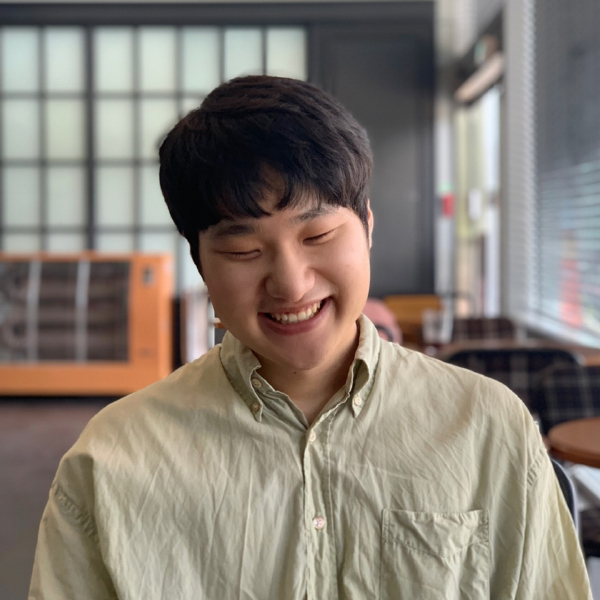
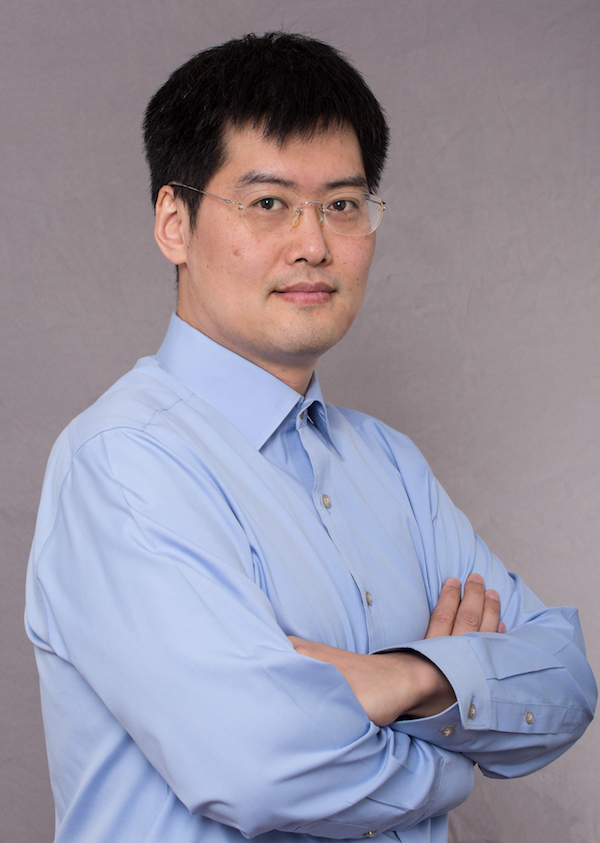
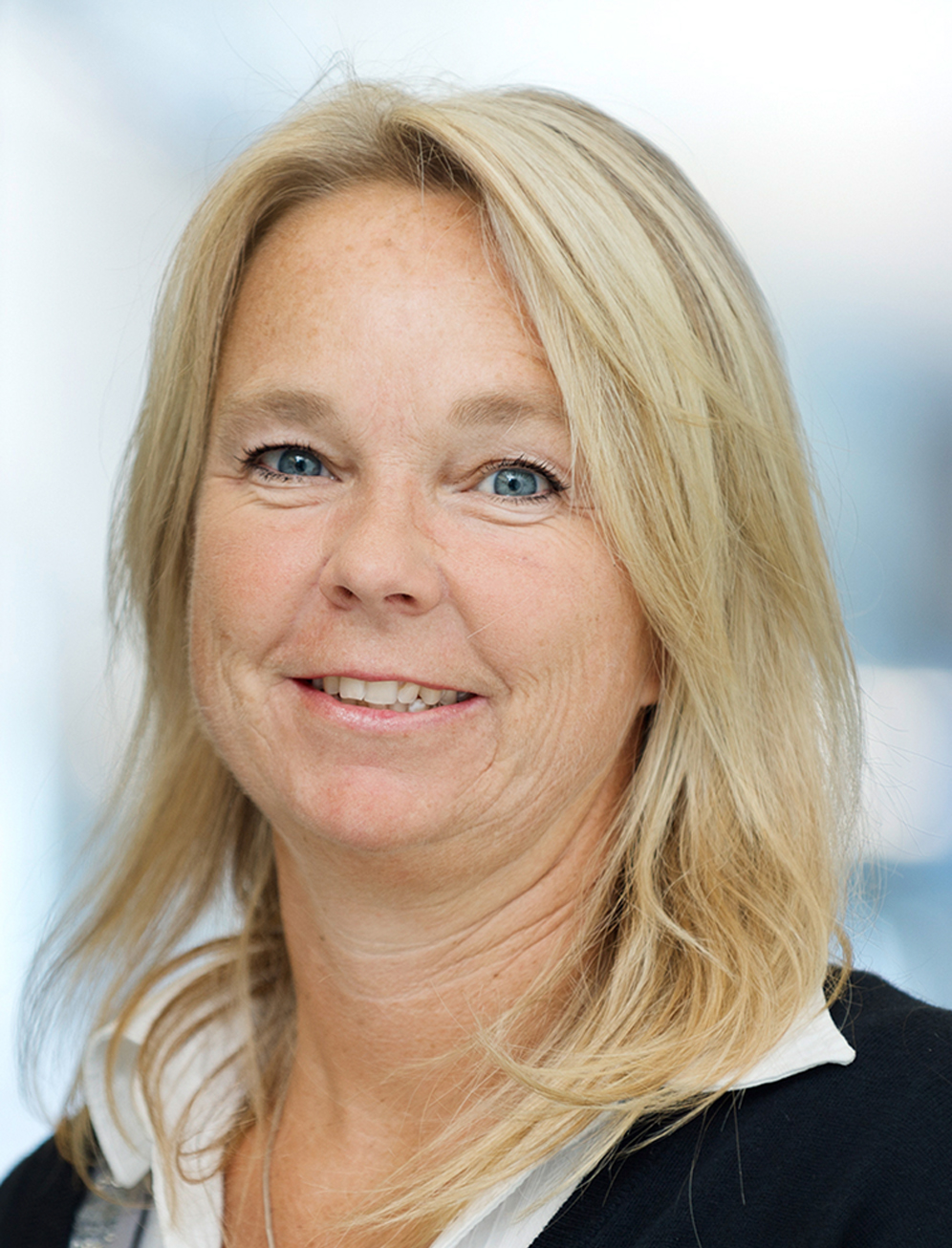
Jinhan Kim is a Postdoctoral Researcher at the Università della Svizzera italiana (USI) in the Faculty of Informatics, working in the TAU lab under Prof. Paolo Tonella. He earned his Ph.D. from KAIST under Prof. Shin Yoo, focusing on software engineering research in mutation testing, fault localization, and deep learning system testing. His work bridges traditional software engineering techniques with AI-driven methodologies, emphasizing AI4SE and SE4AI paradigms. Education: Ph.D. in Software Engineering, KAIST, 2023 Research Interests: Mutation Testing Deep Learning System Testing Autonomous Systems Testing Adversarial Attack Detection Empirical Software Engineering Service and Leadership: Organized SBFT 2026 and DeepTest 2026 (co-located with ICSE 2026) Program Committee Member for ASE, ISSTA, Mutation, and DeMeSSAI Board of Distinguished Reviewers for TOSEM (2024–2025) Labs and Teams: Active contributor to the TAU Lab at USI, focusing on advanced software testing and AI integration.
Nicola Marzari is a Professor of Theory and Simulation of Materials at EPFL, where he also serves as Director of the National Centre for Computational Design and Discovery of Novel Materials (NCCD). He is Chairman of Psi-k, an international network for advanced materials' computational design. Previously, he held the Toyota Chair of Materials Engineering at MIT and leadership roles at the University of Oxford, including Director of the Materials Modeling Laboratory and a Statutory Chair in Materials Modeling. His education includes a Laurea in Physics (summa cum laude) from the University of Trieste, a PhD in Physics from the University of Cambridge under Prof. Michael C. Payne, and postdoctoral work at Rutgers University with Prof. David Vanderbilt. Marzari's research focuses on computational materials science, electronic structure theory, and high-throughput simulations. He develops methods for predicting material properties using first-principles approaches, machine learning, and quantum espresso software. Key areas include energy materials (batteries, thermoelectrics), magnetic materials, and optoelectronic systems. His work bridges fundamental physics and practical material design, emphasizing reproducible workflows and open-source tools like koopmans and AiiDA . His recent articles highlight advancements in machine learning for materials interfaces, dynamical Hubbard functionals, and thermal conductivity modeling. He actively contributes to EuroHPC initiatives for exascale materials design and OPTIMADE standards for materials data exchange. Marzari leads interdisciplinary teams at EPFL and collaborates globally on projects ranging from defect engineering in semiconductors to AI-driven materials discovery. His research aims to accelerate the development of sustainable energy and electronic technologies through computational innovation.
Thijs Defraeye is a Senior Scientist at Empa (Swiss Federal Laboratories for Materials Science and Technology) and Adjunct Professor at Dalhousie University. He holds a PhD in Building Physics from KU Leuven (2011) and a Master's in Civil Engineering (2006). His work focuses on optimizing food supply chains through multiphysics simulations and digital twins, addressing challenges in refrigerated transport, postharvest quality preservation, and energy-efficient food processing. He leads the SimBioSys group, developing solutions for perishable goods logistics and electrohydrodynamic technologies. Research interests include: Biophysics of food systems Digital twin applications in agriculture Electrohydrodynamic drying Thermal management in cold chains Sustainable food technologies Recent work emphasizes reducing food loss through physics-based modeling of refrigerated containers, ventilated packaging optimization, and scalable evaporative cooling systems. His studies bridge engineering principles with biological processes, aiming to enhance global food security and environmental sustainability.
Xuming He is an Associate Professor at the School of Information Science and Technology (SIST), ShanghaiTech University, where he leads the PLUS Lab. His research spans computer vision and machine learning with a focus on developing algorithms that operate effectively under limited supervision and evolving data conditions. His core research interests include weakly-supervised and few-shot learning for scenarios with sparse annotations, continual learning frameworks for knowledge retention during sequential task acquisition, semantic segmentation techniques for scene understanding, and multimodal vision-language representations. He emphasizes interpretable machine learning to build transparent AI systems capable of human-understandable reasoning, addressing critical challenges in model trustworthiness and deployment reliability. Recent publications reveal strong trends toward novel class discovery in long-tailed recognition scenarios, physics-informed generative modeling for scientific applications, and robust segmentation under distribution shifts. His work increasingly integrates large language models for multimodal reasoning while maintaining focus on efficiency in resource-constrained environments like robotic grasping and medical imaging analysis. He actively mentors students, having supervised Qian He to PhD completion and Chuanyang Hu to Master's degree in 2023. He welcomes prospective graduate students through ShanghaiTech's Computer Science & Technology program and offers undergraduate research projects requiring minimum six-month commitments. The PLUS Lab under his direction drives innovation in learning under supervision constraints, with recent work spanning medical tumor analysis, cross-view geolocation, photonic computing, and semiconductor design verification. The lab's research bridges theoretical advances with practical applications across healthcare, robotics, and scientific discovery domains.
Andrea Del Prete is an Associate Professor in the Industrial Engineering Department at the University of Trento (Italy) since 2022. His research focuses on robot control, reinforcement learning, trajectory optimization, and numerical algorithms for dynamic systems. He leads the Interdepartmental Robotics Lab (IDRA) and has previously held roles as a tenure-track assistant professor at the University of Trento (2019-2021), a research scientist at the Max-Planck Institute for Intelligent Systems (2018), and an associated researcher at LAAS-CNRS (2014-2017) working with the HRP-2 humanoid robot. Earlier, he conducted PhD and post-doc research at the Italian Institute of Technology (2010-2013) on iCub robot control. PhD in Robotics (2013) - Italian Institute of Technology MEng in Computer Engineering (2009) - University of Bologna BSc in Computer Engineering (2006) - University of Bologna Dr. Del Prete specializes in merging learning and model-based techniques for safe robot control, particularly in legged systems. His work bridges trajectory optimization (TO) with reinforcement learning (RL) to overcome local minima challenges (CACTO/CACTO-SL algorithms) and develops robust controllers for humanoid and quadrupedal robots in unstructured environments. He explores viability kernels in MPC, safety certificates, and bi-level optimization for co-designing hardware/control policies. Key application areas include mountain rescue robotics (ALPINE platform), aerial maneuver recovery, and energy-efficient legged locomotion. His recent publications (2023-2025) emphasize numerical optimization algorithms, multi-contact locomotion, and hybrid control frameworks. Topics span from analytical integral optimization (2025) to climbing robots for mountain operations (2025), demonstrating a trajectory from theoretical algorithm development to real-world robotic applications. Research keywords include robotics, numerical optimization, and machine learning, with sub-fields like MPC for dynamic systems, humanoid control, and terrain adaptation. As an educator, he teaches advanced courses on: Optimization and Learning for Robot Control (48-hour master's course) Optimization-based Control of Legged Robots (12-hour PhD course) Task-Space Inverse Dynamics (3-hour PhD course) Current PhD advisees include Mohammad Hasan Yeganegi (generalization bounds for imitation learning), Pietro Noah Crestaz (numerically-efficient RL), Veronica Campana (ergodic control for defect detection), Elisa Alboni (data-efficient model-based RL), and Gianni Lunardi (MPC for legged locomotion).
Shashi Kumar is a doctoral student in the Doctoral Program in Electrical Engineering (EDDEE) at École Polytechnique Fédérale de Lausanne (EPFL) , affiliated with the School of Engineering (STI) and the IDIAP Research Institute (LIDIAP) . He holds the role of Doctoral Assistant at LIDIAP, contributing to research in speech technology and machine learning. His work focuses on advancing automatic speech recognition (ASR), optimal transport frameworks, and variational autoencoders for speech enhancement and signal processing. Research interests include speech recognition systems , multimodal task unification , far-field speech processing , and machine learning applications in signal processing and computer vision. His publications highlight contributions to SLAM-ASR performance analysis, joint speaker change detection, and PCB defect classification using image segmentation techniques. Shashi's research is anchored at the IDIAP Research Institute , where he collaborates on projects involving deep learning, audio signal processing, and speech technology. While no awards or grants are explicitly listed, his work reflects active engagement in international challenges like the Interspeech DiCOVA competition.
Pasquale Scarlino is a Tenure Track Assistant Professor in the Institute of Physics at École Polytechnique Fédérale de Lausanne (EPFL), where he founded and leads the Hybrid Quantum Circuits (HQC) Laboratory. He holds a dual appointment with the School of Basic Sciences (SB) and the Physics Section (SB-SPH), conducting research at the intersection of semiconductor and superconducting quantum technologies. His laboratory develops hybrid quantum hardware for advanced quantum information processing. His educational background includes a Master's degree in Physics from the University of Salento (Italy, 2011), where he was a student of Scuola Superiore ISUFI, followed by a Ph.D. from TU Delft (2016) in the Spin Qubits group of Prof. L.M.K. Vandersypen at the Kavli Institute of Nanoscience-Qutech. His doctoral work focused on Si/SiGe spin qubits in collaboration with the M. Eriksson Group at Wisconsin University. Scarlino's research centers on experimental quantum physics using hybrid superconductor/semiconductor devices with electrostatically defined quantum dots coupled to high-impedance microwave resonators. He investigates light-matter interactions in unconventional regimes, quantum transport in low-dimensional systems, and spin/charge qubit implementations. His work aims to merge semiconductor and superconducting platforms to expand quantum information capabilities, with applications in quantum computing, quantum optics, and analog quantum simulation. Early career achievements include establishing the first coherent interface between superconducting and semiconducting quantum systems using high-impedance resonators. His publication record shows strong focus on microwave photon-mediated interactions between quantum systems, with recent work exploring quantum acoustics, topological band engineering, and criticality-enhanced sensing. The articles demonstrate increasing specialization in hybrid quantum hardware, with a shift toward germanium-based systems and advanced resonator designs in the latest publications. Scarlino has advised eleven Ph.D. students at EPFL and teaches courses including General Physics (Electromagnetism), Solid State Systems for Quantum Information, and Introduction to Quantum Science and Technology. His teaching emphasizes experimental quantum hardware approaches and critical assessment of quantum computing platforms. The Hybrid Quantum Circuits Laboratory operates within EPFL's Institute of Physics, utilizing state-of-the-art nanofabrication facilities and cryogenic measurement setups. The team collaborates extensively with leading quantum research groups worldwide, maintaining strong ties with previous institutions including ETH Zurich, TU Delft, and Microsoft Station Q Copenhagen.
Aleksandra Radenovic is a Full Professor at École Polytechnique Fédérale de Lausanne (EPFL) holding multiple positions across the institution. She is a Full Professor at the Laboratory of Nanoscale Biology (LBEN) within the School of Engineering (STI), a Full Professor in Teaching at the School of Life Sciences (SV), and a Full Professor in Teaching at the School of Engineering (STI). Additionally, she serves as Co-Director of both the IBI-STI and IBI-SV administrative units, and is a Member of both the STI School direction and SV School direction. Dr. Radenovic received her PhD from the University of Lausanne in 2003, where she worked with Prof. Dietler in the Laboratory of Physics of Living Matter. Prior to that, she studied physics at the University of Zagreb from 1994-1999, and completed her baccalaureate at a Classical gymnasium in 1994. She conducted postdoctoral research at the University of California, Berkeley from 2004-2007 in the group of Prof. Liphardt. Her research focuses on single molecule biophysics, with particular emphasis on developing techniques and methodologies based on optical imaging, biosensing, and single molecule manipulation. Her laboratory works on three major research directions: (i) developing and using nanopores as platforms for molecular sensing and manipulation, particularly solid-state nanopores in glass nanocapillaries and 2D-material membranes; (ii) studying biomolecular function, especially protein and nucleic acid interactions, using force-based manipulation techniques like optical tweezers and Anti-Brownian Electrokinetic traps; and (iii) developing super-resolution optical microscopy based on single molecule localizations for quantitative cellular imaging. Her work bridges physics, engineering, and biology to create innovative tools for understanding molecular processes at the nanoscale. Analysis of her recent publications reveals a strong focus on nanofluidics, 2D materials (particularly MoS 2 and hBN), nanopore sensing, super-resolution microscopy, and the development of novel instrumentation for biophysical applications. Her research demonstrates increasing interdisciplinary collaboration, integrating materials science, nanotechnology, and biological applications to address fundamental questions in molecular biophysics. Dr. Radenovic has received numerous prestigious awards and grants, including: 2021: ERC Advanced Grant 2021: Optica Fellow 2016: CCMX Materials challenge award 2015: SNSF-ERC Consolidator Grant 2010: ERC Starting Grant 2003: SNSF Fellowship She has successfully advised numerous PhD students whose research spans single molecule biophysics, nanofluidics, and optical techniques. Her laboratory, the Laboratory of Nanoscale Biology (LBEN), is well-equipped for advanced biophysical research, with capabilities in nanopore fabrication, optical trapping, super-resolution microscopy, and 2D materials characterization. Dr. Radenovic has secured significant research funding through competitive grants, including multiple ERC grants, which have supported her innovative research program at the intersection of physics, engineering, and biology.
Prof. Dr. Annette Liesegang serves as a Professor at the Institute of Animal Nutrition and Dietetics within the Vetsuisse Faculty of the University of Zurich. Her research focuses on bone and cartilage physiology, obesity, and clinical nutrition impacts across multiple animal species including ruminants, dogs, reptiles, pigs, and birds. Her primary research interests encompass bone metabolism, mineral nutrition, comparative physiology, and veterinary diagnostics. She specializes in bone marker analysis, bone mineral density measurement via quantitative peripheral computed tomography, and calcium absorption mechanisms using immunohistochemical methods. Her work investigates physiological and nutritional influences on bone resorption/formation dynamics during critical periods like gestation and lactation, with extensive species-specific expertise. Analysis of her 2024-2025 publications reveals dominant research themes in calcium metabolism (particularly in sheep/goats), urolithiasis pathogenesis across species, vitamin D optimization, and clinical dietary interventions for conditions like intestinal malabsorption. Methodological innovations include in-vitro digestion models and UVB-irradiated feed development, reflecting her translational approach from basic bone physiology to practical animal nutrition solutions. Scientific awards: No scientific awards were documented in the provided materials. Prof. Liesegang mentors thesis students and leads collaborative research projects, notably with Prof. Brigitte von Rechenberg on growth plate physiology in foals and lambs. Her work leverages institutional facilities including specialized CT equipment and laboratory infrastructure for biochemical analysis, though specific grant details remain unreported in the source text. The Institute of Animal Nutrition and Dietetics operates dedicated animal research facilities with stables for multiple species and managed sheep/goat herds under veterinary supervision. These resources enable controlled studies on bone metabolism, dietary interventions, and species-specific nutrition, supporting her extensive publication record in veterinary and comparative nutrition science.
Prof. Beat Ruhstaller is a Professor at the ZHAW School of Engineering, leading research in Organic Electronics and Photovoltaics. He specializes in perovskite solar cells, OLEDs, and optoelectronic device simulation. His work focuses on improving device efficiency through charge transport analysis, photon recycling, and material characterization. He heads multiple projects including 'Organic Electronics and Photovoltaics Projects', 'Perovskite-on-Silicon Tandem Photovoltaics', and 'Advanced Materials for Opto-Electronic-Ionic Devices'. Research Interests: Organic Electronics, Photovoltaic Technologies, Perovskite Materials, Device Simulation, Charge Transport Phenomena, and Optoelectronic Devices. His interdisciplinary approach combines experimental and computational methods to tackle challenges in energy-efficient optoelectronics. Key Projects: Tandem solar cell design, perovskite stability, and OLED degradation mechanisms. Over 90 peer-reviewed articles and book chapters, including contributions to Nature Communications , Advanced Materials , and Physical Review Applied . Active in international conferences like EU PVSEC and SID.
Dr. Yuanyuan Yuan is a Researcher at the Department of Computer Science, ETH Zurich, Switzerland, based at CNB H 104.1, Universitätstrasse 6, 8092 Zurich. Her work bridges computer security and machine learning with a focus on practical vulnerabilities in deployed AI systems. Her research centers on exposing and mitigating security flaws in deep learning deployments, particularly targeting trusted execution environments (TEEs) and on-device inference systems. Key contributions include pioneering side-channel attacks against TEE-shielded neural networks (CipherSteal, HyperTheft), bit-flip attack surfaces in DNN executables (BitShield), and novel testing methodologies for neural network robustness. She investigates cache/timing side channels, ciphertext analysis, privacy leakage in partitioned ML, and concept-based explainability. Analysis of her 2023-2025 publications reveals a cohesive focus on offensive security research for AI infrastructures, with consistent contributions to top venues in security and machine learning. Her work demonstrates expertise in low-level system interactions (memory, cryptography) applied to ML security, spanning attack vectors, defensive mechanisms, and validation frameworks. The research trajectory shows increasing sophistication in exploiting hardware-software interfaces while developing practical hardening techniques for real-world deployments.
Dr. Ji Hoon Lee is a Professor in Theoretical Physics at ETH Zürich, affiliated with the Professur für Theoretische Physik. His research focuses on quantum gravity, holography, integrable systems, and gauge-gravity dualities. He explores topics such as AdS/CFT correspondence, string theory vacua, and black hole microstates through advanced mathematical frameworks. His work spans theoretical physics with a strong emphasis on holography, including studies of giant gravitons, D-brane dynamics, and Kondo line defects in affine Gaudin models. Recent publications (2021–2024) highlight contributions to integrable systems, stringy microstate counting, and gravitational brane couplings in AdS3 black holes. Though no explicit awards or grants are listed, his publications indicate active participation in cutting-edge research areas. No student advising details or lab affiliations were provided in the source text.
Dr. Sergii Yakunin is a Lecturer at the Department of Chemistry and Applied Biosciences at ETH Zürich, specializing in inorganic functional materials. His research focuses on advanced materials for radiation detection, semiconductor devices, and optoelectronic applications. Key areas include perovskite nanocrystals, quantum dots, and photodetector technologies. He leads the Laboratory of Inorganic Chemistry (LAC), emphasizing material synthesis, characterization, and device integration. Research interests encompass radiation detection systems, energy materials, and nanotechnology applications. Recent work highlights advancements in X-ray/gamma detectors using perovskites, colloidal nanocrystal fabrication, and compact optical spectrometers. His contributions bridge fundamental material science with applied technologies for medical imaging, energy harvesting, and photonics. Publications emphasize detector performance optimization, nanocrystal stability, and novel material designs. Current efforts address challenges in detector sensitivity, environmental stability, and scalable manufacturing. Collaborative projects focus on integrating functional materials into wearable and compact devices for next-generation applications.
Evelyne Knapp is a Researcher at the ZHAW School of Engineering, Zurich University of Applied Sciences, within the Organic Electronics & Photovoltaics research focus area. Her work centers on advanced materials science, semiconductor physics, and machine learning applications in energy systems. She has led major projects such as 'Uncertainty quantification in ML Prediction for PV Quality Assurance' and contributed to innovations in perovskite solar cell optimization, organic semiconductor characterization, and device simulation models. Her research interests span photovoltaic technologies, charge transport phenomena, and optoelectronic device development. Key areas include: Perovskite solar cell performance analysis and degradation mechanisms Machine learning-driven parameter extraction for semiconductor materials Electro-thermal modeling of organic light-emitting devices Frequency-domain analysis of large-area solar cells Knapp's publications (over 30 peer-reviewed articles) demonstrate expertise in device simulation, material characterization, and interdisciplinary approaches merging computational methods with experimental data. Recent work highlights include: Advancing ML techniques to identify limiting parameters in perovskite solar cells Developing inverse models for solar cell parameter estimation Quantifying charge transport dynamics in organic semiconductors Her contributions have been presented at leading conferences including the IEEE Photovoltaic Specialists Conference and the Society for Information Display Symposium.
Jürgen Bernard is an Assistant Professor of Computer Science at the University of Zurich (UZH), affiliated with the Digital Society Initiative (DSI). He leads the Interactive Visual Data Analysis (IVDA) Group and holds a joint position in the Department of Informatics within the Faculty of Business, Economics, and Informatics. His research focuses on interactive visual data analysis, explainable machine learning, and human-centered AI interfaces. Bernard completed his PhD at TU Darmstadt in 2015, followed by postdoctoral roles at TU Darmstadt and the University of British Columbia. He has received prestigious awards, including the EuroGraphics Young Researcher Award (2022) and EuroVis Young Researcher Award (2021). His work emphasizes combining human expertise with algorithms in domains like healthcare, climate science, and digital humanities. Key research interests include visual analytics for time-oriented data, interactive machine learning, and applications in healthcare. His projects address challenges such as medical data interpretation, sensor data analysis, and decision-making support systems. Bernard actively contributes to conferences like IEEE VIS and chairs workshops such as VAHC 2023. Education: PhD in Computer Science (2015, TU Darmstadt); Diploma in Computer Science (2009, TU Darmstadt) Grants: SNF Grant on Personalized Visual Analytics (2024), BMW collaboration on manufacturing analytics Labs/Teams: IVDA Group, DSI Health Community