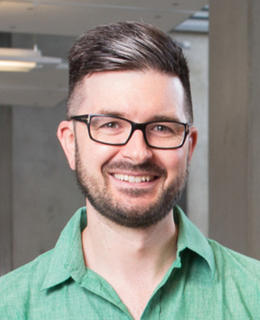
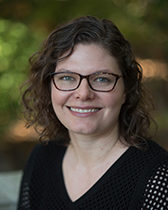
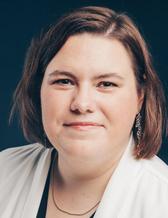
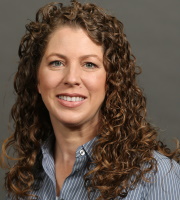
Casey Hubert is Professor and CAIP Chair in Geomicrobiology at University of Calgary, researching microbial ecosystems in petroleum reservoirs and marine sediments. His work bridges geomicrobiology and energy biotechnology. Research characterizes thermophilic anaerobes in subsurface environments, microbial souring control, and hydrocarbon biodegradation potential. Applications include reservoir management and Arctic oil spill response strategies.
Steffen Leth Jørgensen is an Associate Professor at the Department of Earth Science, University of Bergen. He serves as Head of the Geochemistry & Geobiology research group and Director of the CDeepSea Centre. His research focuses on interdisciplinary studies of hydrothermal systems, marine sediments, and microbial communities in extreme environments such as Arctic mid-ocean ridges, submarine volcanoes, and deep-sea sediments. Key interests include geochemical processes, microbial ecology, and the interplay between geological and biological systems. His work integrates field studies, laboratory experiments, and molecular analysis to explore topics such as hydrothermal vent microbiology, nitrogen cycling in marine sediments, and the evolution of microbial communities in extreme environments. Notable projects include the SUSTAIN drilling initiative at Surtsey Volcano, Iceland, which investigates hydrothermal-microbial interactions in basalt over time. He leads collaborative efforts in Arctic geoscience and contributes to global understanding of deep-sea mineral resources and their environmental impacts. Publications highlight his expertise in hydrothermal mineral deposits, microbial adaptations to extreme conditions, and the application of genomic and machine learning tools to study sedimentary systems. His research spans locations such as the Arctic Mid-Ocean Ridge, Milos hydrothermal fields, and East Greenland lake sediments, reflecting a global perspective on Earth's subsurface processes.
Natascha Riedinger is an Associate Professor in the Department of Geology at Oklahoma State University, where she has been serving since 2020. She holds a courtesy appointment and is actively involved in research and teaching in geochemistry and marine geology. She works closely with Rick Colwell and leads the Riedinger Lab, focusing on sedimentary processes, early diagenesis, and biogeochemical cycling in marine environments. Education: Dr. rer. nat. in Geosciences from the University of Bremen, Germany (2005); MSc (Diplom) in Geosciences from the same institution (2001). Her research interests are centered on using geochemical signals to reconstruct sedimentary depositional events, investigating early diagenesis in marine sediments, evaluating subsurface metal cycling, applying paleoproxies (especially redox-sensitive trace metals), and studying hydrothermal vent impacts on sediments. Her work supports Sustainable Development Goals 13 (Climate Action) and 14 (Life Below Water). The 15 most recent publications (2023–2025) reveal a strong focus on hadal trench systems, carbon and metal cycling, microbial community dynamics, and paleoredox reconstructions. Key themes include earthquake-triggered carbon transport, diagenetic metal mobilization, single-cell genomics of deep biosphere microbes, and validation of nitrogen isotope proxies. Her research frequently involves IODP expeditions and integrates field data with reactive transport modeling. No scientific awards are listed in the provided text. Natascha Riedinger actively mentors graduate students, as evidenced by her teaching of Master's Thesis and Doctoral Dissertation Research courses. She has secured multiple grants from the National Science Foundation, Columbia University, and other institutions to support projects on deep-water ventilation, hydrothermal deposits, and sedimentary event deposits. Her funded work emphasizes interdisciplinary collaboration and international ocean drilling programs. She leads the Riedinger Lab, which conducts advanced geochemical and microbiological analyses of marine sediments, particularly from tectonically active margins and deep-sea trenches. The lab’s research contributes to understanding carbon sequestration, microbial life in extreme environments, and paleoenvironmental change.
Magdalena Osburn is an Associate Professor at Northwestern University's Department of Earth, Environmental & Planetary Sciences within the Weinberg College of Arts & Sciences. Her research focuses on geobiology of extreme environments, including the deep subsurface, hydrothermal systems, and caves, with a particular emphasis on compound-specific isotope organic geochemistry (H, C, S) applied to microbial ecology and biogeochemical cycling. She leads the Osburn laboratory, which includes specialized facilities like OrgGeoLab, BugLab, Stable Isotope Lab, and shares the GeoCAL Lab. Ph.D. (2013) and M.S. (2008) in Geobiology from Caltech B.A. (2007) summa cum laude in Earth & Planetary Sciences and Environmental Studies from Washington University in St. Louis Her work integrates organic geochemistry, microbiology, and stratigraphy to investigate microbial processes in modern and ancient environments through lipid biomarkers and isotopic analysis. Key research areas include: Hydrogen isotopic composition of lipids as environmental and metabolic indicators Geochemical modeling of aqueous environments for microbial life Neoproterozoic ocean-atmosphere chemical evolution Carbonate sedimentology with focus on microbialite preservation Recent publications highlight her contributions to deep subsurface biofilm characterization (2020), Greenland ice sheet carbon dynamics (2018), and microbialite studies in Mexico (2017). Her isotopic research reveals trends in microbial metabolism across various environments. Scientific recognition includes: Packard Fellowship (2017) NSF CAREER Award (2021) CIFAR Earth 4D Fellow (2019) Scialog Fellow (2020) AT&T Research Fellow (2021) She has secured major grants from NSF, NASA, and Packard Foundation for projects like the BRAILLE NASA PSTAR proposal and studies on subsurface microbe-rock-fluid systems. Her teaching portfolio includes graduate and undergraduate courses in geobiology, microbial ecology, and sedimentary geology fieldwork. Laboratory components under her supervision include: OrgGeoLab for lipid extraction and isotope analysis BugLab for microbial cultivation and imaging Stable Isotope Lab (GC-IRMS for δD and δ13C measurements) GeoCAL Lab for sediment core processing
Henrik Drake is an Associate Professor at the Linnaeus University within the Faculty of Health and Life Sciences and Department of Biology and Environmental Science . His research focuses on geochemical and geobiological processes in the deep subsurface, particularly microbial methane cycling, uranium immobilization in mineral sinks, and astrobiological implications of subsurface life. Research Interests: Microbial methanogenesis and sulfate reduction in deep granitic fractures Geochemical tracing of ancient life in impact craters via stable isotopes and biomarkers Heavy metal (uranium, arsenic) retention mechanisms in anoxic groundwater Geochronology of fracture-hosted fluid flow using in situ Rb-Sr and U-Pb methods Interactions between fungi and bacteria in extreme subsurface environments Recent Article Trends: His 2023-2025 publications emphasize microbial controls on greenhouse gas cycling, uranium sequestration in nuclear waste repository analogs, and geochronological frameworks for deep biosphere evolution across geological timescales. Key methods include laser ablation ICP-MS, Mössbauer spectroscopy, and multi-isotope (C, S, Sr) analyses. Scientific Engagement: He serves as associate editor for Frontiers in Microbiology , Geofluids , and Discover Geoscience . He chairs the NordSIMS-Vegacenter Steering Committee . Teaching & Leadership: Actively supervises bachelor’s to postdoctoral researchers and leads two master’s programs: Environmental Risk Analysis and Environmental Science and Sustainability . His team, the Environmental Geochemistry Group , investigates deep biosphere processes and their applications to nuclear waste safety and drinking water contamination.
Carina Bunse serves as an Associate Senior Lecturer in the Department of Marine Sciences within the Faculty of Science at the University of Gothenburg. Her research focuses on microbial ecology in marine environments, particularly examining pelagic bacteria dynamics and their role in global nutrient cycles. She maintains an active research profile with extensive collaboration across disciplines including chemistry, modeling, and ecology. Her primary research interests center on functional microbial dynamics in the changing ocean, with emphasis on bacterial responses to environmental drivers across spatio-temporal scales. She investigates metabolite interactions and substrate turnover in marine settings, particularly in the Baltic Sea and North Sea coastal regions. Her work integrates large 'omics datasets and time series analyses using both traditional and advanced methodologies to address global ocean challenges. Dr. Bunse leads research within the MMEco group, focusing on multi-disciplinary approaches to understand marine ecosystem functions. Her publication record demonstrates consistent output in high-impact journals covering microbial community dynamics, carbon cycling, and responses to climate change. She frequently collaborates with international research teams on projects spanning from phytoplankton blooms to deep biosphere connectivity. Her research methodology combines field observations with laboratory analyses, often utilizing cutting-edge techniques for metabolomic and genomic investigations. Current projects examine microbial responses to environmental stressors including temperature changes and pollution events, as evidenced by her 2024 publication on methane plumes following the Nord Stream pipeline explosion.
Brandy M Toner is a Professor in the Department of Soil, Water, and Climate at the University of Minnesota. Her research focuses on biogeochemical cycles, deep ocean microbial ecology, and subsurface environmental processes. Key Research Areas: Iron, sulfur, and carbon cycle interactions Hydrothermal vent microbial communities Fractured-rock subsurface biogeochemistry Metagenomic analysis of extremophiles Synchrotron facility applications in environmental science Recent Project Trends: Colloidal shunt mechanisms in ocean cycles (NSF-funded, 2025-2028) Mercy-sulfur-carbon cycle analysis (USDA Forest Service, 2023-2025) Synchrotron facility community management (University of Chicago/NSF, 2023-2025) Terrestrial-aquatic interface carbon fluxes (NSF, 2021-2026)
Dr. Manoj Hari is a Postdoctoral Research Associate in the Department of Geography at the University of Cambridge. He collaborates with Prof. Andrew Friend on projects such as the hybrid14 Dynamic Global Vegetation Model and landscape regeneration solutions addressing biodiversity and climate change. His work focuses on biosphere-atmosphere interactions, terrestrial carbon cycle dynamics, and Earth system modeling. Dr. Hari holds a PhD in Earth and Atmospheric Sciences from the National Institute of Technology Rourkela (India), an MSc in Geography from the University of Madras, and a BSc in Geography from Government Arts College Coimbatore. His research integrates remote sensing, climate modeling, and field observations to address critical environmental challenges. His recent articles explore topics such as aerosol impacts on ecosystems, tropical forest productivity, urbanization-induced seismicity, and monsoon precipitation trends. These studies highlight interdisciplinary approaches to understanding climate change feedback mechanisms and environmental policy implications. Dr. Hari contributes to the University’s research initiatives under themes like Vital Geographies and Climate and Environmental Dynamics. His work emphasizes translating scientific findings into actionable strategies for sustainable development and climate resilience.
Brandi Kiel Reese is an Associate Professor at the University of South Alabama and Senior Marine Scientist at the Dauphin Island Sea Lab , where she integrates microbial ecology , geomicrobiology , and systems biology to study aquatic and sediment biogeochemical cycling. Ph.D. in Marine Sciences, Texas A&M University (2011) Research focuses on microbial communities in marine subsurface , coastal hypoxia , and deep continental mines , using metatranscriptomics and high-throughput culturing Collaborates with the International Ocean Discovery Program for deep-sea sediment studies Her recent publications (2019-2014) span coastal hurricane impacts , subsurface microbial guilds , and extreme environment genomics . She mentors students including M.S. Sobol , M.M. Mullis , L.A. Zinke , and R.E. Weisend , and teaches courses in microbial ecology and geomicrobiology .
Derek Sawyer is a Professor and Associate Director for Administration in the Department of Earth Sciences at The Ohio State University, serving as Earth Sciences Transfer Credit Coordinator. He leads the Marine Geology and Geohazards Laboratory, focusing on sediment transport, natural hazards (submarine landslides, tsunamis), and subsurface stress analysis using advanced field methods and numerical modeling. His expertise spans marine geology, geophysics, and energy-related geoscience. Education: Ph.D. in Geology (2010, University of Texas at Austin), M.S. (2006, Penn State University), B.S. (2002, Eckerd College). Sawyer has extensive experience in marine expeditions, including roles with the International Ocean Discovery Program (IODP) as a shipboard scientist and Science Evaluation Panel member. He teaches courses on sedimentation, seismology, coastal geology, and energy-environmental systems. Research emphasizes submarine landslide mechanics, gas hydrate systems, and seafloor stability. Notable contributions include studies on Japan Trench paleoseismology, Gulf of Mexico sediment strength, and submarine hazard mitigation. Active in fieldwork using sonar mapping, subbottom profiling, and drone technology, his work bridges geology, geophysics, and environmental science. Collaborative projects include IODP expeditions and seismic interpretations of continental margin processes. His lab integrates field data with numerical models to address geohazard risks and sedimentary processes. Current investigations explore gas hydrate reservoirs, landslide-induced deformation, and subduction zone dynamics.
Anthony Ranchou-Peyruse is an Assistant Professor at the Université de Pau et des Pays de l'Adour, affiliated with the Institute of Analytical Sciences and Physico-Chemistry for Environment and Materials (IPREM). He holds the ANR Industrial Chair ORHyON (2020-2025) in partnership with ENGIE and co-leads the SEnGA laboratory with E2S-UPPA and Teréga. His research focuses on microbial communities in deep subsurface environments, particularly their roles in natural hydrogen reactivity, biocorrosion, and bioremediation. He combines anaerobic culturing, molecular biology, and interdisciplinary approaches with geology and analytical chemistry. Education highlights include a 2006 PhD in Microbiology and 2018 Habilitation to Supervise Research. He has led projects funded by ANR, ENGIE, and Teréga, focusing on hydrogen storage, microbial interactions, and CO₂ conversion. He has supervised 19 students and multiple postdocs/technicians, co-authoring over 50 publications. Key roles include Director of SPACE studies (2019-2023) and membership in national committees like GDR H2 Underground and the IODP France Office. Research interests span deep aquifers, extremophile microbiology, and georesources exploitation impacts. His recent work addresses hydrogen storage feasibility, microbial biofilm dynamics, and biogeochemical processes in subsurface systems.
Jason Sylvan serves as Associate Professor in the Department of Oceanography within the College of Geosciences at Texas A&M University since 2020, having previously held Assistant Professor positions at the same institution (2015-2020) and University of Southern California (2013-2015). His research focuses on geomicrobiology and biogeochemistry across diverse environments including hydrothermal vents, subseafloor crust, and the Gulf of Mexico continental shelf. Ph.D. in Biological Oceanography, Rutgers University (2008) M.Sc. in Biological Oceanography, Rutgers University (2004) B.Sc. in Biology, Brandeis University (1999) Sylvan's research spans three primary domains: hydrothermal vent systems and subseafloor biosphere processes, Gulf of Mexico microbial ecology (particularly regarding oil and dispersant interactions), and terrestrial hot spring environments. His work integrates microbiological, geochemical, and molecular approaches to understand microbial processes in extreme environments and their implications for global biogeochemical cycles. The research has significant relevance to understanding life in Earth's deep biosphere and microbial responses to environmental perturbations. His publication record demonstrates consistent output across marine geomicrobiology, with recent focus on phosphorus cycling in deep sediments, microbial metabolism in ocean crust, and oil-degrading microbial communities in the Gulf of Mexico. Sylvan's work frequently appears in high-impact journals including Nature, Frontiers in Microbiology, and Geochimica et Cosmochimica Acta. 2016 KAVLI Fellow 2016-2017 IODP Ocean Discovery Lecturer 2018 Dean's Distinguished Achievement Award: Innovative Educator Award Sylvan actively mentors graduate and undergraduate students, with numerous publications listing students as primary authors. His lab receives funding supporting research on deep biosphere processes and coastal microbial ecology. The Sylvan Geomicrobiology Lab at Texas A&M maintains active research programs in both deep-sea hydrothermal environments and Gulf of Mexico coastal systems, with particular expertise in microbial responses to environmental disturbances. The lab maintains strong collaborations with researchers across multiple institutions and participates in major oceanographic programs including IODP expeditions. Current research directions include continued investigation of deep biosphere processes, microbial responses to oil spills, and expanding work on terrestrial analog systems for understanding subseafloor life.
Jackie Goordial is an Assistant Professor in the Department of Ecosystem Science and Biodiversity at the University of Guelph. Her research focuses on environmental microbiology in extreme and rapidly changing environments, particularly permafrost soils, polar regions, and cold-arid ecosystems. She employs genomic sequencing, culturing, and in situ metabolic activity measurements to study microbial interactions and biogeochemical cycling. Academic History: BSc Honours, University of Toronto at Scarborough MSc, University of Toronto PhD, McGill University Research Interests: Her work investigates microbial survival strategies in extreme conditions, including permafrost thaw, Antarctic dry valleys, and deep-sea environments. She explores links between microscale processes and global biogeochemical cycles, with applications to astrobiology and climate change. Key themes include microbial community dynamics, extremophile physiology, and contamination prevention in low-biomass studies. Awards & Recognition: No specific awards listed, but her research has been highlighted in ISME Journal and Environmental Microbiology . Advising & Collaboration: Current opportunities exist for graduate students and postdoctoral fellows. Her lab emphasizes Indigenous partnerships in research stewardship, acknowledging traditional lands and collaborating with marginalized communities in polar science. Labs & Teams: Her lab integrates fieldwork, genomic technologies, and cross-disciplinary approaches to advance understanding of microbial life in Earth’s extreme environments and potential extraterrestrial analogs.
Hannah Rose Babel is an Assistant Professor in the Department of Earth Science at the University of Bergen, Norway, with office location at Allégaten 41, room 3A10d - 3102, and contactable via hannah.babel@uib.no. Her research focuses on Earth's largest biome—the deep subsurface biosphere—with emphasis on microbial processes in oceanic crust. Dr. Babel's work centers on geomicrobiology and deep biosphere dynamics , specifically investigating microbial colonization of fresh basalt glass in upper oceanic crust. Using subsurface observatories (SSOs) deployed at Surtsey volcano—a mid-ocean ridge analogue—she employs SEM microscopy and 16S rRNA meta-barcoding to study pioneer microbial communities. Her research reveals that fluid chemistry dominates over mineral substrate in shaping initial colonization patterns, challenging assumptions about mineral-driven microbial distribution in hydrothermally active zones. Her 2022-2024 publications demonstrate consistent focus on extreme-environment microbiology, spanning DNA/RNA stability at cryogenic temperatures, Arctic hydrothermal sulfate reduction, and basalt colonization mechanisms. These works highlight interdisciplinary integration of geochemistry, microbiology, and ocean crust studies to map life's limits in Earth's subseafloor. Supported by Research Council of Norway funding (project 288349), Dr. Babel actively disseminates findings through conferences including NORBIS and Microenergy Workshop. She collaborates extensively with international teams on deep biosphere projects, particularly through subsurface observatory deployments. Affiliated with the Geochemistry & Geobiology research group and Center for Deep Sea Research, she contributes to Bergen's leadership in marine geoscience through field-based investigations of microbial-rock interactions in nascent oceanic crust.
Dr. Cody S. Sheik is an Associate Professor in the Department of Biology at the University of Minnesota Duluth. His research integrates microbial ecology, biogeochemistry, and genomics to study freshwater and subsurface ecosystems. He leads interdisciplinary projects funded by NOAA, NSF, and the Army Corps of Engineers, focusing on climate impacts on cyanobacterial blooms, bioremediation, and deep biosphere processes. Research Focus: Sheik investigates microbial controls on elemental cycles (sulfur, iron, carbon, nitrogen) in environments ranging from Lake Superior to terrestrial subsurface fractures. His work emphasizes metagenomic approaches to uncover metabolic networks in low-energy systems, harmful algal bloom dynamics, and adaptive responses of microbial communities to environmental change. Publication Trends: Recent articles reveal a focus on cryptic biogeochemical cycles, subsurface microbiome diversity, and freshwater cyanobacterial ecology. His team employs cutting-edge omics tools to explore microbial interactions in extreme or anthropogenically impacted environments, with implications for ecosystem management and climate resilience. Grants & Projects: NOAA-funded study on synergistic climate impacts on Great Lakes harmful algal blooms (2022–2026) Peat-based chromium removal from industrial stormwater (2018–present) NSF-supported global survey of subsurface microbiomes (2024–2028) Army Corps collaboration on clay technology for algal bloom mitigation (2024–2025) Collaborations: Sheik works with the Great Lakes Observing System, international subsurface microbiology consortia, and environmental agencies, using facilities like the Lake Superior Ecological Observatory to advance long-term ecological monitoring.