

Professor Elena Pirogova is a faculty member of RMIT University’s School of Engineering, part of the STEM College. She holds the roles of Professor and Associate Dean of the Electrical & Biomedical Engineering Discipline. Her research focuses on biomedical engineering, biomaterials, therapeutic peptides, and biological effects of electromagnetic radiation. She earned her PhD in Biomedical Engineering from Monash University (2002) and a BEng (Hons) in Chemical Engineering from the National Technical University of Ukraine (1991). Academic Positions: Professor (2020–present), Associate Dean (2018–present), and roles in research leadership since 2002. Teaching: Coordinates courses in biomedical engineering design, project management, and professional engineering projects at both undergraduate and postgraduate levels. Research: Over 170 publications in areas like tissue engineering, microfluidics, and wearable technologies. Key projects include biofabrication of scaffolds, electromagnetic radiation effects on cells, and smart textile applications. Supervision: Advises on advanced projects involving biomaterials, medical devices, and interdisciplinary engineering solutions. Her work bridges engineering and healthcare, emphasizing translational research in regenerative medicine and medical technology. She is active in curriculum innovation, particularly post-pandemic educational strategies.
جستوجوی استاد و پژوهشگر
استاد راهنما، استاد دانشگاه یا پژوهشگر مناسب برای مسیر پژوهشیتان را پیدا کنید و با او ارتباط بگیرید.
نمایش ۶۹۱-۷۰۵ از ۴٬۹۰۴ استاد راهنما
اطلاعات این پروفایلها از صفحات عمومی دانشگاهها جمعآوری شده و ممکن است بهروز نباشد.
Professor Craig Wheeler is a distinguished academic in the School of Engineering at the University of Newcastle, specializing in Mechanical Engineering with a focus on bulk solids handling and belt conveyor technology. As Associate Director of the Centre for Bulk Solids and Particulate Technologies and Deputy Chairman for the Australian Society for Bulk Solid Handling, he has established the university as a global leader in fundamental and applied research within this field. Wheeler's research interests primarily center on reducing the energy intensity and environmental impact of ore and mineral transportation globally. His work develops novel theoretical approaches to model and optimize belt conveyor and bulk handling systems, with significant contributions in energy-efficient transportation, dust emission control, and innovative conveying technologies like the Rail Conveyor system. His research bridges fundamental computational techniques with practical industrial applications, addressing real-world challenges in bulk material handling. His extensive publication record demonstrates trends toward increasingly sophisticated modeling techniques, combining continuum mechanics, discrete element methods, and computational fluid dynamics to solve complex problems in bulk material flow and energy consumption. Recent work shows particular emphasis on large-diameter idler rollers for energy savings, rail-running conveyor systems, and advanced dust control methodologies. 2023 Engineers Australia - Australian Society for Bulk Solids Handling 2017 Significant Contributions to Engineers Australia's Warman Design and Build Competition (Weir Minerals) 2017 Australian Council of Engineering Deans National Award for Engineering Education Excellence 2016 Innovative Technology Award (Australian Bulk Handling) 2010 Rising Star Award (Newcastle Innovation, The University of Newcastle) 2009 Pro-Vice Chancellor's Award for Research Excellence 2006 Best Research and Development Project (Australian Bulk Handling Review) 2000 A.W. Roberts Award (Australian Society for Bulk Solids Handling) Professor Wheeler has successfully led numerous Linkage Projects with major companies including Rio Tinto, Veyance Technologies, and Laing O'Rourke, securing significant cash and in-kind contributions for research projects. His industrial consulting experience, built on a 10-year engineering career with BHP, provides valuable insights that bridge fundamental research with practical applications. He actively supervises research students and contributes to professional development courses both within Australia and internationally. As a key member of the Centre for Bulk Solids and Particulate Technologies in association with TUNRA Bulk Solids, Wheeler leads research teams focused on developing eco-friendly conveying solutions. His work has resulted in new licensed technologies, internationally recognized testing methods, design guidelines, and Australian Standards that have transformed industry practices worldwide.

- Robotics
- Control Engineering
- Sensors
- +۵ مورد دیگر
Dr. Babar Jamil is a Lecturer in Electrical Engineering at the University of York's School of Physics, Engineering and Technology. His expertise spans robotics, sensors, control engineering, and mechanism design. He holds a Ph.D. from Hanyang University (South Korea) and conducted postdoctoral research at Sungkyunkwan University, where he also served as a Research Professor. His current research focuses on safe human-robot collaboration systems, novel control algorithms for robotic systems, and smart structures through sensor integration. Education: Ph.D. in Electrical and Electronic Engineering, Hanyang University, South Korea Postdoctoral Researcher, Sungkyunkwan University, South Korea Research Interests: Developing hybrid robotic manipulators combining soft and rigid actuation Designing proprioceptive sensors for extreme environments Advances in pneumatic artificial muscles and soft actuators Integration of machine learning in robotics control systems Publications: Recent work emphasizes soft robotics actuators, sensor design, and human-robot interface innovations. Key themes include energy-efficient actuation, sensorized robotic fingers, and pumpless pneumatic systems. Labs/Teams: Leads robotics research at York, focusing on collaborative robotics and sensor-actuator integration. Maintains an active research group through his UoY Robotics website .
Kangkang Yinمشاهده پروفایل
دانشیار
Kangkang Yin is an Associate Professor in the School of Computing Science at Simon Fraser University (SFU). His research focuses on computer animation, computer graphics, humanoid robotics, machine learning, and multimedia analysis. He teaches courses such as Computer Animation and Scientific Computing, and holds a PhD from the University of British Columbia (2007), MSc from Zhejiang University (2000), and BSc from Zhejiang University (1997). His work bridges robotics and animation through projects like physics-based character controllers, motion diffusion models, and robotic manipulation. Key contributions include the SIMBICON biped locomotion framework and research into emotion-driven dance animation. Recent efforts emphasize reinforcement learning applications in motion synthesis and robust visual navigation for unmanned ground vehicles. Yin's publications span over two decades, addressing challenges in motion control, physics-based simulation, and machine learning applications. His lab contributes to both academic advancements and practical robotics solutions. Current research trends show strong emphasis on combining generative AI with traditional animation techniques, as seen in recent work on auto-regressive motion models (AAMDM) and physics-augmented reinforcement learning (PARC).

Alain Bensoussan is the Lars Magnus Ericsson Chair Professor of Operations Management at the University of Texas at Dallas and Director of the International Center for Decision and Risk Analysis. His work spans stochastic control, mathematical finance, and mean field games. He holds a PhD from the University of Paris (1969) and advanced degrees from École Polytechnique (1962) and École Nationale de la Statistique et de l’Administration Economique (1965). Research interests include inventory control under uncertainty, risk management frameworks, and applications of mean field theory to control problems. Recent work focuses on stochastic control in financial systems, machine learning integration with control theory, and optimal policies in dynamic environments. Notable awards: Legion d’Honneur (Officier), NASA Distinguished Public Service Medal, Member of French Academies of Sciences/Technology, and SIAM Charter Fellowship. Key grants: NSF-funded projects on mean field control theory (2016–2019) and mean field games (2023–present). Teaches advanced courses: Game Theory, Risk Analysis, Stochastic Dynamic Programming. His 2023–2025 publications emphasize theoretical advancements in stochastic control, mean field games, and machine learning applications. Ongoing work addresses infrastructure investment, wind farm optimization, and multi-agent system dynamics.
Andreas J. Kassler is a Full Professor of Computer Science at Karlstad University, Sweden, where he has been since 2005. He co-chairs the Distributed Systems and Communication (DISCO) group and focuses on networking, cloud computing, and wireless networks. His research includes software-defined networking, future internet architectures, and network optimization. He has authored/co-authored over 130 peer-reviewed publications, holds 6 patents, and serves on editorial boards of journals like Journal of Internet Engineering . Education : Ph.D. in Computer Science, Universität Ulm (2002) Docent (Habilitation), Karlstad University (2007) M.Sc. in Mathematics/Computer Science, Universität Augsburg (1995) Research Interests : Software Defined Networking (SDN) Programmable Dataplanes Wireless Mesh Networks Time-Sensitive Networking (TSN) Edge Computing Machine Learning for Network Optimization Recent Directions : His work spans TSN scheduling, hybrid P4 solutions for 5G, and explainable AI in energy communities. He explores network resilience, latency optimization, and multi-objective control in microgrids. Service Contributions : Track co-chair for VTC 2015 General chair for Wired/Wireless Internet Communications (WWIC) 2013 Editor-in-Chief of IARIA Journal on Advances in Internet Technology Labs/Teams : Leads DISCO group at Karlstad University. Collaborates with global teams on projects like mmWave backhaul networks and SDN-enabled industrial control systems.
Dr. Cheng-Chew Lim is a Professor in the School of Electrical and Mechanical Engineering at the University of Adelaide. He specializes in control theory, autonomous systems, and multi-agent reinforcement learning. His research focuses on trusted autonomous systems, secure cyber-physical networks, and decentralized decision-making models. He has published over 300 articles and supervised 50+ PhD and master’s students. Dr. Lim teaches courses in control systems, autonomous systems, and engineering project management. He has held editorial roles, including Associate Editor for IEEE Transactions on Systems, Man, and Cybernetics, and is actively involved in professional associations like the IEEE Control and Aerospace Electronic Systems Joint Chapter. His current projects include physics-informed neural networks for medical imaging, secure distributed autonomous systems, and resilient formation control under cyberattacks. Dr. Lim has secured research grants from ARC and industry partnerships, emphasizing practical applications in robotics, cybersecurity, and smart systems.
Zhao Naمشاهده پروفایل
استادیار
Dr. Zhao Na is a tenure-track Assistant Professor at the Singapore University of Technology and Design (SUTD), affiliated with the Institute of Sustainable Technology and Design (ISTD). She holds a Ph.D. in Computer Science from the National University of Singapore (NUS), where her thesis on 3D point cloud semantics earned the IMDA Excellence Prize. Her research bridges computer vision and machine learning, focusing on scene understanding, data-efficient learning, and domain generalization. Education: Ph.D. in Computer Science (NUS, 2021); Prior roles include Research Fellow at NUS. Research interests emphasize 3D scene analysis, object detection, semantic segmentation, and robust learning under noisy or limited data. Her work addresses challenges in multi-modal learning, continual learning, and open-world scenarios. Recent projects include geometry-semantics synergy in neural fields and cross-modal augmentation for visual grounding. Publications span top-tier venues like CVPR, ECCV, and ICCV, with a focus on 3D vision and AI. Key contributions include the PCTeacher framework for semi-supervised segmentation and Static-Dynamic Co-Teaching for incremental learning. Scientific Awards: IMDA Excellence Prize (2021). Active grants include a DSO Research Grant (2023–2026) and A*STAR MTC Grant (2023–2026). She leads the SUTD-ZJU Thematic Grant on 3D scene understanding (2022–2024). Laboratory/Team: Research group at ISTD/SUTD focuses on advancing AI-driven 3D perception and scene understanding systems.
Diego Patiñoمشاهده پروفایل
استادیار
Diego Patiño is an Assistant Professor in the Department of Computer Science and Engineering at the University of Texas at Arlington (UTA), a position he began in September 2024. He earned his Ph.D. in Computer Engineering from the National University of Colombia in 2020, following M.S. and B.S. degrees from the same institution. Prior to joining UTA, he served as a Postdoctoral Fellow at Drexel University and a Postdoctoral Researcher at the GRASP Laboratory, University of Pennsylvania. B.S. in Computer Engineering, National University of Colombia, 2010 M.S. in Computer Engineering, National University of Colombia, 2012 Ph.D. in Computer Engineering, National University of Colombia, 2020 Dr. Patiño's research centers on geometric computer vision and machine learning, with applications in robotics and 3D vision. His primary interests include 3D reconstruction, graph neural networks, symmetry detection, physics-informed machine learning, and reinforcement learning. He develops algorithms that integrate geometric priors and physical constraints into deep learning models to improve robustness and generalization in real-world robotic systems. His recent publications demonstrate a strong trend in leveraging implicit neural representations for 3D shape reconstruction, applying graph neural networks to swarm robotics, and enhancing computer vision tasks with self-supervised and physics-informed learning. Work spans high-impact venues such as IEEE RA-L, ICRA, ICPR, and MICCAI, showing a consistent focus on geometric reasoning, robotic perception, and medical imaging applications. His scientific contributions have been recognized with awards from the UTA Division of Student Affairs for exceptional dedication and positive impact (2024 and 2025). He is actively involved in securing research funding, with multiple grants under review from NSF, Air Force SBIR, and industry partners like Sony. Exceptional dedication and positive impact recognition, UTA Division of Student Affairs (December 9, 2024) Exceptional dedication and positive impact recognition, UTA Division of Student Affairs (April 30, 2025) Dr. Patiño advises and serves on committees for multiple graduate students in computer science and engineering, including doctoral and master’s candidates. He is also leading or co-leading several research grants under review, covering topics such as aerial swarm navigation, neuromorphic sensing, and industrial computer vision. He teaches graduate courses in computer vision and is involved in service roles including PhD admissions and faculty appointments committees. He is affiliated with research initiatives at UTA, including the UTARI Research Institute, where he has presented on geometric modeling and physics-informed learning. His lab focuses on developing next-generation computer vision algorithms for robotics, industrial inspection, and safety-critical systems.
Andrew Ngمشاهده پروفایل
استاد مدعو
- Artificial Intelligence
- Machine Learning
- Robotics
- +۴ مورد دیگر
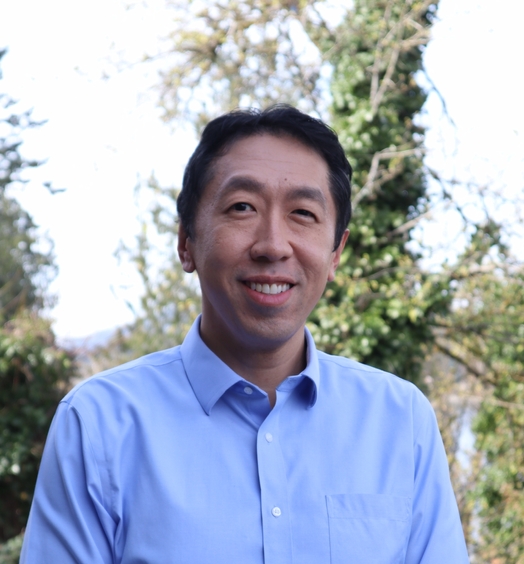
Andrew Ng is an Adjunct Professor at Stanford University's Computer Science Department and a globally recognized leader in AI. He is the Founder of DeepLearning.AI, Executive Chairman of LandingAI, General Partner at AI Fund, and Co-Founder of Coursera. His work has revolutionized machine learning and online education, with over 200 research papers in AI, robotics, and related fields. He was named to the 2023 Time100 AI list of most influential figures in AI. Ng's research focuses on machine learning, deep learning, reinforcement learning, and their applications in robotics and education. He pioneered the development of massive open online courses (MOOCs), notably through Stanford's early experiments in 2011 that attracted hundreds of thousands of learners. His contributions include foundational work in algorithms like Latent Dirichlet Allocation (LDA) for text analysis and advancements in spectral clustering and inverse reinforcement learning. His publications span topics from robotic hand design to scalable deep learning systems, emphasizing practical and scalable solutions. Ng's educational initiatives, such as the Machine Learning and Deep Learning Specializations, have educated millions worldwide. He advocates for accessible AI education and ethical AI development, emphasizing collaboration between academia and industry.
Chen-Yu Weiمشاهده پروفایل
استادیار
Chen-Yu Wei is an Assistant Professor in the Department of Computer Science at the University of Virginia. He holds a Ph.D. from the University of Southern California (2022), and M.S. and B.S. degrees from National Taiwan University (2015, 2012). His research focuses on interactive machine learning, emphasizing robust and adaptive algorithms for non-stationary/adversarial environments, sample-efficient reinforcement learning, and decentralized multi-agent systems. Education: Ph.D., Computer Science, University of Southern California, 2022 M.S., Electrical Engineering, National Taiwan University, 2015 B.S., Electrical Engineering, National Taiwan University, 2012 Research interests include reinforcement learning, game theory, and algorithmic economics. He has received prestigious awards such as the COLT and ALT Best Paper Awards (2021-2022) and the Simons-Berkeley Research Fellowship (2022). His work bridges theory and practice, addressing challenges in adversarial environments and multi-agent coordination. Current research group members include Haolin Liu (PhD), Braham Snyder (PhD), Kingsley Kim (Undergraduate), and Rishik Balerao (Undergraduate). Teaching includes courses on Reinforcement Learning, Artificial Intelligence, and Algorithmic Economics. He co-organizes the RL Meetup and Theory Seminar at UVA.
Murphy Yuezhen Niuمشاهده پروفایل
استادیار
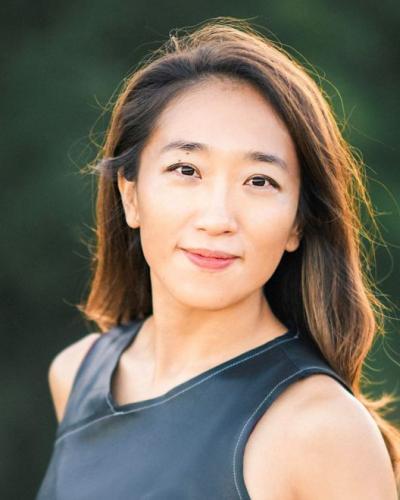
Murphy Yuezhen Niu is an Assistant Professor and Stansbury Chair in Computer Science at the University of California, Santa Barbara (UCSB), since 2024. She holds an adjunct role as Adjunct Assistant Professor at the University of Maryland, College Park, and the University of Maryland Institute for Advanced Computer Studies. Niu earned her Ph.D. in theoretical and mathematical physics from MIT (2018) and a B.A. in Physics from Peking University. Her research focuses on quantum computing paradigms, including quantum control optimization, quantum error correction, quantum machine learning, and scalable quantum architectures. Her work applies deep reinforcement learning and generative models to quantum systems, with contributions to superconducting qubit-based processors, ion traps, photonic systems, and neutral atom qubits. Niu's research emphasizes reducing the computational cost of quantum digitization while achieving real-world impacts. Notable achievements include the Claude E. Shannon Research Assistantship for her work in photonic quantum computation and quantum cryptography. Niu’s publications (2021–2025) span topics like quantum error correction thresholds, hybrid analog-digital quantum simulators, and machine learning-driven quantum decoding. Her research bridges theoretical physics and applied quantum computing, with a focus on fault-tolerant architectures and scalable quantum control protocols. Education: Ph.D., Physics, MIT (2018) B.A., Physics, Peking University Awards: Claude E. Shannon Research Assistantship Labs/Teams: Google Quantum AI Team (former role) UCSB Quantum Computing Research Group

- Robotics
- Computer Vision
- Medical Robotics
- +۶ مورد دیگر
Peter K. Allen is a Professor of Computer Science at Columbia University's School of Engineering and Applied Science, with a career spanning over three decades in robotics research. His work focuses on robotic grasping , 3D vision and modeling , and medical robotics , where he has made significant contributions to autonomous manipulation and sensor integration. Current affiliation: Columbia University Robotics Lab Academic rank: Professor Key research areas: Robotics, Computer Vision, Artificial Intelligence Education A.B. in Mathematics-Economics from Brown University M.S. in Computer Science from University of Oregon Ph.D. in Computer Science from University of Pennsylvania (recipient of CBS Foundation Fellowship, Army Research Office Fellowship) Research Interests Allen's research bridges fundamental robotics challenges with applied domains. His work on robotic grasping explores low-dimensional subspaces and semantic task suitability, while 3D vision contributions include illumination coherence and texture registration methods. In medical robotics , he develops surgical imaging tools and BCI-enabled grasping systems. Recent publications show trends in: Deep learning for robotic manipulation (2017-2022) Human-robot interaction through BCI and augmented reality Deformable object manipulation (garments, thin shells) Multi-modal sensing (vision-tactile fusion) Scientific Recognition NSF Presidential Young Investigator Award Best Student Paper Award (2007) for collaborative work Over 30 years of continuous funding from NSF, Army Research Office, and medical grants Teaching and Mentorship He has taught graduate courses in robotics (COMS 4733/6731) since 2010, emphasizing hands-on projects with advanced platforms like Baxter, PR2, and Fetch robots. His lab provides immersive training in: 3D photography Humanoid robotics Autonomous navigation Grasp planning
Aris Dimeasمشاهده پروفایل
پژوهشگر
- Power Systems
- Renewable Energy
- Smart Grids
- +۷ مورد دیگر
Dr. Aris Dimeas is a Researcher at the National Technical University of Athens in the Department of Electric Power and Industrial Applications . He holds a diploma and PhD in Electrical and Computer Engineering from NTUA and has extensive experience in power systems operations, renewable energy integration, and smart grid technologies. Specialized in AI applications for power systems Developed control software for demand side management Consultant for PPC (2007-2012) Research Focus : Smart grids and digital twin implementations Renewable energy market dynamics Microgrid optimization and control algorithms Collaborations : Active participant in EU research projects, collaborating with HEDNO and other energy grid operators on electronic meters and intelligent network deployments. Teaching : Instructs courses on electric energy systems, power system analysis, and energy management.

Sung Kyung Hong is a Professor in the Department of Intelligent Drone Convergence at Sejong University , specializing in autonomous flight control systems, UAV technology, and sensor applications. He has held leadership roles including Director of the Autonomous Unmanned Vehicle Research Center since 2017 and served as an Advisory Member of South Korea's Presidential Advisory Council on Science and Technology (2019-2021). Education : Ph.D. (1998) from Texas A&M University, M.S. (1989) and B.S. (1987) from Yonsei University. His research focuses on autonomous flight control , inertial sensor integration , and HILS testing for UAVs, with notable achievements in robust fault diagnosis, collision avoidance algorithms, and adaptive filtering in high-vibration environments. Recent publications highlight applications of deep reinforcement learning, fixed-time attitude control, and drone-view image dehazing techniques. The scientific awards section includes: Advisory Member, Presidential Advisory Council on Science and Technology (2019-2021) As advisor, he has mentored researchers in UAV dynamics and simulation, while leading the Autonomous Unmanned Vehicle Research Center to develop advanced drone technologies and hardware-in-the-loop testing frameworks.