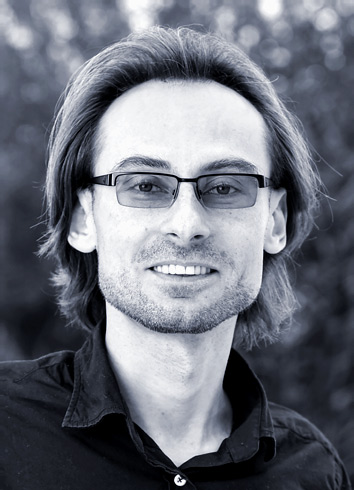
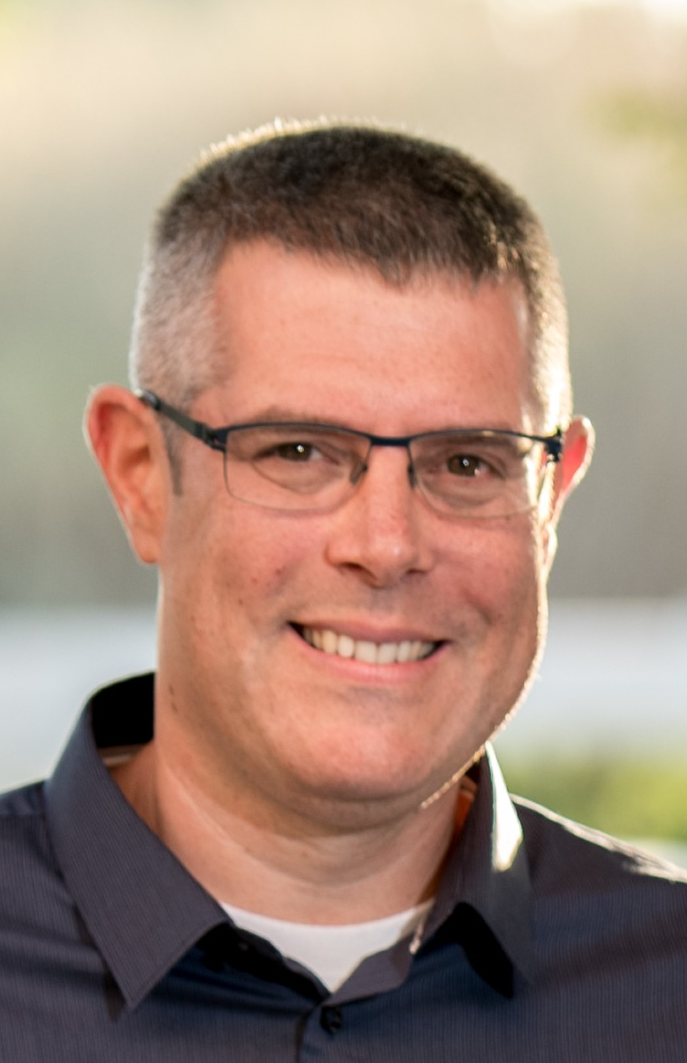
Prof. Yair Weiss is a faculty member at the School of Computer Science and Engineering, The Hebrew University of Jerusalem . He holds a PhD in Brain and Cognitive Sciences from MIT and an MSC in Applied Mathematics from Tel-Aviv University. Education: MSc in Applied Mathematics, Tel-Aviv University (1993) PhD in Brain and Cognitive Sciences, MIT (1998) His research focuses on Human and Machine Vision , Machine Learning , Bayesian Methods , and Neural Computation . Recent work explores adversarial examples, generative models, and robustness in neural networks. Recent publications highlight trends in: Understanding neural network representations Advancements in GANs and adversarial training Image restoration and translation techniques Perceptual distance modeling Bayesian approaches to computer vision Mathematical analysis of deep learning architectures
Aryeh Kontorovich is a Professor in the Computer Science Department at Ben-Gurion University. His research primarily focuses on theoretical machine learning, with expertise in probability, statistics, Markov chains, and metric spaces. His research interests span theoretical machine learning, with particular emphasis on: Probability theory and concentration inequalities Statistical learning theory Markov chains and mixing time estimation Metric space learning Kernel methods Sample compression schemes Professor Kontorovich's recent publications (2021-2025) demonstrate a continued focus on theoretical foundations of machine learning. His work shows strong trends in statistical estimation for Markov processes, distribution learning, metric space analysis, and sample compression. Many papers explore the intersection of probability theory and machine learning, particularly examining concentration inequalities, minimax optimality, and theoretical guarantees for learning algorithms. His research consistently bridges abstract mathematical theory with practical machine learning applications. Scientific awards and recognitions: Distinguished contribution award at MLG 2007 for "A Universal Kernel for Learning Regular Languages" Professor Kontorovich has advised numerous students and collaborated extensively with researchers in theoretical machine learning. His work spans both theoretical foundations and practical applications, with significant contributions to understanding the mathematical limits of learning algorithms. While specific grant information isn't provided in the source material, his extensive publication record in top venues suggests successful funding for his research programs. He maintains active collaborations with researchers worldwide, including prominent names like L. Gottlieb, D. Berend, and S. Hanneke.
Jonathan Kahana is a Researcher in the Computer Science department at the Hebrew University of Jerusalem . His research spans Machine Learning and Computer Vision , focusing on Weight Space Learning , Representation Learning , and Zero-Shot Model Search . He develops methods for probing neural network weights to extract information, including ProbeGen and Spectral DeTuning . His recent work includes mapping model weights into shared embedding spaces (ProbeX), recovering pre-fine-tuning weights of generative models, and improving zero-shot labeling with distribution priors. He contributes to open-source implementations, such as the ProbeGen GitHub repository. Research trends from his publications emphasize: Weight space analysis (ProbeGen, DSiRe) Model retrieval and classification (ProbeLog, Model Atlas) Disentanglement and invariance (Contrastive Objective, Red PANDA) Efficiency in probing (30-1,000x FLOPs reduction in ProbeGen) His work has been accepted at top-tier conferences including ICML , ICLR , and ECCV , with arXiv preprints covering topics like dataset size recovery and model tree analysis.
Eran Treister is an Assistant Professor at the Ben Gurion University of the Negev in the Department of Computer Science. He completed his postdoctoral fellowship at the University of British Columbia (2014-2016) and earned his PhD from the Technion in 2014 under Prof. Irad Yavneh. His research spans computational science, numerical methods, and machine learning, with a focus on: Scalable algorithms for inverse problems Graph Neural Networks (GNNs) optimization Seismic and optical imaging via PDE solvers Low-precision deep learning acceleration Multilevel preconditioning techniques Recent work explores: Graph neural networks for PDEs with adaptive meshes Deep learning approaches to Helmholtz equation modeling 3D shape reconstruction via parametric level sets He serves on editorial boards: SIAM Journal on Scientific Computing (2024-) Copper Mountain Conference on Multigrid Methods (2025) International Conference on Machine Learning (ICML) as Area Chair (2025) Current teaching: Optimization Methods for Data Science (Spring 2025) Deep Learning Mini-Project (Winter 2024/5) Advanced Numerical Optimization (Spring 2025)
Dr. Oren Kolodny is a Professor in the Department of Ecology, Evolution & Behavior at the Hebrew University's Silberman Institute for Life Sciences. His research focuses on modeling ecological and evolutionary dynamics, with emphasis on microbiome-host interactions, human prehistory, and conservation biology. He leads a lab exploring topics like species dynamics in fragmented landscapes, cultural evolution, and disease ecology. Key research themes include the role of microbiomes in host adaptation, the ecological mechanisms behind Neanderthal replacement by modern humans, and the application of computational models to microbiome diversity and disease transmission. His work integrates theoretical frameworks with empirical data, addressing both basic science and conservation challenges. Dr. Kolodny's recent publications emphasize interdisciplinary approaches, combining epidemiological modeling (SIR+ models) with evolutionary perspectives on cultural innovation and invasive species dynamics. He collaborates widely, bridging fields such as anthropology, microbiology, and computational biology. His lab actively engages in citizen science initiatives, e.g., amphibian conservation programs in Mediterranean urban areas. Despite no listed awards here, his impactful contributions are evident through prolific publication and cross-disciplinary research activity.
Eran Yahav is a Professor in the Computer Science Department at the Technion, Israel Institute of Technology, and serves as CTO at Tabnine. His research bridges programming languages, software engineering, program analysis, and machine learning, focusing on program synthesis, verification, and code intelligence. Research Interests: His work spans program synthesis , abstract interpretation , verification of concurrent systems , binary analysis , and AI for code . He leads the PRIME project, which uses machine learning and static analysis to enable programming with millions of examples, improving code completion, search, and prediction. The recent publications reflect a strong trend toward integrating neural models with program analysis—using structured representations of code (e.g., AST paths) for property prediction, generating sequences from code (code2seq), learning distributed representations (code2vec), and interpreting neural networks via automata extraction. His work consistently appears in top-tier venues such as POPL, PLDI, ICSE, OOPSLA, and ICLR. Scientific Awards: Best paper award at ISSTA'07 Best paper award at ISSTA'06 Advising and Grants: He has advised numerous PhD and Master’s students, many of whom have published in premier conferences and now hold academic or industry positions. While specific grants are not mentioned, his sustained high-impact research and leadership in major projects (e.g., PRIME, Fender, SAFE) imply significant funding support. He has served on program committees for PLDI, POPL, CAV, OOPSLA, and VMCAI, reflecting his standing in the programming languages and verification communities. Labs and Teams: He leads a research group focused on program analysis and synthesis, with strong collaborations, particularly with Martin Vechev and others, on concurrency, synthesis, and machine learning for code. The group has developed influential tools such as PRIME, code2seq, code2vec, TRACY, and SAFE.
Prof. Alex Bronstein is a Professor at the Henry and Marilyn Taub Department of Computer Science, Technion – Israel Institute of Technology, where he holds the Dan Broida Academic Chair and heads the VISTA Lab and the Center for Intelligent Systems. He concurrently serves as a Visiting Professor at the Austrian Institute of Science and Technology. His research spans computer vision, machine learning, computational geometry, signal processing, and bioinformatics, with a focus on geometric data analysis and AI applications in science. He has held significant industry roles including Principal Engineer at Intel Corporation, co-founding startups such as Invision (acquired by Intel), VideoCites, and Sibylla. His work bridges academia and industry, emphasizing practical applications of theoretical insights. Research interests include foundational AI models for molecular biology, robust machine learning systems, and interdisciplinary applications in healthcare and robotics. Notable projects include protein structure prediction using AlphaFold integration, adversarial robustness frameworks, and medical imaging innovations like T1-PILOT for MRI acceleration. He actively collaborates with global institutions, maintaining labs in Haifa, Vienna, and Sardinia. Recent publications highlight advancements in quantum computing simulations, wearable health monitoring systems, and AI-driven biomedical solutions. While no explicit awards are listed, his leadership roles and industry impact underscore significant contributions to computational science. He mentors graduate students in his VISTA Lab, focusing on cutting-edge projects in AI, computer vision, and computational chemistry.
Michael Elad is a Professor of Computer Science at the Technion - Israel Institute of Technology, where he has held a permanent faculty position since 2003. He also holds a courtesy appointment in the Technion's Electrical & Computer Engineering Department. Elad received his B.Sc. (1986), M.Sc. (1988) and D.Sc. (1997) in Electrical Engineering from the Technion, followed by a research associate position at Stanford University (2001-2003). His educational background includes: B.Sc. in Electrical Engineering from the Technion (1986) M.Sc. in Electrical Engineering from the Technion (1988), focusing on video compression algorithms under Prof. David Malah D.Sc. in Electrical Engineering from the Technion (1997), focusing on super-resolution algorithms for image sequences under Prof. Arie Feuer Michael Elad's research spans signal and image processing and machine learning, with specialization in inverse problems, sparse representations, deep learning, and generative models. He is particularly renowned for his work on sparse representations, having created the influential K-SVD algorithm together with Michal Aharon and Bruckstein. His 2010 book "Sparse and Redundant Representations: From Theory to Applications in Signal and Image Processing" is a leading publication in this field. Elad has also made significant contributions to diffusion models and generative AI, applying these concepts to solve complex problems in signal and image processing. His extensive publication record shows a clear evolution from foundational work on sparse representations to more recent applications in deep learning and generative models. While his early work focused on theoretical aspects of sparse coding and dictionary learning, his more recent publications demonstrate an integration of these concepts with modern deep learning techniques, particularly in the areas of image restoration, super-resolution, and generative modeling. Elad's scientific achievements have been recognized with numerous awards: Rothschild Prize in Engineering (2024) Member of the Israel Academy of Sciences and Humanities (2024) Weizmann Award for contributions in Sparse Modeling (2021) IEEE SPS Sustained Impact Paper Award (2018) IEEE SPS Best Paper Award (2018) IEEE SPS Technical Achievement Award (2018) Fellow of the Society for Industrial and Applied Mathematics (SIAM Fellow) (2018) IEEE Fellow (2012) ERC advanced grant (2013) Throughout his career, Elad has been actively involved in academic service and mentorship. He has served as an Associate Editor for several prestigious journals including IEEE Transactions on Image Processing, IEEE Transactions on Information Theory, and Applied Computational Harmonic Analysis. From 2016 to 2021, he was the Editor-in-Chief for SIAM Imaging Sciences. He has advised numerous students, including Michal Aharon and Yaniv Romano. Elad also headed the Rothschild-Technion Program for Excellence from 2015 to 2018, an undergraduate program for exceptional students. Elad maintains an active research laboratory at the Technion focused on advancing the theory and applications of sparse representations, deep learning, and generative models in signal and image processing. His team continues to push the boundaries of what's possible in image restoration, super-resolution, and other inverse problems in imaging.
Dr. Chaim Baskin is a researcher at the School of Electrical and Computer Engineering , part of the Faculty of Engineering Sciences at Ben-Gurion University of the Negev . His work focuses on advancing computational learning and deep learning algorithms for real-world applications.
Dr. Itay Safran is a faculty member in the Department of Computer Science at Ben-Gurion University of the Negev, Faculty of Natural Sciences. He completed his BSc in computer science and mathematics at Ben-Gurion University, followed by MSc and PhD studies at the Weizmann Institute, and postdoctoral research at Princeton and Purdue Universities in the US. His academic journey reflects a strong foundation in theoretical and applied computer science. Research interests focus on artificial intelligence and deep learning, particularly on developing theoretical foundations to understand the mechanisms behind deep learning technologies and their potential improvements. He aims to establish a laboratory at Ben-Gurion University to advance this research. His academic career emphasizes inspiring students to achieve high professional and human standards while fostering flexibility in research environments. Personal interests include travel, influenced by his postdoctoral experiences in the US, and he expresses a desire to continue exploring Israel.
Associate Professor Tamir Hazan is a faculty member at Technion - Israel Institute of Technology, where he joined in 2015. His research focuses on theoretical and practical aspects of machine learning, with applications spanning computer vision, natural language processing, and computational biology. His work bridges mathematical foundations with real-world problem solving in complex systems. Professor Hazan received his Ph.D. from the Hebrew University in 2009. His academic trajectory has established him as a leading researcher in machine learning theory and its applications, with a particular emphasis on developing mathematically rigorous approaches to modern AI challenges. Professor Hazan's research centers on mathematically founded solutions to problems demonstrating non-traditional statistical behavior. His work encompasses perturbation models for efficient learning of high-dimensional statistics, deep learning of infinite networks, and primal-dual optimization for high-dimensional inference problems. His research program spans three major interconnected areas: attention models that improve prediction interpretability, perturbation frameworks that integrate optimization and sampling through extreme value statistics, and convex duality approaches to message-passing in graphical models. His work demonstrates both theoretical depth and practical relevance across multiple domains. Analysis of Professor Hazan's recent publications reveals an evolving research trajectory with increasing emphasis on interpretable machine learning, causal modeling, and applications in medical imaging and behavioral science. His work consistently bridges theoretical foundations with practical implementations, with recent publications showing strong connections between perturbation theory, attention mechanisms, and optimization frameworks. The interdisciplinary nature of his research is evident in applications ranging from pedestrian navigation using smartphone sensors to video-text matching systems and medical image analysis. Professor Hazan has mentored numerous students throughout his career, including: Alex Schwing, now Assistant Professor at UIUC Alon Cohen, now Associate Professor at Tel Aviv University Idan Schwartz, currently Postdoc at Tel Aviv University Current Ph.D. students: Guy Lorberbom, Itai Gat, and Hedda Cohen Multiple M.Sc. students including Adi Manos, Ram Yazdi, and others Professor Hazan's research group maintains an active program with several key focus areas: Attention models for interpretable and improved prediction processes in visual question answering and multimodal applications Perturbation models that enable efficient statistical reasoning in complex systems with exponential configuration spaces Markov random fields, convex duality, and message-passing algorithms for structured prediction and distributed computing
Dr. Amnon Buxboim is an Assistant Professor at the Hebrew University of Jerusalem, affiliated with the Alexander Grass Center for Bioengineering and the Department of Cell and Developmental Biology. His research focuses on mechanobiology, particularly the roles of mechanical forces in stem cell differentiation, nuclear mechanics, and embryo development. He leads the Buxboim Lab, which combines single-cell genomics, microrheology, and AI to study mechanotransduction in contexts like preimplantation embryos and inflammation. Key achievements include securing an ERC Starting Grant (2015) for bovine reproduction mechanobiology and developing novel technologies like the MechanoSCOPE for in situ embryo mechanics analysis. His lab trains students in biology, bioengineering, physics, and computer science, collaborating with clinicians for translational impact. Notable students include Yoav Kan-Tor (PhD, Computer Science), Nir Zabari (MSc), and Shlomi Brielle (PhD). Research interests span matrix-directed stem cell fate, embryo development prediction via deep learning, and nuclear lamina interactions. The lab also investigates inflammation's mechanical aspects in IBD and GvHD.
Prof. Ran Nathan is a Professor in the Department of Ecology, Evolution & Behavior at The Hebrew University of Jerusalem. His research focuses on movement ecology, spatiotemporal plant population dynamics, and ornithology. He holds a Ph.D. and serves as the Chief Editor of Movement Ecology . His work integrates theoretical and empirical approaches to study dispersal, migration, and animal movement mechanisms. Key research interests include the ecology and evolution of dispersal, mechanisms underlying organism movements, and the application of tracking technologies. Notable contributions include discoveries on cognitive navigation in bats and the role of movement in microbial community composition in barn owls. Prizes & Honors: 2019 Distinguished Scientist Award from the National Academy of Sciences (China) Landau Award Prof. Nathan leads research groups exploring movement ecology paradigms, lifetime tracks of organisms, and invasive plant spread. He actively seeks PhD students for studies on raven psychometrics in desert ecosystems and collaborates on projects involving big data analysis in movement ecology.
Michael London is an Associate Professor at The Hebrew University of Jerusalem's Edmond and Lily Safra Center for Brain Sciences. His research focuses on the interface between biophysical properties of neurons and information encoding, particularly nonlinear dendritic processes and neuronal noise effects. Key projects involve studying sensory systems (mouse barrel cortex) and self-generated activity (ultrasonic vocalization circuits). Techniques include patch-clamp, two-photon imaging, optogenetics, and computational modeling. Notable collaborations include work on cortical interneurons with Idan Segev and studies of adrenergic modulation with Inbal Goshen. His lab has published extensively on topics like neural coding dynamics, circuit function, and neuron-network interactions. He advises a team of ~9 PhD students and postdocs, focusing on experimental/theoretical integration. Laboratory location: Goodman Brain Sciences Building, Level 1, Room 2103. Active in neuroscience education through ELSC's PhD program and summer internships. Maintains an open-source lab website at www.mikilon.org with research tools and datasets.
Ami Wiesel is a Professor at The Rachel and Selim Benin School of Computer Science and Engineering at The Hebrew University of Jerusalem. His research focuses on statistical signal processing, machine learning, and covariance estimation. Previously, he completed his postdoctoral studies at the University of Michigan with Professor Alfred Hero, earned his PhD in Electrical Engineering from Technion under Professors Yonina Eldar and Shlomo Shamai, and obtained his MSc and BSc in Electrical Engineering from Tel Aviv University. His research interests include robust covariance estimation , statistical learning , signal detection , and MIMO communications . Wiesel has made significant contributions to the field of structured covariance estimation, particularly in elliptical distributions and Tyler's estimator. His work bridges theoretical statistics with practical applications in radar systems, wireless communications, and hyperspectral imaging. Wiesel's publications show a clear trend toward integrating deep learning with traditional statistical signal processing methods. His recent work explores unbiased estimation using neural networks, fair principal component analysis, and deep learning applications for target detection with constant false alarm rate. His research spans theoretical foundations in covariance estimation to practical implementations in radar and communications systems. Among his notable scientific achievements are: Young Author Best Paper Award (2019) for 'Learning to Detect' Young Author Best Paper Award (2006) for 'Linear precoding via conic optimization for fixed MIMO receivers' Student Paper Award (2017) for 'Deep MIMO detection' Wiesel has advised numerous graduate students who have gone on to publish significant work in the field. His research has been supported by various grants focusing on statistical signal processing, machine learning applications, and radar systems. His monograph 'Structured Robust Covariance Estimation' (2015) has become a reference in the field. He maintains an active research group focusing on the intersection of statistical learning and signal processing, with applications in communications, radar, and medical imaging.