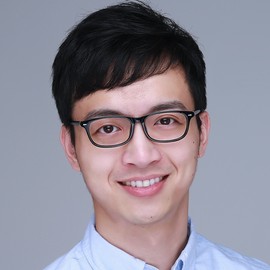
Luo Mai is an Assistant Professor at the University of Edinburgh's School of Informatics , with an upcoming promotion to Associate Professor (UK Reader) in August 2025. He leads the Large-Scale Machine Learning Systems Group and co-leads the UK EPSRC Centre for Doctoral Training in Machine Learning Systems and an ARIA Project on Scaling AI Compute by 1000X . PhD in Computer Science (Imperial College London, 2018) MRes in Advanced Computing (Imperial College London, 2012) His research focuses on the intersection of computer systems , machine learning , and data management . Key contributions include award-winning systems like WaferLLM (wafer-scale LLM inference), Tenplex (elastic ML), and ServerlessLLM (serverless LLM serving), published at top venues (OSDI, SOSP, ICML, NeurIPS, JMLR). Recent publications demonstrate trends in GPU-based distributed systems , LLM optimization , and adaptive machine learning . His team has developed groundbreaking open-source projects including TensorLayer , TorchOpt , and ServerlessLLM . Awarded Microsoft Research StarTrack Scholar (2024) , secured ARIA grant (2024) with Imperial College & Cambridge University, and received Google Fellowship during PhD (2012-2016). As an educator, he designed Edinburgh's popular Machine Learning Systems course (150+ students). His group supervises multiple PhD students including Yao Fu (recognized as 2024 Rising Star in ML & Systems) and Leyang Xue .
Lily Rui Liang is a Professor and Director of the MSCS Program in the Department of Computer Science and Information Technology at the University of the District of Columbia (UDC), School of Engineering and Applied Sciences. She joined UDC in 2004 after completing her Ph.D. at the University of Nevada, Reno. Her educational background includes: Ph.D. in Computer Science and Engineering, University of Nevada, Reno Dr. Liang's research spans cybersecurity , digital image processing , artificial intelligence , and computer science education , with a dedicated focus on broadening participation in computing . Her technical work includes deepfake detection and reinforcement learning for cybersecurity, while her educational innovations develop inclusive curricula for commuter and underrepresented students through Minecraft, robotics, and service learning. Analysis of her recent publications (2024-2018) shows a strategic evolution from core AI/image processing research toward educational interventions, particularly addressing commuter student engagement in urban settings while maintaining technical contributions in multimedia security and deep learning. Her scientific awards and honors include: Fellow of Center for the Advancement of STEM Leadership (CASL) (2019-2020) Fellow of Opportunities for UnderRepresented Scholars (OURS) (2014) Outstanding University Service Award from School of Engineering and Applied Sciences, UDC (2014) Myrtilla Miner Faculty Fellow (2012-2013) Frontiers of Engineering Education (FOEE) Conference participant, NAE (2011) Project Kaleidoscope (PKAL) Summer Leadership Institute participant (2011) Preparing Critical Faculty for the Future (PCFF) program participant (2011) Dr. Liang serves as Co-PI on multiple NSF grants including the UDC-CSEC-ENGAGE Project ($399,924, 2024-2027) for cybersecurity workforce development, CUE-T: HBCU Learning Community ($654,004, 2023-2026), and the AI-CyS Research Partnership ($152,350, 2021-2024) with six HBCUs and national labs. Her mentorship is evidenced through extensive curriculum development projects targeting K-12 and undergraduate students, particularly women and commuters. She leads the MSCS program and coordinates the AI-CyS consortium researching video authentication and autonomous cybersecurity agents, establishing UDC as a hub for HBCU cybersecurity education and AI research.
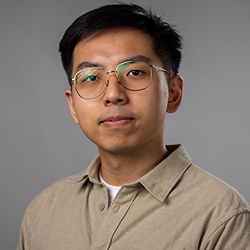
Kaidi Xu is an Assistant Professor in the Department of Computer Science at Drexel University's College of Computing & Informatics. His research focuses on Trustworthy AI, with expertise in formal verification of neural networks, adversarial attacks (especially in the physical world), and certified defenses. He actively publishes in top-tier conferences including NeurIPS, ICML, ICLR, CVPR, and AAAI, and leads the award-winning research team 'alpha-beta-crown'. PhD in Computer Science, Northeastern University (2021) MS in Computer Science, University of Florida (2017) BS in Computer Science, Sichuan University (2015) Dr. Xu's research spans critical areas in AI security and robustness. He investigates formal methods to verify neural network behavior, develops techniques to defend against real-world adversarial manipulations (such as the famous 'Adversarial T-shirt'), and explores model compression and explainability. His work bridges theoretical guarantees with practical applications in healthcare, material science, and autonomous systems. His recent publications reflect a strong trend toward certified robustness, interdisciplinary applications, and formal verification across vision, language, and multimodal systems. He has consistently published at NeurIPS, ICML, CVPR, and ACL, demonstrating sustained impact in both machine learning and computer vision communities. Winner of VNN-COMP'21 with highest score Three-time VNN-COMP champion (2021–2023) with team alpha-beta-crown Faculty Research Excellence Award, CCI@Drexel (2024) Recipient of multiple Carleone Faculty Awards (2025) NSF grant recipient for projects on transit systems and material synthesis Dr. Xu advises PhD students, including Jinhao, and has secured significant external and internal funding, including multiple NSF grants and Drexel internal awards. He is actively recruiting motivated students with strong machine learning backgrounds. He also contributes to the academic community as an Area Chair for NeurIPS 2025, organizer of workshops like GenAI4Health@AAAI 2025, and frequent program committee member. He leads the 'alpha-beta-crown' research team, known for its leadership in neural network verification and repeated success in the VNN-COMP competitions. The team focuses on developing scalable, sound, and complete verification tools for deep learning models, pushing the frontier of AI safety and reliability.
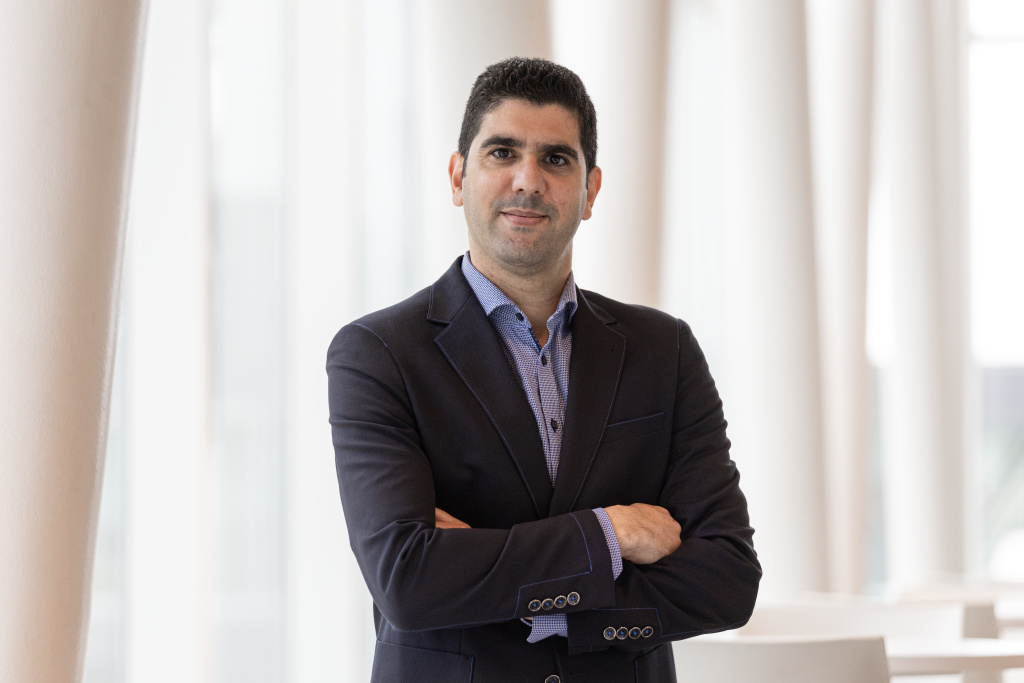
Enrico Magli is a Full Professor at the Department of Electronics and Telecommunications (DET) at Polytechnic University of Turin, Italy. He serves as Director of the Image Processing and Learning group and Coordinator of the 'ICT for Smart Societies' M.Sc. degree program. Additionally, he is a committee member of the PhD program in Electrical, Electronic and Communications Engineering and a member of the Interdepartmental Center SmartData@PoliTO - Big Data and Data Science Laboratory. Professor Magli's research focuses on applying machine learning and deep learning methods to satellite imaging, with applications to onboard processing and image analysis on the ground. His work spans deep learning for image and video analysis, image and video compression, compressive sensing, satellite imaging, and graph signal processing. He has published over 90 journal papers with 5900+ citations and an h-index of 40 on Google Scholar. His recent publications demonstrate a strong focus on developing deep learning architectures for satellite image processing, particularly for onboard applications. His research addresses challenges in hyperspectral image compression, super-resolution, change detection, and efficient neural network architectures suitable for resource-constrained satellite environments. There's also significant work on secure authentication systems using deep learning techniques and neural network optimization for edge devices. Elevated to IEEE Fellow (2017) 'for contributions to compression and communication of remotely sensed imagery' IEEE Geoscience and Remote Sensing Society 2011 Transactions Prize Paper Award IEEE Multimedia 2019 Best Paper Award Best Paper Awards at IEEE ICIP (2015, 2019) ERC Starting grant (consolidator type) and ERC Proof-of-Concept Grant recipient Multiple Best Paper Awards Francesco Carassa (2011, 2013, 2014) Professor Magli actively supervises numerous PhD students working on cutting-edge topics in deep learning for satellite imaging, image processing, and secure authentication systems. His research is supported by significant grants including ERC projects and multiple commercial contracts with space agencies and technology companies. He leads the Image Processing and Learning (IPL) Group at Politecnico di Torino, which focuses on developing innovative solutions for satellite image analysis and compression.
Lin Cai is a Professor in the Department of Electrical & Computer Engineering at the University of Victoria, Canada. She holds prestigious fellowships including NSERC Steacie, IEEE, CAE, and Royal Society of Canada. Her research focuses on wireless communications, networking, and mobile computing, with emphasis on protocols for multimedia and IoT systems. She has led projects in vehicular networks, UAV-assisted systems, and federated learning for edge intelligence. Dr. Cai has advised over 20 students, many of whom have received awards and prominent roles in academia and industry. She has authored numerous high-impact papers, secured grants from NSERC, CFI, and industry partners, and serves in leadership roles at IEEE and educational institutions. Notable contributions include work on congestion control, network security, and autonomous systems. Education: BEng (Nanjing U. of Sci. & Tech.), MASc/PhD (University of Waterloo) Affiliations: IEEE Vehicular Technology Society Board of Governors, IEEE ComSoc Distinguished Lecturer Awards: 2020 IEEE N2Women 'Star in Networking', RSC Fellow 2024, Best Paper Awards (ICC 2008, WCNC 2011) Research Labs: Connected Autonomous Vehicles (CAV) Lab, AI-driven Networking Group Her work integrates networking, AI, and control theory to address challenges in 6G, IoT, and smart transportation. She actively promotes diversity through initiatives like the 'Riko-chan' STEM manga series.
Cheng Han is a tenure-track Assistant Professor in the School of Science and Engineering at the University of Missouri -- Kansas City (UMKC), where he conducts research in adaptable and sustainable intelligence, focusing on efficient AI systems and parameter-efficient fine-tuning methods for large-scale models. Ph.D., Rochester Institute of Technology (RIT) M.S., Pennsylvania State University (PSU) B.S., Tianjin University (TJU) His research interests center on creating energy-wise AI systems that empower communities and address environmental and social challenges. He focuses on multimodal and visual prompt tuning, transfer learning, and robust AI. His work bridges theoretical innovation with real-world deployment, particularly in efficient adaptation of vision and language models. His recent publications span top venues like NeurIPS, ICCV, CVPR, ICLR, EMNLP, and IEEE TPAMI. The research trends highlight a strong focus on parameter efficiency , prompt engineering , model robustness , and multimodal understanding . He investigates when and why prompt tuning outperforms full fine-tuning and develops novel frameworks like E^2VPT and M^2PT for efficient adaptation. Cheng Han actively contributes to the academic community as a reviewer and committee member. Program Committee, AAAI (2023–present) Program Committee, SIAM SDM (2024) Reviewer for NeurIPS, ICLR, CVPR, ICML, ICCV, TPAMI, TMLR, and others He advises Ph.D. students and teaches courses such as Deep Learning (COMP-SCI 5567). He has given invited talks at ICLR, ICCV, and seminars at NSF and Naval Research Laboratory. His research is supported by academic collaborations and likely grant funding, given his active publication and service profile. He leads a research group focused on sustainable and efficient AI, with code available on GitHub.
Waël Jaafar is a Professor in the Department of Software Engineering and IT at École de technologie supérieure (ETS), a constituent school of the Université du Québec system in Montreal, Canada. His research spans multiple critical domains in modern communications and computing infrastructure, with a particular focus on next-generation wireless networks and intelligent systems. Dr. Jaafar holds a B.Eng. from Sup'Com Tunisie, and both M.Sc.A. and Ph.D. degrees from Polytechnique Montréal. His academic background provides a strong foundation for his interdisciplinary research that bridges theoretical concepts with practical engineering solutions. His research interests center around wireless communications systems, with particular emphasis on 5G/6G networks, UAV communications, space telecommunications, and machine learning applications for networking. He has developed significant expertise in federated learning techniques for distributed networks, cybersecurity applications for next-generation mobile systems, and edge computing architectures. His work frequently explores the intersection of communication theory, artificial intelligence, and network security, with applications ranging from industrial IoT to public safety communications. Analysis of his recent publications reveals a strong trend toward integrating artificial intelligence with wireless networking infrastructure, particularly focusing on UAV-assisted communications, federated learning approaches for distributed networks, and security enhancements for 5G/6G systems. His research demonstrates increasing emphasis on practical implementation challenges including energy efficiency, communication overhead reduction, and reliability in non-ideal network conditions. As an academic supervisor, Dr. Jaafar actively mentors numerous graduate students across various projects. He currently supervises doctoral candidates working on blockchain-enhanced security for 5G networks, green network slice orchestration, and federated learning approaches for Open RAN architecture. His master's students are engaged in diverse topics including LiDAR-based power line monitoring, multimodal behavioral authentication, and 5G/6G security using AI techniques. Dr. Jaafar is affiliated with two prominent research laboratories at ETS: LASI (Computer System Architecture Research Laboratory) and LACIME (Communications and Microelectronic Integration Laboratory). At LASI, he contributes to research in AI-based systems engineering, resource orchestration in edge/cloud environments, and intelligent network design. Through LACIME, he engages with broader communications research spanning from microelectronic components to complex communication systems, with particular focus on wireless networks and signal processing applications.
Dr. Jiaojiao Jiang is a Senior Lecturer in the School of Computer Science and Engineering at the University of New South Wales (UNSW). She holds a Ph.D. from Deakin University (Melbourne, Australia) and has published over 45 articles with 1,100+ citations. Her research focuses on AI-driven cybersecurity solutions, particularly misinformation detection and modeling information propagation dynamics. She is affiliated with UNSW's Sydney campus and can be contacted at jiaojiao.jiang@unsw.edu.au . Education: Ph.D., Deakin University, 2010s Research Interests: Artificial Intelligence applications in cybersecurity Misinformation detection and network analysis Machine learning for network security Data privacy in IoT systems Publications span topics like fake news detection via graph neural networks, multiplex network robustness, and cyber threat intelligence frameworks. Her work bridges theoretical network science with practical cybersecurity challenges.
Fabrizio Falchi is a researcher at the Artificial Intelligence for Media and Humanities (AIMH) Lab of the Institute of Information Science and Technologies (ISTI) within Italy's National Research Council (CNR). He also maintains an associate position at the Biorobotics Institute of Scuola Superiore Sant'Anna. His work focuses on developing advanced multimedia retrieval systems, with the VISIONE platform being his most notable contribution, which has won international competitions including the Video Browser Showdown in 2024 and placed second in 2023. Falchi's educational background includes: Ph.D. in Information Engineering from University of Pisa (Italy) Ph.D. in Informatics from Faculty of Informatics of Masaryk University of Brno (Czech Republic) M.B.A. from Scuola Superiore Sant'Anna in Pisa His research spans deep learning, convolutional neural networks, deep features extraction, similarity search algorithms, distributed indexing systems, multimedia information retrieval, computer vision applications, and peer-to-peer systems. Falchi has made significant contributions to fine-grained visual understanding, cross-modal retrieval (particularly image-text matching), and robustness of deep learning systems against adversarial attacks. His work demonstrates a strong focus on practical applications of these technologies, particularly in video retrieval systems and safety monitoring solutions. Analysis of Falchi's recent publications reveals a strong focus on video and image retrieval systems, with the VISIONE platform being central to his work. His research shows increasing emphasis on fine-grained understanding in computer vision, cross-modal retrieval, and addressing practical challenges like cross-resolution face recognition. Recent work demonstrates innovation in making these systems more efficient through techniques like knowledge distillation (ALADIN) and leveraging virtual worlds for training data. His publications consistently bridge theoretical advances with practical applications in surveillance, safety monitoring, and multimedia search. Falchi's work has received significant recognition: Best paper award at CBMI 2024 for 'Is ClLIP the main roadblock for fine-grained open-world perception?' VISIONE 2024 won the Video Browser Showdown competition in Amsterdam VISIONE obtained second place at Video Browser Showdown 2023 in Bergen Best Paper Award for 'Learning Safety Equipment Detection using Virtual Worlds' at CBMI 2019 Falchi collaborates extensively with researchers at ISTI-CNR, particularly within the AIMH Lab. His work on VISIONE involves collaboration with Giuseppe Amato, Paolo Bolettieri, Fabio Carrara, Claudio Gennaro, Nicola Messina, Lucia Vadicamo, and Claudio Vairo. As co-chair of Ital-IA 2023, the 3rd National Conference on Artificial Intelligence, he plays an active role in the academic community. He is a member of ACM (since 2012), the Computer Vision Foundation, the Italian Association for Computer Vision Pattern Recognition and Machine Learning (CVPL), and the CINI Lab on Artificial Intelligence and Intelligent Systems. Falchi is a key member of the Artificial Intelligence for Media and Humanities (AIMH) Lab at ISTI-CNR, where he leads research on video retrieval systems. The lab has developed the award-winning VISIONE platform, which combines multiple scientific results in content-based video retrieval. His team focuses on developing systems that enable users to search for target videos using textual prompts, drawing objects and colors, or images as query examples. The lab's work demonstrates strong interdisciplinary collaboration, bridging computer science with practical applications in media, safety monitoring, and urban environments.
Christophe Charrier is a Full Professor in Forensics and AI at Université de Caen Normandie, affiliated with GREYC UMR CNRS 6072 and IUT Grand Ouest Normandie's Multimedia and Internet Department (Dept. MMI). He obtained his PhD in Computer Science from Université Jean Monnet (Saint-Etienne) in 1998, followed by an HDR (Habilitation à Diriger des Recherches) in 2011 from Université de Caen Normandie. His academic journey includes roles as a Postdoctoral Researcher at Université Laval (1998-2001), Associate Professor at IUT Saint-Lô (2001), and Visiting Scholar/Professor positions at University of Texas at Austin (2008) and University of Sherbrooke (2009-2011). His research focuses on Digital Image and Video Forensics (e.g., deepfake detection), Image/Video Quality Assessment , Computational Vision , and Biometrics (fingerprint quality, template update, presentation attack detection). He leads the SAFE research group since 2016 and collaborates with the E-payment & Biometrics team at GREYC. His work integrates machine learning for quality metrics, biometric system evaluation, and forensic analysis. Recent publications highlight advancements in deepfake detection , 3D mesh quality assessment , and biometric security . Articles span journals like Intelligent Service Robotics (2024), IEEE Access (2024), and conferences such as CORESA (2024) and Cyberworlds (2023-2024). His studies on fingerprint systems, behavioral biometrics, and environmental impacts on data quality underscore his interdisciplinary approach. Scientific Awards : Best PhD Paper Award (ASONAM 2022) Best Full Paper Award (CW2022) He has mentored 14 PhD students since 2003, including notable alumni like Xinwei Liu (Zhejiang Wanli University) and Antoine Cabana (ALTEN, Toulouse). His projects span biometric certification, latent space manipulation, and 3D mesh evaluation, often in collaboration with institutions in Canada, Norway, and Morocco.
Vassilis Christophides is a Professor of Computer Science at the University of Crete and holds an advanced research position at Inria Paris, where he leads work in the MiMove team. His research spans databases, web information systems, big data processing, and IoT analytics, with a strong emphasis on entity resolution, data integration, and scalable data mining. He has supervised numerous research projects funded by the European Union and the Greek State, and has published over 130 articles in top-tier conferences and journals. Research Interests: His primary research areas include Databases, Web Information Systems, Big Data Processing and Analytics, and Information Systems for the Internet of Things. He also focuses on entity resolution, knowledge graphs, streaming data, and explainable AI, particularly in the context of anomaly detection and fairness-aware data systems. His recent work explores hybrid attention models for entity alignment and causal analysis in time series classification. Recent Research Trends: Analysis of his recent publications (2021–2025) reveals a strong focus on entity resolution with fairness constraints, explainable anomaly detection, and adaptive scheduling in IoT edge analytics. He also investigates deepfake detection, crop type mapping using satellite data, and structural bias in knowledge graphs, demonstrating a broad and impactful research portfolio at the intersection of data management and machine learning. Scientific Awards: 2004 SIGMOD Test of Time Award Best Paper Award, ISWC 2003 Best Paper Award, ISWC 2007 Advising and Grants: While specific student names are not listed in the provided texts, Christophides has co-authored numerous papers with researchers such as Vasilis Efthymiou, Ioannis Tsamardinos, and Nikolaos Myrtakis, suggesting active mentorship. He has been the scientific coordinator of multiple EU and national research projects, indicating substantial grant leadership and project management experience. Labs and Teams: He is affiliated with the MiMove team at Inria Paris, a research group focused on mobility and data-intensive systems. His work bridges academic and applied research, leveraging Inria’s infrastructure for large-scale data experimentation and innovation in IoT and edge computing environments.
Professor Liu Hongyan is a full-time Professor in the Department of Management Science and Engineering at Tsinghua University's School of Economics and Management, where he has served since 1994, achieving the rank of Professor in 2011 after previously holding positions as Associate Professor (2003-2011) and Teacher. His research bridges theoretical data science with practical applications across e-commerce, healthcare, and social media platforms. Education: PhD in Management, School of Economics and Management, Tsinghua University (2001) His research focuses on big data management , machine learning , and business intelligence with specialized expertise in personalized recommendation systems , medical/financial data analysis , and computer vision applications . Recent work integrates large language models and causal inference to solve complex problems in short video platforms, live streaming, and healthcare analytics, emphasizing real-world impact through industry collaborations. Analysis of his 15 most recent publications (2023-2025) reveals a strong trajectory toward multimodal AI systems combining recommendation engines with computer vision, particularly in 3D animation for advertising and healthcare. Key trends include LLM-enhanced display advertising, emotion-aware facial animation, and medical image annotation using adversarial learning, while maintaining core contributions to behavioral data mining in social networks. Scientific recognition includes: National Archives Administration's Outstanding Scientific and Technological Achievement Award Multiple Best Paper Awards at international conferences Outstanding Doctoral Dissertation Supervisor designation from the Society for Management Science and Engineering Special Award for National Natural Science Foundation project on user behavior pattern discovery Professor Liu has secured leadership roles in major National Natural Science Foundation projects including Innovation Research Groups and international cooperation initiatives. His industry impact is demonstrated through patented recommendation systems adopted by multiple companies, particularly in personalized content delivery for live streaming and short video platforms. As an Outstanding Doctoral Dissertation Supervisor, he mentors the next generation of data science researchers. He serves as Deputy Director of Tsinghua University's Center for Artificial Intelligence and Management Research and holds key positions in national academic societies including the E-Commerce and Cyberspace Management Committee (China Management Modernization Research Association) and the Information Systems Engineering Committee (Chinese Society for Systems Engineering).
Marina Milovanović is a Professor at the University of Singidunum, Faculty of Informatics and Computing, Department of Mathematics. She holds dual doctoral degrees from the Faculty of Science, University of Kragujevac (Department of Mathematics, 2014) and Faculty of Entrepreneurial Business, Union University (2008), along with Master's and Bachelor's degrees from the Faculty of Mathematics, University of Belgrade (2000-2005 and 1995-2000 respectively). Faculty of Science, University of Kragujevac, Department of Mathematics (PhD, 2014) Faculty of Entrepreneurial Business, Union University (PhD, 2008) Faculty of Mathematics, University of Belgrade (Master's, 2000-2005) Faculty of Mathematics, University of Belgrade (Bachelor's, 1995-2000) Svetozar Marković High School, science and mathematics major (1991-1995) Professor Milovanović specializes in Mathematics Education and Educational Technology, with particular expertise in interactive multimedia applications for teaching mathematics. Her research consistently bridges theoretical mathematics with practical educational technology solutions, evolving from traditional multimedia approaches to incorporating cutting-edge AI and machine learning techniques. She has authored multiple books including 'Interactive multimedia in mathematics teaching' (2015) and collections of solved mathematics problems for entrance exams. Her recent publication record through 2025 demonstrates active engagement in interdisciplinary research, particularly at the intersection of educational technology, artificial intelligence, and practical applications in fields ranging from software engineering to medical diagnostics. Her work shows a clear trajectory from foundational educational technology research toward more sophisticated AI-enhanced learning systems. Professor Milovanović has made significant contributions to semantic web applications in education, particularly through Moodle LMS enhancements, and has explored SCADA applications in industrial contexts. Her collaborative research spans multiple countries and institutions, reflecting an international scholarly network. She has extensive experience developing computer tools for engineering education and has published on diverse topics including petroleum industry processes, environmental management, and financial mathematics. Her work demonstrates consistent application of computational approaches to solve domain-specific problems across multiple disciplines.
Professor Jinho Choi is a Chair and Professor in Radio Frequency at the School of Electrical and Mechanical Engineering, University of Adelaide, Australia. He holds a B.E. (magna cum laude) from Sogang University, and M.S.E. and Ph.D. degrees from KAIST. His research focuses on advancing wireless communication and sensing technologies, particularly in IoT, 5G/6G, non-terrestrial networks, and cognitive satellite systems. He authored three books and has been recognized with the 1999 EURASIP Best Paper Award, IEEE Fellowship, and inclusion in Stanford's Top 2% Scientists list since 2020. He currently serves as a Senior Editor of IEEE Wireless Communications Letters and editorial roles in multiple journals. Education: B.E. (Electronics Engineering) - Sogang University, Seoul (1989) M.S.E. (Electrical Engineering) - KAIST (1991) Ph.D. (Electrical Engineering) - KAIST (1994) Research Interests: Professor Choi's work addresses connectivity challenges in non-terrestrial networks, leveraging statistical signal processing and machine learning. Current projects include UAV-assisted LEO satellite technologies, cognitive satellite radios, and semantic communication protocols. His research aims to enhance global connectivity and efficiency in terrestrial and satellite networks. Publications: His recent work spans semantic communication, satellite quantum key distribution, federated learning optimization, and coverage diversity in mega constellations. These studies reflect trends in 6G-ready technologies, AI-driven communication systems, and hybrid satellite-terrestrial networks. Awards: 1999 Best Paper Award for Signal Processing (EURASIP) IEEE Fellow (Leadership in technical excellence) World’s Top 2% Scientists (Stanford University, 2020–present) Grants & Supervision: As a senior academic, he oversees grants in wireless innovation and has advised numerous students on advanced communication systems. His lab focuses on next-generation networks, integrating theoretical insights with practical implementations. Labs/Teams: Active in interdisciplinary teams at the University of Adelaide, collaborating on projects funded by industry and government to bridge gaps between academic research and real-world applications.
Ming Li is a Professor of Electrical and Computer Engineering at Duke Kunshan University's Division of Natural and Applied Science, and a Principal Research Scientist at the Digital Innovation Research Center. He holds an adjunct position as a Professor at Wuhan University's School of Computer Science. His research focuses on audio/speech processing, multimodal behavior signal analysis, and applications in autism spectrum disorder diagnosis. Li has over 200 publications and serves on editorial boards of journals like IEEE Transactions on Audio, Speech and Language Processing. Education: Ph.D. in Electrical Engineering from the University of Southern California (2013). Awards include the IBM Faculty Award (2016), ISCA 5-Year Best Paper Award (2018), and Youth Achievement Award (2020). He leads initiatives in anti-spoofing countermeasures, voice conversion, and speech synthesis. Recent Courses: Random Signals and Noise Speech Recognition Data Science Key Research Contributions: Development of datasets like KunquDB, TMCSpeech, and systems for speaker verification, deepfake detection, and autism diagnosis tools. His work bridges signal processing with clinical applications, leveraging AI for social interaction improvement in neurodiverse populations.