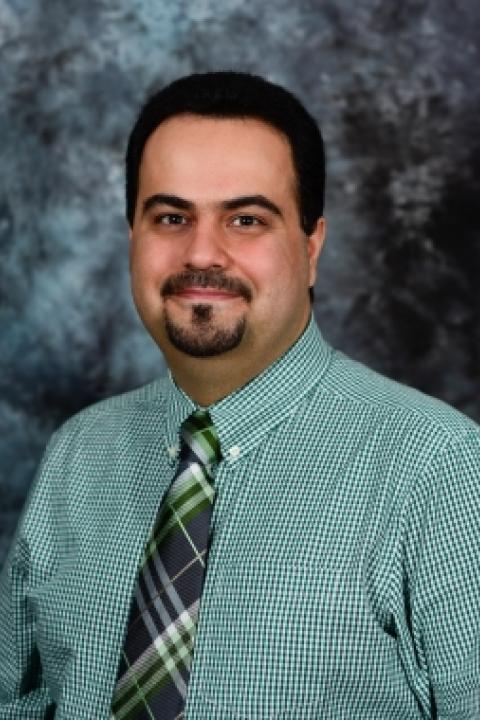
Majid Ghayoomi is a Professor and Civil Engineering Undergraduate Coordinator in the Department of Civil and Environmental Engineering at the University of New Hampshire's College of Engineering and Physical Sciences. His research focuses on geotechnical engineering and geomechanics, particularly unsaturated soil mechanics and geotechnical earthquake engineering. He teaches courses such as Soil Mechanics, Engineering Behavior of Soils, and Geotechnical Modeling. Dr. Ghayoomi holds a Ph.D. from the University of Colorado at Boulder, an M.S. from Sharif University, and a B.S. from the University of Tehran. His research interests include bioremediation, hazards mitigation, soil-structure interaction, and materials testing. He leads the Geotechnical Modeling and Innovation lab, advancing bio-inspired solutions and remote sensing applications in geotechnical systems. His recent work emphasizes climate change impacts on seismic resilience, microbial stabilization of soils, and satellite-based soil moisture monitoring. Key contributions include studies on liquefaction mitigation, seismic site response, and infrastructure vulnerability in dynamic environments. His research spans theoretical, experimental (centrifuge modeling), and computational approaches to address complex geotechnical challenges.
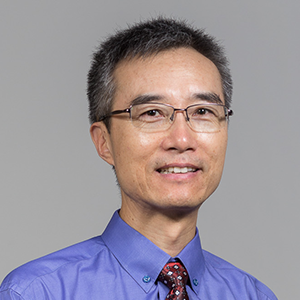
WANG Ye is an Associate Professor in the Department of Computer Science at the School of Computing, National University of Singapore (NUS). He holds a PhD in Information Technology from Tampere University of Technology, Finland, and has been a tenured faculty member at NUS since 2002, following his industry research role at Nokia Research Center. He is the director of the Sound and Music Computing Lab at NUS, leading cutting-edge research in AI-driven music and health technologies. PhD, Information Technology, Tampere University of Technology, Finland (2002) MSc, Telecommunications, Braunschweig University of Technology, Germany (1993) BSc, Telecommunications, South China University of Technology, China (1983) His research is centered on Sound and Music Computing for Human Health and Potential (SMC4HHP) , with a focus on eHealth, eLearning, mobile/wearable computing, and music information retrieval. His work spans AI for stroke rehabilitation, language learning through singing, singing voice synthesis, and automatic music transcription. He has pioneered systems like SLIONS (language learning via karaoke), CocoLyricist (AI co-creation for stroke recovery), and SinTechSVS (expressive singing voice synthesis). The latest articles highlight a strong trend in AI-driven music and health technologies , particularly in controllable lyric generation, singing voice synthesis, automatic pronunciation assessment, and multimodal music transcription. The research increasingly integrates large language models, explainable AI, fairness, and real-world deployment, reflecting a shift from theoretical exploration to practical, human-centered applications in healthcare and education. Dr. Wang has received numerous scientific honors, including: Best Paper Awards at ACM MM, ISMIR, IEEE ISM, and CHI First Prize, Asia Pacific Assistive, Rehabilitative, and Therapeutic Technologies Challenge (2015) Faculty Teaching Excellence Award, NUS School of Computing (2024) Top Paper Award, ACM Multimedia 2022 AI in Medicine Collaborative Grant for CocoLyricist project He has supervised over 11 PhD and 20 MComp students and is currently guiding six PhD candidates. His grants come from MOE, NRF, A*STAR, Nokia, and Smule. He has served as General Chair of ISMIR2017 and TPC Co-Chair of ICOT2017, and is on the editorial boards of IEEE Transactions on Multimedia and Journal of New Music Research. He has also developed and taught the first course on Sound and Music Computing in Singapore. Dr. Wang leads the Sound and Music Computing Lab (SMC Lab) , a multidisciplinary team exploring the synergy of music computing, AI, mobile technology, and cloud systems for health and education. The lab actively collaborates with medical institutions such as NUS Yong Loo Lin School of Medicine, Singapore General Hospital, and Harvard Medical School, and is currently working on projects in AI-supported language learning, stroke rehabilitation, and intelligent music interfaces.
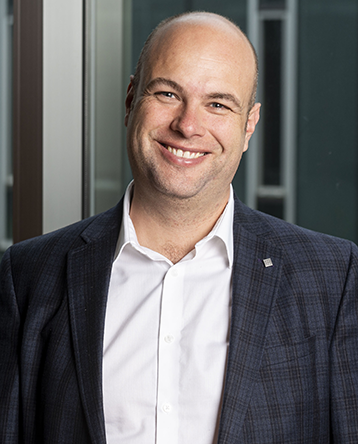
Sebastian Scherer is an Associate Research Professor at the Robotics Institute (RI), Carnegie Mellon University (CMU), where he leads cutting-edge research in autonomous aerial systems and robotics. His work focuses on enabling unmanned rotorcraft to operate safely and efficiently in cluttered, low-altitude, and extreme environments. Education: Ph.D. in Robotics, Carnegie Mellon University (2010) MS in Robotics, Carnegie Mellon University (2007) BS in Computer Science (Minor in Robotics), Carnegie Mellon University (2004) His research interests span robotics, artificial intelligence, autonomous navigation, obstacle avoidance, SLAM, visual-inertial odometry, energy infrastructure, and public policy . He has made seminal contributions to UAV autonomy, including the first obstacle avoidance for micro aerial vehicles in natural environments (2008) and the first automatic landing zone detection and landing on a full-size helicopter (2010). His recent publications (2023–2025) demonstrate a strong focus on resilient autonomy, multi-robot exploration, foundation models for robotics, and large-scale dataset development. His team has released key datasets like TartanGround , BETTY , and SubT-MRS , and simulation tools like Pegasus Simulator , indicating a systems-level approach to advancing real-world autonomy. The research trends emphasize self-supervised learning, robust perception, risk-aware planning, and multi-modal fusion for off-road and urban environments. Scientific Awards: Popular Science Best of What's New 2010 Award AIAA@Infotech Best Paper Runner-up Award (2010) Siebel Scholar Dr. Scherer has advised numerous students and leads a vibrant research group focused on high-impact robotics applications. He has secured significant grants related to UAV autonomy, energy infrastructure, and urban air mobility. His lab develops experimental infrastructure such as AIrTonomy for testing next-generation autonomous aerial vehicles. He is actively involved in advancing SLAM and localization in extreme environments, notably through participation in the DARPA Subterranean Challenge. His team develops large-scale datasets and benchmarking frameworks to push the boundaries of robustness and generalization in mobile robotics.
Martin T. Wells is the Charles A. Alexander Professor of Statistical Sciences at Cornell University, with joint appointments in the Department of Statistical Science, Department of Biological Statistics and Computational Biology, Department of Social Statistics, and as Professor of Clinical Epidemiology and Health Services Research at Weill Medical School. He serves as Editor-in-Chief of the ASA-SIAM Book Series and Co-Editor of the Journal of Empirical Legal Studies. Cornell University, Ithaca, NY Weill Cornell Medical College Research Interests span applied and theoretical statistics, Bayesian methods, biostatistics, clinical epidemiology, and computational biology. His work bridges disciplines like finance, legal studies, and health services research. Article Trends highlight advancements in Bayesian modeling, quantum cognition machine learning, tensor analysis, and misclassification correction, with applications in genomics, finance, and public health. Fellow of the American Statistical Association Fellow of the Royal Statistical Society Contributions include developing statistical software (e.g., rTensor), methodological innovations in clinical trials, and empirical legal studies on civil rights and the death penalty.
Peter Henderson is an Assistant Professor at Princeton University with joint appointments in the Department of Computer Science and the School of Public and International Affairs. He is affiliated with the Center for Information Technology Policy (CITP), Princeton Language and Intelligence Initiative (PLI), Center for Statistics and Machine Learning (CSML), and Program in Law & Public Policy (PLAW). J.D./Ph.D., Stanford University, 2023 M.Sc., McGill University and Montréal Institute for Learning Algorithms Henderson's research focuses on the critical intersection of artificial intelligence and law, with particular emphasis on AI safety, methods to improve reasoning in foundation models, interdisciplinary approaches to law and AI, and AI governance. His work spans language-grounded reinforcement learning, alignment techniques, strategic decision-making in legal contexts, and public interest artificial intelligence. He investigates how legal frameworks can guide the development of AI systems that benefit society while addressing potential harms. Henderson's recent publications reveal a strong trajectory toward addressing the safety, governance, and legal implications of foundation models. His work combines rigorous technical AI research with deep legal analysis, particularly examining how intellectual property law interacts with AI development, regulatory pathways that balance innovation with harm prevention, and the role of law in shaping responsible AI deployment. A significant thread throughout his research is the development of better evaluation methodologies for AI systems, especially in critical domains like law. SEAS Excellence in Teaching Award (2025) Henderson leads the Princeton Law+Language, AI, & Society (POLARIS) Lab, where he advises students and researchers working at the intersection of AI and legal studies. His research has been supported through collaborations with government agencies, including work with the IRS on audit selection algorithms. His findings have informed practical applications in government efficiency and equity, as well as legal system improvements. Henderson runs the POLARIS Lab at Princeton, which focuses on developing AI systems that work for the public interest, particularly in legal contexts. His team develops sequential decision-making systems for government efficiency, foundation models capable of reasoning about law, and improved safety evaluation frameworks for AI systems. The lab maintains strong connections with legal practitioners and policymakers to ensure research has real-world impact.
Sheila McIlraith is a Professor in the Department of Computer Science at the University of Toronto, holding the Canada CIFAR AI Chair at the Vector Institute and serving as Associate Director and Research Lead at the Schwartz Reisman Institute for Technology and Society. Her research spans AI safety, ethics, reinforcement learning, and knowledge representation, with a focus on human-compatible AI and long-term societal impacts. Her career includes six years as a Research Scientist at Stanford University and a year at Xerox PARC. McIlraith’s work has been recognized through ACM and AAAI fellowships, as well as prestigious awards like the SWSA 10-Year Award (2011) and the CAIAC Lifetime Achievement Award (2024). Research Interests: AI Safety and Alignment Human-Compatible AI Reinforcement Learning with Ethical Constraints Semantic Web Services Cognitive Robotics and Diagnostic Systems Probabilistic and Logical Reasoning Recent Contributions: Her work emphasizes ethical AI integration, such as the Embedded Ethics Education Initiative (E3I), and addresses challenges in long-term AI risks, multi-agent systems, and interpretable decision-making frameworks. Awards and Honors: ACM Fellow AAAI Fellow 2023 IJCAI-JAIR Best Paper Prize 2024 CAIAC Lifetime Achievement Award Labs and Teams: McIlraith leads initiatives at the Schwartz Reisman Institute and contributes to the Vector Institute, focusing on societal and ethical dimensions of AI technology.
Judy Hoffman is an Associate Professor in the College of Computing at Georgia Institute of Technology, with a joint appointment in the School of Interactive Computing and affiliation to the Machine Learning Center . She received tenure in April 2025 after joining Georgia Tech as an Assistant Professor. Her research focuses on enabling AI systems that are reliable, fair, and resource-efficient. PhD in Electrical Engineering and Computer Science (2016, UC Berkeley) Postdoctoral Fellowships at Stanford (2017) and UC Berkeley (2018) Former Research Scientist at Facebook AI Research Her work intersects computer vision and machine learning , with specialization in domain adaptation , adversarial robustness , and algorithmic fairness . She has published over 40 peer-reviewed articles, including the award-winning DeCAF (ICML 2024 Test of Time Award) and co-founded Women in Computer Vision (2015), which has sponsored ~40 women annually to premier conferences. ICML Test of Time Award (2024) NSF CAREER Award (2022) PAMI Distinguished Young Researcher (2023) Samsung AI Researcher of the Year (2021) Dr. Hoffman has served as Program Chair for CVPR 2023, Associate Editor for T-PAMI (2021-2023), and co-organizer of workshops at major AI conferences. She has delivered over 70 invited talks and contributes to open-source projects like cycada_release (567 stars) and lsda (47 stars).
Subhasish Mitra is the William E. Ayer Professor of Electrical Engineering and Computer Science at Stanford University, holding dual appointments in both departments. He leads the Stanford Robust Systems Group and serves on the leadership team of the Microelectronics Commons AI Hardware Hub under the US CHIPS and Science Act. His research spans Robust Computing, NanoSystems, Electronic Design Automation (EDA), and Neurosciences, with breakthroughs in X-Compact test compression, carbon nanotube computing, and 3D integration. He has held international roles like the Carnot Chair at CEA-LETI and Visiting Professorships globally. Education & Honors: Recipient of over 40 awards including the IEEE Computer Society’s Harry H. Goode Memorial Award, ACM/IEEE’s A. Richard Newton Technical Impact Award, and the Intel Achievement Award. He earned top academic accolades from IIT Kharagpur and Jadavpur University, and is a Fellow of ACM and IEEE. Research Impact: Pioneered first-of-their-kind systems like the carbon nanotube computer and monolithic 3D integration. His work on robust computing techniques like QED validation and X-Compact compression has industry-wide adoption, saving billions in manufacturing costs. Collaborates with industry leaders like Intel, Google, and Samsung. Publications & Grants: Over 400 publications, including award-winning papers in DAC, ISSCC, and IEEE journals. Leads grants from NSF, DoE, and industry partnerships. His lab explores cutting-edge topics like neuromorphic computing, 3D thermal scaffolding, and AI hardware acceleration. Administration & Outreach: Serves as Associate Chair (Faculty Affairs) for Stanford’s Computer Science Department. Recognized by students for mentorship, and frequently invited to global forums like the World Economic Forum and National Academy of Engineering.
Rajeev Alur is the Zisman Family Professor in the Department of Computer and Information Science at the University of Pennsylvania, leading the School of Engineering and Applied Science. He is the Founding Director of the ASSET Center for Trustworthy AI and a member of the PRECISE Center. His research focuses on formal methods for system design, integrating AI, cyber-physical systems, and machine learning with logical reasoning to ensure safety in autonomous systems. Alur has held leadership roles in major NSF projects like ExCAPE and has directed the Embedded and Multi-Scale Systems (EMBS) program. His research interests span formal verification, temporal logics, programming abstractions, and synthesis techniques. Notable contributions include the development of Nested Words (visibly pushdown languages), streaming string transducers, and tools like AutomataTutor for education. He has advised over 60 PhD students and postdocs, many of whom now hold academic and industry leadership positions. Alur’s awards include the 2024 Knuth Prize and the 2016 Alonzo Church Award. His work on Verisig and compositional verification of neural networks has advanced safety-critical AI applications. He teaches foundational courses like CIS 2620 and develops educational tools, emphasizing both theoretical rigor and practical impact. Key projects include the ASSET Center’s focus on trustworthy AI, integration of logical specifications in reinforcement learning, and formal verification of closed-loop systems with neural components. His publications span over 350 papers, with recent work addressing neurosymbolic learning, security in large language models, and efficient neural network verification.
Maksym Andriushchenko is an incoming faculty member at the ELLIS Institute Tübingen and Max Planck Institute for Intelligent Systems , where he will lead the AI Safety and Alignment group as a principal investigator. Currently, he is a Doctoral Assistant at the Theory of Machine Learning Laboratory (TML) within the Department of Computer Science (IINFCOM) at Swiss Federal Institute of Technology in Lausanne (EPFL) . His work focuses on AI safety, adversarial robustness, and alignment of large language models (LLMs) with societal values.
Arthur Gretton is a Professor at University College London (UCL), leading the Gatsby Computational Neuroscience Unit and serving as director of the Centre for Computational Statistics and Machine Learning. He also works as a Research Scientist at Google DeepMind. His research focuses on causal inference, representation learning, and nonparametric hypothesis testing with applications in machine learning and computational neuroscience. Academic Affiliations Gatsby Computational Neuroscience Unit, UCL Centre for Computational Statistics and Machine Learning, UCL Google DeepMind Arthur's research spans several key areas in modern machine learning, including: Kernel methods for causal effect estimation and two-sample testing Deep learning architectures for proxy causal learning with complex confounding Adaptive gradient flows for generative modeling Nonparametric statistical tests with theoretical guarantees Applications in distributional reinforcement learning and Bayesian inference His work addresses both methodological advancements and practical implementations, particularly for high-dimensional data settings. Recent publications demonstrate his focus on causal inference with hidden confounders (AISTATS 2025), deep learning adaptivity in instrumental variable regression (ICLR 2025), and novel approaches to two-sample testing with adaptive kernel selection (NeurIPS 2024). He has also contributed extensively to distributional reinforcement learning and hypothesis testing frameworks. As an advisor, he supervises multiple PhD students including Jakub Wornbard, Zikai (Steve) Shen, and Zonghao (Hudson) Chen, while co-supervising others. His methodological contributions are implemented in various software packages available at the Gatsby Unit, including tools for kernel-based covariate shift correction, independence testing, and maximum mean discrepancy calculations.
Rakesh Kumar is a Professor and John Bardeen Faculty Scholar in the Electrical and Computer Engineering Department at the University of Illinois at Urbana-Champaign. His work focuses on computer architecture, system-level design automation, and low-power computing. PhD in Computer Engineering from University of California, San Diego BS in Electrical Engineering from IIT Kharagpur His research spans all layers of the computing stack, with key contributions to flexible computer systems , waferscale computing , error-resilient architectures , and approximate computing . He has pioneered work on voltage-reliability tradeoffs and peak power management techniques. Recent publications highlight trends in space microdatacenters , printed microprocessors , and neural graph accelerators . His work on plastic chips was recognized as one of the three biggest semiconductor headlines of 2022 by IEEE Spectrum. IEEE Fellow (2024) ISCA Influential Paper Award MICRO Test-of-Time Award ICCAD Ten Year Retrospective Most Influential Paper Award Best Paper Awards at CASES, SELSE, HPCA He has received teaching accolades including the Stanley H. Pierce Faculty Award and Ronald W. Pratt Outstanding Teaching Award . His research group explores hardware-software co-design for emerging applications in AI, IoT, and sustainable computing.
Elisa Ricci is a Full Professor at the Department of Information Engineering and Computer Science (DISI) at the University of Trento and serves as Head of the Research Unit Deep Visual Learning at Fondazione Bruno Kessler. She coordinates the Doctoral Program in Information Engineering and Computer Science at the University of Trento and holds prestigious fellowships from ELLIS and IAPR. Her research focuses on advancing computer vision and deep learning systems capable of operating in open-world environments. Key interests include domain adaptation, continual learning, and self-supervised learning for visual and multi-modal data processing. Her work addresses critical challenges in enabling machines to adapt to new domains without forgetting prior knowledge, with applications spanning robotics perception, medical imaging, and privacy-preserving AI systems. Recent publications reveal a dominant trend toward leveraging vision-language models for open-vocabulary tasks, training-free adaptation methods, and federated learning architectures. Significant research thrusts include machine unlearning for privacy, robustness against bias in visual classifiers, and novel class discovery using foundation models—particularly evident in 2025 publications addressing medical imaging, 3D segmentation, and collaborative generative systems. Her major recognitions include: ELLIS Fellow IAPR Fellow As Doctoral Program Coordinator at the University of Trento, she oversees PhD training while leading the Deep Visual Learning unit at Fondazione Bruno Kessler. Her research group secures competitive grants in AI-driven perception systems, though specific funding sources aren't detailed in the source material. The Deep Visual Learning Research Unit specializes in open-world computer vision challenges, developing frameworks for domain adaptation, continual learning, and multi-modal perception. Current projects integrate generative models with robotics applications while addressing privacy concerns in vision-language systems through unlearning techniques.
Lin Tan is a Professor of Computer Science at Purdue University , holding the Mary J. Elmore New Frontiers Professorship . She joined Purdue in 2019 after serving as a Canada Research Chair and associate professor at the University of Waterloo. She is an ACM Distinguished Member and IEEE Senior Member . Education: PhD in Computer Science, University of Illinois Urbana-Champaign BS in Computer Science and Technology, Zhejiang University Research Interests: Professor Tan’s research lies at the intersection of software engineering , artificial intelligence , and security . Her work focuses on software-AI synergy , software dependability , defect detection & repair , and software text analytics . She leverages machine learning and natural language processing to enhance software reliability, and conversely uses software techniques to improve the dependability of AI systems. Her recent projects include building binary foundation models (Nova), evaluating large language models for code generation and repair, and developing interactive debugging tools that reduce debugging time by one-third. She also explores robot task planning with LLMs and automated front-end development . Awards & Honors: Best Paper Award Finalist, ICRA 2025 ELATES Fellow, 2024-2025 ACM SIGSAC Distinguished Paper Award, CCS 2024 J.P.Morgan AI Faculty Research Awards (2020, 2021, 2022) ACM SIGSOFT Distinguished Paper Awards (ASE 2020, MSR 2018, FSE 2016) Canada Research Chair (2017) Ontario Early Researcher Award (2015) NSERC Discovery Accelerator Supplements Award (2015) Google Faculty Research Awards (2010, 2014) IEEE Micro Top Picks (2006) Advising & Funding: Professor Tan currently advises eight PhD students and has graduated 20+ PhD and Master’s students now thriving in academia (York University, Concordia University, University of Alberta) and industry (Microsoft, Meta, Amazon, Google). Her group is generously supported by NSF , Meta/Facebook Research Awards , J.P.Morgan AI Faculty Awards , and NSF REU programs. Labs & Teams: She leads the Software Reliability & AI Lab at Purdue, recruiting postdocs, PhD, MS, and undergraduate researchers year-round. Lab interests span binary recovery , LLM-based program repair , testing deep-learning libraries , and data-free model extraction .
Najim Dehak is an Associate Professor in the Department of Electrical and Computer Engineering at Johns Hopkins University, part of the Whiting School of Engineering. His research focuses on machine learning applied to speech processing, audio classification, and health applications. He is renowned for developing the I-vector representation for speaker recognition, introduced in 2008 during a workshop at Johns Hopkins’ Center for Language and Speech Processing. Prior to this role, he was a research scientist at MIT’s Computer Science and Artificial Intelligence Laboratory. Dehak holds a PhD from the School of Advanced Technology in Montreal (2009). He is a Senior Member of IEEE and contributes to the IEEE Speech and Language Technical Committee. His work bridges AI, healthcare, and signal processing, with notable contributions to neurodegenerative disease detection via speech and handwriting analysis. Research interests include adversarial attacks on speech systems, multimodal biomarker discovery, and robust speech processing across demographics. His lab’s tools, like the Hermespeech Recorder, enable scalable data collection for clinical and research applications. Education: PhD in Advanced Technology (2009), Montreal Affiliations: Johns Hopkins University, IEEE Labs/Teams: Center for Language and Speech Processing (CLSP) His recent work explores AI’s role in aging research, including Alzheimer’s and Parkinson’s disease detection through speech, eye tracking, and handwriting analysis. Ongoing projects address fairness in speaker verification and robustness against adversarial attacks in ASR systems.