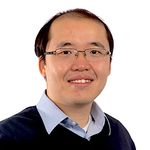
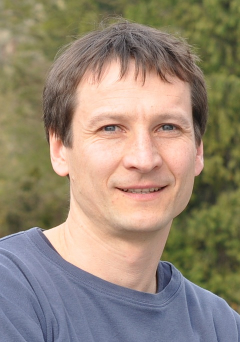
Magnus Nord is an Associate Professor in the Department of Physics, Faculty of Natural Sciences at Norwegian University of Science and Technology (NTNU). His research focuses on advanced electron microscopy techniques and computational tools for materials characterization. Research Interests : Scanning Transmission Electron Microscopy (4D-STEM), Open Source Scientific Software Development (Python), Big Data Processing, Magnetic/Electric Field Imaging, Structural Characterization using Higher Order Laue Zones. Publications span cutting-edge applications in functional materials, nanomagnets, and perovskite thin films, with emphasis on machine learning and precession-enhanced imaging. Key keywords include Materials Science , Electron Microscopy , and Computational Imaging . Software Development : Lead developer of Atomap and pyxem , contributing to HyperSpy and merlin_interface for electron microscopy data analysis. Current Research Funding : InCoMa (Research Council of Norway) IMPRESS (Horizon EU Program)
Jef Vandemeulebroucke is a researcher at the Department of Electronics and Informatics , Vrije Universiteit Brussel (VUB) , specializing in medical imaging, computer vision, and augmented reality applications in healthcare. His work bridges artificial intelligence with radiology and biomechanics , focusing on automated segmentation, predictive modeling, and real-time surgical navigation systems. Research interests include: Medical image analysis for disease prognosis (e.g., COVID-19 severity , neurosurgical drains ) Development of MedShapeNet , a 3D medical shape dataset for computer vision Augmented reality systems in orthopedic and neurosurgical interventions AI-driven fluorescence endoscopy and dynamic CT for joint kinematics Key trends in his 140+ publications emphasize deep learning , image registration , and 4D-CT applications . Supervised theses include brain age prediction and chest radiography automation. Active in 38 projects (e.g., AI-NIMO , TumorScope ), he collaborates with institutions like the Universitair Ziekenhuis Brussel (UZB) and FWO (Fund for Scientific Research-Flanders).
Dr. Andrea Baden is an Associate Professor in the Department of Anthropology at Hunter College, School of Arts and Sciences, and a Doctoral Faculty member at the CUNY Graduate Center. She directs the Primate Molecular Ecology Laboratory (PMEL) and contributes to the New York Consortium in Evolutionary Primatology (NYCEP). Her fieldwork in Madagascar focuses on the Ruffed Lemur Project, integrating ecology, genetics, and behavior. Hunter College, CUNY (2013–present) CUNY Graduate Center (Doctoral Faculty) New York Consortium in Evolutionary Primatology (Core Faculty) Her research explores how landscape features influence primate distribution, migration, and genetic diversity, linking these to social behavior evolution. Publications span journals like Nature Scientific Reports , Animal Behaviour , and American Journal of Primatology , with themes in landscape genetics, conservation, and behavioral endocrinology. Dr. Baden has received the Feliks Gross Endowment Award and a Fulbright Fellowship for her work. She teaches human evolution, primatology, and conservation biology, mentoring future scientists through fieldwork and lab research. PhD in Anthropology, Stony Brook University MA in Anthropology, Stony Brook University BA in Anthropology, University of Miami Postdoctoral Research, Yale University
Prof. Yan Tina Luximon is a Full Professor and Associate Dean (Research) at the School of Design, The Hong Kong Polytechnic University. She chairs the School Research Committee, leads the Asian Ergonomics Design Lab, and serves as Deputy Discipline Leader for BA (Product Design). Her work bridges ergonomics, AI design tools, and 3D human modeling in cross-cultural contexts. Education: PhD in Ergonomics from The Hong Kong University of Science and Technology Research interests span Ergonomics in product design 3D digital human modeling for AI applications Anthropometry and cultural design differences Statistical modeling for head/face product development Human-computer interaction and AI visualization Recent publications focus on AI-enhanced 3D head modeling, ergonomic healthtech products, and cross-cultural design psychology, with applications in robotics, mobile technology, and medical devices. Scientific awards include: Gold Medal with jury congratulations at Geneva Inventions 2024 Silver Award at IDEA 2023 for adaptive eyewear design Best Innovation Award at ACED Japan 2017 She supervises postgraduate research and leads projects funded by the General Research Fund (RGC GRF) and Laboratory for AI in Design, including AI Powered Ergonomic Product Design (2025) and 4D Head Movement Prediction (2024).
Mauricio Bustamante is an Assistant Professor at the Niels Bohr Institute , University of Copenhagen, specializing in theoretical high-energy astrophysics, astroparticle physics, and neutrino phenomenology. His research bridges cosmic phenomena with fundamental particle physics, focusing on ultra-high-energy neutrinos, cosmic rays, gamma-ray bursts, and new physics beyond the Standard Model. PhD in Physics (2012-2014) M.Sc. in Physics (2007-2010) B.Sc. in Physics (2001-2006) His work explores neutrino oscillations, self-interactions, and decay in extreme astrophysical environments. He contributes to major international collaborations like GRAND (Giant Radio Array for Neutrino Detection) and IceCube-Gen2, developing simulation pipelines and forecasting detection methods for EeV-scale neutrinos. Recent publications highlight energy-dependent flavor transitions, Lorentz invariance testing, and constraints on long-range neutrino interactions via DUNE and T2HK experiments. He actively participates in peer review for journals such as Physical Review D , Physical Review Letters , and Astrophysical Journal , and has attended conferences like TeV Particle Astrophysics (2017). His research emphasizes detector design, cosmic ray reconstruction via graph neural networks, and multi-messenger astronomy.
Tobias Andermann serves as an Assistant Professor at Uppsala University's Department of Organismal Biology, specializing in Systematic Biology. He leads the Biodiversity Data Lab, an interdisciplinary research group combining ecology, molecular biology, geomatics, and machine learning to address the biodiversity crisis through innovative computational approaches. His research focuses on quantifying biodiversity loss using AI-driven analysis of environmental DNA, remote sensing data, and fossil records. Key interests include modeling extinction rates across geological timescales, developing standardized biodiversity assessment methods, and predicting species distribution changes under anthropogenic pressures. His work demonstrates current extinction rates are 2000-10,000 times higher than natural background levels, comparable to historical mass extinction events. Methodologically, Andermann integrates machine learning with large-scale environmental DNA datasets and high-resolution remote sensing to develop predictive models of biodiversity distribution. His lab pioneers field sampling protocols for environmental DNA collection and AI frameworks that translate remote sensing data into biodiversity metrics for unsurveyed sites. The Biodiversity Data Lab maintains a dynamic, non-hierarchical research environment focused on high-impact solutions to the biodiversity crisis. Current projects include developing environmental DNA protocols for fungi and insects, analyzing land-use impacts on species communities, and creating neural network models for cross-scale biodiversity forecasting. The lab emphasizes practical applications for conservation policy, notably supporting the UN's 30% protected area target established at COP15.
Brian Weeks is an Associate Professor in the School for Environment and Sustainability at the University of Michigan, where he joined as an Assistant Professor in 2019. His research focuses on understanding how species and communities respond to human-induced environmental changes, with particular emphasis on avian systems. Weeks leads an active research group that integrates museum specimen-based work, genomics, and field studies to investigate biodiversity responses to global change. Weeks' research interests span evolutionary ecology, climate change biology, and biodiversity conservation. His work primarily examines how bird species and communities have responded to environmental change through morphological adaptations. He combines museum-, field-, and lab-based approaches to study evolutionary processes across multiple scales, from macroevolutionary patterns in the Solomon Islands to contemporary changes in North American migratory birds. His lab has developed innovative methods like Skelevision for high-throughput measurement of functional traits from museum skeletal specimens. His publication record shows a strong focus on climate-driven morphological changes in birds, with recent work demonstrating how warming temperatures drive size reductions while simultaneously increasing wing length. His research has revealed that smaller-bodied species change at faster rates, and that migration timing shifts are decoupled from morphological changes. Weeks' lab also investigates biodiversity-ecosystem functioning relationships and extinction risk prediction. Packard Fellowship in Science and Engineering (2022) Ecological Society of America's George Mercer Award (2022) Katma Award, American Ornithological Society ISI Highly Cited paper (2021) Weeks advises multiple PhD and Master's students, and his lab collaborates extensively with researchers across institutions. His work has received significant media attention, with coverage in Science, The Wall Street Journal, The Washington Post, BBC News, and numerous international outlets. His research on birds shrinking due to climate change achieved an Altmetric score higher than 99.98% of papers tracked, reflecting its substantial scientific and public impact.
Sjoerd Dirksen is a Professor of Mathematics for Data Sciences at Utrecht University since May 2025, having previously served as an Associate Professor for Applied Mathematics (2019-2025) and Junior Professor at RWTH Aachen University (2014-2019). He is affiliated with the Mathematical Institute within the Faculty of Science at Utrecht University, where his office is located in the Hans Freudenthal Building. His research interests focus on high-dimensional probability theory and its applications in data science, machine learning, and signal processing. Specifically, he investigates randomized data dimension reduction methods using structured random matrices, theory for deep learning including random neural networks, high-dimensional covariance estimation for wireless communication systems, and statistical postprocessing of weather forecasts in collaboration with the Royal Netherlands Meteorological Institute (KNMI). Previously, he worked on compressed sensing, sharp estimates for stochastic processes in Banach spaces, and noncommutative analysis. Analysis of his recent publications (2018-2024) reveals a strong focus on quantization effects in high-dimensional data processing, particularly one-bit compressed sensing and covariance estimation under coarse quantization. His work bridges theoretical mathematics with practical applications in signal processing, wireless communications, and meteorological forecasting, demonstrating a consistent trajectory from foundational mathematical research to applied data science problems. Dirksen's academic career shows progression from postdoctoral work at the Hausdorff Center for Mathematics in Bonn to independent research positions. His publication record demonstrates significant contributions to the mathematics of data science, with papers appearing in top journals across mathematics, statistics, and signal processing. His research combines deep theoretical insights with practical applications, particularly in the areas of dimensionality reduction and high-dimensional statistics.
Denny Yu is an Associate Professor at the Edwardson School of Industrial Engineering, Purdue University. His work bridges human factors, neuroergonomics, and healthcare safety through advanced sensor systems and AI. Primary Affiliation : Edwardson School of Industrial Engineering, Purdue University Research Themes : Surgical ergonomics, autonomous vehicle human factors, cognitive workload assessment, multimodal physiological sensing Dr. Yu's research focuses on neuroergonomics and human-robot interaction , particularly in surgical and transportation contexts. His team develops sensor-based systems for workload monitoring, including: EEG-eye tracking fusion for situation awareness Wearable exoskeletons for surgical posture support Computer vision tools for lifting task risk analysis Smart infusion pump usability frameworks AI-driven surgical coaching systems Recent publications emphasize deep learning applications in soft tissue deformation estimation and real-time adaptive systems for robotic surgery augmentation. His work spans both occupational health (veterinary surgeons, airport workers) and medical device innovation domains.
Professor Georg Gottwald is a distinguished academic in the School of Mathematics and Statistics at the University of Sydney, where he has been a faculty member since 2002, progressing from Lecturer to his current position as Professor since 2013. He also holds a Visiting Professor position at the University of Surrey in the UK since 2013. His extensive research career spans dynamical systems theory, geophysical fluid dynamics, and the intersection of machine learning with complex systems. Professor Gottwald's research focuses on dynamical systems theory as an abstract formalism for studying systems evolving in time and space. His work has significant applications across diverse fields including climate modeling, biological systems, and complex networks. He is particularly known for developing methods for model reduction of complex dynamical systems, stochastic modeling approaches, and the application of machine learning techniques to dynamical systems. His research aligns with the Faculty of Science Research Strengths in Understanding the Universe, Fundamental Laws of Nature, Complex Systems, Climate and Environmental Change, Data and Decisions, and National Security. His most recent publications demonstrate a strong trajectory toward integrating machine learning with dynamical systems theory, particularly in developing stable generative models, learning dynamical systems with random feature maps, and combining data assimilation with machine learning for forecasting. His work spans pure mathematical theory to practical applications in climate science, finance, and biological systems, showing remarkable breadth while maintaining deep mathematical rigor. Future Fellowship, 'Stochastic methods in mathematical geophysical fluid dynamics', Australian Research Council, 2010-2014 Australian Research Fellowship, 'Stochastic methods in mathematical geophysical fluid dynamics', Australian Research Council, 2010-2015 (declined) Australian Research Fellowship, 'Geometric methods in geophysical fluid dynamics', Australian Research Council, 2004-2009 Professor Gottwald has successfully supervised numerous PhD and Master's students who have gone on to academic and industry positions worldwide. His current research group includes postdocs and PhD students working on machine learning for dynamical systems, stochastic model reduction, physics-informed machine intelligence, and tensor methods for scientific machine learning. He has secured multiple ARC Discovery Project grants and has been involved in significant international collaborative research projects. He is actively involved with the Sydney Dynamics Group, which he co-founded in 2007, fostering collaboration between the University of Sydney and UNSW. Professor Gottwald maintains strong editorial commitments as Associate Editor for Geophysical and Astrophysical Fluid Dynamics, SIAM Journal of Applied Dynamical Systems, and Journal of Computational Dynamics, and serves on the Editorial Advisory Board for Chaos and the Editorial Board for Physical Review E. His professional activities demonstrate leadership in the dynamical systems community through organizing workshops, seminars, and special journal issues.
Lei Tian is an Associate Professor in the Department of Electrical and Computer Engineering and the Department of Biomedical Engineering at Boston University's College of Engineering. He leads the Computational Imaging Systems Lab and maintains affiliations with the Neurophotonics Center, Photonics Center, Center for Information & System Engineering, Rafik B. Hariri Institute for Computing, and Nanotechnology Innovation Center. His educational background includes: PhD, Massachusetts Institute of Technology, 2013 MS, Massachusetts Institute of Technology, 2010 Professor Tian's research integrates optics and computation to overcome physical limitations in imaging systems. His work spans computational imaging and sensing, computational microscopy, imaging in scattering media, phase retrieval, and neurophotonics. He develops next-generation imaging systems with applications in biomedical microscopy, neuroscience, semiconductor metrology, and advanced vision applications, emphasizing the joint design of optical components and computational algorithms. His publication record shows a strong progression from fundamental computational imaging techniques to practical applications, with increasing integration of deep learning approaches to solve challenging imaging problems in scattering media and neural environments. His work consistently bridges theoretical advances with real-world applications. Professor Tian has received numerous prestigious awards: Boston University Provost's Scholar-Teacher of the Year Award (2025) Optica Fellow (2025) Early Career Excellence in Research, BU College of Engineering (2021) NSF CAREER Award (2019) Dean's Catalyst Award (2018) The Fumio Okano Best 3D Paper Prize (2018) As an advisor, he has successfully mentored at least 10 PhD students to completion as of mid-2025, with recent graduates including Jeffrey Alido, Jiabei Zhu, Chang Liu, Hao Wang, and Joseph Greene. His research is supported by substantial funding including a $2 million NIH grant for the Computational Miniature Mesoscope (CM2), a $1.75M grant from NIBIB for cancer cell metabolism research, and funding from the Chan Zuckerberg Initiative. His Computational Imaging Systems Lab pioneers innovative imaging techniques that synergistically combine optical hardware with computational algorithms, making significant contributions to computational microscopy, intensity diffraction tomography, neural imaging systems, and deep learning applications in optical imaging for both biomedical and industrial applications.
Rebecca Feldman is an Assistant Professor in Medical Physics and Physics at the Irving K. Barber Faculty of Science, University of British Columbia Okanagan. Her research integrates MR physics, engineering, and medical research to advance MRI pulse sequences and hardware for clinical translation, particularly in neurological disorders. University: University of British Columbia Okanagan Academic Rank: Assistant Professor PhD: University of Western Ontario Research Interests: Dr. Feldman specializes in technical innovation in MRI (accelerated imaging, spectroscopic imaging, non-proton imaging) and translational research applying MRI to neurological disease detection, characterization, and treatment. Her work leverages ultra-high-field (7T) MRI for enhanced resolution of brain structures like hippocampal subfields and perivascular spaces. Publications: Recent work includes advancements in self-supervised medical imaging backbones (MedMAE), segmentation of venous structures in epilepsy, automated MRI pulse design via neural networks, and clinical applications of 7T MRI in neurosurgical planning and psychiatric disorders like major depressive disorder. Teaching: Currently teaches courses in physics, including physics of waves.
Tobias Ritschel is a Professor of Computer Graphics at University College London . His research spans advanced rendering techniques, perceptual modeling, and data-driven graphics, with a focus on bridging physical accuracy and artistic flexibility in visual computing. Key research themes include: Interactive Global Illumination : Real-time simulation of complex lighting effects on GPUs Perceptual Graphics : Human vision-driven rendering and display optimization Non-physical Graphics : Beyond-photorealistic techniques for artistic expression Data-driven Graphics : Leveraging large datasets for novel rendering and modeling approaches His recent work emphasizes neural rendering , differentiable graphics , and X-ray tomography , with applications in 3D reconstruction , NeRF manipulation , and holographic imaging . Notable scientific achievements include the Eurographics Young Researcher Award 2014 and Eurographics Thesis Award 2011 . He has advised multiple PhD students including Philipp Henzler (EG PhD Award 2024) and Thomas Leimkühler (Otto Hahn Medal 2019), while actively contributing to conference leadership as co-chair for EGSR 2024 and Pacific Graphics 2024 . His team collaborates on X-ray reconstruction with Pablo Villanueva-Perez and works on 3D perception with Anthony Steed.
Daniel Baum is a Research Professor and Head of the Visual Data Analysis research group at the Zuse Institute Berlin (ZIB), which is affiliated with Freie Universität Berlin. His work spans across scientific visualization, computational biology, and image analysis, with a particular focus on developing methods for analyzing complex biological structures and neural circuits. He is actively involved in multiple interdisciplinary research projects including HFSP Chitons, Geometric Learning for Single-Cell RNA Velocity Modeling, and RobustCircuit. Dr. Baum's research interests center on visual and data-centric computing approaches to solve complex problems in biology and medicine. His work bridges the gap between computational methods and biological applications, with significant contributions to cryo-electron tomography analysis, neural circuit mapping, and geometric morphometrics. He develops innovative algorithms for 3D reconstruction, image segmentation, and visualization of biological structures, from molecular to organismal scales. His publication record demonstrates consistent contributions to visualization techniques applied to biological problems, with recent work focusing on neural circuit analysis in zebrafish and Drosophila, biomechanical studies of animal structures, and advanced methods for analyzing ancient artifacts. The research shows a clear trajectory toward increasingly sophisticated multimodal data integration and machine learning approaches. Dr. Baum leads a productive research group with several key collaborators who frequently appear as co-authors on his publications, indicating a strong mentoring relationship. His projects involve substantial funding from various sources supporting interdisciplinary collaborations across biology, computer science, and engineering. His laboratory at ZIB focuses on visual data analysis for complex biological systems, with particular strength in developing computational methods for neuroscience applications and biomaterial analysis. The group maintains strong collaborations with multiple institutions working on cutting-edge imaging technologies and biological model systems.
Jie Deng, Ph.D., is a Professor in the Department of Radiation Oncology at UT Southwestern Medical Center, where she serves as faculty in the Division of Medical Physics & Engineering. She is a certified MRI and MRI for radiation therapy medical physicist by the American Board of Medical Physics and holds a leadership role as a magnetic resonance safety officer. Dr. Deng is actively involved in both clinical and research aspects of medical imaging and radiotherapy, with a strong emphasis on integrating advanced imaging technologies into therapeutic workflows. Dr. Deng earned her academic degrees from prestigious institutions: a Bachelor of Science in Biomedical Engineering from Southeast University in China, a Master’s in Bioengineering from the University of Illinois at Chicago, and a Ph.D. in Biomedical Engineering from Northwestern University. She further enhanced her expertise by obtaining a Master of Science in Law from the Northwestern Pritzker School of Law, reflecting a multidisciplinary approach to her scientific work. Her research interests center on MRI physics , quantitative imaging , oncological imaging , and the application of artificial intelligence in medical imaging. She has pioneered work in MRI-guided radiation therapy, imaging biomarkers for therapeutic response, and AI-driven image reconstruction and artifact reduction. Her recent publications demonstrate a consistent focus on improving imaging accuracy, speed, and clinical utility, particularly in liver, pediatric, and oncological applications. The analysis of her 15 most recent articles reveals a strong trend toward deep learning-based image reconstruction , quantitative MRI biomarkers , and synthetic image generation for radiotherapy planning. Topics such as 4D-MRI, synthetic CT, motion artifact reduction, and AI fusion models dominate her scholarly output, indicating a forward-looking research trajectory centered on intelligent, fast, and precise imaging for personalized cancer therapy. Dr. Deng actively contributes to the scientific community through presentations at major conferences including the International Society for Magnetic Resonance in Medicine (ISMRM) and the American Association of Physics in Medicine (AAPM), where she shares innovations in MRI, adaptive radiotherapy, and AI integration. As an educator, Dr. Deng mentors medical physics residents and graduate students, delivering lectures on MR-only simulation, MR-linear accelerator practices, and medical imaging fundamentals. While no specific grants are mentioned in the text, her extensive publication record in high-impact journals suggests active research funding and collaborative projects. She is affiliated with key professional organizations and serves on UT Southwestern’s MRI Safety Committee, ensuring safe and effective use of MRI in clinical and research settings. Her work bridges the gap between engineering innovation and clinical application, making significant contributions to the field of radiation oncology and medical physics.