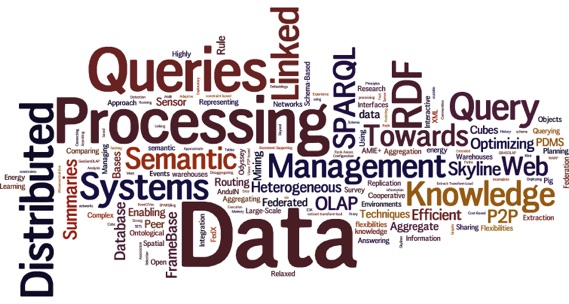
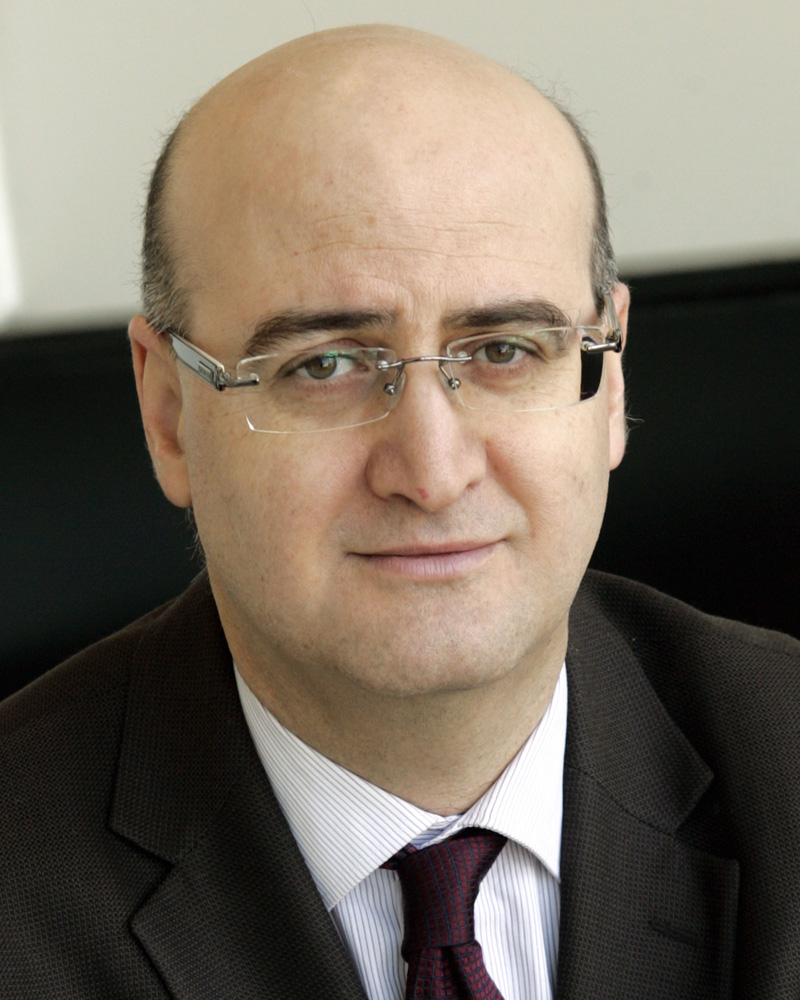
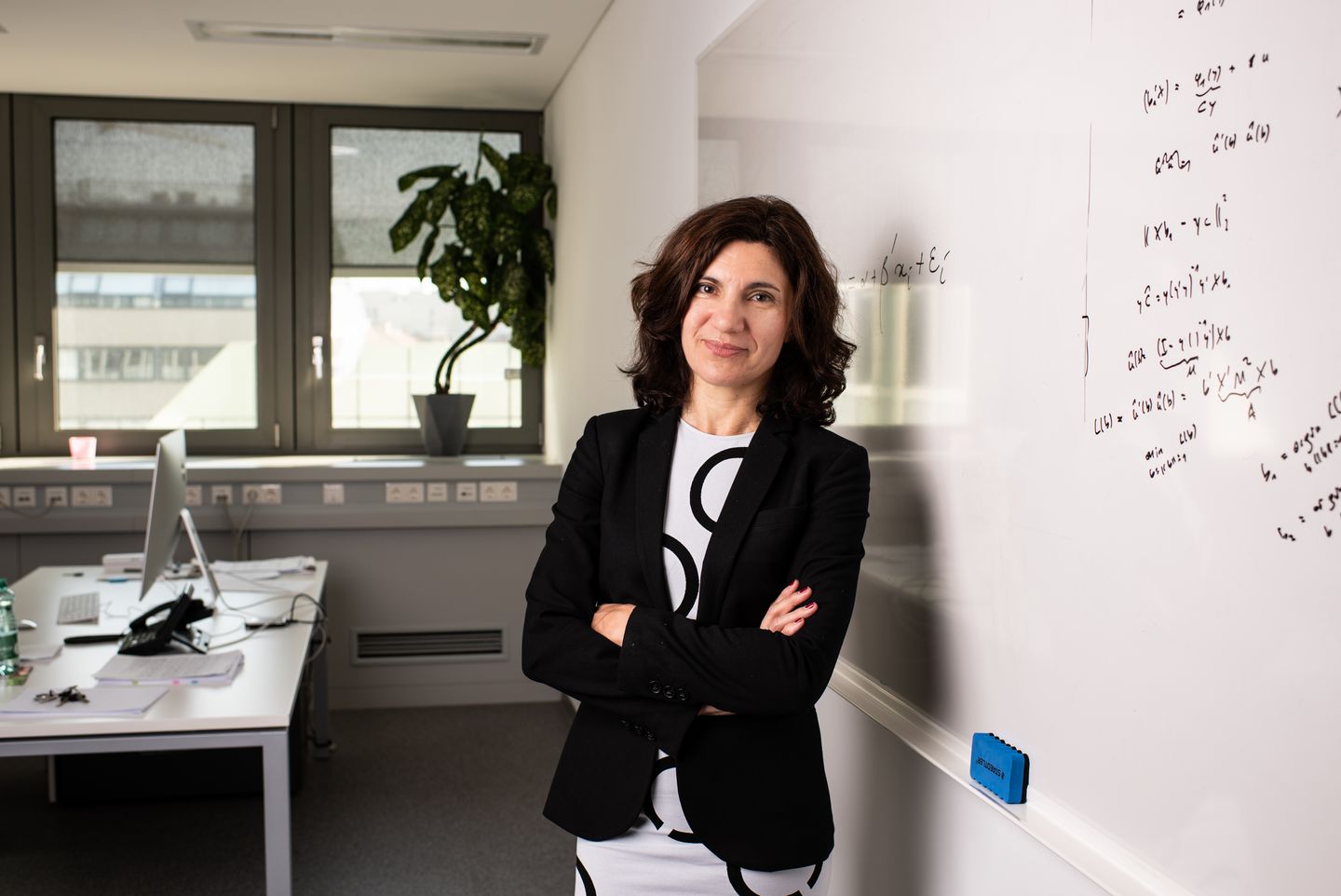
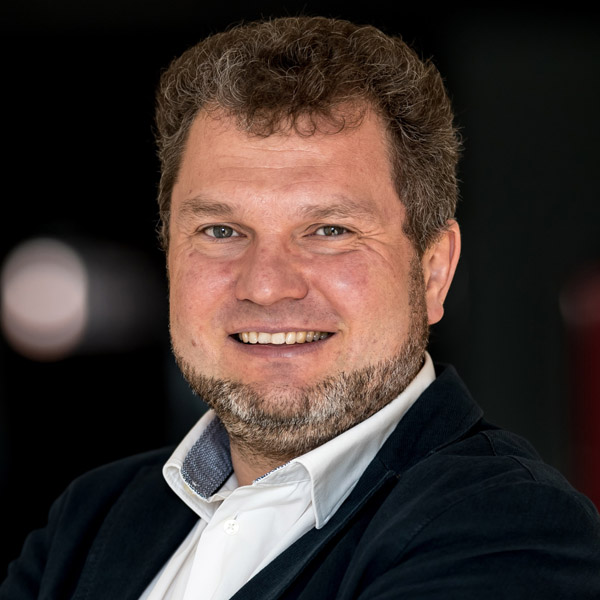
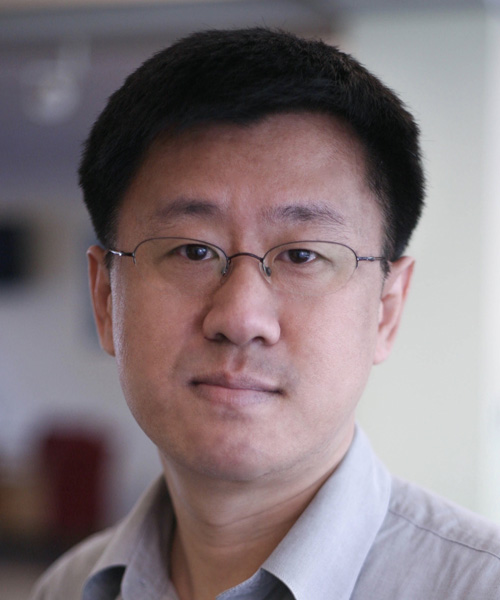
Katja Hose is a Full Professor of Data Management at TU Wien's DBAI research unit, heading the Data Management and Knowledge-Driven AI Lab. She previously held a Poul Due Jensen Foundation Professorship at Aalborg University. Her research focuses on data and knowledge engineering, including graph databases, knowledge graphs, querying, analytics, and machine learning, with interdisciplinary applications in bioscience, healthcare, and environmental assessment. Education: PhD in Computer Science (Ilmenau University of Technology, 2009), Postdoc at Max Planck Institute for Informatics (2009–2012). Academic roles include Program Co-Chair for ISWC 2024 and EDBT 2023, and editorial board membership at VLDBJ and TGDK. She leads projects like TARGET (health virtual twins) and ARMADA (data management). Research Interests: Knowledge Graphs, Semantic Web, Big Data, Machine Learning, Data Integration, and Provenance Systems. Key contributions include SHACL shape extraction, conversational data analytics, and environmental knowledge graphs. Awards include the 2025 Distinguished Meta-Reviewer Award and 2024 Manfred Paul Award. Advising and Grants: Supervised students including E. Pürmayr (Diploma Thesis 2025). Active in EU projects (TARGET, ARMADA) and grant coordination. Labs/Teams: DMKI Lab at TU Wien, collaborating with interdisciplinary teams in healthcare and environmental science.
Claudia Plant is a Professor in the Faculty of Computer Science , leading the Research Group Data Mining and Machine Learning . Her research focuses on clustering algorithms, data mining, and machine learning applications in areas like biomedical data, wind energy, and causality inference. She has contributed to projects such as Knowledge-infused Deep Learning for Natural Language Processing (2020–2028) and Hybrid Computational Sciences (2021–2021). Plant has authored over 160 publications, with recent work emphasizing deep learning, anomaly detection, and GPU-optimized algorithms. She actively engages in academic activities, including talks on clustering methods and interdisciplinary projects like Governing Algorithms: The Politics of Data and Decision-Making . Her research interests span clustering algorithms , graph neural networks , causality discovery , and ethical digital transformation . Notable projects include causal analysis of wind farm dynamics and AI-enhanced education tools. Plant’s work bridges computational methods with societal challenges, such as empowering marginalized communities through ethical technology adoption.
Professor Moncef Gabbouj is a distinguished academic and researcher currently serving as Professor of Signal Processing at the Department of Computing Sciences, Faculty of Information Technology and Communication Sciences, Tampere University, Finland. Previously, he held the same position at Tampere University of Technology before the merger in 2019. He has also held visiting professorships at prestigious institutions including Hong Kong University of Technology and Science, University of Southern California, and Purdue University. Ph.D. and MSc. in Electrical Engineering from Purdue University, USA (1989 and 1986) B.Sc. in Electrical Engineering from Oklahoma State University, USA (1985) Prof. Gabbouj's research spans multiple domains within signal and image processing, with a strong focus on machine learning applications. His primary research interests include artificial intelligence, machine learning, Big Data analytics, multimedia content-based analysis, indexing and retrieval, nonlinear signal and image processing, voice conversion, and video processing and coding. His work bridges theoretical advancements with practical applications across various industries, particularly in multimedia communications and biomedical applications. His extensive publication record demonstrates a clear evolution from traditional signal processing techniques toward more sophisticated machine learning and deep learning approaches. Recent work shows increasing focus on convolutional neural networks for various applications including ECG classification, video processing, financial time-series analysis, and image recognition tasks, reflecting the broader trend in the field toward deep learning methodologies while maintaining strong foundations in signal processing theory. IEEE Fellow (2011) Member, Finnish Academy of Science and Letters (2014) Knight, First Class, of the Order of the White Rose of Finland (2006) Nokia Foundation Recognition Award (2005) Nokia Foundation Visiting Professor Award (2012) Finnish Cultural Foundation for Art and Science Award (2017) TUT Foundation Grand Award (2015) Prof. Gabbouj has supervised 64 doctoral and 72 Master's theses, demonstrating his significant contribution to academic mentoring. His research has been supported by substantial funding, including research grants totaling 8.5 million Euro (2001-2015). He has served as Academy of Finland Professor during 2011-2015 and has been involved in numerous EU research projects including Horizon, ESPRIT, HCM, IST, COST, Tempus and Erasmus programs. As Editor, Guest Editor or member of the Editorial Board of 6 international scientific journals, he has significantly influenced the academic discourse in his field. He leads the Signal Analysis and Machine Intelligence (SAMI) research group at Tampere University and serves as the Finland Site Director of the NSF IUCRC funded Center for Visual and Decision Informatics. His research unit focuses on applying advanced machine learning techniques to solve complex problems in signal processing, computer vision, and multimedia analytics, with applications ranging from healthcare to multimedia communications and financial analysis.
Jussi Parikka is a Professor in Technological Culture and Aesthetics at the Winchester School of Art, University of Southampton (UK), and a Visiting Professor at FAMU, Academy of Performing Arts in Prague. He holds an adjunct professorship at the University of Turku, Finland. His research spans media archaeology, environmental humanities, and new materialism, focusing on intersections of technology, ecology, and culture. Education: PhD in Cultural History, University of Turku, 2007 Licentiate of Philosophy in Cultural History, University of Turku, 2004 Master of Arts in Cultural History, University of Turku, 2002 Research Interests: Parikka investigates media archaeology, environmental media studies, and digital culture. Key themes include the geology of media, operational images, and the ecological implications of technological systems. His work bridges art, science, and philosophy, addressing urgent issues like climate change and data infrastructures. Awards & Honors: 2021: Elected Member of Academia Europaea 2012: Anne Friedberg Award (SCMS) for Insect Media 2016: Choice Magazine Outstanding Academic Title ( A Geology of Media ) 2017: Moebius Fellowship (Kone Foundation) Grants & Projects: Parikka leads the Digital Aesthetics Research Centre (DARC) and collaborates on initiatives like the Critical Environmental Data project with the Helsinki Biennial. His work integrates art, science, and activism, addressing topics such as environmental sensing and climate justice. Labs/Teams: Director of the Digital Aesthetics Research Centre (DARC), Aarhus University, and co-curator of exhibitions like Weather Engines (Onassis Stegi, Athens).
Uwe Zdun is a Professor at the Faculty of Computer Science, University of Vienna, where he serves as Vice-Director of Studies for Computer Science and Head of the Research Group Software Architecture. His teaching portfolio includes core courses such as Software Engineering 2, Advanced Software Engineering, and Practical Software Courses for Bachelor's and Master's theses across multiple semesters (2024W-2025S). His research spans software architecture with emphasis on microservices, cloud computing, and DevOps. Key focus areas include architectural design decisions, infrastructure-as-code conformance, security in distributed systems, and the integration of machine learning operations (MLOps/RLOps). He investigates cognitive aspects of architecture practices through controlled experiments and develops model-driven approaches for quality assessment in complex systems. Recent publications (2024-2026) reveal three dominant trends: (1) Security and coupling analysis in infrastructure-as-code deployments, (2) MLOps/RLOps integration for Industry 4.0 cyber-physical systems, and (3) Performance optimization patterns for CI/CD pipelines and autoscaling. His work bridges theoretical architecture models with industrial practice, particularly in microservice ecosystems and reinforcement learning applications. Professor Zdun leads the Research Group Software Architecture at the University of Vienna's Faculty of Computer Science. The group focuses on empirical validation of architectural patterns, tool development for conformance checking, and advancing design decision methodologies in cloud-native and AI-driven systems.
Professor Thierry Langer is a Full Professor of Pharmaceutical Chemistry at the University of Vienna’s Faculty of Life Sciences (Department of Pharmaceutical Sciences). He leads research in computational drug design, with a focus on pharmacophore modeling, 3D-QSAR analysis, and AI-driven molecular design. His work bridges theoretical and experimental chemistry, addressing targets like viral proteases (e.g., SARS-CoV-2), GABA receptors, and dopamine transporters. Research interests include: Pharmacophore-guided drug discovery for anti-viral and CNS therapies Development of next-generation computational tools (e.g., PharmacoMatch, QPhAR) Protein-ligand interaction modeling using neural networks and graph-based algorithms Recent studies focus on: Inhibitors for herpesvirus nuclear egress complexes, AI-optimized antivirals, and dopamine transporter inhibitors for cognitive enhancement. His lab collaborates on projects like the NeuroDeRisk initiative to de-risk neurotoxic compounds. Publications emphasize drug repurposing, metabolic pathway analysis, and scalable synthesis methods for promising drug candidates.
Nikolaus Hautsch is a full Professor at the Faculty of Economics, Institute of Statistics and Operations Research. His work focuses on econometrics, finance, and high-frequency data analysis. Research Interests : Market microstructure, volatility modeling, transaction costs, systemic risk, and machine learning applications in finance. Publication Trends (2025–2018): 2025: High-dimensional portfolio optimization, dynamic systemic risk 2024: Blockchain asset arbitrage, DeFi, polarization metrics, jump detection 2023–2022: Microstructural noise, volatility forecasting, neural networks Scientific Awards : Fellow of the Society for Financial Econometrics (2014) Projects : Artificial Intelligence in Rowing (2022–2025) Vienna Graduate School of Finance (2018–2022) Risk management of CCPs
Georg Langs is a Full Professor of Machine Learning in Medical Imaging at the Medical University of Vienna and Founding Director of the Computational Imaging Research Lab (CIR). He leads a 25-member interdisciplinary team focusing on machine learning methodologies for medical image analysis. Key roles include Director of the Joint Initiative on AI in Medical Imaging (European Institute of Biomedical Imaging Research) and Scientific Lead of the Respiratory Disease Phenotype Observatory (ZODIAC, UNO/IAEA). He is affiliated with MIT’s CSAIL and serves on advisory boards for global AI initiatives. Education: PhD in Computer Science, Graz University of Technology (2007) M.Sc. in Mathematics, Vienna University of Technology (2003) Research Interests: Machine learning-driven precision imaging, neuroimaging, clinical data phenotyping, and cross-species brain connectivity analysis. His work bridges imaging biomarkers with biological mechanisms and large-scale clinical data integration. Grants & Funding: Over €6M in competitive grants as Principal Investigator in the last two years. Projects include ARTEMIS (fatty liver disease digital twins) and AI-POD (personalized risk scores via imaging). Awards: 2022 IS3R Emerging Leaders Club 2022 National Academy of Medicine Emerging Leader Programme 2018 Advisor, AI Mission Austria 2030 Lab & Teams: CIR Lab focuses on AI-driven medical imaging solutions. Co-founded contextflow GmbH , a MedUni spin-off developing AI software for imaging analysis.
Efstathia Bura is a Professor heading the Applied Statistics Research Unit (ASTAT) within the Institute of Statistics and Mathematical Methods in Economics at TU Wien's Faculty of Mathematics and Geoinformation. Her research focuses on dimension reduction techniques in regression and classification, high-dimensional statistics, and their applications in biostatistics, econometrics, and legal statistics. She leads projects like ProbInG (WWTF-funded) and the SecInt Doctoral College on statistical verification of cyber-physical systems. Her work integrates advanced statistical methodologies with interdisciplinary applications, emphasizing practical solutions for complex data challenges. Current projects explore probabilistic program analysis, security properties in cyber-physical systems, and dynamic econometric modeling. She collaborates internationally, with notable contributions to statistical theory and applications in law, healthcare, and telecommunications. Key research themes include time-varying regression models, sufficient dimension reduction for mixed predictors, and fusion of statistical methods with machine learning. Her publications bridge theoretical advancements and real-world problem-solving, reflecting her role as a leading academic in modern applied statistics. Her team includes postdocs and assistants working on WWTF and SecInt grants, focusing on probabilistic systems and statistical verification. While no formal student advisees are listed, her collaborative projects engage junior researchers in cutting-edge statistical research.
Erich Schweighofer serves as Associate Professor at the University of Vienna within the Institute for European, International and Comparative Law, specifically affiliated with the Department of International Law and International Relations. His research activities are centered at the Juridicum building (Schottenbastei 10-16, 1010 Vienna), where he maintains an active office presence with scheduled consultation hours. His scholarly focus spans Legal Informatics , Artificial Intelligence and Law , Data Protection , and Legal Knowledge Representation , with particular emphasis on explainable AI systems for legal contexts and formal methodologies for translating legal norms into computational frameworks. This interdisciplinary work bridges jurisprudence and computer science through projects examining biometric regulation, autonomous vehicle governance, and natural language processing applications in legal domains. Analysis of his 2021-2024 publications reveals consistent thematic progression toward operationalizing legal principles in AI systems, with increasing focus on transparency mechanisms, temporal logic for dynamic regulations, and cross-jurisdictional compliance challenges. His work predominantly appears in the International Legal Informatics Symposium (IRIS) proceedings and JURIX conferences, reflecting deep engagement with the legal informatics community. Professor Schweighofer leads a dedicated research team including project assistants Mag. Jessica Fleisch, Mag. Jonas Pfister, Felix Schmautzer, and Mag. Jakob Zanol, while actively participating in the University of Vienna's Working Group on Legal Informatics (Arbeitsgruppe Rechtsinformatik). His collaborative approach extends to organizing the biennial IRIS symposium, which has established itself as a cornerstone event for European legal informatics scholarship since 1998.
Theresa Scharl-Hirsch is a Senior Scientist and Deputy Scientific Director at the Core Facility Bioinformatics, University of Natural Resources and Life Sciences, Vienna (BOKU). She holds concurrent appointments at the Institute of Statistics, BOKU, and has extensive experience in bioprocess modeling, machine learning, and statistical computing. Her work bridges biochemical engineering with advanced data science methodologies. Her research focuses on real-time monitoring of biopharmaceutical processes, clustering of high-dimensional data (particularly RNA sequencing), and application of explainable machine learning techniques. She has developed statistical models for process optimization and quality prediction in antibody capture and protein purification, with a strong emphasis on industrial implementations using R programming. Key trends in her publications include three-way data analysis, matrix-variate Gaussian mixture models, and permutation-based variable importance methods for deep learning architectures. Her work spans bioprocess engineering, bioinformatics, and industrial data science applications.
Dietmar Jannach is a Full Professor at the University of Klagenfurt, Austria, affiliated with the Institute for Artificial Intelligence and Cybersecurity where he leads the Research Group for Information Systems. His academic roles include membership in the university's Senate and Curricular Commissions for Liberal Arts and Information Management. His research spans: Core Areas : Artificial Intelligence, Recommender Systems, and Software Engineering. Methodological Focus : Algorithm reproducibility, fairness in AI, sequential recommendations, and hybrid learning models. Emerging Interests : Generative AI for group decision support, ethical recommender systems, and foundation model applications. Jannach's recent publications critically evaluate reproducibility challenges in AI research, advocate for calibrated recommendations to mitigate bias, and explore agentic paradigms in group recommender systems. He emphasizes real-world validation, with studies on deployment challenges and developer experiences in software processes. He actively contributes to academic governance and mentors through research groups, though specific student advisees are not listed. Contact via Dietmar.Jannach@aau.at .
Rafał Weron is a Full Professor at Wrocław University of Science and Technology, where he has held leadership roles since 2015, including Head of the Department of Operations Research and Business Intelligence and Chairman of the Scientific Discipline Council for Management and Quality Sciences. His expertise spans electricity price forecasting, computational economics, and risk management, with significant contributions to probabilistic forecasting methods. As a globally recognized scholar, he has received prestigious awards such as the Hugo Steinhaus Prize (2018) and the Tao Hong Award (2017). Key Affiliations : Wrocław University of Science and Technology; Polish Academy of Sciences (Statistics and Econometrics Committee); Polish Mathematical Society. Research Trends: Weron's work focuses on electricity price forecasting, leveraging machine learning and statistical models to enhance accuracy and reliability. His publications emphasize probabilistic forecasting frameworks, quantile regression, and hybrid modeling techniques, reflecting a commitment to methodological rigor and practical applications in energy markets. Scientific Awards: Top 1% globally ranked economist (IDEAS/RePEc, 2013-2022) World's Top 2% Most Widely Cited Scientist (2019-2021) 'Hugo Steinhaus' Prize (2018) Tao Hong Award (2017) Emerald Citation of Excellence (2017) Minister of Science & Higher Education Prize (2016) Commission of National Education Medal (2016)
Dr. Zhendong Su is a Professor at the Department of Computer Science, ETH Zurich (since 2018), and previously a Professor (2011-2019) and Adjunct Professor (since 2019) at the Department of Computer Science, University of California, Davis. His academic career includes Associate Professor (2007-2011) and Assistant Professor (2002-2007) positions at UC Davis. Ph.D. in Computer Science (minor in Mathematics), University of California, Berkeley (2002) M.S. in Computer Science, University of California, Berkeley (1997) B.A. in Mathematics (Highest Honor), University of Texas at Austin (1995) B.S. in Computer Science (Highest Honor), University of Texas at Austin (1995) Dr. Su's research focuses on Programming Languages and Compilers , Software Engineering , and Computer Security , with recent emphasis on Deep Learning methodologies for improving software quality and programmer productivity. His EdTech research explores transformative technologies for K-12 and college education. Awarded prestigious honors including the NSF CAREER Award (2006), multiple ACM SIGSOFT Distinguished Paper Awards , and faculty research awards from Google, Microsoft, IBM , and other industry leaders. Advisor to 18 doctoral/postdoctoral students, including tenure-track/tured academics at UCL, Waterloo, and GaTech Extensive service as Associate Editor, Program Chair, and Steering Committee member for major software engineering conferences
Helmut Hlavacs is a Professor at the Faculty of Computer Science, leading the Research Group on Education, Didactics, and Entertainment Computing. His expertise spans serious games, game design, virtual reality, and health informatics. He has contributed to over 218 publications since 2005, focusing on topics like hedonic experiences in gaming, VR applications in therapy, and AI-driven behavior trees. His work intersects technology, education, and healthcare, with notable projects such as Conquer Catharsis (VR anxiety treatment) and PhyLab (VR physics experiments). Hlavacs has secured research funding for initiatives like Programmieren lernen durch Computerspielentwicklung and Dig-Equality FF , emphasizing digital equity and education. In 2019, he won the Best Poster Award at IFIP for his work on health data from serious games. Research Interests: Serious Games for health and education Virtual Reality applications in therapy and learning Game design methodologies and AI-driven NPC behavior Psychological impacts of gaming and digital consumption Procedural content generation for games Key Projects: Programmieren lernen durch Computerspielentwicklung (2008): Game-based learning for programming skills Dig-Equality FF (2020-2021): Digital competence promotion for equity TP1 PRECIOUS (2013-2016): VR conferencing and stress management Grants and Advising: Hlavacs has advised on projects involving AI in military command systems, VR therapy for anxiety disorders, and participatory design of social media literacy tools. He collaborates internationally on topics like gamification for behavior change and multicultural health interventions. Labs/Teams: His research group focuses on Serious Storytelling and Entertainment Computing , developing tools like the Prototypical game framework and InvisibleSound for blind musicians. Current work includes FiGHT (a web-based tool for eating disorder communication) and OutSmart! (a serious game for social media literacy).