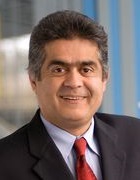
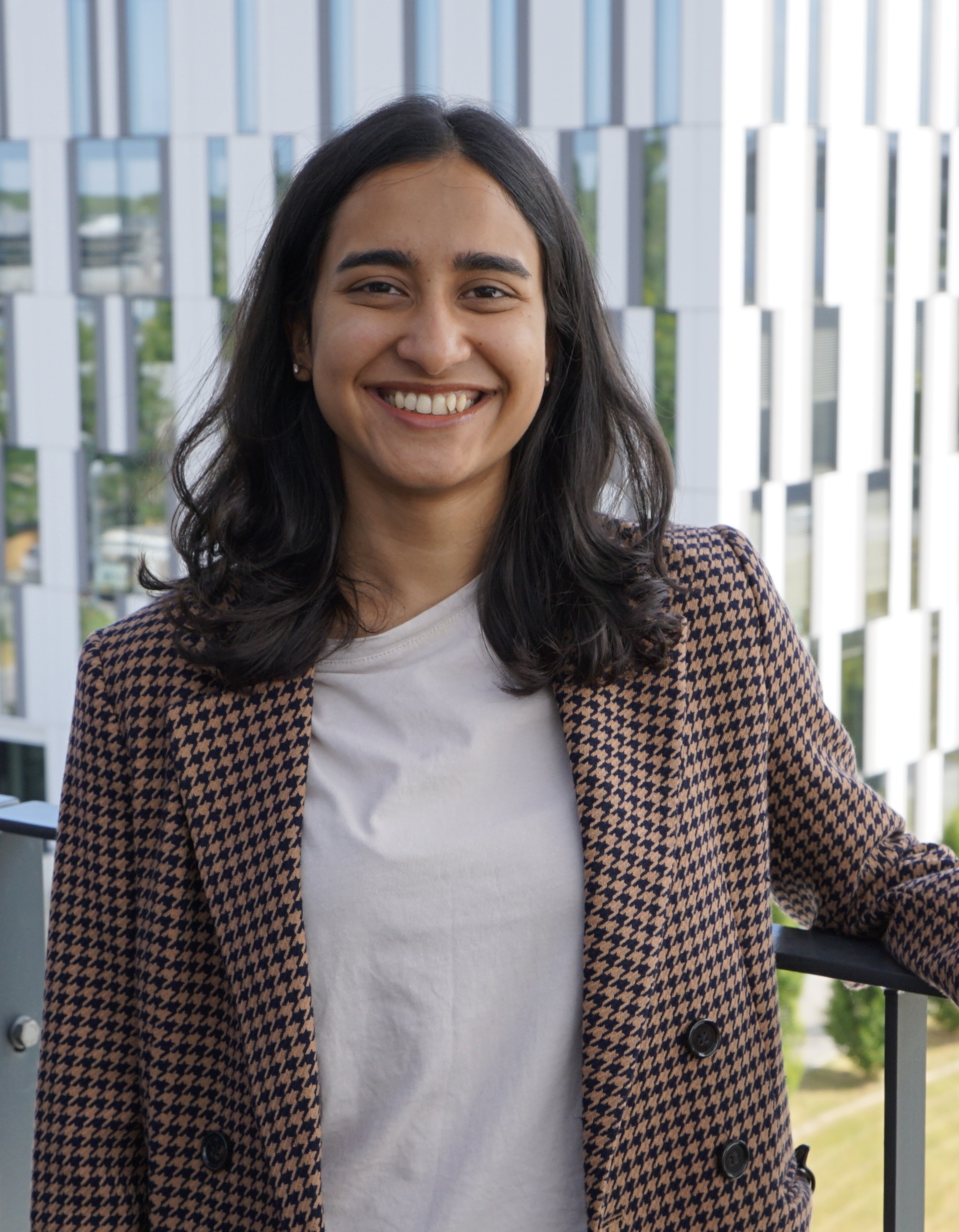
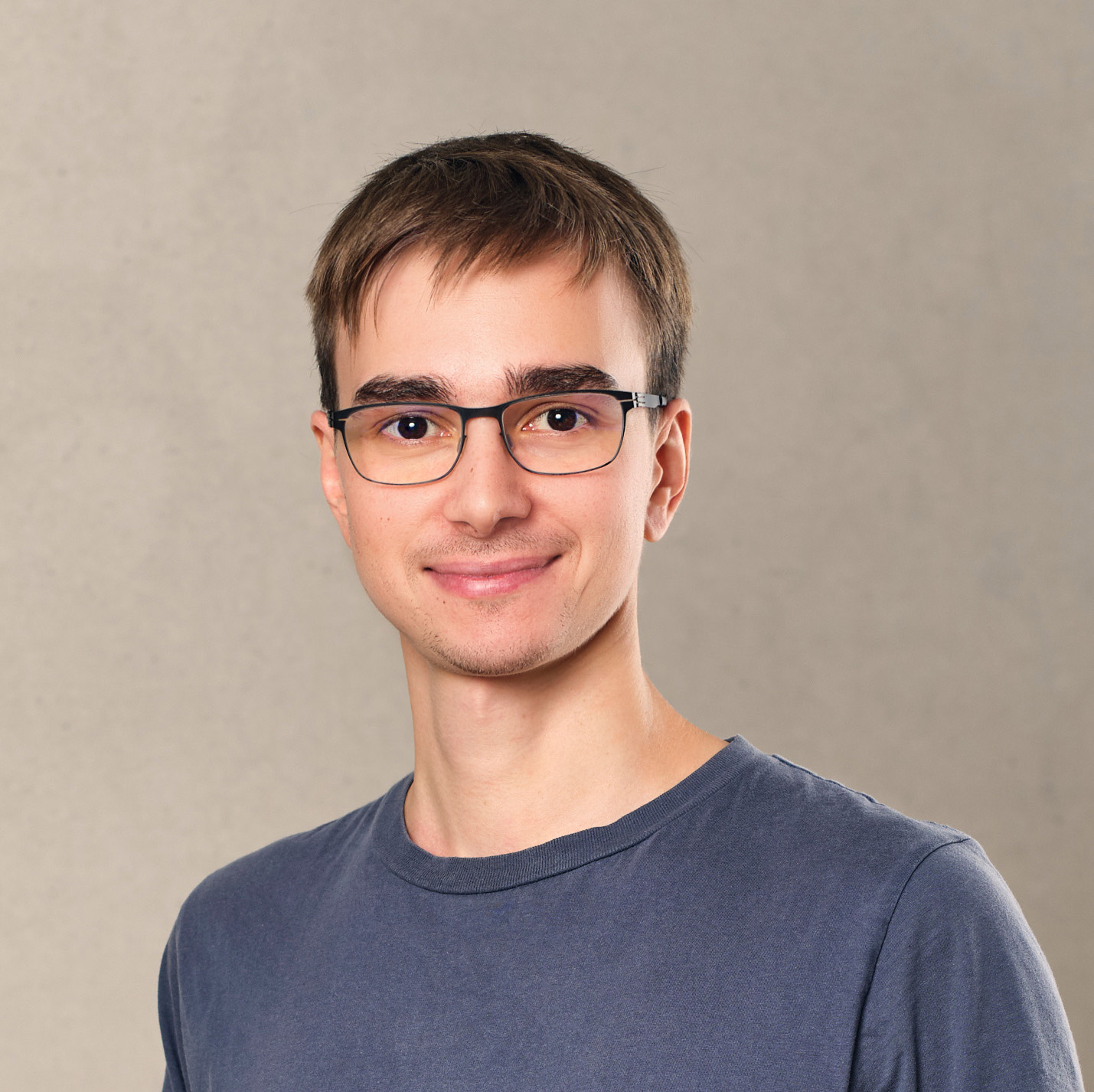
Prof. Dr. Fatih Gedikli is a full-time Professor of Artificial Intelligence and Big Data at the Institute of Computer Science, Ruhr West University of Applied Sciences . His academic work spans software engineering, web engineering, and applied artificial intelligence, with a focus on recommendation systems . Key research areas: Recommender Systems , Big Data Analytics , Natural Language Processing , Deep Learning Contribution: Development of AI-based data pipelines for unstructured data analysis from news, social media, and scientific publications Entrepreneurial Activities : Co-founder and Co-CEO of graphworks.ai , a German AI startup offering student internships. Regular speaker at workshops and keynotes, including events on entrepreneurship and sustainable supply chains.
Prof. Nassir Navab is a full professor and director of the Chair for Computer Aided Medical Procedures & Augmented Reality at the Technical University of Munich (TUM) School of Computation, Information and Technology. He leads the Medical Augmented Reality summer school series and is a member of Academia Europaea. Education: Mathematics and Physics, Computer Engineering and Systems Control, PhD at INRIA/Paris XI Professional History: Postdoctoral research at MIT Media Lab; Distinguished Member of Technical Staff at Siemens Corporate Research (1993–2003); Full Professor at TUM since 2003 Leadership Roles: Board Member of MICCAI (2006–2012, 2014–2017); Editorial Board Member of IEEE TMI, MedIA, IJCV His research focuses on bridging medicine and computer science through Computer Vision , Medical Augmented Reality , and Robot-Guided Surgery . He pioneered digital surgical workflow modeling (2005) and robotic imaging (2012), with over 100 patents and 90,926 citations (h-index 129). Recent publications highlight AI-driven medical imaging trends, including ultrasound-CT registration , reinforcement learning for robotic sonography , and semantic scene graphs for operating room modeling . Collaborations span institutions like Johns Hopkins University and cover applications in ophthalmology , oncology , and orthopedic interventions . MICCAI Enduring Impact Award 2021 IEEE ISMAR Career Impact Award 2024 IEEE ISMAR 10 Years Lasting Impact Award 2015 Siemens Inventor of the Year 2001 16 Best Paper Awards at MICCAI He mentors teams advancing medical AI and surgical robotics , with labs like CAMP and NARVIS. His work also emphasizes medical education , including courses on Computer Science for Medical Students and Innovation in Healthcare .
Anum Afzal is a Ph.D. candidate and Researcher at the Chair of Software Engineering for Business Information Systems (sebis) within the Faculty of Informatics at Technical University of Munich . Her work focuses on improving efficiency and domain adaptation of Large Language Models (LLMs) , particularly in business contexts through collaborations with SAP and Holtzbrinck Publishing Group.
Dr. Nikita Araslanov is a Postdoctoral Researcher at the Technical University of Munich (TUM) in the School of Computation, Information and Technology, Department of Informatics 9 (Computer Vision Group). He also serves as a visiting faculty member at Google. His research focuses on semantic and 3D visual inference from video data, aiming to bridge perception and understanding in complex visual scenes. Dr. Araslanov earned his PhD in Computer Science from TU Darmstadt in the Visual Inference Lab, graduating with highest distinction. He holds a Master's degree in Computer Science from the University of Bonn, where he graduated with distinction in 2016. His research spans multiple areas of computer vision, with a particular emphasis on 3D reconstruction, semantic segmentation, and deep learning approaches for visual understanding. His work often combines theoretical insights with practical applications, addressing challenges in dynamic scene understanding, vision-language correspondence, and unsupervised learning paradigms. He has made significant contributions to bundle adjustment for dynamic scenes, hierarchical semantic segmentation using hyperbolic geometry, and novel approaches to unsupervised panoptic segmentation. Dr. Araslanov's research has been recognized with several prestigious awards, including being selected as a Best Paper Candidate at ICCV 2025 for his work on dynamic scene reconstruction, and having his Scene-Centric Unsupervised Panoptic Segmentation paper designated as a Highlight Paper at CVPR 2025 (top 3% of submissions). He has also received multiple oral presentation awards at major computer vision conferences including GCPR 2024, CVPR 2024, and ICLR 2024. Actively involved in the academic community, Dr. Araslanov serves as an Area Chair for CVPR 2025. He is committed to mentoring the next generation of researchers and regularly supervises master's theses, guided research projects, and research assistant positions (HiWi). His teaching includes courses on Deep Learning for Spatial AI (Summer Semester 2025) and Computer Vision 3: Segmentation, Detection and Tracking (Winter Semester 2024/25). As a member of the Computer Vision Group led by Prof. Dr. Daniel Cremers at TUM, Dr. Araslanov collaborates with a diverse team of researchers working on cutting-edge computer vision problems. The group maintains strong connections with industry partners and contributes significantly to the advancement of computer vision research through publications at top-tier conferences and journals.
Ljubica Kärkkäinen is a post-doctoral researcher at the Chair of Connected Mobility within the Department of Informatics at the Technical University of Munich (TUM), where she focuses on vehicular mobility systems and connected infrastructure. Her academic background includes: PhD in Electrical Engineering from KTH Royal Institute of Technology, Network and Systems Engineering Department Her research specializes in mobility analysis, modeling and simulation of vehicular networks, with emphasis on developing mathematical frameworks and software tools for connected mobility applications. Current projects include the Virtual Mobility World initiative exploring next-generation transportation systems. She actively contributes to TUM's teaching curriculum through courses such as Connected Mobility Basics, Internet for All, and Applications of Machine and Deep Learning in Mobile Networking, demonstrating expertise at the intersection of networking, mobility systems, and AI. As a core member of Prof. Jörg Ott's research group, she collaborates on edge computing, IoT, and networking projects while maintaining focus on vehicular communication systems and mobility pattern analysis.
Hans Weytjens is a postdoctoral researcher at the Technical University of Munich (TUM) and a guest professor at KU Leuven in Belgium. He holds a Ph.D. in Machine Learning for Predictive and Prescriptive Process Monitoring, an M.Sc. in Business and Information Science, and an MBA in Finance. His current academic role at TUM involves research in the Department of Information System Development and Operation. Ph.D., KU Leuven (2023) M.Sc., KU Leuven (1990-1991) MBA, University of Chicago (1990-1991) Hans Weytjens specializes in Machine Learning applications for Business Processes , with a focus on Prescriptive Process Monitoring , Generative AI , and Autonomous Enterprise systems. His work bridges theoretical advancements with practical implementations in process optimization and AI-driven decision-making frameworks. Hans Weytjens' publications span topics like Event Log Dynamics , Reinforcement Learning , and Time Series Forecasting , reflecting his expertise in integrating Uncertainty Quantification and Visual Analytics into process mining methodologies. At TUM, Hans contributes to the Chair of Information System Development and Operation , advancing research on AI-driven enterprise automation and predictive process analytics.
Thomas Apel is a Professor of Mathematics at Universität der Bundeswehr München (UniBw München), where he maintains an active research program in numerical analysis and computational mathematics. His academic career began at TU Chemnitz (formerly TH Karl-Marx-Stadt), where he completed his PhD in 1991 and habilitation in 1999. He has been supervising PhD students since 2006, with his most recent student completing in 2022, demonstrating his ongoing academic engagement and leadership in the field. Apel's research focuses on challenging mathematical problems involving singularities, optimal control, and specialized mesh techniques. His work bridges theoretical numerical analysis with practical applications for solving complex partial differential equations. He has made significant contributions to the development of anisotropic finite element methods, error estimation techniques, and adaptive algorithms for problems with geometric singularities. His publication record spans over three decades, with continuous contributions to top numerical analysis journals through 2024. His recent work shows increasing focus on pressure-robust methods for fluid dynamics problems, isogeometric analysis for complex geometries, and mathematical modeling of biological processes. The consistent quality and relevance of his research have established him as a leading figure in computational mathematics. Member of the Scientific Committee of the annual Chemnitz Finite Element Symposium Supervised 9 PhD students since 2006 Author of numerous journal articles, books, and conference proceedings Active researcher with publications continuing through 2024 Apel's academic journey reflects a deep commitment to advancing numerical methods for challenging mathematical problems. His work has evolved from foundational contributions to anisotropic finite elements to more recent applications in fluid dynamics, eigenvalue problems, and interdisciplinary mathematical modeling. His sustained research productivity and mentorship of the next generation of numerical analysts demonstrate his enduring impact on the field.
Dr. Marcel Köster is a researcher affiliated with the Ubiquitous Media Technology Lab at the German Research Center for Artificial Intelligence (DFKI) and the Saarland Informatics Campus. His work focuses on GPGPU computing, particle simulations, compilers, and optimization techniques. Email: Marcel.Koester@dfki.de Phone: +49 681 85775 7750 Location: Gebäude D3 1, Room 0.13, Saarbrücken Research Interests Dr. Köster's research integrates GPU computing with simulation algorithms and compiler optimization. He contributes to advancements in parallel processing, domain-specific languages, and scientific visualization through both theoretical exploration and practical implementations. His publications highlight innovative applications of GPU acceleration to heuristic optimization, state generation, and particle simulations. These works demonstrate expertise in thread compaction, shared memory utilization, and warp scheduling. Teaching Experience Dr. Köster has taught multiple courses at HBK Saar, including: Artificial Intelligence (Summer 2019) Grundlagen der Medieninformatik (Winter 2016/17) Physical Simulations on Media Facades (Winter 2015/16) Core Lecture: Compiler Construction (Winter 2013/2014)
Prof. Dr. Florian Elert serves as Professor of Business Administration with a specialization in Insurance at the Hamburg School of Business Administration (HSBA), where he heads the Bachelor's program in Insurance Management and leads the Department of Finance & Accounting. He directs practice-oriented teaching, research, workshops, and industry studies while regularly presenting at sector events as a key thought leader in insurance innovation. His academic foundation includes a Business Administration degree from the University of Cologne focused on Insurance Sciences and a PhD from the University of Leipzig on 'Value-oriented management of insurance companies,' combining theoretical rigor with extensive industry experience as an insurance executive. Elert's research centers on digital disruption in insurance, analyzing how digitalization transforms business models, distribution channels, and risk management practices. He pioneers studies on Generation Y's insurance expectations and digital assistance services, emphasizing practical applications through empirical research and industry collaboration to address evolving market dynamics and consumer behavior shifts. His publication portfolio reveals consistent thematic focus across fifteen recent works, demonstrating deep expertise in InsurTech ecosystems, digital risk management frameworks, and business model innovation. The trajectory shows increasing emphasis on generational consumer analysis and practical digital transformation strategies for insurers, with foundational work on comparison portals evolving into current InsurTech and assistance service research. No personal scientific awards are documented in the source material, though he actively participates in academic recognition processes such as the Excellence Award for outstanding student theses in insurance management. As academic director, Elert oversees thesis supervision and curriculum development while leading major industry-funded research initiatives like the Generation Y study on digital risk management, supported by the Association for the Promotion of Insurance Science in Hamburg and the Hamburg Financial Centre. He organizes international student excursions to London institutions including Lloyd's and AIG to bridge academic learning with global industry practices. He founded the Hamburg Insurance Innovation Days (HIID) platform connecting insurers, distributors, and InsurTechs, co-founded the InsurTech-Werft Hamburg implementation initiative, and established the ITW Institute for Transformation and Further Education in Insurance as a HSBA spin-off where he serves as managing director driving executive education programs for the sector.
Martin Vechev is a Professor in the Department of Computer Science at ETH Zurich, leading the Secure, Reliable, and Intelligent Systems (SRL) Lab. His research bridges programming languages, software analysis, and emerging domains like quantum computing, with significant contributions to static analysis, abstract interpretation, and machine learning for code. His primary research interests include programming languages, static analysis, abstract interpretation, and quantum computing. Vechev has pioneered scalable techniques for software verification, particularly in concurrency and security analysis, and has recently driven innovations at the intersection of programming languages and quantum software development. His work emphasizes practical applications while maintaining theoretical rigor. Analysis of Vechev's recent publications reveals a strategic evolution toward quantum programming languages and machine learning integration. His lab has shifted from traditional static analysis to developing foundational frameworks for quantum circuit synthesis (e.g., Silq, Unqomp) and robust neural network certification, addressing critical challenges in quantum resource management and AI safety. The SRL Lab under Vechev's direction focuses on building intelligent systems that are inherently secure and reliable through advanced program analysis techniques. The lab's research spans theoretical foundations to industrial-strength tools, with strong emphasis on quantum software engineering and the application of machine learning to code understanding and generation.
Weilong Chen is a researcher at the Multiscale Modeling of Fluid Materials group in the School of Mechanical Engineering at Technical University of Munich (TUM). He is affiliated with the Atomistic Modeling Center (AMC) and Munich Data Science Institute (MDSI), working on computational methods for fluid materials and molecular simulations. Education: MSc in Mathematics (2024, Chalmers University, Sweden) and BSc in Aerospace Engineering (2022, National University of Defense Technology, China) His research focuses on AI for Science , particularly Graph Neural Networks , Deep Generative Models (including Flow Matching/Diffusion), and Machine Learning Potentials for applications in Coarse-grained Molecular Dynamics and scalable simulations. Recent work involves developing frameworks like chemtrain-deploy for million-atom molecular dynamics and generative thermodynamics modeling. He actively collaborates on projects at the intersection of machine learning and physics-based modeling, with involvement in workshops and team events. Weilong Chen is available for master's thesis supervision and can be contacted via email.
Yaohua Zang is a Professor at the Technical University of Munich , affiliated with the Department of Data-driven Materials Modeling . Their research bridges computational materials science, machine learning, and mathematical modeling, focusing on advanced methods for solving partial differential equations (PDEs), inverse problems, and optimal control in complex systems. Research Interests include: Physics-informed neural operators for PDEs Stochastic generative modeling for materials design Optimal control in robotics and dynamic systems Bayesian inference and uncertainty quantification High-dimensional numerical analysis Adversarial and weak formulation-based neural networks Recent work highlights physics-aware neural operators (DGenNO), weak adversarial networks for inverse problems, and applications in elastography and robotic assembly. Their scientific contributions span PDEs, materials science, and computational control. Labs & Teams : Part of the Chair of Data-driven Materials Modeling, located in Garching b. München, Germany.
Claus Wimmer is a researcher at the Chair of Thermodynamics within the Faculty of Mechanical Engineering at the Technical University of Munich (TUM), holding the position of Researcher. His work bridges mechanical engineering principles with clinical medicine, specifically focusing on orthopedic applications through interdisciplinary collaboration with medical institutions. His primary research interests include: Artificial Intelligence in Medical Imaging and Diagnosis Orthopedic Surgery and Arthroplasty Optimization Bone Tumor Classification and Analysis Wearable Sensor Technology for Gait Assessment Machine Learning for Surgical Outcome Prediction Digital Health Implementation in Clinical Settings Analysis of Wimmer's recent publications (2024-2025) reveals a concentrated research trajectory in developing AI-driven solutions for orthopedic challenges. Key trends include deep learning applications for bone tumor segmentation in radiological images, predictive modeling of arthroplasty failures using national registry data, and systematic evaluations of wearable technology for postoperative rehabilitation. His work consistently emphasizes practical clinical translation, with frequent collaborations leveraging German healthcare datasets and addressing real-world implementation barriers in medical AI. No scientific awards were documented in the available information. Details regarding student supervision, research grants, laboratory infrastructure, or collaborative research teams were not provided in the source material, though his publication patterns suggest active engagement with clinical partners in orthopedic departments and medical technology development.
Fabian David Schmidt is a Research Associate and Doctoral Student at the CAIDAS Chair for NLP at Julius-Maximilians-Universität Würzburg. He works on multilingual representation learning and sample-efficient cross-lingual transfer, co-advised by Prof. Dr. Goran Glavaš (University of Würzburg) and Ivan Vulić (University of Cambridge). Research Interests: His work focuses on cross-lingual transfer methods, low-resource NLP, and robust knowledge editing in LLMs. He also explores vision-language benchmarks, process mining, and semantic encoders for information retrieval. Key areas include Robust Cross-Lingual Transfer Sample-Efficient Training Vision-Language Integration LLM Evaluation Publication Trends: Fabian's recent publications emphasize multilingual and cross-lingual NLP advancements, including sliced fine-tuning for NER, model averaging for robustness, and domain adaptation. His 2025 work extends into vision-language tasks and LLM generalization across cultures. He also contributes to spoken language understanding benchmarks. Labs & Teams: Affiliated with the WüNLP group and the CAIDAS Chair at the University of Würzburg, collaborating with international researchers on cross-lingual NLP and LLM optimization.
Dr. Petra Bevandic is a researcher at the Faculty of Engineering at Universität Bielefeld within the Machine Learning Group . Her work spans key areas in computer vision and machine learning. Primary Affiliation: Faculty of Engineering, Machine Learning Group, Universität Bielefeld Research Interests: Specializes in semantic segmentation and anomaly detection Focus on open-set recognition and domain adaptation Active in diffusion models and garment reconstruction Scientific Contributions: Pioneering work on virtual try-on/try-off systems Developing robust methods for out-of-distribution detection Advancing multi-domain image segmentation techniques