Yong Cheng is a prolific researcher with significant contributions to computer science, artificial intelligence, and mathematical logic. His work spans biomedical image segmentation, federated learning, robotics, and formal logic, reflecting a multidisciplinary approach to solving complex technical challenges. Key Research Areas: Machine Learning, Natural Language Processing, Computer Vision, Remote Sensing, Robotics, Privacy-Preserving Techniques. Publication Trends show a focus on deep learning architectures (e.g., Transformer, U-Net), adversarial training, and applications in healthcare, autonomous systems, and geospatial analysis. His 2025 work on biomedical imaging and logic theorems highlights ongoing interests in theoretical and applied domains. Scientific Contributions include foundational work in Gödel's incompleteness theorems and practical innovations in edge computing and fusion robotics. While no formal honors are listed, his collaborations with institutions like IEEE and ACM suggest industry-wide recognition.
Prof. Dr. Elisabeth André is a Full Professor of Computer Science and Chairholder for Human-Centered Artificial Intelligence at the University of Augsburg. She leads the Human-Centered Artificial Intelligence research team within the Institute of Computer Science, Faculty of Applied Computer Science. Her academic career includes roles such as Managing Director of the Institute of Computer Science (2004-2006) and leadership in major research initiatives like the DFG-funded CEEDs and FORSocialRobots projects. Education: 1988: Diploma in Computer Science from Saarland University (Thesis: 'Generierung natürlichsprachlicher Äußerungen zur simultanen Beschreibung von zeitveränderlichen Szenen') 1995: PhD from Saarland University (Thesis: 'Ein planbasierter Ansatz zur Generierung multimedialer Präsentationen') Research Interests: Focuses on multimodal interaction, affective computing, social robotics, and ethical AI applications. Key areas include embodied conversational agents, emotion recognition systems, and human-centered AI design principles. Awards: 2021 Gottfried Wilhelm Leibniz Prize (Germany's highest research honor) ICMI Sustained Accomplishment Award (2021) Member of Bavarian Academy of Sciences and Humanities (2022) Selected as one of 'Ten Influential Minds in German AI History' (GI, 2019) Grants and Leadership: Has coordinated EU projects (e.g., CEEDs, CALLAS) and led national initiatives. Currently serves on the Bavarian Artificial Intelligence Council and the German Ethics Council for AI. Founded the FMLA Forum for Machine Learning at Augsburg. Labs/Teams: Leads the Human-Centered AI Lab with 20+ researchers including Dr. Michael Dietz, Dr. Matthias Kraus, and Dr. Florian Lingenfelser. Active in interdisciplinary projects like VIVA (social robots) and TherapAI (healthcare applications).
Dr. Dimitris Tzionas is an Assistant Professor at the University of Amsterdam leading research at the intersection of Computer Vision, Computer Graphics, and Machine Learning. His work focuses on modeling human appearance, motion, and interactions within physical environments. His research explores: 3D reconstruction of humans and objects from images/video Modeling whole-body interactions with scenes Developing novel representations for articulated motion Creating realistic digital avatars for AR/VR applications Recent publications demonstrate consistent focus on human-object interaction modeling, 3D reconstruction under challenging conditions, and the development of novel datasets. Work frequently appears in top-tier venues like CVPR, ICCV, and ECCV. Awards & Recognition: Outstanding Reviewer - CVPR 2021 Outstanding Reviewer - CVPR 2023 Best Paper Finalist - CVPR 2022 Current PhD students include George Paschalidis and Dimitrije Antic. Research is supported by grants including BMBF funding for 'Machine Learning for Interacting Human Avatars'. The lab maintains collaborations with MPI-IS Tübingen and develops novel capture systems for human motion analysis.
Dr. Bimal Viswanath is an Associate Professor in the Department of Computer Science at Virginia Tech. His research focuses on security and privacy aspects of large online services, particularly at the intersection of machine learning and security. His work covers three main directions: attacks using ML, attacks on ML systems, and ML for improved security/privacy. He has received multiple awards including the Distinguished Paper Award at SOUPS 2014 and Best Paper Award at COSN 2015. Dr. Viswanath completed his Ph.D. in Computer Science at the Max Planck Institute for Software Systems and was a postdoctoral researcher at UCSB's SAND lab. His research group currently includes several PhD students working on security and machine learning projects. His work has been supported by grants from CCI, NSF and 4-VA. Recent research has focused on security challenges in generative AI systems, including deepfake detection, chatbot vulnerabilities, and adversarial attacks on ML systems. His team develops practical defenses against emerging threats in AI-powered systems. Teaching activities include courses on Foundation Models and Security, Secure Computing Capstone, and Security Analytics. Dr. Viswanath serves on program committees for top security conferences including CCS, USENIX Security, and IEEE S&P.
Dr. Jing Liu is a researcher at Fudan University's Academy for Engineering and Technology specializing in computer vision and AI-driven video analysis. Their work focuses on developing advanced deep learning frameworks for video anomaly detection in surveillance systems. Research explores diffusion models, causal representation learning, and privacy-preserving techniques. Primary research interests include video understanding through spatial-temporal modeling, unsupervised anomaly detection paradigms, and multimodal fusion techniques. Recent publications demonstrate innovative approaches to feature consistency learning and network architecture design. Publications emphasize practical applications in security surveillance while addressing theoretical challenges in temporal modeling and causal inference. Collaborations include international researchers working on computer vision benchmarks and industrial applications.
Prof. Juergen Gall is a Professor at the University of Bonn, affiliated with the TRA Mathematics, Modelling and Simulation of Complex Systems and the Department of Information Systems and Artificial Intelligence. He leads the Computer Vision Group at the Lamarr Institute for Machine Learning and Artificial Intelligence. His research focuses on action recognition, video understanding, anticipation, human pose estimation, and applications in plant science, earth science, and neuroscience. He has contributed to numerous projects and conferences, including organizing workshops on machine learning for Earth systems and holistic video understanding. His work spans over 200 publications in top venues like CVPR, ICCV, and NeurIPS. He oversees software tools like MANTA and STING-BEE, and has developed datasets such as Humans in Kitchens and PoseTrack21. Research interests emphasize advancing computer vision for real-world challenges, with a focus on multi-modal learning and deep learning applications. Recent articles explore parameter-efficient models, diffusion-based anticipation, and multi-view matching for plant analysis. His contributions bridge academia and industry, addressing agricultural and environmental monitoring needs.
Prof. Dr. Thomas Indinger is a Professor at the Chair of Aerodynamics and Fluid Mechanics at the Technische Universität München (TUM). He leads the Automotive Aerodynamics Group, established since 2006, and has held academic roles such as Akademischer Oberrat (Senior Academic Councillor) since 2016. His affiliations include the TUM School of Engineering and Design and the Department of Aerodynamics and Fluid Mechanics. Educations: Diplom (Master's) in Mechanical Engineering, TU Dresden (2000) PhD (Dr.-Ing.) in Aerodynamics, TUM (2005) Habilitation in Fluid Mechanics, TUM (2013) Research Interests: Focuses on automotive aerodynamics, numerical flow simulation (using GPUs), experimental investigation of turbulent boundary layers, and unsteady fluid mechanics in rotating systems. His work integrates advanced computational methods like lattice-Boltzmann, dynamic mode decomposition (DMD), and quantum algorithms for CFD. He explores applications in vehicle design optimization, heat transfer, and wind tunnel testing. Publications: Recent works address quantum algorithms for fluid dynamics, surrogate models for turbulence closure, and CFD validation in automotive contexts. His research spans topics like wheel aerodynamics, battery module flow, and high-performance computing. Awards: No specific awards listed. Grants/Advising: Leads projects such as DrivAer and FURADO, involving aerodynamic design and simulation frameworks. Active in collaborative initiatives like NFDI4ING. Labs/Teams: Part of the Aerodynamics and Fluid Mechanics group, utilizing TUM's wind tunnels (Windkanal A/B/C) and GPU-based simulation infrastructure.
Johannes Czech is a Researcher in the Machine Learning Group at the Computer Science Department of Technische Universität Darmstadt. His research focuses on applying deep learning models to planning algorithms like Monte-Carlo Tree Search (MCTS), with a particular emphasis on parallel reinforcement learning and supervised learning optimizations. He has co-supervised numerous theses on topics such as phase-specific learning in Pommerman, neural network architectures in AlphaZero, and evaluating MCTS variants for chess and other games. Education: Ph.D. student in Computer Science (2020–present), TU Darmstadt M.Sc. in Computer Science (Visual Computing, 2017–2020), TU Darmstadt B.Sc. in Computer Science (2014–2017), Hochschule Furtwangen University Research interests include optimizing MCTS for imperfect information games, improving feature representations in AlphaZero, and exploring generative adversarial networks for creative applications like emoji generation. His work bridges theoretical algorithm design with practical implementations in domains like chess variants and robotics. Teaching: Co-instructor for courses such as "Einführung in die Künstliche Intelligenz" (Introduction to AI) and supervised projects like LiGround, an open-source Chess Variant Analysis GUI. He has also contributed to research projects involving time management in chess using neural networks and human data. Lab affiliations: Machine Learning Lab at TU Darmstadt, collaborating with researchers like Prof. Dr. Kristian Kersting and Dr. Arturo Crespo.
Mathias Wien is a Professor and Head of the Chair of Image Generation and Image Processing at RWTH Aachen University. He specializes in video and image communication, with a focus on compression standards, 3D video technology, and perceptual quality metrics. His work spans medical imaging applications, adaptive coding techniques, and algorithm optimization for real-time video processing. Research interests include video coding algorithms, immersive media standards (e.g., VVC), point cloud quality assessment, and efficient template matching methods for reference picture padding. He actively contributes to MPEG and IEEE initiatives, co-authoring standards and reviewing emerging technologies. Recent publications (2021–2025) emphasize advancements in template-based video coding, medical image segmentation using deep learning, and viewer training protocols for visual assessment. He leads a research team addressing challenges in scalable compression, dynamic mesh coding, and 3D LiDAR odometry. His team collaborates with institutions like the RWTH Aachen University Medical Department and industry partners, focusing on clinical applications of imaging technology.
Dr. Isaak Lim is a researcher in the Department of Computer Science at RWTH Aachen University, Faculty of Mathematics, Computer Science and Natural Sciences. His contact information includes Room 109, phone +49 241 8021805, fax +49 241 8022899, and email isaak.lim@cs.rwth-aachen.de. He maintains an active research profile with publications spanning from 2016 to 2025. Lim's research focuses on computer graphics, 3D shape generation, deep learning applications for visual data, and geometry processing. His work bridges computer vision and graphics with machine learning techniques, particularly exploring how to represent and generate visual data more effectively. He has made significant contributions to point cloud processing, feature curve analysis, and vision-language model fine-tuning. His research often addresses the challenge of creating efficient representations of visual data that balance compression with information preservation. His publication record shows a clear trajectory of increasing independence and impact, with recent work (2023-2025) often featuring him as first author on high-impact venues like ICCV and VMV. His research demonstrates a consistent focus on improving the representation and processing of visual data through novel algorithmic approaches that combine traditional computer graphics techniques with modern deep learning methods. Among his notable achievements is the Best Paper Award at VMV 2025 for his work on Quantised Global Autoencoders, which presented a holistic approach to visual data representation inspired by spectral decompositions but enhanced with data-driven basis functions. Lim frequently collaborates with Prof. Leif Kobbelt and other researchers at RWTH Aachen, contributing to a productive research environment in computer graphics. While specific grant information isn't provided in the available text, his consistent publication output across major conferences suggests active research funding support. His work has practical applications in areas including 3D modeling, image generation, and computer vision systems. His research group appears to be part of the Computer Graphics group at RWTH Aachen, focusing on the intersection of traditional computer graphics techniques with modern deep learning approaches. The team's work emphasizes practical solutions for visual data representation that balance computational efficiency with high-quality output.
Prof. Franz Rottensteiner is an Adjunct Professor and Deputy Director at the Institute of Photogrammetry and GeoInformation, Leibniz University Hannover. His work focuses on remote sensing, photogrammetry, and AI applications in geospatial data analysis. He leads projects like Gauss Centre for temporal geospatial data analysis and EU ChemiNova for cultural heritage conservation. Key research areas include CNN-based 3D reconstruction, satellite image time series classification, and cooperative vehicle positioning using UAV imagery. He collaborates on initiatives such as OER4Ukraine, providing educational resources in image analysis for Ukrainian academia. His recent projects emphasize interdisciplinary AI applications, including the Leibniz AI Academy for trans-curricular learning. Notable contributions include deep learning frameworks for land cover classification and vehicle pose estimation, with publications spanning 2020–2025. Current research integrates transformer models for temporal data analysis, semantic segmentation, and domain adaptation techniques. His work bridges theoretical advancements with practical applications in autonomous systems, environmental monitoring, and heritage preservation.
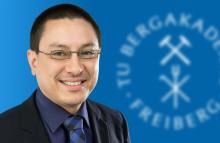
Oliver Rheinbach is a Professor of High-Performance Computing in Continuum Mechanics at the Institute of Numerical Mathematics and Optimization, Faculty of Mathematics and Computer Science, TU Bergakademie Freiberg. He also serves as the Pro-Dean of the faculty and the Scientific Director of the University Computing Center (URZ). His academic affiliations reflect a deep integration of computational mathematics and high-performance computing in engineering and biomedical applications. Research Interests: His primary fields include High-Performance Computing, Numerical Mathematics, Domain Decomposition Methods, Finite Element Methods, and Fluid-Structure Interaction. His work bridges theoretical numerical analysis with practical applications in biomechanics, materials science, and exascale computing. He actively explores the co-design of algorithms and solvers for next-generation supercomputers. Research Trends from Publications: The 15 most recent articles reveal a consistent focus on scalable domain decomposition methods (e.g., BDDC, FETI-DP), particularly for nonlinear and time-dependent problems in solid and fluid mechanics. There is a strong emphasis on parallel algorithms for exascale systems, with applications in hemodynamics, glacier modeling, and cardiac simulation. Recent work integrates machine learning into inverse problems, indicating a forward-looking research direction. Scientific Awards and Recognition: h-index of 28 (Google Scholar), 16 (zbMATH) Active participation in DFG and BMBF-funded priority programs Leadership roles in major academic and computing infrastructures Advising and Grants: While no formal list of students is provided, his leadership in research projects such as SPP2311, SPP2256, and SCALEXA suggests extensive mentorship and collaboration. He has secured substantial grant funding from the DFG (e.g., EXASTEEL, Domain-Decomposition-Based FSI) and BMBF (SCALEXA, OERSax), reflecting national recognition of his research impact. Labs and Teams: As Scientific Director of the URZ, he leads the university's high-performance computing infrastructure. He is deeply involved in the Faculty’s Compute Cluster and collaborates with interdisciplinary teams in computational biomechanics and materials science. His work in the SPP2256 and SPP2311 consortia involves national and international research networks focused on variational modeling and cardiovascular simulation.
Dr. Daniel Schlör is a researcher at the Chair of Data Science (Informatics X) at the University of Würzburg, with additional affiliations to the CLiGS (Computational Literary Genre Stylistics) research group in Digital Humanities. His work focuses on machine learning for cybersecurity, fraud detection, and explainable AI, with recent projects exploring synthetic data generation, knowledge graph integration, and deep learning for imbalanced datasets. Research interests include Explainable AI (XAI) for anomaly detection Deep learning architectures for domain-specific relationships Multi-agent simulations for fraud scenario modeling Computational stylistics in digital humanities Article trends show expertise in Developing novel neural units (e.g., ModeConv) for structural anomaly differentiation Advancing XAI methods with generative inpainting techniques Creating open ERP datasets for occupational fraud research Applying graph neural networks to water distribution leakage detection Labs & collaborations include the Data Science Chair’s AI Institute at Hubland Nord campus and CLiGS research group for computational literary analysis.
Professor Mathias Trabs is a faculty member at the Karlsruhe Institute of Technology (KIT), where he has been serving as a Professor since 2021. He is affiliated with the Department of Mathematics, specifically within the Institute of Stochastics. Previously, he held positions as Heisenberg professor at Universität Hamburg (2021) and Assistant professor at Universität Hamburg (2016-2021). His research spans several key areas in modern statistics and probability theory. Professor Trabs specializes in Nonparametric and high-dimensional Statistics, Statistics for stochastic processes, Statistical inverse problems, Statistical Learning, and Stochastic (partial) differential equations. His work bridges theoretical statistics with practical applications in physics, machine learning, and high-energy experiments. Analysis of his recent publications reveals a strong focus on the intersection of statistical theory and machine learning, particularly in generative models, neural networks, and high-dimensional data analysis. His work also demonstrates significant contributions to the mathematical foundations of stochastic processes and their applications in physical sciences. Professor Trabs has supervised numerous doctoral students including Lea Kunkel, Thea Engler, Jan Rabe, Sebastian Bieringer, Maximilian F. Steffen, and Florian Hildebrandt. His research has been supported by various projects including the Data Science in Hamburg - Helmholtz Graduate School for the Structure of Matter (DASHH), DFG project TR 1349/3-1 on high-dimensional statistics, and the LD-SODA research project. He is actively involved in academic leadership, serving as Deputy speaker of the KIT Center MathSEE (Mathematics in Sciences, Engineering, and Economics), and as a member of the steering boards of both the DMV-Fachgruppe Stochastik (Probability and Statistics Group of the German Mathematical Society) and the KIT Graduate School Computational and Data Science (KCDS).
Michael Strube is an Honorary Professor at the Department of Computational Linguistics at Heidelberg University and leads the Natural Language Processing (NLP) Group at HITS (Heidelberg Institute for Theoretical Studies) in Germany. He has been with HITS (previously EML Research and European Media Laboratory) since 2003 and became an Honorary Professor at Heidelberg University in 2010. He is also a Fellow of the Association for Computational Linguistics (2019). Dr. Strube received his PhD from the Computational Linguistics Department at the University of Freiburg in December 1996 under the supervision of Udo Hahn. Between 1997 and 1999, he was a postdoctoral fellow at the Institute for Research in Cognitive Science at the University of Pennsylvania, Philadelphia. Michael Strube's research focuses on semantics and discourse pragmatics, graph-based methods for text representation and analysis, extraction of world knowledge from Wikipedia for computational linguistics, and development of methods to synchronize multilingual content. His work spans coreference resolution, discourse processing, text summarization, entity linking, and natural language generation. He has made significant contributions to coherence modeling, anaphora resolution, and the application of geometric deep learning in NLP. His recent publications demonstrate strong trends in discourse processing, coreference resolution, and the application of geometric approaches to NLP problems. Strube has pioneered work in hyperbolic space for entity typing and graph embeddings, while maintaining his foundational work in discourse and coherence. His research bridges theoretical linguistics with practical NLP applications across multiple languages. Dr. Strube has received several prestigious awards, including: Fellow of the Association for Computational Linguistics (2019) Best Paper Award for "Fine-grained entity typing in hyperbolic space" (2019) Honorable Mention for the IJCAI-JAIR best paper prize 2010 for "Knowledge Derived from Wikipedia for Computing Semantic Relatedness" Professor Strube has advised numerous PhD students who have gone on to successful careers in academia and industry. His current PhD students include Yi Fan, Wei Liu, Haixia Chai, Mehwish Fatima, and Sungho Jeon, working on topics such as discourse structure, discourse relations, coreference resolution, and cross-lingual summarization. His former students include Federico Lopez, Benjamin Heinzerling, Mohsen Mesgar, and Nafise Moosavi, who now hold positions at institutions like Argo AI, RIKEN, Bosch Center for AI, and the University of Sheffield. As group leader of the NLP Group at HITS, Strube oversees a team focused on advancing natural language processing through research in discourse analysis, coreference resolution, text generation, and knowledge extraction. The group has been involved in numerous collaborative projects and has made significant contributions to the field through publications, shared tasks, and community building via workshops and conferences.