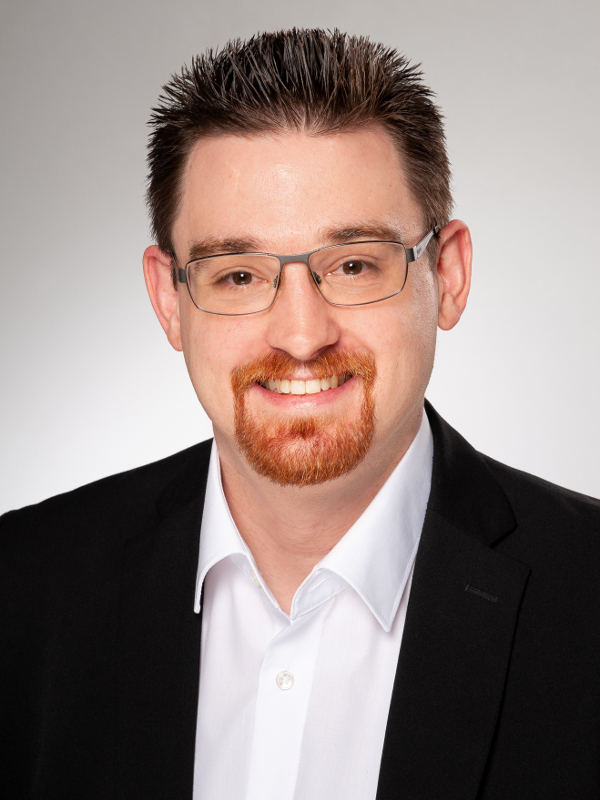
Prof. Dr. Damian Borth is a faculty member and Academic Director of the Doctoral Program for Computer Science at the University St.Gallen , affiliated with the School of Computer Science and the Institute of Computer Science (ICS-HSG) . His research spans Machine Learning , Remote Sensing , and Digitalization & Transformation , with a focus on diffusion models, vision transformers, and environmental data analysis. Recent publications highlight advancements in anomaly detection , cross-modal translation , and climate monitoring using AI. Key themes include weight space learning , federated learning , and data-efficient AI for Earth observation. His work bridges theoretical deep learning and practical applications in financial auditing, pollution estimation, and satellite imagery.
Dr. Stefan Peters is a Senior Lecturer in Surveying and GIS at the University of South Australia (UniSA) within the UniSA STEM school. His research focuses on applied remote sensing and GIS to address environmental and geospatial challenges, including fire detection, habitat modeling, and 3D reconstructions. Lecturer in Surveying and GIS, UniSA STEM Research Degree Supervisor Stefan's research spans geospatial data fusion, environmental monitoring, and participatory mapping. He has contributed to frameworks for 3D point cloud fusion in forestry, AI-driven fire smoke detection, and urban catchment analysis using LiDAR and multispectral data. His recent publications highlight advancements in hyperspectral satellite AI emulation, channel morphology monitoring, and cross-sensor fire detection algorithms. Key themes include remote sensing innovation, environmental data integration, and urban-ecosystem interactions. Scientific contributions include: Best Paper Award (2012) Stefan coordinates courses in Web Cartography and Environmental Remote Sensing, emphasizing practical geospatial applications. He collaborates with institutions like Geoscience Australia and the FWPA on projects spanning forestry, fire management, and heritage preservation.
Andrea Nardin is a Fixed-term Assistant Professor at the Department of Electronics and Telecommunications (DET) within Politecnico di Torino. He is an active member of the Interdepartmental Center CARS@PoliTO (Center for Automotive Research and Sustainable Mobility), contributing to advancements in telecommunications and navigation systems. His research spans Digital Signal Processing Global Navigation Satellite Systems (GNSS) Signal Integrity Wireless Communication Andrea's scholarly work focuses on GNSS signal applications, ranging from combating electromagnetic interference to developing robust tracking architectures and orbit determination algorithms. His recent publications highlight innovations in jammer localization, lunar navigation, and Kalman filter optimization for space environments. Teaching engagements include collaborations on courses such as Numerical Estimation Methods for Radionavigation Hardware & Wireless Security Satellite Navigation Systems across multiple academic programs. He supervises PhD candidate Francesco Fiorina in the field of Electrical, Electronics, and Communications Engineering.
Kari Beate Remmen is an Associate Professor in the Department of Teacher Education and School Research at the University of Oslo, where she has been employed since 2016. Her academic work focuses on science and geography education with particular emphasis on outdoor learning environments, field-based teaching approaches, and the integration of sustainability concepts into educational practices. Dr. Remmen's research interests include exploratory field teaching in geosciences, outdoor education in science education and teacher training, collaboration between school teachers and external science professionals, video observation of teaching and learning in earth sciences, and using representations in science teaching. She has developed frameworks for effective fieldwork design that support student learning processes throughout preparation, fieldwork, and follow-up activities. Her extensive publication record from 2013-2024 reveals consistent focus on practical applications of educational theory. Remmen's work frequently addresses how fieldwork and outdoor learning can enhance deep learning experiences, with particular attention to the transition between classroom instruction and outdoor activities. Her research shows strong commitment to understanding how students and teachers engage with scientific concepts in real-world settings. As an educator, Remmen teaches courses in geography didactics for practical pedagogical education programs, geoscience didactics for the Geosciences program, and research methods courses. She has served as supervisor for numerous master's students and is currently guiding several PhD candidates from multiple institutions. Dr. Remmen actively collaborates with institutions including the Climate House (NHM, UiO), OsloMet, University of Tromsø, School Laboratories in Geosciences at UiO and UiB, Science Centre (UiO), and University of Sherbrooke (Canada). She currently leads the National Network for Sustainability and Education (NABU) and serves on the board of the Norwegian Geographical Society. Her research has been conducted through projects such as 'Representation and Participation in Science (REDE)' and as part of the 'Challenges of Sustainability in Educational Research (COSER)' research group, reflecting her commitment to sustainable educational practices and meaningful science learning experiences.
Dr. Barbara Klimesz serves as a Lecturer in the Department of Physics at the Faculty of Production Engineering and Logistics, Opole University of Technology, where she conducts research on advanced optical materials. Her primary focus involves the development and characterization of rare-earth doped glass systems for photonic applications. Her research expertise centers on spectroscopic analysis of oxyfluorotellurite and oxyfluoride glasses doped with lanthanide ions including praseodymium, neodymium, erbium, and holmium. She investigates thermal stability, luminescence mechanisms, and temperature-dependent optical properties to advance materials for optical sensors and temperature sensing devices. Her work demonstrates deep specialization in energy transfer phenomena within co-doped systems and the relationship between glass composition and functional performance. Analysis of her publication record reveals consistent contributions to glass science since the early 2000s, with recent work emphasizing multi-parameter temperature sensing capabilities and optical amplification applications. Her research trajectory shows increasing sophistication in material design, particularly in oxyfluorotellurite systems that balance thermal stability with high luminescence efficiency. The publications consistently address practical implementation challenges for photonic devices while maintaining rigorous spectroscopic characterization.
Helle Astrid Kjær is an Associate Professor at the Physics of Ice, Climate and Earth department within the Niels Bohr Institute at the University of Copenhagen . With 9 years of expertise in analyzing ice core impurities via Continuous Flow Analysis (CFA) , she has participated in 6 deep ice core campaigns across both hemispheres and developed novel CFA methods for acid and phosphorus. Her fieldwork includes 9 months across 6 seasons on the Greenland ice sheet. Education: Cand. Scient. in Geophysics Research Focus: Kjær's work centers on leveraging ice core impurities to reconstruct climate processes like volcanic eruptions, sea ice dynamics, and atmospheric transport. She contributes to projects such as ice2ice , investigating abrupt climate events and nutrient fluxes in polar ice. Article Trends: Her recent publications span Greenland and Antarctic ice core chronologies, aerosol and mercury fluxes during climate transitions, and DO event spatial patterns. Methodological innovations in CFA and field equipment like the Lightweight In-Situ Analysis (LISA) box are recurring themes. External Roles: She has held positions at institutions including the Desert Research Institute (USA) , National Institute for Polar Research (Japan) , and GNS Science (New Zealand) .
Dr. Erke Arıbaş is a Lecturer at Istanbul Technical University's Faculty of Computer and Informatics , specializing in the Department of Computer Engineering . His research spans interdisciplinary domains including artificial intelligence, simulation modeling, and biophysics applications. Education: PhD in Computational Science and Engineering (2001-2013), Istanbul Technical University MA in Information Systems Design and Management (2001), Istanbul Technical University (Evening Education) BS in Physics (1992-1996), Istanbul Technical University BS in Physics (1996-2000), University of Missouri-Rolla His research focuses on generative AI applications , autonomous systems , and multi-phase flow simulations with thermal modeling. He has contributed to fields ranging from smart city cybersecurity to biomechanical modeling of blood flow. Article trends show expertise in AI-personality modeling integration , unmanned aerial vehicle design , and biofluid dynamics with specialized focus on red blood cell aggregation and arterial hemodynamics.
Daniel Gritzner is a researcher at the Institute for Information Processing (Leibniz Universität Hannover) , specializing in computer vision, remote sensing, and scenario-based software engineering. His work bridges academic research with real-world applications in renewable energy, geospatial analysis, and automated code generation. Studied Computer Science (B.Sc. 2010, Diploma 2014) at the University of Mannheim Focus areas: Deep Learning, Semantic Segmentation, Remote Sensing, Formal Specifications His research integrates computer vision with remote sensing , applying techniques like transfer learning and domain adaptation to aerial/satellite imagery. Key projects include SegForestNet for segmentation and WindGISKI for wind turbine site selection. Recent publications highlight advancements in semantic segmentation, hyperspectral band optimization, and scenario-based controller synthesis. Collaborative work with Jörn Ostermann and others demonstrates interdisciplinary approaches across IEEE, Springer, and arXiv platforms. Technical contributions include the open-source SegForestNet framework, implementing binary space partitioning trees for geospatial analysis. This toolchain combines Python/Rust with PyTorch, emphasizing reproducibility and practical deployment in industrial/energy domains.
Neil Davies is a Researcher in the Department of Earth Sciences at the University of Cambridge, specializing in sedimentary geology and paleoenvironments. His work explores the deep-time co-evolution of life and Earth surface processes, utilizing original fieldwork across six continents to analyze strata from the Precambrian to Pliocene. Department: Earth Sciences Email: nsd27@cam.ac.uk His research focuses on how organisms interacted with physical sedimentary processes over millions of years, with implications for evolutionary feedbacks and modern eco-geomorphic phenomena. Techniques include sedimentary logging, facies analysis, and advanced SEM work, complemented by meta-analysis of literature to understand ancient environmental changes. Recent publications highlight his interest in ichnology, sedimentology, and planetary geology, with projects spanning the Silurian-Devonian terrestrialization process, Permian-Triassic extinction, and human impacts on geological systems. Collaborative and fieldwork-driven, his work bridges evolutionary biology and Earth science. Neil mentors students in deep-time sedimentary-stratigraphic studies, emphasizing fieldwork and interdisciplinary approaches. His team trains in robust outcrop interpretation and sedimentary analysis to address gaps in knowledge about early land colonization and biogeomorphic feedbacks.
Abdul K. Parchur, PhD, is an Assistant Professor in the Department of Radiation Oncology at the University of Maryland Marlene and Stewart Greenebaum Comprehensive Cancer Center. He holds a dual role as a Medical Physicist, specializing in advanced radiotherapy technologies. His academic credentials include: B.Sc. in Physics from Acharya Nagarjuna University, India (2003) M.Sc. in Physics from Dr. Harisingh Gour Central University, India (2005) Ph.D. in Physics from Dr. Harisingh Gour Central University, India (2010) CAMPEP Certificate in Medical Physics from Medical College of Wisconsin (2022) Therapeutic Medical Physics Residency at Medical College of Wisconsin (expected 2025) Dr. Parchur's research integrates artificial intelligence, medical imaging, and nanotechnology to innovate radiation therapy workflows. His primary focus includes developing AI-driven solutions for MRI-guided adaptive radiotherapy, synthetic CT generation, and quality assurance protocols. He pioneers methods to optimize treatment accuracy through automated image analysis and machine learning classifiers. His recent publications demonstrate a strong emphasis on translating nanotechnology into clinical applications, particularly through theranostic nanoparticles for image-guided cancer therapy. Research trends reveal interdisciplinary convergence of medical physics, materials science, and AI, with consistent focus on improving treatment personalization and efficiency in radiation oncology. Dr. Parchur contributes to several collaborative research initiatives at the Greenebaum Comprehensive Cancer Center, focusing on technology development for precision radiation therapy. Current projects involve AI-based treatment planning optimization and nanoparticle-enhanced radiotherapy protocols.
Kurt Schwehr serves as Affiliate Associate Research Professor at the University of New Hampshire's Center for Coastal and Ocean Mapping (CCOM) while concurrently holding the position of Head of Ocean Engineering at Google. His distinguished career spans NASA's Jet Propulsion Laboratory, NASA Ames Research Center, Carnegie Mellon University's Robotics Institute, and the United States Geological Survey, demonstrating exceptional cross-disciplinary expertise in marine and space systems. His educational foundation includes a Ph.D. in Marine Geology and Geophysics from Scripps Institution of Oceanography and a B.S. in Geology from Stanford University. These qualifications underpin his innovative approach to solving complex environmental challenges through technological integration. Dr. Schwehr's research program uniquely bridges computer science, geology, and geophysics to develop robotic systems and real-time visualization tools for extreme environments. His work focuses on applying computer graphics and autonomous systems to marine conservation and planetary exploration, with signature projects including the Chart-of-the-Future initiative, maritime Automatic Identification System applications, and Mars mission visualization software. The Right Whale AIS Project exemplifies his commitment to practical conservation, using acoustic networks to prevent ship-whale collisions in Boston Approaches. Analysis of his publication trajectory reveals a strategic evolution from Mars exploration software (2000s) toward ocean-focused geospatial technologies. Recent work emphasizes cloud-based big data processing (Google Earth Engine), high-resolution land cover mapping, and AIS-driven marine spatial planning, reflecting his dual focus on environmental monitoring infrastructure and actionable conservation tools. His publications consistently integrate open-source methodologies with real-world maritime safety applications. As a mission-critical contributor to NASA's Mars exploration program, Dr. Schwehr developed visualization systems for Pathfinder through Mars Science Laboratory missions. His leadership of the Right Whale AIS Project demonstrates applied innovation in marine conservation technology. An active open-source advocate, he develops and maintains software libraries using Python, C++, and Emacs org-mode while contributing to major geospatial projects like GDAL and Google Earth Engine.
Dr. Arne Lohrberg is a scientific staff member in the Marine Geophysics and Hydroacoustics group at Christian-Albrechts-Universität zu Kiel since 2016. His research focuses on high-resolution seismic imaging of glacial landforms and methane seepage analysis in the North Sea and Baltic Sea. PhD in Marine Geophysics (2021, Kiel) M.Sc. in Geophysics (2016, Kiel) B.Sc. in Earth System Physics (2010-2013, Kiel) Key research areas include: Methane flux quantification in coastal environments Glacial paleolandscape reconstruction using seismic methods Pockmark formation and sediment-gas dynamics Hydroacoustic and sidescan sonar applications Tunnel valley architecture analysis Quaternary marine geology His recent publications (2013-2021) demonstrate expertise in integrating seismic, magnetic, and sonar data for gas seep detection, glacial landscape analysis, and Baltic Sea paleoenvironmental studies. Key collaborations include DFG SPP 1006 and ICDP programs.
Dr. Julie Christin Belo is a research scientist at GEOMAR Helmholtz Centre for Ocean Research Kiel, affiliated with the Research Unit for Magmatic and Hydrothermal Systems. She holds a PhD magna cum laude from Kiel University (2012-2015) and completed diploma studies in Geology and Paleontology at the same institution (2006-2012). Her career includes positions as Post-Doctoral Researcher at GEOMAR, University of Heidelberg, and visiting scientist appointments at Lamont Doherty Earth Observatory and Boston University. Belo's research focuses on tephrostratigraphy in marine and terrestrial environments, physical volcanology with emphasis on explosive processes, and volcano-climate interactions. Her investigations span volcanic systems worldwide including the Azores, Central America, Japan, and the Andes. She leads multiple research projects examining volcanic records in marine sediments and their connections to paleoclimate. Her scientific publications demonstrate consistent focus on volcanic processes with recent emphasis on: tephra correlation techniques, reconstruction of volcanic histories from marine records, volcanic impacts on climate systems, and geochemical analysis of eruptive products. Studies frequently integrate field observations, laboratory analyses, and marine sediment core data. Scientific Awards: Island Arc Award 2020 Fulbright Travel Grant (2016-2017) Research Leadership: Belo serves as Principal Investigator for several major projects including VolCLimA (Volcano-Climate Interaction: Azores case study), IBM Tephra (Izu-Bonin Arc tephrostratigraphy), and MarDATA 'Volcanism and Climate' initiative. She has participated in numerous marine research expeditions as sediment laboratory head and scientific team member across the Atlantic, Pacific and Indian Oceans.
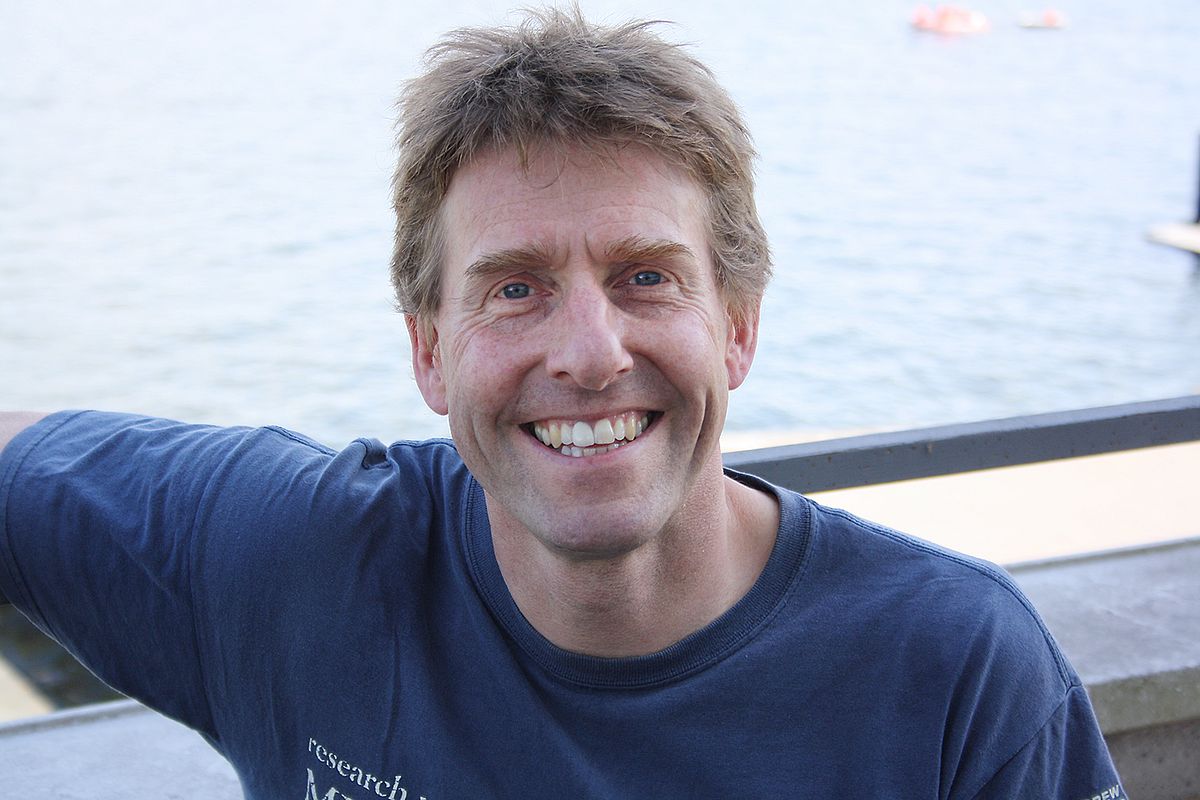
Prof. Dr. Martin Frank is a leading scientist at GEOMAR Helmholtz Centre for Ocean Research Kiel, where he serves as Spokesperson for Research Area 1: Ocean Circulation and Climate Dynamics since 2020. He works in the Department of Paleo-Oceanography, operating a modern trace-metal-clean laboratory and an MC-ICP mass spectrometer. His research focuses on reconstructing past ocean circulation and its relationship with climate using geochemical and isotopic proxy indicators. Dr. Frank's research interests span multiple interconnected fields of marine science: Paleoceanography : Reconstructing ocean circulation patterns and their relationships with past climate on different timescales Geochemical Proxies : Developing and applying radiogenic (Nd, Pb, Hf, Sr), stable (Si, Fe, Ba, Mo), and cosmogenic (10Be) isotope systems Continental Weathering : Investigating relationships between weathering inputs from continents, nutrient utilization, biological productivity, and climate Marine Archives : Extracting proxy signals from marine sediments, manganese/iron crusts, and nodules Modern Ocean Processes : Understanding processes controlling proxy indicators in the present-day water column through participation in the GEOTRACES program His recent publications demonstrate a strong focus on isotope geochemistry applied to understanding ocean circulation, continental weathering inputs, and biogeochemical cycling. Major trends in his work include the use of multiple isotope systems (particularly neodymium, hafnium, and barium) to trace water masses and continental inputs, investigations of river-ocean interfaces (particularly the Amazon and Congo systems), and studies of hydrothermal inputs to the ocean. His work bridges modern process studies with paleoceanographic reconstructions, providing critical insights into how the ocean system operates across different timescales. Dr. Frank actively participates in the internationally coordinated GEOTRACES program, which aims to improve the understanding of biogeochemical cycles and large-scale distribution of trace elements and their isotopes in the marine environment. His laboratory at GEOMAR operates advanced analytical facilities including a trace-metal-clean laboratory and MC-ICP mass spectrometer, enabling high-precision isotope measurements critical for his research.
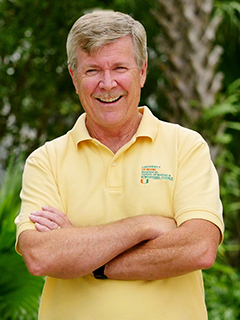
Dennis A Hansell serves as a Professor in the Department of Ocean Sciences within the Rosenstiel School of Marine, Atmospheric, and Earth Science at the University of Miami. His research is centered at the Hansell Laboratory, where he investigates fundamental biogeochemical processes in marine environments. His research focuses on carbon and nitrogen cycles with particular emphasis on dissolved organic matter (DOM) dynamics in oceanic systems. Key investigation areas include DOM distribution in deep ocean layers, net community production of DOM, export mechanisms through overturning circulation, and atmospheric influences on biogeochemical processes. His work integrates time-series studies with basin-scale surveys across the Pacific, Atlantic, and Indian Oceans as evidenced by his 2009 publication mapping global DOM distribution. Hansell leads the Hansell Laboratory which conducts fieldwork using instrumentation like Conductivity Temperature & Depth (CTD) profilers aboard research vessels such as the R.V. Walton Smith. The lab bridges regional oceanographic observations with global biogeochemical context, maintaining active research programs in marine carbon cycling despite no publicly listed awards or formal advisees.


.jpg)